
There’s something about the sound of falling water that stops people in their tracks, even the most seasoned travelers who think they’ve seen it all. Photographs never quite capture it: the mist that settles on your skin from half a mile away, the way the ground seems to hum under your feet, the sheer scale that makes you feel unusually small. Some of these places take days of jungle trekking to reach, others sit just a short walk from a parking lot, yet each one has earned its reputation the hard way, through millions of years of water carving its path through rock.
What follows is a tour through ten waterfalls that consistently show up on the lists compiled by geographers, photographers, and travelers who’ve actually stood in front of them. Height, width, volume, and setting all play a role, but so does something less measurable: the feeling of awe that a place like this can produce.
Angel Falls, Venezuela
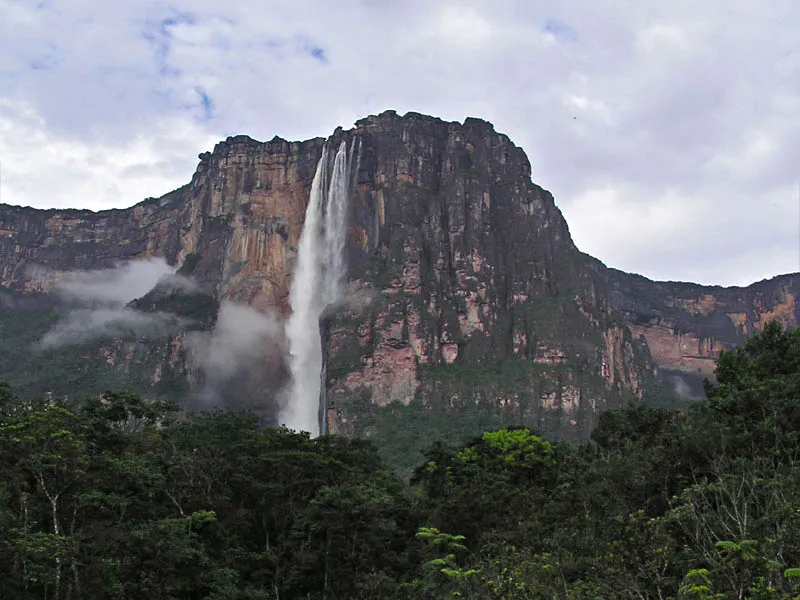
Tucked deep inside Canaima National Park, Angel Falls holds the title of the world’s tallest uninterrupted waterfall, dropping 979 metres (3,212 ft) with a plunge of 807 m (2,648 ft). The water spills off the edge of Auyán-tepui, a flat-topped mountain that locals call Devil’s Mountain, and by the time it reaches the bottom much of it has already dissolved into mist. There are no roads leading here. Visitors typically fly into the region and then travel by dugout canoe and on foot through dense rainforest just to catch a glimpse of the falls from below.
The falls take their English name from American aviator Jimmie Angel, though the site’s Indigenous name, Kerepakupai Merú, has gained official recognition over the past two decades. During the rainy season, Angel Falls creates its own weather, and those within a kilometre radius can feel mist settling on their skin. The falls have also found their way into popular culture, most notably as the inspiration for the floating house adventure in Pixar’s Up. Reaching the base requires patience and a genuine appetite for adventure, but for those who make the trip, the payoff is a waterfall that seems to fall from the sky itself.
Victoria Falls, Zambia and Zimbabwe
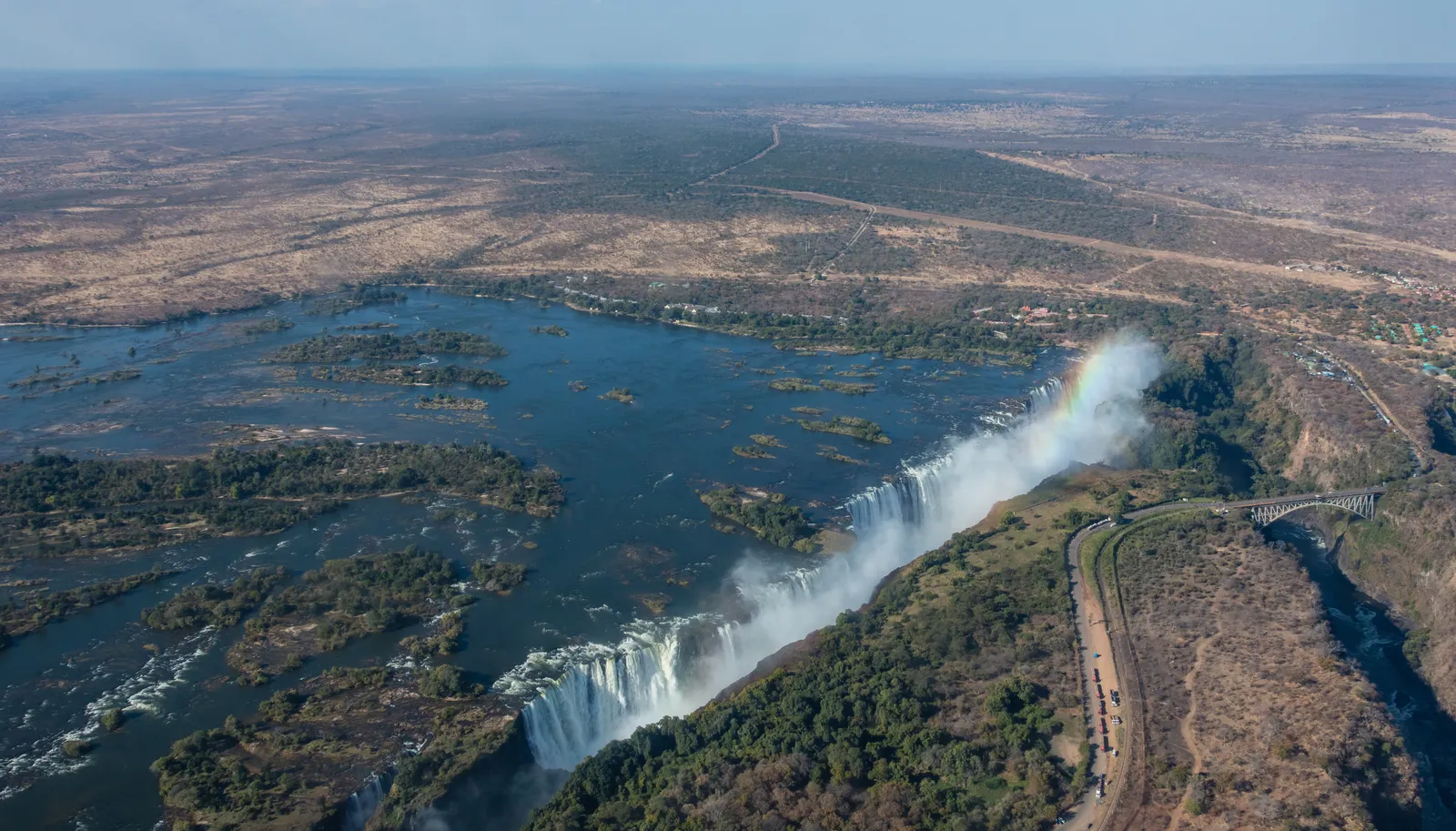
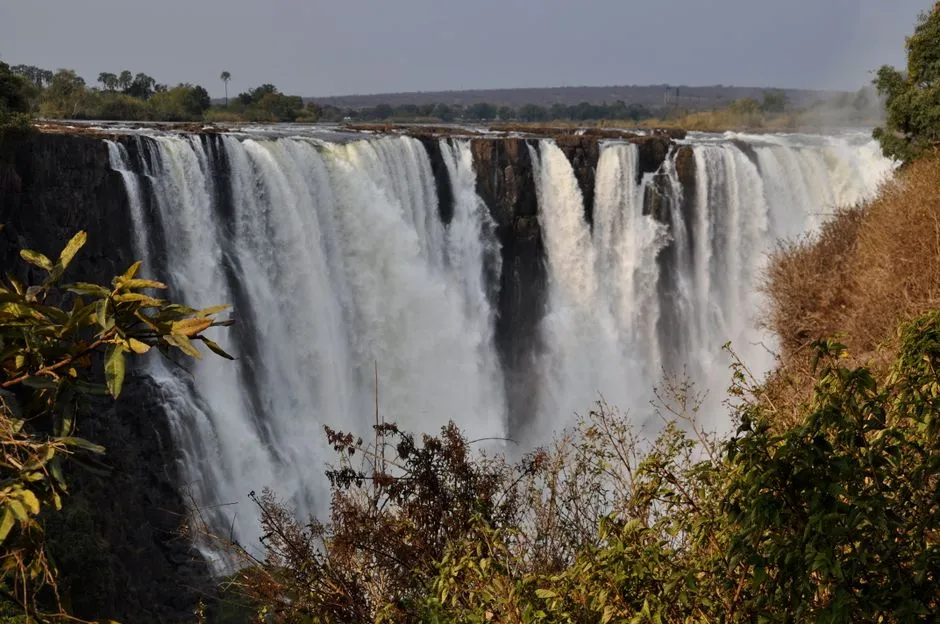
Known locally as Mosi-oa-Tunya, or “The Smoke That Thunders,” Victoria Falls sits on the Zambezi River along the border of Zambia and Zimbabwe. It isn’t the tallest or the widest waterfall on the planet, but it is classified as the largest based on its combined width of 1,708 metres (5,604 ft) and height of 108 metres (354 ft), resulting in the world’s largest sheet of falling water. Scottish missionary David Livingstone became the first European to document the site in 1855, naming it after his queen, though local communities had known the falls for generations before that.
What makes Victoria Falls so striking is the sheer volume of water crashing over a single continuous edge. During the wet season, from February to May, over 500 million liters of water cascade over the edge every minute, creating a powerful roar that can be heard from miles away. The spray rises so high it can be seen well before the falls themselves come into view, and it feeds a pocket rainforest that exists nowhere else nearby. Bridges, boat cruises, and viewing platforms on both the Zambian and Zimbabwean sides offer strikingly different perspectives of the same colossal curtain of water.
Iguazu Falls, Argentina and Brazil
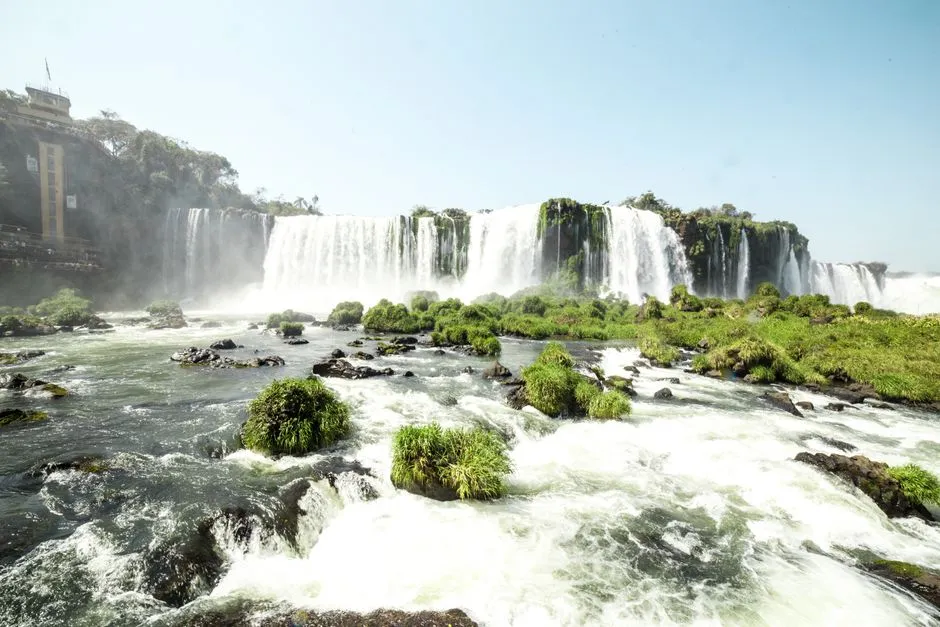
Iguazu isn’t a single waterfall so much as a sprawling system of them. Spanning 1.7 miles (2.7km) in width, it features 275 individual waterfalls, with heights ranging from 196 to 270ft (60-82m), scattered across a horseshoe-shaped gorge on the border of Argentina and Brazil. The name comes from the Guarani word for “big water,” and reportedly Eleanor Roosevelt once exclaimed “Poor Niagara” upon seeing it for the first time.
The centerpiece is the Devil’s Throat, a U-shaped chasm where roughly half the river’s flow crashes down in a single dramatic surge. Visitors generally split their time between the Argentine and Brazilian sides, since each offers something the other doesn’t. The Brazilian side is known for panoramic overviews, while walkways on the Argentine side let visitors get remarkably close to the thundering water, close enough to feel the spray on their face and hear little else but the roar.
Niagara Falls, Canada and the United States
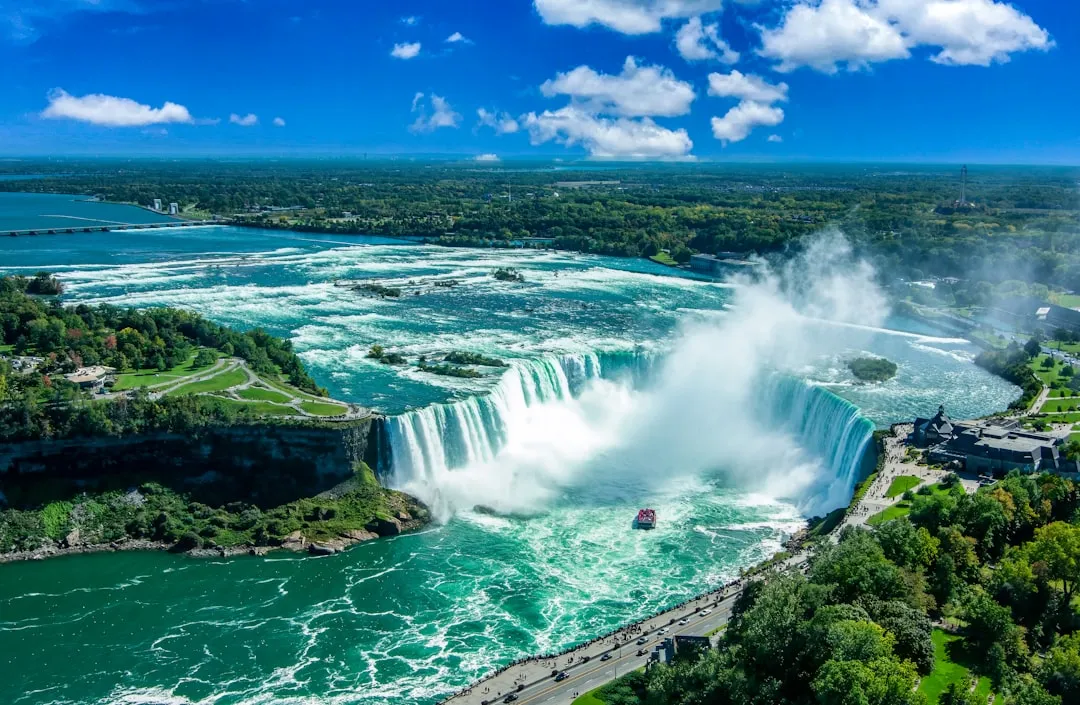
Few waterfalls carry the cultural weight of Niagara, which straddles the border between Ontario and New York State. It’s actually a trio of falls, the Horseshoe Falls, American Falls, and the smaller Bridal Veil Falls, formed by the Niagara River as it drains Lake Erie into Lake Ontario. Niagara isn’t especially tall by global standards, but its combination of width and water volume has made it one of the most recognizable natural landmarks on Earth for over two centuries.
What Niagara lacks in height, it makes up for in accessibility and spectacle. Boat tours like the Maid of the Mist have been ferrying visitors close to the base of the falls since the nineteenth century, and nighttime illumination shows have become something of a tradition on both sides of the border. The falls also carry an unusual honeymoon reputation, dating back to the early 1800s, that has stuck around long enough to become a genuine piece of Americana.
Kaieteur Falls, Guyana
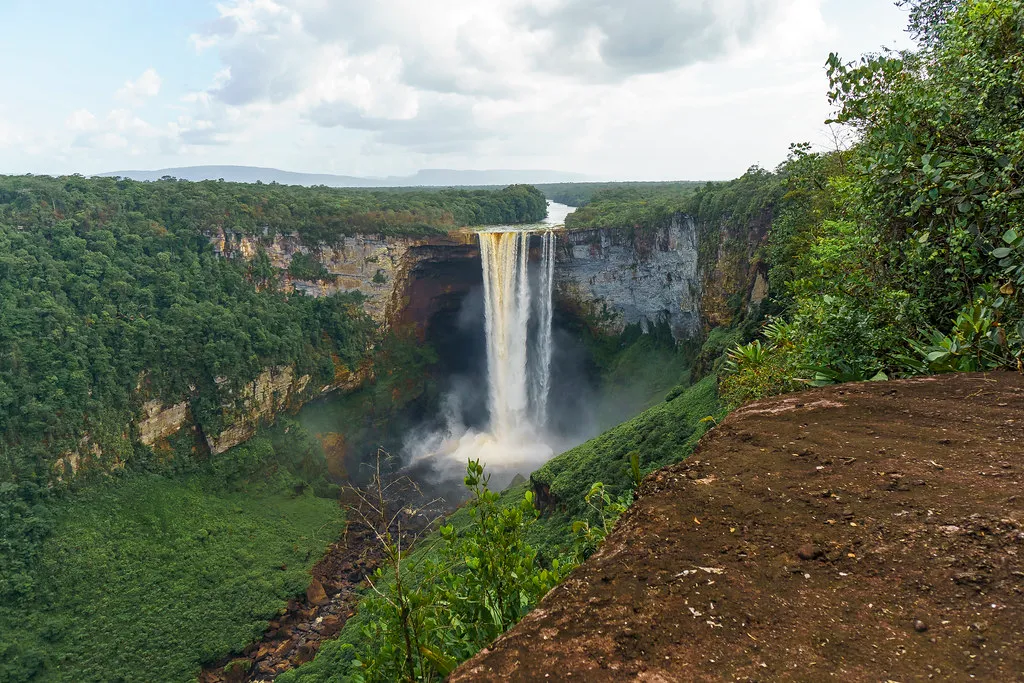
Kaieteur remains one of the least visited yet most dramatic waterfalls on this list, hidden deep within Guyana’s Amazon rainforest. It measures 226 metres (741 ft) high when measured from its plunge over a sandstone and conglomerate cliff to the first break, then flows over a series of steep cascades that bring the total height to 251 metres (822 ft). That makes it roughly four and a half times taller than Niagara Falls, yet it remains largely overlooked by mainstream travel routes.
Part of the appeal here is the isolation. There are no crowds jostling for a photo, no souvenir stands, just an airstrip a short walk from the top of the falls and a rainforest full of wildlife found almost nowhere else. It’s among the most powerful waterfalls in the world, with an average flow rate of 663 cubic meters per second. Getting there typically requires a small chartered plane, but for travelers willing to make the effort, Kaieteur offers a version of raw, untouched nature that’s increasingly rare.
Plitvice Lakes Waterfalls, Croatia
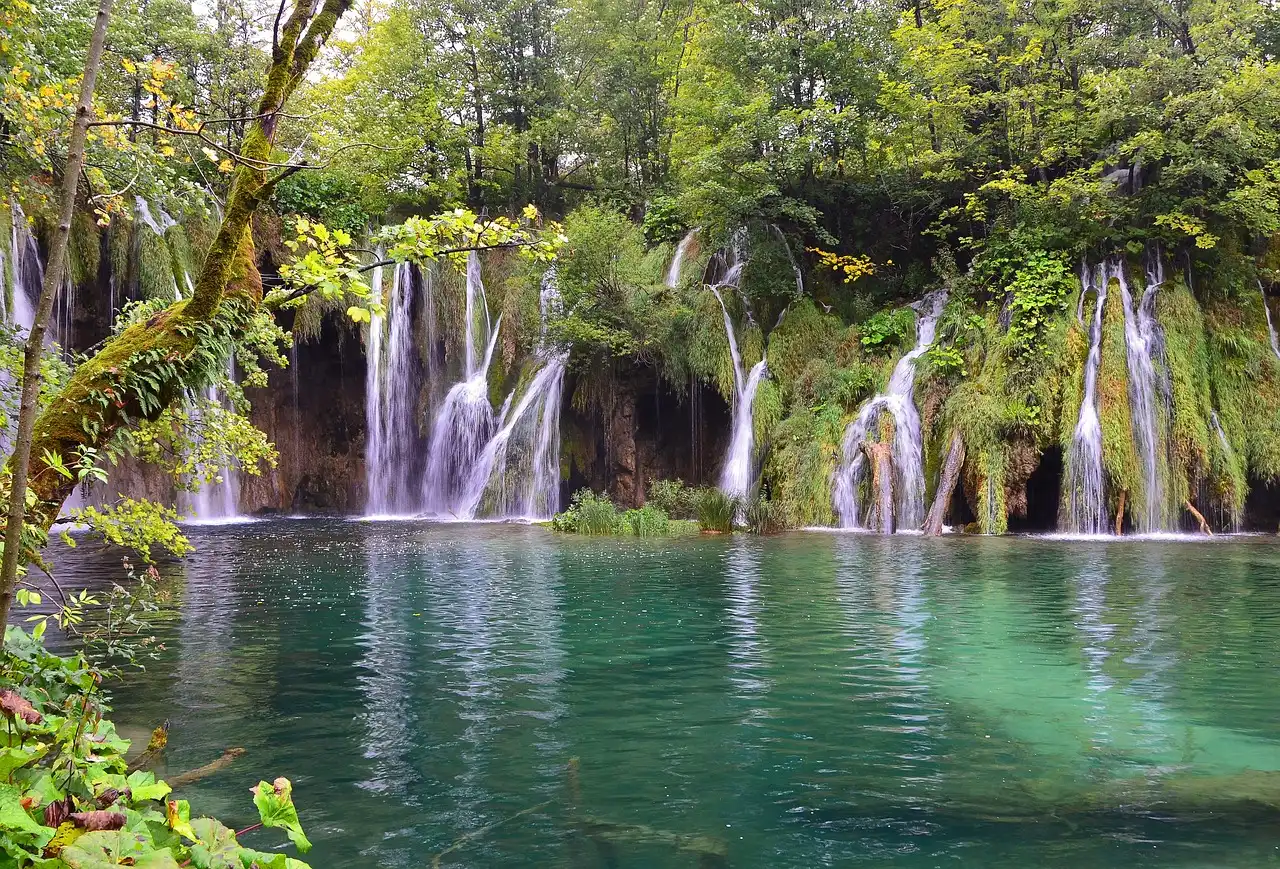
Plitvice Lakes National Park in central Croatia isn’t home to a single dramatic drop but rather a cascading network of sixteen terraced lakes connected by dozens of waterfalls. The water here takes on an almost unreal turquoise and green color, a result of minerals and algae in the limestone-rich terrain, and it shifts noticeably with the seasons and the angle of the light. Wooden boardwalks wind through the park, letting visitors walk directly over and alongside the falling water rather than viewing it from a distance.
The park has been a UNESCO World Heritage Site since 1979, recognized for both its geological rarity and the surrounding forest, which shelters bears, wolves, and a wide range of bird species. Unlike many of the waterfalls on this list, Plitvice rewards slow exploration. Visitors often spend an entire day wandering the trails, discovering new cascades around nearly every bend, making it feel less like a single attraction and more like an entire landscape built around falling water.
Gullfoss, Iceland
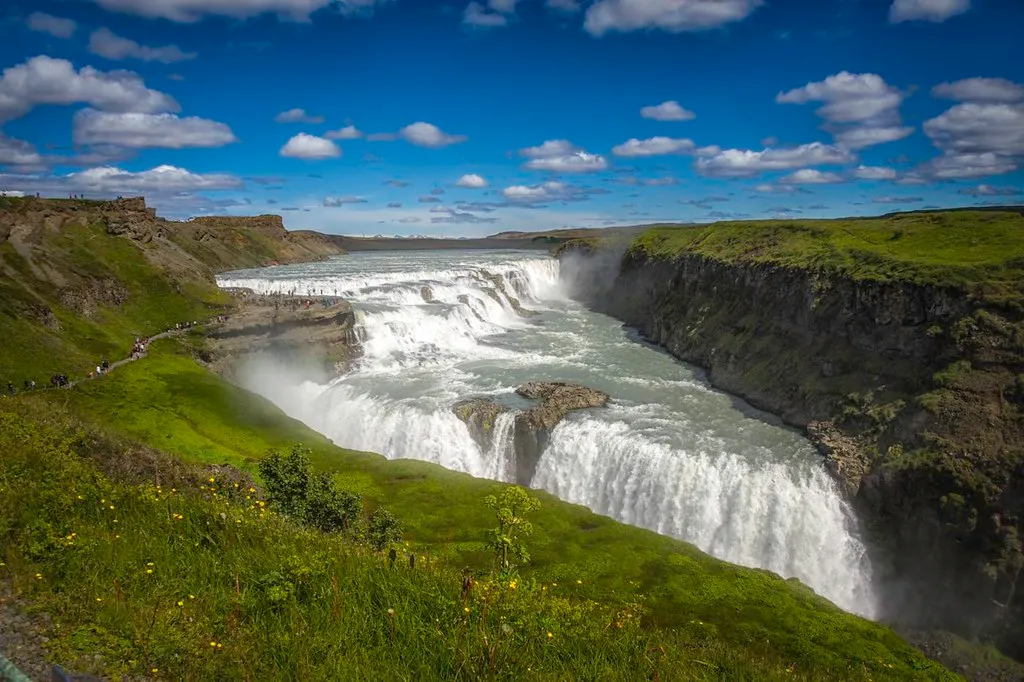
Gullfoss, meaning “Golden Falls,” sits along Iceland’s Hvítá River as part of the popular Golden Circle route out of Reykjavik. The water drops in two stages into a narrow canyon, and on sunny days the spray catches the light in a way that produces near-constant rainbows, which likely explains the name. In winter, the surrounding landscape freezes into a dramatic ice-fringed scene, while in summer the glacial meltwater feeding the falls swells to a thunderous volume.
The falls carry a somewhat lesser-known history tied to early Icelandic conservation efforts. In the early twentieth century, local farmer Sigríður Tómasdóttir famously opposed plans to harness Gullfoss for hydroelectric power, and her advocacy is often credited as a foundational moment in the country’s environmental movement. Today the site is protected, and a short walking path lets visitors get close enough to feel the spray without disturbing what remains a wild, largely unaltered river landscape.
Seljalandsfoss, Iceland
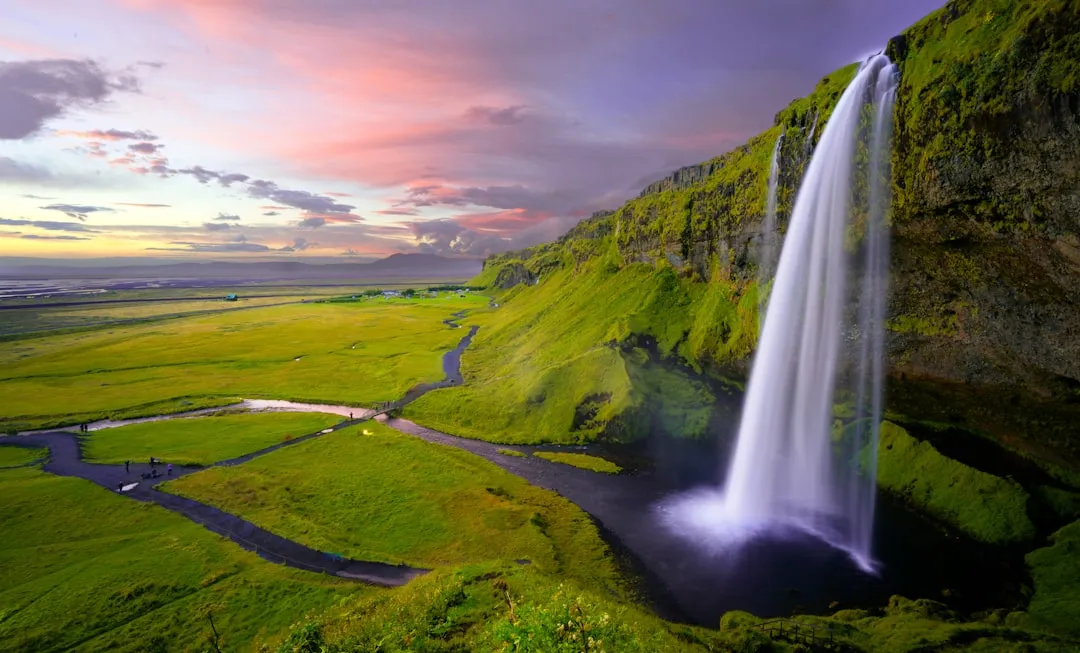
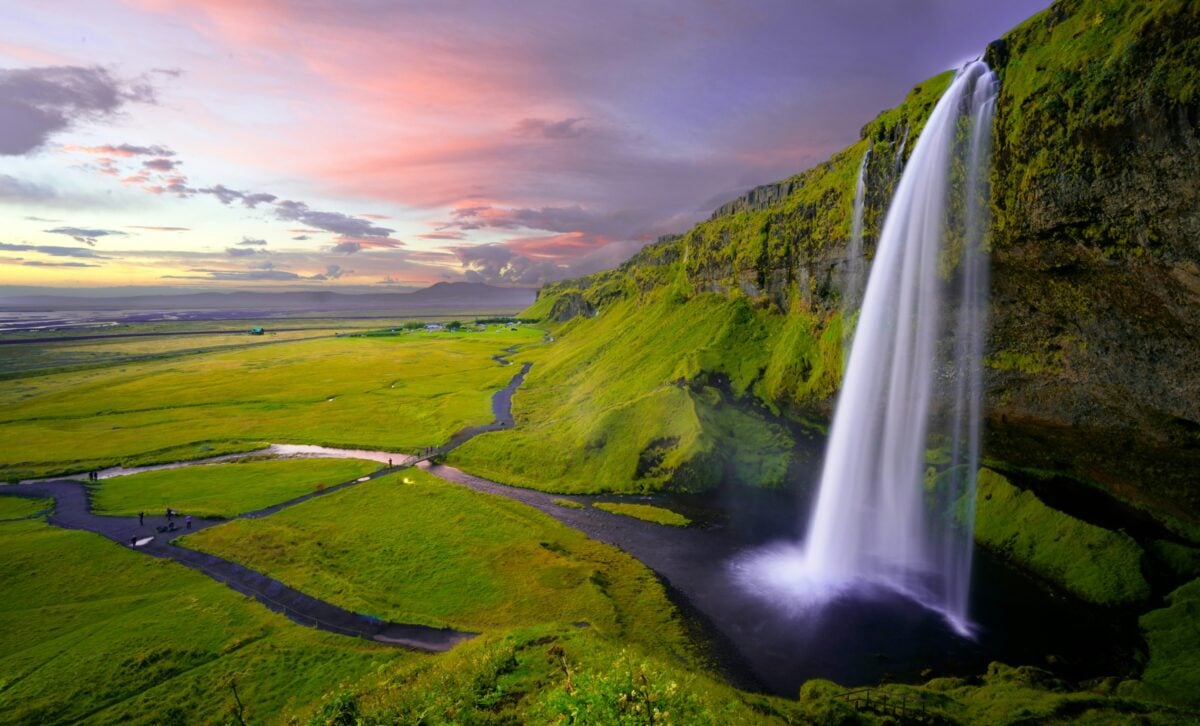
A short drive from Gullfoss, though on Iceland’s southern coast, Seljalandsfoss offers something few waterfalls anywhere can: the ability to walk behind the curtain of falling water itself. The falls drop about sixty meters from a cliff that was once part of Iceland’s coastline before the sea receded, leaving a hollowed-out space behind the water that visitors can now access via a walking path. Standing behind the falls, looking out through a shifting wall of water toward the surrounding farmland, is an experience that photographs struggle to do justice.
The setting has made Seljalandsfoss a favorite for photographers chasing Iceland’s long summer twilight and its equally dramatic winter light. Nearby, a lesser-known sister waterfall called Gljúfrabúi hides almost entirely within a narrow canyon, accessible only by wading partway through a shallow stream, and it draws a smaller but no less devoted following. Together the two falls have become something of a quiet counterpoint to Iceland’s more famous, more crowded attractions.
Yosemite Falls, United States
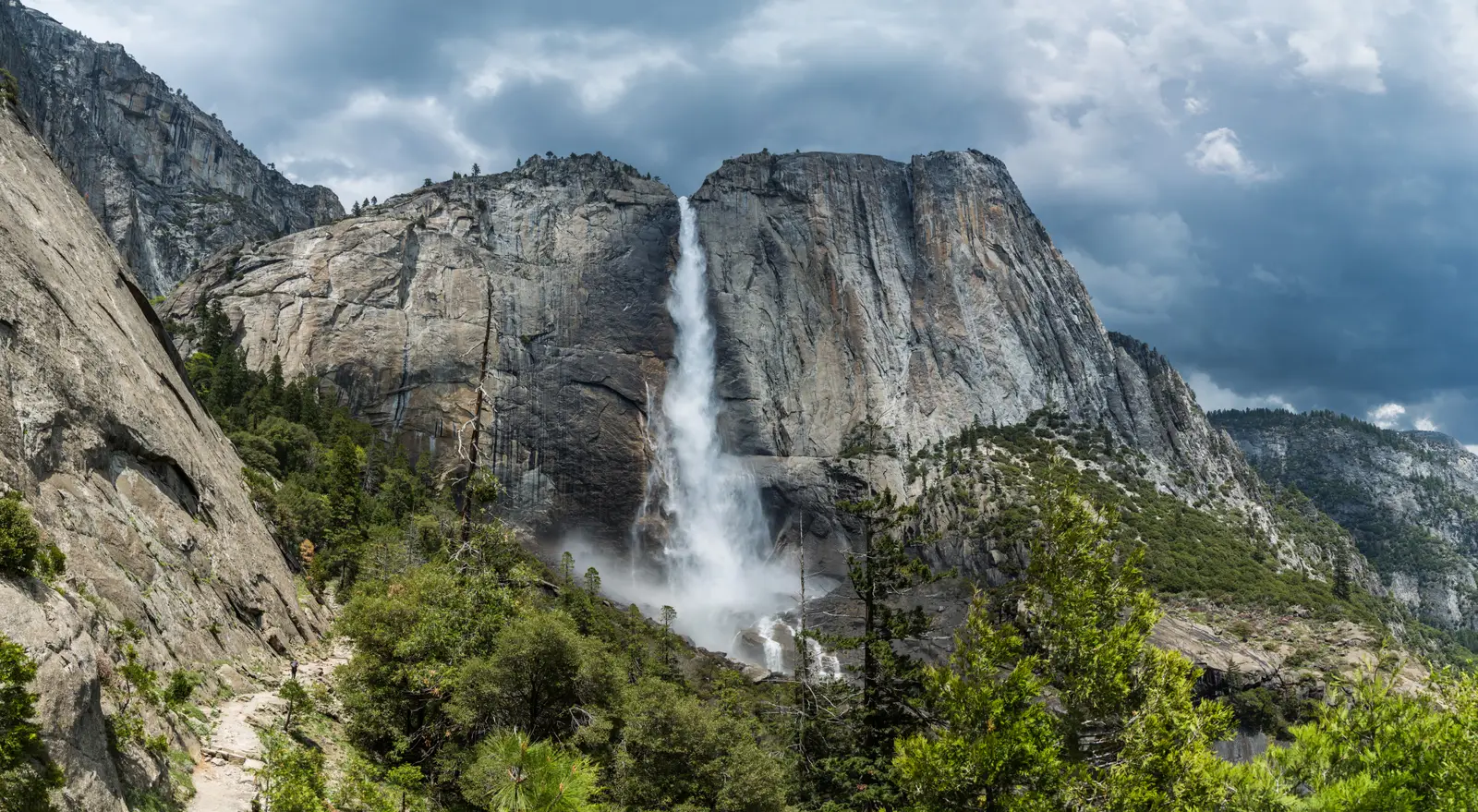
Rising within Yosemite National Park in California, Yosemite Falls is the tallest waterfall in North America, dropping in three distinct tiers down granite cliffs carved by ancient glaciers. The upper fall, middle cascades, and lower fall combine for a dramatic vertical descent that becomes especially forceful during the spring snowmelt, when the volume of water can be startling. By late summer, however, the falls often slow to a trickle or disappear entirely, a reminder of just how seasonal this spectacle really is.
What sets Yosemite Falls apart is its backdrop. The falls sit within a valley ringed by granite monoliths like El Capitan and Half Dome, giving visitors a sense of scale that few other waterfalls can match. Trails of varying difficulty lead hikers toward different vantage points, from easy valley floor walks to a demanding climb toward the top of the upper fall, rewarding those who make the effort with sweeping views across the entire valley below.
Havasu Falls, United States
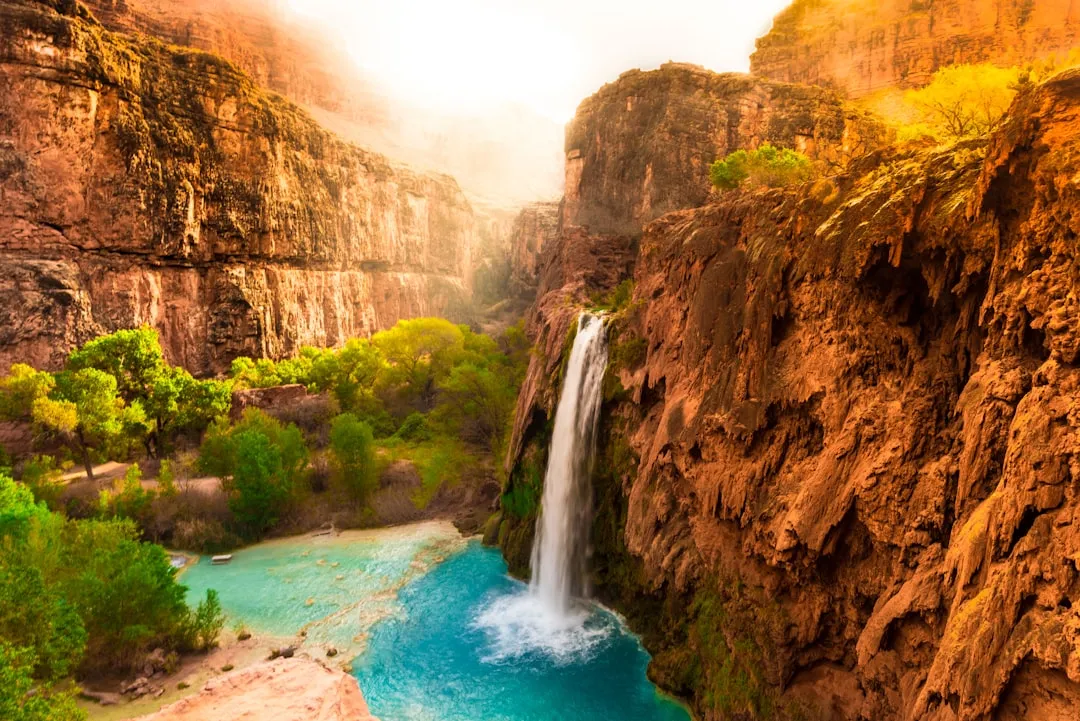
Havasu Falls sits within a side canyon of the Grand Canyon, on land belonging to the Havasupai Tribe, and its striking blue-green water often surprises first-time visitors who expect the desert surroundings to produce something more muted. The color comes from high concentrations of calcium carbonate in the water, which also creates travertine terraces and natural pools below the main drop. Reaching the falls requires a permit and a strenuous multi-mile hike or mule ride through remote desert terrain, which keeps visitor numbers naturally limited.
The remoteness is part of the draw. There’s no easy drive-up access here, no paved viewing platform, just a demanding trek that rewards hikers with a swimmable oasis in the middle of otherwise arid canyon country. The Havasupai people have managed this land for generations, and the falls remain central to their community and heritage, which adds a layer of cultural significance that many visitors come away appreciating just as much as the scenery itself.
Final Thoughts
Ranking waterfalls is, admittedly, a bit of a fool’s errand. Beauty here depends on what you value, the raw height of Angel Falls, the overwhelming volume of Victoria Falls, or the quiet, walkable wonder of Plitvice. Still, having gone through the numbers and the history behind each of these places, a few stand out as genuinely irreplaceable rather than just impressive.
Victoria Falls and Iguazu Falls, in particular, seem to earn their reputation not just from scale but from the sheer sensory experience of standing near them, something photographs consistently undersell. Kaieteur and Havasu, meanwhile, make the case that remoteness itself can be part of a waterfall’s beauty, since fewer visitors often means a more unspoiled encounter with the place. If there’s one takeaway worth holding onto, it’s that these ten waterfalls are not simply geological curiosities. They’re reminders that some of the most powerful sights on Earth are still, refreshingly, difficult to fully capture until you’re standing right in front of them.
