
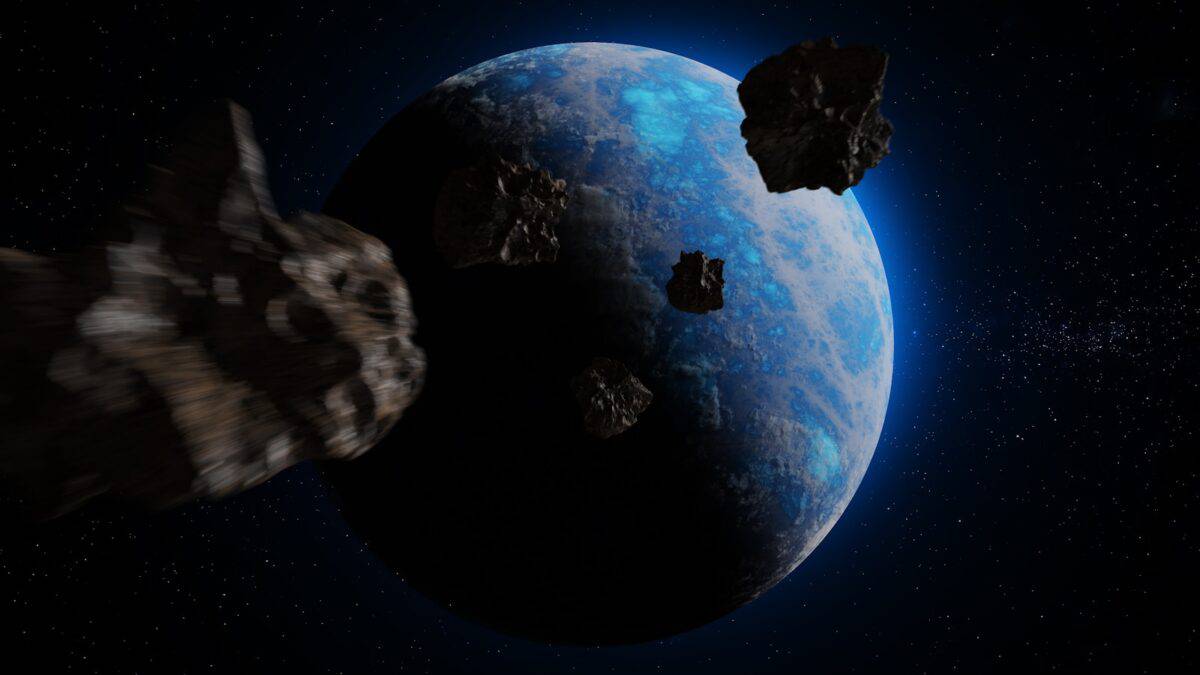
Between Mars and Jupiter lies a vast cosmic junkyard of rocky debris – the Asteroid Belt. For centuries, this region was merely considered a failed planet or cosmic leftovers. However, modern scientific investigation has revealed that these ancient space rocks may in fact be treasure troves of information about our solar system’s earliest days.
The asteroids, largely unchanged for billions of years, serve as time capsules from the formation of our solar system, potentially holding crucial clues about Earth’s origins and the building blocks that eventually formed our home planet. As our technology and understanding advance, scientists are increasingly turning to these celestial bodies to answer fundamental questions about how Earth obtained its water, organic materials, and even the conditions that made life possible.
The Cosmic Library Between Mars and Jupiter

The Asteroid Belt occupies a vast region between the orbits of Mars and Jupiter, spanning approximately 140 million miles in width. Despite popular depictions in science fiction movies of densely packed rocks requiring skillful navigation, the belt is actually quite sparse. If you were to travel through it, you would rarely encounter an asteroid without deliberately seeking one out.
The total mass of all objects in the Asteroid Belt is estimated to be just 4% of the Moon’s mass, with material distributed across an enormous volume of space. What makes this region scientifically invaluable is not its density but its composition—these are primordial materials that have remained relatively unchanged since the solar system’s formation approximately 4.6 billion years ago.
Primitive Building Blocks of the Solar System

Asteroids represent the leftover building blocks from the solar system’s formation. When our solar system began to form from a cloud of gas and dust, most material was pulled toward the center to create the Sun, while the remaining material began to clump together. In the inner solar system, these clumps eventually formed the terrestrial planets: Mercury, Venus, Earth, and Mars. However, Jupiter’s enormous gravitational influence prevented material in the asteroid belt from coalescing into a planet.
This disruption left behind thousands of planetesimals and smaller rocky bodies that never combined into a larger world. This failure to form a planet has become our scientific fortune, as it preserved these primordial materials in their near-original state.
Asteroid Classification: A Spectrum of Cosmic Materials
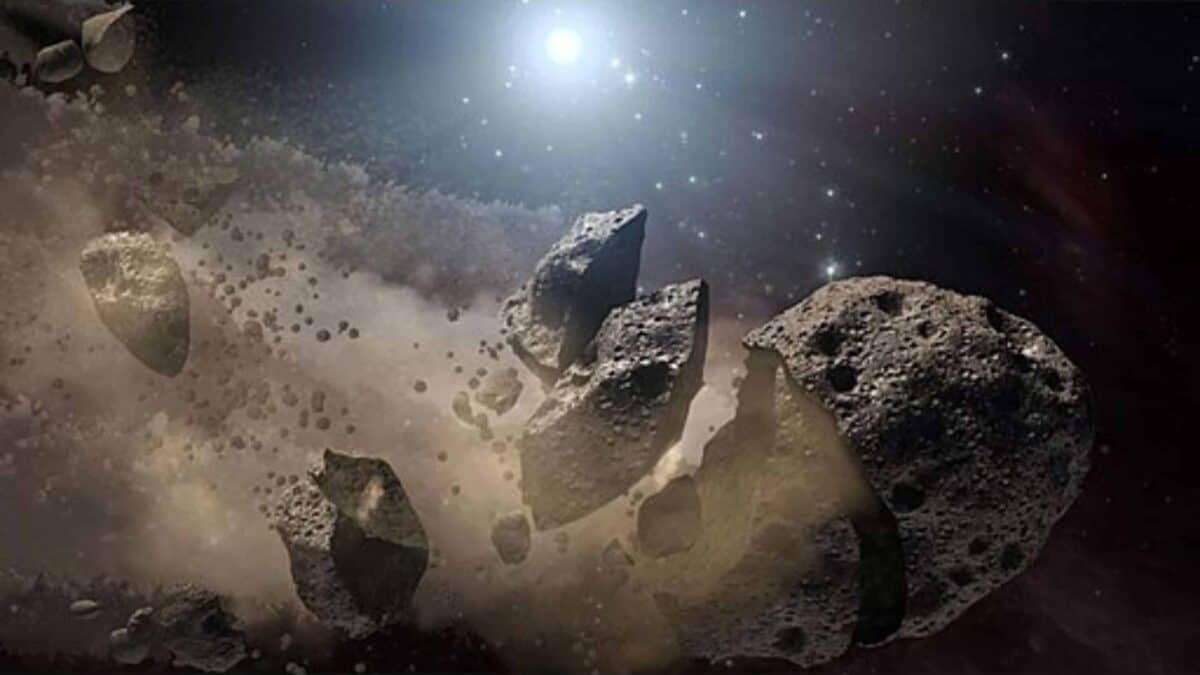
Scientists classify asteroids into different types based on their composition, with each type telling a different story about the solar system’s formation. C-type (carbonaceous) asteroids, making up about 75% of known asteroids, contain high amounts of carbon and are similar to the Sun in elemental composition, minus the hydrogen, helium, and other volatiles. S-type (silicaceous) asteroids, comprising about 17% of known asteroids, contain silicate materials and nickel-iron.
The rarer M-type (metallic) asteroids are primarily composed of nickel-iron. Other less common types include V-type asteroids, believed to originate from Vesta’s crust, and D-type asteroids in the outer belt, which may contain organic compounds and water ice. This diversity suggests that asteroids formed at different distances from the Sun and under varying conditions, providing a comprehensive snapshot of the early solar system environment.
Earth’s Water: An Extraterrestrial Delivery System

One of the most compelling insights from asteroid research concerns Earth’s water origins. Studies of carbonaceous chondrite meteorites, which originate from C-type asteroids, have revealed that these space rocks contain up to 20% water by weight, locked within hydrated minerals. Isotopic analysis of hydrogen in this water closely matches Earth’s oceanic water.
This suggests that water-rich asteroids and similar bodies may have bombarded the early Earth, delivering substantial amounts of our planet’s water inventory. The “late heavy bombardment” period, approximately 4 billion years ago, may have been particularly significant for these deliveries. This finding challenges earlier theories that Earth’s water was primarily outgassed from the planet’s interior and points to the asteroid belt as a critical source of Earth’s life-supporting hydrosphere.
Organic Building Blocks for Life

Beyond water, carbonaceous asteroids contain something potentially even more significant for Earth’s story: organic compounds. Analysis of meteorites from these asteroids has revealed amino acids, nucleobases, and other complex organic molecules—the fundamental building blocks of life as we know it. The Murchison meteorite, which fell in Australia in 1969, contained over 80 different amino acids, some of which are used by life on Earth.
More recently, samples returned from asteroid Ryugu by Japan’s Hayabusa2 mission contained uracil, a nucleobase found in RNA, along with vitamin B3 (niacin). These discoveries suggest that asteroids may have seeded Earth with the essential chemical precursors that eventually led to the emergence of life, potentially answering one of humanity’s most profound questions about our origins.
The Gravitational Dance with Jupiter
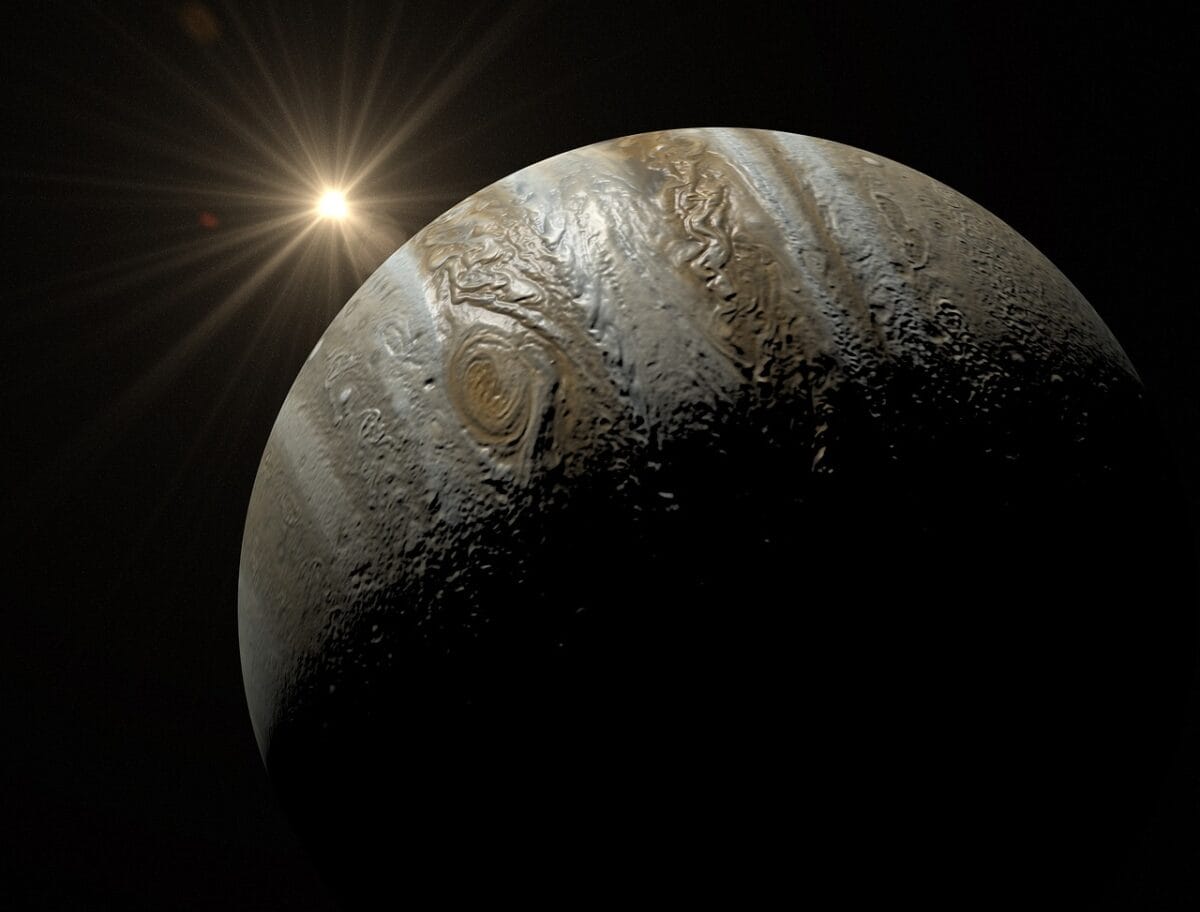
Jupiter’s massive gravitational influence has shaped the asteroid belt throughout solar system history. In the early solar system, Jupiter’s formation created gravitational resonances that prevented material in the asteroid belt region from forming a planet. Computer modeling suggests that Jupiter’s inward and then outward migration during the solar system’s formation—a phenomenon known as the Grand Tack hypothesis—scattered a significant amount of asteroid-like material into the inner solar system.
This migration not only sculpted the asteroid belt into what we see today but may have been responsible for delivering water-rich and organic-bearing materials to the early Earth. The asteroid belt we observe today represents less than 1% of its original mass, with Jupiter having ejected most of the material. This dynamic relationship between Jupiter and the asteroid belt was crucial in determining Earth’s final composition.
Mission to the Past: Spacecraft Exploring Asteroids

Recent decades have seen numerous space missions dedicated to studying asteroids up close. NASA’s Dawn mission orbited both Vesta and Ceres (the largest asteroid belt objects), revealing their complex geology and composition. JAXA’s Hayabusa and Hayabusa2 missions successfully returned samples from asteroids Itokawa and Ryugu, respectively, providing scientists with pristine extraterrestrial material for laboratory analysis.
NASA’s OSIRIS-REx mission collected samples from asteroid Bennu in 2020, returning them to Earth in September 2023. These sample return missions are particularly valuable as they allow scientists to analyze asteroid material using sophisticated laboratory equipment that couldn’t be sent to space. Preliminary analysis of the Ryugu samples has already revealed that this asteroid contains some of the most primitive material ever studied, practically unchanged since the solar system’s birth.
Meteorites: Asteroid Fragments on Earth

Before dedicated asteroid missions, scientists relied heavily on meteorites—asteroid fragments that survived passage through Earth’s atmosphere—for direct study of asteroid material. Different meteorite classes correspond to different asteroid types, with carbonaceous chondrites coming from C-type asteroids, ordinary chondrites from S-type asteroids, and iron meteorites from M-type asteroids.
Chondrites are particularly valuable as they contain chondrules—small spherical inclusions formed in the early solar nebula—and represent some of the oldest solid materials in our solar system. Isotopic dating of these meteorites has helped establish the age of the solar system at approximately 4.567 billion years. The study of meteorites continues to complement data from space missions, providing physical samples of different asteroid types and regions of the belt.
Ceres: A Water-Rich World in the Asteroid Belt

The dwarf planet Ceres, the largest object in the asteroid belt at nearly 600 miles in diameter, has emerged as a particularly fascinating subject for understanding Earth’s water story. NASA’s Dawn mission, which orbited Ceres from 2015 to 2018, discovered evidence of a subsurface ocean of briny water beneath its crust. Bright spots in Ceres’ Occator Crater were found to be deposits of sodium carbonate and other salts, which likely originated from this subsurface briny reservoir.
Scientists estimate that up to 25% of Ceres’ mass could be water—more fresh water than exists on Earth. Geological activity on Ceres appears to have continued until relatively recently, suggesting that bodies in the asteroid belt could remain active longer than previously thought. Ceres represents a potential analog for water delivery to the early Earth, as similar water-rich bodies that formed beyond the snow line may have migrated inward and collided with our planet.
Isotopic Fingerprints: Tracing Earth’s Building Materials

Isotopic analysis has become one of the most powerful tools for connecting Earth’s materials to their potential asteroid sources. Elements exist in different isotopic forms, and the ratios of these isotopes create a unique “fingerprint” that can be used to trace material origins. Oxygen isotope ratios in meteorites have revealed that Earth’s building blocks came from a mix of materials, including some resembling enstatite chondrites, which formed in the inner solar system.
Meanwhile, the hydrogen isotope ratio (deuterium to hydrogen) in carbonaceous chondrites closely matches Earth’s oceanic water, strengthening the case for asteroid water delivery. Chromium, titanium, and molybdenum isotopes in Earth rocks compared to different meteorite classes have helped scientists determine which asteroid types contributed most to Earth’s formation. These isotopic studies suggest that Earth formed primarily from inner solar system materials, but with crucial contributions from the asteroid belt region.
Asteroid Vesta: A Window into Planetary Differentiation
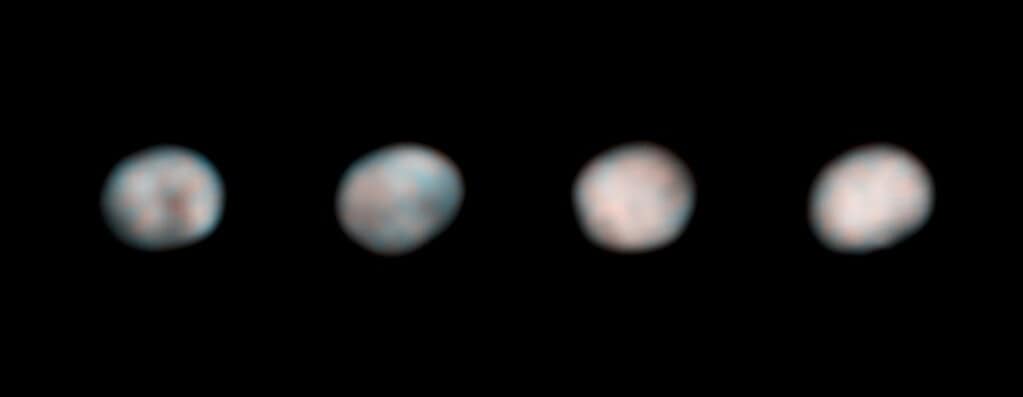
Asteroid Vesta, the second-largest asteroid at about 326 miles in diameter, offers unique insights into how Earth and other terrestrial planets formed and differentiated into layers. Unlike most asteroids, Vesta underwent complete melting and differentiation early in its history, developing a core, mantle, and crust similar to Earth but on a much smaller scale. The Dawn mission’s detailed mapping of Vesta revealed a massive impact basin at its south pole, excavating material from deep within its crust and possibly exposing its mantle.
This natural cross-section allows scientists to study the internal structure of a differentiated body. Meteorites known as HED (Howardite-Eucrite-Diogenite) meteorites have been linked to Vesta and represent samples from different depths of its crust and possibly upper mantle. By studying Vesta and these meteorites, scientists can better understand the processes that shaped Earth’s internal structure during its formative years.
Future Research and Unanswered Questions

Despite significant advances in asteroid research, many questions about Earth’s formation remain unanswered. Scientists continue to debate the exact proportions of different asteroid types that contributed to Earth’s composition and whether the current asteroid belt accurately represents the materials that existed in the early solar system. The role of catastrophic collisions in altering asteroid compositions over time presents another challenge for interpreting their connection to Earth’s origins.
Future missions like NASA’s Psyche, launched in October 2023 to study the metal-rich asteroid 16 Psyche, may provide insights into planetary core formation. The Lucy mission, launched in 2021, will study Jupiter’s Trojan asteroids, which may represent more distant material captured early in solar system history. Advanced spectroscopic surveys from Earth and space telescopes continue to characterize more asteroid compositions. These ongoing and future research efforts promise to further refine our understanding of how asteroid belt materials contributed to Earth’s formation and evolution.
Conclusion: Reading Earth’s Origin Story in Space Rocks

The asteroid belt stands as one of our solar system’s most valuable scientific treasures—a preserved relic of the early solar system that continues to yield insights about Earth’s origins. Through meteorite studies, space missions, and advanced analytical techniques, scientists have established clear connections between asteroid materials and Earth’s composition, particularly regarding our planet’s water and organic compounds.
The evidence increasingly suggests that Earth’s habitability may be directly linked to contributions from asteroid belt materials, delivered through impacts throughout our planet’s history. As technology advances and more samples are returned from these ancient time capsules, we continue to refine the story of Earth’s birth and evolution. The asteroid belt, once thought to be merely cosmic debris, has proven to be an invaluable cosmic library recording the conditions and processes that ultimately led to our habitable world.

- The Perfect Pet for Each Zodiac Sign - July 7, 2026
- The Wild Animal That Embodies Your Zodiac Sign’s Spirit - July 6, 2026
- 7 Steps to Planting Admirably Beautiful Bluebonnets - July 6, 2026