

Nothing captures a dog owner’s attention quite like watching their furry friend become absolutely enchanted by a simple squeaky toy. You’ve probably seen it happen countless times – that magical moment when your pup discovers a new squeaker and suddenly becomes completely transfixed by the high-pitched sound. The way their ears perk up, their tail starts wagging, and their entire body language shifts into hunting mode is both amusing and fascinating.
This phenomenon isn’t just random playful behavior. There’s actually a deep-rooted, scientifically-backed reason why our domesticated companions lose their minds over these noisy little playthings. Let’s dive into the surprising psychology and biology behind this obsession.
The Predator Awakens Within

Dogs are descendants of wolves, creatures for whom hunting was a necessity for survival. This evolutionary past has equipped dogs with certain innate behaviors that are triggered by stimuli reminiscent of their ancestral hunting activities. The high-pitched noise of a squeaky toy is particularly effective in getting a dog’s attention as it imitates the sound of prey animals, which can ignite the dog’s primal instinct to hunt.
When your dog grabs that squeaky mouse or rubber chicken, they’re not just playing – they’re channeling their inner wolf. Dogs’ love for squeaky toys dates back to their wild ancestors. Wolves, along with other wild canines, depend on their strong sense of hearing to detect and capture smaller prey that emits high-pitched cries when caught. The prey drive in dogs carries onto the modern canines captivating the attention of dogs whenever they hear a noise sounding like a scared little animal.
The Dopamine Rush of Victory

Every time a dog hears a squeak after biting on a toy, its brain releases dopamine, a feel-good chemical often connected with reinforcement and pleasure. This process helps to strengthen the dog’s desire to play with the toy consistently, as the act of making it squeak becomes extremely satisfying.
Think of it like hitting the jackpot on a slot machine. When a dog chomps down on a squeaky toy, they hear a sound that triggers an immediate gratifying auditory reward, which, of course, is one of the reasons why dogs like squeaky toys. “Several studies have shown that certain sounds like those a squeaky toy makes trigger reward centers in the brain to release the feel-good chemical dopamine.” This creates an addictive cycle that keeps dogs coming back for more.
Superior Hearing Puts Dogs in the Game

A dog’s sense of smell is its true superpower (estimated to be anywhere from 1,000 to 10,000 times more acute than a human nose), they also have exceptionally keen hearing. With 18 ear muscles that allow them to reposition their ears toward dogs and the ability to hear independently with each ear, a dog’s hearing is about four times more powerful than our own. So a little auditory stimulation can really capture their attention.
Dogs have a much better sense of hearing than humans, which means they can pick up sounds that we can’t. They can hear frequencies that are much higher than what we’re capable of hearing, which is why the high-pitched squeak of a squeaky dog toy can be so appealing to them. What sounds merely annoying to us becomes a symphony of excitement for our four-legged friends.
The Irresistible Feedback Loop

The squeaky toys serve as a self-rewarding object with a feedback loop of action, such as biting, and reaction, such as squeaking, creating a play cycle that is extremely addictive to them. It’s not just the sound itself that dogs love – it’s also the act of making the sound. Dogs are natural chewers and love to use their mouths to explore their surroundings. When they bite down on a squeaky toy and hear that satisfying squeaky toy sound, it’s a reward for their efforts.
This cause-and-effect relationship becomes deeply satisfying for dogs. Dog toys that squeak offer instant feedback for pups, which makes them more interesting and stimulating than a toy that doesn’t make any noise or move. It’s like giving them a button that produces an immediate, predictable response every single time they press it.
Hunting Simulation in the Living Room
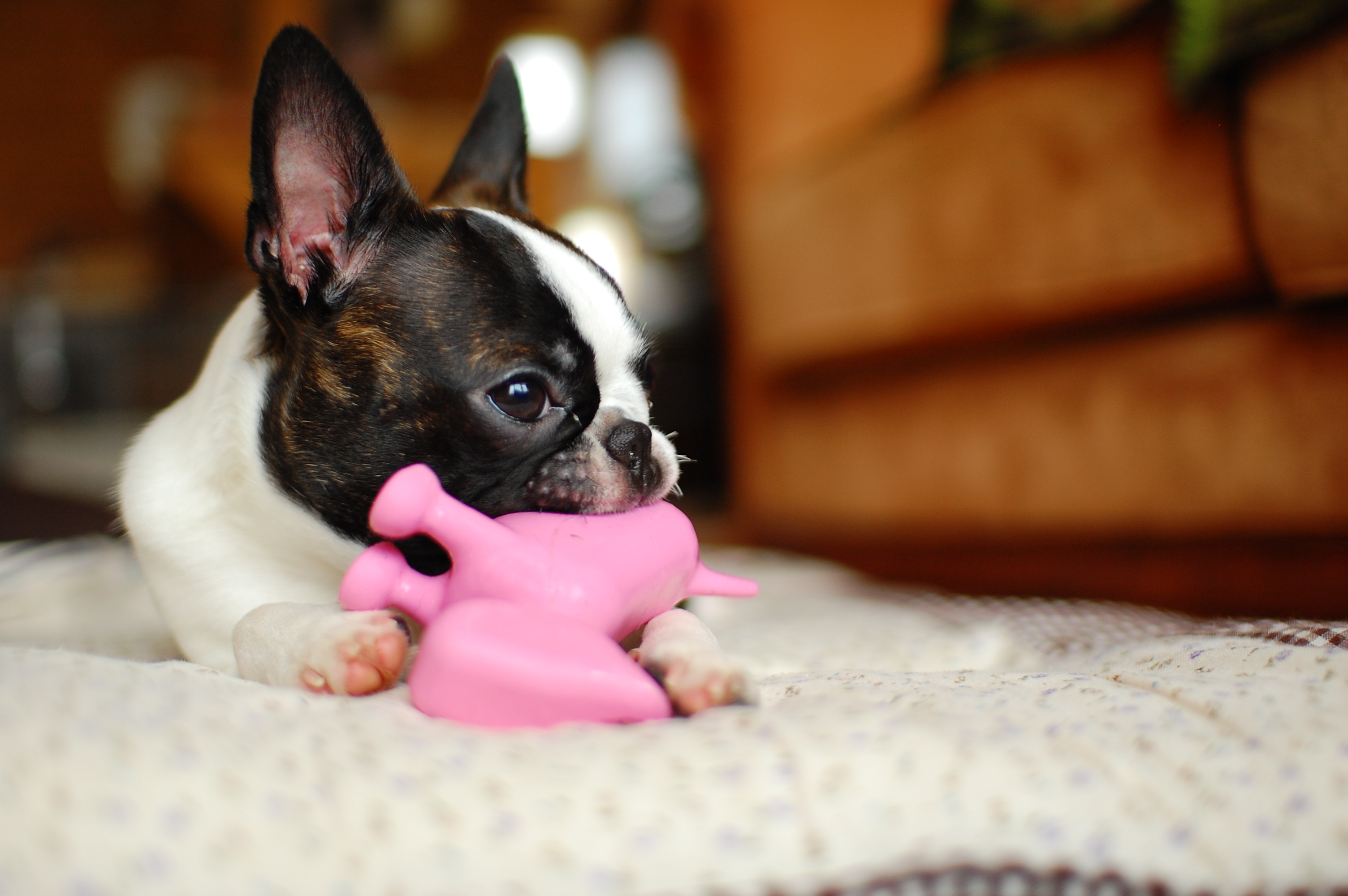
Squeaky toys offer dogs a form of hunting simulation that involves tracking, chasing, and capturing. When a dog bites down on a squeaky toy and hears the sound, it simulates the experience of subduing prey. This activity not only provides mental stimulation for the dog but also allows it to practice and refine its hunting skills in a domestic environment.
Some dogs take this simulation very seriously. You bring home a brand-new, pristine squeak toy as a gift for your dog; they fall on it with obvious delight; yet a mere matter of hours later the entire thing is shredded beyond recognition. Dogs bred for hunting, particularly terriers like Jack Russells that were selected as “ratters” to hunt and kill rodents, may find the squeaker extremely stimulating. While most small mammals would be killed quickly from a dog bite, the relentless prey squeak may compel your dog to shred the toy until the squeaker is finally silenced.
Stress Relief and Mental Stimulation
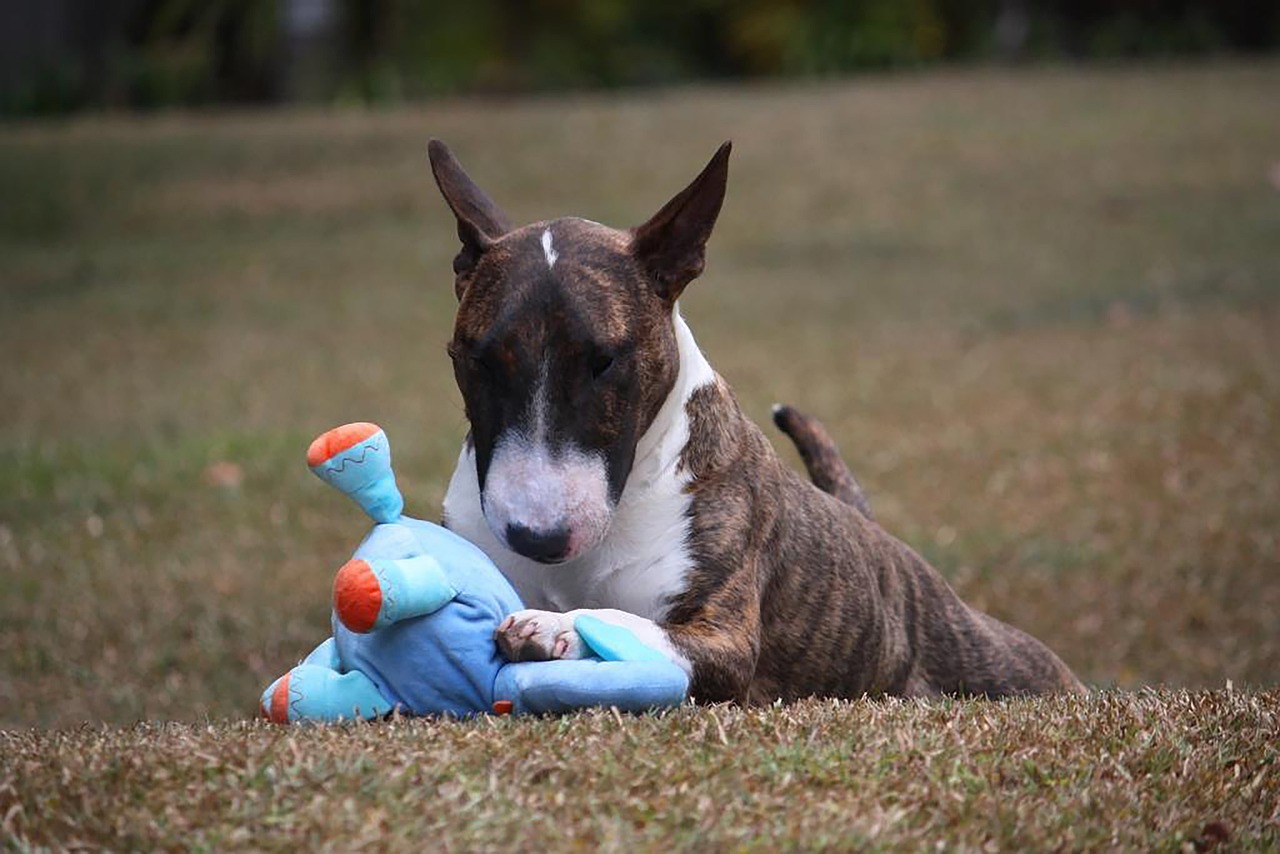
Dogs often experience stress relief through play. The act of squeezing and biting on a squeaky toy can be a form of a stress-reliever for dogs. They exhibit a calming effect when the repetitive action of chomping on squeaky toys releases tension, thus mirroring behaviors they would naturally display in the wild.
The innate urge to chew is evident in most dogs, and noisy, chewy toys offer some mental stimulation and a healthy outlet into which they can channel destructive tendencies (away from, say, your furniture). Rather than chewing your favorite shoes or furniture, your dog can satisfy their natural urges with something designed specifically for that purpose.
The Human Connection Factor

According to Dr. McCarthy, as soon as we engage with them by picking up the squeaky toy, it releases dopamine and oxytocin, which cements their bond with us. When the dog interacts with the squeaker toy, she is reinforced both by the toy itself as well as with attention from the person.
If you’re more likely to engage in play with your dog when there’s an auditory cue, your dog may just have got you trained as a playmate. Next time your dog drags a squeaky toy toward you, they might be attempting to catch your attention. Dogs are incredibly smart about learning what gets our attention, and they quickly figure out that squeaky toys are guaranteed attention-grabbers.
Conclusion

The next time you hear that familiar squeak-squeak-squeak echoing through your home, remember that you’re witnessing millions of years of evolution in action. Your dog isn’t just playing with a toy – they’re engaging their most fundamental instincts, getting a natural high from dopamine release, and potentially trying to bond with you in the process.
Whether your pup is a gentle squeaker who preserves their toys for months or a determined destroyer who surgically removes every squeaker within hours, they’re simply following their biological programming. What do you think about your dog’s squeaky toy obsession now that you know the science behind it?

- What Happens to Your Brain in the Final 60 Seconds Before Death – Neuroscientists Just Mapped It - August 13, 2026
- The Most Dangerous Myths About Tornadoes at Night - August 13, 2026
- How To Ride A Horse Safely - August 13, 2026