

Speed is a crucial advantage in the underwater world, where predators must outpace their prey to survive. Among the ocean’s numerous hunters, some have evolved remarkable velocities that leave others in their wake. The biological adaptations, hunting strategies, and evolutionary advantages that create these living torpedoes represent some of nature’s most impressive engineering. In this comprehensive exploration, we’ll dive into the fascinating world of marine speed demons, examining what makes them so extraordinarily fast and crowning the ultimate champion: the fastest marine predator ever recorded.
The Black Marlin: King of Marine Speed
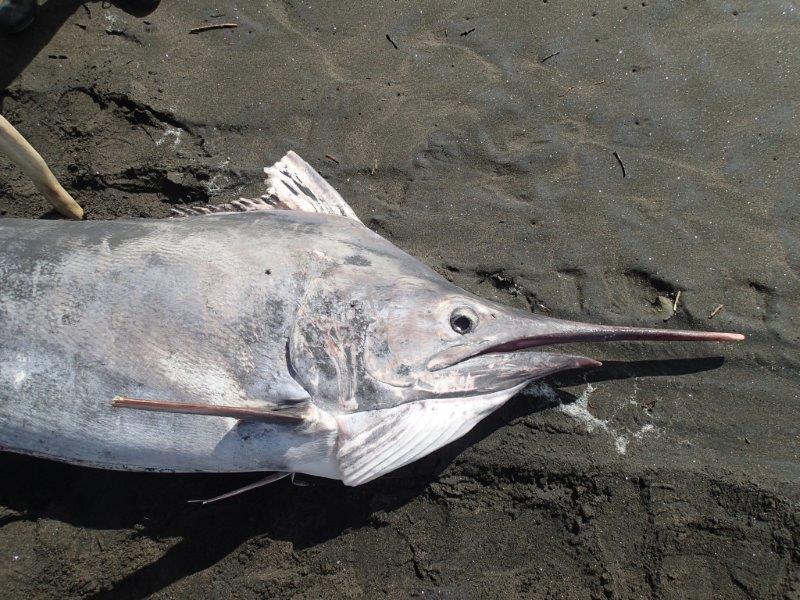
When discussing the fastest marine predators, the black marlin (Istiompax indica) reigns supreme. This magnificent billfish has been recorded reaching speeds of up to 82 miles per hour (132 km/h), making it the fastest marine predator ever documented with scientific certainty. These speeds were measured during intense hunting bursts when the marlin was pursuing prey. Their streamlined bodies, rigid pectoral fins that can lock into position, and crescent-shaped tails contribute to their remarkable hydrodynamic efficiency.
The black marlin’s impressive speed doesn’t come without physical costs. During these extraordinary bursts, their muscles generate so much heat that specialized vascular systems are required to prevent overheating. Their metabolism accelerates dramatically, requiring significant oxygen uptake and energy consumption. This means that while black marlins can achieve these astounding speeds, they can only maintain them for short periods before requiring recovery.
How Scientists Measure Marine Speed
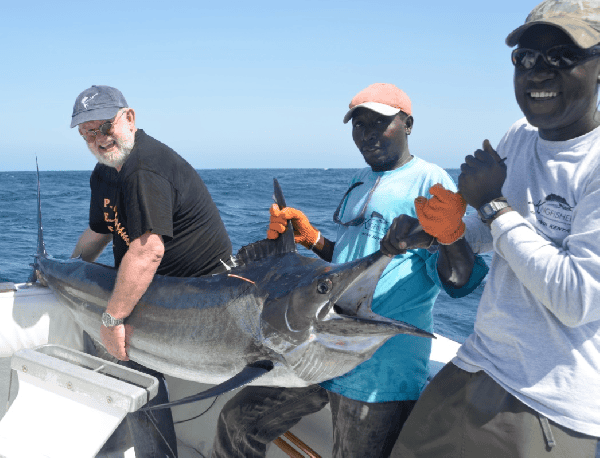
Accurately measuring the speed of marine animals presents unique challenges that don’t exist when tracking land animals. Scientists employ various methods, including satellite tracking, underwater cameras, and hydrophones to monitor movement patterns. One particularly effective method involves attaching accelerometers and time-depth recorders to animals, providing data on their three-dimensional movements through water. These sophisticated devices can log information for weeks or months before being retrieved.
For creatures like the black marlin, scientists also use specialized fishing equipment with calibrated line-release mechanisms that can measure the speed at which line is pulled from a reel during a strike or chase. This data, combined with underwater observations and computational fluid dynamics modeling, helps researchers validate speed measurements and account for variables like water currents and temperature that might affect performance. Despite these advanced techniques, capturing the true top speed of marine predators remains challenging, suggesting that some records may still underestimate their actual capabilities.
The Sailfish: A Close Contender
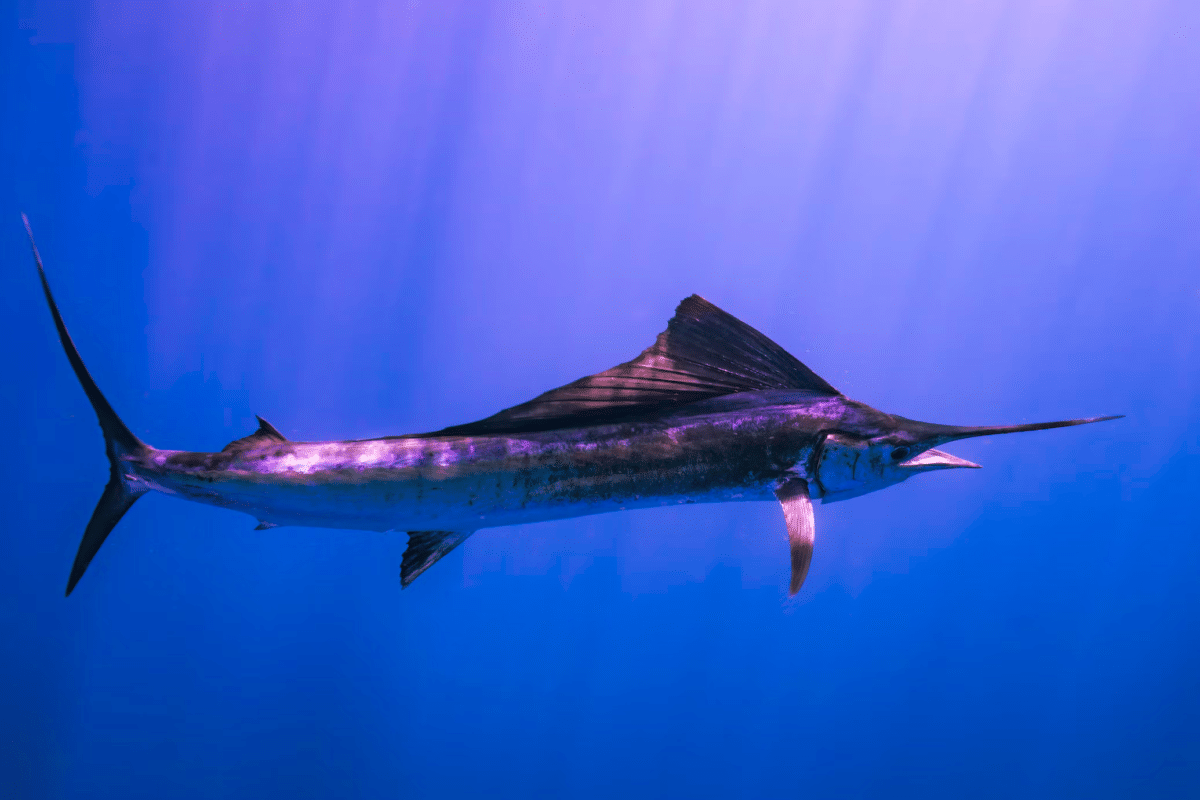
The sailfish (Istiophorus platypterus) stands as the black marlin’s closest competitor, with recorded speeds reaching up to 68 miles per hour (110 km/h). Named for its distinctive dorsal fin that resembles a sail, this predator combines speed with remarkable agility. Sailfish are known for their cooperative hunting behavior, where groups will work together to herd schools of smaller fish into tight formations before striking. Their iconic sail isn’t just for show—when extended, it helps stabilize the fish during high-speed maneuvers and may even intimidate prey.
What makes the sailfish particularly remarkable is its size-to-speed ratio. While black marlins can grow to over 1,500 pounds (680 kg), sailfish typically weigh between 120-220 pounds (55-100 kg). This means that pound for pound, the sailfish may actually be the more impressive speedster. Their bodies contain a higher percentage of red muscle tissue than many other fish, allowing for sustained swimming at high speeds without as rapid fatigue as seen in other species. This combination of sprint capability and endurance makes the sailfish one of the most formidable hunters in tropical and temperate oceans.
Shortfin Mako Shark: The Fastest Shark

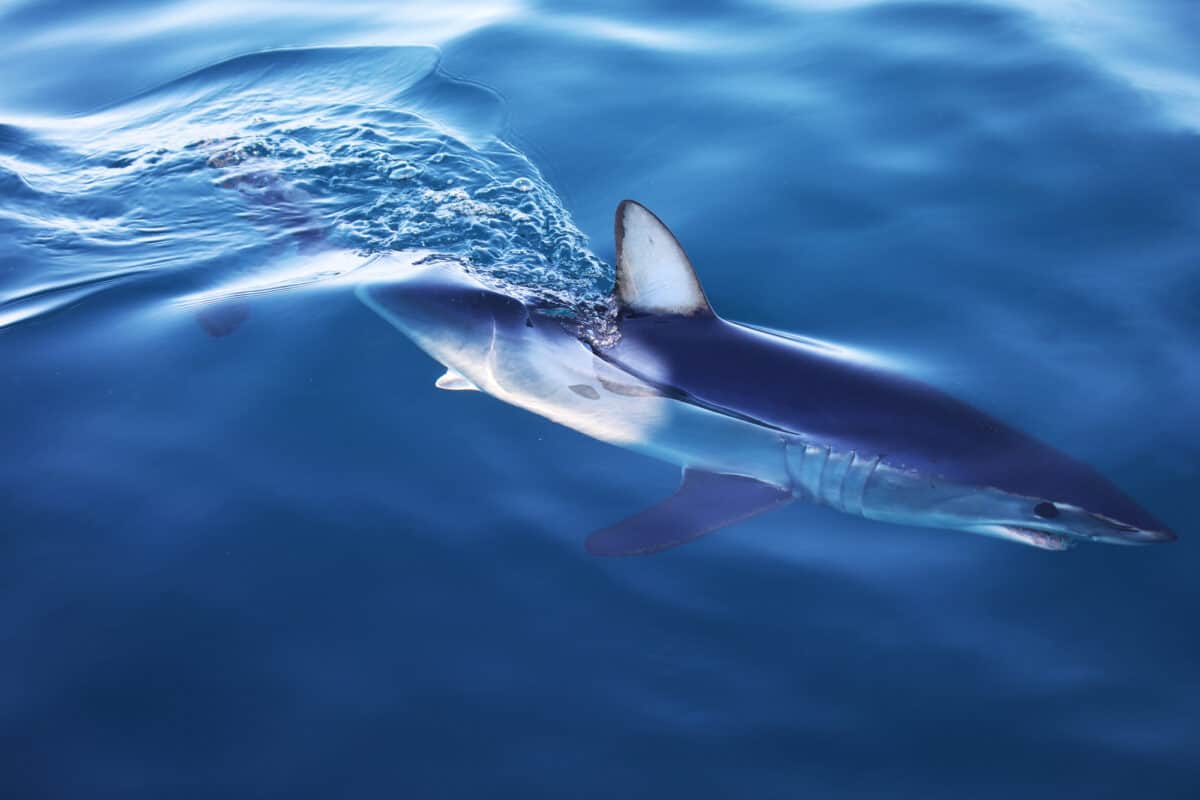
Among sharks, the shortfin mako (Isurus oxyrinchus) holds the undisputed speed title, with reliable measurements documenting bursts of up to 45 miles per hour (72 km/h). This makes it not only the fastest shark but one of the fastest fish in the ocean. The mako’s speed comes from evolutionary adaptations including a streamlined, torpedo-shaped body, powerful tail, and unique skin properties. Their dermal denticles (tiny tooth-like scales) create tiny vortices that reduce drag, essentially allowing the shark to slip through water with minimal resistance.
Makos also possess physiological adaptations that support their high-speed lifestyle. They are among the few shark species that can maintain a body temperature higher than the surrounding water through a specialized circulatory system called the rete mirabile. This elevated body temperature increases muscle efficiency and reaction time, giving makos a crucial advantage when hunting fast prey like tuna and swordfish. Their exceptional vision, powerful jaws, and ability to detect electromagnetic fields from prey complete the package, making the shortfin mako one of the ocean’s most perfectly designed predatory machines.
The Physiology of Speed: How Marine Predators Move So Fast

The remarkable speeds achieved by marine predators result from millions of years of evolutionary refinement. At the heart of their velocity is hydrodynamic efficiency—the ability to move through water with minimal resistance. This begins with body shape, typically featuring a fusiform (tapered at both ends) design that reduces pressure drag. Specialized muscle structures, particularly the arrangement of red muscle (for endurance) and white muscle (for explosive speed), allow for optimized energy use depending on hunting requirements. The position and design of fins also play crucial roles, providing stability, lift, and thrust at different points in the swimming motion.
Beyond physical structure, the fastest marine predators possess sophisticated neural and sensory systems that coordinate their movements with extraordinary precision. High-speed swimming requires not just raw power but precise timing of muscle contractions to maintain efficiency. The fastest species also demonstrate advanced respiratory adaptations, including specialized gill structures and blood chemistry that maximize oxygen uptake and distribution during intense activity. These biological systems work in concert, allowing animals like the black marlin and sailfish to achieve speeds that would seem impossible given the density and resistance of water.
Bluefin Tuna: Built for Speed and Endurance

The Atlantic bluefin tuna (Thunnus thynnus) represents one of the most impressive combinations of speed and endurance in the marine world. Capable of bursts approaching 43 miles per hour (70 km/h), these massive fish—which can weigh up to 1,500 pounds (680 kg)—are engineering marvels. Unlike many fish that become slow and sluggish in cold water, bluefin tuna maintain their performance across a remarkable temperature range, from near-freezing polar waters to warm tropical seas. This is possible because of their unique ability to regulate their body temperature, keeping their swimming muscles significantly warmer than the surrounding water.
The bluefin’s streamlined body minimizes drag while its crescent-shaped tail and retractable fins provide exceptional propulsion efficiency. What truly sets these tuna apart is their muscle structure and circulatory system. Their bodies contain a higher proportion of red muscle tissue than almost any other fish, allowing for sustained high-speed swimming. Additionally, their complex network of blood vessels recaptures heat that would otherwise be lost through the gills and skin, redirecting it to maintain optimal muscle temperature. These adaptations enable bluefin tuna to not only achieve impressive top speeds but also to maintain cruising speeds of 5-10 mph for weeks at a time during their transoceanic migrations.
Killer Whales: Mammals with Surprising Speed

While fish dominate the list of fastest marine creatures, killer whales (Orcinus orca) demonstrate that mammals can also achieve remarkable speeds underwater. These apex predators have been documented reaching speeds of 30-35 miles per hour (48-56 km/h) during hunting sprints. What makes this particularly impressive is that killer whales maintain these speeds while navigating in three dimensions, often executing complex maneuvers to coordinate with pod members during hunts. Their hydrodynamic body shape, powerful tail flukes, and intelligence allow them to utilize speed with tactical precision.
Unlike fish, killer whales must regularly surface to breathe, which could theoretically limit their sustained speed. However, they’ve evolved specialized respiratory systems that allow them to exchange up to 90% of the air in their lungs with each breath (compared to about 15% in humans). This efficiency, combined with oxygen-storing myoglobin in their muscles, enables them to maintain high speeds for extended periods. Their social hunting strategies often involve relay techniques where pod members take turns pursuing prey, allowing some individuals to rest while others maintain the chase. This combination of physical attributes and cooperative behavior makes killer whales among the most effective hunters in the ocean, capable of pursuing and capturing nearly any marine creature—including other high-speed predators.
Flying Fish: Speed Above and Below

Flying fish (family Exocoetidae) represent a fascinating case of evolutionary adaptation to predatory pressure. While not predators themselves, these remarkable fish have developed extraordinary speed capabilities to escape their hunters. They can reach underwater speeds of up to 35 miles per hour (56 km/h) before breaking the surface and gliding above the waves for distances exceeding 650 feet (200 meters). Their pectoral fins have evolved into wing-like structures that generate lift when extended, allowing them to remain airborne for up to 45 seconds.
This ability to transition between aquatic and aerial environments gives flying fish a unique advantage against purely aquatic predators. Their speed underwater is generated by rapid tail oscillations, with frequencies reaching 50 beats per second in some species. Once airborne, they can adjust their “wings” to manipulate their glide path and even extend their flight by dipping their tail back into the water for additional propulsion. While their adaptations developed primarily as escape mechanisms, they illustrate how predatory pressure in marine environments has driven the evolution of extreme speed capabilities across many species—not just among the hunters, but in their prey as well.
Billfish Adaptations: Built for the Hunt
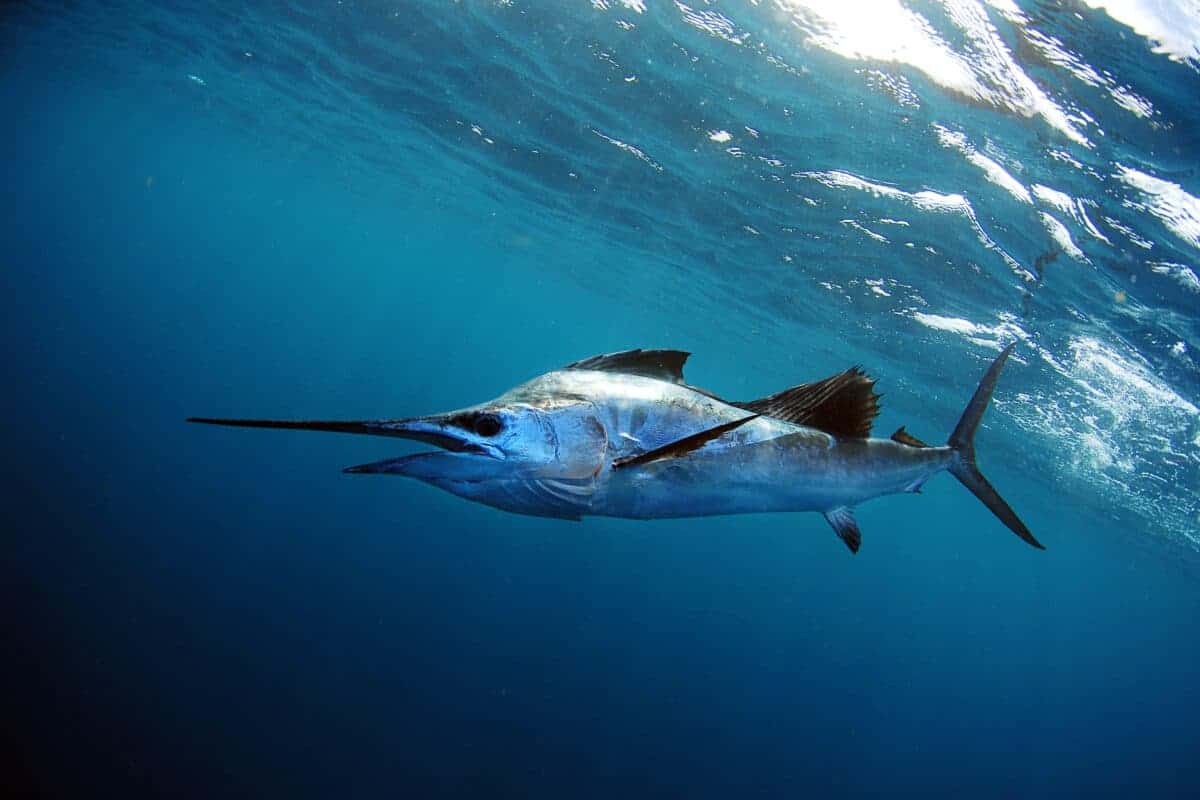
The extraordinary speeds achieved by billfish like the black marlin and sailfish result from specific evolutionary adaptations focused on predation. Their most distinctive feature—the elongated bill or rostrum—serves multiple functions in high-speed hunting. The bill reduces water resistance by creating a pressure wave that allows the fish to slip through water more efficiently. It also serves as a weapon, used to stun or injure prey during high-speed attacks. Marlins have been observed slashing through schools of fish with their bills, striking multiple prey in a single pass.
Beyond their iconic bills, these fish possess specialized muscle arrangements that generate tremendous power. Their lateral muscles are organized in a complex pattern that maximizes force transfer to their tails. Unlike many fish that rely primarily on body undulation for propulsion, billfish generate most of their thrust from their stiff, crescent-shaped tails. Their bodies remain relatively rigid during high-speed swimming, reducing energy loss from excessive flexing. Additionally, they possess specialized brain and nerve structures that process visual information at exceptional speeds, allowing them to track fast-moving prey and make split-second adjustments during pursuit. These combined adaptations make billfish among the most perfectly evolved high-speed hunters in the natural world.
The Debate: Sailfish vs. Black Marlin

The scientific community continues to debate whether the black marlin or sailfish deserves the title of fastest marine predator. While black marlins have the highest recorded speed (82 mph), some researchers argue that sailfish may potentially be faster under optimal conditions. The challenge lies in obtaining accurate measurements in the wild, where controlled testing is difficult. Some older studies claimed sailfish speeds exceeding 68 mph, but modern research techniques have yet to confirm these higher estimates. Both fish employ similar hunting strategies, using their speed for explosive attacks on schooling prey fish.
The debate is complicated by differences in how the fish achieve their speed. Black marlins rely more on raw power and their larger muscle mass, while sailfish demonstrate greater efficiency and acceleration. Environmental factors also play a significant role; water temperature, currents, and prey behavior all influence maximum speed potential. While the scientific consensus currently favors the black marlin as the speed champion based on verified measurements, ongoing research using more sophisticated tracking technology may eventually settle this debate definitively. Regardless of which ultimately proves faster, both represent extraordinary examples of evolutionary adaptation for high-speed marine predation.
Predatory Tactics: How Speed Translates to Hunting Success
The remarkable speeds achieved by marine predators aren’t merely impressive statistics—they represent essential survival tools that have evolved through natural selection. Different predators employ speed in varying tactical approaches. Some, like the black marlin and sailfish, rely on explosive acceleration to ambush prey, often reaching their top speeds in bursts lasting just seconds. Others, like tuna, maintain moderate speeds over longer periods, wearing down prey through sustained pursuit. The shortfin mako combines both approaches, capable of both lightning-fast ambushes and endurance chases that exhaust fleeing prey.
Speed also plays into coordinated hunting strategies. Killer whales, for example, use their velocity to herd prey into tight formations or drive them toward shorelines where escape is impossible. Meanwhile, dolphins utilize their agility and speed to create cooperative hunting circles, trapping fish within shrinking perimeters. For deep-diving predators like sperm whales, speed becomes critical during hunting dives where oxygen supply is limited—the faster they can reach their prey, the more time they have to feed before needing to surface. Through these diverse approaches, marine predators demonstrate that raw speed alone isn’t enough; the tactical application of velocity, combined with sensory capabilities and hunting intelligence, ultimately determines predatory success in the competitive underwater world.
The Future of Marine Speed: Evolution and Adaptation

As marine ecosystems face unprecedented changes from climate impacts, overfishing, and habitat destruction, the evolutionary pressures on high-speed predators are shifting. Rising ocean temperatures affect water density and oxygen content, potentially altering the physics and physiology of high-speed swimming. Some research suggests that warming oceans might actually increase maximum potential speeds for certain species by reducing water viscosity, but this advantage could be offset by decreased oxygen availability, particularly for predators like tuna that rely on high metabolic rates. The changing distribution of prey species is also forcing predators to adapt their hunting ranges and strategies.
Conservation concerns add another dimension to this evolution. Many of the fastest marine predators, including marlins, sharks, and tuna, face significant population declines due to commercial fishing pressure. This reduction in genetic diversity could impact their adaptive capacity. However, marine predators have demonstrated remarkable resilience throughout evolutionary history. The arms race between predators and prey continues to drive adaptations for greater speed, efficiency, and hunting prowess. As researchers develop more sophisticated methods for studying marine life, our understanding of these extraordinary animals and their speed capabilities will only deepen, potentially revealing even more impressive performance metrics than currently recognized.
Conclusion: Nature’s Underwater Speed Champions

The black marlin stands as the scientifically verified fastest marine predator ever recorded, with its astonishing 82 mph speed representing one of nature’s most remarkable achievements. This velocity—maintained in a medium 800 times denser than air—demonstrates the extraordinary power of evolutionary adaptation when survival depends on the ability to outpace competitors and prey. Each of the high-speed hunters we’ve examined represents a unique solution to the challenges of underwater predation, with specialized adaptations honed over millions of years to perfect their performance.
These marine speedsters remind us of the incredible diversity and specialization found in ocean ecosystems. From the cooperative hunting strategies of sailfish to the thermal adaptations of tuna and the powerful hydrodynamics of sharks, each represents a masterclass in biological engineering. Their capabilities not only inspire human technological innovations in fields ranging from swimwear design to naval architecture but also highlight the importance of preserving marine biodiversity.
As we continue to explore and understand the ocean’s depths, we may yet discover predators that challenge current speed records or reveal new aspects of high-velocity marine hunting tactics. What remains certain is that these remarkable creatures—particularly the reigning champion black marlin—will continue to captivate our imagination as nature’s ultimate underwater speed machines, embodying the perfect synthesis of power, efficiency, and evolutionary refinement in their relentless pursuit of survival.

- 7 Animals That Can Survive Extreme Environments You Couldn’t - July 20, 2026
- The Longest Snake Ever Found in the U.S. - July 20, 2026
- The Top 10 Animal Escapes That Shocked the World - July 20, 2026