

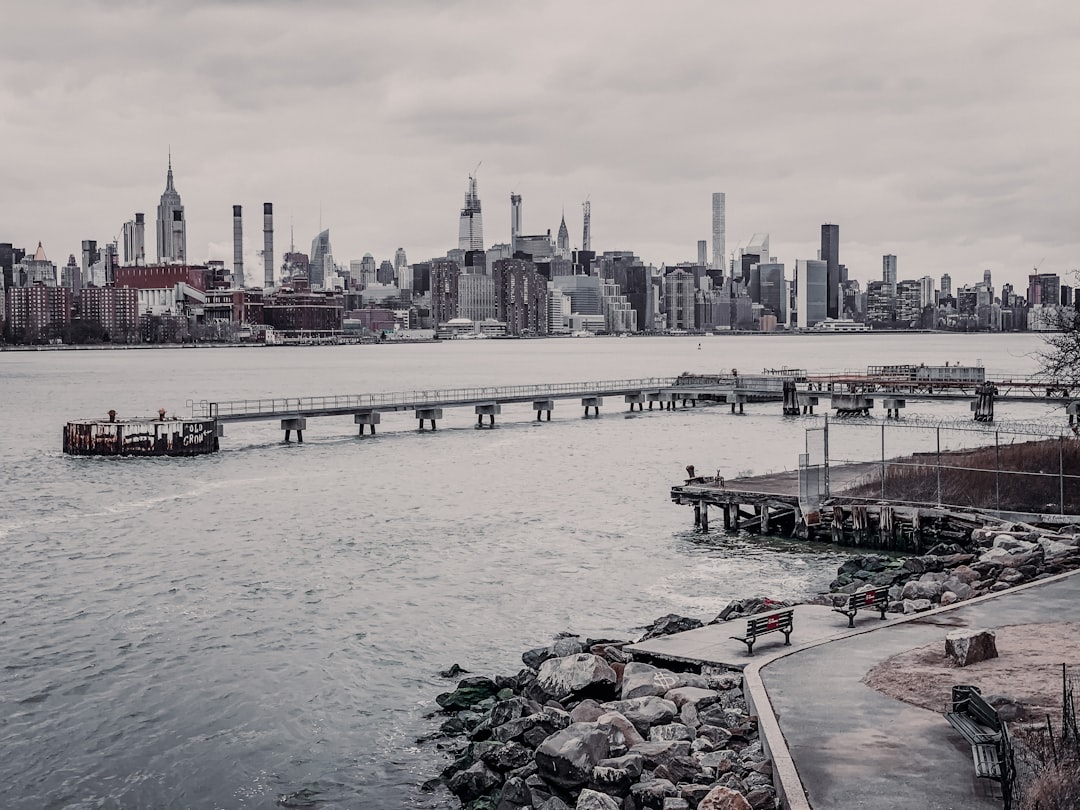
Arctic Air Fuels Dramatic Ice Formation (Image Credits: Unsplash)
New York City – Patchwork ice floes now dominate the Hudson River amid a relentless cold snap that has kept temperatures below freezing for over a week.[1][2]
Arctic Air Fuels Dramatic Ice Formation
Subzero conditions swept through the Northeast last weekend, ushering in Winter Storm Fern and prolonged frigid weather. Manhattan recorded no highs above freezing for seven straight days. This chill spurred ice growth from New York Harbor northward into the Hudson Valley.[3]
Large slabs and drifting floes now extend nearly halfway across the waterway toward New Jersey. Much of this ice originates upstream in fresher waters before floating downstream. Residents marveled at the shimmering mosaics reflecting sunlight amid the still air.[1]
Forecasters predict the deep freeze will hold through early February, with real-feel temperatures dipping into single digits. Such persistence has sparked questions about the river’s limits.
Factors Stacking Against a Solid Freeze
Several dynamics make a complete ice-over improbable. Strong tidal currents constantly mix warmer deep water to the surface, breaking up thin ice layers into slush. Salinity in the estuary lowers the freezing point further.[1]
Heavy vessel traffic and deeper shipping channels add agitation. Shannon Roback, science director at Riverkeeper, noted, “It’s extremely rare for the Hudson River to freeze completely in New York City. Much of the ice seen there actually drifts down from the river’s upper reaches, where the water is primarily fresh.”[1]
- Tidal flows prevent cohesive ice sheets.
- Saline water resists freezing.
- Boat wakes shatter forming ice.
- Upstream drift dominates NYC views.
- Climate trends favor milder winters.
Historical Precedents Recall Rarer Times
The Hudson has frozen solid near New York City only a handful of times. The last full blockage occurred in 1821, when pedestrians crossed to Hoboken and taverns sprang up mid-river.[4][1]
Earlier deep freezes struck in 1780, 1856, and 1918, with partial ice bridges forming after weeks of cold. In 1934, extreme conditions halted navigation entirely. These events demanded Coast Guard icebreakers, much like today.
Partial freezes appeared more recently, such as in 1947 post-blizzard. Yet modern conditions rarely match those extremes.
Navigation Challenges Emerge
U.S. Coast Guard vessels now patrol relentlessly. Three icebreaking tugs from Bayonne – the Penobscot Bay, Sturgeon Bay, and Hawser – carve paths around the clock. Their mission safeguards fuel deliveries and commerce under Operation Reliable Energy.[3][2]
New York City Ferry service suspended operations due to hazardous floes. Commuters turned to alternatives while monitoring updates. Staten Island Ferry continued unaffected, thanks to its larger propellers. Ports stayed open, ensuring heating oil stability.
Mariners reported growing shore ice, prompting caution advisories.
Key Takeaways
- Ice floes disrupt but do not halt major shipping.
- Full freezes demand weeks of unrelenting cold, unseen lately.
- Tides and traffic keep the Hudson navigable.
This icy display underscores winter’s power, even if a total freeze stays elusive. Nature’s spectacle captivates, reminding New Yorkers of the river’s resilience. What do you think of this frozen vista? Tell us in the comments.

- Urban Coyotes Show Remarkable Adaptability, Learning to Thrive in City Environments - July 22, 2026
- Beavers Are Nature’s Engineers, Creating Vital Habitats for Other Wildlife Species - July 21, 2026
- The Recovery of the California Condor Offers Hope for Other Critically Endangered Birds - July 21, 2026