
Deep beneath the ocean’s surface, something extraordinary is happening right now. Enormous creatures, some as long as a basketball court, are singing to each other across distances that would take a human days to drive. No phone lines. No satellites. Just physics, biology, and millions of years of evolution working in breathtaking harmony.
It sounds like something out of a science fiction novel. Honestly, it feels that way even after you learn the science. Whale communication is a rich blend of songs, clicks, pulses, and low-frequency rumbles that travel through water with remarkable efficiency. These aren’t random noises. There is structure here, meaning here, and perhaps something far deeper than we currently understand.
What exactly are they saying? How far does it travel? And what happens when we drown it all out with our noise? Let’s dive in.
The Physics of an Underwater Symphony
Here’s something that genuinely stops people in their tracks. Water conducts sound waves nearly four times faster than air, enabling whale vocalizations to travel vast distances through deep ocean channels. Think about that for a second. Everything we know about the speed of sound gets rewritten the moment it hits the water.
The extraordinary range of blue whale communication is rooted in the physics of their calls, which are classified as infrasound. These vocalizations are extremely low-frequency, typically ranging between 14 and 20 Hertz, which is below the threshold of human hearing. We literally cannot hear the conversations these giants are having around us.
These low-frequency sound waves travel much farther in water than higher-pitched sounds because they experience less scattering and absorption. The sheer volume of these calls also contributes to their extensive range. Blue whale vocalizations have source levels estimated between 155 and 188 decibels, with some reaching 189 decibels.
To put that in perspective, a jet engine at close range reaches around 140 decibels in air. These animals are louder. Significantly louder. The blue whale’s vocalizations represent an extraordinary feat of natural acoustic engineering, with documented detection distances exceeding 500 miles under optimal ocean conditions. This remarkable range surpasses any other biological sound system on Earth and rivals many human-made communication technologies developed over centuries.
Nature’s Own Highway: The SOFAR Channel

Even extraordinary volume wouldn’t be enough on its own. Whales have something else working for them, something so elegant it almost feels designed. Whales tuned into the SOFAR channel long before scientists. As whales migrate, they rely on SOFAR to communicate over distances of hundreds and even thousands of miles.
The whales strategically utilize a feature of the ocean known as the Deep Sound Channel, or SOFAR channel, to maximize their acoustic reach. The SOFAR channel is a horizontal layer of water, typically found at depths between 600 and 1,200 meters, where sound velocity is at its minimum. Within this layer, sound waves are constantly refracted back toward the channel’s axis due to changes in water temperature and pressure, effectively trapping the sound.
It’s like a natural acoustic pipe running through the ocean. By vocalizing within this natural acoustic waveguide, the whales’ calls can travel for thousands of kilometers without the signal scattering or rapidly losing intensity. That’s not a small thing. That’s ocean-basin-wide communication.
In optimal conditions within the SOFAR channel, the low-frequency moans of a blue whale can be detected by another individual up to 1,600 kilometers, about 1,000 miles, away. Fin whale calls, which are similarly low-pitched, have been estimated to travel even farther, with potential ranges reaching 6,000 kilometers under specific oceanographic circumstances. Six thousand kilometers. The distance from New York to London and back, all through a single sustained call.
Songs That Evolve Like Language
This is where it gets really remarkable, and I think this is the part that most people genuinely don’t know. Whale songs don’t just travel far. They change, learn, and spread like trends in a culture.
Humpback whale song is long, repetitive, complex, and structured in a nested hierarchy. Individual “sound elements” are sung in a stereotyped “phrase,” which is repeated multiple times to create a “theme.” Several themes are sung in a stereotyped sequence to form a “song,” with multiple songs making up a “song session.”
Humpback whale songs exhibit a statistical structure similar to human language, a feature previously thought unique to humans. Research published in Science has uncovered the same statistical structure that is a hallmark of human language in humpback whale song. That is not a minor scientific footnote. That is a civilisation-shaking finding, delivered with scientific understatement.
Most males within a population sing the same version of the song at any one time. Songs within a population gradually change within and between breeding seasons, as singers alter the duration, structure or frequency content of their sequence of vocalizations, leading to modifications that accumulate over time, termed “song evolution.”
Song revolutions also occur when the entire song arrangement is rapidly and completely replaced by a song introduced from a neighboring population. This wholesale change is notable; multiple song revolutions have been documented spreading eastwards across the South Pacific. It’s an underwater music scene. A living, breathing cultural phenomenon moving across entire ocean basins, one whale at a time.
More Than a Song: A Survival System
Let’s be real for a moment. As beautiful as these songs are, they aren’t just art. They are life itself for these animals. The exact function of song in sexual signalling of humpback whales is debated, although the prevailing hypotheses are that song functions in advertising male quality to prospective female mates, plays a role in male-male interactions at wintering grounds, potentially to establish hierarchies among singers, and aids individual or population recognition.
Scientists believe that some of the most powerful and persistent blue whale vocalizations function primarily as mating advertisements produced by solitary males. These low-frequency calls, which can continue for hours or even days without interruption, appear designed to attract females across vast distances. The impressive volume and endurance required to produce these calls may signal genetic fitness, as sustaining such energetically costly vocalizations reflects a male’s physical condition and stamina.
Eavesdropping on baleen whale songs in the Pacific Ocean reveals year-to-year variations that track changes in the availability of the species they forage on. Scientists are now realizing the songs function almost like ecological reports. The ocean is speaking through the whales, and researchers are only just beginning to listen properly.
Recent breakthroughs in cetacean communication research have moved the field from simple sound cataloging to genuine linguistic analysis. A 2024 study revealed that sperm whale vocalizations possess a complex, combinatorial structure analogous to human phonetics. The research identified what scientists are calling a “sperm whale phonetic alphabet,” consisting of four key features including rhythm, tempo, rubato, and ornamentation that whales combine to create a vast repertoire of distinguishable calls.
A Song Interrupted: The Threat of Human Noise
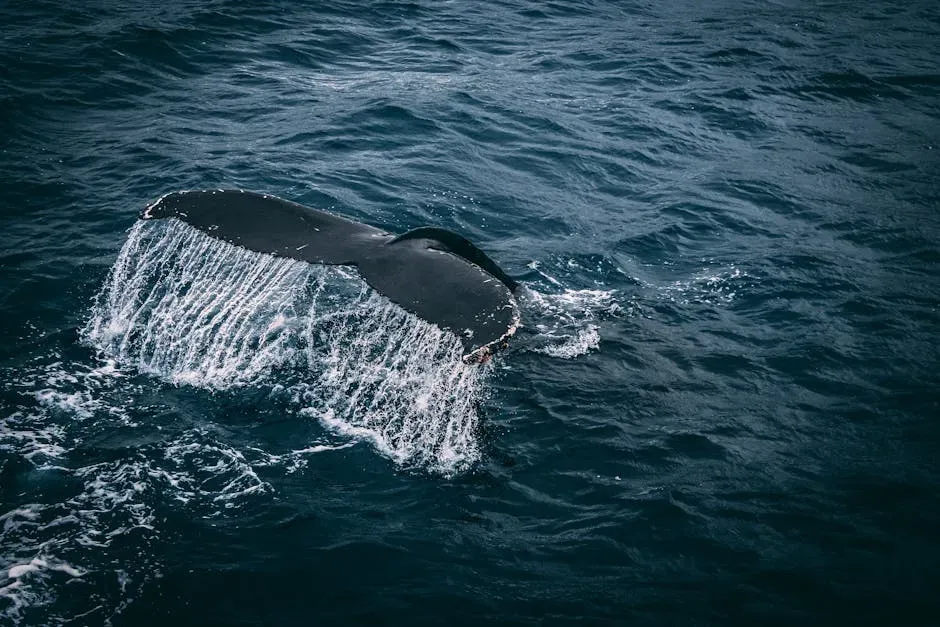
It is hard to write this section without feeling a knot in the stomach. Because just as science is uncovering how sophisticated and vital this underwater language truly is, we are simultaneously drowning it out.
Ship traffic and other human activities result in a noisier ocean, and studies show that louder noise levels interfere with whale communication. This “cocktail party effect” impedes many marine animals that depend on sound for their most basic needs, including food, communication, protection, reproduction, and navigation.
Human activities, particularly commercial shipping, naval sonar, and seismic testing, have introduced a pervasive layer of acoustic pollution that drastically interferes with marine communication. This human-generated sound effectively creates an “acoustic smog” that masks the whales’ signals. Acoustic smog. The phrase itself feels deeply sad.
Industrial underwater noise significantly alters the behavior of marine mammals, especially whales, affecting their hearing, causing stress, disrupting feeding, hindering mother-calf communication, and frightening off fish, their main prey. A whale’s call, which could theoretically travel over a thousand kilometers, may only be detectable for a few hundred kilometers or less because it is drowned out by the constant background hum of ship traffic. Studies have shown that the functional communication space of some whales can be reduced by half in areas with heavy vessel noise.
The global response is starting, at least. At the United Nations Ocean Conference, a coalition of ministers from 37 countries launched an effort to reduce the underwater noise pollution that harms marine biodiversity and ecosystems. In a new declaration, the High Ambition Coalition for a Quiet Ocean committed to the advancement of including noise reduction protocols and quieter shipping designs in their marine protected areas. It’s a step. Whether it’s a big enough step, or fast enough, remains to be seen.
Conclusion
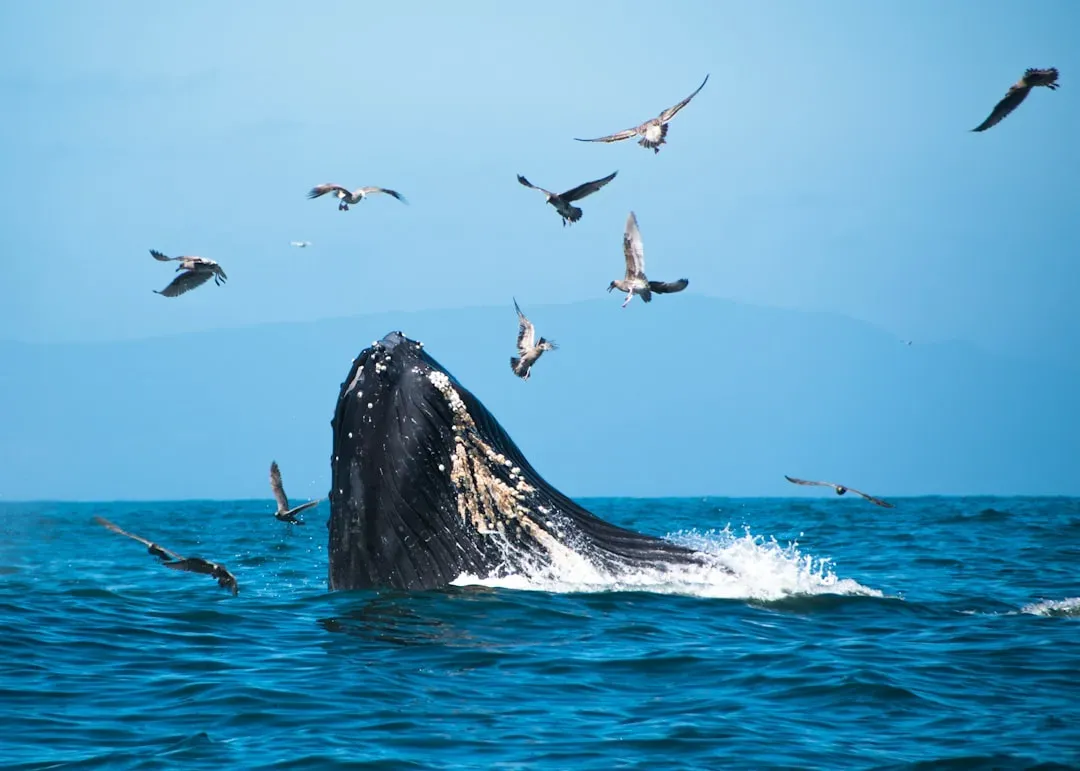
There is something profoundly humbling about what we are learning. Beneath the surface of every ocean on Earth, creatures of staggering size are holding ongoing conversations across distances our voices could never reach. Phrases of humpback whale songs are traveling thousands of miles from breeding to feeding grounds across the Pacific Ocean. Songs are evolving season by season. Cultural traditions are passing between populations like music spreading across generations.
This is not a short-term story but the launch of a global initiative to listen to whales on their own terms. It is a long-term, evolving effort that blends science, technology, curiosity and ethics to understand and protect these extraordinary societies.
We have barely scratched the surface of what is being communicated down there. Honestly, what strikes me most isn’t just the science. It’s the reminder that intelligence, culture, and the need to connect across distance are not uniquely human traits. They are ocean traits too. The whales have been having this conversation for millions of years. The real question is whether we will quiet down long enough to hear it.
What do you think we might discover once we truly understand what they’re saying? Share your thoughts in the comments.

- 16 Things a Dog Only Ever Does Around the One Human It Has Truly Chosen for Life - July 31, 2026
- Does It Snow in Arizona? Snowiest Places in The State - July 31, 2026
- How Bees Are Saving The Planet, One Flower At A Time - July 31, 2026