

The great white shark, a creature both feared and revered, is an apex predator in today’s oceans. Its reputation as a master hunter often overshadows its fascinating lineage that stretches back millions of years. Understanding the history of the great white shark’s ancestors offers a window into the evolutionary marvels that have shaped these majestic creatures.
The Dawn of Sharks
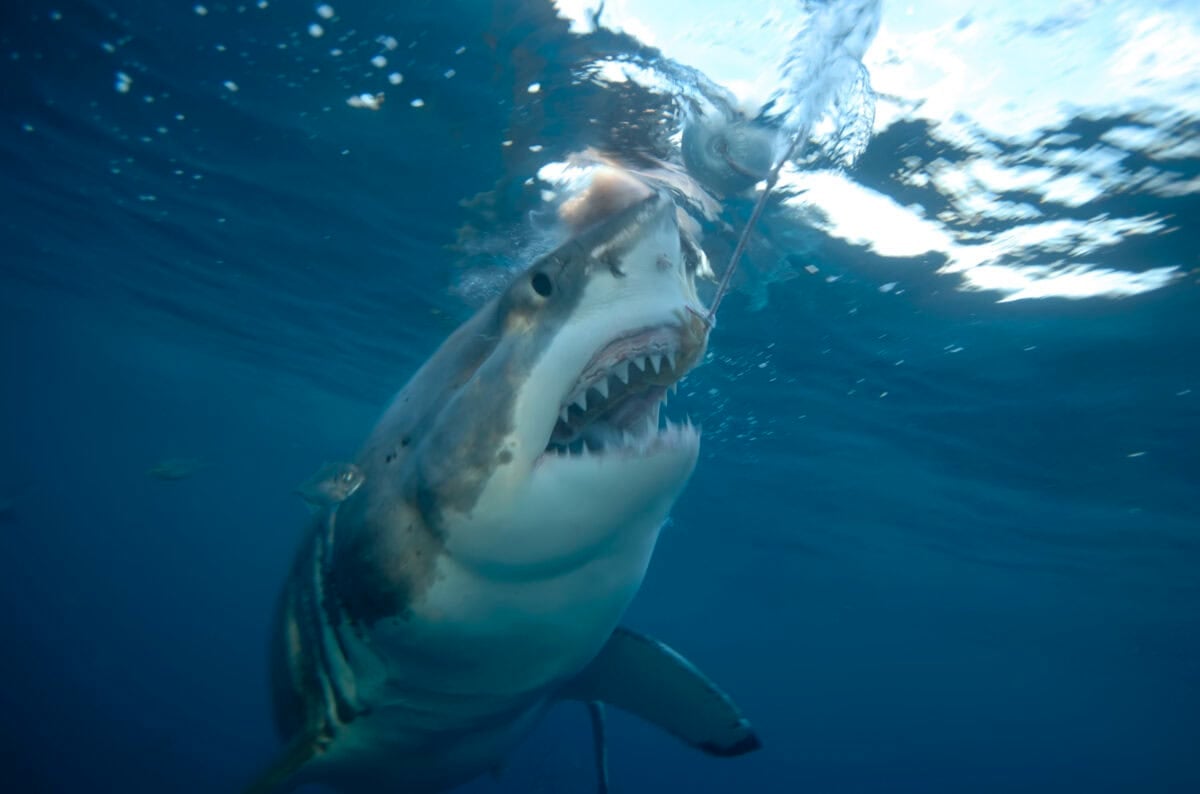
The lineage of the great white shark, Carcharodon carcharias, dates back over 400 million years, long before the dinosaurs roamed the Earth. Sharks are among the oldest surviving vertebrates, with their family tree tracing back to the Devonian period. This era is often referred to as the “Age of Fishes,” a time when early sharks ruled the seas.
Early Shark Evolution

Throughout the Devonian period, early sharks, known as Cladoselachians, began to evolve. These creatures differed significantly from modern sharks; they were generally smaller, more streamlined, and lacked many of the advanced features seen in today’s species. Despite these differences, they laid the groundwork for future evolutionary adaptations.
Megalodon: An Ancestor Among Giants

One of the most iconic ancestors of the great white shark is the Megalodon (Otodus megalodon). This colossal predator lived around 23 to 3.6 million years ago and is considered one of the largest and most powerful predators in vertebrate history. The Megalodon could reach lengths of up to 60 feet, dwarfing today’s great whites.
Size and Strength of Megalodon

The Megalodon’s immense size was complemented by its formidable jaw, which could exert a bite force of over 18,000 newtons. This power allowed it to prey on large marine mammals, including whales. Evidence of its hunting prowess is seen in fossilized whale bones that bear the unmistakable marks of the Megalodon’s massive teeth.
The Carcharodon Lineage

As we trace the lineage closer to modern times, the sub-family Carcharodon becomes particularly significant. It is from this line that the great white shark emerged. These ancestors began diverging from the ancient mako sharks (Isurus) approximately 30 million years ago. This split led to the development of the features that define the great white shark today.
Adaptations Through Time
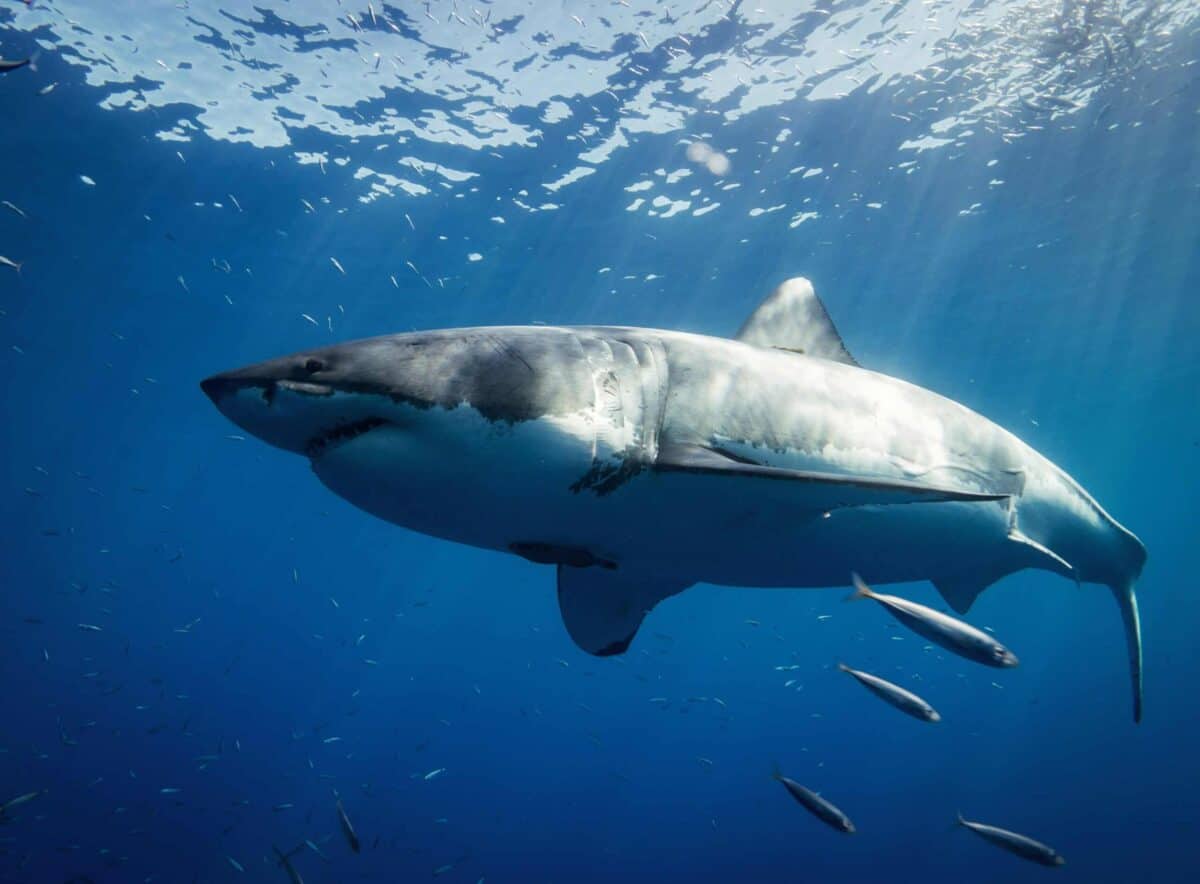
Great white sharks possess several adaptations that have ensured their survival. Over millions of years, they developed serrated teeth for tearing flesh, a streamlined body for efficient travel, and endothermic abilities that allow for temperature regulation—a trait uncommon in most species of sharks.
Survival of the Fittest in the Ocean

In the competitive oceanic environment, the adaptive traits of great white sharks allowed them to remain as dominant predators. Behavioral adaptations, like their migratory patterns, are believed to have evolved for optimized hunting and breeding opportunities.
The Fossil Record and Scientific Discoveries

The fossil record plays a critical role in understanding the evolution of the great white shark. Shark teeth fossils are particularly abundant and provide insights into dietary habits and evolutionary trends. Continuous discoveries challenge and enhance existing knowledge, contributing to the dynamic field of paleontology and evolutionary biology.
The Role of Extinction Events

Throughout history, several extinction events have shaped the evolution of sharks. These events often wiped out numerous species, but the adaptable nature of sharks allowed them to survive. These events forced sharks to evolve and fill new ecological niches as other creatures went extinct.
The Impact of the Ice Ages
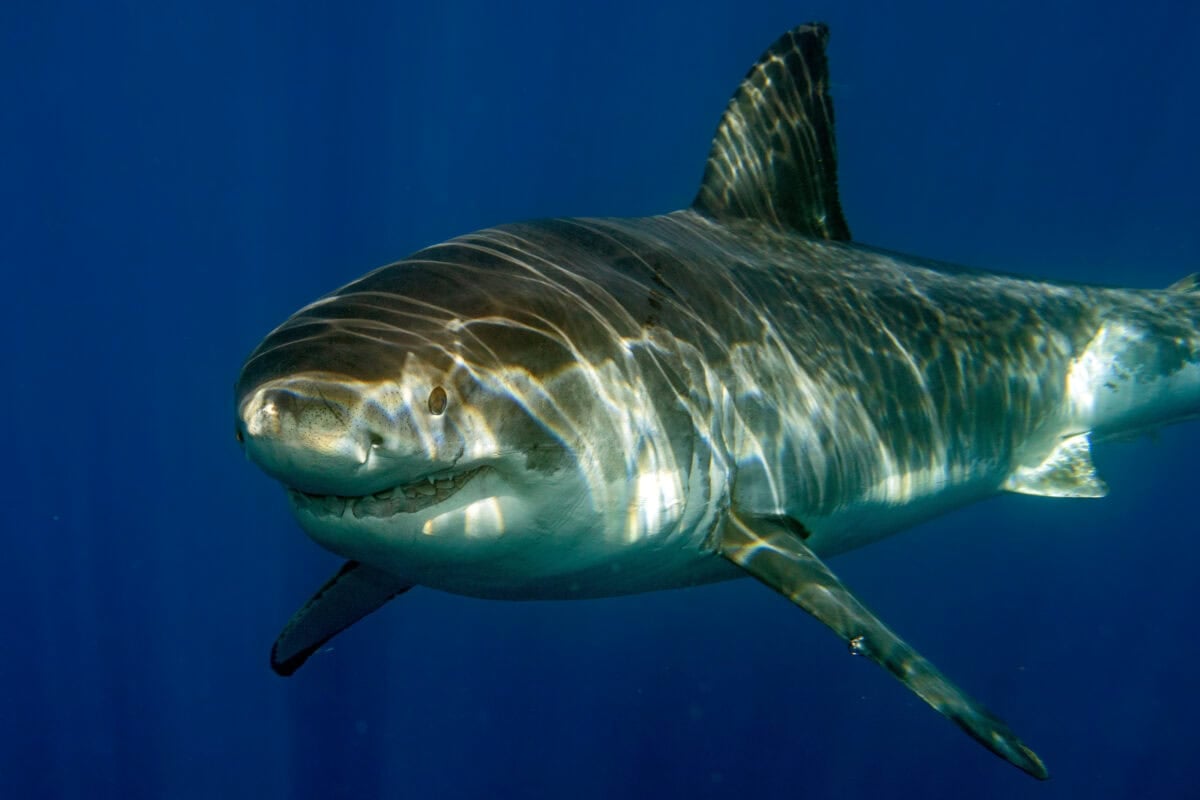
The Ice Ages proved to be a significant period for great white shark ancestors. During these times, fluctuations in sea levels and temperatures may have driven evolutionary changes, leading to the development of specialized physiology and behaviors seen in modern sharks today.
Current Research and Genetic Studies

Recent genetic studies are uncovering more about the ancestry of great white sharks. Advanced DNA analysis techniques allow scientists to trace lineages and understand how specific genetic traits came to be dominant. These studies reveal more about the complex nature of shark evolution.
The Future of Great White Sharks
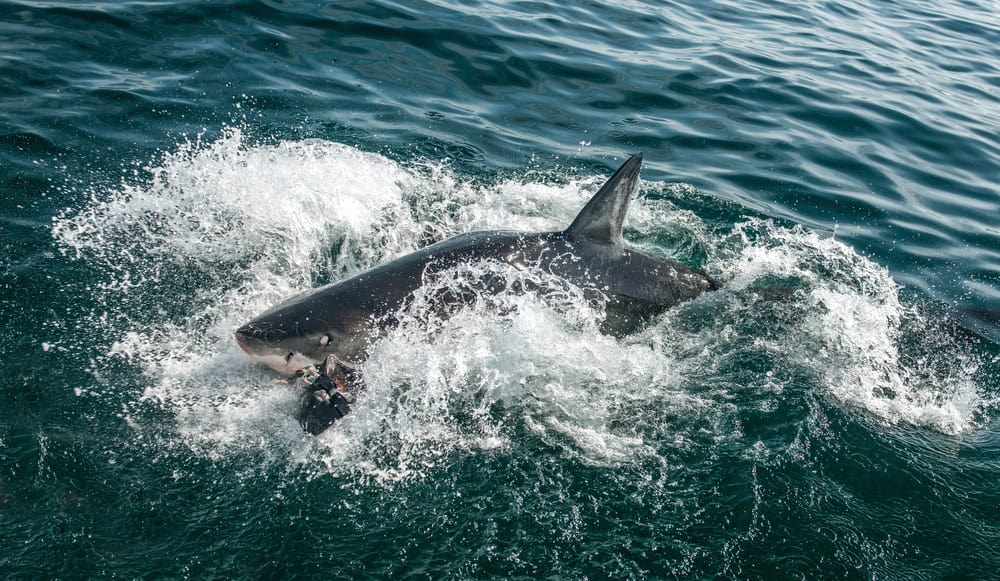
In today’s world, great white sharks face numerous threats, from environmental changes to human activities. Understanding their history and evolution is crucial to developing effective conservation strategies. By respecting their past, we have a better chance of ensuring their future in our oceans.
Conclusion: Celebrating a Fascinating Legacy

The history of the great white shark and its ancestors is a testament to nature’s power and adaptability. From the mighty Megalodon to the sophisticated predator that roams today’s seas, the story of the great white shark is filled with evolutionary triumphs and mysteries. By continuing to study and protect these remarkable creatures, we not only preserve their legacy but also gain insights into the evolutionary processes that shape life on our planet.

- The Perfect Pet for Each Zodiac Sign - July 7, 2026
- The Wild Animal That Embodies Your Zodiac Sign’s Spirit - July 6, 2026
- 7 Steps to Planting Admirably Beautiful Bluebonnets - July 6, 2026