
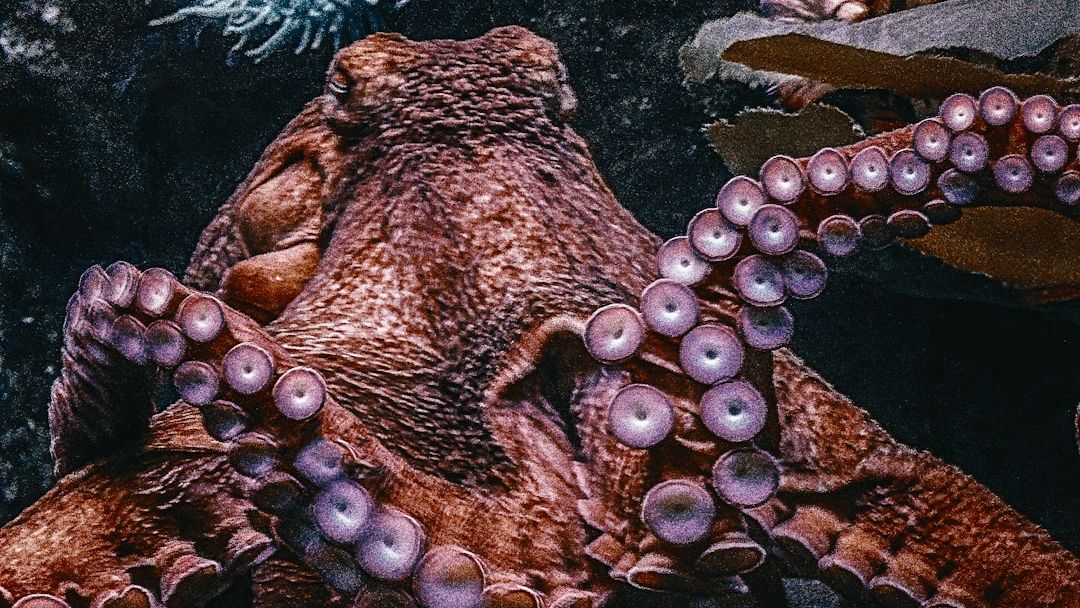
Imagine an animal with nine brains, three hearts, blue blood, and the ability to squeeze its entire body through a hole no bigger than its own eye. It can taste with its arms, dream while it sleeps, and recognize a human face well enough to hold a grudge. That animal is the octopus, and it is, without question, one of the most mind-bending creatures on this planet.
For centuries, scientists mostly dismissed them. Even Aristotle once wrote that the octopus was a “stupid creature” simply because it would approach a human hand lowered into the water. Turns out, that curiosity was actually a sign of intelligence, not naivety. The more researchers study these extraordinary beings, the more they realize we have been dramatically underestimating what lies beneath those alien-looking eyes. Let’s dive in.
A Nervous System Unlike Anything Else on Earth
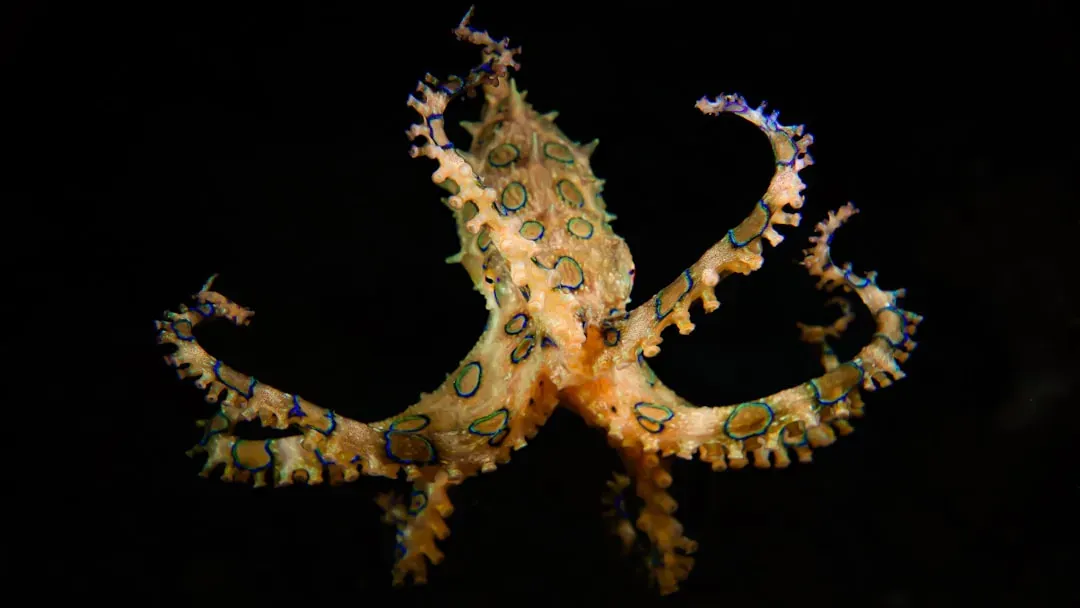
Here’s the thing most people don’t realize: when you talk about an octopus’s “brain,” you’re really talking about something far more complex and decentralized than our own. Unlike vertebrates with centralized brains, octopuses possess a distributed nervous system where much of the “thinking” happens outside the head. The common octopus has around 500 million neurons, with nearly two-thirds located in its arms rather than in the central brain, meaning each arm can sense, taste, and respond independently while still communicating with the central brain.
Think of it this way: it’s like having eight semi-autonomous co-pilots, each capable of making real-time decisions, while a central commander oversees the bigger picture. Thanks to their nine brains, octopuses have the benefit of both localized and centralized control over their actions. Honestly, that is a kind of cognitive architecture no science fiction writer could have dreamed up.
Unlike vertebrates, octopus arms have their own neurons, so they do not require input from their central brain to function. In fact, two-thirds of an octopus’s neurons are in the nerve cords of its arms, and these are capable of complex reflex actions without input from the brain. Even a severed arm retains sensitivity and movement. Let that sink in for a moment.
One of the incredible things about octopuses is that not only do they have advanced intelligence that lets them camouflage themselves, use tools, manipulate their environments, and act as clever hunters in their ecosystems, they do all of this with a brain that evolved essentially from something like a slug in the oceans hundreds of millions of years ago. That is perhaps the most extraordinary part of the whole story.
Problem-Solving, Memory, and the Personality Nobody Expected
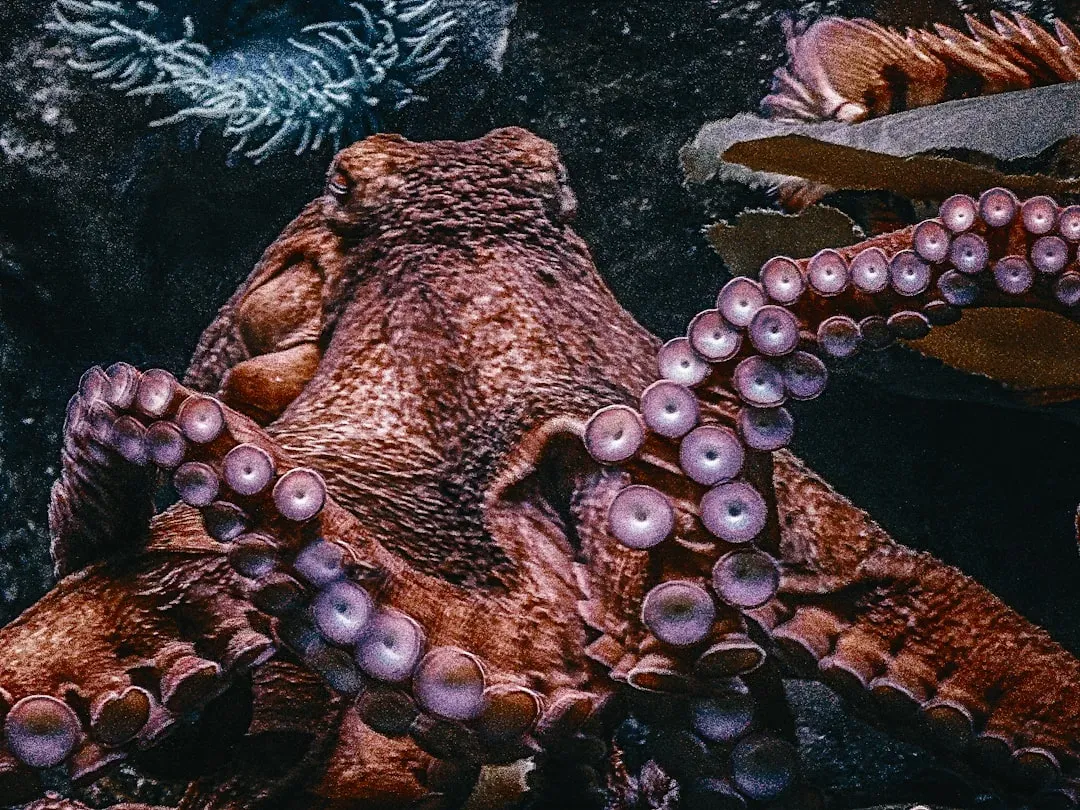
Let’s be real: when most people picture an octopus, they imagine a creature floating passively in the ocean, not one strategizing over puzzles. Octopuses can solve complex puzzles requiring pushing or pulling actions, and can also unscrew the lids of containers and open the latches on acrylic boxes to obtain food inside. They can also remember solutions to puzzles and learn to solve the same puzzle presented in different configurations.
Researchers tested octopuses on their problem-solving abilities in a series of eight consecutive experiments over twelve days, characterizing the octopuses as neophilic or neophobic based on their reaction to new objects and their tendency to approach them. The curious ones, the neophilic individuals, consistently outperformed their more cautious counterparts. Sound familiar? That kind of individual variation is something we typically associate with mammals, not mollusks.
Octopuses are capable of experiencing pleasure and pain, stress, and excitement, and they also have individual personalities, meaning some will be more curious while others will be terrified. This is not metaphorical. It is measurable, observable, and increasingly accepted in the scientific community.
Octopuses are also able to recognize specific humans. In one study, an octopus came to dislike a researcher working with it and would squirt water out of its tank at them each time they walked by. A grudge. An actual grudge. If that is not personality, I don’t know what is.
Masters of Disguise and the Mystery of Color Without Color Vision
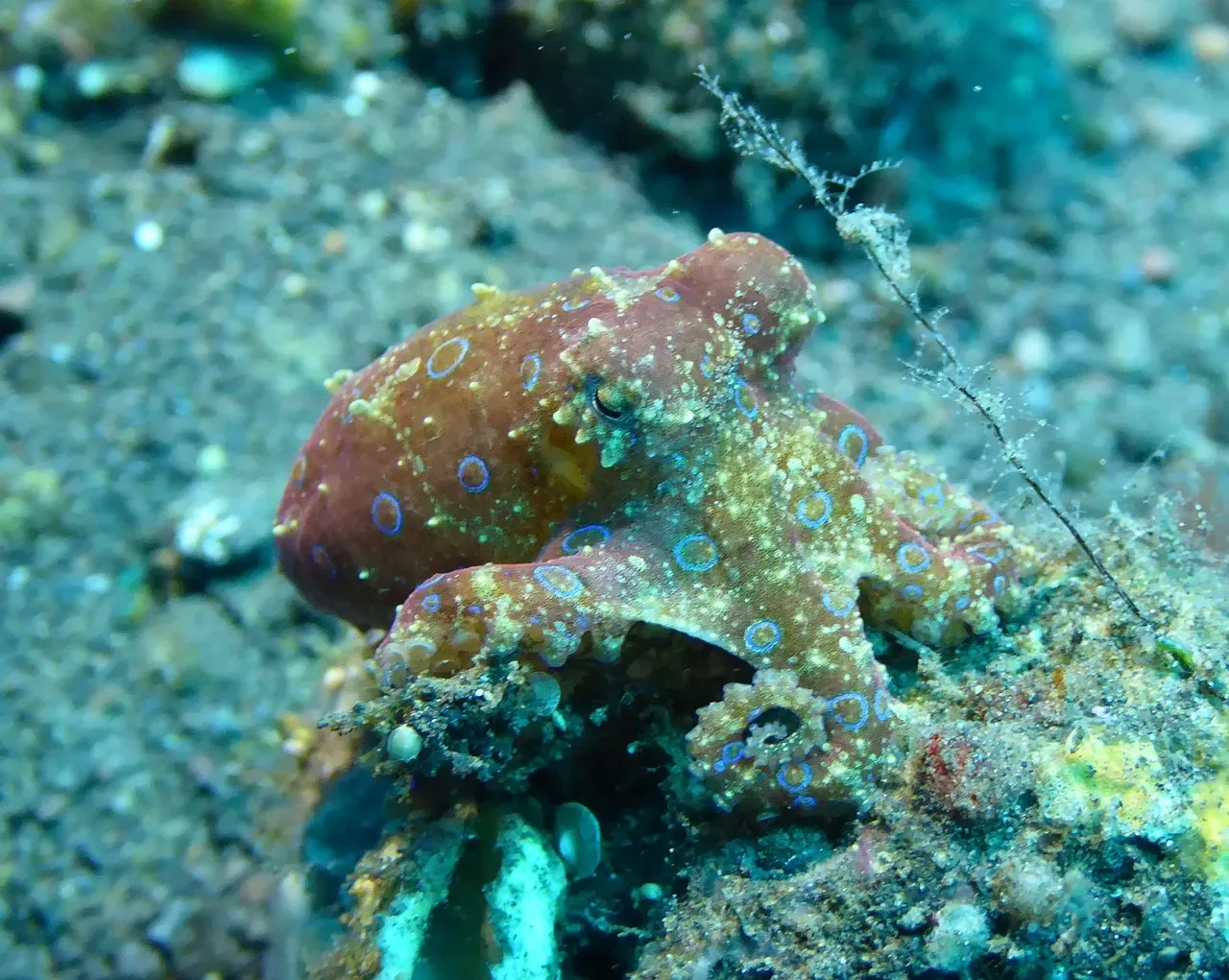
Perhaps no aspect of octopus biology is more jaw-dropping than their camouflage abilities, and not just because the results are visually stunning. Octopuses have an incredible ability not just to change the color and patterns on their skin but also to transform their body’s shape and texture. They use this ability to trick and confuse predators and prey, impersonating animals that are more threatening or venomous than they are, as well as changing appearance to appear less threatening and get close to their prey.
Here is the part that truly baffles scientists: octopuses possess psychedelic color-changing capabilities that they use to hide and communicate, yet their eyes cannot see color. Instead, octopuses can detect polarization, the different directions in which light waves vibrate. So they produce a color masterpiece while being technically colorblind. It’s the equivalent of a painter who cannot see their own canvas somehow creating a perfect portrait.
To produce these signals, cephalopods can use four types of communication elements: chromatic skin coloration, skin texture such as rough or smooth, posture, and locomotion. Some cephalopods are capable of rapid changes in skin color and pattern using chromatophores, iridophores, and leucophores, an ability that almost certainly evolved initially for camouflage.
They can outsmart their predators by avoiding detection, blending into their environment, evading pursuit using tools or an inky smokescreen, or even escaping a predator’s grasp once captured. There are reports of octopuses blocking the gills of sharks, practically suffocating them until they release their grip. Survival, it seems, is a powerful motivator for brilliance.
Do Octopuses Dream? The Question That Changes Everything
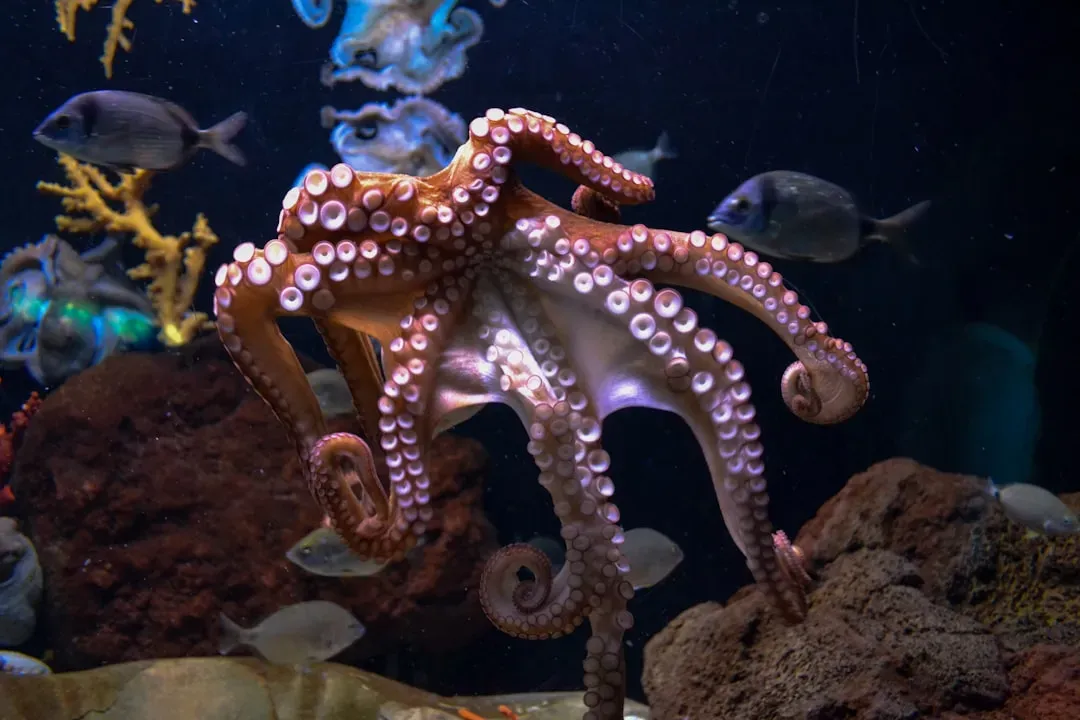
This is where things get genuinely extraordinary, perhaps even a little eerie. Octopuses are very curious and can remember things. They can also recognize people and actually like some more than others. Researchers now believe they even dream, since they change their color and skin structures while sleeping.
It is suggested that octopuses have a complex, vertebrate-like sleep pattern with two separate stages similar to REM and NREM stages. The quiet sleep stage usually involves behaviors such as eyes closing, flat body posture, and a white skin pattern, lasting around sixty minutes. After the quiet stage, the octopus moves into an active sleep stage lasting about one minute, during which there are more eye and body movements and an increased breathing rate, and the most obvious color changing occurs.
The implication is stunning. If octopuses experience something analogous to REM sleep, that raises profound questions about whether they process experiences, form memories during rest, or even replay events from their day. Scientists are still discovering new mechanisms that explain exactly how octopuses are capable of such cognitive sophistication, with one recent study finding that octopus brains contain an unusually high amount of non-coding microRNA molecules used in regulating genes and building proteins.
This represented the third-largest expansion of microRNA families in the animal world, and the largest outside of vertebrates. To give a sense of scale, oysters, which are also mollusks, have acquired just five new microRNA families since the last ancestors they shared with octopuses, while octopuses have acquired ninety. Ninety versus five. That is not a small gap. That is a cognitive leap of astonishing proportions.
What Octopus Intelligence Means for Science, Ethics, and Our Understanding of the Mind
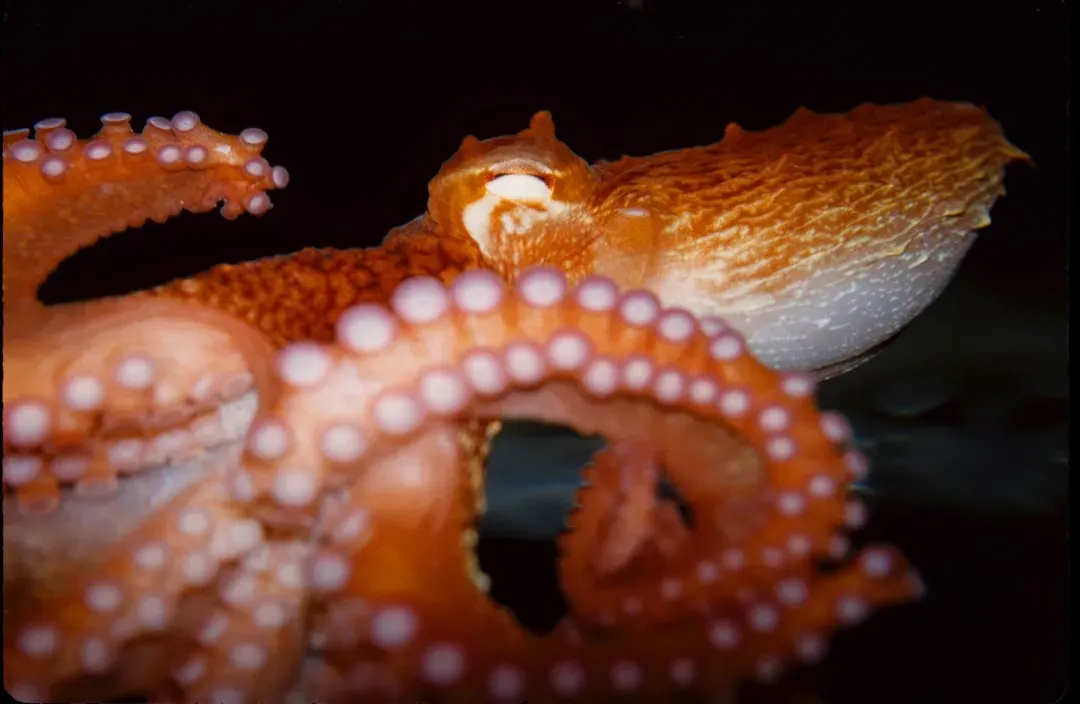
The implications of octopus intelligence stretch far beyond marine biology. They reach into philosophy, artificial intelligence, animal welfare law, and even the search for extraterrestrial life. In 2024, over 500 researchers signed a declaration supporting the likelihood of consciousness in mammals and birds and acknowledging the possibility in creatures like cephalopods. That is a remarkable shift in the scientific conversation.
Some animal welfare laws, for example in the EU and parts of the US, have begun to include octopuses, recognizing that an animal this smart and behaviorally complex deserves ethical consideration. In 2024, Washington and California became the first states to pass bans on octopus aquaculture, with similar legislation being introduced in New Jersey, Hawaii, and Oregon. Society is catching up, slowly but surely.
These insights inform artificial intelligence research, where scientists study octopus neural systems to design more flexible robotic networks. They also influence the search for extraterrestrial life, as cephalopods demonstrate that advanced cognition can evolve along drastically different biological paths.
While octopuses do sometimes fail at experimental tasks, one reason may be that researchers are not yet asking them the right questions, meaning scientists are failing to match their intelligence-measuring approaches to the motivational and perceptual space of a creature so dissimilar to us. In other words, we may be underestimating them not because they are limited, but because our tests are. Ultimately, the octopus teaches us that intelligence is not a single formula. It is an adaptive trait shaped by context, environment, and necessity.
Conclusion
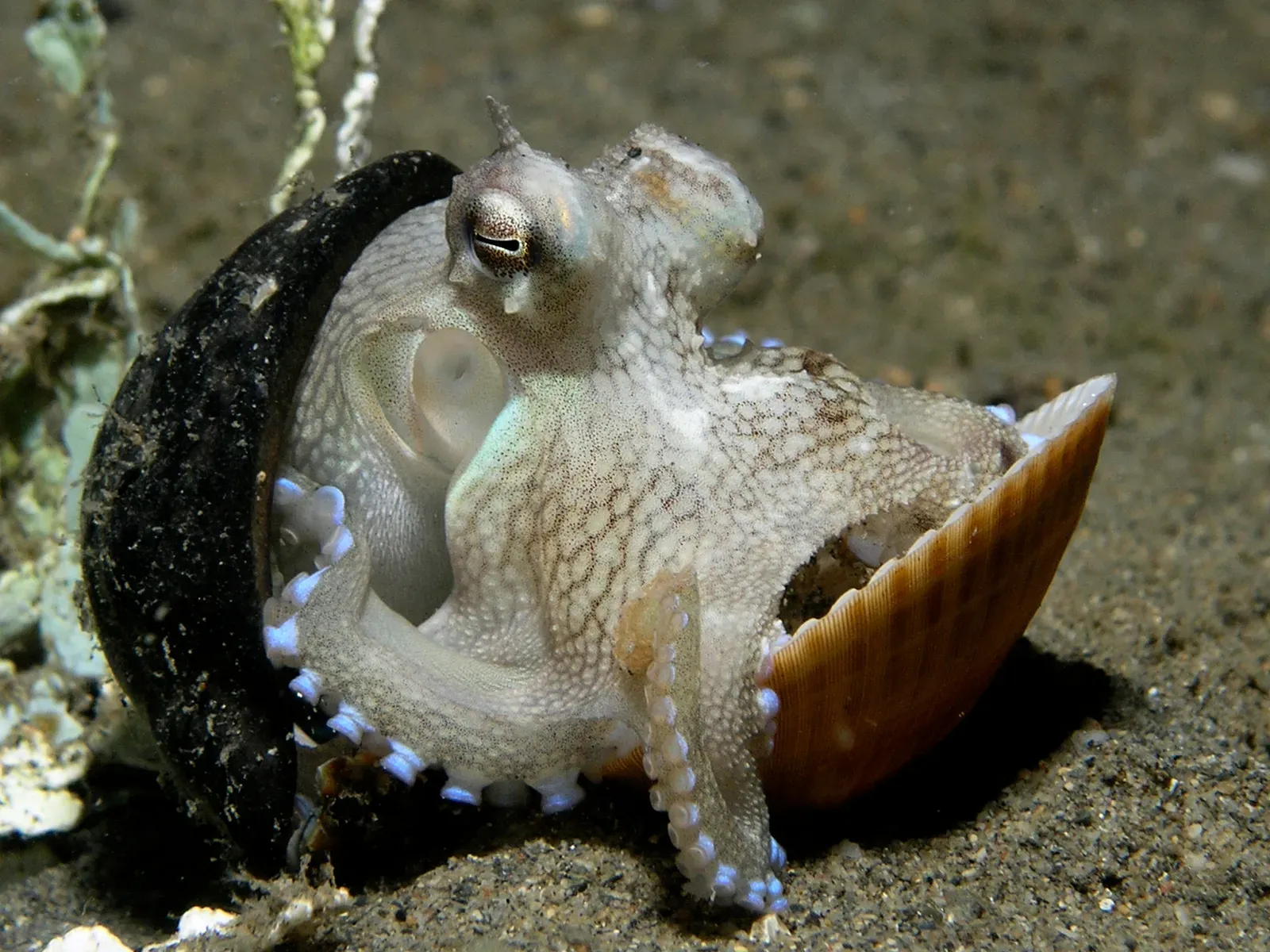
The octopus doesn’t fit our definitions. It doesn’t have a spine. It doesn’t live in a family unit. It doesn’t benefit from parental guidance. Unlike chimpanzees, dolphins, or elephants, an octopus lives an independent life from birth, with no parents or teachers to learn from, and must quickly learn everything on its own to survive. Yet here it is, solving puzzles, holding grudges, possibly dreaming, and rewriting our entire understanding of what a mind can be.
The hidden genius of octopuses lies in their ability to think, learn, and adapt in ways that defy our expectations. Their brains and even their arms embody a form of intelligence that challenges how we define consciousness.
The more we study these creatures, the more humbling the experience becomes. Intelligence, it turns out, doesn’t need a backbone, a warm-blooded body, or millions of years of social evolution. Sometimes it just needs the right evolutionary pressure and a very strange, very brilliant, eight-armed body.
So next time you look into the eyes of an octopus at an aquarium, remember: it’s probably looking back and forming an opinion about you. What do you think it sees?
