

In the spring of 1942, amid the chaos and destruction of World War II, an unusual friendship began that would later become one of the most heartwarming and peculiar stories of the war. Near Hamadan, Iran, a group of Polish soldiers belonging to the 22nd Artillery Supply Company of the Polish II Corps encountered a local shepherd boy carrying a small, weakened brown bear cub. The mother bear had been shot by hunters, leaving the young cub orphaned and vulnerable. Moved by compassion, the soldiers traded some canned meat, chocolate, and a Swiss army knife for the tiny creature, not realizing they were adopting a companion who would become a symbol of courage and camaraderie during dark times.
The bear was named “Wojtek,” which means “happy warrior” or “smiling warrior” in Polish. Initially, the soldiers fed him condensed milk from an empty vodka bottle, as he was too young to eat solid food. As Wojtek grew, he became accustomed to human company, displaying remarkable intelligence and gentleness despite his increasing size and strength. Little did these Polish soldiers know that their new furry friend would not only become their mascot but would also earn official military status and contribute to the Allied war effort in ways no one could have anticipated.
From Orphaned Cub to Beloved Mascot
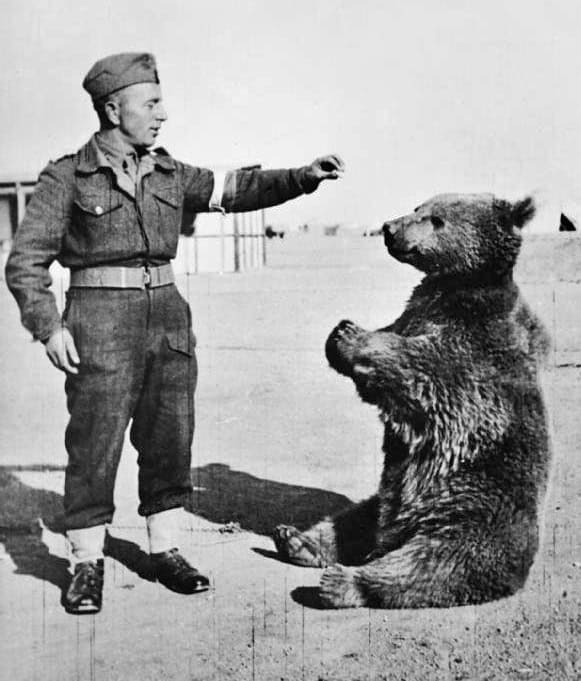
Wojtek’s transformation from a vulnerable orphan to a beloved mascot was swift and remarkable. As he grew under the care of the Polish soldiers, he quickly adapted to military life, developing a range of behaviors that endeared him to everyone in the unit. He would wrestle with the soldiers, often allowing them to win despite his growing strength, and learned to mimic human behaviors such as saluting when greeted. The bear enjoyed swimming, drinking beer (which became his favorite beverage), and eating cigarettes, which he would ingest rather than smoke. These endearing quirks made him not just a mascot but a genuine morale booster for troops facing the horrors of war.
The soldiers treated Wojtek not as a pet but as a fellow soldier and friend. He slept in the same tents as the men, traveled in military vehicles, and even learned to understand simple commands in Polish. His intelligence was remarkable—he could open crates, packages, and even doors with latches. As his reputation spread throughout the Polish II Corps, Wojtek became a symbol of resilience and hope, his playful nature providing much-needed relief from the constant stress of wartime. His presence transformed the atmosphere of the military camp, bringing moments of joy and normalcy to soldiers far from home.
Official Enlistment: The Bear Becomes a Soldier

In 1944, when the Polish II Corps was deployed from Egypt to Italy to join the Allied Italian campaign, they faced an unexpected obstacle. British naval authorities, who were responsible for transporting the troops across the Mediterranean Sea, refused to allow a bear on their ships, citing regulations that only permitted soldiers and military equipment. Facing the prospect of leaving their beloved companion behind, the Polish soldiers devised an ingenious solution that would forever change Wojtek’s status: they officially enlisted him as a private in the 22nd Artillery Supply Company of the Polish II Corps.
Wojtek was given his own service number, rank, and paybook. He became Private Wojtek, a fully documented soldier of the Polish Army. This clever administrative maneuver satisfied the British authorities, who could no longer object to his presence on military vessels. Standing at nearly six feet tall and weighing around 500 pounds by this time, Wojtek boarded the ship with his human comrades and sailed to Italy, where he would soon prove his worth not just as a mascot but as a contributing member of the war effort. This unusual enlistment made Wojtek possibly the only bear to be officially recognized as a soldier during World War II, a distinction that added to his already legendary status.
The Battle of Monte Cassino and Wojtek’s Heroism
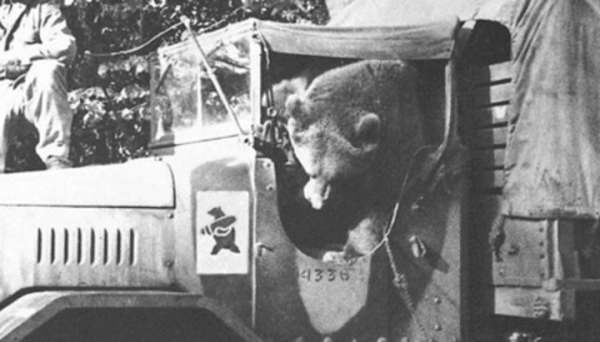
The Battle of Monte Cassino in 1944 was one of the most brutal and hard-fought engagements of the Italian campaign, lasting from January to May and resulting in thousands of casualties. The Polish II Corps, including the 22nd Artillery Supply Company with Private Wojtek, was assigned to this difficult mission. It was during this fierce battle that Wojtek transcended his role as mascot and became a genuine war hero. Observing his human comrades struggling to unload heavy crates of artillery shells from supply trucks, Wojtek began to imitate them. To the soldiers’ amazement, he began picking up 100-pound crates of ammunition and carrying them from the supply vehicles to the artillery positions.
Wojtek transported these heavy boxes of ammunition and supplies without dropping a single one, working tirelessly alongside his human counterparts. This unexpected assistance was not just symbolic—it provided real, practical help during a critical battle. Eyewitness accounts describe the astonishment of allied soldiers from other units who couldn’t believe what they were seeing: a bear calmly carrying ammunition boxes while artillery shells exploded nearby. Wojtek’s actions at Monte Cassino were so remarkable that the Polish II Corps later adopted an emblem depicting a bear carrying an artillery shell, commemorating their unusual comrade’s contribution to the Allied victory. This insignia was proudly worn on uniforms and painted on vehicles, forever linking Wojtek to one of the most important Allied victories in Italy.
Life in the Military Camp

Daily life with a bear in a military camp created situations that ranged from comical to challenging. Wojtek had his own living space in the soldiers’ tents but was free to roam around the camp when not “on duty.” His diet evolved from the early days of condensed milk to include fruits, marmalade, honey, and syrup, but he also developed a strong liking for beer, which was often given as a reward for good behavior. Soldiers would share their rations with him, and Wojtek would sit with them during meals, behaving with surprising decorum for a wild animal. He became notorious for stealing food, particularly desserts, from the camp kitchen, but these minor transgressions were usually overlooked due to his beloved status.
Beyond his ammunition-carrying duties, Wojtek served other practical functions in camp. He was an excellent guard, alerting soldiers to approaching strangers with a distinctive growl. He enjoyed taking showers and developed a habit of stealing the towels of soldiers who were bathing. One of his favorite pastimes was wrestling with the soldiers, a activity that drew crowds of spectators from other units. Despite his enormous strength, Wojtek seemed to understand the playful nature of these matches and never seriously harmed anyone. Perhaps most remarkably, he learned to respond to Polish verbal commands and hand signals, demonstrating an intelligence and adaptability that continually amazed those around him. Through these daily interactions, the bear became not just a mascot but an integral part of the unit’s identity and operations.
The Bear’s Impact on Military Morale

In the midst of war’s brutality, Wojtek’s presence provided an invaluable psychological benefit to the Polish soldiers, many of whom were exiles unable to return to their Soviet-occupied homeland. The bear became a living symbol of hope and resilience, his playful antics offering moments of normalcy and joy amidst the chaos of conflict. For soldiers experiencing homesickness, trauma, and uncertainty about their future, caring for Wojtek gave them a sense of purpose beyond the immediate demands of war. His childlike curiosity and affectionate nature reminded the men of the peace and normalcy they were fighting to restore.
Wojtek’s fame spread beyond his immediate company, and he became something of a celebrity among Allied forces. Soldiers from other units would visit the Polish camp specifically to see the famous bear soldier. These interactions boosted morale not just for the Polish troops but for Allied soldiers as well, creating bonds across national divisions. Military commanders recognized Wojtek’s value to troop morale and generally supported his presence, despite the occasional chaos he caused. In many ways, Wojtek served as an unofficial therapy animal long before such concepts became formalized, providing emotional comfort to men enduring some of the most stressful conditions imaginable. His contribution to maintaining the psychological well-being of the troops was as significant as his physical assistance with ammunition.
Post-War Challenges: A Bear Without a Country
When World War II ended in 1945, Wojtek and his Polish comrades faced an uncertain future. Poland had fallen under Soviet control, and many Polish soldiers, fearing persecution in their communist-controlled homeland, chose to remain in exile. The 22nd Company was transported to Berwickshire, Scotland, for demobilization, bringing Wojtek with them. However, as military units disbanded, a serious question arose: what would happen to a 500-pound Syrian brown bear who had spent his formative years in human company and had no experience of living in the wild? Releasing him into nature was not an option, as he lacked the skills to survive independently and was too accustomed to human interaction.
The solution came in November 1947, when Wojtek was given to the Edinburgh Zoo. His former handlers made the difficult decision to entrust his care to professional zookeepers, knowing they could no longer maintain him as a private citizen. The transition was emotionally challenging for both Wojtek and his soldier friends. Reports suggest that the bear initially showed signs of depression in his new environment, missing the camaraderie and freedom he had enjoyed with his military family. Former soldiers of the Polish II Corps would visit him regularly, often climbing over the zoo barriers to enter his enclosure and wrestle with him as in old times. Wojtek would reportedly perk up immediately upon hearing Polish being spoken near his enclosure, recognizing the language of his adopted family even years after leaving their daily company.
Life at Edinburgh Zoo
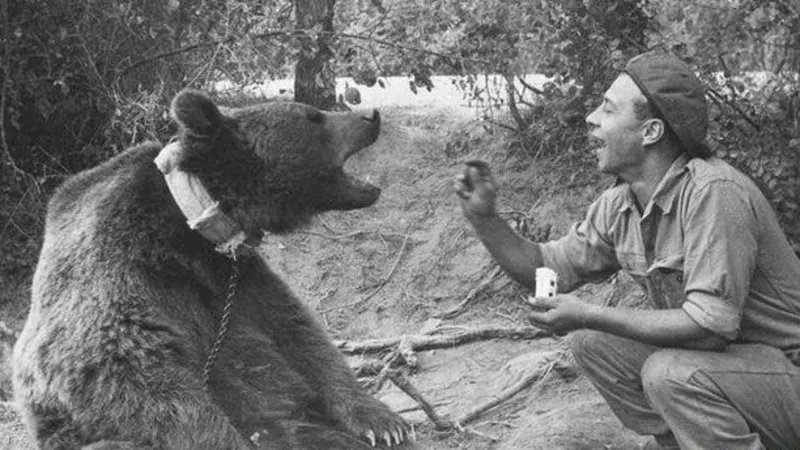
Wojtek’s transition to zoo life marked a significant change from his military adventures. At Edinburgh Zoo, he became one of the most popular attractions, drawing visitors who had heard the remarkable stories of the “soldier bear.” While the zoo provided him with proper care and nutrition, many observers noted that Wojtek seemed to miss the stimulation and companionship of his army days. He lived in an enclosure designed for bears but quite different from the open environments and constant human interaction he had experienced during the war. Zookeepers observed that he remained unusually responsive to humans compared to other bears, often reacting to visitors who spoke Polish.
Former Polish soldiers made regular pilgrimages to visit their old comrade, bringing him treats like cigarettes and beer, which the zookeepers generally discouraged as unhealthy. These visits were emotional reunions, with Wojtek often displaying clear recognition of his former companions. Polish veterans would sometimes throw cigarettes into his enclosure, which he would eat as he had done during his military service. While these reunions brought temporary joy, they also highlighted the contrast between his current life and his past. As the years passed, these visits became less frequent as veterans aged, moved away, or passed on. Wojtek spent 16 years at Edinburgh Zoo, becoming a beloved fixture and a living memorial to an extraordinary wartime story that might otherwise have been forgotten.
The Legacy of the Soldier Bear

Wojtek died in December 1963 at the age of 22, but his legacy has far outlived him. In the decades following his death, his story has inspired books, documentaries, museum exhibits, and countless articles. The image of a bear carrying an artillery shell, the emblem adopted by the 22nd Company after Monte Cassino, has become an enduring symbol of the Polish contribution to World War II. More than just an unusual wartime anecdote, Wojtek’s story has come to represent the enduring bond between humans and animals even in the most extreme circumstances, as well as the resilience of the Polish spirit during one of history’s darkest chapters.
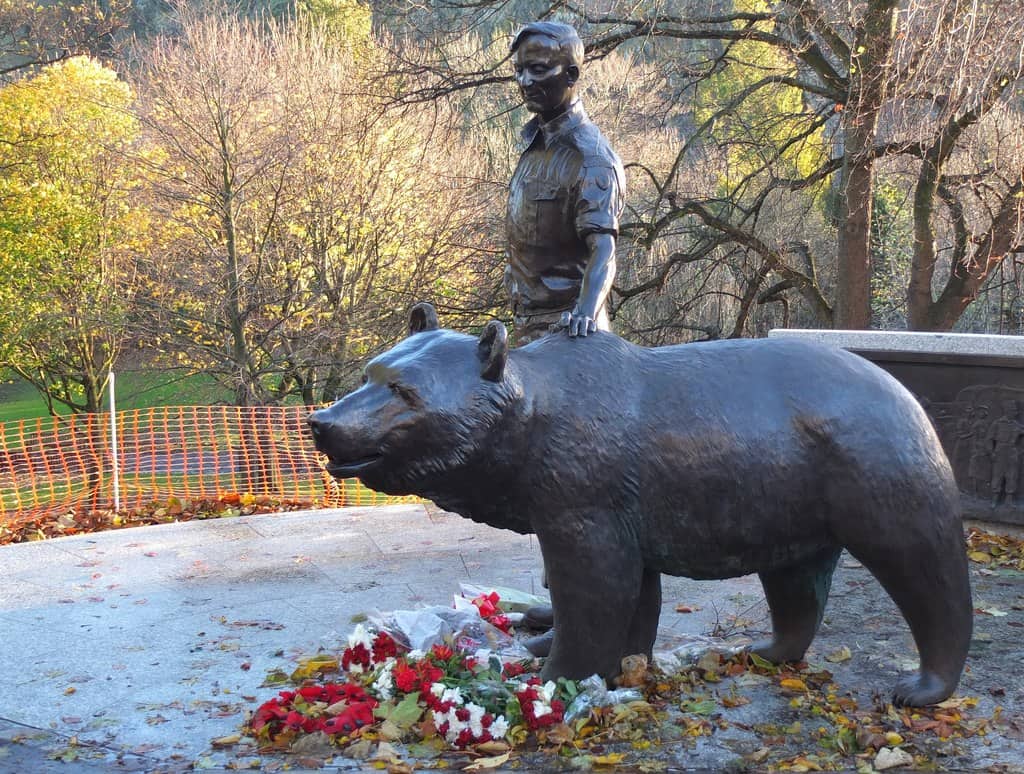
Memorials to Wojtek have been erected in several locations, including a bronze statue in Princes Street Gardens in Edinburgh, unveiled in 2015, and another in Krakow, Poland. These monuments ensure that new generations learn about this unusual soldier. In 2011, Polish President Bronisław Komorowski visited the Wojtek memorial during a trip to Scotland, acknowledging the bear’s importance to Polish cultural heritage and military history. Beyond the physical monuments, Wojtek’s story continues to be told in children’s books, academic histories, and popular media, ensuring that this extraordinary bear-soldier remains a symbol of courage, friendship, and the unexpected connections formed during wartime.
Scientific Perspective: Understanding Wojtek’s Behavior

From a zoological perspective, Wojtek’s remarkable adaptation to human company and military life raises fascinating questions about bear cognition and behavior. Syrian brown bears (Ursus arctos syriacus), the subspecies to which Wojtek belonged, are known for their intelligence and adaptability, but Wojtek’s level of socialization was extraordinary. Wildlife biologists note that bears imprint easily on their caregivers when raised from cubhood, but typically become more difficult to handle as they mature. Wojtek’s continued docility and affinity for human company into full adulthood was unusual and speaks to both the timing of his rescue as a very young cub and the consistent, affectionate treatment he received from his human companions.
Modern animal behaviorists suggest that Wojtek’s unique behaviors—carrying ammunition, responding to commands, participating in human activities—represent an impressive example of behavioral conditioning and environmental adaptation rather than any innate predisposition to military service. His comfort with loud noises (including artillery fire) likely resulted from early and constant exposure during his developmental years. Similarly, his famous ammunition-carrying behavior probably began as imitation—bears are observant animals that can learn by watching—and was reinforced through positive reactions from soldiers. While Wojtek’s story is often romanticized, from a scientific standpoint, it demonstrates the remarkable plasticity of bear behavior and the powerful effects of early socialization and positive reinforcement, offering insights that continue to inform our understanding of wildlife rehabilitation and captive animal behavior.
Cultural Impact and Symbolism

Wojtek’s story transcends mere historical curiosity to occupy a significant place in Polish cultural identity, particularly in the context of World War II narratives. For many Poles, Wojtek symbolizes their nation’s unconventional but valuable contribution to the Allied victory—a contribution sometimes overshadowed in broader historical accounts. The image of the bear carrying artillery shells has become emblematic of Polish military participation, resourcefulness, and determination during the war. In the difficult post-war years, when many Polish veterans could not return to their Soviet-controlled homeland, Wojtek’s story provided a rallying point for the Polish diaspora, particularly in the United Kingdom, helping to preserve their wartime identity and experiences.
Beyond Polish culture, Wojtek has become an international symbol of the unusual bonds that can form during wartime and the role of animals in military history. His story appears in military museums worldwide and is often cited in discussions about animal heroism and the human-animal relationship during conflict. In children’s literature, Wojtek’s tale has been adapted numerous times, offering young readers an accessible entry point to understanding aspects of World War II through the story of a bear who became a soldier. The enduring fascination with Wojtek’s story speaks to its universal appeal—crossing cultural, national, and temporal boundaries to connect with fundamental human values of friendship, loyalty, and finding moments of humanity even in war’s darkest hours.
The Enduring Story of Wojtek

The tale of Wojtek, the bear who carried ammunition, stands as one of the most extraordinary animal stories to emerge from World War II, blending elements of courage, companionship, and the unexpected nature of wartime experiences. From his humble beginnings as an orphaned cub in the mountains of Iran to his service at the Battle of Monte Cassino and his final years at Edinburgh Zoo, Wojtek’s journey captures the imagination and touches the heart. His story reminds us that in the midst of humanity’s darkest hours, unexpected connections can form that transcend the usual boundaries between species and demonstrate the resilience of the spirit.
Today, as statues of Wojtek stand in Edinburgh and Krakow, his legacy continues to educate new generations about a unique chapter in military history while also highlighting the Polish contribution to the Allied victory. Beyond the historical significance, Wojtek’s story speaks to something more fundamental about the bonds that can develop between humans and animals, even in the most unlikely circumstances. For the soldiers who adopted, cared for, and served alongside him, Wojtek was more than a mascot—he was a comrade who shared their hardships, boosted their morale, and quite literally shouldered some of their burdens. In honoring the memory of this remarkable bear-soldier, we celebrate not just an unusual historical footnote but a timeless story of

- How Animals Express Emotions: What Scientists Are Discovering - June 25, 2026
- From Coyotes to Roadrunners: Wild Faces of the American Desert - June 25, 2026
- Why Prairie Dogs Have the Most Complex Social Networks - June 25, 2026