

When we think about nature’s most powerful displays of raw force, few phenomena can match the terrifying beauty and devastating power of a tornado. Throughout American history, these spinning columns of air have carved paths of destruction across the landscape, leaving meteorologists and storm chasers in awe of their incredible might. Yet among all the tornadoes that have swept across the Great Plains, one stands alone as the undisputed champion of wind strength.
On May 3, 1999, a monster tornado would rewrite the record books forever, achieving wind speeds that meteorologists had never before witnessed. This wasn’t just another severe weather event – it was a meteorological phenomenon that would change how we understand the raw power of nature itself. Let’s dive into the remarkable story of the strongest tornado ever recorded.
The Historic Wind Speed Record

The 1999 Bridge Creek–Moore tornado was a large, long-lived, and exceptionally violent F5 tornado in which the highest tornado wind speed ever measured with a doppler radar was recorded at 301 miles per hour ± 20 mph (484 ± 32 km/h) by a Doppler on Wheels. This extraordinary measurement stands as the highest wind speed ever recorded in a tornado.
Multiple radar measurements confirmed the historic nature of these winds. As it passed over Bridge Creek, around 6:54 p.m., a Doppler On Wheels mobile Doppler weather radar detected wind speeds of 302 mph (486 km/h) – measured at 301 mph ± 20 mph (484 ± 32 km/h) – inside the tornado at an elevation of 105 ft (32 m). Other sources reported slightly different but equally staggering measurements, with mobile Doppler radar measured its rotating wind speed on the ground at 301 miles per hour (484 kilometers per hour), plus or minus 20 miles per hour (32 kilometers per hour), which represents the highest wind speed ever measured in a tornado.
The Setting and Meteorological Conditions

The day of May 3, 1999, started ominously across Oklahoma. At 8:00 a.m. on Monday, May 3, 1999, the Storm Prediction Center (SPC) in Norman, Oklahoma, issued a notice that the risk for thunderstorms was slight. As the day advanced, the SPC raised the risk to moderate, then to high. The atmosphere was primed for catastrophic weather development.
The thunderstorm that eventually produced the F5 tornado began developing around 3:20 p.m. CDT that afternoon over northeastern Tillman County (southwest of Faxon). The storm system was part of what would become one of the most significant tornado outbreaks in American history. By late afternoon, conditions had become extremely dangerous, with At 4:45 p.m., it issued a tornado watch to alert much of the state and part of Kansas that atmospheric conditions might lead to supercell thunderstorms, which generate tornadoes.
The Tornado’s Devastating Path

The tornado first touched down at 6:23 p.m. Central Daylight Time (CDT) in Grady County, roughly two miles (3.2 km) south-southwest of the town of Amber. What started as a relatively small tornado would rapidly evolve into one of nature’s most fearsome displays of power.
It quickly intensified into a violent F4, and gradually reached F5 status after traveling 6.5 miles (10.5 km), at which time it struck the town of Bridge Creek, where parts of the community were rendered unrecognizable. It fluctuated in strength, ranging from F2 to F5 status before it crossed into Cleveland County where it reached F5 intensity for a third time shortly before entering the city of Moore. The tornado’s path stretched across multiple counties, affecting densely populated suburban areas with unprecedented fury. By 7:30 p.m., the tornado crossed into Oklahoma County and battered southeastern Oklahoma City, Del City, and Midwest City before dissipating around 7:48 p.m. just outside Midwest City.
The Scale of Destruction and Human Toll
The Bridge Creek-Moore tornado left behind a scene of almost incomprehensible devastation. The tornado covered 38 miles (61 km) during its 85-minute existence, destroying thousands of homes, killing 36 people (plus another five indirectly), and causing US$1 billion (1999 USD) in damage, ranking it as the fifth-costliest on record not accounting for inflation. The human cost was staggering, with 36 direct fatalities (12 in Bridge Creek, 1 in Newcastle, 9 in southern/southeastern Oklahoma City, 5 in Moore, 6 in Del City, and 3 in Midwest City), 5 indirect fatalities during or shortly after the tornado, 583 direct injuries and thousands of families left homeless.
The physical destruction was equally overwhelming. 1800 homes destroyed, and 2500 homes damaged. Total damage was estimated at $1 billion. The tornado’s maximum width reached nearly a mile in some areas, with The maximum width of damage in Bridge Creek was estimated to be 1 mile. This created a swath of total destruction that would take years to rebuild.
Scientific Significance and F-Scale Rating
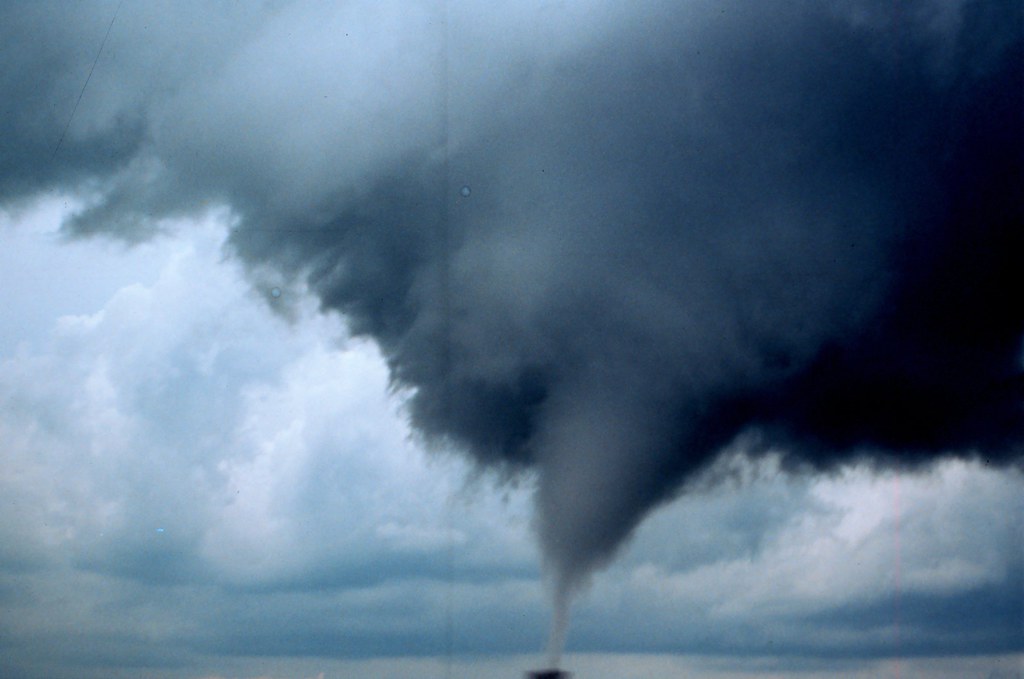
Despite achieving the highest wind speeds ever recorded, the tornado’s official rating remained F5 on the Fujita Scale. The tornado has been rated F5 (minimal F5, in fact), and will not be “upgraded” to F6. This decision was based on scientific principles, as F-scale ratings are assigned based on the severity of the damage caused, *not* on wind speed.
Interestingly, while the tornado was rated F5, although the tornado was rated F5, very few areas affected by this tornado actually experienced F5 damage. There were only a few small, narrow areas near the center of the damage path where intermittent F5 damage was found: in the Bridge Creek area (Grady County), and in a few parts of south Oklahoma City and Moore (Cleveland County). This is less than 1 percent of the approximately 15 square miles of damage that this tornado produced. The tornado was also notable for being the 100th tornado to strike the Oklahoma City area since 1890.
Legacy and Modern Weather Warning Systems
The Bridge Creek-Moore tornado fundamentally changed how meteorologists communicate severe weather threats to the public. The first “Tornado Emergency” was issued by the NWS Norman office during this event. Per their overview of the event, “with a large, violent tornado on the ground heading into the most populous center in the state of Oklahoma, the forecast office staff wanted to convey the message that would grab people’s attention and let them know that this event was something different than normal.”
The advanced warning systems likely prevented an even greater catastrophe. The National Weather Service credited the Norman, Oklahoma Forecast Office for providing 18 minutes of warning time, seven minutes better than the national average. This tornado also occurred during VORTEX-99, a major field research project that provided scientists with unprecedented data about tornado formation and behavior. The research conducted during this event has contributed significantly to our understanding of these powerful storms and has helped improve tornado forecasting and warning systems that protect countless lives today.
The Bridge Creek-Moore tornado of May 3, 1999, remains unmatched in terms of recorded wind strength, cementing its place as the most powerful tornado in American meteorological history. Its legacy continues to influence severe weather research and emergency preparedness across Tornado Alley and beyond. Though we’ve witnessed many devastating tornadoes since 1999, none have matched the sheer wind speed of this remarkable storm. What would you have guessed the strongest tornado winds would be? Tell us in the comments.

- Why Certain Birds Keep Crashing Into Skyscrapers at Night - August 7, 2026
- What Marsh Animal Are You According to Your Zodiac Sign - August 7, 2026
- 5 Majestic US Castles You Didn’t Know Existed - August 7, 2026