

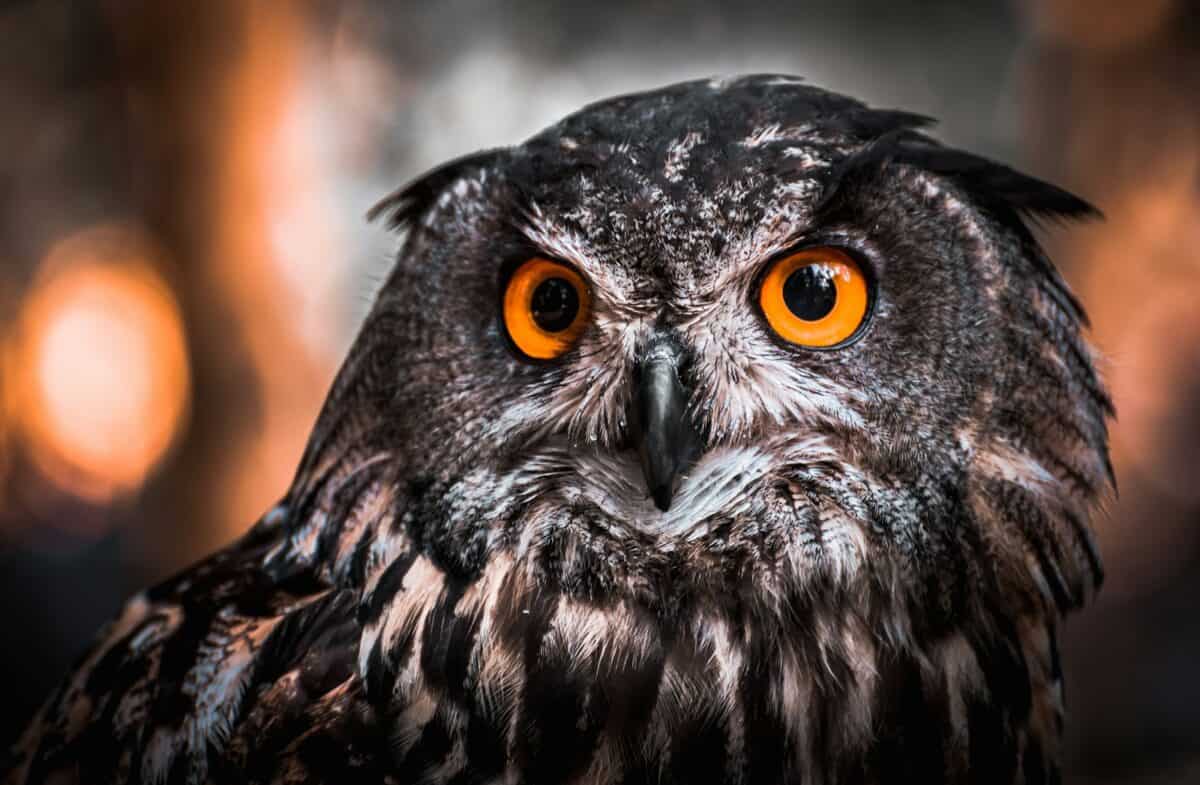
In the realm of nocturnal predators, owls stand as masterful hunters whose evolutionary adaptations have fascinated scientists and bird enthusiasts alike. Their legendary ability to see in near-darkness and move through the night without making a sound represents one of nature’s most impressive engineering feats. These specialized adaptations don’t just make owls efficient hunters—they’ve made them cultural symbols of wisdom and mystery across civilizations throughout human history. This article explores the remarkable truth behind owl vision and silent flight, uncovering the fascinating biological mechanisms that allow these birds to rule the night skies.
The Evolutionary Marvel of Owl Eyes

Owls have evolved specialized visual systems over millions of years to become the consummate nocturnal hunters we know today. Unlike most birds whose eyes sit on the sides of their heads, owls possess forward-facing eyes that provide binocular vision similar to humans. This arrangement allows for exceptional depth perception—crucial for judging distances accurately when swooping down on prey. The evolutionary pressure to hunt in low-light conditions has led to eyes that occupy up to 5% of an owl’s total body weight, compared to just 0.1% in humans. The Great Horned Owl’s eyes are nearly as large as human eyes, despite the bird weighing only about 3 pounds. This disproportionate eye size is a testament to the evolutionary priority placed on vision in these remarkable birds.
The Myth of Night Vision Versus the Reality
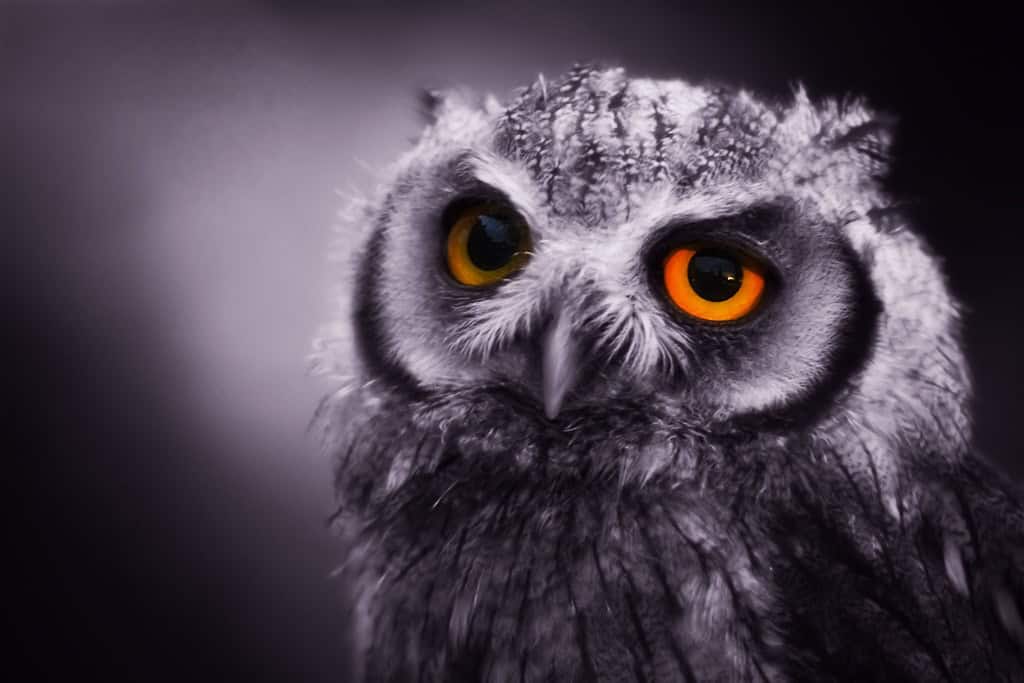
Contrary to popular belief, owls don’t have “night vision” in the sense of seeing in complete darkness. Rather, they have extraordinary light amplification capabilities that allow them to make use of minimal available light. Their eyes contain an exceptionally high density of rod cells—photoreceptors sensitive to light but not color—which far outnumber the color-detecting cone cells. A nocturnal owl may have 25-30 times more rod cells than a human. Additionally, owl eyes possess a specialized layer behind the retina called the tapetum lucidum, which reflects light back through the retina, effectively giving photons a second chance to be detected. This adaptation allows owls to see in light levels up to 100 times dimmer than what humans require, enabling them to hunt successfully under starlight or moonlight conditions that would leave other predators effectively blind.
The Tubular Eye Structure
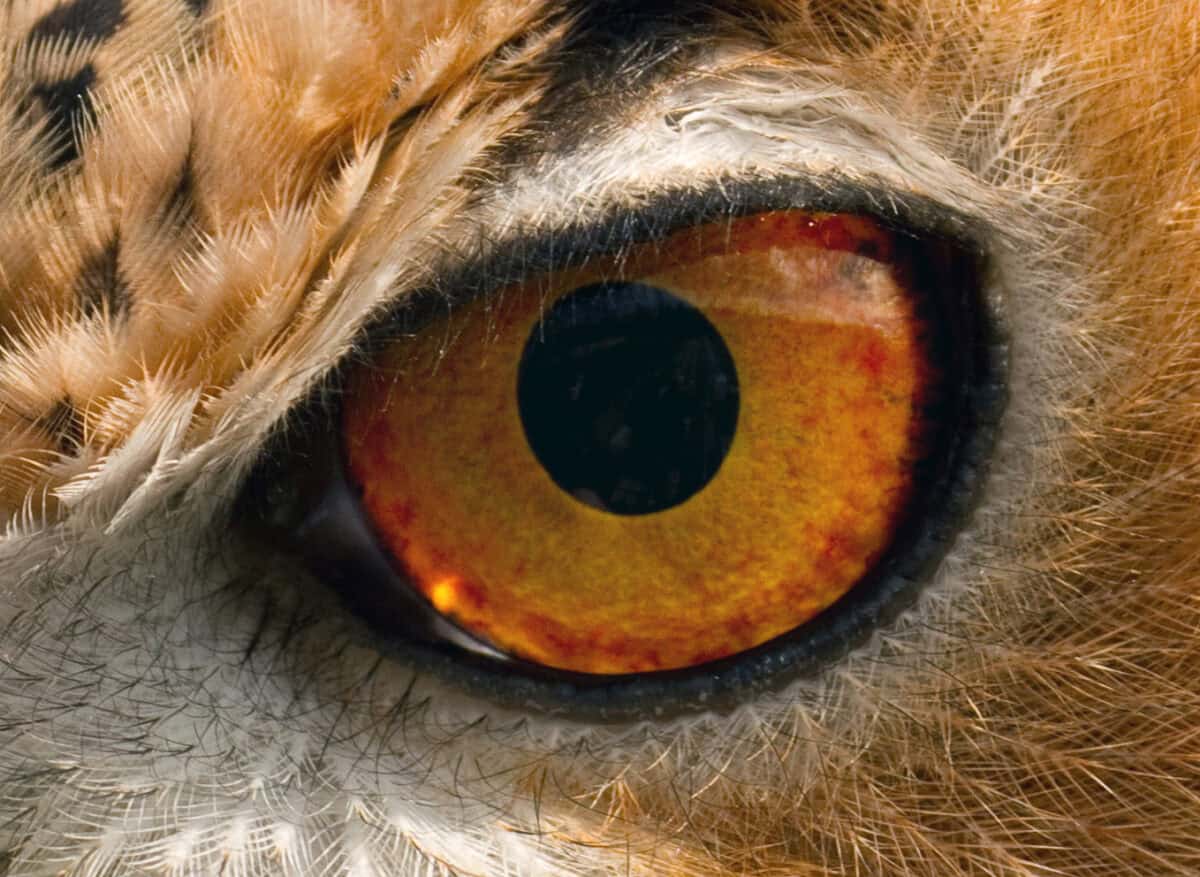
Unlike most birds and mammals, owls possess tubular rather than spherical eyes. These elongated structures can’t move within their sockets—they’re fixed in place by bony structures called sclerotic rings. This seemingly limiting design actually serves a critical purpose: it creates space for an enlarged retina that captures more light. The tubular shape also creates a longer focal length, functioning similar to a telephoto lens in a camera, providing greater visual magnification of distant objects. This fixed position of owl eyes necessitates their remarkable neck flexibility, allowing them to rotate their heads up to 270 degrees to change their field of view without moving their bodies. This adaptation permits owls to maintain perfect stillness while scanning their surroundings, crucial for both spotting prey and avoiding detection.
Color Perception in Low Light

While owls sacrifice some color vision for their exceptional low-light sensitivity, their visual perception is far more nuanced than simply seeing in black and white. Research indicates that most owl species possess limited color discrimination, primarily detecting blues and greens but struggling with reds and oranges. This selective color vision likely evolved as an adaptive compromise—maintaining the ability to distinguish prey from vegetation under moonlight conditions while maximizing light sensitivity. Interestingly, diurnal owl species like the Burrowing Owl have more cone cells than their nocturnal cousins, giving them better color vision during daylight hours. This diversity in visual adaptations across owl species demonstrates how evolution has fine-tuned their sensory systems to match their specific ecological niches and hunting patterns.
The Owl’s Third Eyelid
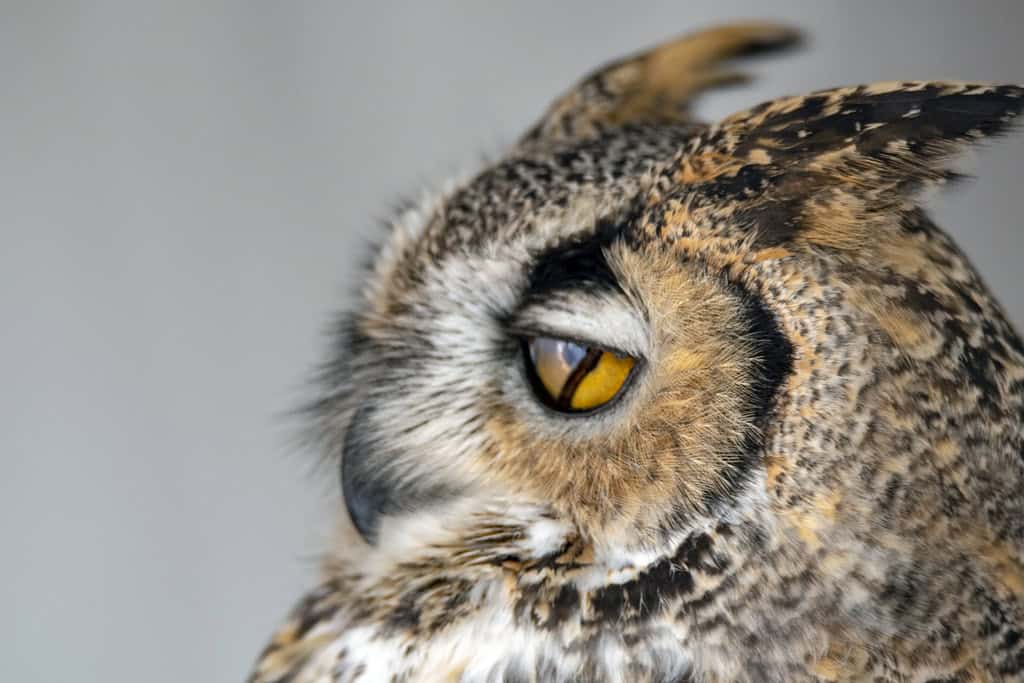
Owls possess a specialized third eyelid called the nictitating membrane—a translucent structure that moves horizontally across the eye. This adaptation serves multiple critical functions. First, it helps clean and protect the eye surface while maintaining vision, essentially acting as a windshield wiper. Second, it provides additional protection during hunting, when owls must dive through branches or vegetation to capture prey. The nictitating membrane also plays a role in reducing the intense glare that might otherwise blind an owl when facing direct sunlight, especially important for species that are occasionally active during daylight hours. This adaptation exemplifies the evolutionary precision that has made owls such successful predators across diverse environmental conditions and time periods.
Beyond Vision: The Facial Disc and Hearing
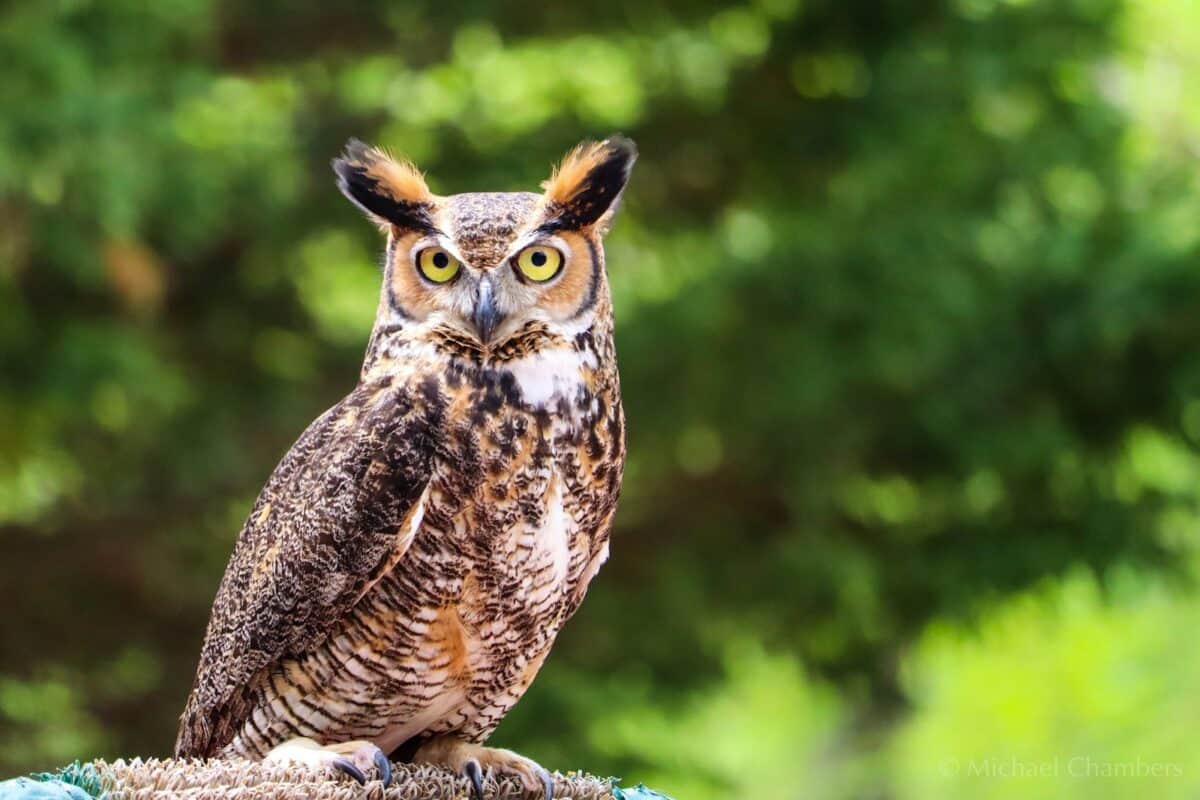
While owl vision receives much attention, their extraordinary hearing capabilities work in concert with their visual system to create an unparalleled hunting apparatus. The distinctive facial disc that characterizes most owl species isn’t merely decorative—it functions as a sophisticated sound-capturing parabolic dish. Composed of stiff feathers arranged in a concave shape around each eye, the facial disc funnels sound to the ear openings, which are asymmetrically positioned on either side of the head. This asymmetry allows owls to triangulate the precise location of sounds in three-dimensional space with remarkable accuracy. Barn Owls can locate prey by sound alone in complete darkness, pinpointing small mammals with an accuracy of less than one degree in both horizontal and vertical planes. This auditory precision complements their visual adaptations, creating a sensory system perfectly tuned for nocturnal hunting.
The Physics of Silent Flight

The silent flight of owls represents one of nature’s most sophisticated acoustic engineering achievements. Three key adaptations work in concert to virtually eliminate noise during flight. First, the leading edge of their primary wing feathers features a comb-like fringe that breaks up the airflow over the wing, reducing sound-producing turbulence. Second, the trailing edge of their wings contains a flexible fringe that dampens the sound of air passing over the wing surface. Third, the entire upper surface of their wings and body is covered with velvety down feathers that absorb any remaining sound vibrations. These adaptations collectively reduce noise by up to 40 decibels compared to other birds of similar size. This silent flight capability provides owls with a critical hunting advantage, allowing them to approach prey undetected and enhancing their ability to hear prey movements during the approach phase of their attack.
Wing Structure and Aerodynamic Adaptations
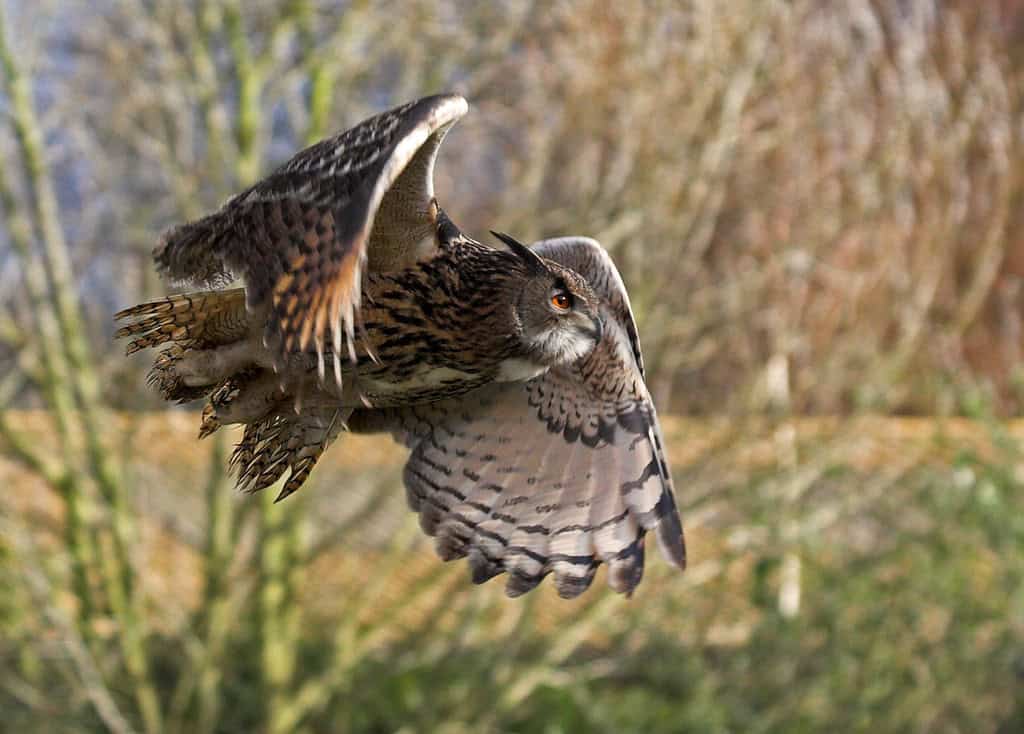
Beyond their sound-dampening features, owl wings possess unique aerodynamic properties that further enhance their hunting prowess. Compared to other birds of similar size, owls have disproportionately large wings relative to their body mass, creating a low “wing loading” that allows for exceptionally slow, controlled flight. The broad, rounded shape of owl wings generates substantial lift even at low speeds, enabling them to hover briefly when necessary to precisely target prey. Additionally, owl feathers have a uniquely soft texture that reduces turbulence while maintaining lift efficiency. Research using wind tunnels has demonstrated that these specialized wings create significantly less aerodynamic noise than those of other birds, even when the sound-dampening structures are experimentally removed. These aerodynamic adaptations work in harmony with their silent flight mechanisms to make owls nature’s perfect stealth predators.
The Deadly Precision of the Strike

The culmination of owl adaptations manifests in their hunting strike—a marvel of biological precision. When an owl spots or hears prey, it calculates a perfect interception course, taking into account distance, movement patterns, and environmental obstacles. Their specialized vision and hearing provide the targeting information, while their silent flight ensures the element of surprise. In the final moments before impact, owls extend their legs forward while simultaneously rotating their outer toes backward to create a four-taloned capture mechanism. The strike force can exceed five times their body weight, delivered with pinpoint accuracy. For smaller owl species hunting mice or voles, the strike can be lethal instantly, with specialized tendons automatically locking their talons upon impact to ensure prey cannot escape. This deadly efficiency makes owls among the most successful predators in their ecosystems, with some species achieving success rates exceeding 80% of hunting attempts.
Species Variations in Vision and Flight

While all owls share common adaptations for vision and silent flight, significant variations exist across the 200+ species worldwide. Northern species like the Snowy Owl hunt in Arctic conditions where twilight may last for hours, giving them relatively larger eyes optimized for these extended low-light periods. Tropical owl species often hunt in dense forest canopies where sound localization may be more critical than vision, resulting in more pronounced facial discs for enhanced hearing. The diminutive Elf Owl, weighing less than 45 grams, hunts primarily flying insects, requiring exceptional maneuverability and faster wing beats that sacrifice some stealth for agility. The fish-hunting Fishing Owl has specialized serrations on its talons for gripping slippery prey and modified wing structures that resist water splash during strikes. These variations demonstrate how the fundamental adaptations of owl vision and silent flight have been fine-tuned through evolution to match specific ecological niches across diverse global habitats.
Biomimicry: Learning from Owl Adaptations

The remarkable adaptations of owl vision and silent flight have inspired significant advances in human technology through biomimicry. Engineers studying owl wing structures have developed noise-reduction technologies for wind turbines, airplane wings, and drone propellers that mimic the sound-dampening properties of owl feathers. The resulting designs have achieved noise reductions of up to 10 decibels—a significant improvement in applications where noise pollution is a concern. Similarly, owl vision has informed advances in low-light camera technology, with computational approaches that prioritize movement detection and contrast over color fidelity in limited light conditions. Military applications include stealth aircraft surface treatments inspired by the sound-absorbing properties of owl down feathers. Even the facial disc structure has influenced the design of acoustic detection systems and microphone arrays. These technological adaptations demonstrate how careful study of evolutionary solutions can inform human innovation across diverse fields.
Conservation Challenges and Human Impact

Despite their remarkable adaptations, many owl species face significant conservation challenges due to human activities. Habitat loss represents the most pervasive threat, with deforestation eliminating the mature trees many species require for nesting. Light pollution in expanding urban areas disrupts their hunting patterns and can render their specialized night vision less effective. Rodenticide use poses a particular danger, as owls consuming poisoned prey can suffer secondary poisoning effects. Traffic noise masks the subtle sounds owls rely on to locate prey, while the vehicles themselves cause significant mortality through collisions. Climate change threatens to disrupt the synchronization between owl breeding cycles and prey availability. Conservation efforts include nest box programs for species like Barn Owls, habitat preservation initiatives, and public education campaigns about rodenticide dangers. Protecting these magnificent birds requires addressing multiple human impacts while recognizing the ecological value of these specialized predators.
The truth about owl vision and silent flight reveals nature’s extraordinary capacity for specialized adaptation. Through millions of years of evolution, owls have developed a suite of integrated features that collectively transform them into supremely efficient nocturnal hunters. Their remarkable eyes capture minimal available light, while their distinctive facial discs and asymmetrical ears provide unparalleled sound localization capabilities. The silent flight adaptations complete this predatory package, allowing owls to approach unsuspecting prey without detection. These adaptations represent not just individual features but an integrated system where vision, hearing, and stealth work in concert to create what may be nature’s perfect nocturnal predator. As we continue to study and understand these magnificent birds, they offer both inspiration for human innovation and a compelling case for conservation efforts to ensure their continued survival in our rapidly changing world.

- Amazing Animal Tracks You Might Find on a Trail - July 11, 2026
- The Role of Bears in Keeping Forests Healthy - July 10, 2026
- How Tiger Cubs Learn to Hunt From Their Mothers - July 10, 2026