
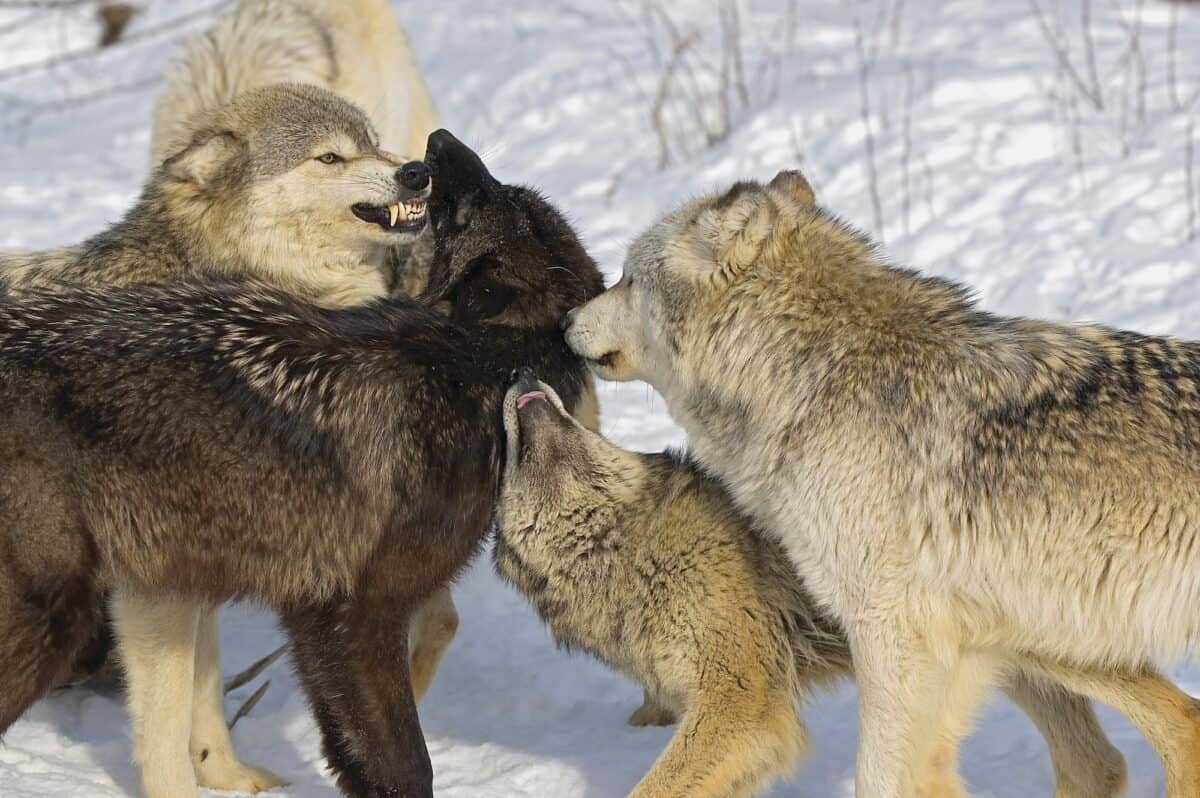
In the winter of 1995, a momentous ecological experiment began in the snow-covered valleys of Yellowstone National Park. After a 70-year absence, gray wolves were reintroduced to the ecosystem, setting in motion one of the most remarkable stories of ecological restoration in modern history. What followed was not just the return of a apex predator, but the transformation of an entire ecosystem—from the flow of rivers to the behavior of elk, from the growth patterns of trees to the return of songbirds. The story of Yellowstone’s wolves demonstrates the intricate interconnectedness of nature and offers profound lessons about conservation, ecosystem management, and the unexpected benefits of restoring natural balances. This ecological renaissance, known scientifically as a trophic cascade, has changed how scientists understand ecosystems and has become a powerful example of how reintroducing a single species can heal damaged landscapes.
The Elimination of Wolves: A Historical Misstep

The story begins with a systematic campaign against wolves in the early 20th century. By the 1920s, government-sanctioned predator control programs had successfully eliminated wolves from Yellowstone National Park. These programs were driven by a combination of factors: livestock protection for ranchers surrounding the park, misguided conservation beliefs that predators harmed game populations, and deeply ingrained cultural fears of wolves. The last wolf pack in Yellowstone was killed in 1926, leaving the park without one of its key native predators for nearly 70 years. During this time, the absence of wolves would dramatically alter Yellowstone’s ecological balance in ways that scientists of the era had not anticipated, demonstrating how removing a single species can trigger far-reaching consequences throughout an ecosystem.
The Cascading Effects of Apex Predator Removal

With wolves gone, Yellowstone’s ecosystem began to unravel in complex and interconnected ways. The most immediate and visible change was in elk populations, which exploded without their main predator. By the 1990s, the Northern Range elk herd had grown to approximately 19,000 animals—far exceeding the land’s carrying capacity. These overabundant elk heavily browsed woody vegetation, particularly willow, aspen, and cottonwood saplings along riverbanks. The consequences rippled throughout the ecosystem: riverbank erosion increased as vegetation disappeared, beaver populations declined without materials to build dams, and songbird populations dropped without adequate nesting habitat. This period demonstrated what ecologists now call a “trophic cascade”—where changes at the top of the food web cascade down through the ecosystem, affecting species seemingly unrelated to the original change. Yellowstone had become a textbook example of an ecosystem out of balance.
The Road to Reintroduction: Scientific Advocacy and Controversy

The journey to bring wolves back to Yellowstone was neither simple nor uncontested. Beginning in the 1960s, a growing ecological understanding prompted scientists to advocate for wolf reintroduction. The passage of the Endangered Species Act in 1973 provided legal framework for such efforts, as gray wolves were among the first species listed for protection. The National Park Service initiated an environmental impact statement in the late 1980s, but the proposal faced fierce opposition from ranchers concerned about livestock losses, hunters worried about diminished elk herds, and local residents with cultural fears about wolves. After years of public hearings, legal challenges, and scientific studies, the U.S. Fish and Wildlife Service approved the reintroduction plan in 1994. The controversy revealed deep divisions in how Americans view wilderness and wildlife management, pitting ecological restoration against economic interests and traditional values—tensions that continue to characterize wolf conservation efforts today.
The Historic Reintroduction: Bringing Wolves Home

In January 1995, the ambitious reintroduction plan finally became reality. Fourteen gray wolves captured in Canada were transported to Yellowstone and temporarily held in acclimation pens. On January 12, 1995, the first wolves were released into the park, followed by another 17 wolves in 1996. Each wolf was radio-collared, allowing scientists to track their movements and monitor the formation of new packs. The reintroduction represented a $30 million investment and was carefully designed as a “non-essential experimental population” under the Endangered Species Act, which provided flexibility in management. The wolves adapted remarkably well to their ancestral home—within just a few years, they began reproducing successfully. By 2000, approximately 100 wolves in about 10 packs were established throughout the Greater Yellowstone Ecosystem. The return of wolves to Yellowstone stands as one of the most successful wildlife reintroduction efforts in conservation history, demonstrating the resilience of nature when given the opportunity to restore itself.
The Immediate Response: Elk Behavior Changes

Almost immediately after wolves returned, scientists observed dramatic behavioral changes in Yellowstone’s elk herds. Beyond just reducing elk numbers through predation, wolves fundamentally altered how elk used the landscape—a phenomenon ecologists call “the ecology of fear.” Elk began avoiding risky areas such as deep snow, dense forests, and narrow valleys where wolves could trap them. They started spending less time browsing in riparian (riverside) areas, which offered poor visibility and escape routes. Research by ecologist John Laundré documented that elk began moving more frequently, spending less time feeding in any single location, and maintaining higher vigilance. GPS collar data showed elk shifting their habitat use patterns away from high-risk areas toward more open terrain. These behavioral changes had profound implications: even though wolves killed relatively few elk compared to the total population (averaging 12-13% of the elk population annually), their presence changed elk browsing patterns across the entire landscape, allowing heavily browsed plant communities to begin recovery in certain areas. This demonstrated that predators affect ecosystems not just through direct predation but through the “landscape of fear” they create.
The Rebirth of Rivers: Riparian Recovery

One of the most striking ecological transformations occurred along Yellowstone’s rivers and streams. With elk avoiding riparian areas or browsing more cautiously, willow, aspen, and cottonwood began to recover dramatically. In some stream corridors, these woody plants grew five to six times taller within just a few years after wolf reintroduction. This vegetation recovery stabilized riverbanks, reducing erosion and narrowing widened stream channels. The most impressive documentation comes from researcher William Ripple’s before-and-after photographs of the same stream segments, showing barren banks transformed into lush corridors of willows and young trees. The returning vegetation provided critical habitat for beaver, which had nearly disappeared from many areas of the park. By 2006, the beaver population had increased from one colony to nine on the northern range. These industrious rodents further transformed the watershed by building dams that created ponds and wetlands, raised water tables, and created habitat for fish, amphibians, and waterfowl. The complex of effects—from wolves to elk to vegetation to beavers to waterways—exemplifies how ecological relationships cascade through systems, ultimately changing the physical landscape itself.
Small Mammals and Birds: The Return of Biodiversity

As riverside vegetation recovered and beaver activity increased, Yellowstone experienced a renaissance of biodiversity. Researchers documented significant increases in songbird diversity and abundance, particularly among riparian specialists like warblers, flycatchers, and kingbirds that depend on streamside vegetation for nesting and foraging. Studies by the University of Montana demonstrated a 50% increase in riparian bird species following wolf reintroduction. Small mammal populations also flourished—voles, mice, and shrews found more protective cover, increasing prey availability for raptors, foxes, and coyotes. The creation of beaver ponds provided habitat for fish, amphibians, and aquatic insects, further diversifying the food web. Ecologist Joel Berger documented how these changes benefited moose populations, which utilize willow communities that had been suppressed by intense elk browsing. The ecological ripple effects even extended to insects, with researchers noting increased populations of butterflies, bees, and other pollinators as flowering plants recovered. This expansion of biodiversity at multiple levels—from insects to birds to mammals—revealed how the presence of wolves helped restore ecological complexity throughout the system.
Predator Dynamics: Reshuffling the Carnivore Guild

The return of wolves restructured Yellowstone’s entire carnivore community in fascinating and unexpected ways. Prior to reintroduction, coyotes had flourished in the absence of wolves, reaching some of the highest densities ever recorded. When wolves returned, they actively killed coyotes near den sites and in contested feeding areas, reducing the coyote population by approximately 50% in core wolf territories. This reduction in coyotes benefited smaller predators like foxes, which faced less competition and predation. The presence of wolves also affected Yellowstone’s grizzly and black bear populations by creating more carrion (animal carcasses) during winter and early spring—a critical food source when bears emerge from hibernation. Research by the Yellowstone Ecological Research Center documented bears usurping wolf kills, providing an important nutritional boost during lean seasons. Mountain lions adapted their hunting behavior, focusing on different terrain and often hunting at different times than wolves to avoid direct competition. This reshuffling of the predator hierarchy restored a more natural balance to Yellowstone’s carnivore guild, with each species adapting to fill specific ecological niches. The complex interactions between these predators demonstrated that ecosystems function not as simple predator-prey relationships but as intricate webs of competition, adaptation, and coexistence.
The Scavenger Community: Sustaining Biodiversity

Wolf kills became vital feeding stations that supported Yellowstone’s diverse scavenger community. Each elk carcass provides meals for dozens of species—from ravens and eagles to magpies, wolverines, and foxes. Researchers documented over 30 species of vertebrate scavengers utilizing wolf kills in Yellowstone. Data collected by wildlife biologist Doug Smith showed that in winter, a single wolf-killed elk can feed at least 12 different scavenger species over several days. Wolves typically consume about 70% of their prey, leaving substantial remains for other animals. This provided reliable food sources during harsh winter months when many scavengers struggle to survive. Ravens have developed such a close relationship with wolves that they follow hunting packs and call other ravens when wolves make a kill. Bald eagle numbers increased dramatically after wolf reintroduction, partly due to greater carrion availability. Even insects benefit—beetle communities that specialize in decomposing carcasses flourished with the consistent supply of carrion. This network of scavengers completes the nutrient cycle by distributing the energy from wolf kills across the landscape, demonstrating how a single predator can support biodiversity throughout an ecosystem.
Economic and Tourism Benefits: Wolves as Wildlife Ambassadors

The return of wolves transformed Yellowstone not only ecologically but economically as well. A University of Montana study estimated that wolf-related tourism brings approximately $35 million annually to the Greater Yellowstone Ecosystem, supporting local economies in Wyoming, Montana, and Idaho. Visitors from around the world come specifically to see wolves, particularly in the Lamar Valley, nicknamed “America’s Serengeti” for its wildlife viewing opportunities. The wolf watching community has developed its own culture, with dedicated “wolf watchers” spending countless hours observing and documenting pack behavior. Local businesses have adapted to this new tourism niche—wildlife guides, photography tours, and educational programs centered on wolves have flourished in gateway communities. Surveys indicate that 44% of park visitors list wolf viewing as an important reason for their trip to Yellowstone. This economic boost has helped shift some local perspectives on wolves from seeing them solely as livestock threats to recognizing them as valuable tourism assets. The economic benefits of wolf restoration provide a compelling counternarrative to traditional concerns about predator recovery, demonstrating that conservation can generate significant economic value through sustainable tourism.
Ongoing Controversies and Management Challenges

Despite ecological successes, wolf restoration remains contentious in the regions surrounding Yellowstone. Ranchers continue to express legitimate concerns about livestock predation, though confirmed wolf depredations remain relatively low compared to other causes of livestock mortality. In 2012, management authority for wolves was transferred from federal to state control in Wyoming, Idaho, and Montana, leading to the establishment of hunting seasons outside park boundaries. This has created significant challenges for park wolves, as packs don’t recognize park boundaries and frequently travel outside protected areas. Research by the Yellowstone Wolf Project indicates that approximately 25% of collared wolves that primarily live within the park are killed when they cross into areas where hunting is permitted. Management approaches differ significantly between federal protection within the park and state management outside, creating a patchwork of policies. Conservation groups continue legal battles with state wildlife agencies over hunting quotas, particularly in areas bordering the park. Finding balance between wolf conservation, hunting interests, and ranching concerns remains one of the most challenging wildlife management issues in the American West, reflecting deeper cultural and political divides about land use and wildlife value.
Scientific Discovery: Yellowstone as a Living Laboratory

The wolf reintroduction transformed Yellowstone into one of the world’s most valuable living laboratories for ecological research. The park’s wolf population represents one of the most intensively studied predator populations on Earth, with continuous monitoring since 1995 providing unprecedented data on pack dynamics, predation patterns, and ecological effects. This long-term dataset has allowed scientists to document how ecosystems respond to the return of an apex predator in real time—a rare opportunity in ecology. Researchers have published hundreds of peer-reviewed studies based on Yellowstone’s wolves, advancing understanding of trophic cascades, predator-prey dynamics, and ecosystem resilience. The Yellowstone Wolf Project maintains detailed genealogies of all park wolves, creating one of the most complete family trees of any wild animal population. This research has practical applications far beyond Yellowstone, informing predator reintroduction efforts worldwide and helping resolve human-wildlife conflicts. The wolf story has also shaped ecological theory, challenging simplistic views of food webs and demonstrating how single species can have disproportionate effects throughout ecosystems. Perhaps most importantly, Yellowstone’s wolf research has bridged the gap between science and public understanding, as millions of visitors and documentary viewers have learned about ecological relationships through the compelling narrative of wolf recovery.
Conclusion: The Enduring Legacy of Yellowstone’s Wolves

The return of wolves to Yellowstone stands as one of the most profound and instructive ecological restoration stories of our time. What began as the reintroduction of 31 wolves has cascaded into system-wide transformations—from altered elk behavior to recovering vegetation, from reshaped river systems to thriving biodiversity, all interconnected in ways that continue to surprise and educate. The Yellowstone wolf story teaches us that ecosystems possess remarkable complexity and resilience when key species are restored to their functional roles. It demonstrates that our understanding of nature’s interconnections is still evolving, challenging us to approach conservation with humility and ecological awareness. The ongoing tensions surrounding wolf management remind us that conservation exists within social and political contexts, requiring engagement with diverse stakeholders and values. Perhaps most importantly, Yellowstone’s wolves offer hope that damaged ecosystems can heal when we have the courage to restore missing pieces, suggesting that other conservation challenges might similarly benefit from ecological restoration approaches that work with rather than against natural processes.

- The 11 Most Unique Mating Rituals in the Animal Kingdom - August 7, 2026
- How Animals React to Sudden Weather Changes - August 6, 2026
- What Makes Raptors the Apex Predators of the Sky - August 6, 2026