


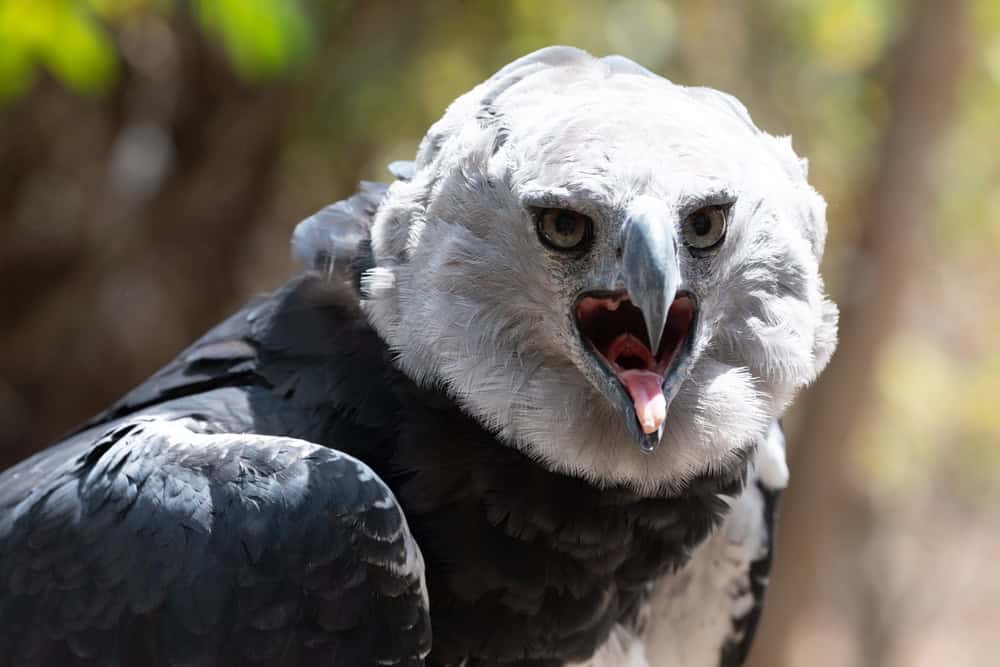
The Harpy Eagle, often referred to as the “world’s strongest eagle,” is an apex predator of the skies. Native to the tropical rainforests of Central and South America, this magnificent bird of prey is a symbol of power, resilience, and biodiversity. Let’s explore the fascinating world of the Harpy Eagle, from its physical characteristics to its ecological significance.
Physical Characteristics of the Harpy Eagle

🔥 Would you like to save this?
We'll email this post to you, so you can come back to it later!
The Harpy Eagle is massive, with a wingspan of up to 7.5 feet (2.3 meters) and weighing between 13 to 20 pounds (6 to 9 kilograms). Despite its size, it has relatively short wings, which allow it to navigate dense forests with remarkable agility. Its most distinctive feature is the feathered crown, which it raises when threatened or curious.
Where Does the Harpy Eagles Live?

🔥 Would you like to save this?
We'll email this post to you, so you can come back to it later!
Harpy Eagles inhabit tropical lowland rainforests, primarily in Central and South America, from southern Mexico to northern Argentina. They prefer large, undisturbed tracts of forest, where they can hunt and nest undisturbed.
A Diet Fit for a Predator

🔥 Would you like to save this?
We'll email this post to you, so you can come back to it later!
Harpy Eagles are apex predators, preying on a variety of animals, including sloths, monkeys, snakes, and birds. Their talons, which are the size of a grizzly bear’s claws, enable them to snatch prey weighing up to 17 pounds (7.7 kilograms) directly from tree branches.
The Harpy Eagle’s Hunting Strategy

🔥 Would you like to save this?
We'll email this post to you, so you can come back to it later!
These eagles are ambush predators. Using their keen eyesight, they can spot prey from up to 650 feet away. Once they identify a target, they launch a swift and silent attack, using their powerful wings for acceleration and their sharp talons to deliver a lethal grip.
Harpy Eagles and Their Impressive Strength

🔥 Would you like to save this?
We'll email this post to you, so you can come back to it later!
The Harpy Eagle’s strength is unparalleled among birds of prey. Their talons exert a crushing force of approximately 530 pounds per square inch (psi), making them capable of breaking bones and dispatching prey almost instantly.
Reproduction and Parenting

🔥 Would you like to save this?
We'll email this post to you, so you can come back to it later!
Harpy Eagles are monogamous and form lifelong pair bonds. A mating pair will raise a single chick every two to three years, investing significant effort into its care. The parents take turns hunting and guarding the nest, ensuring the chick’s survival.
The Role of Harpy Eagles in Ecosystems
🔥 Would you like to save this?
We'll email this post to you, so you can come back to it later!
As apex predators, Harpy Eagles play a crucial role in maintaining the balance of their ecosystems. By controlling the populations of arboreal mammals and other prey, they help sustain the health of the forest.
Cultural Significance of the Harpy Eagle

🔥 Would you like to save this?
We'll email this post to you, so you can come back to it later!
In many Indigenous cultures of Central and South America, the Harpy Eagle symbolizes strength, courage, and freedom. It is often featured in folklore, art, and even as a national emblem, such as in Panama.
Threats Facing the Harpy Eagle

🔥 Would you like to save this?
We'll email this post to you, so you can come back to it later!
Despite their power, Harpy Eagles face significant threats, including habitat loss due to deforestation, hunting, and human encroachment. As their forest habitats shrink, their population continues to decline.
Conservation Efforts to Protect Harpy Eagles

🔥 Would you like to save this?
We'll email this post to you, so you can come back to it later!
Numerous conservation programs aim to protect Harpy Eagles and their habitats. Initiatives include reforestation projects, anti-poaching measures, and community education to reduce human-wildlife conflict.
The Harpy Eagle in Captivity

🔥 Would you like to save this?
We'll email this post to you, so you can come back to it later!
Several zoos and conservation centers around the world house Harpy Eagles to raise awareness about their importance and support breeding programs. These facilities provide a rare opportunity for the public to see these majestic birds up close.
How You Can Help the Harpy Eagle

🔥 Would you like to save this?
We'll email this post to you, so you can come back to it later!
Supporting organizations that work to conserve rainforests, educating others about the importance of biodiversity, and advocating for sustainable practices can all help protect the Harpy Eagle and its habitat.
Conclusion

🔥 Would you like to save this?
We'll email this post to you, so you can come back to it later!
The Harpy Eagle is not just a marvel of nature but a vital player in the ecosystems it inhabits. By understanding and protecting this incredible bird, we ensure the survival of one of Earth’s most fascinating creatures and the forests they call home.

For any feedback please message Feedback@animalsaroundtheglobe.com
- 10 Facts onMiniature Teacup Poodles - November 4, 2026
- The 12 Ugliest-Looking Animals Ever - October 29, 2026
- The Secrets of the Adorable Baby Squirrels - October 14, 2026