
Most families believe a restless old dog is simply “slowing down.” The numbers tell a stranger story. In one study, 14.2% of dogs over 8 showed cognitive dysfunction, yet only 13% of those dogs had ever been diagnosed. If your dog’s evenings have changed, this may be the explanation nobody mentioned.
A lot of what gets shrugged off as age shows up after dark, when the light fades and the house goes quiet. Some of it is treatable, and some of it isn’t age at all. One of the most overlooked culprits on this list is something most owners never think to ask about. Here’s what the veterinary data actually say, starting with the change that usually shows up first.
#9 – The Pacing That Starts When the Light Fades

🔥 Would you like to save this?
We'll email this post to you, so you can come back to it later!
The first change usually isn’t memory. It’s how your dog moves through the evening.
Sundowning is the everyday name for restlessness, pacing, vocalizing and confusion that appears in the evening and overnight in some older dogs. Many of these dogs seem fine during the day. That contrast is exactly why families miss it.
Picture the scene. Dinner is over, the dishes are done, and your dog can’t settle anywhere. He paces from room to room or stands in corners. He wants to go outside, then immediately wants to come back in.
Sundowning is a pattern, not a diagnosis. The diagnosis underneath it is usually canine cognitive dysfunction (CCD). Researchers still don’t fully understand why the confusion peaks later in the day. Suspected factors include changes to sleep-wake cycles and age-related changes in the brain. Fatigue, reduced stimulation and changing light may add to the confusion and anxiety at sundown.
What to look for:
- Pacing in circles or back and forth
- Panting and an inability to settle
- Wanting out, then immediately wanting in
But pacing is only the visible part. What happens to your dog’s sleep is the bigger tell, and it’s #8.
#8 – The Sleep Schedule That Quietly Flips
🔥 Would you like to save this?
We'll email this post to you, so you can come back to it later!
Your dog isn’t being lazy all day and restless all night by accident.
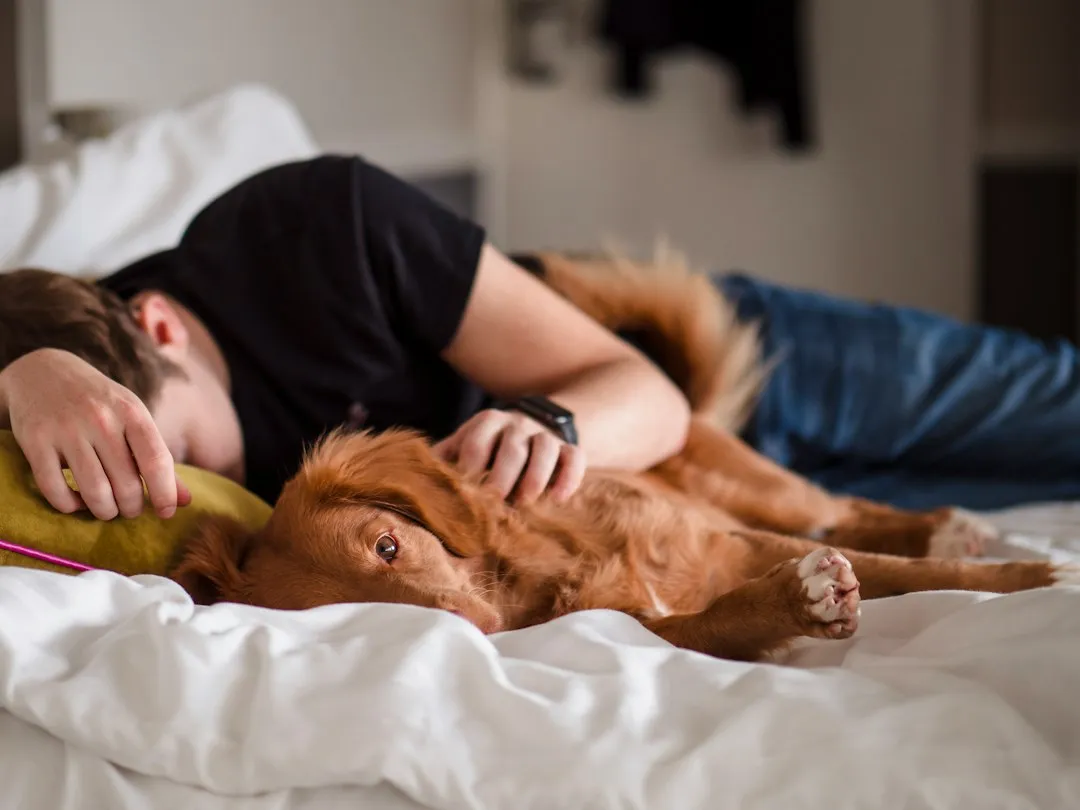
In dogs, the most common signs of cognitive dysfunction include daytime sleeping and nighttime restlessness. One long-term study of affected dogs found it was the single most common sign, at 57%. It’s also the sign that hides best, because dogs nap a lot anyway and seniors nap even more.
Here’s the mechanism. CCD damages the brain’s sleep-wake cycle, so the normal rhythm of awake by day and asleep by night breaks down. The dog isn’t choosing to keep you up. His internal clock has stopped keeping time.
Many families read the long daytime naps as a peaceful retirement. Many vets read them as half of a warning sign. By day, these dogs may sleep excessively, show lower activity and seem calm but emotionally distant.
The calm daytime dog and the frantic midnight dog can be the same animal with the same condition. That’s why a daytime-only check-in can miss the whole picture.
Fast Facts
- 57%: the share of affected dogs showing this sign in one long-term study, making it the most common one
- The cause: CCD disrupts the brain’s sleep-wake cycle
- The daytime look: heavy sleep, lower activity, calm but distant
- Why it’s missed: seniors nap more anyway
Here is what a flipped schedule tends to look like at home:
- Long, deep daytime sleeps
- Waking repeatedly overnight
- Seeming “off” or distant during the day
And the sleepless nights are only half the story. What your dog does when he’s awake is stranger, and it’s #7.
#7 – The Stare at the Wall
🔥 Would you like to save this?
We'll email this post to you, so you can come back to it later!
Some old dogs stop reacting to the room they’ve lived in for ten years.
Owners describe dogs who stare blankly at walls, the floor or into space. They get stuck trying to get around objects. Some stop recognizing familiar people. Others become disoriented and wedge themselves into corners or behind furniture.
It’s easy to laugh at the “stuck in the corner” moment. It’s actually a classic sign. Vets describe it as disorientation, meaning confusion or getting lost in familiar surroundings.
A dog who can’t work out how to back out of a corner isn’t being silly. He’s lost in his own home.
Dusk may be when it’s hardest. For dogs already struggling to process information, the shift from daylight into evening can simply be overwhelming. A hallway he crossed ten thousand times can suddenly feel like unfamiliar territory.
The catch is that the senses matter here too. Pain, hearing loss and reduced eyesight can also contribute to these changes. A dog who can’t see well in dim light may look confused for a very different reason.
But confusion isn’t always silent. Some dogs get loud, and that’s #6.
#6 – The Voice That Won’t Stop

🔥 Would you like to save this?
We'll email this post to you, so you can come back to it later!
A dog who barks at nothing at 2 a.m. is telling you something.
Increased barking or whining without a clear reason is one of the common signs. It often sounds monotone: a flat bark or a howl, repeated. As things progress, some dogs bark at a wall for no apparent reason.
Here’s the mistake many households make. They treat it as attention-seeking and respond with scolding or by ignoring it. If the cause is a brain that can’t tell what time it is or where he is, punishment just adds fear.
That’s an opinion, but it’s grounded in how the condition works. A confused, anxious dog isn’t testing you. He’s calling out in a room that no longer makes sense.
Not every noisy night is dementia, either. Laryngeal paralysis is one condition worth naming, because affected dogs pant and pace at night and owners reliably describe it as anxiety. The same sound can have a very different cause.
Common night noises:
- Monotone barking or howling
- Whining with no clear trigger
- Heavy panting while pacing
Noise is the problem the neighbors notice. The one that costs families the most patience is #5.
#5 – The Accidents That Aren’t Defiance
🔥 Would you like to save this?
We'll email this post to you, so you can come back to it later!
A perfectly house-trained dog who starts going inside isn’t “acting out.”
House-training regression is one of the recognized signs. So is a decrease or loss of signaling to go out. The dog may no longer connect the urge with the door.
The “H” in the vet checklist stands for house soiling and the loss of other learned behaviors. The full acronym is DISHAA, covering disorientation, social interactions, sleep-wake cycles, house training, activity levels and anxiety. Accidents are just one letter, but they’re the one families notice first.
At a Glance: The DISHAA Checklist
- D: Disorientation
- I: Social interactions
- S: Sleep-wake cycles
- H: House training
- A: Activity levels
- A: Anxiety
But accidents have other explanations. Urinary tract infections can cause frequent urges to urinate. Sometimes the restlessness ends the moment the dog gets outside, which points to a simple need to toilet.
Scolding a dog for an accident he can’t control is worse than useless. It teaches him to fear you at the exact time of day he’s already most anxious.
Clues that help sort it out:
- Does the pacing stop once he goes outside?
- Is he peeing more often, in small amounts?
- Has he stopped asking to go out?
Accidents are one thing. A change in how your dog treats you is another, and it’s #4.
#4 – The Clinginess (or the Sudden Distance)
🔥 Would you like to save this?
We'll email this post to you, so you can come back to it later!
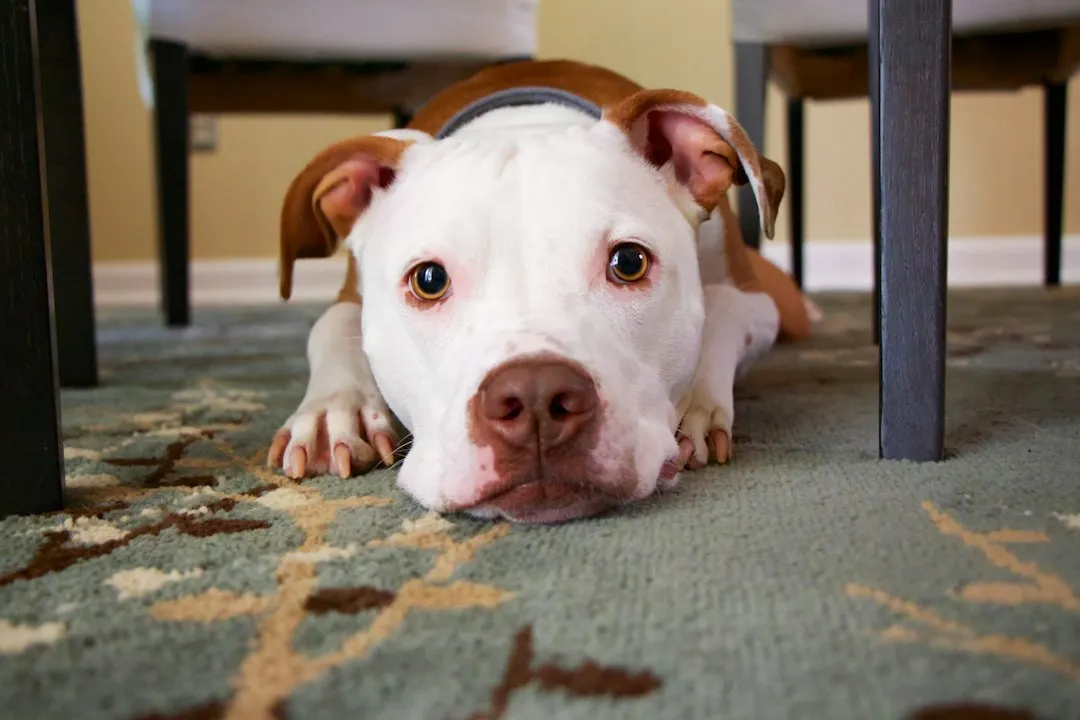
Some dogs shadow you every evening. Others quietly pull away.
Vets call it altered social interaction. It can mean increased fear, withdrawal or even aggression. Owners report dogs who are more clingy or fearful, who spend more time alone, or who show less interest in being petted.
Anxiety often rides along with it. Examples include more anxiety when separated from owners and stronger reactions to sounds. Interest in play and walks often drops too.
The dog who once greeted every visitor and now hides during the evening isn’t “just grumpy.” Families sometimes read it as a personality change, when it can be a health signal.
Changes families often shrug off:
- Skipping games he used to love
- Following you from room to room at night
- Seeming fearful of the garden after dark
Before anyone blames the brain, though, vets rule out a long list of lookalikes. That’s #3.
#3 – The Medical Mimics Nobody Checks For

🔥 Would you like to save this?
We'll email this post to you, so you can come back to it later!
Not every restless senior is sundowning, and that’s the part families rarely hear.
Arthritis pain that worsens at night, urinary tract infections and high blood pressure can all cause restlessness and anxiety. A dog who can’t get comfortable is restless, and that looks exactly like sundowning. Dogs also tend to hide pain, so it often shows up as pacing and panting rather than an obvious limp.
That’s why CCD is a diagnosis of exclusion. The first appointment is typically an exam, bloodwork, a urine sample and a blood pressure check, rather than a prescription.
The mimics are not rare. In a trial of 100 senior dogs flagged for cognitive dysfunction signs, 15 had markedly abnormal lab results, including kidney disease in 3 and bacterial cystitis in 5. Some dogs labeled “senile” had an infection that could be treated.
Common lookalikes:
- Arthritis or other pain
- Urinary tract infections
- High blood pressure
- Vision or hearing loss
- Laryngeal paralysis
So why do so many of these dogs slip through? The answer is #2.
#2 – The Diagnosis Gap Behind “He’s Just Old”
🔥 Would you like to save this?
We'll email this post to you, so you can come back to it later!
The biggest problem isn’t that vets can’t spot this. It’s that families rarely bring it up.
Back to that 14.2% figure. In that study of dogs over 8, only 13% of the affected dogs had been diagnosed. Estimates elsewhere vary. AAHA puts it at roughly 14 to 22.5% of dogs older than 8.
The risk climbs steeply. One study found CDS in 28% of dogs aged 11 to 12, but 68% of dogs aged 15 to 16. Signs can appear in dogs most people wouldn’t call elderly. Mature dogs are defined as being at 50 to 75% of their expected lifespan.
Quick Compare: How the Risk Climbs
| Age group | Reported share with CDS |
|---|---|
| Older than 8 (AAHA estimate) | Roughly 14 to 22.5% |
| Ages 11 to 12 | 28% |
| Ages 15 to 16 | 68% |
Here’s the controversial take: “he’s just old” is the most expensive sentence in senior dog care. It costs months of treatable decline. Evidence suggests management is most effective when started early.
What the data suggest you do:
- Don’t wait until it’s “bad enough”
- Report any persistent behavior change
- Book regular senior check-ups
Catching it early matters most because of what comes next, which is the part that changes how you see all of this. It’s #1.
#1 – What Actually Helps After Dark
🔥 Would you like to save this?
We'll email this post to you, so you can come back to it later!
This diagnosis is not a countdown clock.
One long-term study found dogs with cognitive dysfunction reached a median age of 13.9 years, slightly older than dogs without it. The authors concluded they have a good chance of a full lifespan if supported. Support is the keyword.
Vets work through a layered plan. The options discussed include melatonin, trazodone, gabapentin and selegiline, alongside routine and environment changes. These are prescription decisions for your vet, not a shopping list. Medication choices depend on the dog.
The environment is where families have the most power. Predictable meals, walks and bedtimes help. So do dim lights in hallways and a bed in a spot he can find. Some owners also ask about diets built for senior brain health.
What a good evening plan usually includes:
- A vet exam first, to rule out pain and infection
- A fixed evening routine
- Gentle daytime activity and mental stimulation
- A safe, well-lit sleeping area
The goal isn’t to fix the dog. It’s to make dusk less frightening for him.
The Bottom Line

🔥 Would you like to save this?
We'll email this post to you, so you can come back to it later!
The old line that “it’s just age” does real damage. Sundowning isn’t a normal part of getting older. It’s a sign that something is going on, whether that’s cognitive dysfunction, pain, infection or sensory loss. Most of these dogs are never diagnosed, and a surprising share of the lookalikes are treatable.
My opinion: families who book the exam early do their dogs a bigger favor than any gadget or supplement. Waiting for it to get “bad enough” is the real mistake. What was the first thing that changed in your dog’s evenings, and what were you told it was?

- 7 Everyday Habits That Can Make Your Senior Dog Happier - November 5, 2026
- 10 Enigmatic Structures That Continue to Puzzle Scientists Today - November 5, 2026
- 10 Strange Ruins in the Americas That Challenge What We Know About Early History - November 5, 2026