
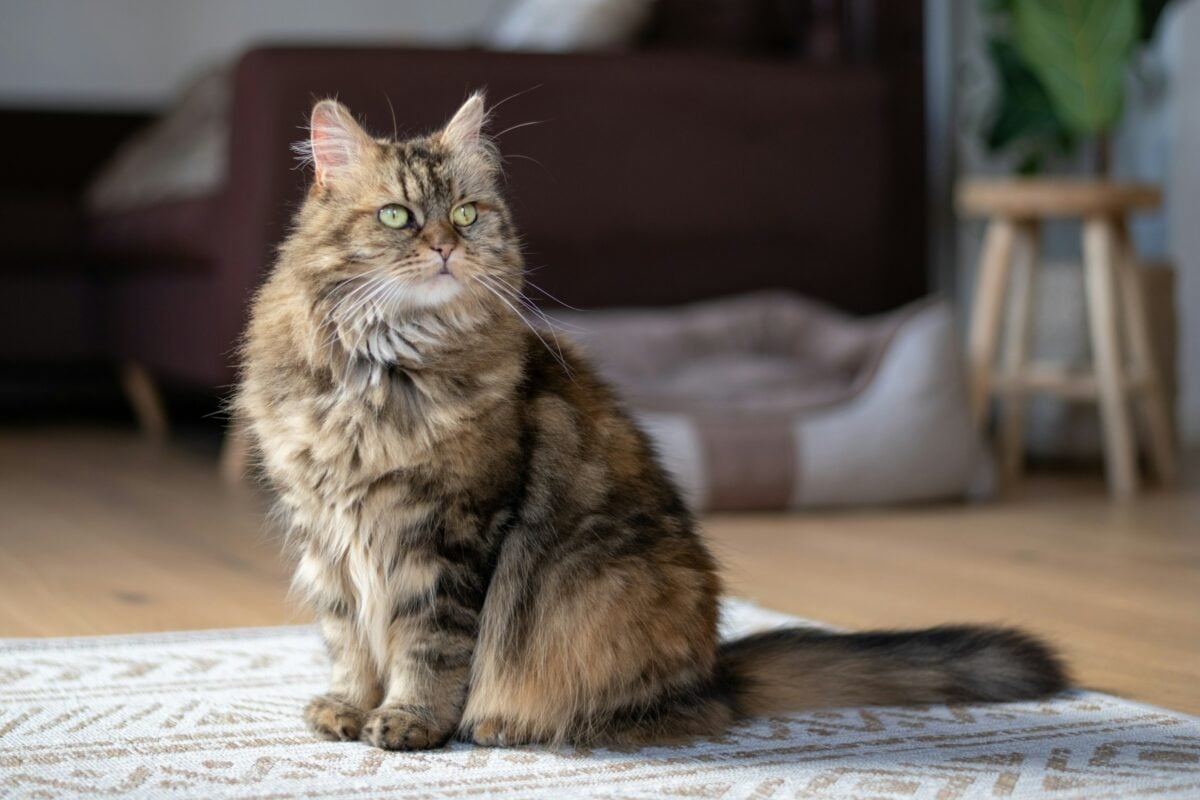
Your older cat has started asking for things she never needed: a lower box, a ramp, a drink straight from the bathroom faucet, your company at 3 a.m. If that sounds familiar, this list is for you. Most owners file these requests under “just getting old,” which is a comforting story and usually the wrong one.
Studies suggest the large majority of cats over 12 show joint disease on X-rays, yet most owners never notice. Cats are built to hide pain, so the clues arrive as small, strange demands instead. Some of the most worrying changes even look like good news: a hungry cat, a cuddly cat, a 16-year-old suddenly full of kitten energy. Keep reading, because the request that feels sweetest is often the easiest one to miss.
#9 – A Way Up That Never Mattered Before
🔥 Would you like to save this?
We'll email this post to you, so you can come back to it later!
Your cat didn’t get lazy. She got cautious.
The first request often isn’t a request at all. She stops leaping onto the sofa and sits below it, staring up like someone eyeing a staircase at the end of a long shift. Or she takes the long way, in two stages, with a pause in the middle to think it over.
Veterinary guidelines note that a change in jumping or climbing is often the first visible sign of joint disease or muscle weakness in senior cats. It’s easy to miss because nothing dramatic happens. She just quietly retires from the highest shelf.
Estimates suggest 40–92% of cats show clinical signs of degenerative joint disease, and it is more prevalent and severe in older cats. The shoulders, hips, elbows, knees and ankles are the most commonly affected joints. That is a lot of joints to protect with one leap.
And cats rarely limp. Limping and gait changes are inconsistent findings in feline osteoarthritis, because hiding pain reduces predation risk and cats evolved to mask it. So a cat can look fine strolling across the room while quietly ruling out anything that hurts.
Signs to watch for:
- Shorter or lower jumps
- Hesitating before a leap she used to make easily
- Avoiding stairs
- Less time on high perches
Simple home changes like ramps, pet stairs and raised bowls can make an arthritic cat much more comfortable. Skip the medicine cabinet, though. Many human painkillers are toxic to cats, so pain relief has to come from a vet.
But the next request is one most owners misread as a “litter box problem”…
#8 – A Litter Box With a Lower Doorway
🔥 Would you like to save this?
We'll email this post to you, so you can come back to it later!
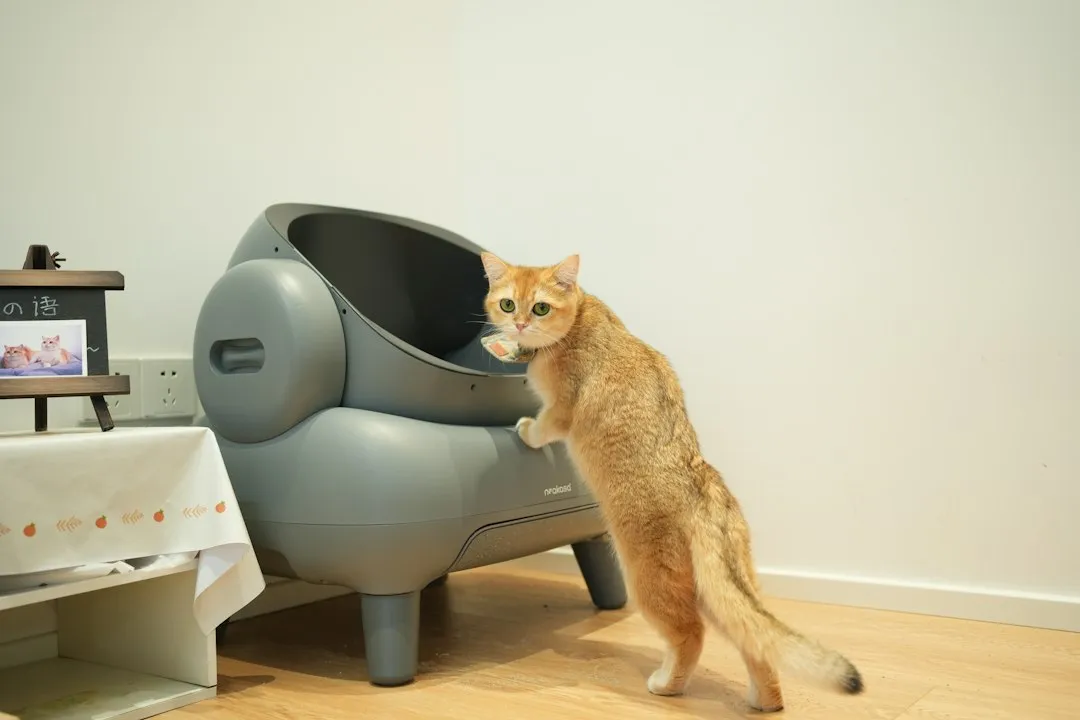
She isn’t being spiteful. The box has become an obstacle course.
Most people don’t realize that accidents outside the box are the most common senior cat behavior problem, and they are rarely about attitude. Eliminating outside the box is frequently caused by kidney disease, diabetes, hyperthyroidism, arthritis or other treatable conditions.
Litter box changes may point to urinary tract disease, constipation or diabetes. They may also come from reduced muscle strength, poor balance or pain. Stepping over a high wall means lifting a stiff hip and bending an achy spine.
Some cats start to link the box itself with the pain. A cat who once hopped in without a thought may now tiptoe in, strain, and hurry out. The spot beside the box starts to feel safer.
Here’s the mistake: scolding. Punishing accidents, restlessness or vocalizing can increase stress in pets with cognitive changes. Punishment fixes nothing, and the cause is usually medical.
Practical fixes:
- Choose a litter box with at least one lowered side.
- Put a litter box on every floor she uses.
- Place boxes where she doesn’t have to climb stairs to reach them.
- Mention any new accidents to your vet before trying to retrain her.
But there’s another furniture change vets recommend that looks almost too simple to matter…
#7 – Her Food and Water at a Different Height
🔥 Would you like to save this?
We'll email this post to you, so you can come back to it later!
The bowl hasn’t changed. Her neck and elbows have.
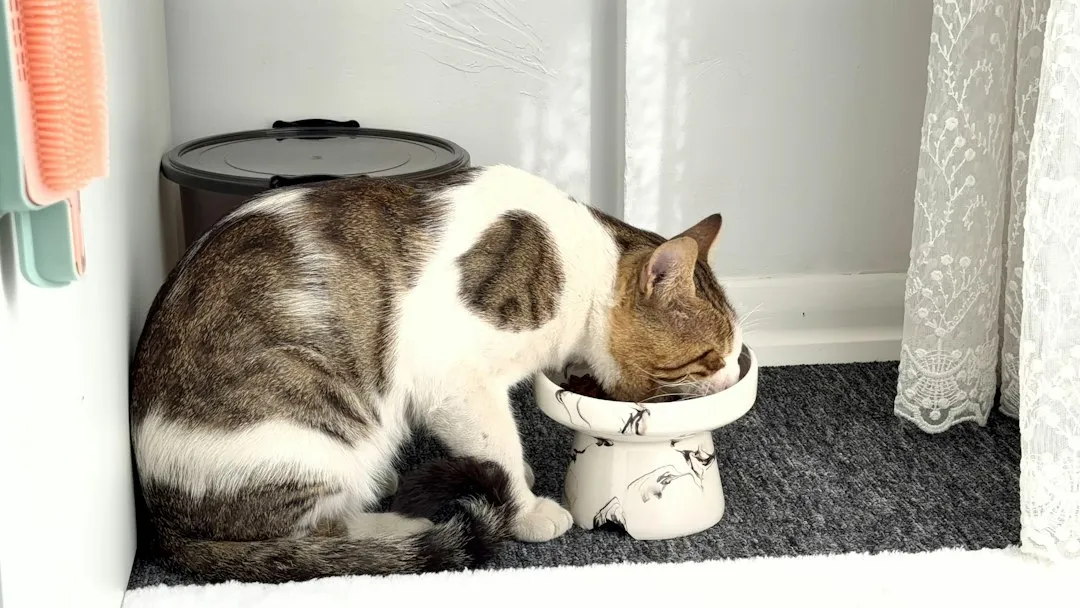
Turns out, bending down to a floor-level bowl can be uncomfortable for an arthritic cat. Cat-health experts suggest raising both the food and water bowls. The point is to take pressure off arthritic elbows and the neck.
Placement matters too. Experts also advise keeping bowls away from walls so a cat can get behind them, since cats tend to get anxious. Many owners push bowls into a corner without thinking, and for a nervous older cat that can feel like a trap.
Worth Knowing
- Raised bowls are meant to ease strain on the elbows and neck, not to be fancy.
- A bowl pushed into a corner can leave an anxious cat feeling boxed in.
- Pain can chip away at confidence, which can show up as pickiness about where she eats.
- Both food and water bowls count, so raise both.
Pain also affects confidence. Pain can reduce confidence and increase anxiety. A cat who suddenly seems picky about where she eats may actually be uncomfortable or on edge.
Most owners assume a slow eater is “just being fussy.” Many vets now argue the opposite: new eating hesitation in a senior cat deserves a closer look before anyone calls it a quirk.
Cheap, easy adjustments:
- Raise the bowls a few inches
- Pull them away from walls
- Keep water near where she rests, not upstairs
The next sign is the one that sends the most people to the vet, and the one most often brushed off…
#6 – Water, and a Lot More of It
🔥 Would you like to save this?
We'll email this post to you, so you can come back to it later!
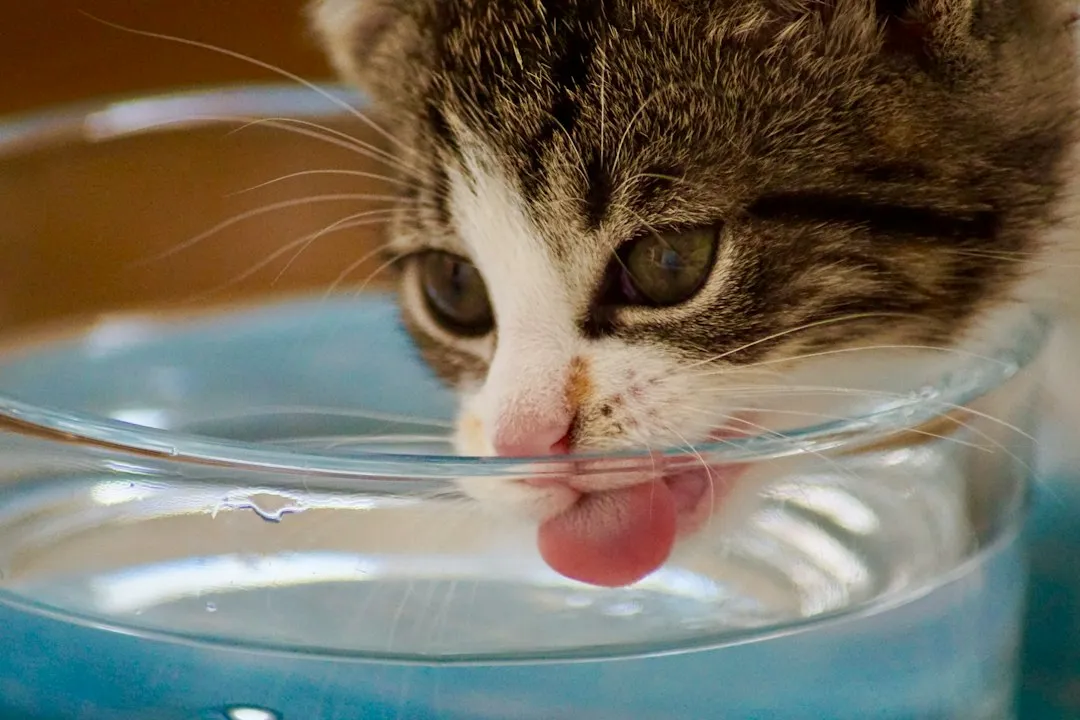
Is she suddenly drinking from the bathroom faucet? That’s a request.
Increased thirst is one of the most reliable early flags in an older cat. Drinking more is not a normal part of aging, even though it can start slowly. A noticeable or persistent increase in thirst isn’t simply a normal part of aging.
The usual suspects are kidney disease, an overactive thyroid and diabetes. Chronic kidney disease prevalence is estimated at 20–50% in cats over 10. Some hyperthyroid cats drink from unusual places like dripping faucets or plant containers.
Here’s why it happens in kidney disease. As kidney function declines, cats produce more dilute urine and drink more to replace the fluid they lose. The extra drinking is the body compensating, not a habit.
It helps to notice the slow version of this change, not just the dramatic one. Are you refilling the bowl more often? Are the litter clumps bigger than they used to be? Those small tallies are exactly what a vet wants to hear.
Possible signs that travel with thirst:
- More urine in the box, or accidents
- Weight loss
- Reduced appetite
- Vomiting or a dull coat
But a hungry cat is trickier, because it can look like good news…
#5 – More Food, Even as She Gets Thinner
🔥 Would you like to save this?
We'll email this post to you, so you can come back to it later!
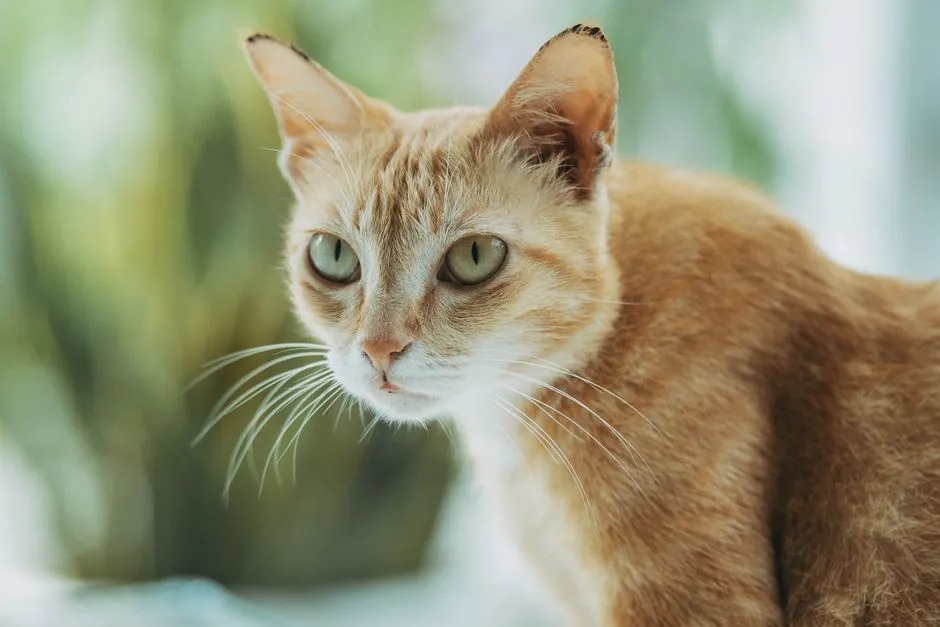
A cat who eats more and loses weight is not a healthy cat.
This one fools people. Many hyperthyroid cats seem unusually energetic and have a strong or increased appetite, yet continue to lose weight. Owners often describe a 16-year-old cat “acting like a kitten again.” That sounds like a gift, but it can be a symptom.
The mechanism is simple. Hyperthyroidism raises the metabolic rate, which typically causes weight loss despite a good appetite. The body burns through calories faster than she can eat them.
Most cat parents celebrate the new energy. Many vets read it differently, as a warning. Weight loss is a common symptom of hyperthyroidism and not a normal sign of aging.
The good news is that it is treatable. Feline hyperthyroidism is, in most cats, easy to diagnose with a routine blood test, and treatment options include medication, radioactive iodine, surgery or a prescription diet. Untreated, it can strain the heart, so early detection matters.
Early signs to log:
- A mild increase in thirst or appetite
- Restlessness or more vocalizing
- A slightly unkempt coat
And if the hunger doesn’t wake you up, the next one definitely will…
#4 – Your Attention at 3 A.M.
🔥 Would you like to save this?
We'll email this post to you, so you can come back to it later!
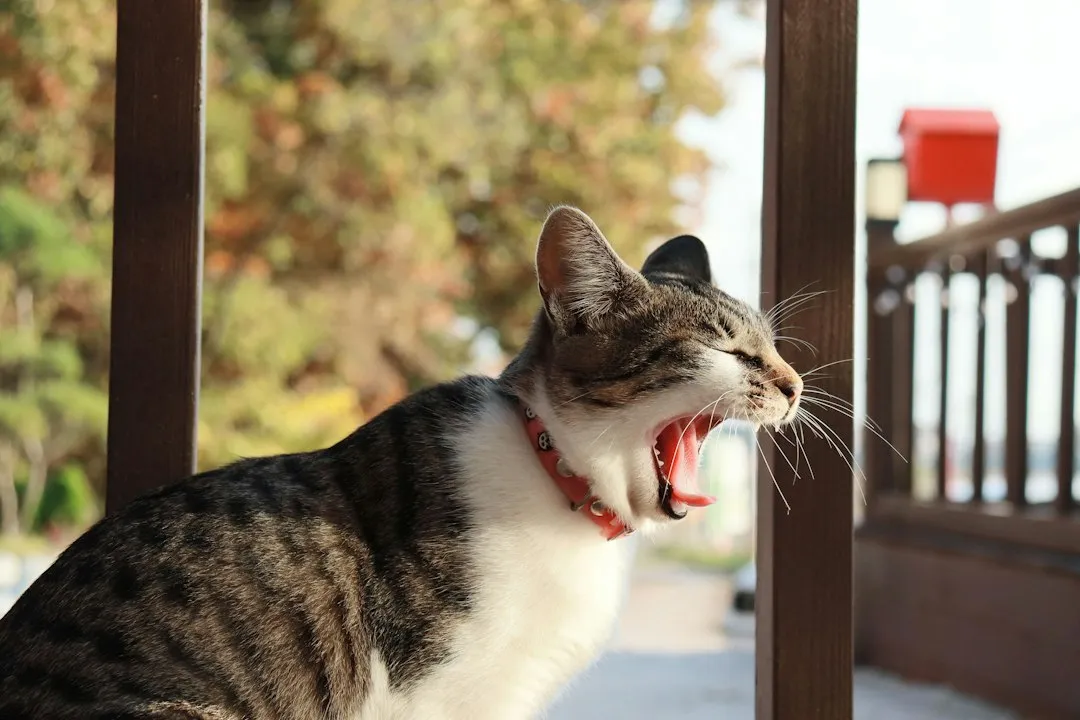
That midnight yowl is not a protest. It’s a symptom list.
Night vocalizing is one of the most common senior-cat complaints. A 2020 study of senior cats reported increased vocalization in over 58% during the day and more than 30% at night. The same study found 55% had new house-soiling issues.
The causes are broader than people expect. Vocalization, especially nighttime waking, may represent declining hearing and vision, cognitive dysfunction, pain, hyperthyroidism or hypertension.
Fast Facts
- Over 58% of senior cats in the 2020 study vocalized more by day.
- More than 30% vocalized more at night.
- 55% had new house-soiling issues.
- Six different problems can sit behind one yowl, so a guess won’t cut it.
High blood pressure deserves special attention. Hypertension can cause retinal detachment and blindness, leading to anxiety and confusion. A cat who can’t see well in the dark may call out simply to find you.
Most owners respond by shutting the bedroom door. Many experts argue the biggest mistake is treating the yowling as bad behavior. New, intense vocalizing, vets say, deserves bloodwork and a blood pressure check, not a closed door.
While you wait for the appointment, a night light and a clear path to her water and box can help a cat who is struggling to see.
What to track:
- When it happens, and for how long
- Whether she seems to be searching or staring
- Any weight, thirst or appetite changes
Next up is a request that can feel sweet, which is exactly why it gets missed…
#3 – To Be Closer, and Constantly
🔥 Would you like to save this?
We'll email this post to you, so you can come back to it later!
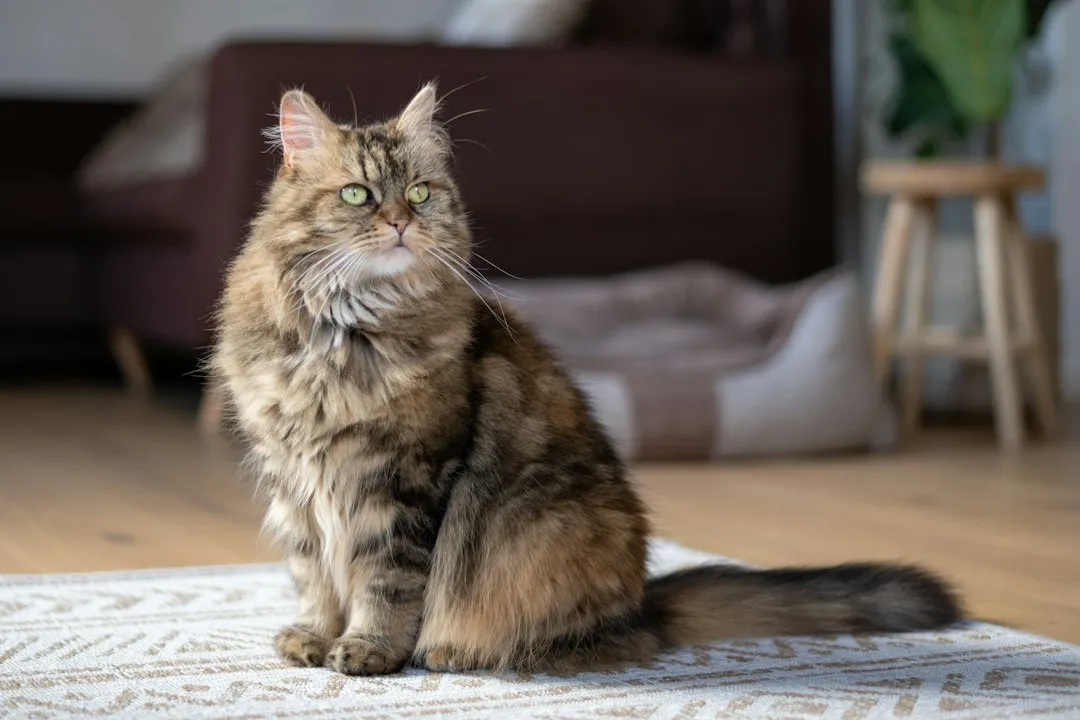
Your independent cat suddenly can’t stand being alone.
Here’s something that surprises even experienced owners. A senior cat who becomes friendlier and “talks” a lot may be showing early signs of feline cognitive dysfunction. Both vocalization and increased affection are clinical signs of it.
The same 2020 study found more than a third of senior cats showed increased affection and dependency on owners. So the “clingy phase” isn’t always a bond. It can be a clue.
The behavioral signs of cognitive dysfunction tend to become clearly noticeable in cats 10 or older. Other signs can include disorientation, staring at walls, getting stuck in corners and altered sleep. A cat who walks into a room and seems to forget why is telling you something.
Be careful, though. Pain, sensory loss, hyperthyroidism and hypertension can look the same. A vet needs to rule those out before anyone assumes dementia.
But what she wants next is the opposite of closeness…
#2 – A Quiet, Soft, Predictable Place
🔥 Would you like to save this?
We'll email this post to you, so you can come back to it later!
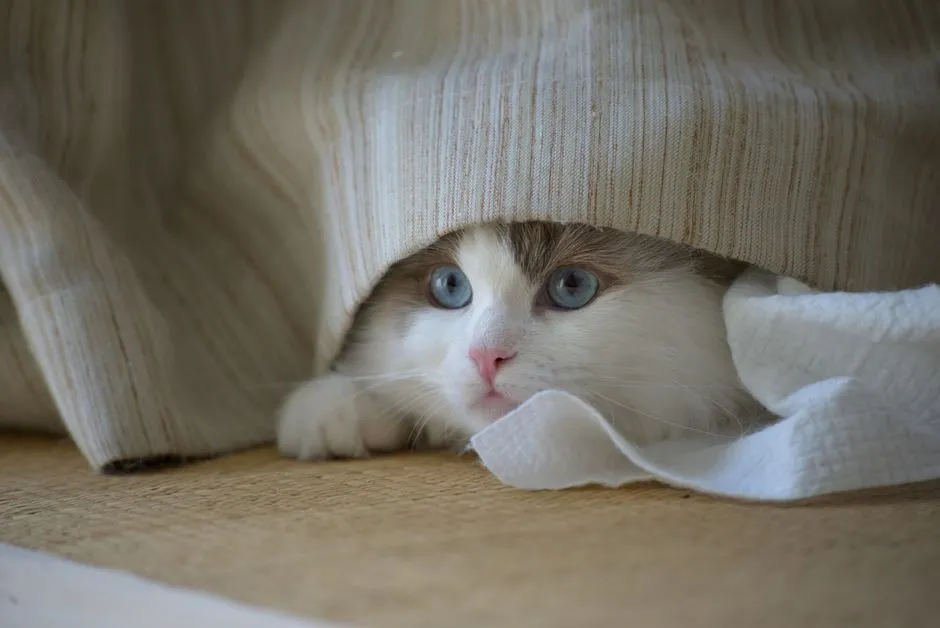
Some older cats don’t want you. They want a hiding spot.
Hiding is a request too. Cats with neurological changes may feel disoriented and seek quiet, enclosed spaces to manage the confusion. It can also reflect pain. Cats with arthritis may hide or avoid interaction due to pain and discomfort.
Soft surfaces matter more than most owners realize. For arthritic cats, non-drug options include soft bedding, ramps and lower-sided litter pans. A thin hard bed isn’t a bargain when joints ache.
New moodiness can also be a sign. New aggression or fearfulness in an older cat is a red flag for pain, vision or hearing loss, or a condition affecting the nervous system. That “grumpy old cat” may actually be hurting.
Keep her world steady:
- Leave furniture and bowls where they are
- Offer a soft bed in a quiet corner
- Avoid scolding for confusion or accidents
The final request is the one she can’t make herself…
#1 – A Vet Who Looks at Behavior, Not Just Age
🔥 Would you like to save this?
We'll email this post to you, so you can come back to it later!
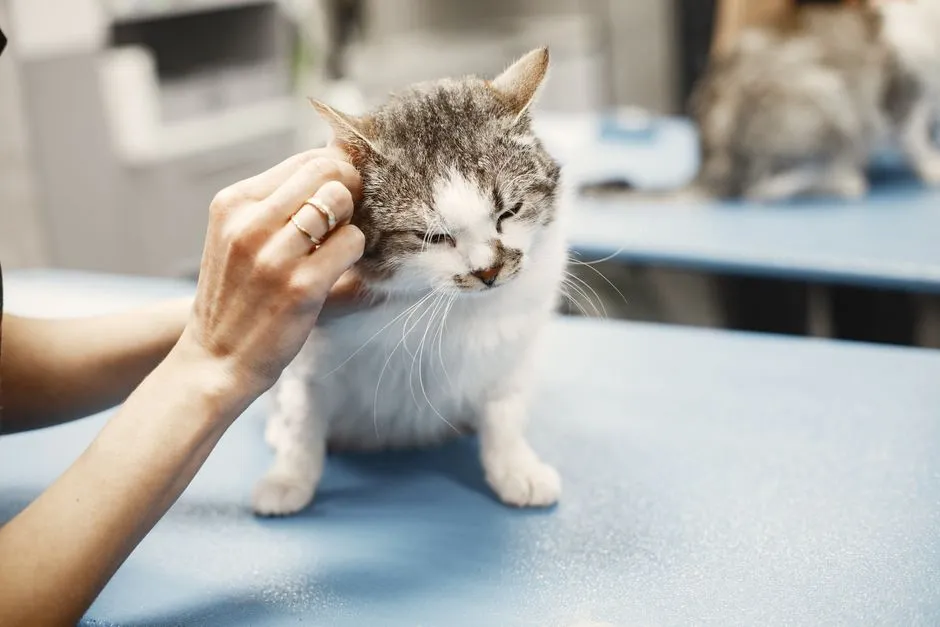
Every request on this list is a symptom until proven otherwise.
Here’s the truth most owners don’t expect. New or worsening behavior changes should not automatically be attributed to aging. Cats hide illness well, so behavior is often the first clue, and veterinary guidelines say senior cats with new behavior should be evaluated for medical conditions.
The conditions overlap and often travel together. Kidney disease, hyperthyroidism and high blood pressure frequently occur together in older cats. That’s why a symptom like yowling can have more than one cause.
So what does a good visit include? The AAFP’s senior care guidelines recommend bloodwork and a urinalysis at every senior wellness visit. For a cat yowling at night, ask about a T4 test and a blood pressure check.
At a Glance
- Bloodwork and urinalysis at every senior wellness visit
- A T4 test if she’s yowling, restless or losing weight despite a big appetite
- A blood pressure check, especially with night crying or vision changes
- A dated list of every new request, from the ramp to the faucet
Many of these problems are manageable once found. Pain can be treated, thyroid disease has options, and kidney disease responds better when caught early. A short phone video of her jumping, drinking or pacing can show your vet what a quiet exam room never will.
All of which leads to one clear conclusion…
The Bottom Line
🔥 Would you like to save this?
We'll email this post to you, so you can come back to it later!
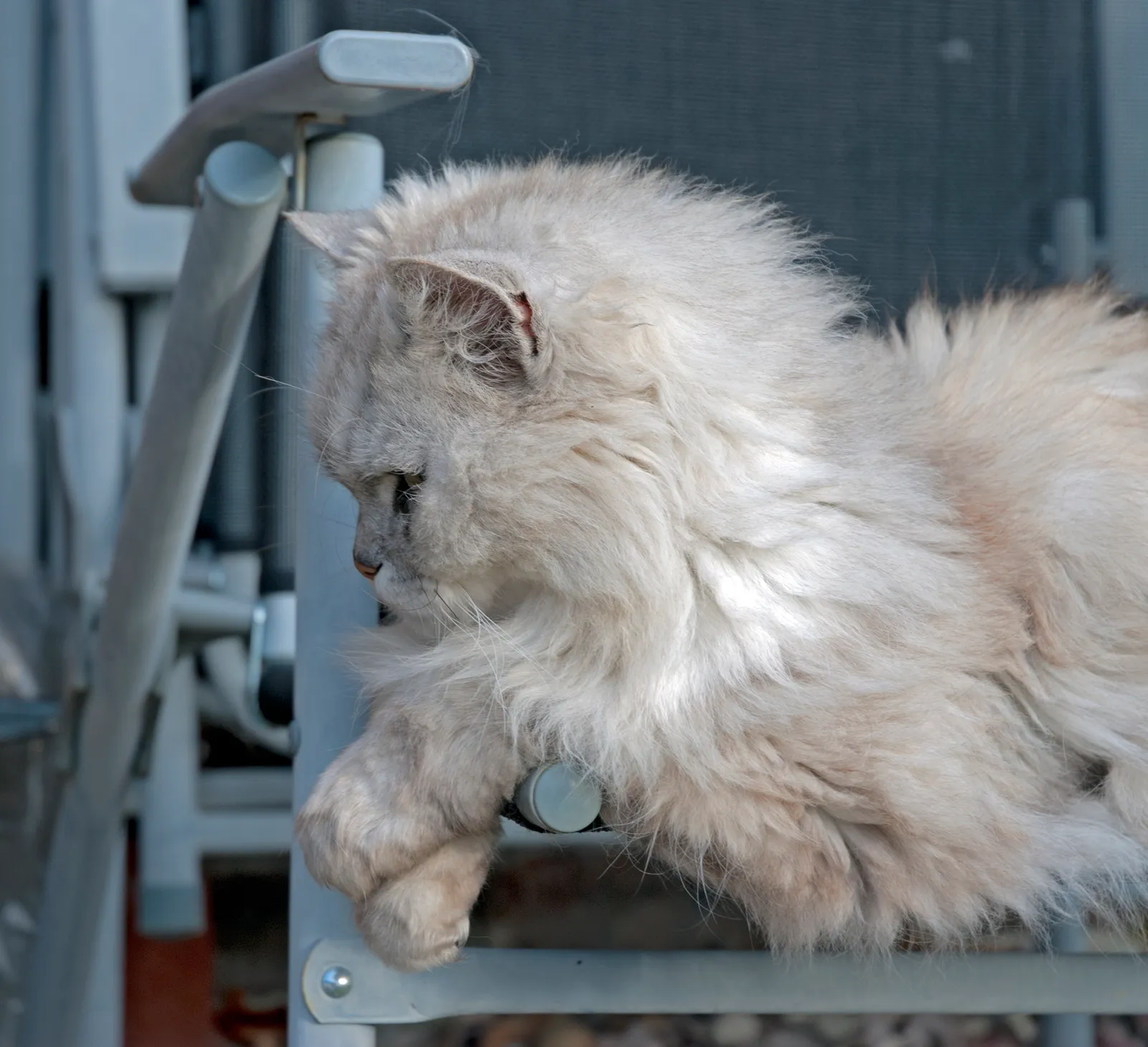
An older cat’s new demands are rarely quirks. A ramp, a lower box, a raised bowl or a drink from the faucet can each point to something treatable: arthritis, kidney disease, thyroid trouble, high blood pressure or cognitive change.
The most overlooked fact is that appetite, thirst and clinginess can look like “good signs” when they aren’t. The cat who finally seems youthful again may be the one who needs bloodwork most.
Our opinion: stop explaining behavior away and start writing it down. A note on your phone beats a guess every time. Give her the ramp, then book the bloodwork.
Which of these did you notice in your cat first?

- 12 Surprising Facts About North American Mountain Lions You Never Knew - November 5, 2026
- Wild Salmon Populations Are Rebounding in the Pacific Northwest, A Sign of Healthier Rivers - November 5, 2026
- 8 Fascinating Facts About Owls You Never Knew - November 5, 2026