
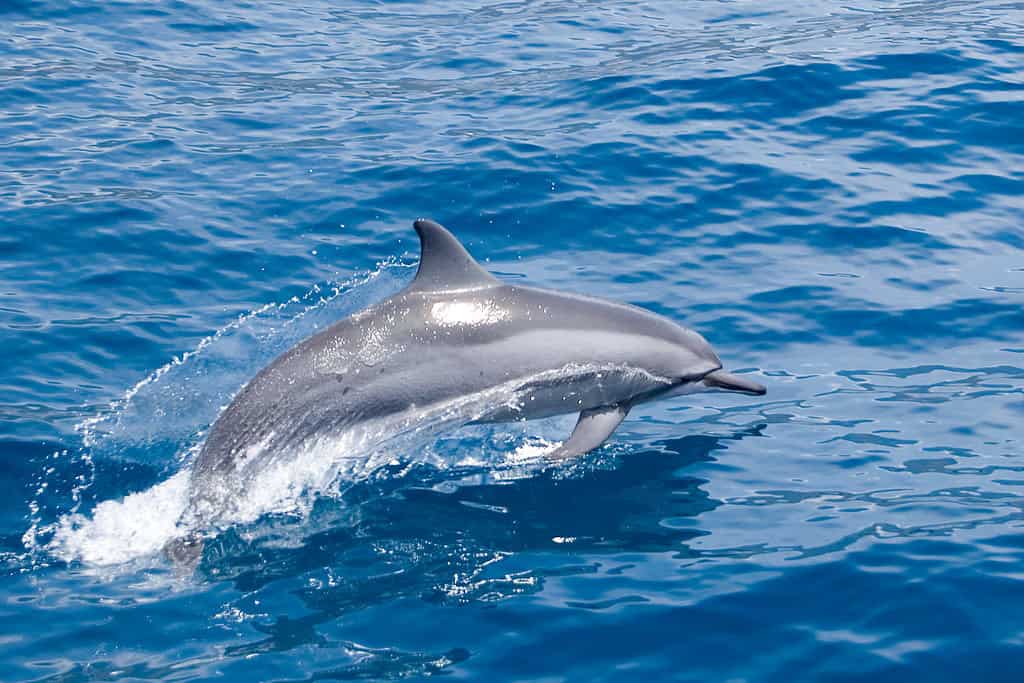
In the vast blue depths of our oceans, dolphins have established sophisticated learning communities that rival human educational systems. These remarkable marine mammals don’t simply survive by instinct alone – they thrive through intricate knowledge transfer mechanisms that span generations. While humans rely on schools and universities, dolphins have developed their own forms of cultural transmission, creating a rich tapestry of learned behaviors that help their societies flourish. From specialized hunting techniques to complex communication systems, dolphin knowledge passes through time in ways that continue to astonish marine biologists and behavioral scientists. This intergenerational teaching represents one of the most fascinating examples of non-human culture on our planet.
The Foundation of Dolphin Culture

Dolphin culture forms the bedrock of their social learning systems. Unlike many animals whose behaviors are primarily instinctual, dolphins demonstrate clear evidence of culturally transmitted knowledge – information passed through social learning rather than genetic inheritance. This cultural foundation allows dolphin communities to develop unique traditions and practices specific to their particular groups. Research by marine biologists has documented distinct “cultural communities” among dolphin populations, each with their own set of learned behaviors that persist across generations. These cultural differences can be observed in feeding strategies, communication dialects, and social rituals that distinguish one community from another, even when they inhabit overlapping territories. The existence of these cultural variations provides compelling evidence that dolphins don’t simply inherit their knowledge genetically but learn significant portions of their behavioral repertoire through social transmission across generations.
Mother-Calf Knowledge Transfer

The mother-calf bond represents the most fundamental channel for dolphin knowledge transmission. For the first three to six years of life, dolphin calves remain in close proximity to their mothers, creating an extended learning period that exceeds most other marine mammals. During this critical developmental window, mothers systematically introduce their young to essential survival skills. They demonstrate proper breathing techniques, effective swimming patterns, and introduce their calves to the social protocols of their pod. Research from the Shark Bay Dolphin Research Project has documented mothers spending thousands of hours modeling foraging techniques specific to their habitat, with calves gradually attempting these techniques under maternal supervision. The extended dependency period allows for extensive trial-and-error learning under the watchful guidance of experienced mothers. This apprenticeship model ensures that crucial survival knowledge transfers reliably between generations, with each calf receiving personalized instruction tailored to its developing abilities.
Specialized Hunting Techniques

Perhaps the most remarkable examples of dolphin cultural transmission appear in their diverse hunting strategies. Different dolphin communities have developed specialized techniques uniquely adapted to their local environments, and these methods are clearly taught rather than instinctively known. In Shark Bay, Australia, some dolphin groups practice “sponging” – a technique where individuals carry marine sponges on their rostrums (beaks) to protect them while foraging in rocky seafloors. Long-term studies have confirmed this behavior passes primarily from mother to daughter, creating matrilineal “sponging families” that maintain this tradition across generations. In Florida, bottlenose dolphins have developed “mud-ring feeding,” where they create circular mud plumes to trap fish, while in South Carolina, some groups practice “strand feeding” – intentionally beaching themselves to catch fish they’ve herded onto shorelines. Each of these complex techniques requires years of observation and practice, demonstrating how dolphins have developed regionally specialized knowledge systems that transmit vertically through generations and horizontally among peers.
Vocal Learning and Communication

Dolphins possess some of the most sophisticated vocal learning capabilities outside of humans, and this linguistic knowledge transfers culturally rather than genetically. Unlike many animals with fixed vocal patterns, dolphins must learn their communication systems. Each dolphin develops a unique signature whistle – essentially a name for itself – within its first year of life. Research by Dr. Vincent Janik and colleagues has shown that dolphins create these whistles by learning and modifying sounds from their environment and pod members. Beyond individual signatures, dolphin pods develop distinct “dialects” that serve as cultural markers of group identity. Young dolphins acquire not only the ability to produce the right sounds but also the contextual knowledge of when and how to use different vocalizations. This communication system includes learned signals for coordinating hunting, warning of dangers, and maintaining social bonds. The existence of these pod-specific dialects provides strong evidence for cultural transmission, as genetically similar dolphins from different areas develop entirely different vocal repertoires based on their learning environment.
Tool Use Across Generations

Tool use, once considered uniquely human, has been well-documented in multiple dolphin populations with clear evidence of cultural transmission. Beyond the sponging technique mentioned earlier, dolphins exhibit various forms of tool utilization that pass through social learning. In the Florida Keys, dolphins have been observed using seagrass, empty shells, and even bits of marine debris as tools to flush out hiding fish. Research published in Current Biology documented how this knowledge transfers primarily along maternal lines but can spread horizontally when younger dolphins observe the success of their tool-using peers. What makes dolphin tool use particularly significant is the regional variation – different populations develop tool-using techniques specific to their ecological circumstances. The pattern of transmission often follows predictable social learning pathways, with young females more likely to adopt their mothers’ techniques, while young males may acquire methods from multiple adult models. This complex pattern of transmission creates tool-using traditions that can persist for decades within specific dolphin communities, demonstrating how cultural knowledge becomes embedded in their societies.
Social Rules and Etiquette

Dolphin societies operate under sophisticated social codes that must be learned rather than instinctively known. Young dolphins undergo what amounts to a social education, learning the intricate rules that govern their community’s interactions. Research by marine ethologists has documented how juvenile dolphins observe and gradually master complex social skills – understanding dominance hierarchies, recognizing appropriate play behaviors, and learning conflict resolution techniques. In some populations, researchers have observed what appears to be corrective behavior from adults when juveniles violate social norms, suggesting active teaching of proper etiquette. These social rules can vary significantly between different dolphin communities, indicating cultural rather than genetic transmission. For example, some dolphin groups maintain strict protocols around feeding territories, while others demonstrate more fluid resource sharing. The process of acquiring these social skills continues well into adolescence, with young dolphins gradually gaining proficiency in navigating their community’s particular social landscape. This transmission of social knowledge ensures cohesion within dolphin societies and allows them to maintain complex cooperative relationships across generations.
Play as Learning

Play serves as a crucial mechanism for knowledge transfer in dolphin societies, functioning as both a teaching tool and learning laboratory. Young dolphins engage in elaborate play sessions that simulate adult activities, particularly hunting and social interactions. Marine biologists have observed how these play sessions become increasingly sophisticated as juveniles age, with adult dolphins occasionally intervening to demonstrate proper techniques or redirect inappropriate behaviors. Object play appears particularly important for developing tool-using skills, with juveniles practicing manipulation of various items before applying these abilities to actual foraging. Social play helps young dolphins learn the boundaries of acceptable behavior within their community, teaching them how to navigate complex social relationships. Research from the Dolphin Communication Project has documented how play sessions often involve mixed age groups, creating opportunities for knowledge to transfer not just from adults to juveniles but between peers at different developmental stages. This multi-directional learning through play creates a rich educational environment that helps maintain and elaborate cultural knowledge across generations of dolphin societies.
Cooperative Hunting Strategies

Dolphins have developed remarkably sophisticated cooperative hunting techniques that require coordinated action and shared knowledge among group members. These strategies demonstrate clear evidence of cultural transmission, as they vary significantly between different dolphin populations and must be learned through observation and practice. In some regions, dolphins have developed “herding” techniques where they work together to encircle fish schools, taking turns feeding while others maintain the perimeter. Off the coast of Mauritania, bottlenose dolphins have been documented cooperating with human fishermen in a tradition that spans generations – the dolphins signal when to cast nets and help herd fish toward the fishermen, receiving scattered fish as reward. Perhaps most impressively, some dolphin groups practice what researchers call “wave hunting,” generating controlled waves to wash fish off mudbanks into waiting pod members. Each of these strategies requires precise coordination and specific roles that younger dolphins must learn from experienced hunters. Research has shown that these hunting traditions can persist for decades or even centuries within specific dolphin communities, with each generation teaching the next through demonstration, practice, and occasionally direct intervention when younger members make errors.
Ecological Knowledge Transfer

Dolphins accumulate and transmit detailed ecological knowledge across generations, creating a form of environmental wisdom that helps them navigate their complex marine habitats. Studies tracking dolphin movements have revealed how pods maintain awareness of seasonal resource patterns, migratory routes, and feeding opportunities that couldn’t possibly be genetically encoded. This ecological knowledge includes awareness of safe resting areas, dangerous predator zones, and productive feeding grounds that may shift with changing ocean conditions. Research by marine ecologists has documented how older, more experienced dolphins often lead group movements during challenging conditions or resource scarcity, drawing on accumulated knowledge that younger members haven’t yet acquired. Particularly fascinating is evidence suggesting dolphins may maintain “cultural memory” of rare but important events – such as unusual predator behaviors or exceptional resource opportunities – that occur too infrequently for individuals to learn through personal experience alone. This transfer of ecological knowledge creates a form of collective intelligence that allows dolphin communities to adapt to changing environmental conditions more effectively than they could through individual learning alone.
Cultural Innovation and Adaptation

Dolphin cultures don’t merely preserve traditional knowledge – they also demonstrate innovation and adaptation across generations. Research has documented instances where dolphin communities develop novel behaviors in response to environmental changes or opportunities, and these innovations can spread through social learning. One striking example comes from Australia’s Port River, where dolphins began decorating themselves with sea sponges – a behavior that appeared suddenly in the 1990s, spread through the community, and has persisted across multiple generations. Similarly, following the introduction of prawn trawlers in Moreton Bay, local dolphins developed new techniques for exploiting this fishing activity, with specific behaviors spreading through social networks rather than emerging independently. What makes these examples particularly significant is how rapidly new behaviors can become established traditions within dolphin societies. Research published in Biology Letters demonstrated that innovative feeding techniques can spread through dolphin communities along social networks, with young dolphins particularly likely to adopt behaviors from successful peers. This capacity for cultural innovation allows dolphin societies to adapt to changing circumstances while maintaining the accumulated wisdom of previous generations.
The Elder Knowledge Keepers

Within dolphin societies, older individuals play a crucial role as repositories of accumulated knowledge and experience. These elder dolphins, particularly post-reproductive females, function as what some researchers have termed “knowledge keepers” for their communities. Studies of dolphin social networks have revealed how younger dolphins preferentially associate with these experienced elders during challenging situations like unusual weather events, food scarcity, or predator encounters. The phenomenon resembles what anthropologists call the “grandmother effect” in human societies – the presence of knowledgeable elders significantly improves group survival and success. Research from the Sarasota Dolphin Research Program has documented how groups led by experienced matriarchs demonstrate more efficient foraging patterns and better predator avoidance strategies than those without elder leadership. This role of elder knowledge keepers creates a form of living library within dolphin societies, preserving information that extends beyond any individual’s lifespan. The relationship between these knowledge keepers and younger generations ensures continuity of cultural wisdom while still allowing for adaptation to changing conditions – a sophisticated balance that has allowed dolphin cultures to persist and evolve over thousands of years.
Threats to Cultural Transmission

Despite the sophistication of dolphin cultural systems, human activities increasingly threaten these knowledge networks in concerning ways. When dolphin populations face disruption through hunting, habitat destruction, or bycatch, the consequences extend beyond mere population decline – they can sever crucial chains of cultural transmission. Research published in Nature Communications has documented how the removal of key knowledge-holding individuals can result in the permanent loss of specialized techniques and traditions within dolphin communities. Unlike genetic information, cultural knowledge cannot be preserved in DNA databases or recovered through breeding programs once lost. Particularly concerning are situations where dolphin communities face rapid environmental changes that outpace their capacity for cultural adaptation. For instance, increasing ocean noise from shipping and military activities interferes with the acoustic communication essential for dolphin teaching and learning. Similarly, pollutants like PCBs and heavy metals can impair cognitive function in dolphins, potentially undermining their capacity for complex social learning. These threats highlight the urgent need for conservation approaches that recognize and protect not just dolphin populations but the cultural knowledge systems that have evolved within their societies over countless generations.
The Continuing Story of Dolphin Culture

The intergenerational teaching systems of dolphins offer profound insights into the nature of non-human culture and knowledge transmission. As our scientific understanding continues to deepen, we increasingly recognize dolphins not merely as intelligent animals but as bearers of cultural traditions with their own forms of wisdom and learning. This recognition challenges us to expand our conception of culture beyond human societies and acknowledge the sophisticated knowledge systems that have evolved in our oceans. The parallels between dolphin teaching and human educational systems – including demonstration, guided practice, peer learning, and knowledge specialization – suggest fascinating convergent evolution of cultural transmission mechanisms. By studying how dolphins preserve and transmit knowledge across generations, we gain valuable perspective on our own cultural evolution and the universal importance of intergenerational learning. As we face unprecedented environmental challenges, the sophisticated cultural adaptations of dolphins remind us that knowledge transmission represents one of nature’s most powerful tools for survival – a lesson as relevant for human societies as it is for our cetacean counterparts in the world’s oceans.

- This Tiny Insect Can Survive in Outer Space—Here’s How - July 21, 2026
- Could the Tasmanian Tiger Be Brought Back to Life? - July 21, 2026
- Why You Should Never Approach a Sleeping Hippo - July 21, 2026