
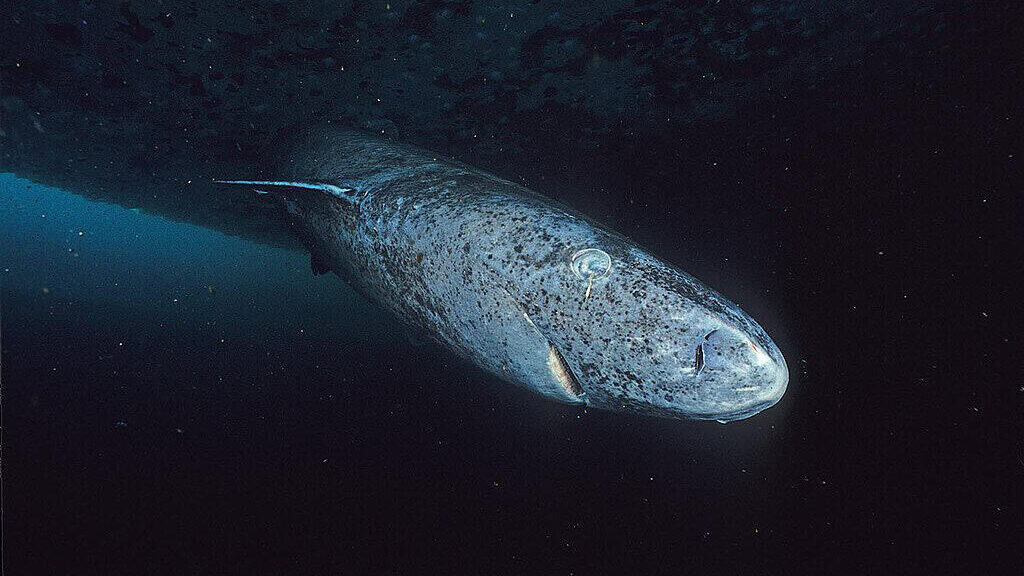
Few creatures make time feel as strange as the Greenland shark. Gliding through the dark, near-freezing waters of the Arctic and North Atlantic, this quiet giant can outlive entire civilizations. Some individuals alive today may have begun life centuries ago, long before modern industry, modern medicine, or even many modern nations took shape. Scientists estimate the species can live at least 250 years, and some age estimates for the largest animals stretch close to 400 years or more.
That kind of longevity feels almost unreal, which is exactly why the Greenland shark has become one of the ocean’s most fascinating mysteries. Its age-defying life is not explained by a single “secret,” but by an extraordinary combination of cold habitat, slow growth, delayed maturity, unusual biology, and perhaps even powerful cellular repair mechanisms that scientists are still trying to fully understand.
An Animal Built for a Slow World

The Greenland shark lives in some of the coldest marine environments on Earth, ranging across Arctic waters and into the deep North Atlantic. These waters can dip below freezing, and the species often inhabits dark, deep environments where sunlight barely penetrates. In these extreme conditions, life moves slowly and energy is scarce.
That environment plays a major role in the shark’s longevity. Cold temperatures slow many biological processes in animals, including metabolism. For the Greenland shark, this icy world seems to stretch time itself, allowing its body to function at a pace far slower than most other vertebrates.
Its Body Does Almost Everything Slowly
One of the clearest clues to the Greenland shark’s extraordinary lifespan is the way it lives—slowly, steadily, and without urgency. Scientists estimate the species grows roughly a centimeter per year, which is astonishingly slow for an animal that can eventually reach over 20 feet in length.
This slow growth reduces the physical stress placed on the body over time. Instead of burning energy quickly and aging rapidly, the shark’s entire biology appears tuned toward conservation and endurance. Every process—from movement to growth—seems designed for patience.
Age Comes Late for the Greenland Shark

Perhaps the most astonishing aspect of the Greenland shark’s life cycle is how long it takes to reach adulthood. Researchers believe these sharks may not reach sexual maturity until they are around 150 years old.
Imagine an animal spending a century and a half simply growing up. This incredibly delayed maturity contributes to their longevity, but it also makes the species fragile from a conservation perspective. When animals reproduce so late in life, population recovery from threats like fishing or habitat disruption can take generations.
Scientists Read Its Age in the Eye
For decades, scientists struggled to determine the true age of Greenland sharks because their bodies lack the typical structures used to age most fish. The breakthrough came from studying the shark’s eye lens.
Inside the eye lens is a core that forms early in life and remains largely unchanged as the animal ages. By analyzing this tissue using radiocarbon dating techniques, researchers discovered that Greenland sharks can live for centuries, making them the longest-lived known vertebrates on Earth.
The Genes May Be Doing Some Heavy Lifting
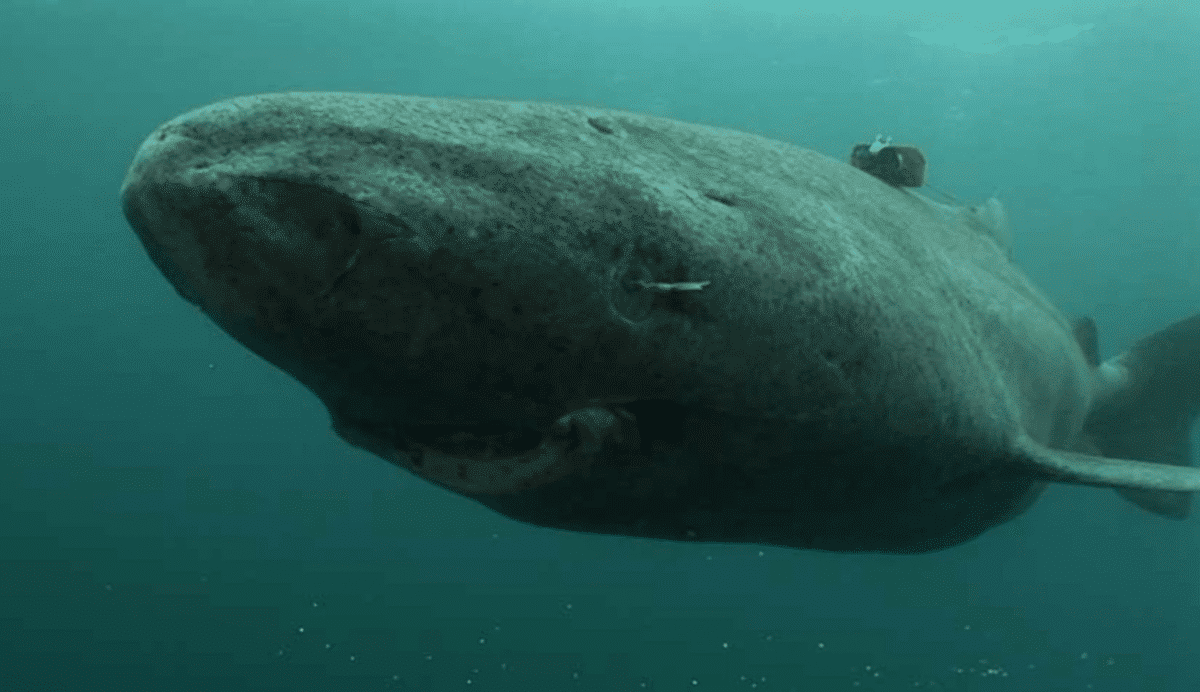
While environment and slow metabolism explain part of the mystery, genetics may also play a crucial role. Studies of the Greenland shark’s genome suggest the species may possess genes linked to strong DNA repair and cellular maintenance.
These biological tools could help prevent the accumulation of damage that normally leads to aging. In other words, the shark’s cells may be particularly good at fixing themselves, allowing the animal to maintain healthy tissues for hundreds of years.
Even Its Senses Seem Made to Endure
Greenland sharks often carry tiny parasites attached to their eyes, which once led scientists to believe they were nearly blind. However, newer research suggests their vision may still function better than previously thought.
What makes this remarkable is that many tissues in the shark’s body—including those associated with vision—show little evidence of the severe degeneration one might expect in an animal that lives for centuries. Their bodies appear to maintain stability over time rather than rapidly deteriorating.
Longevity Is Also a Survival Strategy
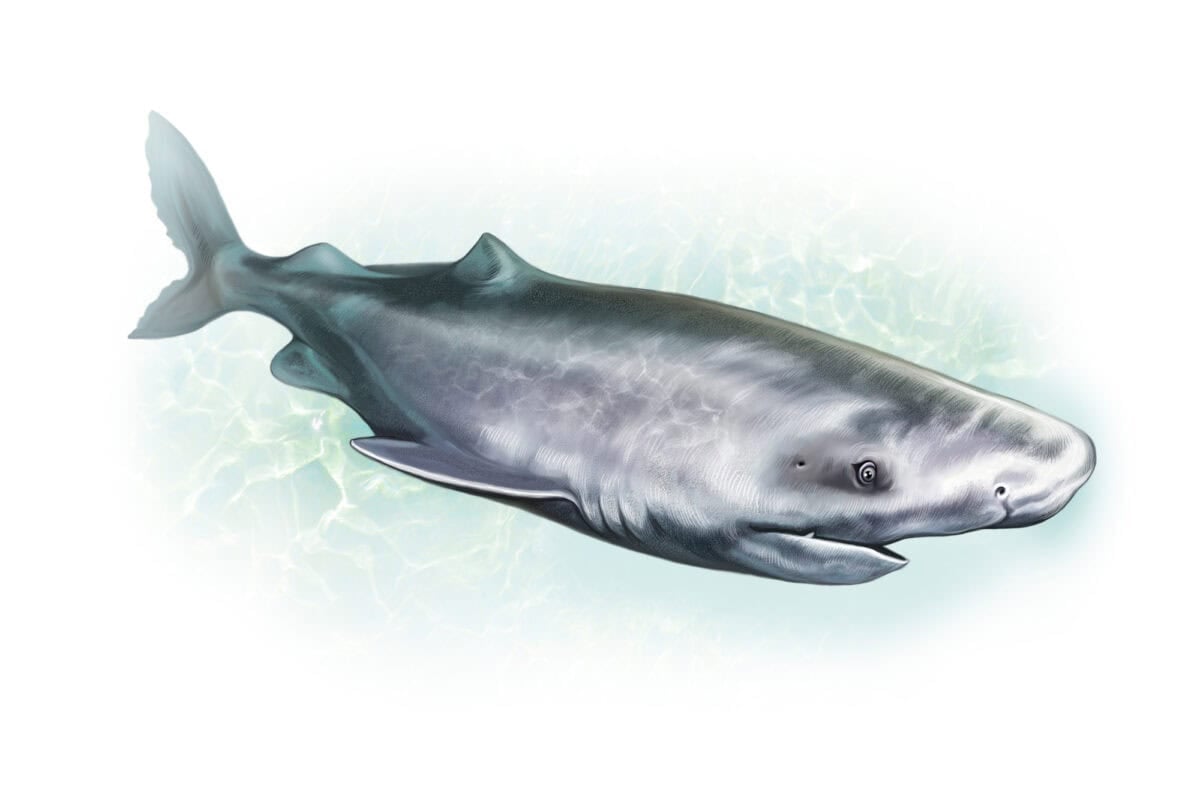
Life in the Arctic deep is not fast-paced. Food can be scarce, temperatures are brutal, and survival often depends on conserving energy rather than chasing it. The Greenland shark’s slow metabolism, deliberate movements, and patient lifestyle may be perfectly suited to this environment.
In this harsh underwater world, speed is less important than endurance. The shark’s ability to survive for centuries may be less about resisting time and more about living in harmony with a slow, energy-limited ecosystem.
The Greenland shark’s incredible lifespan is not the result of a single magical trait. Instead, it appears to come from a powerful combination of cold-water living, extremely slow growth, late maturity, resilient tissues, and possibly unique genetic advantages that protect its cells over time.
There is something deeply humbling about this animal. Somewhere in the silent Arctic depths, sharks may still be swimming today that were already alive centuries ago. Long before modern science, long before many of today’s cities existed, they began their quiet journey through the ocean—and they are still going.

- 12 Dog Breeds That Stay Healthy Well Into Old Age - July 29, 2026
- 11 Incredible Adaptations That Allow Animals to Survive Extreme Cold - July 29, 2026
- 8 Striking Facts About the Oryx: The Desert’s Living Spear - July 29, 2026