
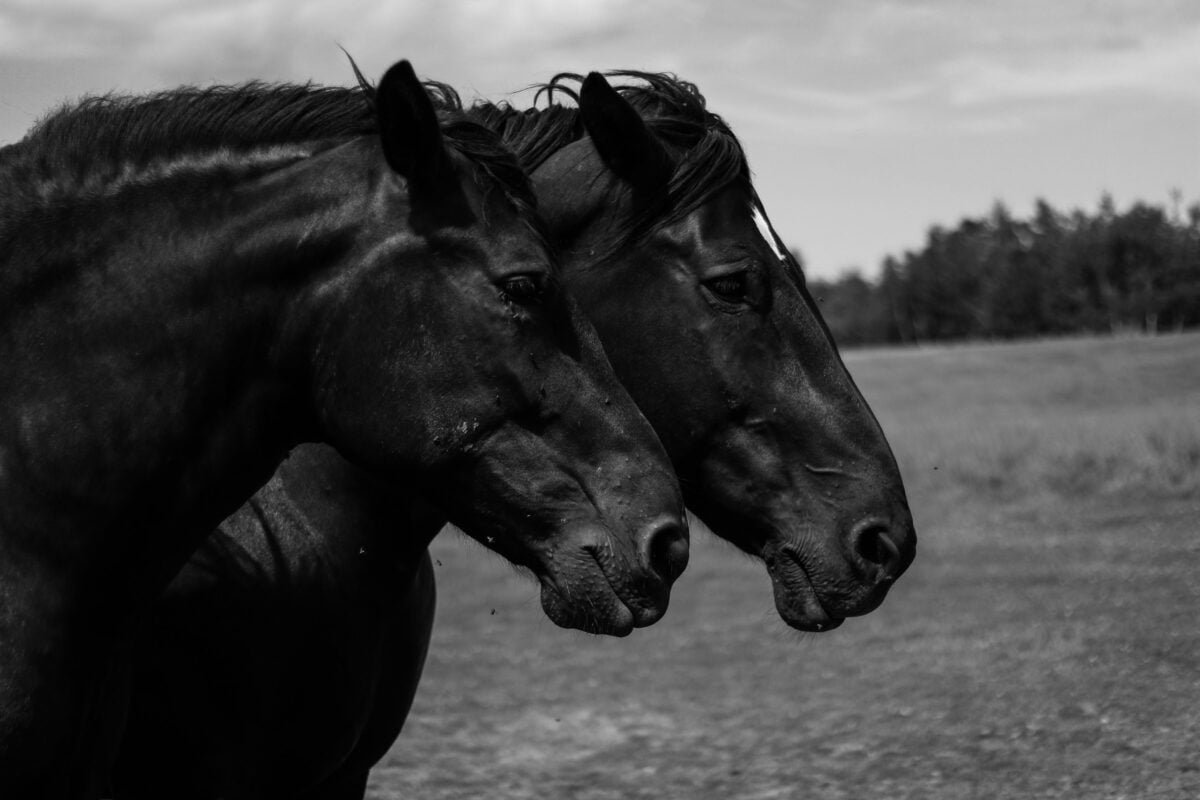
Drive past a paddock with two graying horses in it and you’ll probably assume nothing is happening. They’re just standing there – chewing, swishing tails, waiting out another afternoon. That assumption is almost completely wrong.
Underneath that quiet, “boring” surface, two build something closer to a marriage than a friendship – complete with grudges, rescue missions, borrowed personalities, and a private language made of ear flicks and half-steps. Stay with this, because by the time you reach what happens when one of them finally dies, you won’t look at “just two old horses” the same way again.
#9 – They Build a Quiet but Powerful “Pair Bond”
🔥 Would you like to save this?
We'll email this post to you, so you can come back to it later!
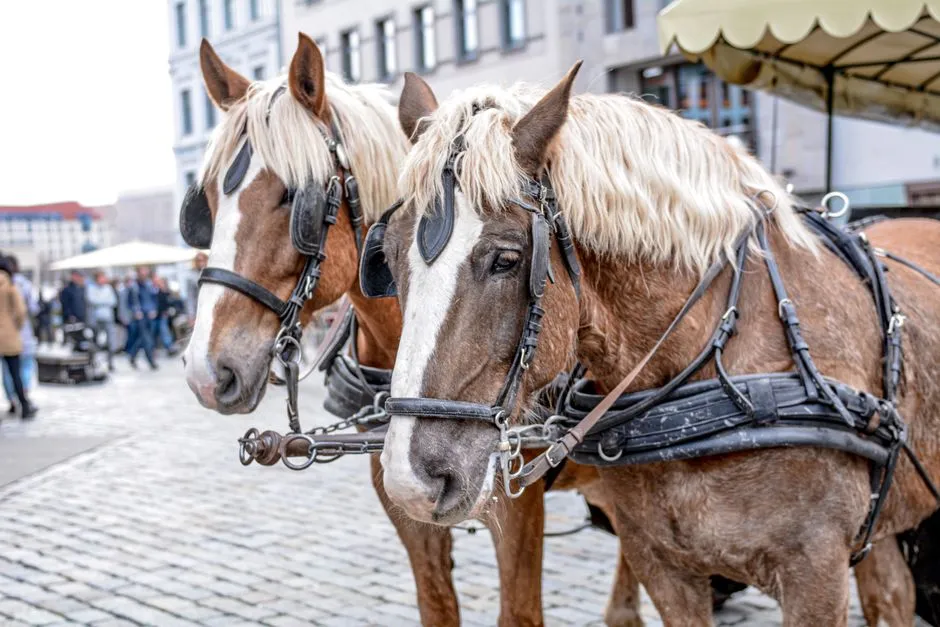
Two old horses who’ve shared a field for years don’t just tolerate each other. Behaviorists call it a pair bond – a preferred partnership that shows up in dozens of small, repeated choices every single day.
You’ll see them graze shoulder to shoulder, rest nose to tail, and drift back together even when the gate opens or a new horse shows up. For many seniors, that one familiar body is their emotional anchor, and studies of both domestic and feral herds show that tightly bonded pairs often sync almost everything – grazing, resting, even which side they swat flies on.
One of the clearest signs of a real bond is proximity by choice. Horses are prey animals, so choosing to stand within a few feet of another horse, with nothing forcing that closeness, is a serious trust decision – not an accident of geography.
This is why separation hits so hard. Owners often notice that when one half of the pair is pulled out for a ride or a vet visit, the other gets restless almost instantly – weaving at the fence, calling, pacing the boundary line. That’s not “spoiled” behavior. It’s genuine distress from losing the one horse that anchors its sense of safety.
- Consistent side-by-side grazing, even with open pasture elsewhere
- Resting together, often touching or overlapping personal space
- Immediate restlessness when the partner is removed, even briefly
#8 – Their Personal Space Rules Disappear Completely
🔥 Would you like to save this?
We'll email this post to you, so you can come back to it later!
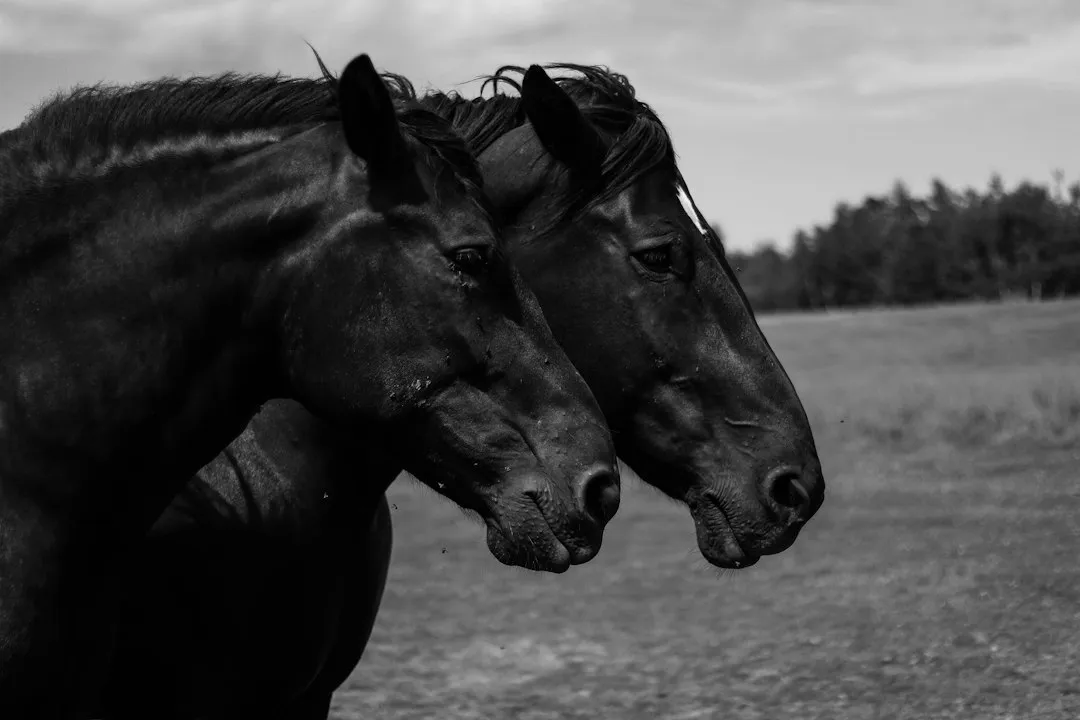
When two horses first meet, there’s a lot of posturing – pinned ears, snaking necks, a well-timed kick if someone crowds the wrong patch of hay. Fast-forward ten or fifteen years with the same partner, and something striking happens: their personal space boundaries with each other almost vanish.
An old pair that has truly settled will allow things they’d never tolerate from anyone else. They’ll share the same hay pile without pinned ears, stand hip to shoulder while dozing, and let the other lean or bump against a sore, arthritic spot without flinching.
Worth Knowing
- Bonded seniors often share a hay pile with no ear-pinning warnings at all
- They tolerate contact near sore or arthritic spots that would earn a stranger a kick
- Even lying down, they position themselves at a precise “safe but ready” distance
That last part matters more than it looks. Many senior horses get defensive around painful joints or backs, yet they’ll let a trusted companion crowd right up against the exact area that would earn a stranger a kick. If you see a horse allow another to stand within kicking range of its hindquarters while both are relaxed, you’re watching years of trust condensed into one still moment.
Even lying down reveals it. When one horse settles onto the ground, the other often positions itself just close enough to warn off threats, but not so close that it would have to scramble out of the way if its friend struggled to rise. That precise, practiced distance isn’t luck – it’s the product of years spent learning exactly how the other horse moves, hurts, and recovers.
#7 – They Develop a Shared Daily Rhythm (And Even Walk in Sync)
🔥 Would you like to save this?
We'll email this post to you, so you can come back to it later!
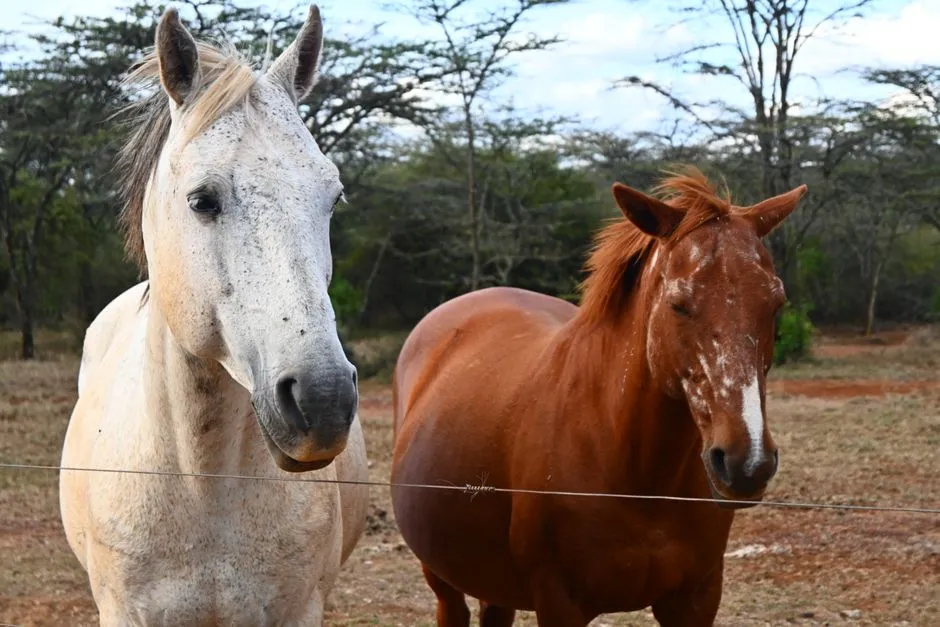
Watch two old pasture mates long enough and you’ll see something people love to romanticize – but it’s real: they start to move like one horse in two bodies. That’s not magic. It’s years of habit stacking on top of habit.
Researchers have documented “behavioral synchronization” across horse herds: when one starts grazing, others follow; when one lies down, others often do too. With long-term pairs, this goes further, because the sounder horse frequently becomes an escort for its stiffer, slower friend.
At a Glance
- The sounder horse often slows its own pace to match a stiffer partner
- Long-term pairs tend to pick shade or shelter at the same time
- One dozes while the other stays alert, then the roles swap
You’ll notice the healthier horse adjusting its own walking speed without any obvious cue, looping back if the older one falls behind, and pausing at gateways until its partner catches up. It’s not uncommon to see the sounder horse physically block others from barging through a narrow gate where its slower friend could get jostled. That can look like ordinary dominance – until you notice it only happens when the old friend is actually at risk.
Even rest cycles line up. Aging pairs tend to choose shade or shelter at the same time, and some seem to rotate lookout duty – one dozes while the other stays more alert, then they swap. This “you sleep, I’ll watch” pattern has deep roots in wild herds, but with an old pair that’s survived years of the same winters and the same stress, it becomes almost ritual.
#6 – Their Arguments Get Shorter, But More Honest
🔥 Would you like to save this?
We'll email this post to you, so you can come back to it later!
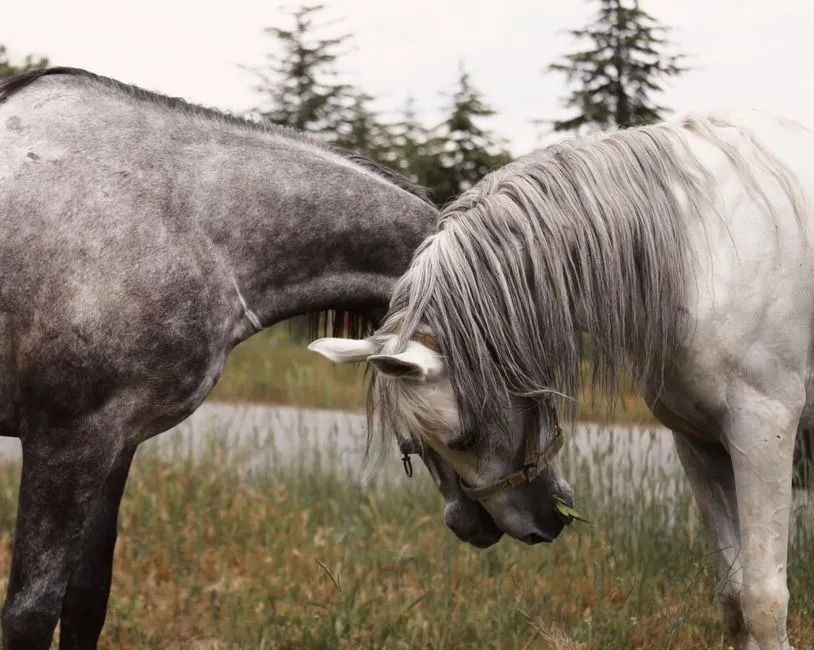
People love to imagine old horses as endlessly gentle, but that’s not quite true. Two seniors who’ve shared a field for years still argue – they’re just efficient about it. They know exactly how much pressure it takes to move the other, and they rarely overshoot.
In a new herd, a disagreement over hay or shelter can turn into chasing, kicking, and real drama. With a long-term pair, the same disagreement gets settled almost instantly.
- One pinned-ear look, and the other steps aside
- A small tail swish replaces a full double-barrel kick
- A short, low squeal, then immediate resolution
Because these horses have tested each other’s boundaries thousands of times, the “rules” of who moves for whom, and over what, are essentially burned in. Owners sometimes mistake this quiet efficiency for a dull relationship, but it’s actually the opposite – a sophisticated, fully negotiated partnership with almost no room left for confusion.
Interestingly, that old rivalry can flip instantly when a third horse interferes. If an outsider shoves in at the hay pile, the bonded pair may briefly unite against the intruder, then go right back to bickering with each other five minutes later. Old alliances have a way of resurfacing exactly when they’re needed.
#5 – They Share Stress – and Sometimes Each Other’s Health Problems
🔥 Would you like to save this?
We'll email this post to you, so you can come back to it later!
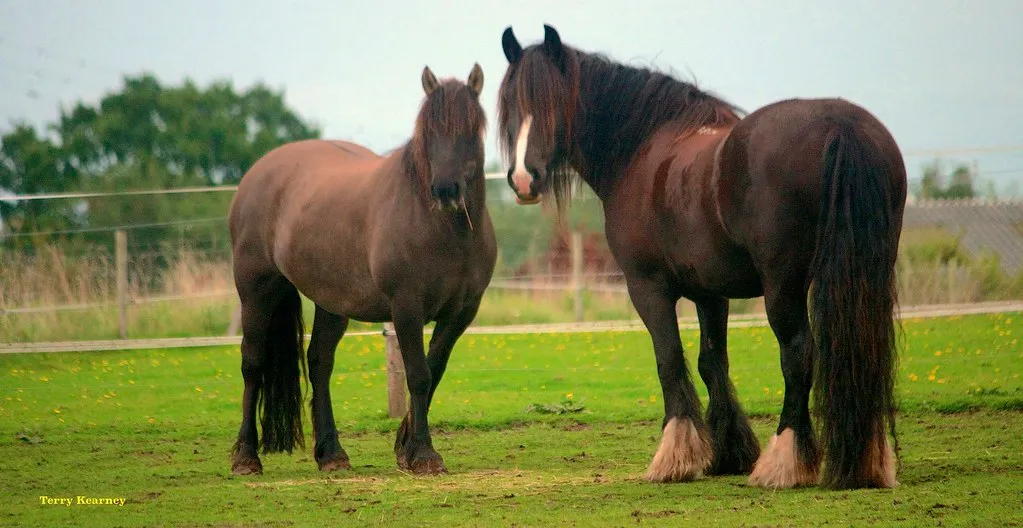
This is the part most people don’t want to hear: when one senior horse declines, the other often follows – mentally, and sometimes physically.
Long-term companions co-regulate each other’s stress levels. When one stays calm, the other tends to settle too; when one panics, the other often escalates right along with it. Over years, that creates a shared emotional baseline that’s hard to break.
If one horse suddenly gets sick, goes to the clinic, or loses mobility, the change ripples straight into the “healthy” one too.
- Loss of appetite in the still-healthy partner
- Increased calling, fence walking, or standing guard at the gate
- Staring or scanning the exact spot where the missing horse usually stands
There’s even anecdotal evidence from barns and retirement farms that a surviving partner’s immune issues or weight problems worsen after losing a bonded friend. That’s not illness spreading in a literal sense, but chronic stress and loneliness can absolutely wear down an older horse’s resilience.
To be fair, not every pair collapses together – some seniors adapt surprisingly well, especially inside a larger, stable herd. But ignoring the physical toll of one partner’s decline is a mistake that often shows up months later, in vet bills and behavior problems nobody connects back to grief.
#4 – They Carve the Field Into Their Own Private Territory
🔥 Would you like to save this?
We'll email this post to you, so you can come back to it later!
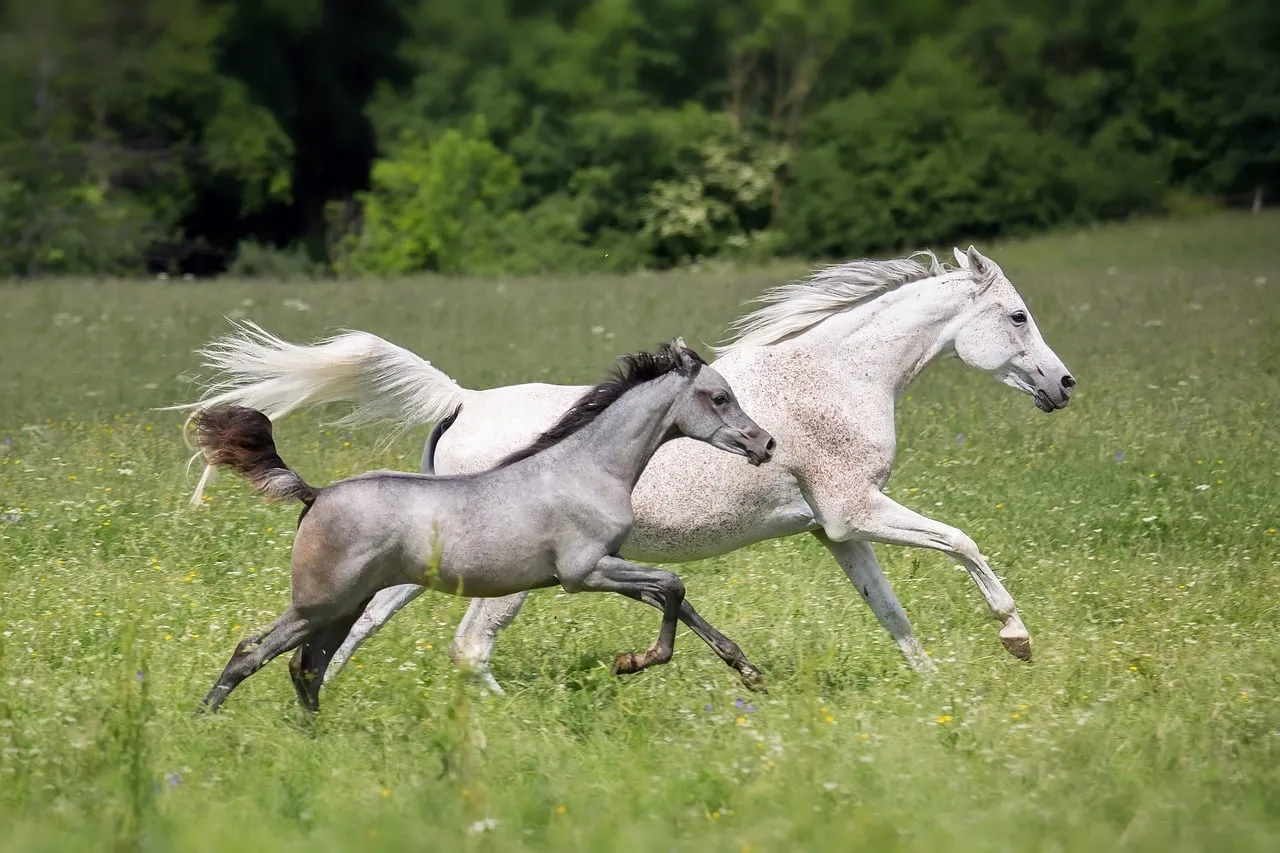
Most owners picture the field as one shared space. Two old horses who’ve lived together for years quietly disagree – they carve it into their zones, often in ways humans never notice.
Over time, the pair builds a mental map of safe resting spots, preferred grazing strips, and sheltered corners for bad weather. Those spots are rarely random.
- Slightly elevated ground for better visibility
- Near a windbreak, tree line, or building
- Close enough to water or shelter that an arthritic horse can still manage the walk
What’s fascinating is how firmly some old pairs defend these micro-territories from newcomers. A young, energetic gelding might be free to tear around the open pasture all he wants, but the quiet, shady corner behind the trees is off-limits. You’ll see one senior cut off the youngster’s path while the other pushes from behind, until the intruder gives up and chooses somewhere else.
This bubble is also where the pair relaxes most deeply – it’s usually the only place you’ll see both of them lie down, roll, or truly stretch out. New ground is for grazing. Their chosen corner is for going fully off-duty, which tells you exactly how much predictability starts to matter as their bodies age.
#3 – Their Communication Turns Nearly Invisible (But Never Stops)
🔥 Would you like to save this?
We'll email this post to you, so you can come back to it later!
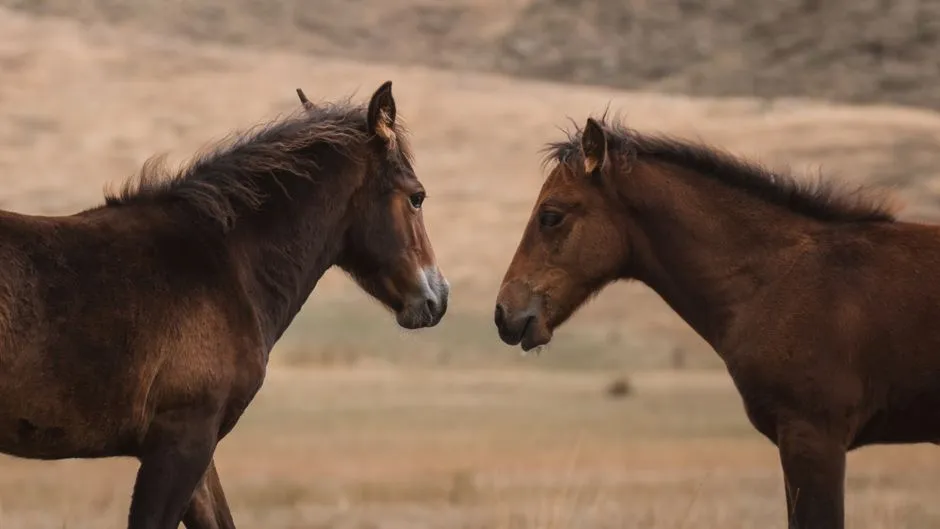
Ask a casual observer what the horses are doing and they’ll say, “Just standing there.” Anyone who studies horse behavior will disagree completely. With old, long-term companions, most of the communication is subtle enough that people simply miss it.
Watch closely and you might catch a tiny ear flick that redirects the partner away from a slippery patch, a half-step sideways to block wind or a pushy neighbor, or a brief tail swish that quietly says “stop crowding my sore side.”
Quick Compare
- Looks like: two horses standing still, doing nothing – really is: a tiny ear flick steering a partner away from ice or mud
- Looks like: a half-lifted hoof, barely noticeable – really is: a clear “don’t come closer” signal the other obeys instantly
- Looks like: both horses limping the same way – really is: one mirroring the other’s posture out of habit, not shared injury
The threshold for a response is incredibly low, and the signals are tiny. A half-lifted hoof can be enough to say “don’t come closer,” and the other horse diverts immediately – not out of timidity, but because that exact exchange has been rehearsed thousands of times and both already know how it ends.
There’s also a kind of mirroring. One shifts weight off a sore leg, and the other often shifts the same way, almost matching posture. Over time this can trick an owner into thinking both horses share the same stiffness, when really one is simply echoing the other’s body language out of long habit. Watch this pair through a storm sometime – the tiny cues for when to move, where to stand, and how much to shelter each other border on choreography.
#2 – They Rewrite Each Other’s Personality
🔥 Would you like to save this?
We'll email this post to you, so you can come back to it later!
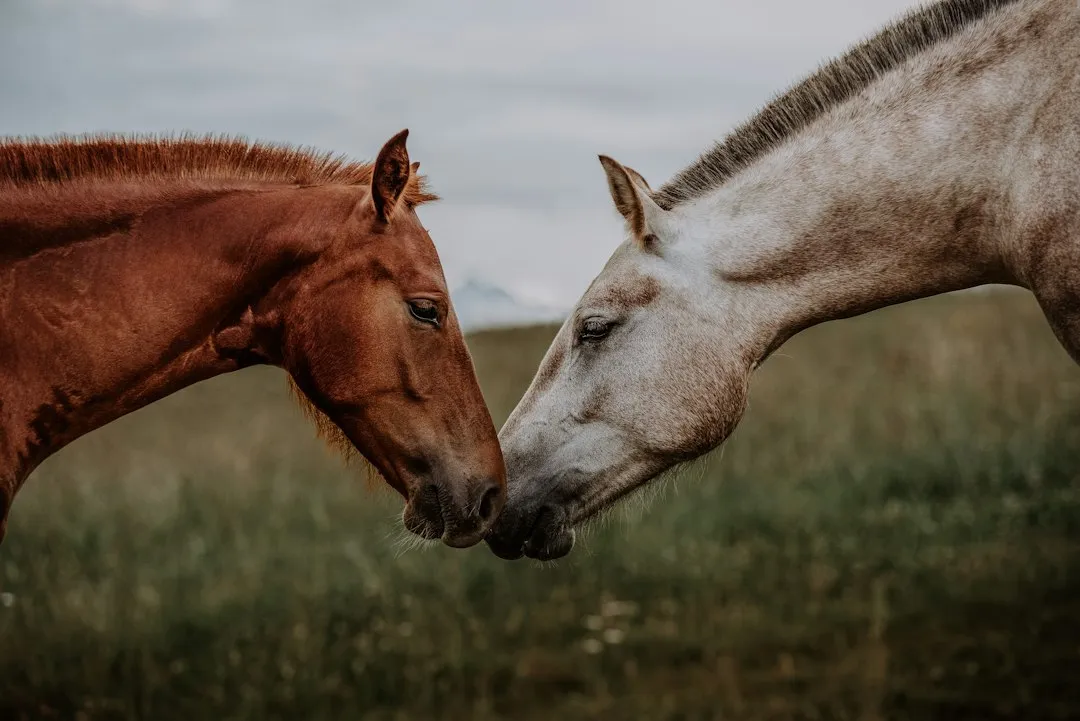
This is where it gets uncomfortably human. Two old horses who share a field for years can literally reshape each other’s temperament. Timid horses often turn bolder beside a steady partner. Anxious ones sometimes calm down – right up until that anchor is gone.
Owners frequently describe things like the spooky mare who became rock-solid after retiring beside a calm gelding, the independent horse who turned quietly clingy after years in a pair, or the dominant one who softened enough to let a partner into space that used to be strictly forbidden.
Those changes aren’t imagined. Horses learn continuously from each other, especially about what’s safe and what deserves fear. If one horse repeatedly proves that a tractor, a dog, or a loudspeaker is harmless, the other eventually stops wasting energy worrying about it – and over years, that adds up to a genuine personality shift.
The darker side is real too. If one horse is chronically anxious, aggressive, or obsessively pacing, the other can start echoing it. Long-term companions don’t just share calm – they can just as easily share neuroses, which is why some behaviorists insist that pairing an anxious horse with a merely “less anxious” one rarely fixes anything. And when one half of a tightly bonded pair dies or moves away, the survivor sometimes reverts to an earlier, rawer version of itself – spookier, clingier, oddly detached. You’re not imagining it. You’re seeing what that horse looks like without the daily behavioral editing its friend used to provide.
#1 – They Grieve, and Sometimes Choose to Let Go
🔥 Would you like to save this?
We'll email this post to you, so you can come back to it later!
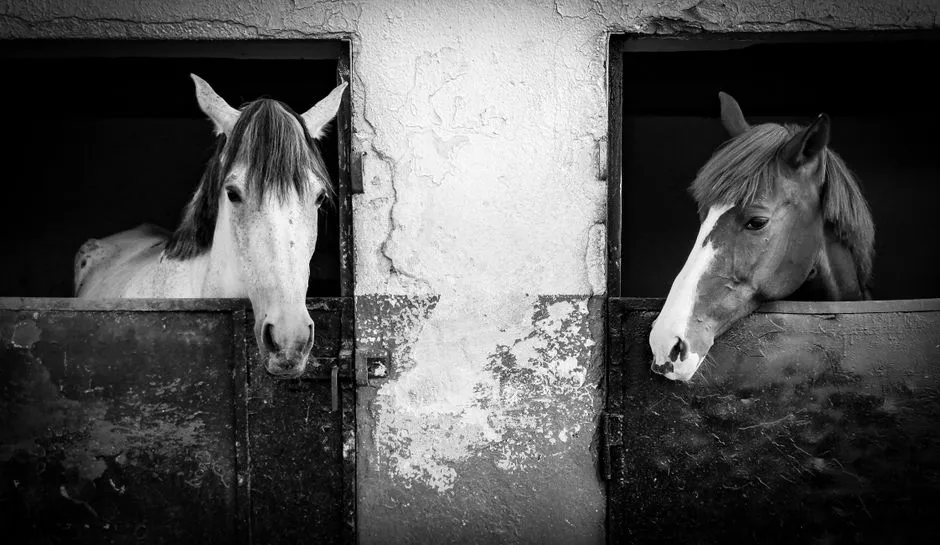
This is the part horse people still argue about in comment sections, but pretending it isn’t real is dishonest at this point: old horses who’ve shared a field for years often show clear signs of grief when one dies. Not every horse, not in every situation – but often enough that dismissing it all as projection is simply outdated.
When a bonded partner is euthanized or dies suddenly, the survivor’s behavior can shift dramatically over the following hours, days, and even weeks.
- Standing over or near the body, sniffing, nudging, or vocalizing
- Pacing the fence line, calling, or scanning the horizon
- Refusing feed, losing weight, or withdrawing socially
Many experienced owners and vets now recommend letting the companion horse see and smell the body briefly before it’s moved. Anecdotally, horses given that chance often settle faster and stop searching as obsessively. It isn’t tidy closure in any human sense, but it may help them process a disappearance that would otherwise seem to come from nowhere.
Horses don’t experience loss the way we narrate it in our heads, but their behavior after losing a lifelong companion makes it hard to argue they feel nothing at all.
Temple Grandin
Here’s the hard part. Some very old surviving horses decline sharply after losing a long-term partner – they stop fighting chronic illness, drop weight, become more accident-prone. Whether that counts as “choosing to die” is a fair debate; scientifically it’s stress, depression-like behavior, and collapsing resilience. From the outside, though, it can look painfully close to giving up. And occasionally the opposite happens: the survivor finally relaxes, blooming once a partner who was actually a quiet source of tension is gone. That contrast is exactly why the sentimental, one-size-fits-all version of this story falls apart – these relationships are specific, history-loaded, and not always gentle.
The Bottom Line
🔥 Would you like to save this?
We'll email this post to you, so you can come back to it later!
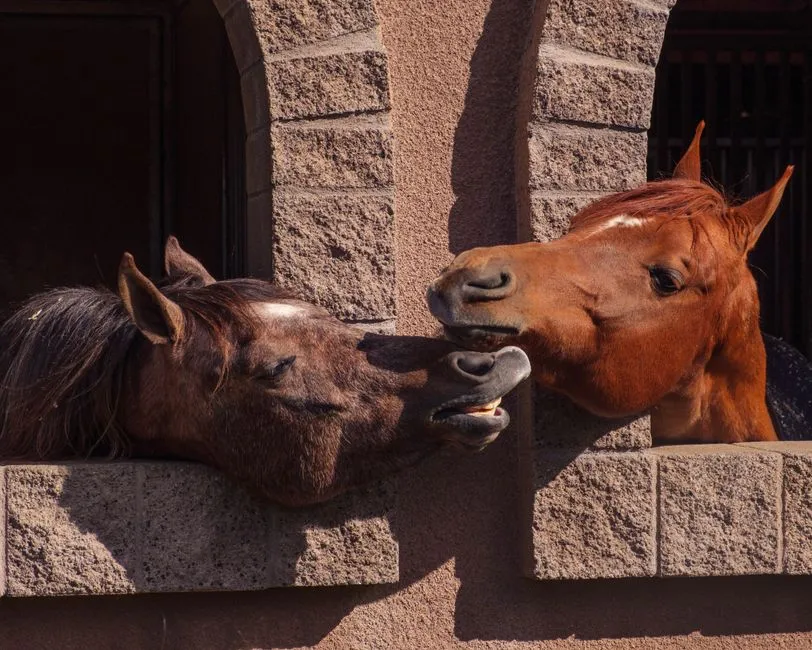
Two old horses who’ve shared a field for years are not pasture ornaments. They’re living inside a slow-motion, high-stakes relationship that shapes how they move, eat, sleep, cope with pain, and eventually face the end of their lives.
Fast Facts
- Long-term pairs sync grazing, resting, and even lookout duty
- Personal space rules nearly disappear between trusted senior partners
- Losing a bonded companion can trigger appetite loss, fence-walking, and grief-like behavior
- Letting a survivor see the body of a deceased partner often eases the search-and-call phase
They build pair bonds, negotiate invisible territory, rewrite each other’s personalities, and sometimes quite literally fall apart when the other is gone. Treating that as “just instinct, no feeling” is as naive as pretending horses think exactly like people do. The truth sits in the messier middle: decades of tiny compromises at every hay pile, a shared map of the best shade and the worst mud, and a language made almost entirely of things too small for most of us to see.
Ignore that reality and you get careless decisions – rushed separations, thoughtless new introductions, underestimating how much one old horse can mean to another. So next time you glance at the “just two old horses” standing quietly in a back field, ask yourself the real question: are you looking at replaceable livestock, or two beings in the middle of a long, unfinished conversation? If you’ve watched a retired pair of your own do something that still doesn’t quite make sense to you, that’s worth saying out loud – because chances are, it wasn’t random at all.

- 12 Surprising Facts About North American Mountain Lions You Never Knew - November 5, 2026
- Wild Salmon Populations Are Rebounding in the Pacific Northwest, A Sign of Healthier Rivers - November 5, 2026
- 8 Fascinating Facts About Owls You Never Knew - November 5, 2026