
Eyes That Were Never Meant to Move
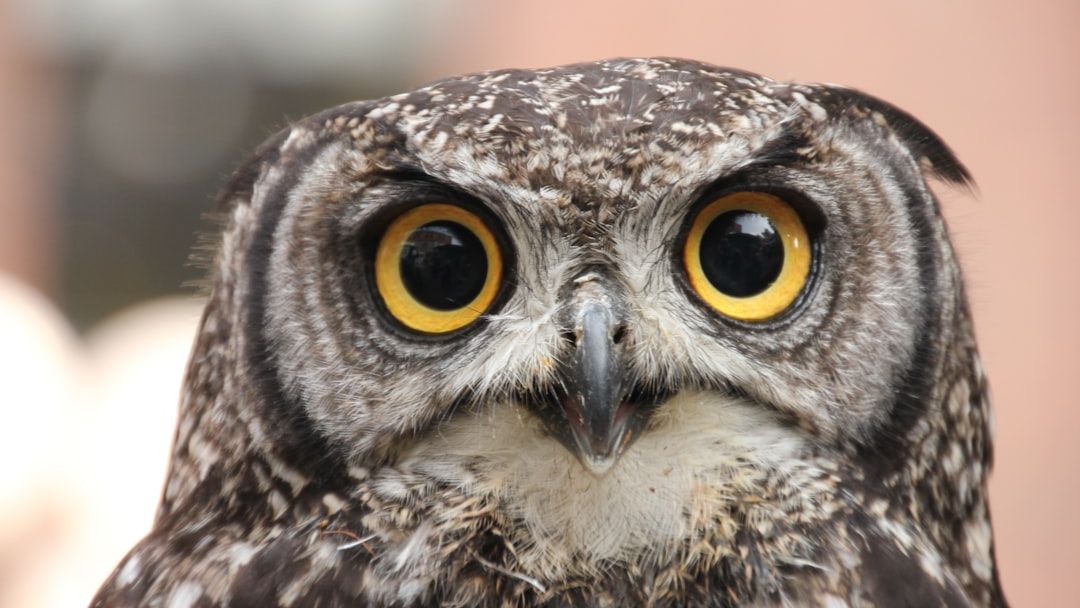
The first thing to understand is that an owl physically cannot look away from you the way a sparrow or pigeon would. Unlike the spherical eyes found in humans and many other mammals, an owl’s eyes are distinctly tubular and fixed rigidly within the skull. This isn’t a flaw. It’s the central design choice of their entire visual system.
Unlike the spherical eyeballs humans possess, owls have elongated, tube-shaped eyes. These ocular tubes are held firmly in place by bony structures called sclerotic rings, which act like scaffolding, providing structural support and preventing the tubes from moving within the skull. So when an owl appears to stare, it’s not choosing to hold eye contact. It’s just pointing its entire optical apparatus at you, which is the only thing it can do.
Owls have special bony structures called sclerotic rings to support these huge eye structures and hold them in place, and these rigid rings prevent owls from being able to move their eyes – their eyes are fixed in place, pointing straight ahead. Most birds you encounter can subtly shift their gaze without moving their heads. Owls simply can’t. The stare is, in its most literal sense, structural.
The Head Spin That Makes Up for Everything
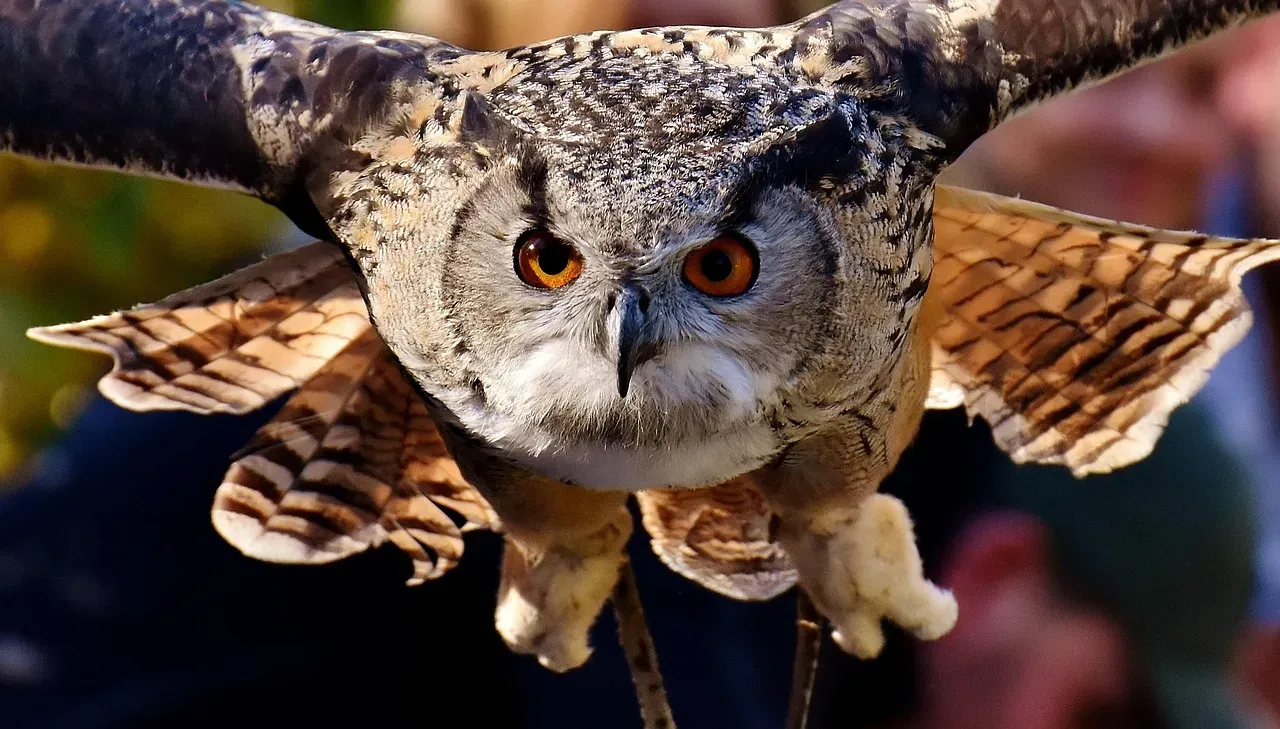
Since an owl can’t roll its eyes to track movement, evolution found a different solution. Because owls’ eyes are fixed, they have to move their entire head to change their field of vision, which has led to another incredible adaptation: the ability to rotate their necks up to 270 degrees. This remarkable flexibility allows them to compensate for their immobile eyes and survey their surroundings effectively.
Since moving their torsos would likely make noise that would alert their prey to their presence, owls have evolved to have necks that can spin up to 270 degrees essentially silently. That’s a quietly elegant solution. Rather than two small eye movements, an owl makes one smooth, near-silent head rotation that gives it coverage most other birds achieve with much less mechanical effort.
They can’t literally turn their heads all the way around, but they can rotate them 270 degrees in either direction, plus 90 degrees up and down. When you do see an owl staring at you for an extended period without moving its head, it means you are squarely within its frontal visual window. You are, in effect, the most visible thing in its world at that moment.
Forward-Facing Eyes and the Predator Advantage
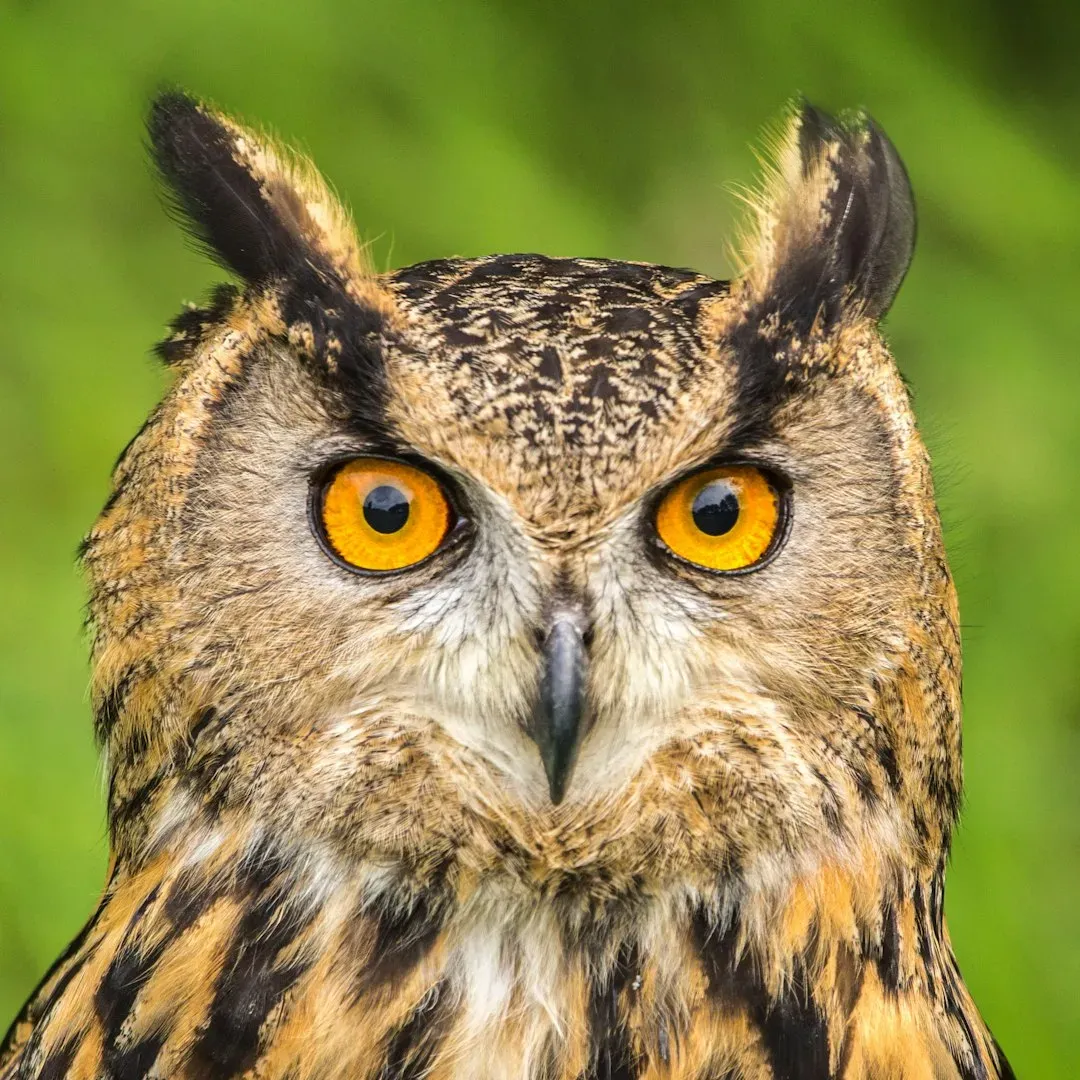
One of the clearest distinctions between owls and most other bird species is where the eyes are positioned on the head. While most birds have eyes that sit at an angle towards the sides of their heads, allowing a wider scope of vision, owls’ eyes face directly forward. This immediately sets them apart visually and functionally from the songbirds, shorebirds, and prey species that dominate most people’s experience of wild birds.
Owls’ distinctive appearance comes from the intense stare resulting from the position of their piercing eyes, both of which are located facing forward on the front of the head. This arrangement is an adaptation for tracking the movements of potential prey. Where their two eyes’ fields of view overlap, owls have binocular vision, providing them with acute depth perception that allows them to gauge distance to perfectly time their attacks.
In fact, owls have the most forward-facing eyes of any group of birds. That distinction is worth sitting with. Out of every bird family on the planet, owls have pushed their visual axis the furthest forward, making direct, prolonged frontal engagement with anything in their environment an unavoidable feature of how they function. When you stand in front of one, you’re essentially stepping into the exact zone their entire visual system was built to analyze.
The Scale of Their Vision Compared to Other Birds
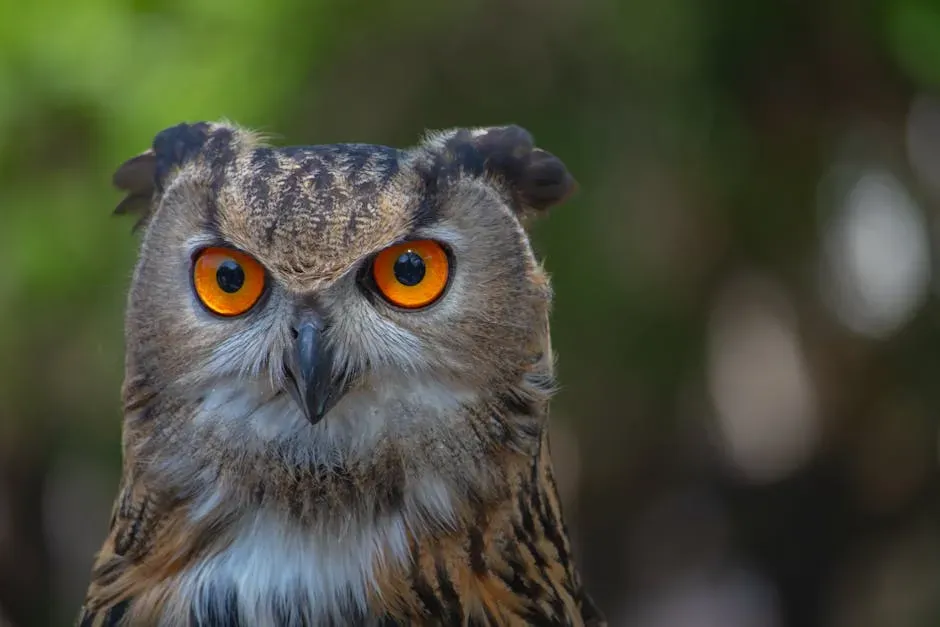
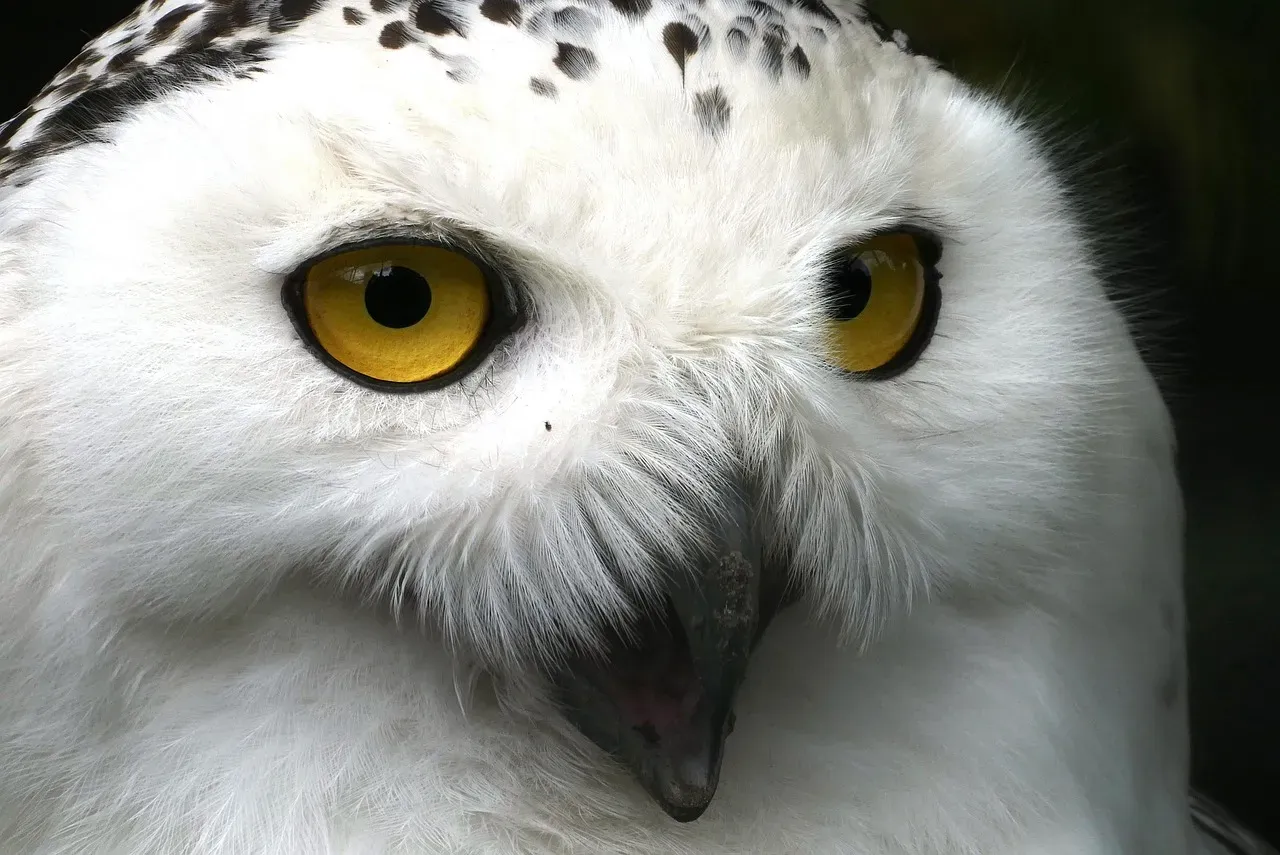
Numbers help here. The field of view for an owl is about 110 degrees, with about 70 degrees being binocular vision. By comparison, humans have a field of view that covers 180 degrees, with 140 degrees being binocular. A woodcock has an amazing 360 degree field of view, because its eyes are on the side of its head. An owl’s total view is narrower than yours, but the binocular overlap, the zone of three-dimensional precision, is impressively dense for a bird.
Owls have very large eyes for their size, more than twice as large as the average for birds of the same weight, and positioned at the front of the head. The eyes have a field overlap of roughly 50 to 70 percent, giving better binocular vision than diurnal birds of prey, which have an overlap of only 30 to 50 percent. This matters when you consider that eagles and hawks are already considered exceptional hunters. Owls, operating in the dark, have evolved an even more refined forward-facing system.
Ecological traits strongly influence the binocular field shape and size in owls, and the binocular field shape of owls significantly differed from that of diurnal raptors. So owls aren’t just different from sparrows and pigeons. They’re visually distinct even from their closest raptor relatives. Their stare is the product of a uniquely refined evolutionary path.
Night Vision and Why It Demands Stillness
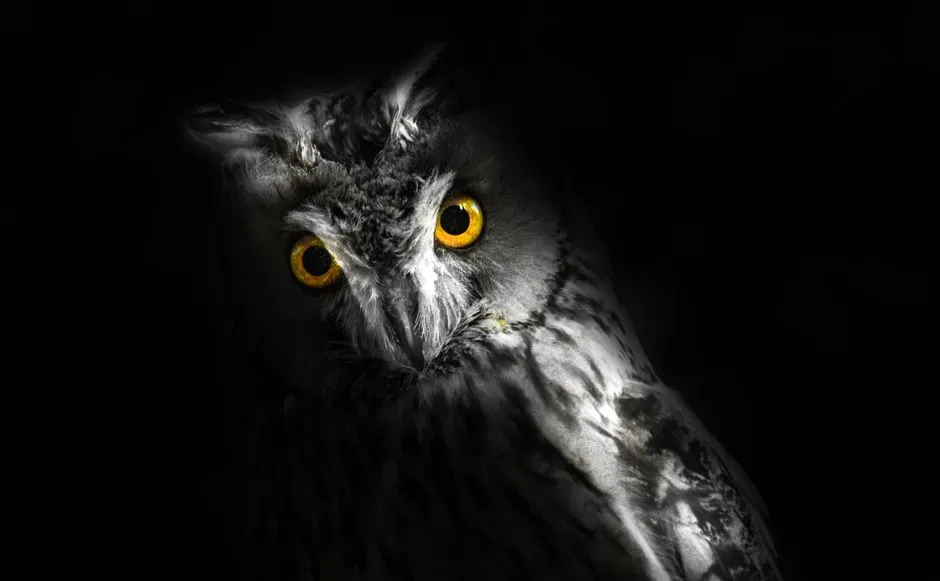
Owls’ eyes are highly specialized to amplify existing light through a dense concentration of rod cells and a reflective layer called the tapetum lucidum. Rod cells are the photoreceptors responsible for detecting light in low-contrast, dim environments. Pack enough of them into a narrow optical tube, and you get a system that pulls in light the way a camera with a wide aperture does on a dark night.
Further enhancing their night vision, owls possess a specialized layer behind their retina called the tapetum lucidum, which acts like a mirror, bouncing light back through the retina a second time, effectively doubling the light-gathering capacity of their eyes. This adaptation explains the eerie eyeshine seen when owl eyes reflect light in darkness. That reflective flash you sometimes catch in the dark is the tapetum lucidum doing exactly what it was built to do.
The owl’s eye is a masterpiece of evolutionary design, sacrificing mobility for unparalleled light-gathering power and acute detail perception in the dark. The combination of the fixed tubular structure, the high density of rods, and the sophisticated coordination of neck and head movements creates a visual system perfectly tailored for its role as a nocturnal apex predator. That combination of stillness and optical power is precisely what makes the stare feel so loaded when you’re on the receiving end of it.
Threat Assessment and Why You’re Being Watched
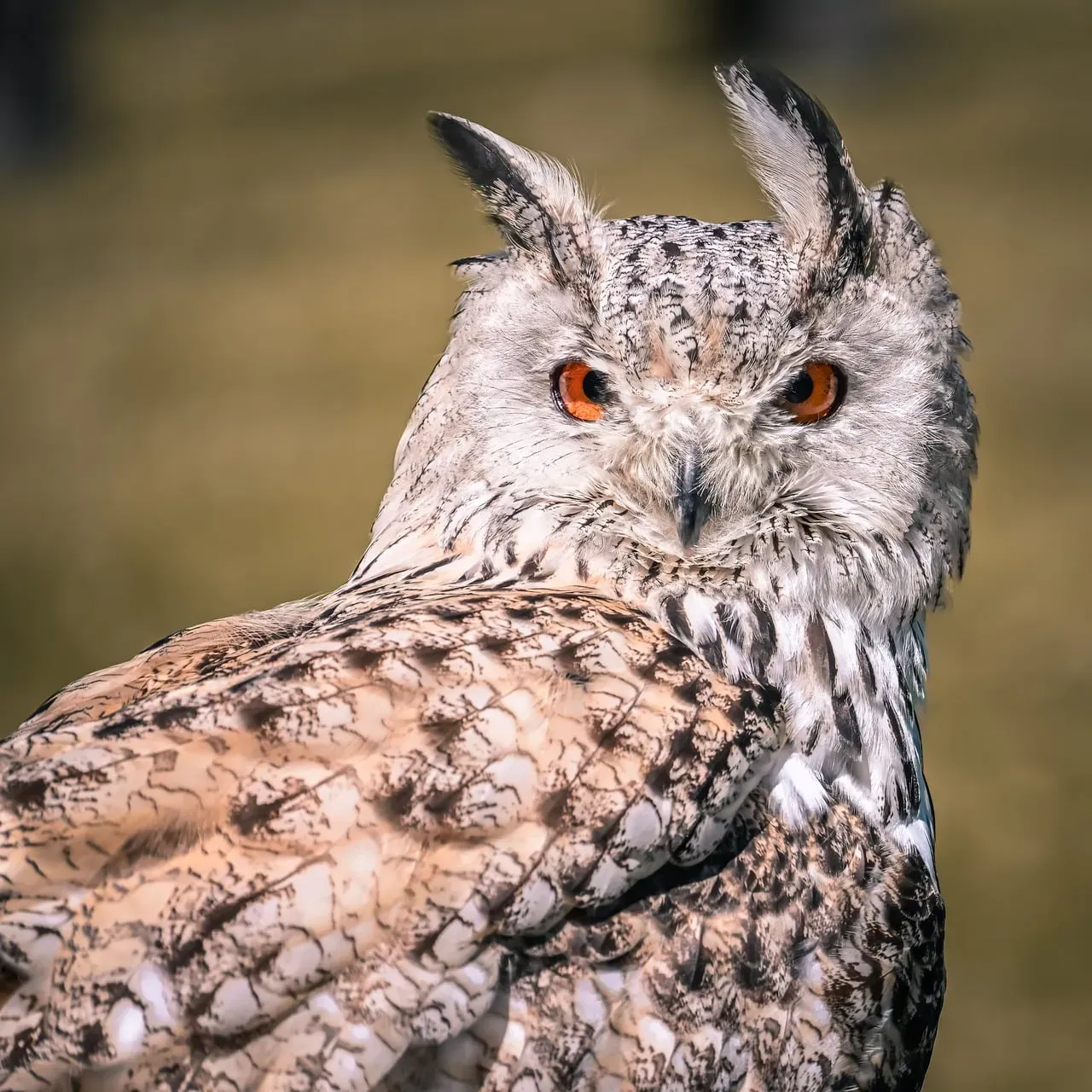
When an owl stares at you, it’s almost certainly doing what any sensible predator would do when something large and unfamiliar enters its space. When an owl stares at you from its perch during twilight hours, it could be assessing whether you’re friend or foe. That assessment takes time, and because the owl has no option but to face you directly while it works this out, the result looks like a long, deliberate stare.
Most prey birds see direct eye contact from larger animals, including humans, as a sign that they’ve been spotted by a predator. This triggers immediate alarm and flight responses because in nature, a predator making eye contact usually precedes an attack. This is why most small birds flee almost instantly when you meet their eyes. They’ve evolved a hair trigger around being noticed. Owls operate on a different logic entirely, assessing the situation from a position of relative confidence, taking their time.
Every owl is an individual, and every situation is unique. There are no one-size-fits-all rules to avoid disturbing owls, so if you learn to interpret owl behavior you can let the owl tell you if your behavior is acceptable to them. A relaxed owl staring at you is typically just monitoring its environment. A stressed one will show other signals. The stare itself is neutral, a tool for information gathering, not necessarily a sign of tension.
What the Stare Means in the Broader Context of Bird Behavior
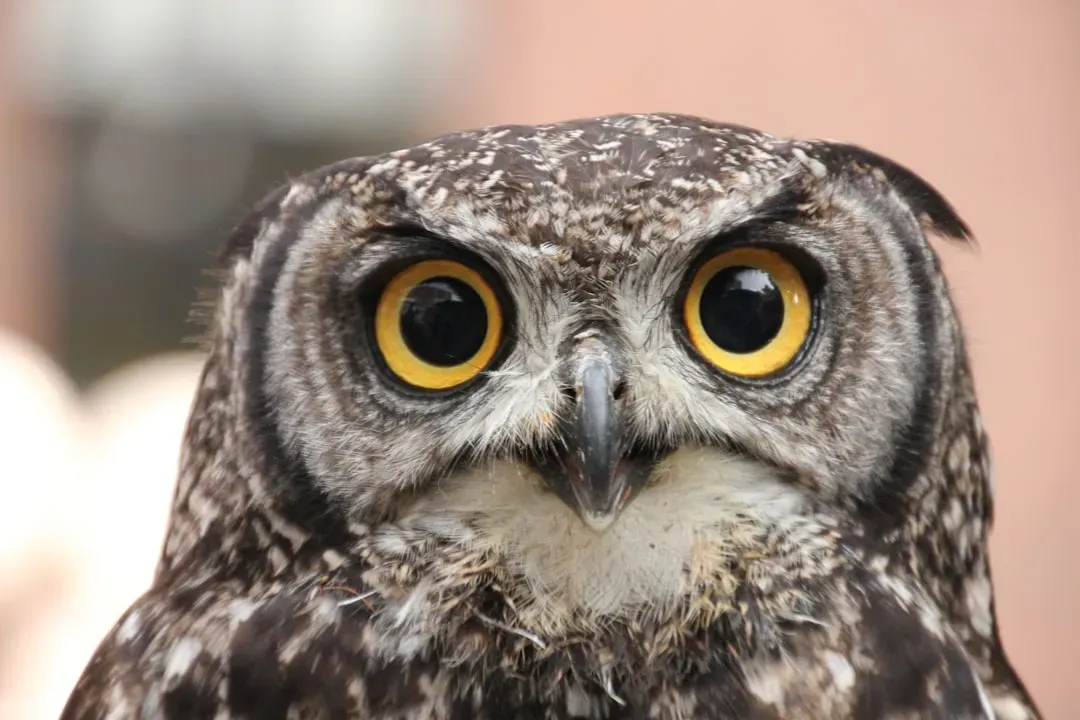
It’s worth stepping back to consider just how unusual the sustained owl gaze is by the standards of wild bird behavior. Most birds are wired to minimize exposure. Their body language is a near-constant stream of small movements designed to signal alertness, reduce predation risk, and avoid committing too long to any single posture. An owl holding its position on a branch, locked onto you for thirty seconds or more, operates on a completely different behavioral register.
Owls, with their large, forward-facing eyes, are masters of observation. This unique facial structure provides them with exceptional binocular vision and depth perception, crucial for hunting in low-light conditions. That observational confidence is something they can afford as apex predators near the top of their food chain. They don’t have the same flight-reflex urgency that a thrush or warbler does.
Unlike many animals that might interpret prolonged eye contact as a challenge or threat, owls embody a different kind of communication. Whether you read that as composure, curiosity, or simply anatomy doing its job depends on your point of view. What’s clear is that the stare isn’t accidental or performative. It’s the natural result of a visual system built to observe, assess, and act with precision.
Conclusion: A Stare Built by Evolution, Not Intention
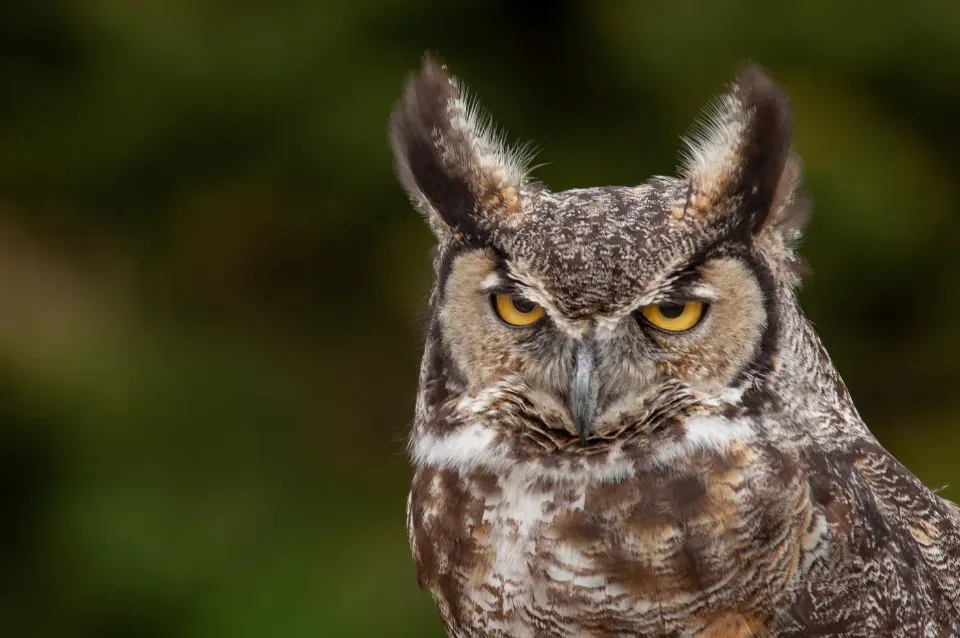
There’s a temptation to project meaning onto an owl’s gaze, to read wisdom, judgment, or eerie intent into those fixed, luminous eyes. Cultures across history have done exactly that. The science, though, tells a more interesting story. The owl stares long because it has no other option. It watches because watching is what it was built to do. And the reason it doesn’t flinch and look away like almost every other wild bird you’ll ever encounter is simply that it is anatomically, ecologically, and behaviorally unlike them.
That’s not a disappointment. If anything, it makes the encounter more honest. Extreme specialization often requires extreme trade-offs, and the owl’s trade was simple: give up mobile eyes, gain the most powerful low-light visual system in the bird world. What you experience when an owl holds your gaze isn’t some ancient wisdom staring back at you. It’s two hundred million years of evolution, pointing its entire face in your direction and deciding, calmly, whether you’re worth worrying about.
In my view, that’s more compelling than any mythology could manage.

- 10 Beautiful Birds You Often See in a US Backyard - July 26, 2026
- 10 Ancient Indian Temples With Engineering Marvels No One Can Explain - July 26, 2026
- 10 Most Expensive US Cities to Celebrate Christmas - July 26, 2026