

With their rust-colored fur, teddy bear-like faces, and endearing behaviors, red pandas have captured hearts worldwide through viral videos and zoo exhibits. But beneath their undeniable cuteness lies an evolutionary marvel – a uniquely adapted species with remarkable characteristics and ecological significance. Red pandas represent far more than an adorable social media sensation; they embody millions of years of specialized evolution, play crucial roles in their native ecosystems, and now stand as important symbols in conservation efforts. As their populations continue to decline in the wild, understanding these fascinating creatures beyond their aesthetic appeal becomes increasingly important. This article explores the multifaceted nature of red pandas, revealing why they deserve our attention, respect, and protection for reasons that transcend their adorable appearance.
The Evolutionary Marvel of Red Pandas

Red pandas (Ailurus fulgens) represent an extraordinary evolutionary story that began over 25 million years ago. Despite their name and some physical similarities to giant pandas, genetic studies confirm they belong to their own unique family, Ailuridae. They evolved independently in the temperate forests of the eastern Himalayas, developing specialized adaptations for their bamboo-centric lifestyle. Fossil evidence suggests their ancestors once roamed across North America and Eurasia, making today’s red pandas living relics of a once more widespread lineage.
Their taxonomic classification has puzzled scientists for generations – initially grouped with raccoons, then bears, and finally recognized as a distinct family with distant relationships to both groups. This evolutionary uniqueness makes red pandas living examples of convergent evolution, where similar environmental pressures led to comparable adaptations in unrelated species, as seen in their specialized “false thumbs” that evolved independently from those of giant pandas.
Masters of Bamboo Processing

Red pandas possess remarkable physiological adaptations that allow them to process and digest bamboo, a feat shared by few mammals worldwide. Their specialized dental structure includes broad, flat molars and powerful jaw muscles that can crush tough bamboo shoots and leaves. Unlike many herbivores, red pandas lack a complex, multi-chambered stomach or an extended digestive tract. Instead, they compensate with a specific enzyme in their saliva that begins breaking down bamboo’s tough cellulose even before it reaches the stomach.
Their digestive system extracts only about 24% of the nutrients from bamboo they consume, explaining why they must eat roughly 20-30% of their body weight daily – spending up to 13 hours a day foraging and eating. This inefficient digestion also necessitates energy conservation; red pandas save energy by remaining relatively sedentary and utilizing a low metabolic rate. Their bamboo processing capabilities represent millions of years of evolutionary refinement, allowing them to thrive in an ecological niche with minimal competition.
Thermal Regulation Specialists

Red pandas have evolved extraordinary adaptations for thermal regulation that allow them to thrive in their temperamental Himalayan habitat, where temperatures can swing dramatically. Their lush, double-layered fur provides exceptional insulation—dense woolly undercoat traps warm air close to the body while a covering of longer guard hairs offers water resistance and additional warmth. This thick coat extends to their paws and even the soles of their feet, allowing them to traverse snow without heat loss.
During summer months, red pandas prevent overheating through behavioral adaptations, primarily by remaining in the forest canopy where temperatures are cooler and by limiting activity to dawn and dusk. They also utilize their bushy tails—nearly as long as their bodies—not just for balance but as insulating wraps during cold weather. When temperatures drop, they curl into tight balls and wrap their tails around their faces, creating a natural thermal barrier. These combined adaptations demonstrate how red pandas have evolved specialized solutions to the specific challenges of their mountain habitat.
Arboreal Acrobats with Specialized Anatomy

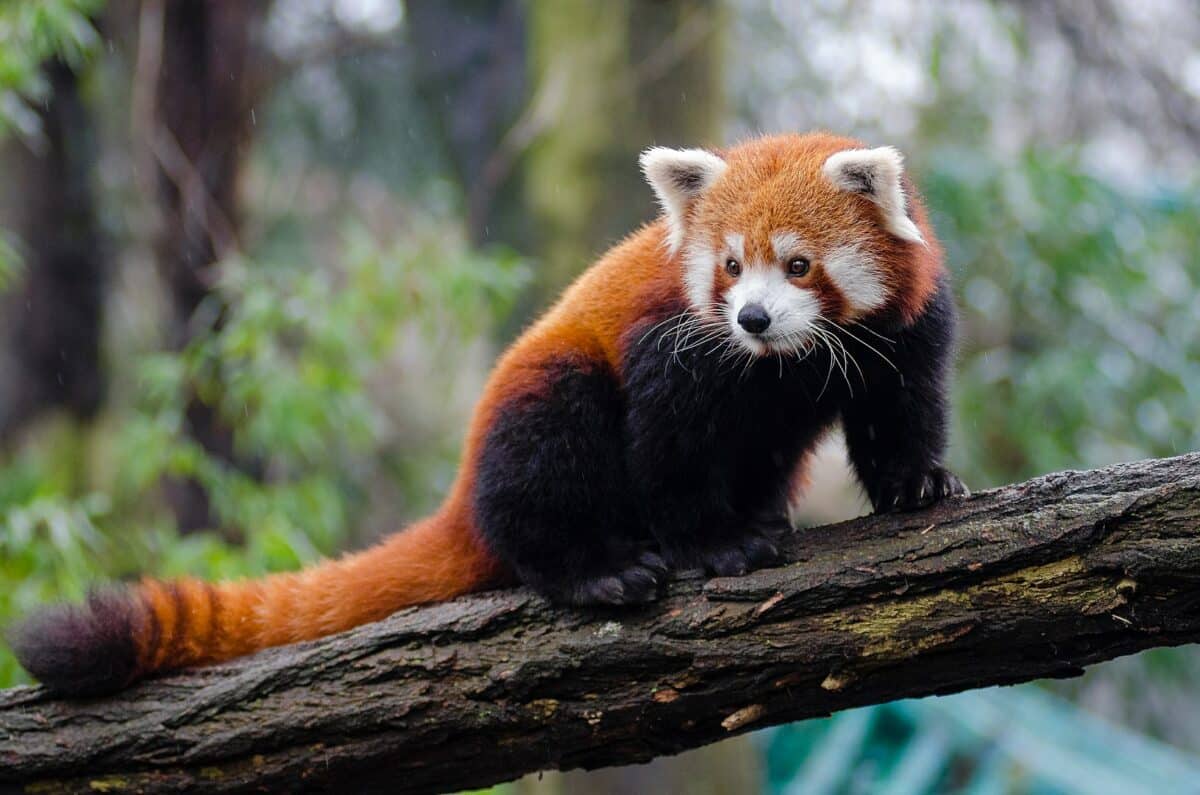
Red pandas possess a suite of specialized physical adaptations that make them exceptional tree-dwellers. Their semi-retractable claws are curved and ultra-sharp, providing superior grip on tree bark and branches. The most remarkable adaptation is their “false thumb”—an extended wrist bone that functions as an opposable digit, allowing them to firmly grasp bamboo stems and navigate narrow branches with precision. Their ankles feature a unique rotational ability that lets them descend trees headfirst, similar to squirrels.
Red pandas’ muscular but lightweight bodies maintain a low center of gravity, with short limbs that help them stay stable on branches. Their balance is further enhanced by their bushy tails, which act as both counterweights and steering mechanisms during movement through the canopy. These anatomical specializations enable red pandas to spend up to 90% of their waking hours in trees, making them one of the most arboreal mammals in their size class. They can leap up to 5 feet between branches and race headlong down trunks when threatened—skills that have evolved over millions of years to maximize survival in their forest habitat.
Complex Communication Systems
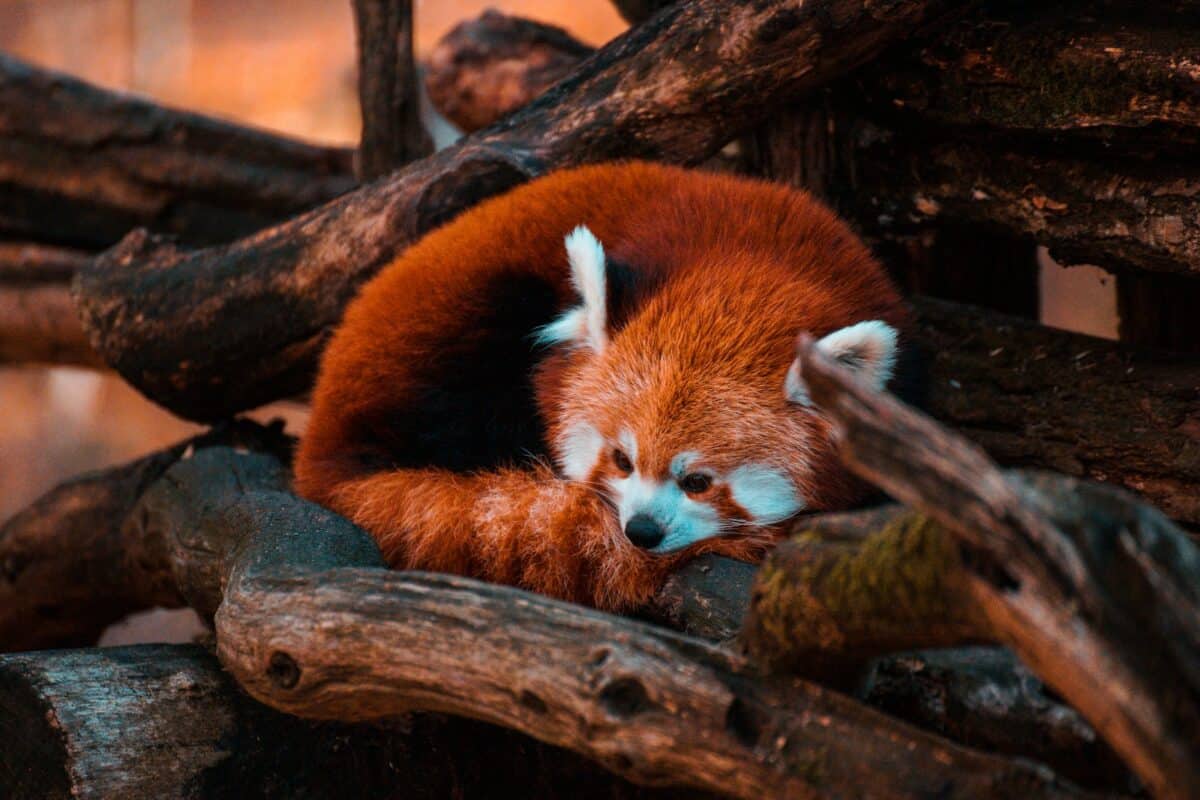
Despite their solitary nature, red pandas employ a sophisticated repertoire of vocalizations and non-verbal signals that belies their seemingly simple lifestyle. Researchers have documented at least 11 distinct vocalizations serving various social functions. Their high-pitched “twitter-chirp” maintains contact between mothers and cubs, while a characteristic “huff-quack” warns of potential threats. During mating season, males emit a distinct “bleat” to attract females, and aggressive encounters feature sharp warning barks. Beyond vocalizations, red pandas communicate through body language, including tail positions, ear movements, and facial expressions.
Their tails serve as emotional barometers—when relaxed, they hang down, but when alert or threatened, the tail raises straight up. Red pandas also use chemical communication extensively, employing specialized glands near their anus and at the base of their tail to mark territory. Males increase marking behaviors during breeding season, creating scent posts that communicate reproductive status and territorial boundaries. This complex communication system allows red pandas to maintain territories averaging 2.5 square kilometers while avoiding direct confrontation with competitors—an energy-efficient strategy for a species with limited metabolic resources.
Ecological Role as Forest Engineers

Red pandas fulfill critical ecological functions in their native forests that extend far beyond their charismatic appearance. As bamboo specialists, they help regulate this fast-growing plant’s growth and distribution, preventing dominance that could reduce forest diversity. Their selective browsing habits—preferring certain bamboo species and specific parts of the plant—create microhabitats that benefit various insects, birds, and small mammals. Red pandas are also important seed dispersers; though primarily bamboo-eaters, they supplement their diet with fruits, flowers, and berries, distributing seeds through their feces across their territory.
This seed dispersal is particularly valuable for plant species growing at different elevations, as red pandas travel vertically through forest layers. They also serve as hosts for several parasite species that have co-evolved with them, maintaining these specialized relationships within the ecosystem. As mid-sized mammals, red pandas occasionally become prey for larger predators like snow leopards and martens, forming a link in the food chain. Their presence in healthy numbers indicates a functioning forest ecosystem with intact vegetation layers and sufficient bamboo resources—making them valuable indicator species for conservation monitoring in the eastern Himalayan region.
Cultural Significance Across Asia

Red pandas have been woven into the cultural fabric of Himalayan communities for centuries, inspiring folklore, religious symbolism, and traditional practices across their native range. In Nepal, the indigenous Kirat people consider red pandas protective forest guardians, believing that households showing kindness to these creatures will prosper. The Lepcha tribe in Sikkim, India, traditionally saw red pandas as reincarnations of Buddhist monks due to their reddish coat resembling monks’ robes. In parts of southwestern China, particularly Yunnan province, historical tribal masks incorporate red panda imagery to symbolize peace and harmony with nature.
The Chinese name for red panda, “hun-ho” (fire fox), appears in ancient medicinal texts dating back to the 13th century, where parts of the animal were prescribed for ailments ranging from coughs to infertility. Modern cultural representations continue this legacy – the red panda inspired the character of Master Shifu in the animated film “Kung Fu Panda,” and Mozilla’s Firefox browser logo was partially influenced by red panda coloration. These cultural connections provide valuable foundations for conservation efforts, allowing local communities to build on traditional reverence for these animals while addressing modern threats to their survival.
Surprising Intelligence and Problem-Solving Abilities

Red pandas demonstrate cognitive abilities that surpass what might be expected of a specialized bamboo-eater. Researchers studying both wild and captive populations have documented impressive problem-solving capabilities and learning potential. In captivity, red pandas quickly master puzzle feeders designed to stimulate natural foraging behaviors, often improving their techniques with repeated attempts. They display excellent spatial memory, remembering complex routes through forest canopies and the locations of seasonal food sources across their territories.
Wild red pandas have been observed using tools in rudimentary ways, such as using sticks to reach items or manipulating objects to access food. They also show behavioral flexibility—altering their activity patterns in response to human disturbances or shifting their diet when preferred bamboo species flower and die back. Perhaps most remarkably, red pandas demonstrate self-awareness through mirror recognition tests, where some individuals showed behaviors suggesting they recognized their reflection as themselves rather than another animal. Their intelligence is particularly notable considering their metabolic constraints from a bamboo diet, which typically limits brain development in other specialized herbivores. This cognitive capacity likely evolved to help them navigate their three-dimensional forest environment and manage the challenges of their specialized ecological niche.
Unique Reproductive Biology

Red pandas exhibit fascinating reproductive characteristics that set them apart from many mammals. They practice a remarkable reproductive strategy called “delayed implantation,” where fertilized eggs remain dormant for weeks or months before implanting in the uterus. This adaptation allows births to coincide with optimal environmental conditions, typically in spring when bamboo shoots are most nutritious. Red pandas have one of the longest gestation periods relative to their size—typically 114-145 days, far longer than would be expected for a mammal weighing 3-6 kg. Females prepare elaborate nest sites in hollow trees or rock crevices, lining them with moss, leaves, and small branches.
Cubs are born extremely altricial—weighing only 100-130 grams, blind, and completely dependent on maternal care. Interestingly, females can produce litters of 1-4 cubs despite having only two mammary glands, requiring careful rotation of nursing opportunities in larger litters. Males play no role in cub-rearing, but females invest intensively, carrying cubs by the scruff to new nest sites when threatened and teaching foraging skills through demonstration. The cubs develop slowly, remaining with their mother for up to a year—a lengthy dependency period that allows for the transmission of complex foraging techniques and spatial memory necessary for survival in their specialized niche.
Conservation Challenges Beyond Habitat Loss

While habitat destruction remains the primary threat to red pandas, several less-publicized challenges compound their conservation predicament. Climate change significantly impacts their specialized habitat, with warming temperatures forcing bamboo zones to shift upward in elevation, effectively shrinking available habitat. Disease transmission poses an increasing risk, particularly canine distemper virus (CDV) and canine parvovirus spreading from domestic and feral dogs in villages near red panda habitat. The illegal pet trade has surged with their internet popularity, creating a devastating market for wild-caught cubs, with fewer than 40% surviving capture and transport.
Infrastructure development, particularly roads cutting through forests, creates barriers to movement and increases vehicle strikes and human access to previously remote habitats. Mining operations in Nepal, India, and Myanmar contaminate water sources with heavy metals that accumulate in bamboo consumed by red pandas. Even seemingly benign activities like mushroom and medicinal plant collection in forests disturb breeding females and disrupt normal behaviors. The growing wildlife tourism industry, while potentially beneficial for conservation awareness, can cause stress through noise and presence when improperly managed. These diverse threats require multifaceted conservation approaches beyond simply protecting forest areas, including community education, sustainable development planning, and international cooperation to address cross-border challenges.
Scientific Research Significance

Red pandas provide unique research opportunities that extend far beyond their own conservation. As taxonomic “living fossils” with no close relatives, they offer evolutionary biologists insights into ancient mammalian adaptations and specialized herbivory development. Medical researchers study their remarkable tolerance for certain plant compounds toxic to other mammals, potentially yielding applications in pharmaceutical development. Red pandas’ specialized digestive enzymes that break down bamboo cellulose have attracted attention from biofuel researchers seeking efficient methods to convert plant matter into energy.
Their unique thermoregulation abilities in variable mountain climates provide models for energy-efficient temperature control technologies. Conservation biologists use red pandas as indicator species for monitoring entire forest ecosystem health, as their specialized requirements make them sensitive to environmental changes. Their genome, fully sequenced in 2017, revealed distinctive immune system adaptations that help them resist certain pathogens despite limited genetic diversity. Behaviorally, they provide windows into the evolution of solitary social systems and information on how specialized diets influence cognitive development. This scientific significance adds substantial value beyond their appealing appearance, making red pandas important subjects for research across multiple disciplines that benefit both wildlife conservation and human knowledge advancement.
Success Stories in Red Panda Conservation
Despite facing serious threats, several successful conservation initiatives demonstrate that red panda populations can recover with targeted interventions. The Red Panda Network’s Forest Guardian program in eastern Nepal employs local community members to monitor wild populations, remove snares, and conduct educational outreach, resulting in increased red panda sightings and reduced poaching incidents in participating areas. In India’s Singalila National Park, a comprehensive approach combining anti-poaching patrols, bamboo habitat restoration, and community-based tourism has stabilized previously declining populations. Innovative conservation techniques including satellite collar tracking in Bhutan have revealed previously unknown movement patterns, helping design more effective protected area boundaries.
Captive breeding programs have made tremendous advances, with coordinated efforts across zoos worldwide increasing genetic diversity and developing protocols that have improved cub survival rates from under 40% to over 80% in the past two decades. In China’s Sichuan province, a pilot program paying farmers to maintain bamboo corridors between fragmented forests has created crucial genetic connectivity between isolated populations. The development of non-invasive monitoring techniques using fecal DNA analysis now allows researchers to track population changes without disturbing these sensitive animals. These success stories provide templates for expanding conservation efforts and demonstrate that with appropriate interventions, red panda decline can be reversed, offering hope for the species’ future despite the significant challenges they face.
Conclusion: Beyond the Cute Factor

Red pandas represent far more than their charming appearance suggests – they embody 25 million years of specialized evolution, complex ecological relationships, and scientific significance across multiple disciplines. Their unique adaptations for bamboo consumption, arboreal lifestyle, and thermal regulation demonstrate nature’s remarkable solutions to environmental challenges. As we’ve explored, these animals possess surprising intelligence, sophisticated communication systems, and fulfill crucial roles as seed dispersers and forest engineers in their native ecosystems.
The cultural significance they hold across Asian communities further enriches their value beyond biological importance. While red pandas face severe conservation challenges, from habitat fragmentation to climate change, successful protection efforts demonstrate that their decline is not inevitable with proper intervention. By appreciating red pandas for their ecological roles, evolutionary uniqueness, and research value rather than simply their adorable appearance, we develop a more complete understanding of why these remarkable animals deserve our protection and respect – not just because they’re cute, but because they’re irreplaceable components of our planet’s biodiversity.

- What Your Zodiac Sign Says About How You Bond with Pets - August 8, 2026
- The Science Behind Animal Heroes in Classic Children’s Stories - August 8, 2026
- How to Look for Symptoms of Stomach Ache in Dogs - August 6, 2026