


Picture this: you’re hiking through the Amazon rainforest when suddenly, a 600-pound animal gracefully glides past you in the river, moving with the elegance of a dolphin despite looking like a cross between a pig and an elephant. This remarkable creature is the tapir, and what you’ve just witnessed is one of nature’s most ingenious survival strategies. These ancient mammals have perfected the art of aquatic escape, turning water into their personal highway to safety.
For millions of years, tapirs have been quietly mastering skills that would make Olympic swimmers jealous. While most large land mammals awkwardly splash around in water, tapirs transform into aquatic acrobats the moment they hit the surface. Their swimming abilities aren’t just impressive – they’re literally a matter of life and death in the unforgiving world of predator-prey relationships.
The Ancient Swimmers of the Animal Kingdom
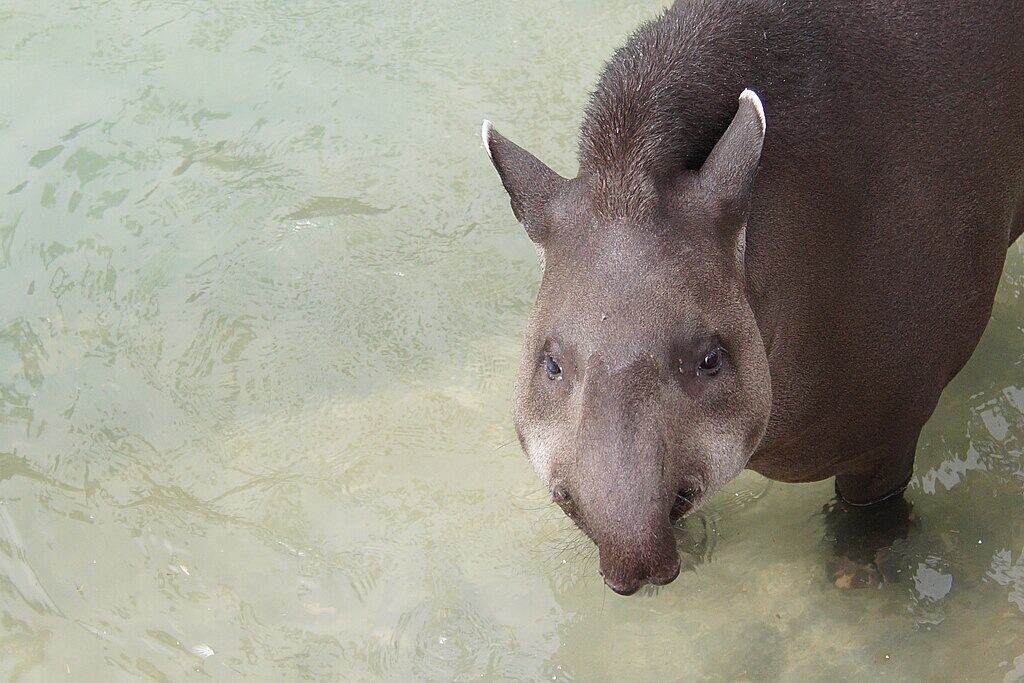
Tapirs belong to one of the oldest mammalian lineages on Earth, with fossil evidence dating back over 20 million years. These living fossils have survived ice ages, continental drift, and countless evolutionary pressures by developing remarkable adaptations. Their swimming prowess isn’t a recent evolutionary development – it’s been refined over millennia of dodging predators and navigating challenging environments.
What makes tapirs truly extraordinary is their ability to remain underwater for extended periods while moving substantial distances. Unlike hippos, which primarily use water for cooling and territory, tapirs have evolved swimming as a primary escape mechanism. Their ancestors likely developed these skills when ancient predators roamed the same territories, creating an evolutionary arms race that pushed tapirs toward aquatic excellence.
Anatomy Built for Aquatic Escapes
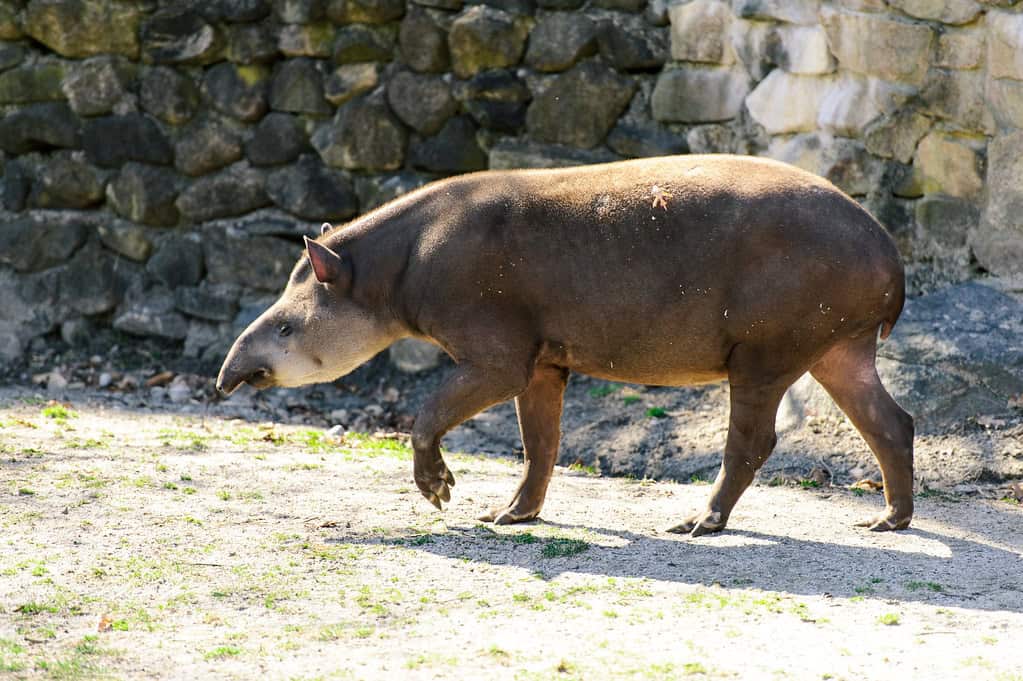
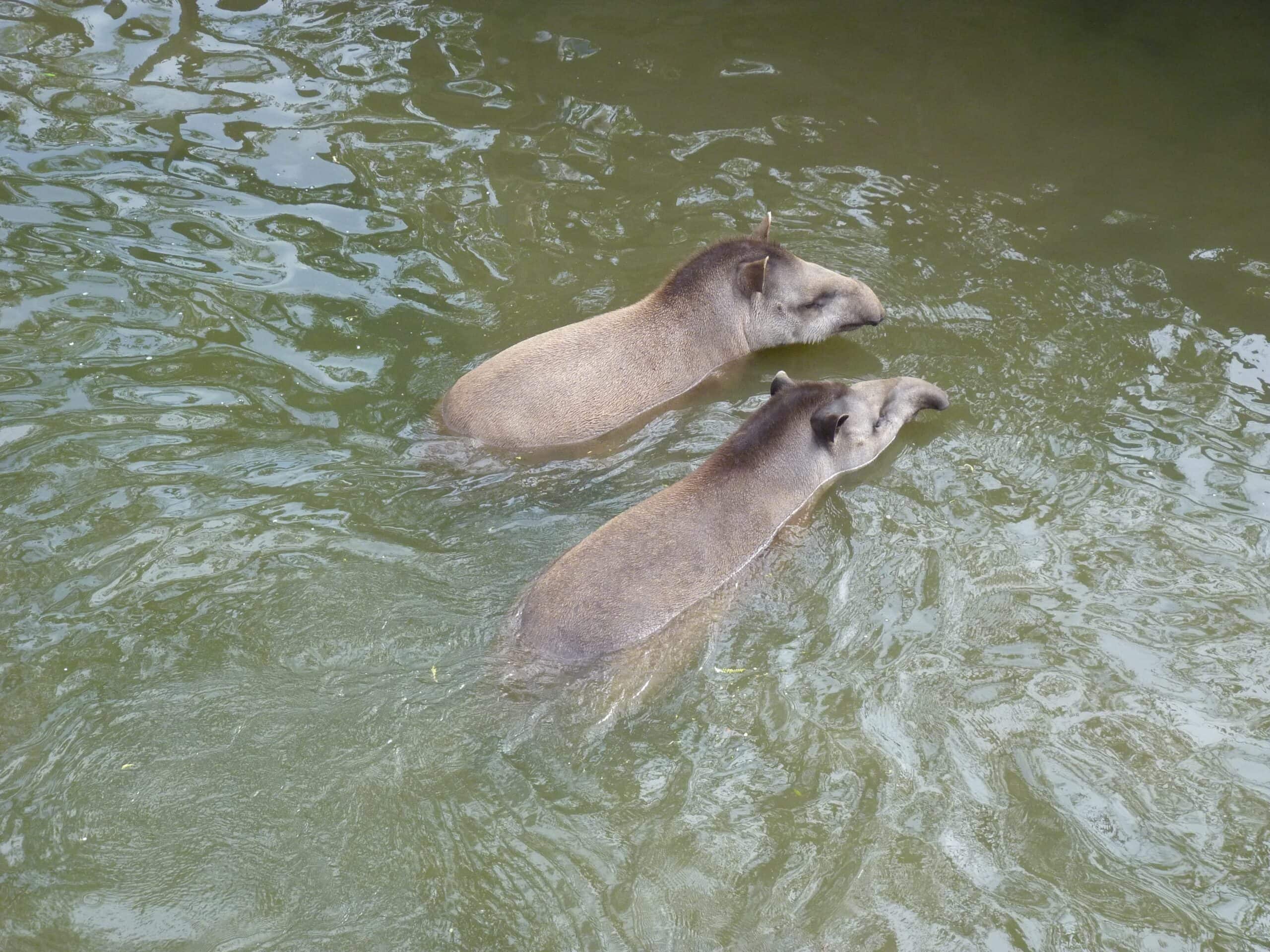
The tapir’s body is essentially a living submarine designed by nature’s finest engineers. Their barrel-shaped torso provides natural buoyancy, while their dense bone structure allows them to control their depth underwater with remarkable precision. The tapir’s flexible proboscis acts like a built-in snorkel, enabling them to breathe while keeping most of their body submerged and hidden from land-based threats.
Their legs, though appearing stubby and awkward on land, become powerful propulsion systems in water. The tapir’s broad, padded feet work like natural flippers, pushing against water with surprising efficiency. Their muscular hindquarters provide the driving force that can propel a 600-pound animal through water faster than most humans can swim.
The Proboscis: Nature’s Perfect Snorkel
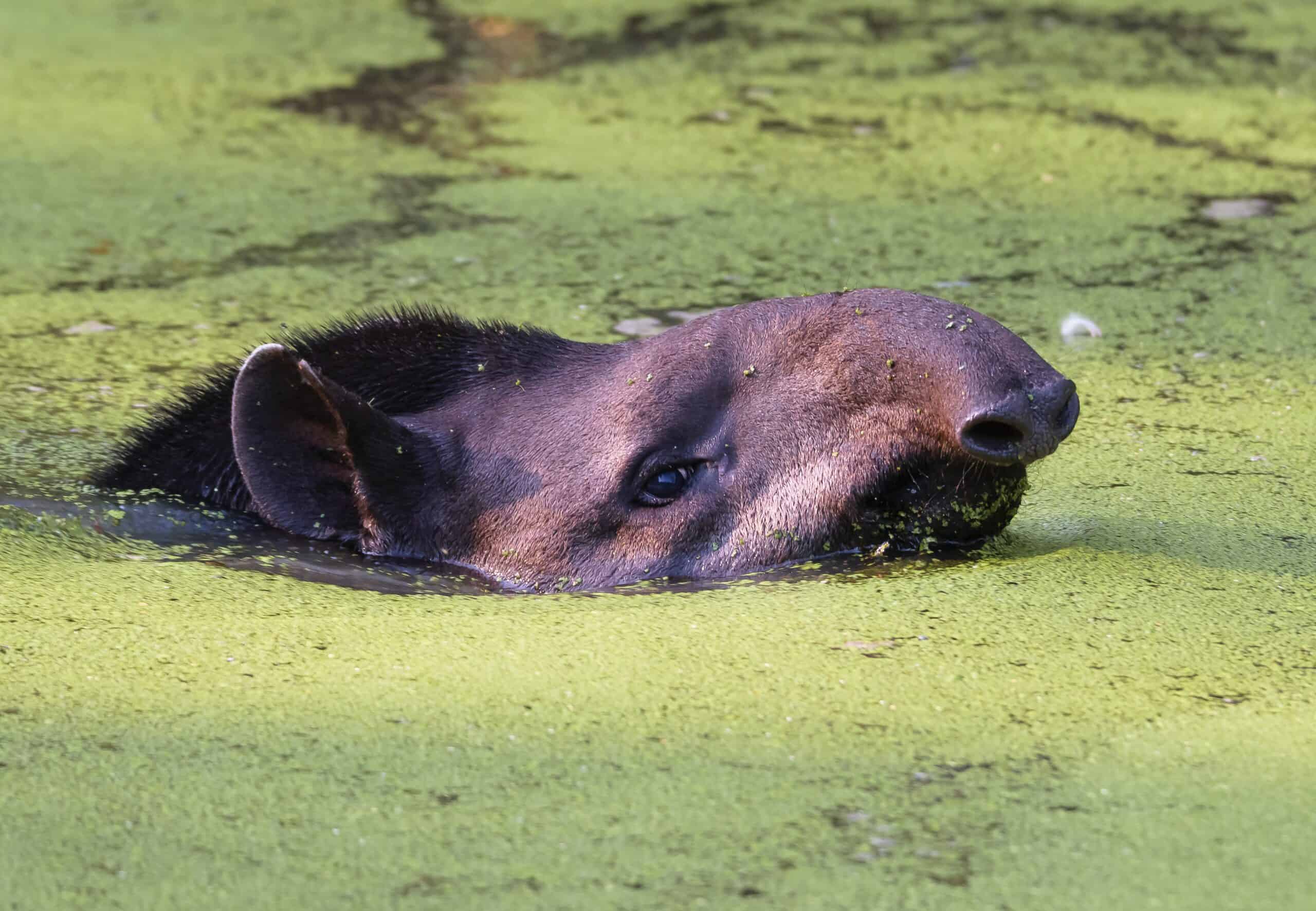
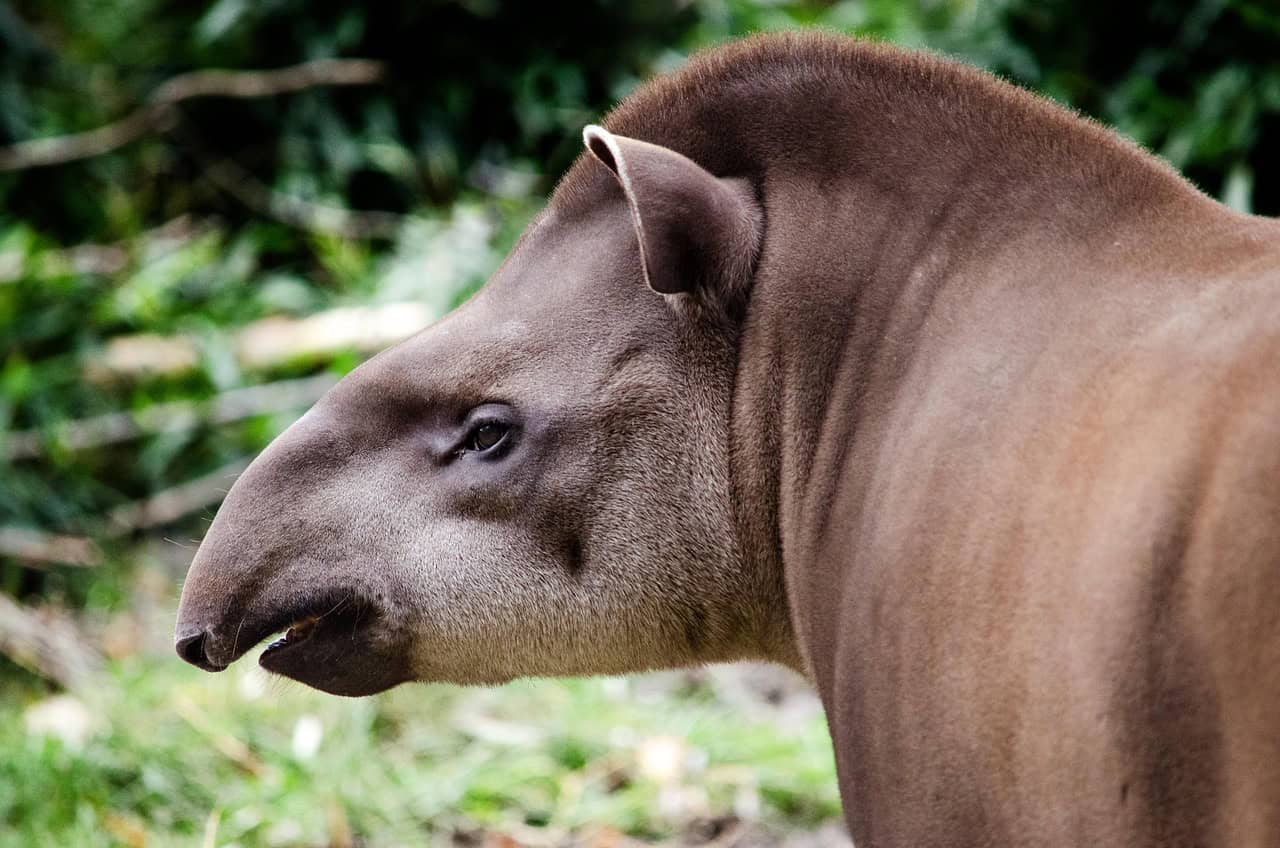
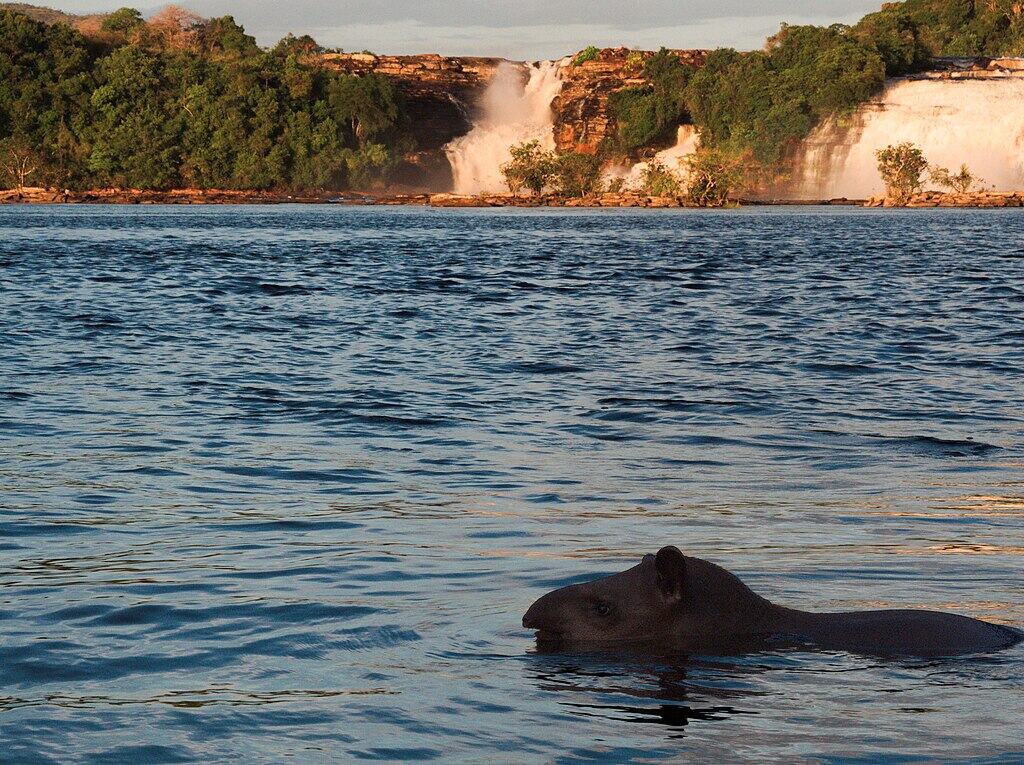
The tapir’s most distinctive feature – that elephant-like trunk – serves as the ultimate survival tool in aquatic environments. This flexible proboscis can extend and retract like a periscope, allowing tapirs to breathe while remaining completely submerged except for the tip of their nose. This adaptation is so effective that tapirs can stay underwater for several minutes while slowly moving to safer locations.
The proboscis also serves as an early warning system, capable of detecting predator scents from considerable distances. When danger approaches, tapirs can quickly submerge while keeping their trunk above water, creating an almost invisible profile that’s nearly impossible for predators to detect. This biological snorkel has saved countless tapir lives throughout evolutionary history.
Jaguars: The Primary Threat That Drives Swimming Behavior
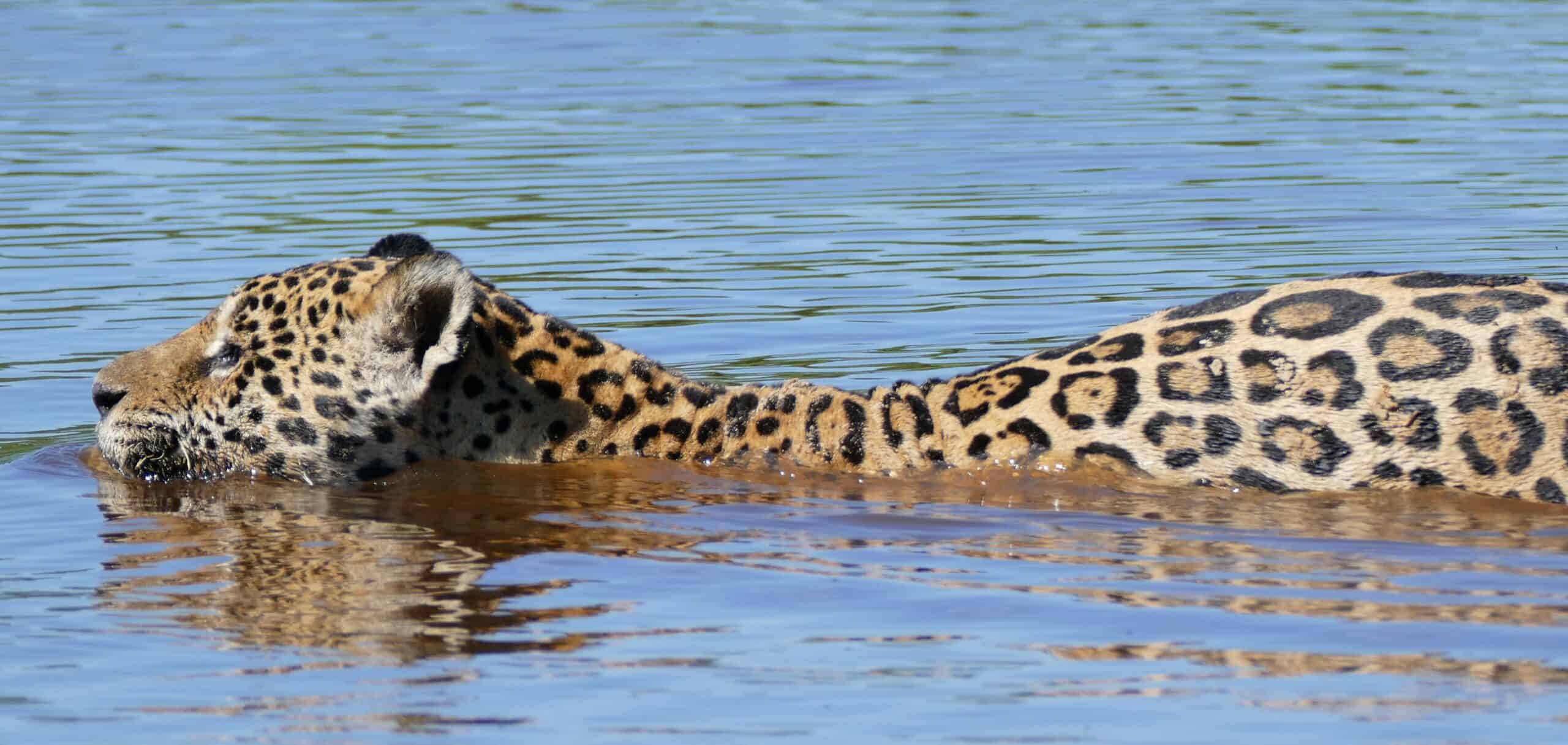
In the Americas, jaguars represent the tapir’s most formidable predator, possessing powerful jaws capable of crushing turtle shells and caiman skulls. These apex predators are skilled hunters both on land and in water, but tapirs have discovered that deep water provides their best chance of survival. While jaguars are competent swimmers, they’re no match for a tapir’s underwater endurance and maneuverability.
When a jaguar approaches, a tapir’s first instinct is to head for the nearest water source. The big cat might follow initially, but jaguars typically abandon the chase once tapirs reach deeper waters. This predator-prey dynamic has shaped tapir behavior for thousands of years, making swimming an instinctive response rather than a learned behavior.
Tigers and Asian Tapir Survival Strategies
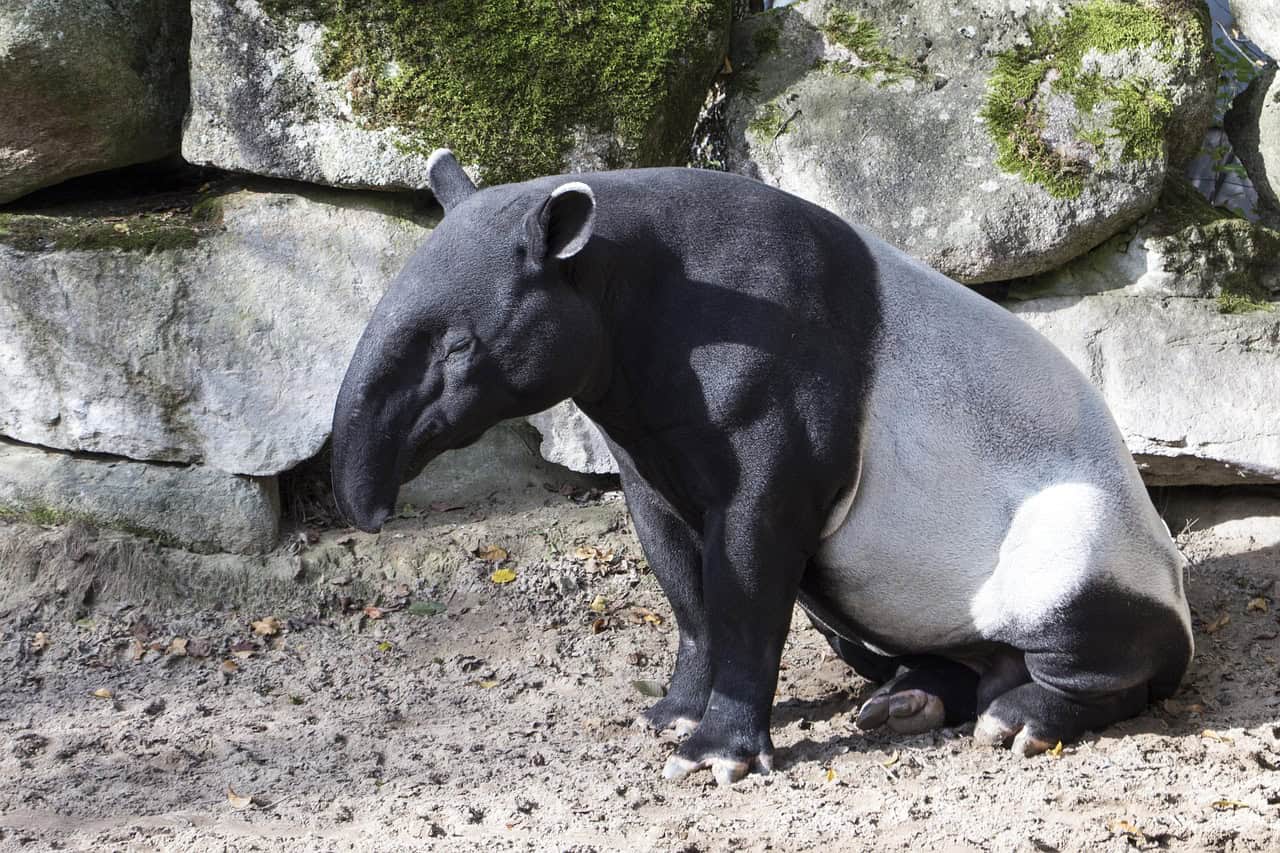
In Southeast Asia, Malayan tapirs face a different but equally dangerous predator: the tiger. These massive cats are even more water-averse than jaguars, making aquatic escape routes particularly effective for Asian tapirs. Tigers, despite their size and strength, rarely pursue prey into deep water, giving tapirs a significant advantage in riparian environments.
Asian tapirs have evolved slightly different swimming techniques compared to their American cousins, often utilizing dense vegetation along riverbanks to mask their escape routes. Their black and white coloration, which appears conspicuous on land, becomes incredibly effective camouflage when partially submerged among water plants and shadows. This adaptation shows how different predator pressures have shaped regional tapir behaviors.
Crocodilian Encounters: When Water Becomes Dangerous

Not all aquatic environments offer safe haven for tapirs. In regions where crocodiles and caimans inhabit the same waters, tapirs must carefully assess their escape routes. These reptilian predators pose a unique challenge because they’re perfectly adapted for aquatic hunting, unlike the primarily terrestrial jaguars and tigers.
Tapirs have developed sophisticated risk assessment abilities, often testing waters before fully committing to an aquatic escape. They can detect the subtle vibrations and chemical signatures that indicate crocodilian presence, allowing them to choose alternative escape routes when necessary. This behavioral flexibility demonstrates the complex decision-making processes that govern tapir survival strategies.
The Physics of Tapir Swimming
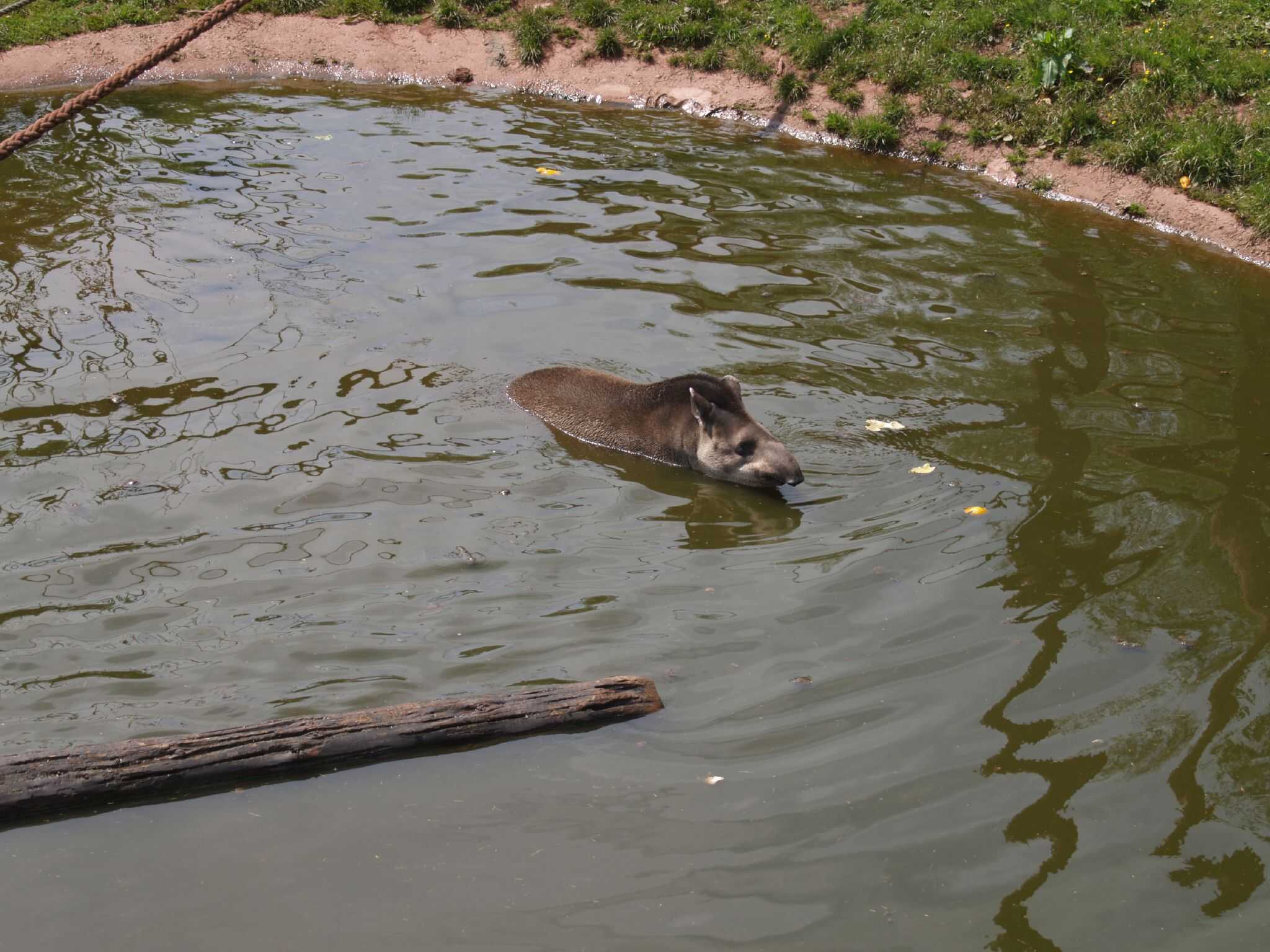
From a biomechanical perspective, tapirs are remarkably efficient swimmers despite their seemingly ungainly appearance. Their body density is perfectly calibrated for neutral buoyancy, allowing them to glide through water with minimal energy expenditure. The tapir’s swimming stroke resembles a modified dog paddle, but with much greater coordination and power.
Research has shown that tapirs can maintain swimming speeds of up to 8 kilometers per hour, which is faster than most humans can sustain over long distances. Their streamlined movement through water creates minimal wake or disturbance, making them difficult to track visually. This hydrodynamic efficiency allows tapirs to cover significant distances underwater while conserving energy for extended escapes.
Behavioral Adaptations for Aquatic Defense
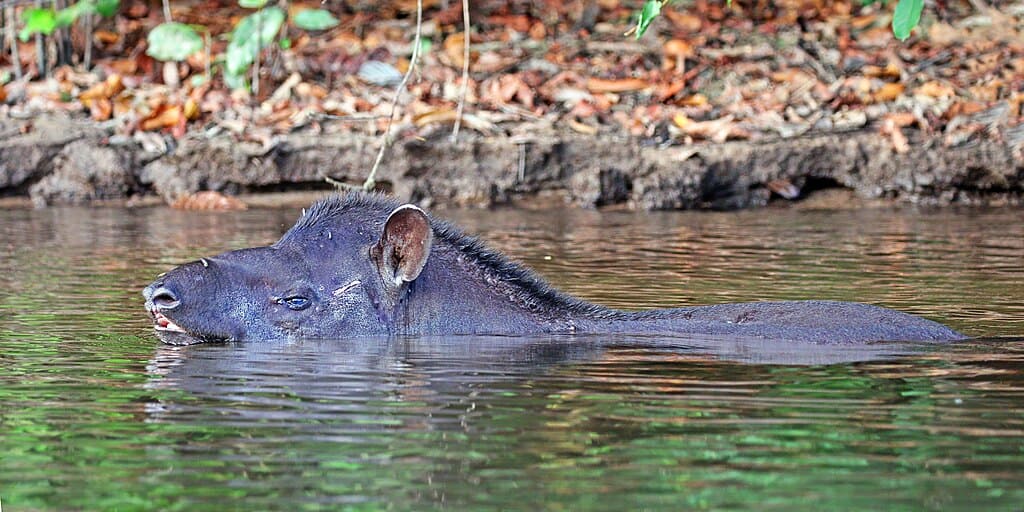
Tapirs have developed complex behavioral patterns that maximize their aquatic escape success. They often establish multiple escape routes from their feeding areas, memorizing the locations of rivers, streams, and even small ponds that could provide refuge. This mental mapping of water sources demonstrates sophisticated spatial intelligence that goes far beyond simple flight responses.
When threatened, tapirs don’t simply run toward the nearest water – they choose their aquatic refuge based on factors like water depth, current strength, and available cover. Pregnant females and mothers with young show even more complex decision-making, often selecting shallow areas where calves can more easily follow their escape routes. These learned behaviors are passed down through generations, creating family-specific survival strategies.
Seasonal Swimming Patterns and Predator Pressure

Tapir swimming behavior varies significantly with seasonal changes, particularly in regions with distinct wet and dry seasons. During dry periods, when water sources become scarce, tapirs must venture further from safety to find food and water. This increased vulnerability leads to more frequent predator encounters and, consequently, more dramatic aquatic escapes.
In contrast, during wet seasons when water is abundant, tapirs can remain closer to aquatic refuge zones. They often modify their daily routines to coincide with periods of lower predator activity, such as midday when jaguars typically rest. This temporal adaptation shows how tapirs integrate swimming strategies with broader survival tactics.
Mother-Calf Swimming Dynamics

Perhaps nowhere is the importance of swimming more evident than in the relationship between tapir mothers and their calves. Young tapirs learn to swim almost immediately after birth, with mothers gently guiding them into shallow waters within their first few days of life. This early aquatic education is crucial for calf survival, as predators often target vulnerable young animals.
Mother tapirs demonstrate remarkable patience and teaching ability, gradually introducing their offspring to deeper waters and more complex swimming techniques. They’ll often position themselves between their calves and potential threats, using their own bodies as shields while guiding the young toward aquatic safety. This maternal investment in swimming education highlights the critical importance of aquatic skills in tapir survival.
Underwater Navigation and Sensory Adaptations
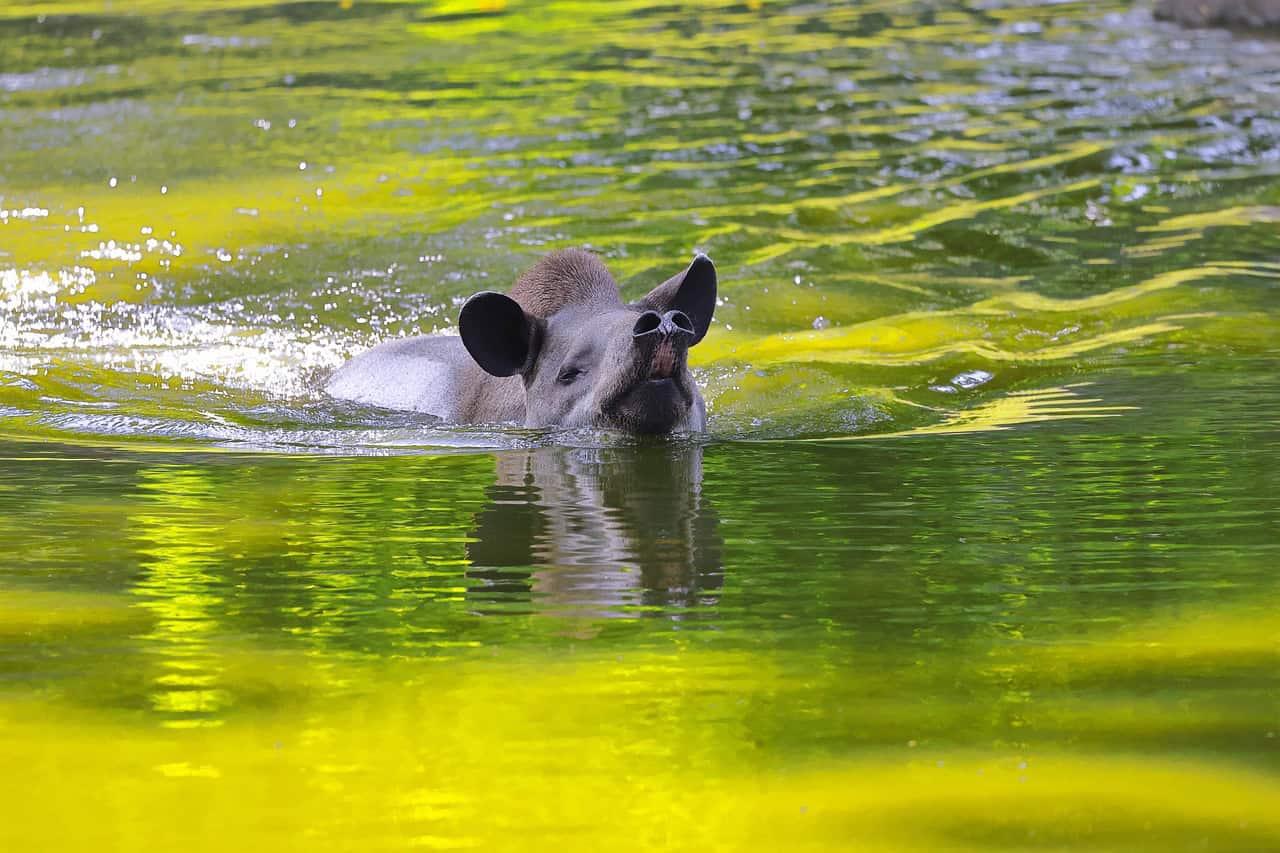
Swimming in murky tropical waters requires specialized sensory adaptations, and tapirs have evolved several remarkable abilities to navigate underwater environments. Their sensitive whiskers, called vibrissae, can detect water currents and obstacles even in complete darkness. These tactile sensors allow tapirs to navigate complex underwater terrain without relying solely on vision.
Tapirs also possess an enhanced sense of spatial orientation that helps them maintain direction during underwater escapes. They can sense changes in water pressure and temperature that indicate depth variations, underwater obstacles, or approaching threats. This sensory toolkit transforms potentially disorienting underwater environments into navigable escape routes.
Energy Conservation During Extended Swims
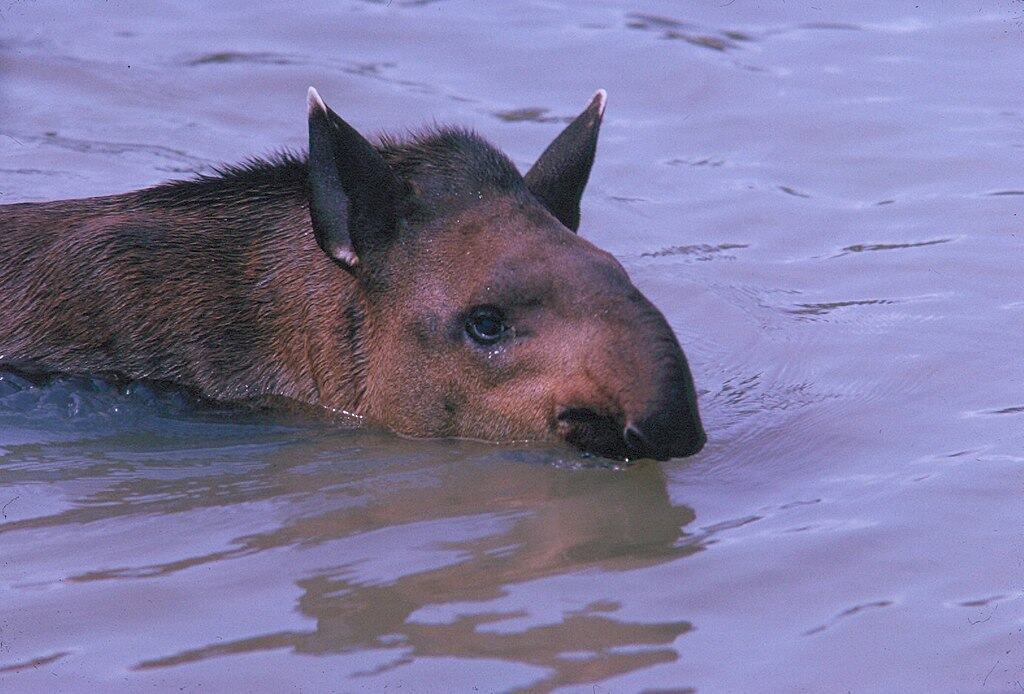
One of the most remarkable aspects of tapir swimming is their ability to conserve energy during extended aquatic escapes. Unlike many mammals that exhaust themselves quickly in water, tapirs can maintain steady swimming for hours if necessary. Their metabolic rate actually decreases during swimming, allowing them to outlast pursuing predators through sheer endurance.
This energy efficiency comes from their unique swimming technique, which maximizes forward propulsion while minimizing wasted motion. Tapirs have learned to use water currents to their advantage, often allowing rivers to carry them downstream while they rest. This strategic use of natural forces demonstrates sophisticated understanding of aquatic environments.
Territorial Advantages of Aquatic Corridors
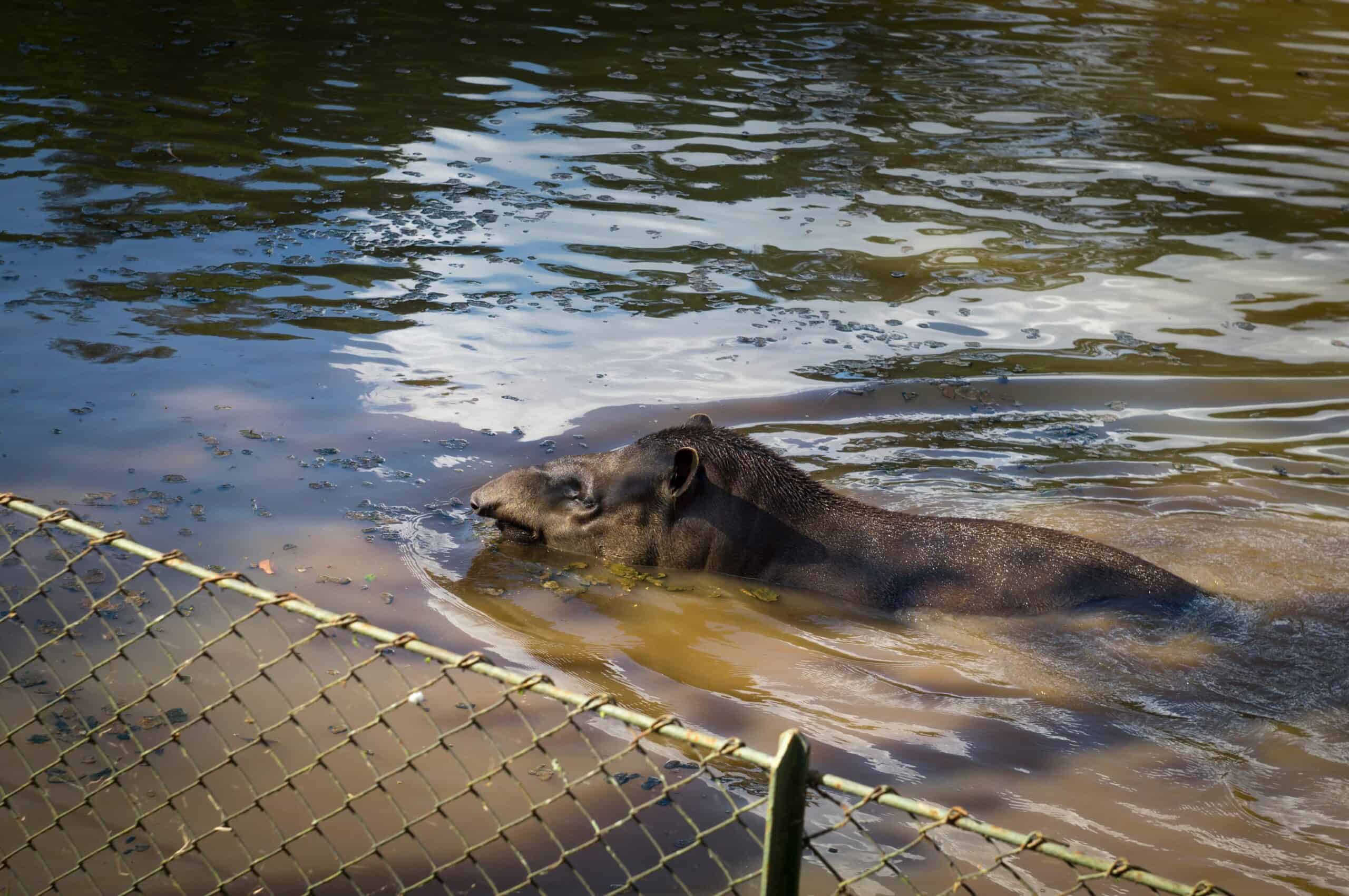
Tapirs often establish territories that include multiple water sources, creating extensive aquatic corridor networks that provide escape routes from various locations. These water-connected territories offer significant survival advantages, allowing tapirs to move between feeding areas while maintaining access to safety. The presence of water sources often determines tapir territory boundaries more than food availability.
Individual tapirs become intimately familiar with their aquatic territories, knowing every underwater log, rock formation, and depth variation. This detailed knowledge allows them to navigate complex underwater landscapes with confidence, even during high-stress escape situations. Some tapirs have been observed using the same underwater hiding spots repeatedly, suggesting they develop preferred refuge locations.
Interspecies Interactions in Aquatic Environments
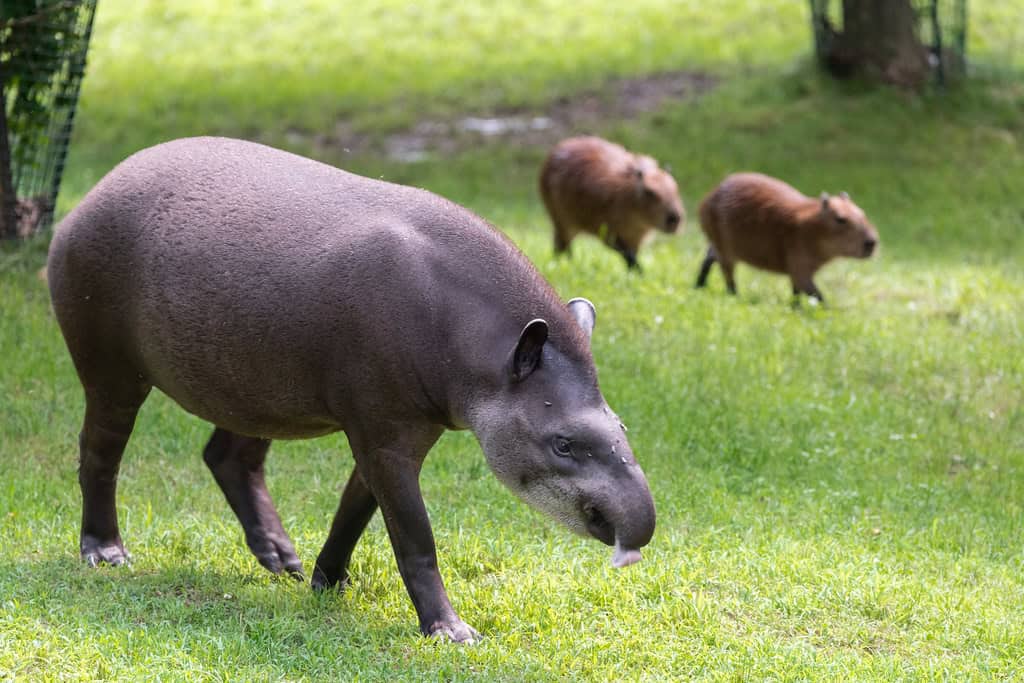
Water sources attract diverse wildlife, creating complex interspecies dynamics that tapirs must navigate carefully. While seeking aquatic refuge, tapirs often encounter other animals with similar survival strategies, including various deer species, capybaras, and even primates. These interactions can be both beneficial and challenging for tapir survival.
Sometimes, the presence of other animals in water sources can alert tapirs to potential dangers, as different species often have complementary warning systems. However, crowded water sources can also make tapirs more visible to predators or force them to seek alternative, potentially less secure escape routes. Managing these social dynamics while maintaining escape readiness requires considerable behavioral flexibility.
Climate Change and Evolving Escape Strategies

Environmental changes are significantly impacting tapir swimming behaviors and survival strategies. As deforestation reduces available water sources, tapirs must travel greater distances to reach aquatic refuge zones, increasing their vulnerability to predator encounters. Climate change is also altering seasonal water patterns, forcing tapirs to adapt their escape strategies to new environmental realities.
Some tapir populations have begun modifying their behavior in response to these challenges, spending more time near remaining water sources and developing more efficient swimming techniques. These adaptations demonstrate the remarkable plasticity of tapir behavior, but also highlight the increasing pressure these ancient survival strategies face in rapidly changing environments.
Comparative Swimming Abilities Across Tapir Species
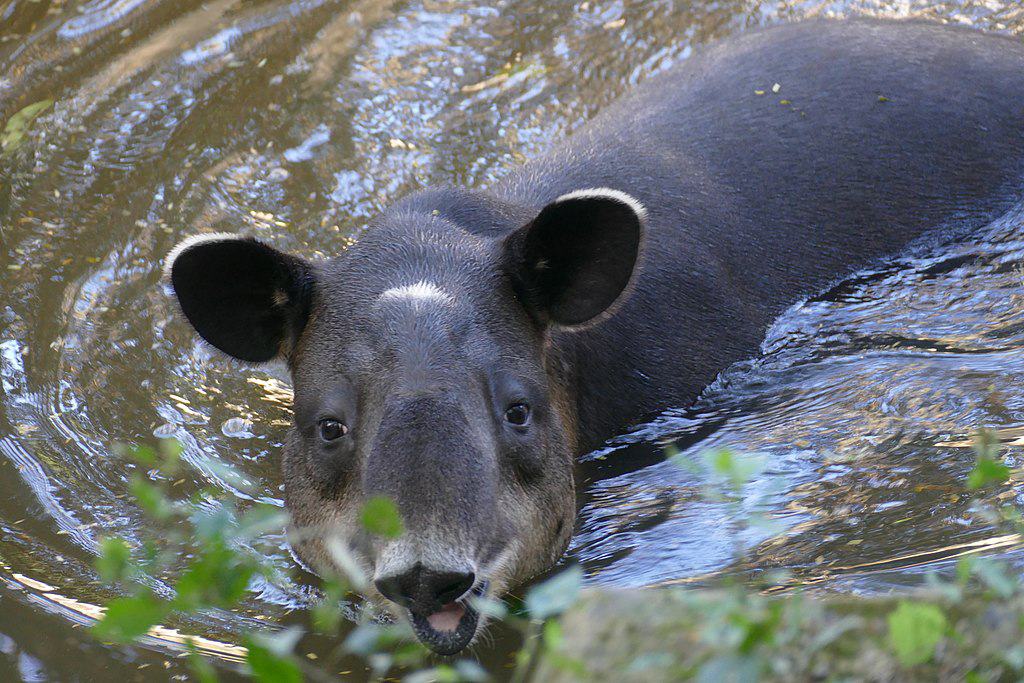
Different tapir species have evolved distinct swimming capabilities based on their specific environments and predator pressures. Baird’s tapirs, the largest species, are powerful swimmers capable of crossing wide rivers and even small lakes during escape situations. Their size provides advantages in water, as they can maintain momentum through strong currents that might overwhelm smaller species.
Mountain tapirs, living in high-altitude environments, have developed specialized swimming techniques for cold, fast-flowing streams. Their denser fur and modified circulation help them maintain body temperature during aquatic escapes in challenging mountain conditions. These species-specific adaptations show how swimming strategies have evolved to match particular environmental challenges.
Conservation Implications of Aquatic Habitats
Understanding tapir swimming behavior has crucial implications for conservation efforts. Protecting tapir populations requires maintaining not just their terrestrial habitats, but also the aquatic corridors that serve as their lifelines during predator encounters. Conservation strategies must include watershed protection and river system preservation to ensure tapir survival.
Many current conservation efforts focus primarily on forest protection while overlooking the critical importance of water sources for tapir survival. Without access to aquatic escape routes, even well-protected forest areas may not provide adequate security for tapir populations. This highlights the need for integrated conservation approaches that consider the full range of tapir survival requirements.
Future Research and Behavioral Studies
Scientific understanding of tapir swimming behavior continues to evolve as researchers develop new technologies for studying these elusive animals. Underwater cameras and tracking devices are providing unprecedented insights into tapir aquatic behavior, revealing complex swimming patterns and decision-making processes that were previously unknown.
Future research may uncover additional sensory adaptations and behavioral strategies that tapirs use during aquatic escapes. Understanding these mechanisms could inform conservation efforts and help predict how tapir populations might respond to environmental changes. The more we learn about tapir swimming behavior, the better equipped we become to protect these remarkable animals and their unique survival strategies.
Conclusion
The tapir’s mastery of aquatic escape represents one of nature’s most elegant survival solutions. These ancient mammals have transformed a simple biological need into a sophisticated defense system that has protected them for millions of years. Their swimming abilities showcase the incredible adaptability of life, demonstrating how species can evolve remarkable skills when survival demands it.
As we face an uncertain environmental future, the tapir’s swimming strategy offers valuable lessons about adaptation and resilience. These remarkable creatures remind us that survival often depends not on strength or speed alone, but on the ability to find creative solutions to life’s challenges. Did you expect these seemingly awkward animals to be such accomplished aquatic athletes?

- From Babe to Babe 2: What’s Life Like for Real Farm Animals? - July 27, 2026
- Why Vampire Bats Share Blood Meals With Unfed Friends - July 27, 2026
- What It’s Like to See Plankton Glow in Real Life - July 26, 2026