

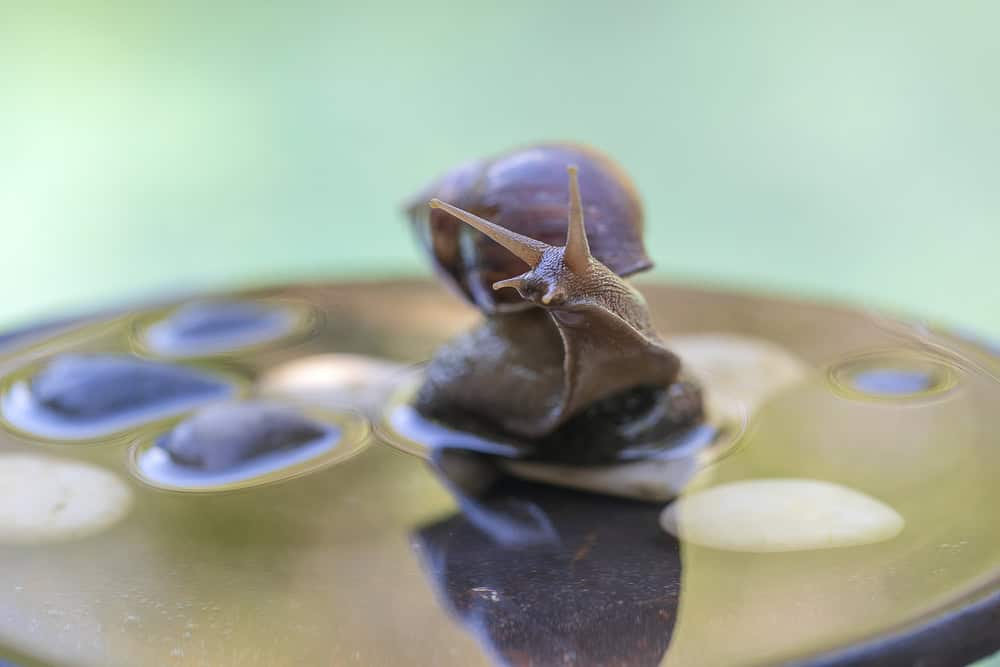
The garden snail, known scientifically as Cornu aspersum, is often cited as an example of sluggishness. Despite its seemingly inconsequential pace, its unique adaptation strategies have helped it survive and thrive in its natural habitat. Understanding why the garden snail moves so slowly can provide deeper insights into its physiology, survival mechanisms, and role in our ecosystem.
Anatomy Of A Slowpoke
🔥 Would you like to save this?
We'll email this post to you, so you can come back to it later!
The snail’s slow movement is largely due to its anatomy. Snails lack legs and rely on a muscular “foot” to traverse their environment. This foot contracts in a wave-like motion, which is efficient for gliding over various surfaces but inherently slow. The muscular contractions generate a ripple effect that propels the snail forward, albeit at a glacial pace.
Energy Conservation And Efficiency

🔥 Would you like to save this?
We'll email this post to you, so you can come back to it later!
Snails are ectothermic animals, meaning they rely on external conditions to regulate their body temperature. Moving slowly allows them to conserve energy, which is crucial since their diet, which consists predominantly of low-calorie plant material, supplies minimal energy. The slow pace is a trade-off for endurance, allowing them to travel greater distances when necessary without rapidly depleting their energy reserves.
Dependence On Mucus
🔥 Would you like to save this?
We'll email this post to you, so you can come back to it later!
One of the fascinating aspects of snail locomotion is their production of mucus, which plays a crucial role in their movement. This mucus reduces friction as they move and also forms a protective barrier against rough surfaces. However, the production of mucus comes at an energy cost, further contributing to the snail’s need to move slowly to conserve resources.
Structural Limitations

🔥 Would you like to save this?
We'll email this post to you, so you can come back to it later!
The snail’s protective shell, although a vital part of its anatomy, adds to its burden. The shell is heavy, limiting its speed. This weight, combined with their low body mass, restricts their potential for quick movement. The shell, while slowing the snail, provides significant protection against predators, offering a different form of survival advantage.
Advantages Of A Slow Pace

🔥 Would you like to save this?
We'll email this post to you, so you can come back to it later!
While speed is often associated with survival, a slower pace has advantages. Moving slowly minimizes the risk of detection by predators, granting snails a form of stealth. Furthermore, by moving cautiously, snails can better navigate their often complex and treacherous environments, such as densely populated gardens, without harming themselves.
Evolutionary Adaptation

🔥 Would you like to save this?
We'll email this post to you, so you can come back to it later!
The garden snail’s slow movement is the result of millions of years of evolution. In their ecological niche, speed was not selected as a key trait. Instead, other adaptations, such as the development of a tough, protective shell and efficient mucus production, were prioritized. Living in environments with abundant hiding spots also reduced the evolutionary pressure for speed.
A Symbiotic Relationship With Nature

🔥 Would you like to save this?
We'll email this post to you, so you can come back to it later!
In their slow-and-steady way, snails play a significant role in the ecosystem. They contribute to nutrient cycling by decomposing plant matter and serve as a food source for various animals. Their slow movement aids in the gradual fertilization of the soil as the nutrients in their waste are spread over larger areas.
Conclusion

🔥 Would you like to save this?
We'll email this post to you, so you can come back to it later!
Although the garden snail may appear to us as a creature of sluggishness, its pace is perfectly suited to its biology and ecological role. By understanding the reasons behind its unhurried movement, we gain an appreciation for the intricate balance of nature and the adaptations that enable even the slowest creatures to flourish in their environments. Every slow movement of a garden snail is a testament to the evolutionary ingenuity that allows it to survive and thrive.

As a little kid, I fell in love with nature, wildlife, and animals. Living in the USA, South Africa, Italy, China and Germany gave me the opportunity to discover the world's Wildlife. My favorite animals are Mountain Gorillas, Siberian Tigers, and Great White Sharks.
I'm a certified PADI Open Water Diver, went to Everest Base Camp and Trekked Gorillas in Uganda. I hold a Master of Science in Economics and Finance.
Please send any feedback to feedback@animalsaroundtheglobe.com
- 10 White Animals - November 5, 2026
- 11 Monkey Antics That Prove They are Our Wildest Relatives - November 5, 2026
- 14 Dog Breeds That Do not Need Much Exercise - November 5, 2026