

Ever seen an animal whose tongue starts in its chest? Honestly, it sounds like something out of a sci-fi movie, yet here in 2026, the pangolin still manages to defy what we think we know about biology. While most predators rely on speed, venom, or razor-sharp teeth to catch their prey, this scaly oddball from Asia and Africa has evolved something far weirder. Picture this: a creature that looks like a walking pinecone, armed with nothing but a sticky ribbon that can extend nearly half a body length away from its mouth.
It’s hard to believe until you see it yourself. The pangolin doesn’t hunt like other mammals. It doesn’t chase down food or ambush it from the shadows. Instead, it relies on a tongue so bizarre and specialized that scientists still marvel at its mechanics. What makes this appendage so peculiar? Let’s dive in.
An Organ That Starts Near The Pelvis
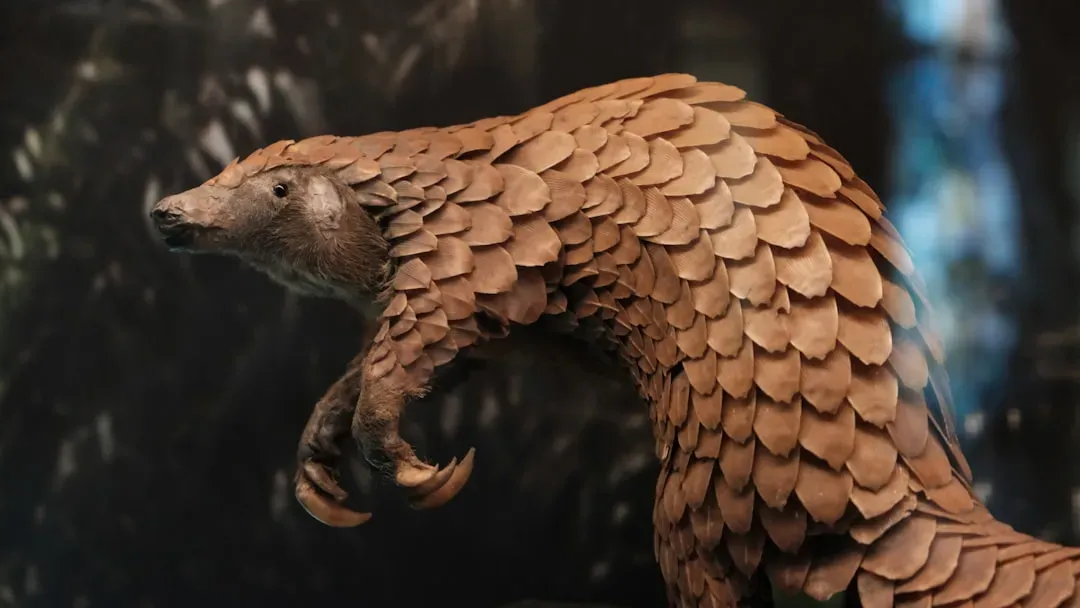
The root of the pangolin’s tongue is not attached to the hyoid bone but is in the thorax between the sternum and the trachea. Think about that for a second. When you stick out your tongue, it comes from the back of your mouth. When a pangolin does the same, the base of its tongue literally originates deep inside its chest cavity, anchored near its pelvis and last pair of ribs.
A pangolin’s tongue is attached near its pelvis and last pair of ribs, and when fully extended can be up to half the length of the animal’s head and body. This extraordinary anatomical arrangement allows for an extension length that would be impossible if the tongue were structured like ours. The tongue is 70 centimeters long in Manis gigantea and 30 centimeters long in M. tricuspis.
When the tongue retracts, it doesn’t just slide back into the mouth like a normal mammal’s. It goes into a hole at the base of the mouth and into a long sheath that curls up in the chest cavity, so if you looked in a pangolin’s mouth when their tongue is retracted you wouldn’t actually see the tongue. Imagine having your most important feeding tool stored somewhere between your ribs and breastbone. That’s the pangolin’s reality.
This setup requires a complex system of muscles and support structures. Most of the caudal end of tongue is kept in the sac having attached external muscles running into thoracic cavity and lie on dorsal surface of sternum, with some parts running backward to insert on ventral surface of xiphoid process at xiphisternal junction.
The whole mechanism functions like a biological spring. The coiled nature of the xiphisternal bones and attachments of tongue muscles suggests an elastic mechanism may help propel tongue extension. It’s like storing a whip inside your body, ready to snap out at a moment’s notice.
Sticky Saliva As The Ultimate Trap
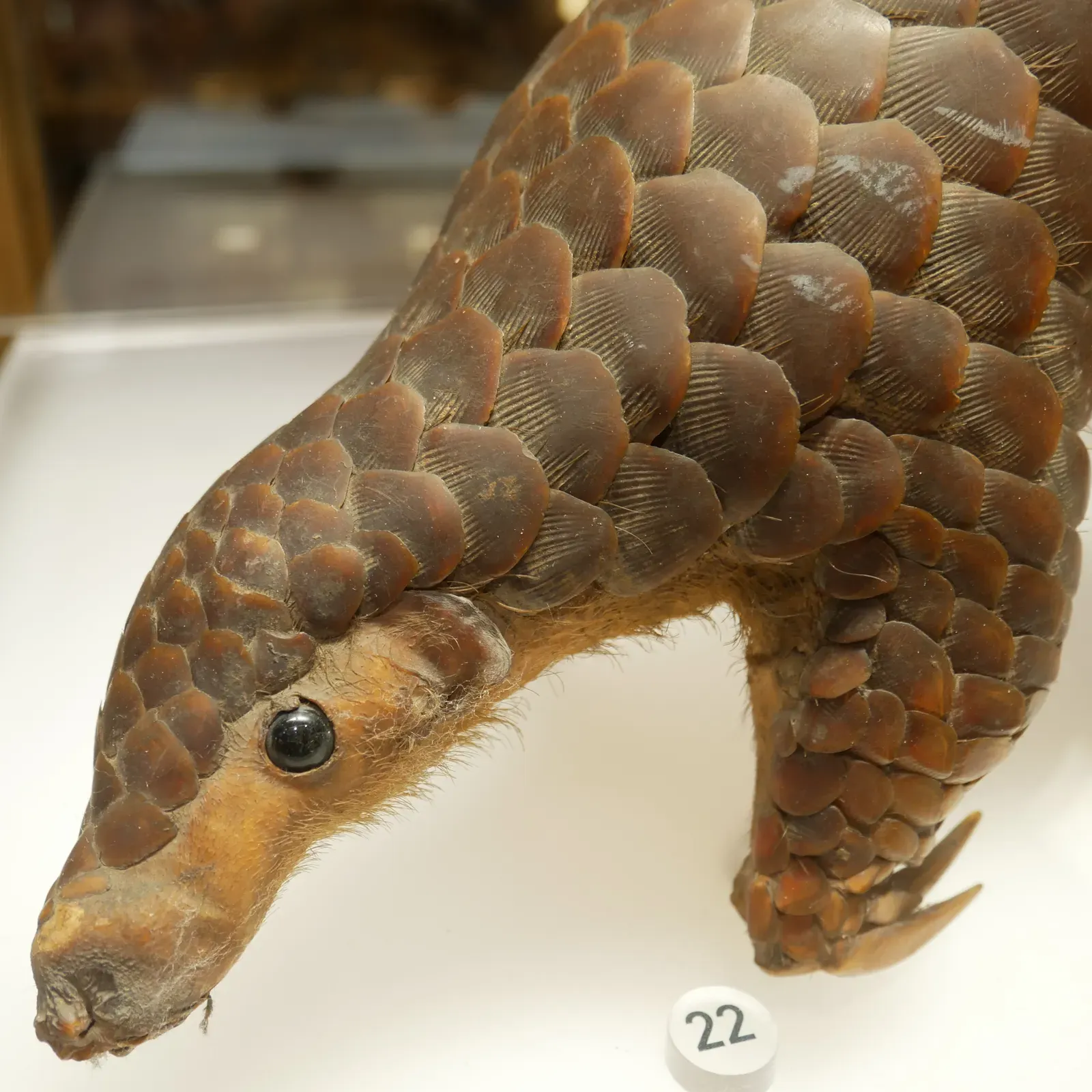
Length alone wouldn’t make the pangolin’s tongue effective without its coating. Their saliva is sticky, causing ants and termites to stick to their long tongues when they are hunting through insect tunnels. This isn’t just slightly adhesive like human spit. The saliva is specialized to create a tacky surface that insects simply cannot escape from once contact is made.
The stickiness is critical because pangolins don’t grab their prey with jaws or teeth. They also lack teeth. Instead, every single ant or termite must adhere to that tongue surface. The tongue flicks in and out of narrow tunnels deep inside mounds, picking up hundreds of insects in mere minutes.
Pangolins are toothless mammals with long tongue coated with sticky saliva for catching ants and termites and taking to their mouth. This means the tongue is doing all the work: locating, capturing, and transporting prey directly to the stomach. There’s no chewing involved, no secondary processing by teeth. Just sticky contact and swallowing.
The adhesive quality has to be strong enough to hold struggling insects but flexible enough to allow the tongue to move rapidly. Scientists believe the saliva’s composition is uniquely adapted to the pangolin’s myrmecophagous lifestyle, though the exact chemical makeup remains an area of ongoing research. What we do know is that without this specialized secretion, the tongue would be useless.
It’s a perfect example of form meeting function. The length gets the tongue where it needs to go, the stickiness ensures prey doesn’t escape, and the retraction mechanism brings the bounty home.
A Tongue That Can Outmeasure The Body
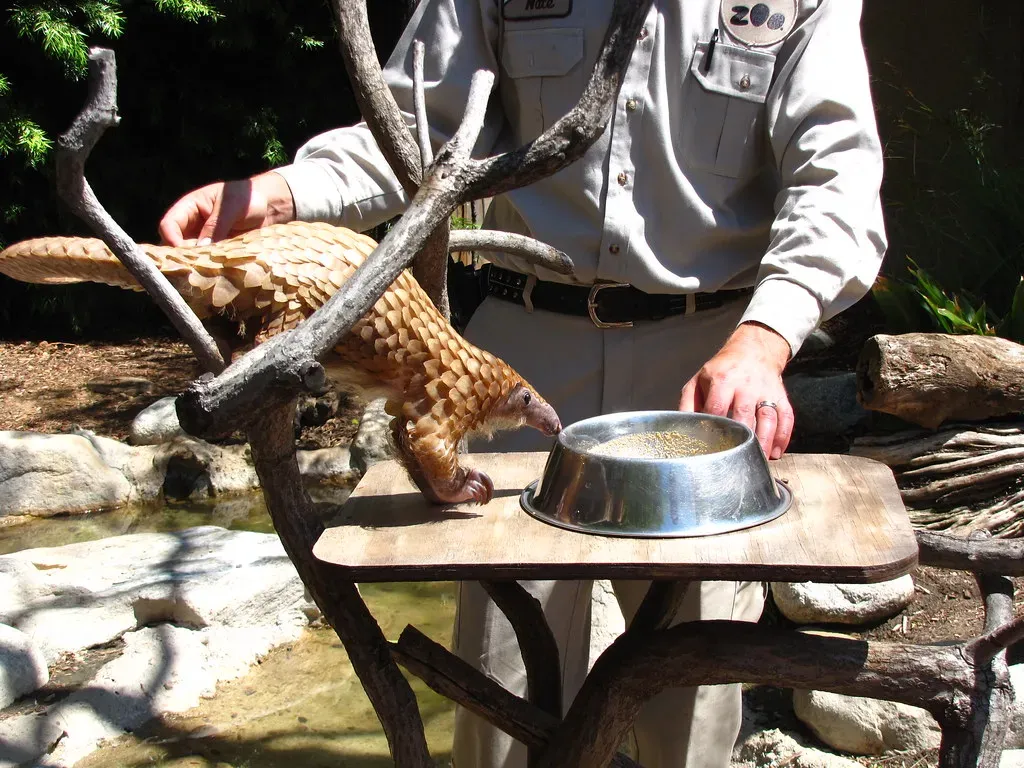
Here’s where it gets truly wild. If a pangolin fully extends its tongue, it is longer than the animal’s head and body, with some pangolin tongues being over 40cm long. To put that in perspective, imagine if your tongue could stretch past your knees. Large pangolins can extend their tongues as much as 40 cm with a diameter of only about 0.5 cm.
A pangolin’s tongue can be longer than the length of its body, which helps it probe insect tunnels for food. This isn’t just a party trick. The extreme length allows pangolins to reach deep into ant hills and termite mounds without exposing themselves to defensive bites. Termites and ants are fierce protectors of their colonies, equipped with biting jaws and chemical defenses. Staying at a distance while still accessing the colony’s interior is a survival advantage.
The thinness of the tongue is equally important. At roughly half a centimeter in diameter, it can snake through tiny passageways that would be inaccessible to thicker appendages. This slender profile means the pangolin can exploit food sources that other insectivores might struggle to reach. It’s like having a biological fishing line that’s both strong and incredibly flexible.
Different species have varying tongue lengths based on their size and prey preferences. Smaller pangolins have proportionally shorter tongues, but the ratio of tongue length to body size remains impressively high across all species. This consistency suggests the trait has been under strong evolutionary pressure, fine-tuned over millions of years.
The Muscular Hydrostat That Powers The Weapon
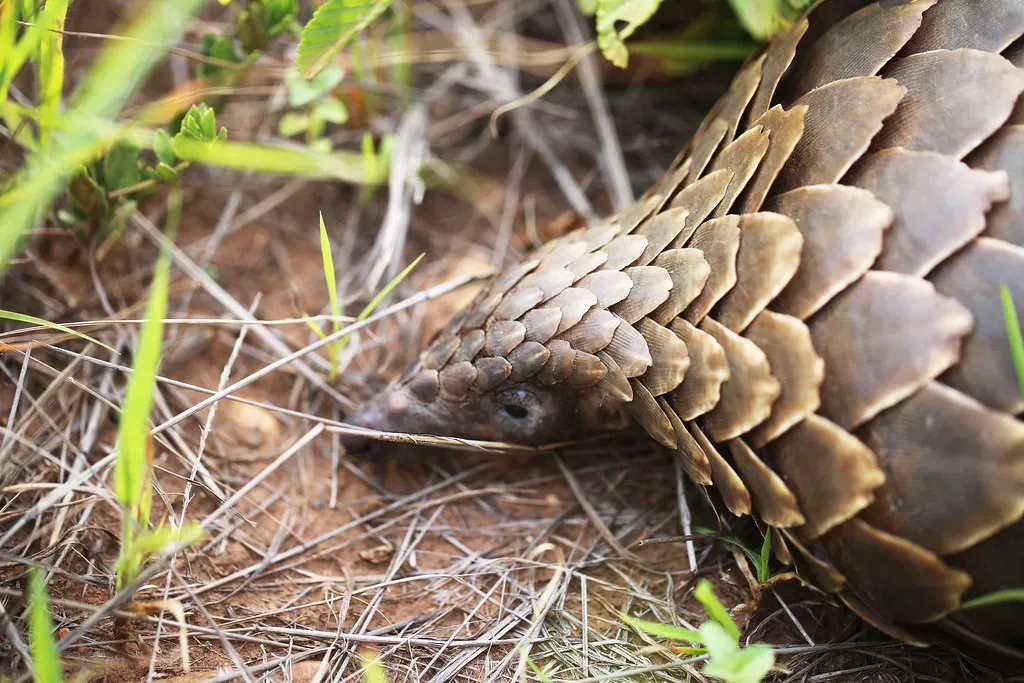
Let’s be real, a tongue this long needs serious muscle power. The tongues of pangolins are among the more derived of other mammalian ant-eating specialists, extending nearly a body length to capture food, with pangolins packing portions of their hyolingual apparatus in their thoracoabdominal cavity. The tongue operates as what scientists call a muscular hydrostat, similar to an elephant’s trunk or an octopus tentacle.
Together, these muscles act as a hydrostat in promoting hyolingual movements in pangolins. A muscular hydrostat is an organ made almost entirely of muscle, with no skeletal support, that maintains constant volume while changing shape. This allows incredible flexibility and strength. When pangolins extend their tongues, muscles contract lengthwise while others compress, pushing the structure forward like a biological piston.
The body of the tongue is occupied by m. sternoglossus, paired, parallel-fibered muscle bellies that run the longitudinal distance of the first two-thirds of the tongue, with xiphisternal muscle fibers enveloping the caudal portion and aiding in retracting the tongue. This muscular architecture provides both power and precision. The tongue can shoot out rapidly to maximize insect capture, then retract just as quickly to deposit prey into the digestive system.
The body of the tongue resides in a glossal tube, an extension of geniohyoid muscles built by layers of circular and longitudinal fibers that modestly, helically wind around the long axis of the tongue, also aiding in tongue protraction. It’s an engineering marvel, really. The helical arrangement creates a spring-like action that amplifies the force generated by muscle contractions.
This complex musculature allows pangolins to control their tongue with remarkable dexterity. They can navigate tight corners inside ant nests, adjust the angle of entry, and even vary the speed of extension depending on the situation. For an organ that lives most of its life coiled up inside the chest, it’s astonishingly responsive.
How The Strangest Tongue Became An Evolutionary Masterpiece
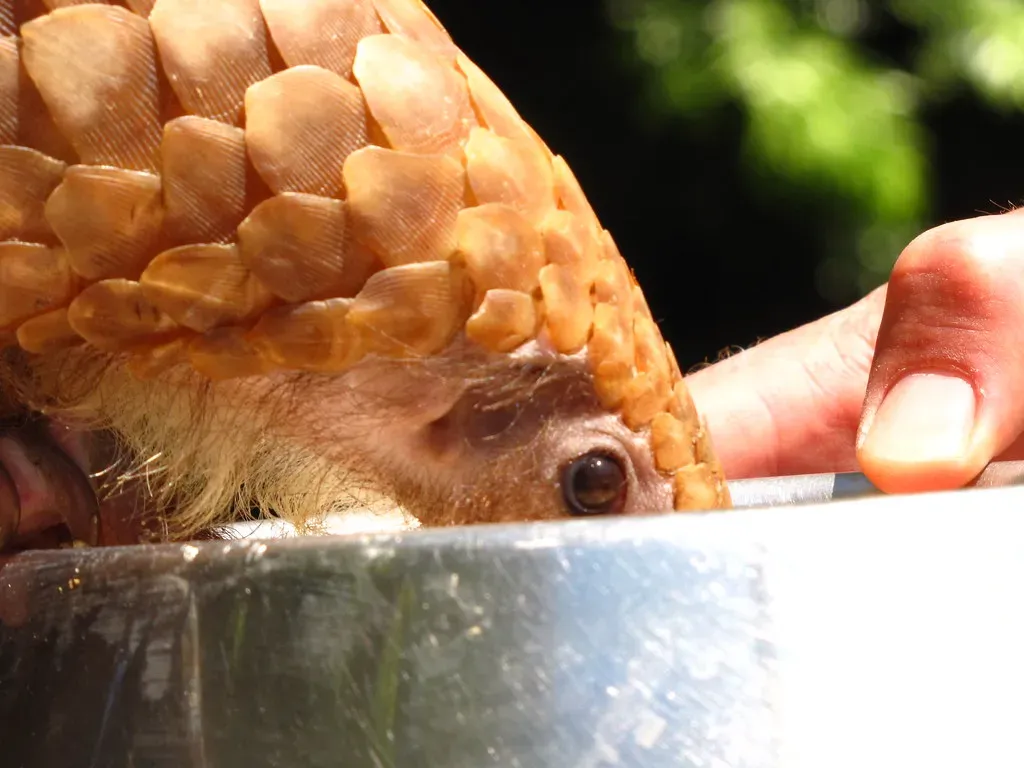
You’d think such a bizarre adaptation would be rare, yet pangolins have thrived with this design for millions of years. The group has a long fossil history of more than 80 million years, but only one family remains today: Manidae. This suggests the tongue adaptation appeared early and proved so successful that it became the defining feature of the entire lineage.
Pangolins evolved separately from other ant-eating mammals like anteaters and aardvarks. Even though pangolins are myrmecophagous, they developed this feeding style of eating ants and termites completely separately from the Anteater in a process called Convergent Evolution, which means that two completely unrelated animals developed similar features. Nature found the same solution twice, which tells you something about how effective the design is.
The tongue isn’t just about catching food. It’s also about protection. Pangolins have special muscles that seal their nostrils and ears shut, protecting them from attacking insects. While the tongue is busy working inside an ant hill, the pangolin’s face remains sealed off, preventing angry insects from swarming into vulnerable openings. It’s a coordinated defense system that makes the hunting strategy viable.
The evolutionary payoff has been enormous. Estimates indicate that one adult pangolin can consume more than 70 million insects annually. That’s an astounding amount of biomass processed through a single tongue. By specializing so completely, pangolins have carved out an ecological niche that few other mammals can compete in. Their tongue isn’t just strange; it’s a testament to how far evolution can push a single body part when the pressure is right.
Conclusion
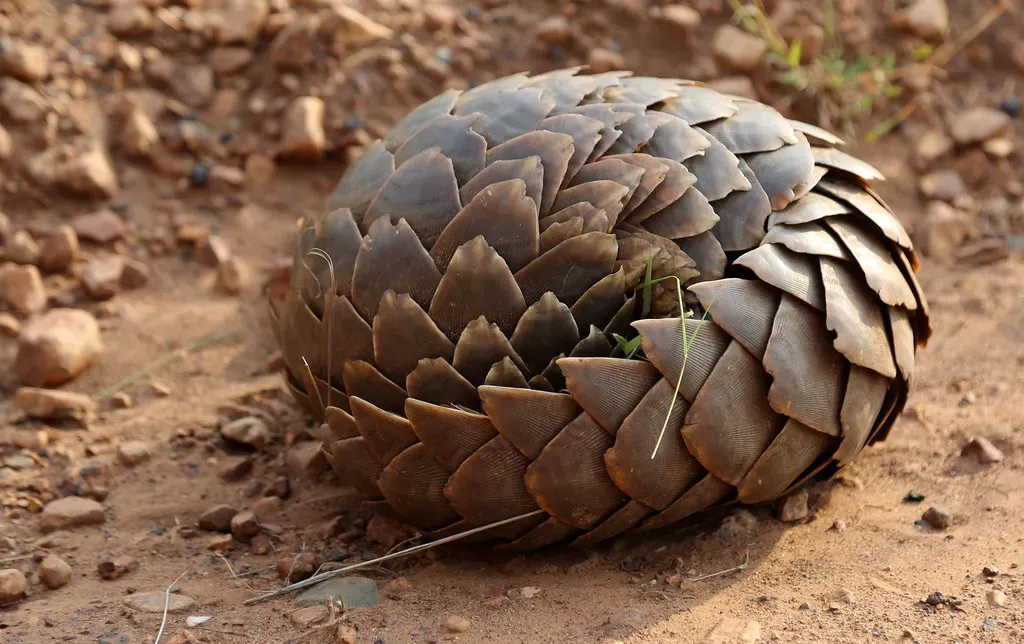
The pangolin’s tongue is more than just unusual. It’s a complete reimagining of what a mammalian tongue can be. From its origin point deep in the chest cavity to its incredible length and sticky coating, every aspect has been optimized for a singular purpose: extracting insects from places other predators can’t reach. The muscular hydrostat design gives it power and flexibility, while the saliva ensures every flick brings back a meal.
In a world full of teeth, claws, and venom, the pangolin chose a different path. It invested everything into one extraordinary appendage, and the result is one of the most specialized feeding tools in the animal kingdom. It’s a reminder that evolution doesn’t always favor the obvious solution. Sometimes, the strangest adaptation turns out to be the most brilliant.
What do you think about nature’s ability to create such unexpected solutions? Tell us in the comments.
