

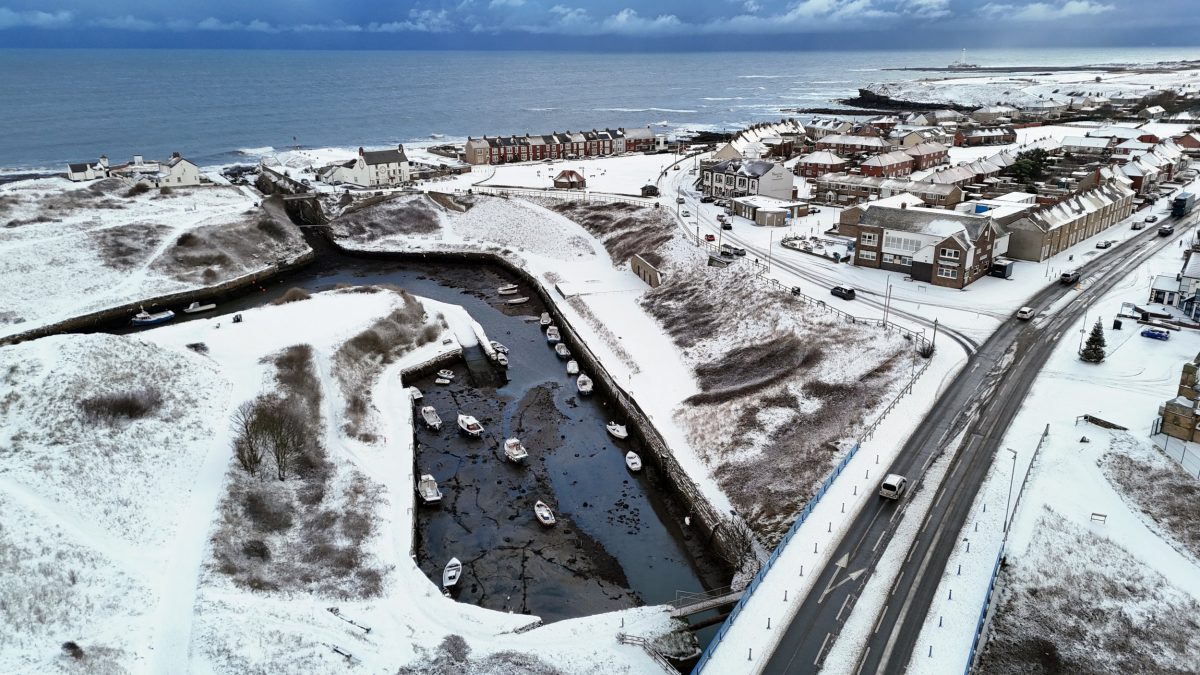

Snow’s Unpredictable Nature Challenges Models (Image Credits: Inews.co.uk)
As recent winter storms like Storm Goretti battered Britain, countless smartphone users discovered that their go-to weather apps provided forecasts far removed from the actual conditions on the ground.
Snow’s Unpredictable Nature Challenges Models
Forecasters have long acknowledged that predicting snow ranks among the toughest meteorological tasks, often described by experts as a “fool’s game” due to the fine line between snow, sleet, and rain. During Storm Goretti, which struck in early January 2026, many apps underestimated snowfall amounts or failed to pinpoint affected areas accurately. This stems from the chaotic microphysics involved in precipitation formation, where slight temperature variations at different altitudes can drastically alter outcomes.
Computer models powering these apps rely on vast datasets, yet they struggle with localized effects like urban heat islands or terrain influences that disrupt snow patterns. In Britain, hilly regions amplified discrepancies, leading to apps showing clear skies while residents shoveled inches of accumulation. Such errors erode trust, especially when travel plans hinge on precise predictions.
Data Sources and App Limitations Exposed
Weather apps aggregate information from multiple providers, including national services like the Met Office and global models, but inconsistencies arise in how this data integrates. For instance, the Apple Weather app, which draws from The Weather Channel and other sources, has drawn criticism for lagging updates during rapid snow events. Users reported apps displaying 0% precipitation chances mere hours before heavy flurries began, highlighting delays in real-time data processing.
Unlike dedicated meteorological stations, smartphones lack direct sensors for hyper-local conditions, forcing apps to interpolate from distant radars. This approach works well for broad trends but falters in snow, where small-scale phenomena like lake-effect bands create isolated heavy falls. Posts on social platforms echoed frustrations, with users noting apps like AccuWeather offered overly generalized views, missing nuances in forecasts.
Technological Hurdles in a Digital Age
Despite advances in satellite imagery and AI-driven analytics, weather apps prioritize user-friendly interfaces over granular accuracy, often simplifying complex simulations into icons and percentages. During the 2026 winter season, this simplification backfired as apps struggled to convey uncertainty in transitional weather – rain turning to snow or vice versa. Experts point out that high-resolution models exist but require immense computing power, which mobile apps cannot fully leverage without slowing performance.
Moreover, algorithmic biases toward historical averages can skew predictions; if a region rarely sees deep snow, apps may downplay risks even when conditions align for it. This was evident in recent U.S. and European storms, where apps forecasted light dustings but reality delivered disruptive accumulations, stranding commuters and closing schools unexpectedly.
Seeking More Reliable Winter Guidance
Professionals recommend cross-referencing apps with official sources for better results, as local meteorologists outperform automated tools in interpreting snow dynamics. The Met Office, for example, issued detailed warnings during Storm Goretti that captured variability better than commercial apps. Users can enhance accuracy by enabling location services and reporting discrepancies directly within apps, which feeds back into model improvements over time.
To navigate these pitfalls, consider supplementing apps with radar visualizations from trusted sites. While no tool guarantees perfection, combining them reduces surprises. In an era of frequent winter disruptions, understanding these limitations empowers better preparedness.
Key Takeaways
- Snow prediction is inherently difficult due to temperature sensitivities and local variations.
- Apps rely on aggregated data that may lag or oversimplify during dynamic events.
- Consult official meteorological services for the most reliable winter updates.
Ultimately, the interplay of atmospheric complexity and technological constraints underscores why snow forecasts remain elusive, reminding us that while apps offer convenience, they are no substitute for expert vigilance. What experiences have you had with weather apps during snow? Share in the comments below.

- Urban Coyotes Show Remarkable Adaptability, Learning to Thrive in City Environments - July 22, 2026
- Beavers Are Nature’s Engineers, Creating Vital Habitats for Other Wildlife Species - July 21, 2026
- The Recovery of the California Condor Offers Hope for Other Critically Endangered Birds - July 21, 2026