


California, with its diverse ecosystems ranging from coastal waters to alpine mountains, desert landscapes to lush forests, hosts an incredible variety of wildlife. The Golden State’s unique geography and climate create perfect habitats for numerous fascinating creatures. Whether you’re hiking through national parks, exploring tide pools, or simply driving along scenic routes, you’ll have opportunities to encounter some truly remarkable animals. Here’s a guide to 10 amazing animals you can spot in California, where to find them, and what makes each one special.
10. California Condor – A Conservation Success Story

The California condor (Gymnogyps californianus) stands as North America’s largest flying bird, with an impressive wingspan reaching up to 9.5 feet. Once on the brink of extinction with only 22 individuals remaining in the wild in 1982, these magnificent birds have been slowly recovering thanks to intensive conservation efforts. Their comeback represents one of the most dramatic wildlife rescue stories in American history.
Today, visitors can spot these majestic scavengers soaring above the rugged terrain of Pinnacles National Park, Big Sur coastline, and the remote areas of Southern California. Their distinctive bald heads and white underwing patches make them identifiable even from a distance. California condors can live up to 60 years in the wild and play a crucial ecological role as nature’s clean-up crew, consuming carrion that might otherwise spread disease.
9. Sea Otters – Charismatic Marine Mammals

California’s coastal waters are home to the southern sea otter (Enhydra lutris nereis), one of the state’s most beloved marine mammals. These charismatic creatures can be observed floating on their backs in kelp forests along the central coast, particularly in Monterey Bay, Elkhorn Slough, and Morro Bay. Sea otters are known for using rocks as tools to crack open shellfish, displaying remarkable intelligence and adaptability.
With the densest fur of any animal (up to one million hairs per square inch), sea otters don’t rely on blubber for insulation like other marine mammals. Instead, they maintain their body temperature through their incredibly thick fur and high metabolism, requiring them to eat approximately 25% of their body weight daily. Once hunted to near extinction for their valuable pelts, sea otters have made a gradual comeback but remain threatened by pollution, habitat loss, and disease.
8. Desert Bighorn Sheep – Masters of Harsh Terrain
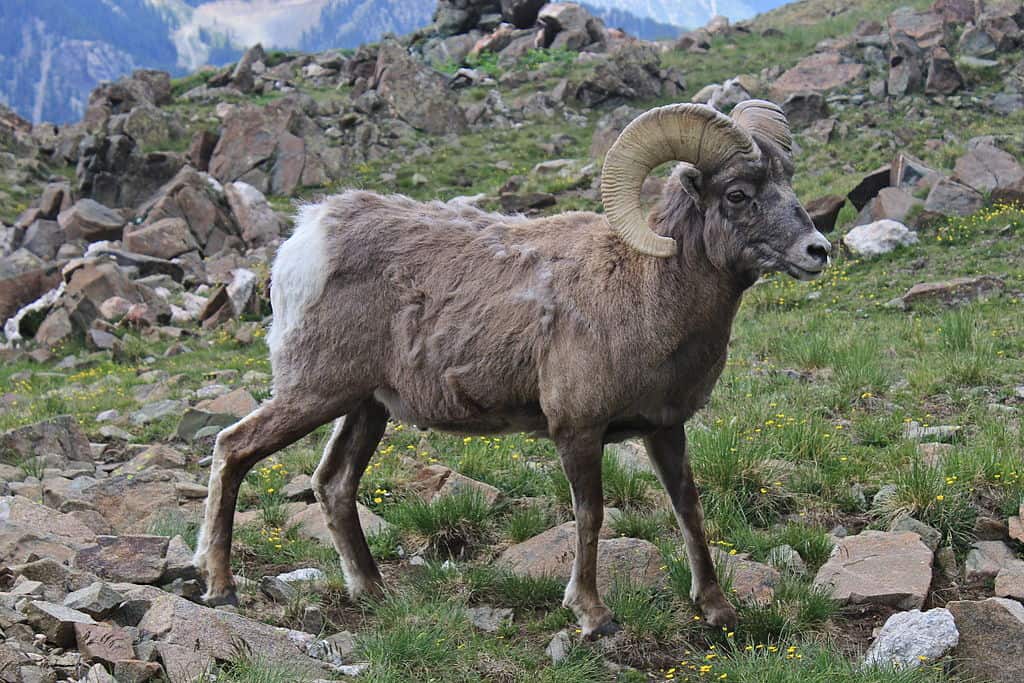
The desert bighorn sheep (Ovis canadensis nelsoni) have evolved perfectly to thrive in California’s harsh desert environments. These magnificent ungulates can be spotted navigating the steep, rocky terrain of Death Valley National Park, Joshua Tree National Park, and Anza-Borrego Desert State Park. Their specialized hooves allow them to grip precarious rock faces with remarkable agility, while their keen eyesight helps them spot predators from great distances.
Male bighorns, known as rams, develop massive curved horns that can weigh up to 30 pounds, nearly 10% of their body weight. These horns serve as both status symbols and weapons during the dramatic head-butting contests between males competing for mating rights. Desert bighorn sheep have adapted to survive in temperatures exceeding 100°F and can go for extended periods without water by obtaining moisture from the desert vegetation they consume. Witnessing these majestic creatures navigate seemingly impossible cliff faces is truly an unforgettable wildlife experience.
7. Gray Whales – Epic Ocean Migrators

California’s coastal waters serve as the highway for one of nature’s most impressive migrations. Every year, gray whales (Eschrichtius robustus) travel an astounding 10,000-12,000 miles round-trip between their Arctic feeding grounds and the warm lagoons of Baja California where they breed and give birth. This represents the longest known migration of any mammal on Earth. From December through May, these massive marine mammals can be spotted from numerous California coastal viewpoints.
The best whale-watching locations include Point Reyes National Seashore, Monterey Bay, and the Channel Islands. Gray whales reach lengths of up to 45 feet and weights of 40 tons, yet they feed primarily on tiny amphipods by scooping up sediment from the ocean floor and filtering it through their baleen plates. Their distinctive mottled gray appearance, heart-shaped spouts, and lack of dorsal fins make them relatively easy to identify. For an unforgettable experience, join a whale-watching tour during peak migration season in January or March when sightings are most common.
6. Mountain Lions – Elusive Apex Predators

Also known as cougars or pumas, mountain lions (Puma concolor) represent California’s largest wild cats and serve as apex predators throughout the state’s diverse ecosystems. These powerful and elusive felines can be found from the northern forests to the southern mountains, though actually spotting one is extremely rare due to their secretive nature and primarily nocturnal hunting habits. Their territory spans from the Santa Monica Mountains near Los Angeles to the dense forests of Northern California.
Mountain lions are solitary animals with males establishing territories of up to 100 square miles. They’re remarkable athletes, capable of leaping 15 feet vertically and 40 feet horizontally. They primarily hunt deer but will opportunistically take smaller prey. Despite their fearsome reputation, attacks on humans are extremely rare. California’s mountain lion population faces increasing challenges as urban development fragments their habitat, forcing these cats to navigate human-dominated landscapes. Various conservation efforts are underway to create wildlife corridors that allow these magnificent predators to maintain genetic diversity and healthy populations.
5. Elephant Seals – Remarkable Marine Giants
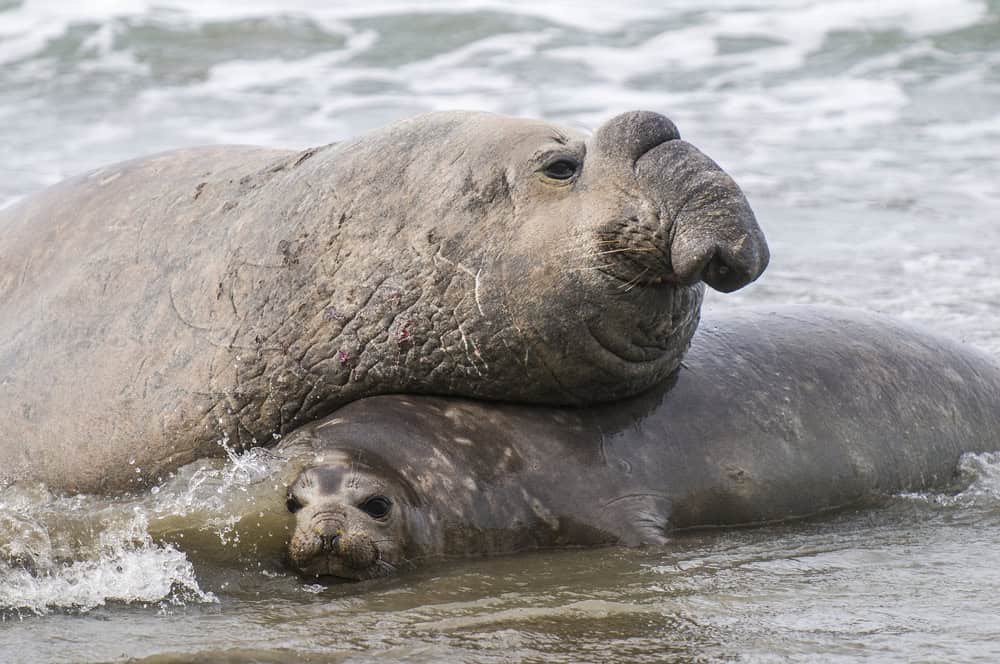
The northern elephant seal (Mirounga angustirostris) creates one of California’s most dramatic wildlife spectacles during their breeding season. These enormous marine mammals gather in large colonies along the coast, with the most accessible viewing locations at Año Nuevo State Park and Piedras Blancas near San Simeon. Male elephant seals can reach lengths of 16 feet and weigh up to 5,000 pounds, making them the largest pinnipeds in the Northern Hemisphere. Their name derives from the distinctive elongated snouts of adult males, which resemble elephant trunks.
The breeding season from December through March offers the most impressive display as massive bulls engage in thunderous battles for dominance and mating rights, while females give birth and nurse their pups on the beaches. These remarkable animals were hunted to near extinction in the late 1800s, with perhaps fewer than 100 individuals remaining. Protected since the early 20th century, they’ve made an extraordinary recovery with a current population estimated at over 150,000. When not breeding, elephant seals spend months at sea, diving to extraordinary depths exceeding 5,000 feet and staying submerged for up to two hours – abilities that make them among the most impressive diving mammals on Earth.
4. Tule Elk – California’s Endemic Ungulate

The tule elk (Cervus canadensis nannodes) represents a uniquely Californian success story. This endemic subspecies of elk, found nowhere else in the world, once roamed the Central Valley and coastal regions in herds numbering in the hundreds of thousands. By 1874, hunting and habitat loss had reduced their population to a single pair discovered on a ranch in the San Joaquin Valley. From this precarious beginning, careful conservation efforts have restored the population to approximately 5,700 animals distributed across 22 herds throughout the state.
Today, visitors can observe these magnificent ungulates at Point Reyes National Seashore, Grizzly Island Wildlife Area, and Tule Elk State Natural Reserve. Bulls develop impressive antlers that can span five feet and weigh up to 40 pounds, which they shed and regrow annually. During the fall rutting season, male elk engage in dramatic bugling contests – haunting calls that echo across meadows and valleys as they compete for females. The restoration of tule elk populations represents one of California’s most successful wildlife conservation efforts, bringing back a iconic species that had nearly vanished forever.
3. Great White Sharks – Apex Ocean Predators

The waters off California’s coast host one of the world’s most significant populations of great white sharks (Carcharodon carcharias). These apex predators gather particularly around the Farallon Islands, Año Nuevo Island, and parts of Southern California, drawn to the rich populations of seals and sea lions that serve as their primary prey. Research has revealed that these sharks follow established migration patterns, with many returning to the same coastal feeding grounds year after year in what scientists call the “White Shark Café.”
Despite their fearsome reputation, great white sharks play a crucial ecological role in maintaining healthy marine ecosystems. Growing up to 20 feet long and weighing over 4,000 pounds, these impressive predators can detect a single drop of blood in 25 gallons of water and can sense the electrical impulses of other animals. For those interested in observing these magnificent creatures safely, several tour operators in the San Francisco Bay Area offer cage diving expeditions during peak season (September-November). Conservation efforts are increasingly important as these sharks face threats from fishing pressure, habitat degradation, and climate change impacts on marine ecosystems.
2. Bald Eagles – America’s National Bird
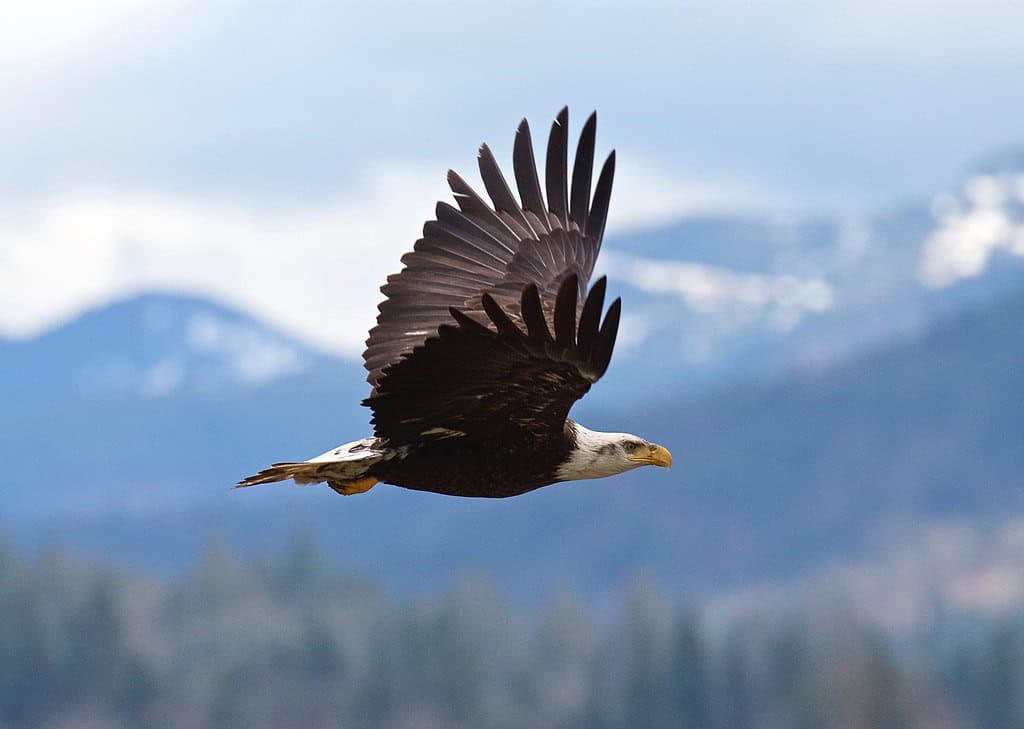
The bald eagle (Haliaeetus leucocephalus), America’s national symbol, has made a remarkable comeback in California after decades of population decline due to habitat loss, hunting, and the effects of DDT poisoning. Today, these majestic raptors can be observed in several locations throughout the state, with significant populations around bodies of water such as Shasta Lake, Lake Almanor, Big Bear Lake, and Catalina Island. With their distinctive white heads, yellow beaks, and impressive 7-8 foot wingspans, adult bald eagles are unmistakable as they soar overhead.
Winter provides the best viewing opportunities when resident eagles are joined by migrants from northern regions. Bald eagles primarily feed on fish, which they snatch from the water’s surface with their powerful talons, though they also scavenge and steal prey from other birds. These birds mate for life and build massive nests that they return to year after year, adding new materials each breeding season until these structures can weigh up to a ton. California’s bald eagle population continues to grow, with over 30 breeding pairs now established on Catalina Island alone – a conservation success that allows more visitors to experience the thrill of seeing these iconic birds in the wild.
1. Pacific Coast Newt – Colorful but Deadly

The California newt (Taricha torosa) and its close relative, the rough-skinned newt (Taricha granulosa), represent some of North America’s most fascinating amphibians. These seemingly innocuous creatures, found in moist woodland habitats throughout California’s coastal ranges and Sierra foothills, harbor a deadly secret – their skin contains tetrodotoxin, a neurotoxin over 1,000 times more potent than cyanide. This powerful defense mechanism makes them one of the most poisonous vertebrates in California’s ecosystems.
During the rainy season from December through March, these orange-bellied newts can be observed making mass migrations to breeding ponds and streams, sometimes traveling over a mile from their woodland homes. Males develop smooth skin and swollen cloacas during breeding season, while females grow significantly larger to accommodate egg production. Despite their toxicity to most predators, garter snakes in some regions have evolved resistance to the newts’ poison, creating an evolutionary arms race where newts produce increasingly potent toxins. Hikers exploring damp trails in places like Big Basin Redwoods State Park, Mount Tamalpais, and the Santa Monica Mountains can often spot these charismatic amphibians, though they should be admired without handling due to both their toxicity and their protected status.
Conclusion: Experience California’s Remarkable Wildlife Diversity

California’s extraordinary range of habitats – from the Pacific Ocean to alpine peaks, scorching deserts to ancient redwood forests – supports one of North America’s most diverse assemblages of wildlife. The ten amazing animals highlighted here represent just a fraction of the remarkable creatures that call the Golden State home. Each species has adapted to specific ecological niches and faces unique conservation challenges in an ever-changing environment influenced by human activities, climate shifts, and natural processes.
Witnessing these animals in their natural habitats provides not only unforgettable experiences but also opportunities to develop deeper connections with the natural world. Whether you’re watching the dramatic courtship battles of elephant seals, glimpsing the shadowy form of a mountain lion disappearing into chaparral, or marveling at the soaring flight of a California condor, these encounters remind us of the importance of protecting wild spaces and the creatures that depend on them. As visitors and residents alike explore California’s diverse landscapes, responsible wildlife viewing practices – maintaining safe distances, avoiding disturbance, and leaving no trace – help ensure these amazing animals will continue to thrive for generations to come.

As a little kid, I fell in love with nature, wildlife, and animals. Living in the USA, South Africa, Italy, China and Germany gave me the opportunity to discover the world's Wildlife. My favorite animals are Mountain Gorillas, Siberian Tigers, and Great White Sharks.
I'm a certified PADI Open Water Diver, went to Everest Base Camp and Trekked Gorillas in Uganda. I hold a Master of Science in Economics and Finance.
Please send any feedback to feedback@animalsaroundtheglobe.com
- 26 Popular Pets Vets Secretly Wish You’d Stop Choosing - July 11, 2026
- 13 Animals That Appear the Most in U.S. State Emblems - July 11, 2026
- 10 Weird Komodo Habits That Help Them Survive And 3 That Risk Their Lives - July 11, 2026
Leave a comment
You must be logged in to post a comment.