


In the mysterious depths of the ocean and the shadows of dense forests, nature has gifted certain creatures with the remarkable ability to produce their own light. This phenomenon, known as bioluminescence, occurs when living organisms emit light through chemical reactions within their bodies. Unlike artificial light sources that generate heat, bioluminescent light is cold and efficient. These living light shows aren’t just beautiful—they serve crucial purposes for survival, from attracting mates to confusing predators. Let’s explore ten fascinating creatures that have mastered the art of living light and discover how they use their glow-in-the-dark superpowers in their natural environments.
The Science Behind Bioluminescence
Bioluminescence results from a chemical reaction involving a light-emitting molecule called luciferin and an enzyme called luciferase. When these compounds interact with oxygen, they release energy in the form of light rather than heat. This process is incredibly efficient, with nearly 100% of the energy converted to light (compared to incandescent bulbs which waste about 90% of energy as heat). Different species have evolved various colors of bioluminescence ranging from blue and green to yellow and red, with each color serving specific purposes in different environments. Blue light, for instance, travels furthest in water, making it the predominant color among deep-sea creatures. This elegant solution to visibility in dark environments has independently evolved at least 40 times across the tree of life, highlighting its remarkable value as an evolutionary adaptation.
Anglerfish The Deep Sea Predator with a Living Lure

Perhaps the most iconic bioluminescent creature, the female anglerfish sports a modified dorsal spine topped with a glowing lure called an esca. This biological fishing rod dangles in front of the anglerfish’s enormous mouth and giant teeth, creating an effective trap for curious prey. What makes this system particularly fascinating is that the light doesn’t come from the anglerfish itself but from symbiotic bacteria living inside the esca. These bacteria receive nutrients and protection in exchange for their glow services. Found at depths of up to 3,000 meters, anglerfish have adapted to an environment where food is scarce and finding a mate is challenging. This explains their extreme sexual dimorphism—males are tiny parasites that permanently fuse to females, ensuring reproduction in the vast darkness of the deep sea. With over 200 species of anglerfish identified, their bioluminescent adaptation has proven remarkably successful in one of Earth’s most hostile environments.
Fireflies Nature’s Nighttime Light Show

Few bioluminescent displays are as beloved as the synchronized flashing of fireflies on summer evenings. These beetles (family Lampyridae) use their light-producing organs located on their abdomens primarily for courtship. Each of the approximately 2,000 firefly species has a unique flash pattern, allowing males and females of the same species to recognize potential mates. Males typically fly around flashing their signals, while females respond from perches on plants with their own species-specific pattern. This light-based conversation is essential for successful reproduction. Some firefly species can even synchronize their flashing across large groups, creating spectacular displays that have become tourist attractions in places like the Great Smoky Mountains and Southeast Asia. Firefly larvae (glowworms) also produce light, but they use it to warn predators of their bitter taste—a phenomenon known as aposematic signaling. Unfortunately, light pollution and habitat loss have led to declining firefly populations worldwide, threatening these magical displays that have enchanted humans for generations.
Dinoflagellates The Ocean’s Sparkling Plankton

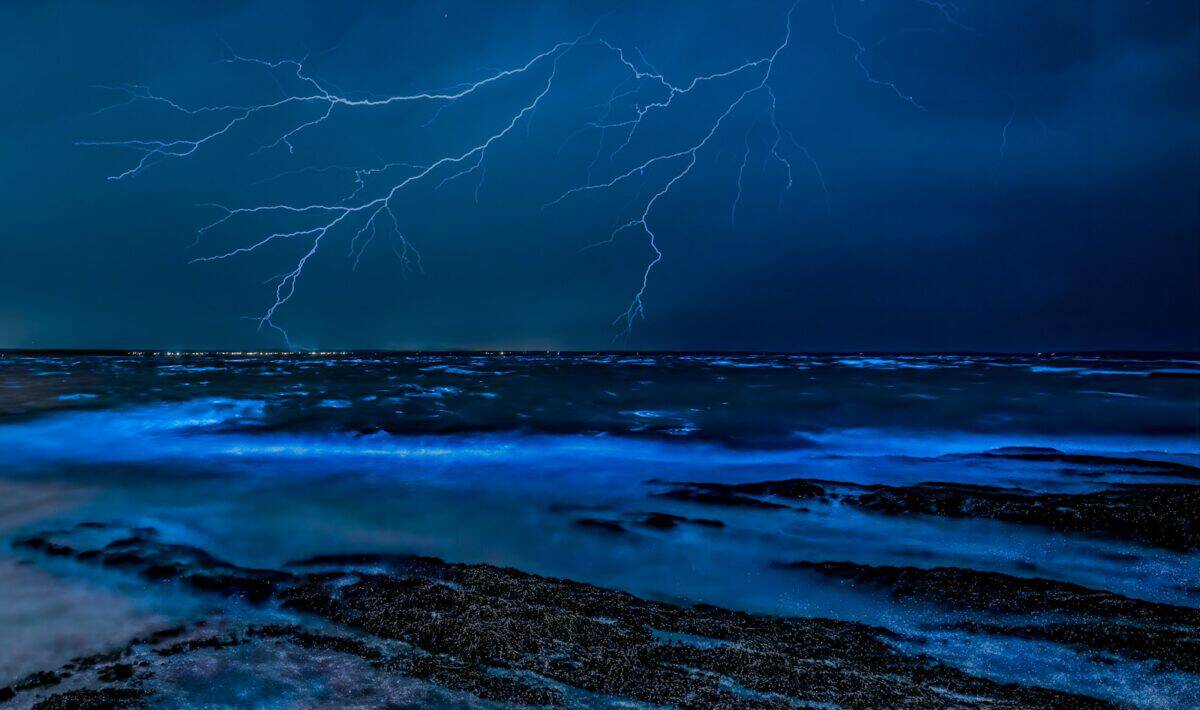
Those who have experienced the magic of waves that glow blue at night have witnessed bioluminescent dinoflagellates in action. These single-celled marine plankton create one of nature’s most spellbinding displays when disturbed by movement, causing shorelines to sparkle with blue light. Species like Noctiluca scintillans (commonly called sea sparkle) are responsible for this phenomenon. When agitated by wave action or predators, these microscopic organisms emit brief flashes of blue light as a defensive mechanism. This startle response confuses predators and may even attract larger predators that will eat the original threat—a clever “burglar alarm” strategy. Some beaches around the world, including those in the Maldives, Puerto Rico’s Mosquito Bay, and Australia’s Jervis Bay, are famous for their bioluminescent displays created by high concentrations of these organisms. Though each dinoflagellate is too small to see with the naked eye, their collective light show can be visible from space when blooms reach high density, highlighting how even microscopic life forms can create phenomena of breathtaking scale and beauty.
Comb Jellies Rainbow Light Displays

Comb jellies, or ctenophores, offer a unique twist on bioluminescence. Unlike most bioluminescent creatures that produce a single color, many comb jellies combine true bioluminescence with another light phenomenon called iridescence. Their bodies feature rows of tiny cilia (called combs) that scatter light like prisms, creating rainbow-like patterns as they move through the water. When threatened, species like Beroe forskalii can also produce blue-green bioluminescent flashes. What makes comb jellies particularly fascinating is their evolutionary significance—they’re among the oldest animal groups on Earth, having evolved over 500 million years ago. Despite their ancient lineage, they possess highly sophisticated light-producing mechanisms. Most comb jellies are transparent, allowing their internal bioluminescence to shine unobstructed through their gelatinous bodies. This transparency, combined with their light displays, helps these slow-moving creatures blend into their surroundings while also creating stunning distraction displays when necessary. Scientists study comb jellies extensively not only for their light production but also because understanding these ancient organisms provides insights into the earliest evolution of animal nervous systems and light sensitivity.
Glowing FungiThe Forest’s Mysterious Lights

While marine bioluminescence often captures the spotlight, some of the most magical displays occur in forests where certain mushroom species glow with an ethereal green light. Approximately 80 species of fungi possess this ability, with the ghost fungus (Omphalotus nidiformis) and foxfire (Armillaria mellea) being among the most striking examples. These mushrooms typically grow on decaying wood and emit a continuous glow rather than the flashing patterns seen in animals. This phenomenon, sometimes called “foxfire,” has historically inspired folklore about fairy lights or will-o’-the-wisps leading travelers astray. The biological purpose of fungal bioluminescence remains somewhat mysterious, though recent research suggests it may attract insects that help disperse spores. Alternatively, the glow might deter fungus-eating animals or attract the predators of these fungivores. Some bioluminescent fungi are so bright that early explorers in Brazil reportedly used them as natural torches. The distribution of these glowing mushrooms tends to concentrate in tropical and subtropical forests, with notable hotspots in Brazil, Australia, and parts of Asia, where the humidity and abundant decaying matter create ideal conditions for these luminous decomposers.
Deep-Sea Squid Masters of Light Manipulation
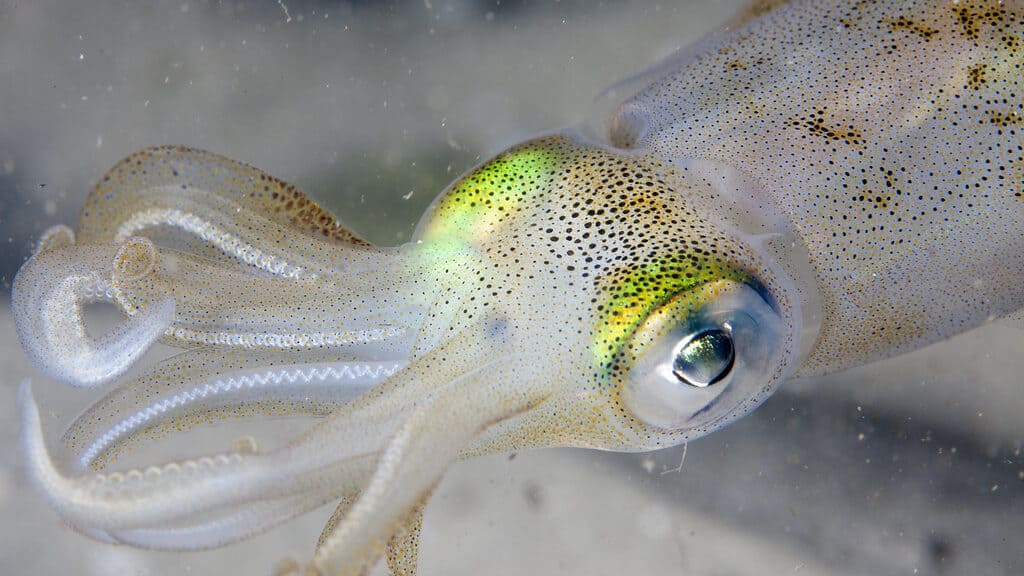
The vast, dark ocean depths house some of the most sophisticated bioluminescent systems, with deep-sea squid being particularly remarkable light engineers. The vampire squid (Vampyroteuthis infernalis), despite its fearsome name, uses bioluminescence defensively. When threatened, it can eject a cloud of bioluminescent mucus that disorients predators while the squid escapes—nature’s version of a smoke bomb. Even more impressive is the Hawaiian bobtail squid (Euprymna scolopes), which harbors light-producing bacteria in a special organ called the light organ. This squid can control the light output to match the moonlight and starlight coming from above, effectively eliminating its shadow and becoming invisible to predators below—a technique called counter-illumination. Perhaps most spectacular is the Humboldt squid (Dosidicus gigas), which can rapidly change from glowing red to dark by expanding and contracting special cells called chromatophores, allowing complex communication with other squid during hunting. These cephalopods demonstrate that in the absence of sunlight, evolution has driven the development of light manipulation technologies that rival human engineering in their sophistication and efficiency.
Glow Worms Cave Ceiling Constellations

The famous glowworm caves of New Zealand showcase one of nature’s most breathtaking bioluminescent displays, where thousands of glowworms (Arachnocampa luminosa) create a living starscape on cave ceilings. Despite their name, these creatures aren’t worms at all but the larvae of a fungus gnat. Each larva creates a nest of silk threads coated with droplets of sticky mucus, then hangs up to 70 glowing threads like fishing lines. The blue-green light attracts flying insects that become entangled in these deadly threads before being reeled in and consumed. The brightness of a glowworm’s light correlates directly with its hunger—hungrier larvae produce brighter light to increase their chances of catching prey. Glowworm colonies require specific environmental conditions: high humidity, still air, and darkness, making certain cave systems perfect habitats. The Waitomo Caves on New Zealand’s North Island have become an ecotourism destination where visitors can boat through underground rivers beneath these living constellations. Similar displays occur in Australia with the species Arachnocampa flava. What makes these displays particularly magical is how the collective glow of thousands of individuals transforms cave ceilings into what appears to be a perfect mirror of the night sky, creating a disorienting but beautiful inversion of the world above.
Bioluminescent Sharks The Ocean’s Glowing Predators

The discovery that certain shark species possess bioluminescent capabilities has revolutionized our understanding of these ancient predators. The kitefin shark (Dalatias licha), reaching lengths up to 1.8 meters, is currently the largest known bioluminescent vertebrate. It produces a soft blue-green glow from specialized cells in its skin. Meanwhile, the smaller lanternshark family (Etmopteridae) features species with more complex light patterns, including the velvet belly lanternshark which has light-producing photophores arranged along its underside for counter-illumination. Perhaps most sophisticated is the cookiecutter shark (Isistius brasiliensis), which uses bioluminescence as part of a devious hunting strategy. This small shark glows entirely except for a dark band around its neck, creating what researchers call the “burglar’s mask” effect. To predators looking up, this makes the cookiecutter appear as a much smaller fish, attracting larger predators like tuna and dolphins. When they approach, the cookiecutter attaches and uses its specialized jaws to remove a plug of flesh—hence its name. These recent discoveries of bioluminescence in sharks highlight how much remains unknown about deep-sea ecosystems, where light production may be far more common among vertebrates than previously thought.
Marine Polychaetes The Glowing Fireworms

Marine polychaete worms create some of the ocean’s most reliable and spectacular light shows during their reproductive cycles. The Bermuda fireworm (Odontosyllis enopla) has earned legendary status for its bioluminescent mating display that occurs predictably 55 minutes after sunset, 2-5 days after the full moon, during summer months. Female worms swim to the surface and release a bright green luminous secretion while swimming in circles, creating rings of light visible from boats. Males, attracted by this display, race toward the females, creating their own bioluminescent trails, resulting in an underwater light show locals have termed “the sparkle of the sea.” A similar phenomenon occurs with the palolo worm (Eunice viridis) in the South Pacific, where their synchronized spawning has become so reliable that local cultures developed calendars based on these events and even harvest the nutritious worms as a delicacy. What makes these displays particularly fascinating is their precise timing linked to lunar cycles—an adaptation ensuring that males and females release their gametes simultaneously, maximizing reproductive success. These predictable displays demonstrate how bioluminescence can be integrated with celestial rhythms to create evolutionary advantages in reproductive synchronization.
Crystal Jellyfish The Source of a Scientific Revolution

The modest-looking crystal jellyfish (Aequorea victoria) sparked one of biology’s most important scientific breakthroughs. This transparent jellyfish, native to the west coast of North America, produces blue-green light through a protein called aequorin. However, its greatest contribution to science came through another protein: Green Fluorescent Protein (GFP). Unlike typical bioluminescence, GFP absorbs one color of light (blue) and emits another (green), a process called fluorescence. When scientists isolated and later cloned the gene for GFP in the 1990s, they discovered it could be inserted into other organisms’ DNA as a biological marker—essentially creating a genetic highlighter pen. This revolutionary technique transformed molecular biology, allowing researchers to track protein expression, neural activity, cancer growth, and countless other biological processes. The significance of this discovery was recognized with the 2008 Nobel Prize in Chemistry. Today, scientists have engineered variations of GFP that glow in different colors, creating a rainbow palette of fluorescent markers. While the crystal jellyfish uses its light for communication and possibly to startle predators, its greatest impact has been in laboratories worldwide, where its light-producing proteins continue to illuminate the inner workings of cells and advance medical research.
Bioluminescence Nature’s Light With Human Potential

Bioluminescent organisms represent one of nature’s most remarkable evolutionary innovations, developing light-producing capabilities that serve diverse functions from attracting mates to confusing predators. The chemical efficiency of bioluminescence—converting nearly 100% of energy to light with minimal heat—far exceeds any artificial lighting technology humans have created. This has inspired scientists to explore applications ranging from bioluminescent trees that could replace street lights to medical imaging techniques that use light-producing compounds to track disease progression without harmful radiation. Conservation of these remarkable creatures is increasingly important, as light pollution threatens terrestrial species like fireflies, while ocean acidification and warming endanger marine bioluminescent organisms. By studying these living light systems, researchers continue to uncover new species and applications, reminding us that some of our most valuable scientific breakthroughs come from understanding and protecting the planet’s biodiversity. The future of bioluminescence research promises not only to deepen our understanding of evolution but also to develop sustainable technologies inspired by nature’s elegant solutions.

As a little kid, I fell in love with nature, wildlife, and animals. Living in the USA, South Africa, Italy, China and Germany gave me the opportunity to discover the world's Wildlife. My favorite animals are Mountain Gorillas, Siberian Tigers, and Great White Sharks.
I'm a certified PADI Open Water Diver, went to Everest Base Camp and Trekked Gorillas in Uganda. I hold a Master of Science in Economics and Finance.
Please send any feedback to feedback@animalsaroundtheglobe.com
- 15 Ways to Create a Bird Friendly Garden Amid Climate Change - June 13, 2026
- 9 Animals That Hibernate in the Most Fascinating Ways - June 13, 2026
- 13 Creatures That Thrive in Volcanoes, Geysers, and Acid Pools - June 13, 2026