
Worried about unexpected vet bills?
Pet insurance can cover thousands in unexpected vet costs. Get a free quote from Lemonade in under 2 minutes.
Get My Free Quote →Sponsored · Opens Lemonade.com
Most people can picture a grizzly or a polar bear without much effort. But ask someone to describe a sun bear, and you’ll likely get a blank stare. These fascinating little creatures are the least known members of the entire bear family, and honestly, that’s a real shame.
Also known as the honey bear for its love of honey, the sun bear is the smallest, least well-known, and one of the rarest of all bear species. Hidden deep in the tropical forests of Southeast Asia, this remarkable animal lives a secretive life that few humans ever get to witness. Get ready to be surprised by what you’re about to discover.
1. They Are the Tiniest Bears on the Planet
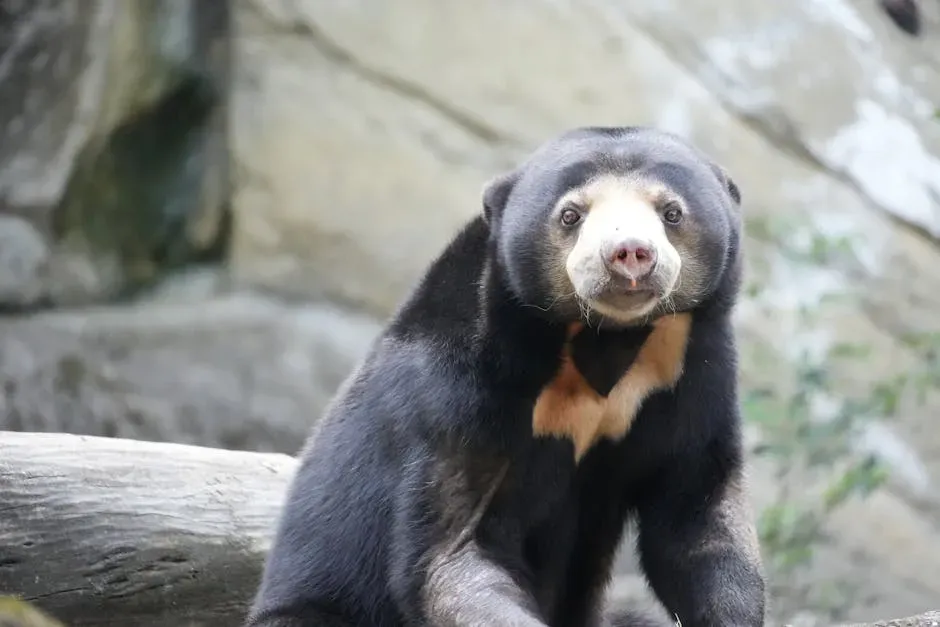
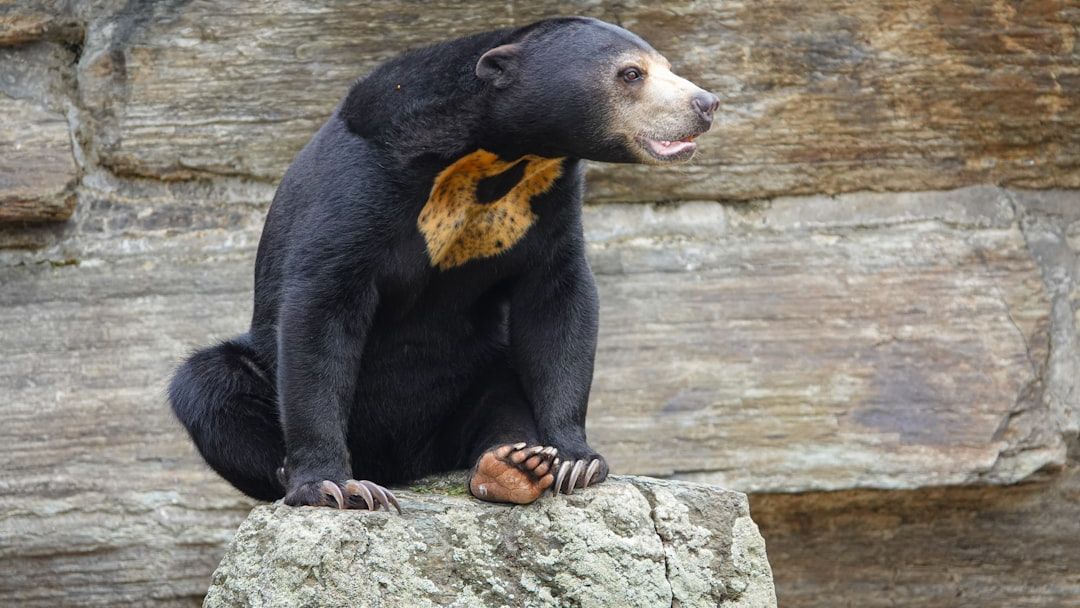
Let’s be real, when you think of a bear, you probably imagine something enormous. So here’s a fact that might genuinely shock you: the sun bear is the smallest bear species, standing nearly 70 cm at the shoulder and weighing between 25 and 65 kg. To put that into perspective, males grow about 5 feet long and weigh up to 150 pounds, which is roughly half the size of an adult American black bear.
The hair is silky and fine, and is the shortest of all bear species, suiting its hot tropical habitat. Everything about this animal is compact, almost miniaturized, like someone hit the “scale down” button on a regular bear. Despite their small frame, they are far from fragile.
While sun bears are the smallest of the eight living bear species, they have many disproportionately large physical features, which give them phenomenal strength relative to their body size. The skull is wider than for other bear species, with a short snout. The canines are large and also wide in cross-section. The structure of the jaw and surrounding muscles and teeth give sun bears a powerful bite force for their size.
2. Their Chest Patch Is Like a Fingerprint
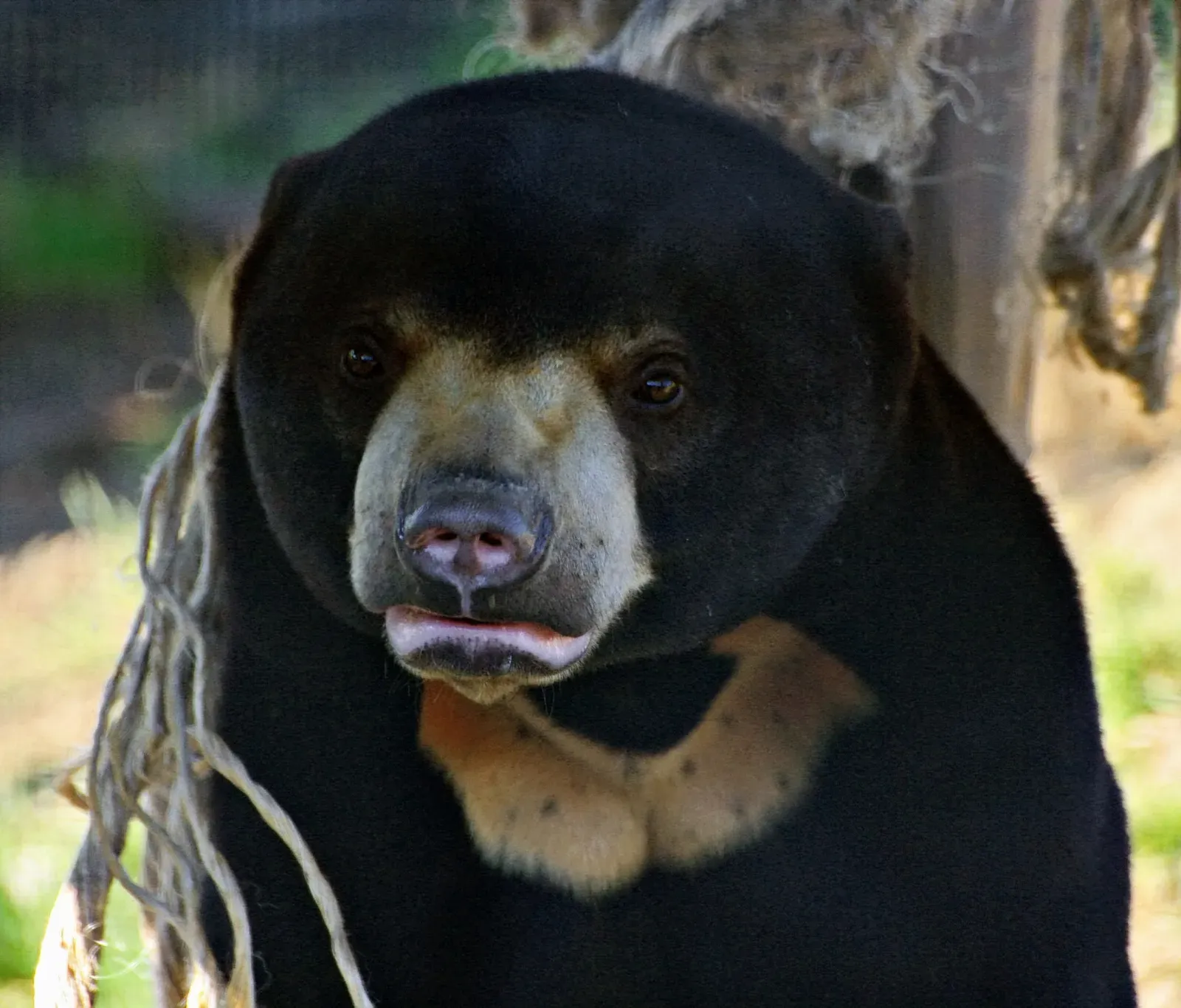
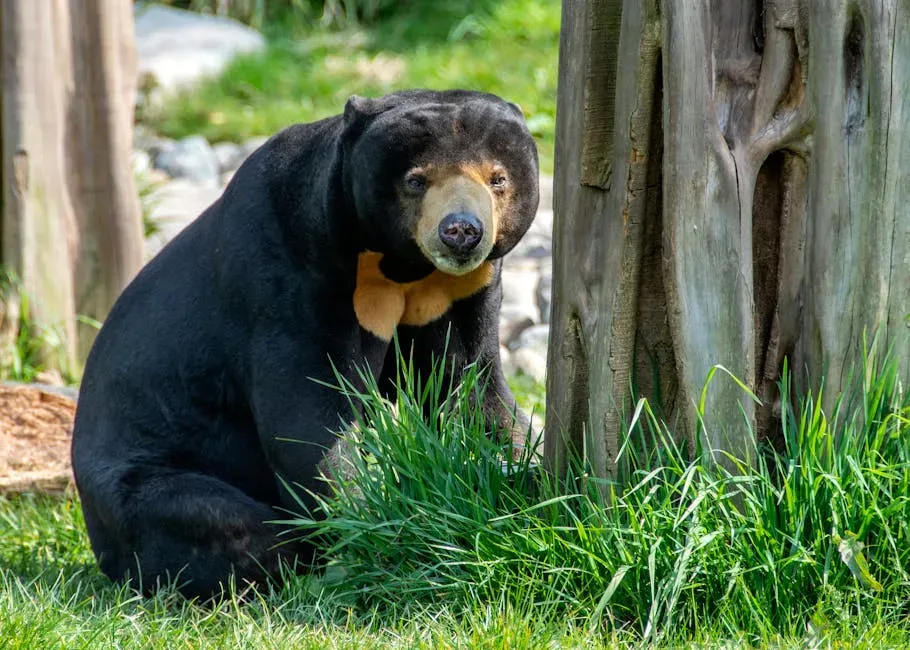
The sun bear gets its name from its characteristic orange to cream-coloured chest patch. It is unmistakable and instantly recognizable. Think of it as a golden badge worn right on the chest, almost like a sunrise painted onto their fur.
Here is something truly remarkable about that marking. Like a thumbprint, no two markings are the same. Every single sun bear carries a completely unique chest pattern. The characteristic chest patch, typically U-shaped, but sometimes circular or spotlike, varies from orange or ochre-yellow to buff or cream, or even white.
I think that’s one of the most poetic things in the animal kingdom. In a species where so much is still unknown, nature still found a way to make each individual distinctly itself.
3. They Are the Most Skilled Tree Climbers of All Bears
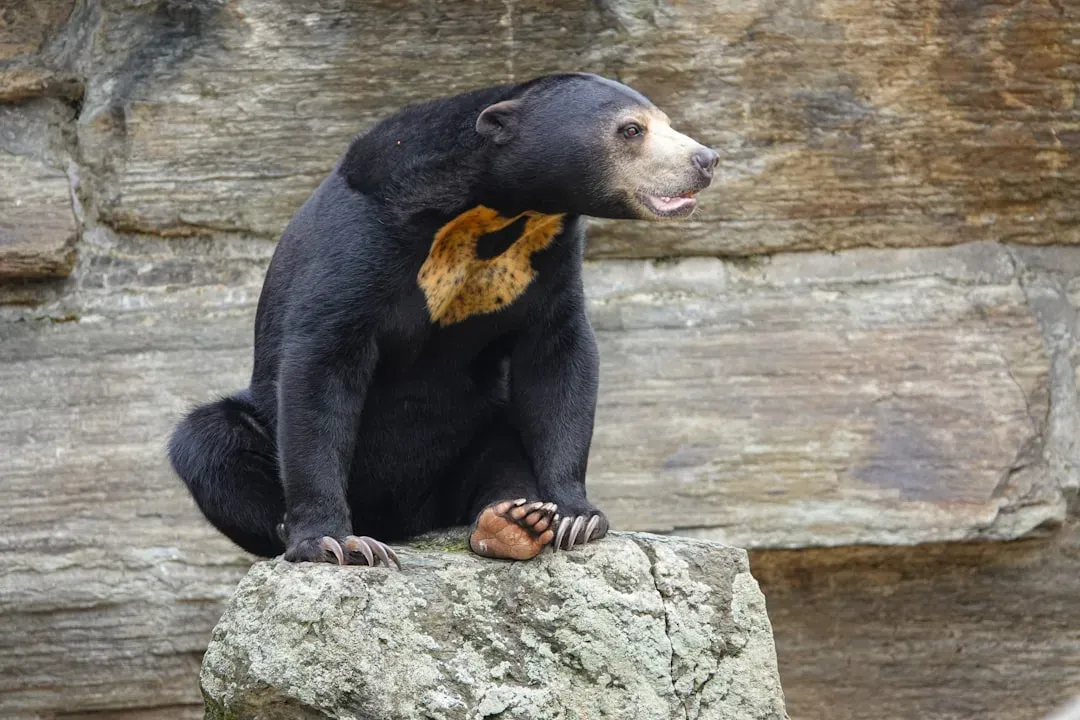
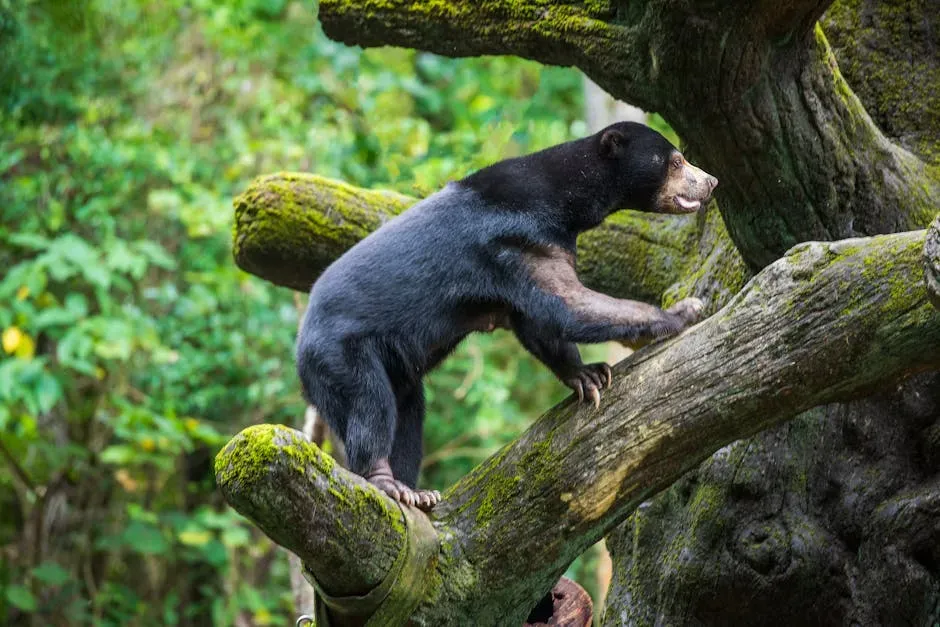
The sun bear’s unique morphology, with inward-turned front feet, flattened chest, and powerful forelimbs with large claws, suggests adaptations for climbing, and it is an excellent climber and the most arboreal of all bears. They are built for the canopy in a way no other bear comes close to matching.
Their tiny size allows them to defy gravity and climb up to 40 feet into the canopy, higher than any other bear species. Their large paws and flexibility allow them to traverse the treetops with ease, making them act more like monkeys than bears.
They spend a lot of time in tree canopies and even build “beds” of twigs and leaves on the branches to sleep in. There’s something almost charming about imagining a bear constructing its own little nest high above the forest floor, settling in for a nap like it owns the place.
4. Their Tongue Is Extraordinarily Long
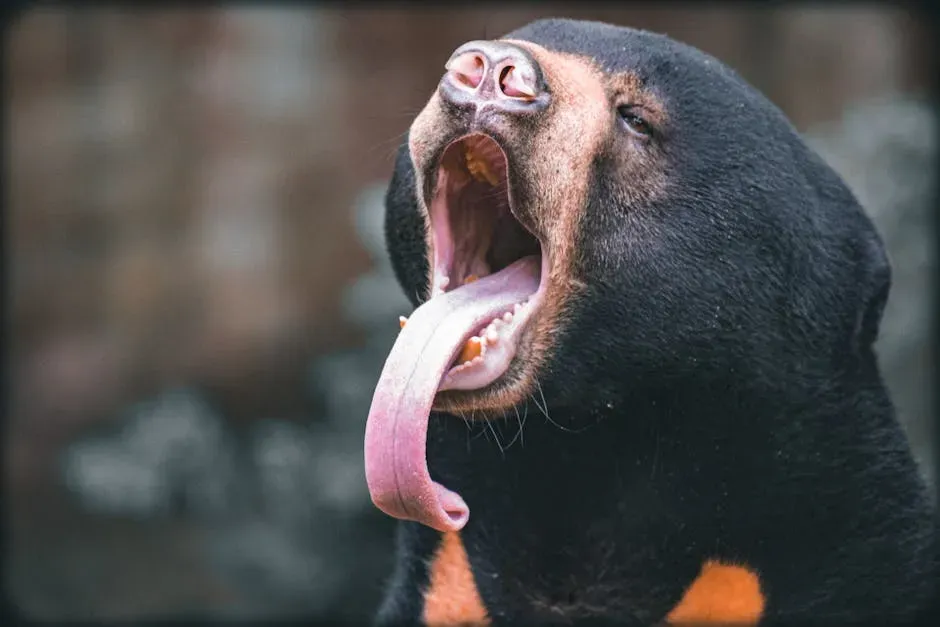
Here is the fun fact that almost nobody expects. Sun bears, the smallest of all bear species, are remarkably strong for their size, featuring large claws, a powerful bite, and a tongue up to 46 cm long for extracting food. That’s nearly half a meter of tongue on a bear you could theoretically lift.
Their uniquely long tongue can reach up to 30 centimeters, which allows them to reach deep into crevices to find food. The sun bear’s favorite snack is honey. To get the treat, they rip open beehives with their sharp claws. Then the bears use their superlong tongues to extract the honey inside, often gobbling up bees with the sticky sweet.
It’s this obsession with honey that earned them one of their most beloved nicknames. “Dog-face bear,” “Malay bear,” and “honey bear” are common nicknames for sun bears. Honestly, “honey bear” suits them perfectly.
5. They Have a Superpower Sense of Smell
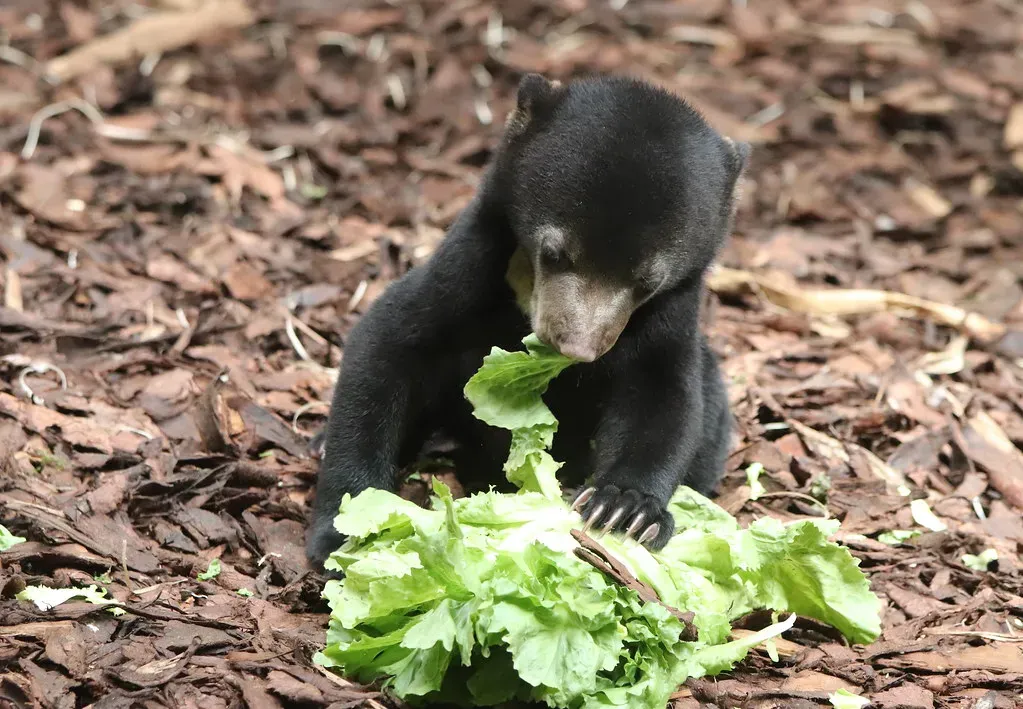
Navigation in a dense tropical rainforest isn’t easy. Sun bears, however, have a remarkable sensory advantage. They have an incredible sense of smell, 2,000 times more powerful than ours, which they use to sniff out the hives. Imagine being able to smell a beehive through several feet of tree bark. That is exactly what these bears can do.
They tear open hollow trees with their long, sharp claws and teeth in search of wild bees and honey. They break termite mounds and quickly lick and suck the contents, holding pieces of the broken mound with their front paws. It’s a highly efficient, precision-driven feeding strategy that their entire body is literally built for.
6. They Don’t Hibernate
This one surprises a lot of people. Most bears are famous for their deep winter hibernation. Sun bears, however, completely skip it. Unlike other bear species, sun bears don’t need to hibernate through the winter. The reason is that food is abundant year-round in their tropical rainforest environments, so they don’t need to spend cold winters conserving energy.
It’s a bit like living somewhere with a never-ending buffet. Why would you ever need to save up? Sun bears are active at night and are excellent and agile climbers. They sleep and sunbathe in trees at heights from 2 to 7 meters. This species does not go through periods of hibernation, probably because they live in tropical areas and their food sources are present year round.
7. They Are Keystone Species of the Rainforest
Sun bears aren’t just passive residents of the rainforest. They actively shape it. Sun bears are a keystone species, and are considered ecosystem engineers in the forests they call home. In their hunt for wood-dwelling insects, sun bears often rip cavities and holes in deadwood and trees which become important habitats for other forest species, such as the endangered hornbill and other birds.
Sun bears play a crucial role in maintaining the health of their rainforest ecosystem. They disperse seeds, control insect populations, and help to maintain forest biodiversity. As keystone species, their presence has a ripple effect that benefits the entire ecosystem.
Think of them as tiny, furry architects. Remove them from the forest, and the whole structure starts to weaken in ways that most people would never notice until it’s far too late.
8. Their Reproduction Is Unlike Other Bears
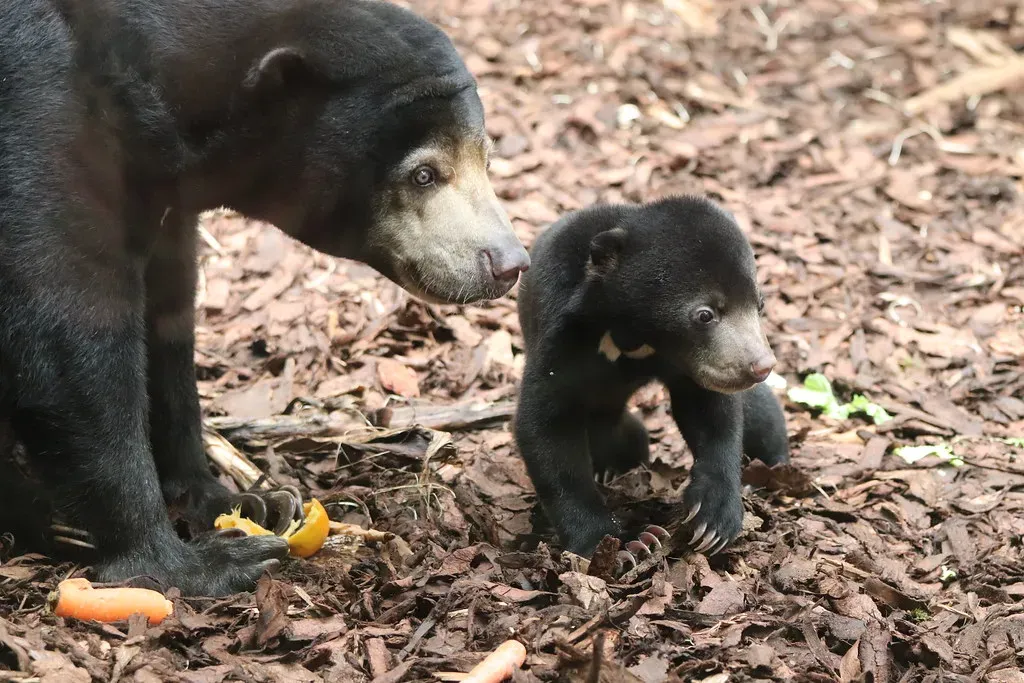
Sun bears don’t have a particular breeding season. In fact, adult female sun bears are the only type of bear known to cycle several times each year. That’s a genuinely unusual biological trait in the bear world. It’s hard to say for sure why this adaptation evolved, but it likely relates to the unpredictability of tropical food supplies.
After a gestation period of 95 to 100 days, the female gives birth to one to two cubs. Cubs are born hairless and helpless, unable to hear or smell. They depend on their mother for food, warmth, and protection.
Mothers have actually been observed cradling a cub in their arms while walking on their hind legs, a rare trait among bears. The cubs stay with their mother for about two years and reach sexual maturity when they are 3 to 5 years old.
9. Their Population Has Been Declining Alarmingly
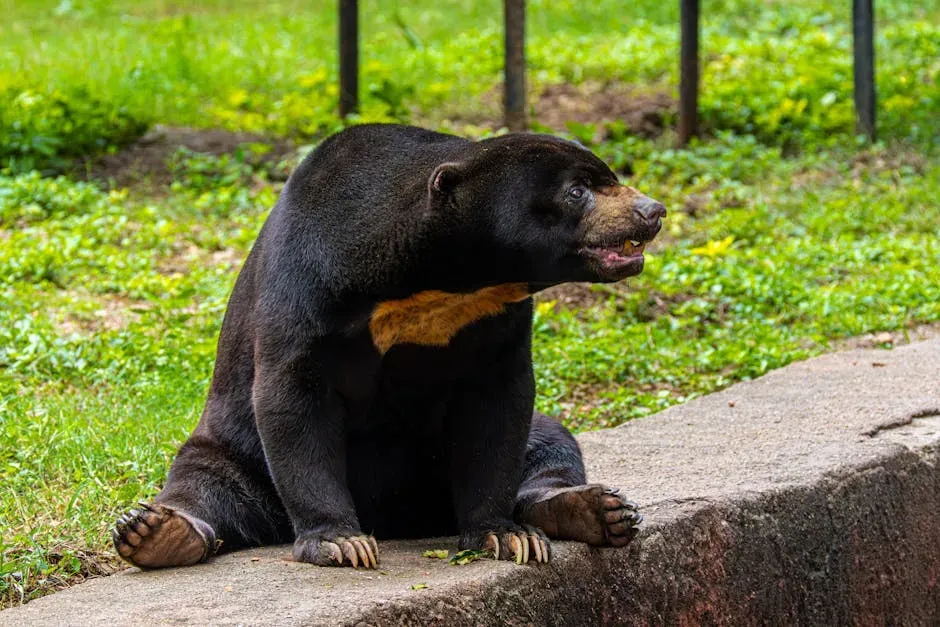
According to the IUCN Bear Specialist Group, sun bear populations have fallen by an estimated 35% since the 1990s. Numbers are especially low in Bangladesh and China, and populations in Vietnam are feared to decline severely by 50 to 80% in the next 30 years. These are genuinely frightening numbers.
Standing only as tall as an average human woman, there are fewer than 10,000 of these forest-dwelling bears left in the wild. Their biggest threats come from poachers, who hunt them for traditional medicine, meat, and the illegal pet trade, as well as extensive habitat loss.
Like other bears in Asia, sun bears are hunted for their gall bladders and other body parts for medicinal uses that have been proven by scientists to have no medical value at all. It’s heartbreaking. Animals are dying for medicine that doesn’t even work.
10. They Are the Least Studied Bear in the World
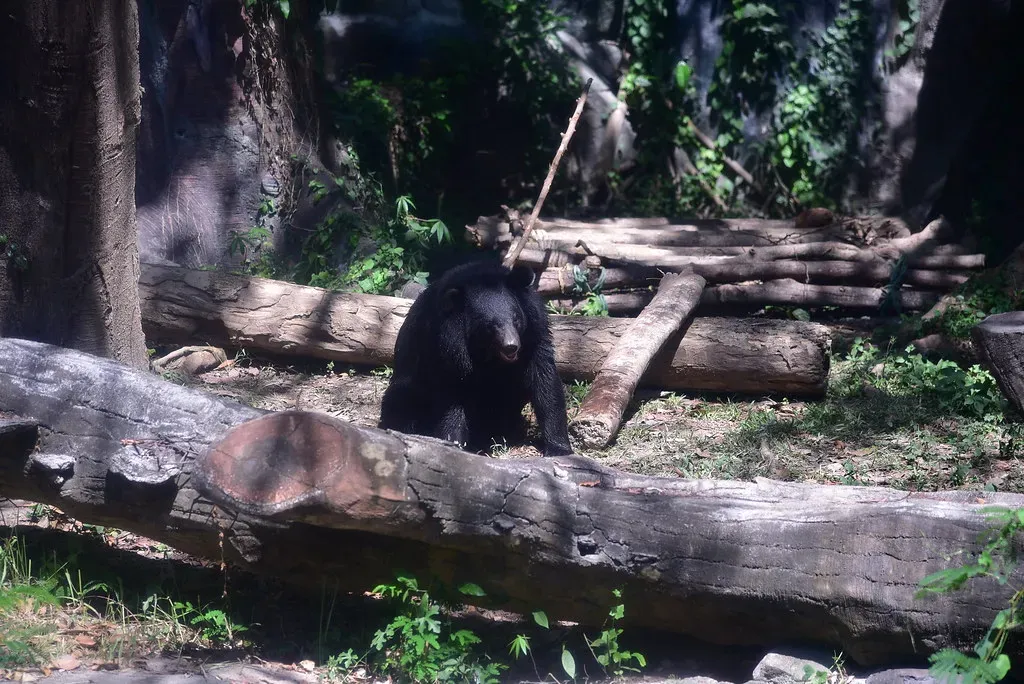
Sun bears are the smallest, most arboreal and least studied bears in the world. Their estimated population size is unknown. This is a staggering reality. We know more about polar bears in the remotest corners of the Arctic than we do about sun bears living in accessible Southeast Asian forests.
According to the International Union for the Conservation of Nature, sun bears are vulnerable to extinction. It is unknown how many are left, since their secretive nature makes them hard to find, and few studies have focused on these bears.
Despite recent research, their conservation status remains uncertain due to the lack of systematic population monitoring efforts. Sun bears are listed as Vulnerable on the IUCN Red List, and their populations are increasingly fragmented due to deforestation and poaching. Traditional monitoring methods like camera trapping and noninvasive genetic sampling face limitations in tropical environments.
Conclusion: The Bear the World Almost Forgot
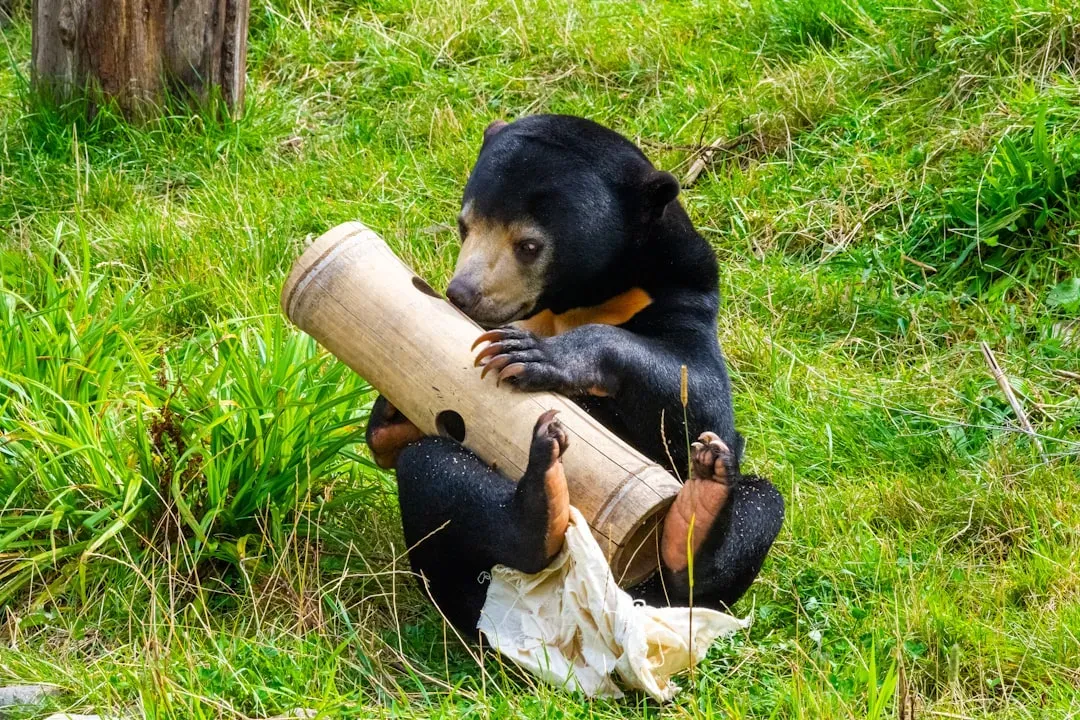
The sun bear is one of the most extraordinary animals on Earth, compact but powerful, uniquely designed, and ecologically essential. Yet it remains one of the most overlooked creatures in global conservation conversations.
Sun bears are vital to the rainforests they call home. Not only are they cute, they’re key to the success of their ecosystem. With so few left in the wild, it’s more important than ever to protect this vulnerable species from becoming extinct.
Every great forest ecosystem tells a story, and in Southeast Asia, the sun bear is one of the most important chapters in that story. Losing it wouldn’t just mean losing an animal. It would mean unraveling a thread that holds so much else together.
The question worth sitting with is this: how many more species like the sun bear are quietly disappearing before we even learn their names? What do you think? Tell us in the comments.
Worried about unexpected vet bills?
Pet insurance can cover thousands in unexpected vet costs. Get a free quote from Lemonade in under 2 minutes.
Get My Free Quote →Sponsored · Opens Lemonade.com
