
Nature has a way of surprising us when we least expect it. Hidden among leaves, crawling across branches, and munching on foliage are some of the planet’s most peculiar creatures. Caterpillars don’t get nearly enough credit for the wild diversity they showcase. Sure, we all know they’ll eventually transform into butterflies or moths, but what about the bizarre journey they take to get there?
From translucent bodies that look like living gems to spiky armor resembling medieval weaponry, these larvae are far from ordinary. Some disguise themselves as bird droppings, others wear venomous hairstyles, and a few even look like they escaped from a sci-fi movie. Ready to dive into the strange and stunning world of caterpillar oddities? Let’s get started.
Jewel Caterpillar
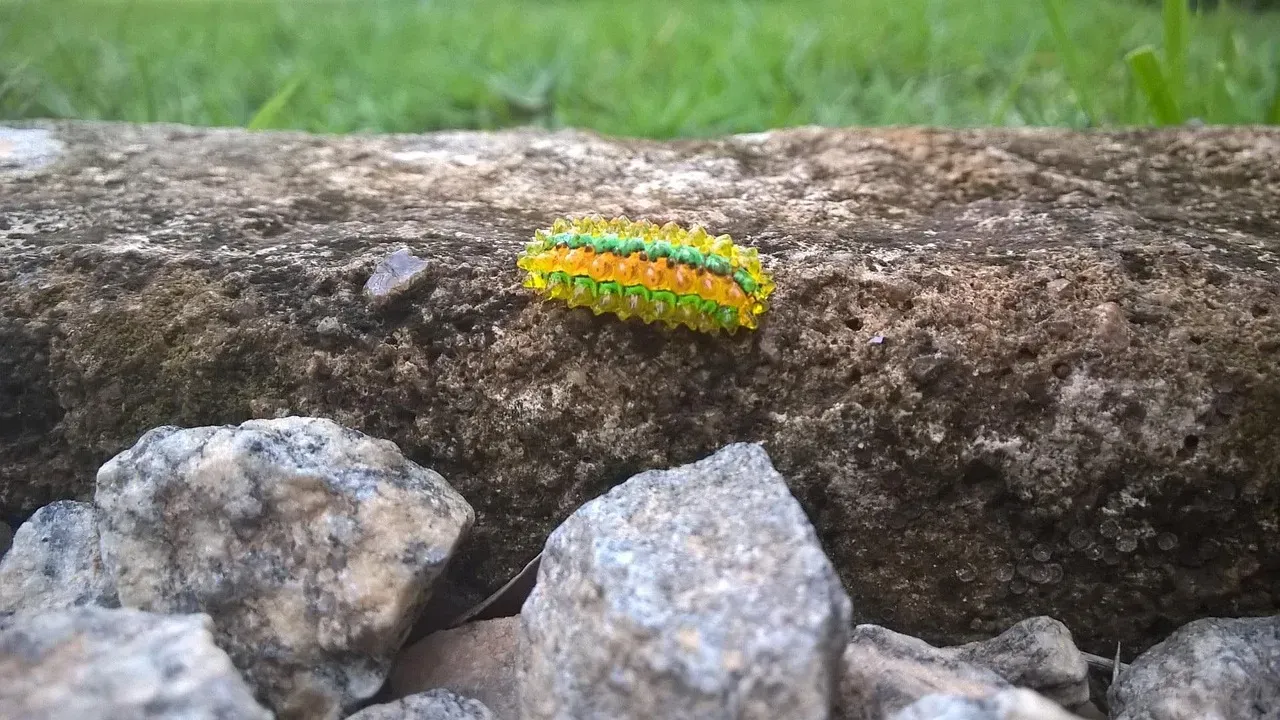
Dubbed the jewel caterpillar, this translucent larva belongs to a family of moths known as Dalceridae. Honestly, when you first see one, it’s hard to believe it’s even real. The body appears almost see-through, covered in colorful, gooey projections that shimmer and catch the light.
Scientists are still unsure about the exact function of the caterpillar’s translucent, gooey attributes, though the leading theory is that the slimy stickiness helps to deter predators. The jelly-like cones that cover the body break off easily, sort of like a lizard’s tail, helping the caterpillar slip out of a predator’s clutches. It’s like nature’s version of a self-defense ejection seat.
Hickory Horned Devil
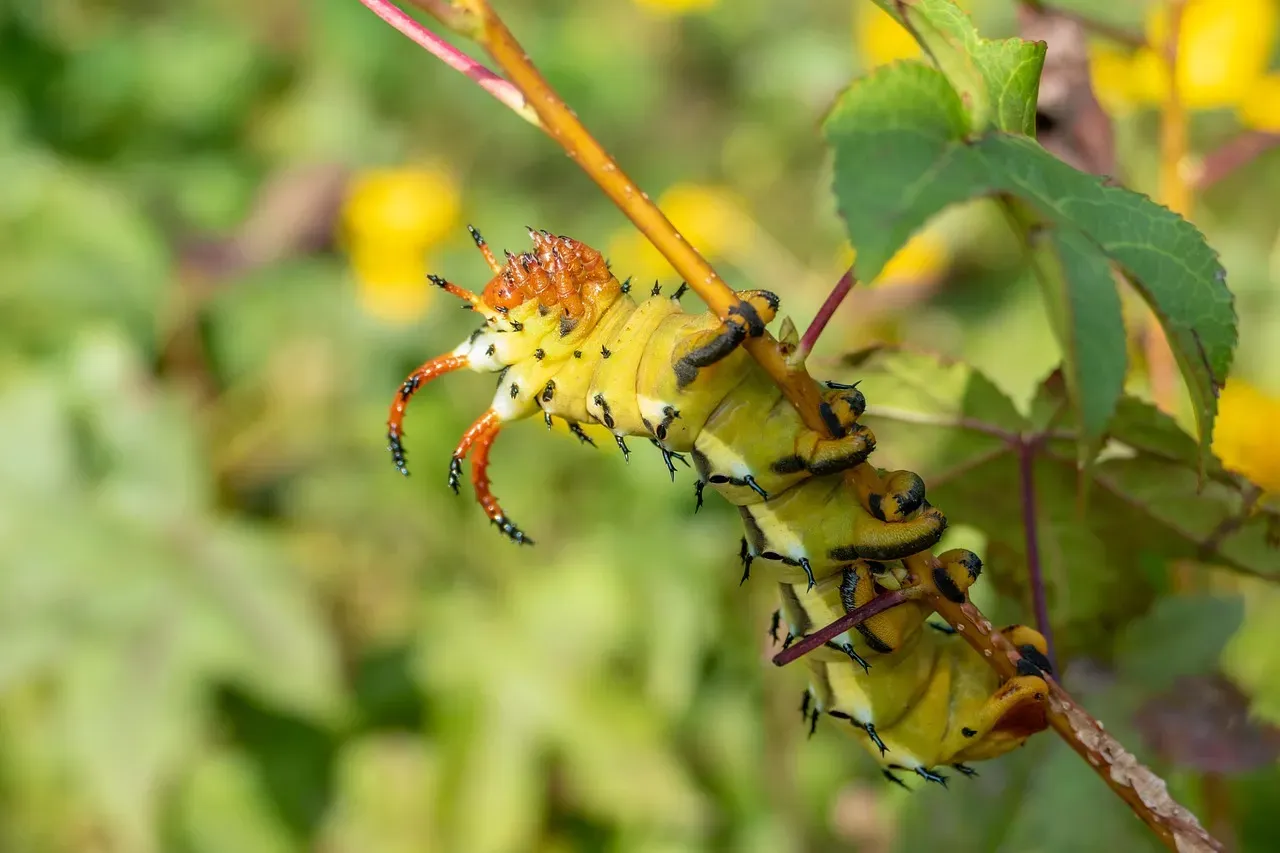
This caterpillar is the larva of the Regal Moth and has a scary, frightful appearance resembling a small dragon with up to five pairs of long, curving hornlike structures over the back of its thorax. They are enormous in size, being five to six inches long and nearly three-quarters of an inch in diameter. I know it sounds crazy, but despite looking absolutely terrifying, these giants are completely harmless.
The body color ranges from deep blue-green to tan with orange spikes tipped with black, while shorter spikes are black. This behemoth is North America’s largest, at roughly five and a half inches, and can be found feeding on tree leaves throughout the state. Let’s be real, if you stumbled across one of these on a hike, you’d probably jump back at first sight.
Monkey Slug Caterpillar
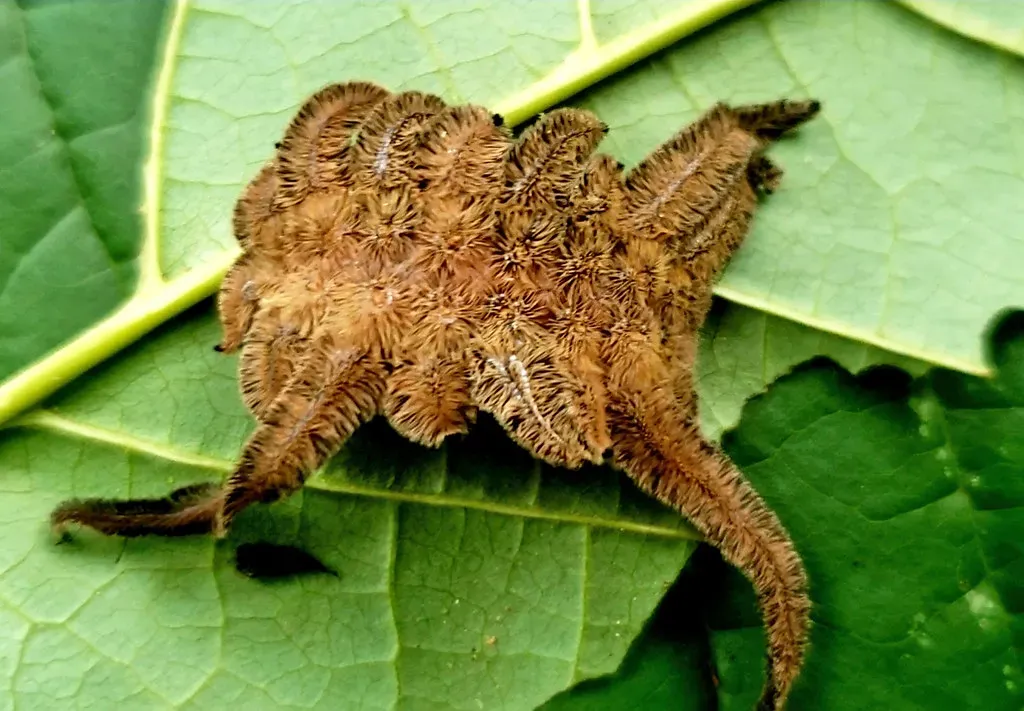
Monkey Slug Caterpillars are some of the most atypical and weird , with no other species resembling this type of caterpillar. Judging by those furry, curly projections and flattened body, you’d be forgiven for mistaking this caterpillar for a weird hairy spider. It really is that bizarre.
A slim body with similarly-sized and curled projections is specific to this caterpillar, and the underside is mostly yellow. The larva of the hag moth can lose one of its shaggy appendages without any ill effects. Here’s the thing, even though it looks like it has legs all over, those projections aren’t functional for movement at all.
Flannel Moth Caterpillar
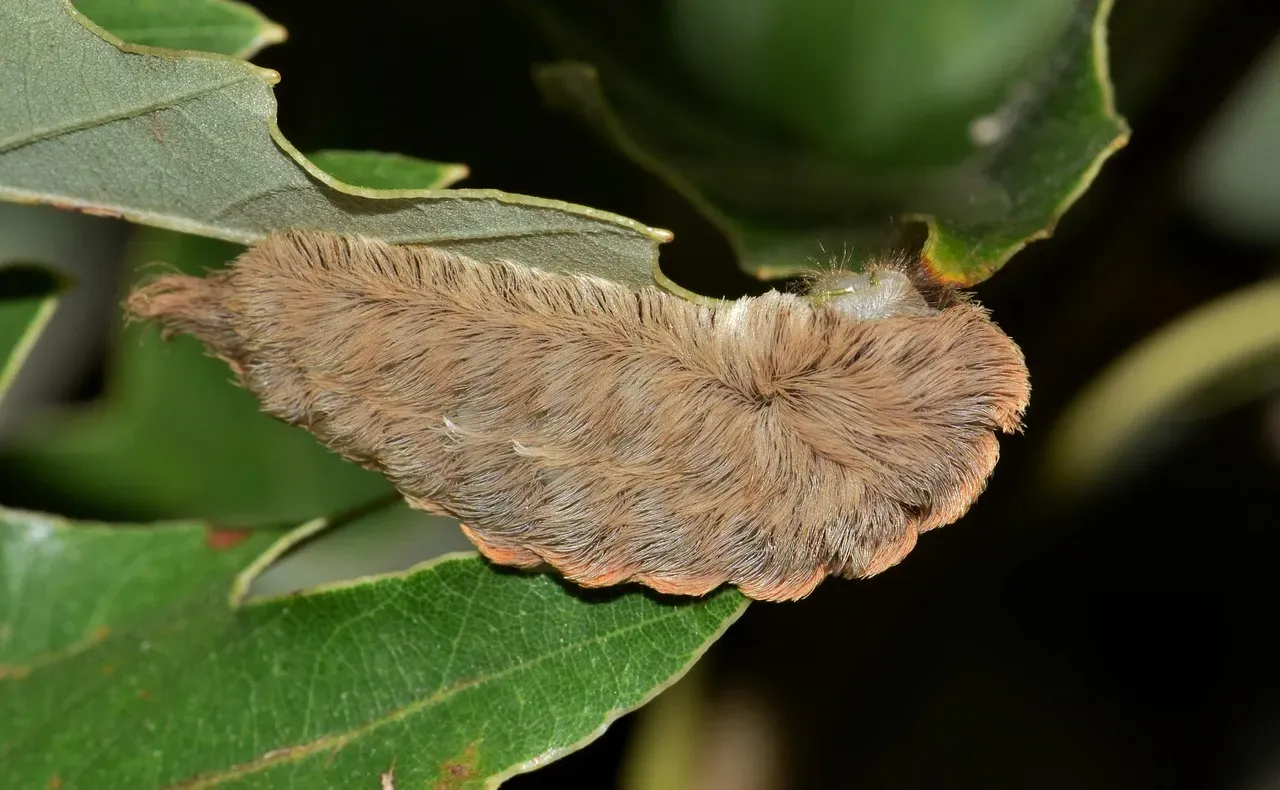
Those silky-looking threads are actually venomous spines that can cause intense, burning pain when touched, making the caterpillar one of the most venomous in the US. This fuzzy little fella is called the flannel moth caterpillar, but researchers who encountered the critter in the Peruvian Amazon nicknamed it the Trumpapillar due to its similarity in color and style to a certain hairstyle.
The appearance is deceiving. What looks soft and cuddly is actually a venomous defense system. These caterpillars actually come in a range of colors, including white, pink, red, and yellow, and the hairs are covered in little venomous spines which cause an excruciating rash upon contact. Whatever you do, don’t try to pet one of these fluffy imposters.
Cecropia Moth Caterpillar
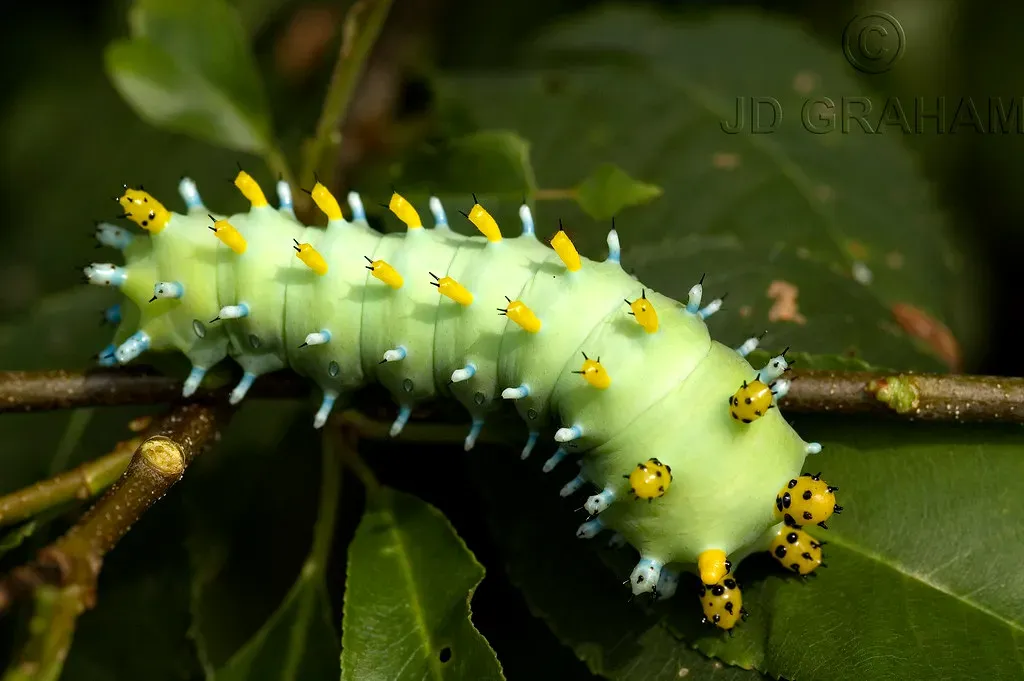
This strange-looking caterpillar will eventually transform into North America’s largest native moth, the cecropia moth. Body color is green with a blue tinge and there are two pairs of orange, and up to eight pairs of yellow knob-like tubercles over the back with many smaller pale blue and yellowish-white tipped tubercles along the sides.
Cecropia Moth caterpillars are greenish blue and are adorned with brightly colored knobs armed with thin black spikes, reaching a length of over four inches and conjuring up an image of a weapon that might have been used in medieval battles. Despite their freakish appearance, these enormous caterpillars are harmless and don’t bite or sting. Still, you have to admit they look like something out of a fantasy novel.
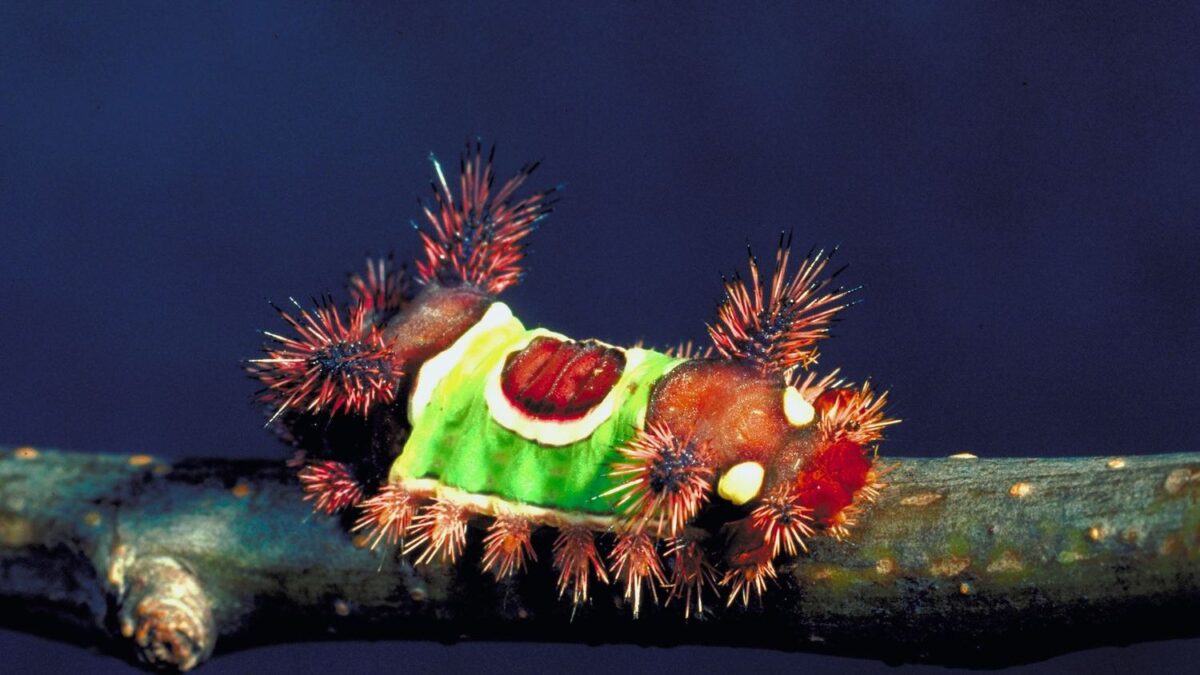
Saddleback Caterpillar
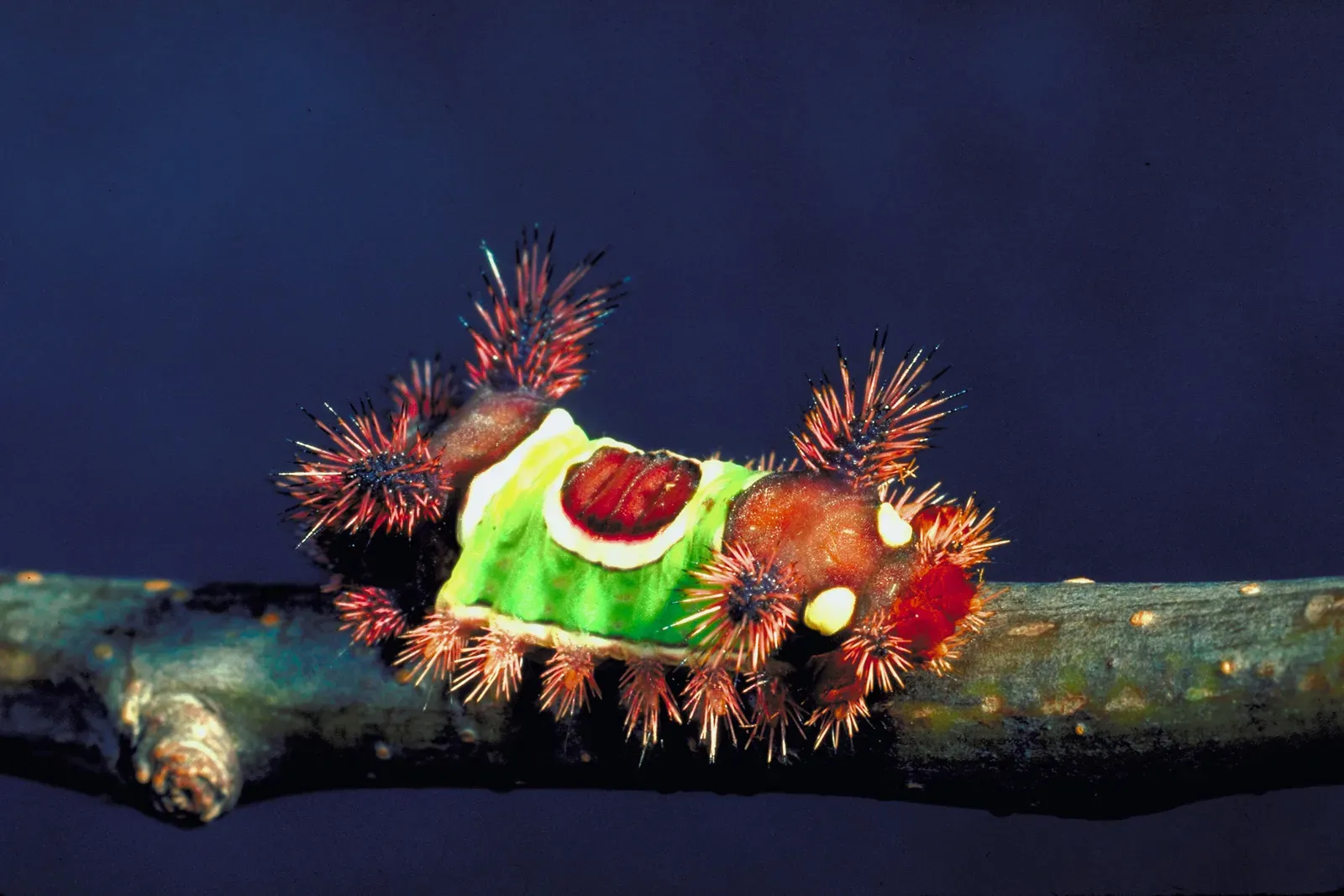
As its name implies, the Saddleback Caterpillar is a species dominated by its colored saddle-like formation in the mid of its body, with a green saddle-like coloring. This moth-in-the-making also brandishes a pair of fleshy horns covered with venom-secreting hairs that can cause stinging, swelling and a nasty rash when touched.
Brown ends are specific to the caterpillar, and short spines grow on these brown ends of its body. It’s hard to say for sure, but this has to be one of the most recognizable caterpillars out there. That distinctive saddle pattern makes it unmistakable, though you’d be wise to keep your distance from those venomous spines.
Hubbard’s Silk Moth Caterpillar
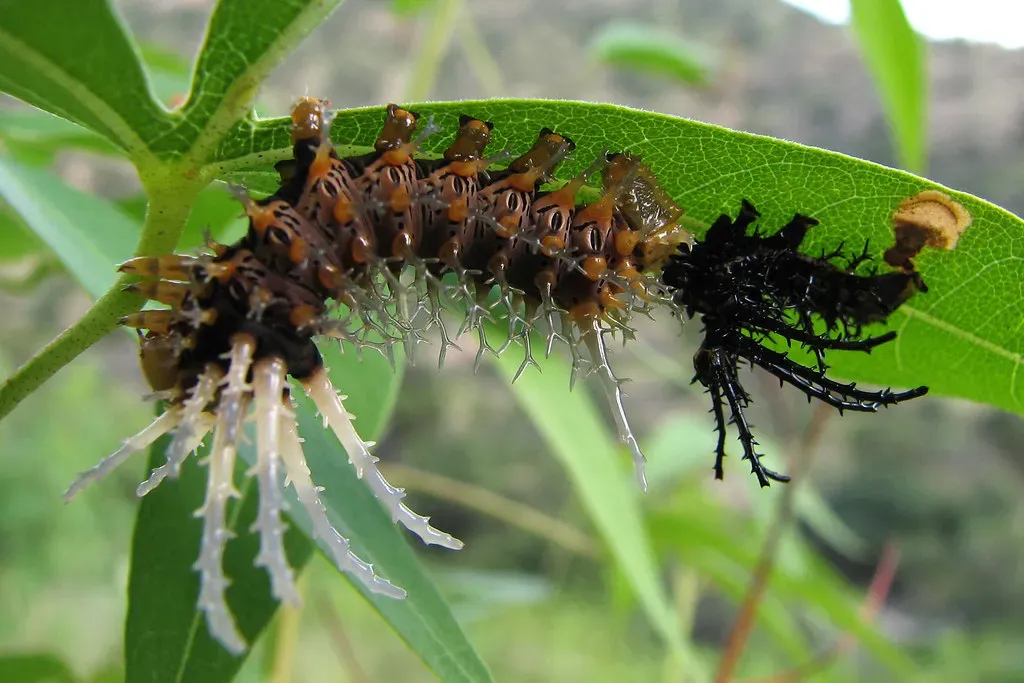
The Hubbard’s silk moth might not be much to look at, but the larval form of this North American species is nothing short of stunning. With a spine-lined body sporting a brilliant green finish, these caterpillars certainly won’t go unnoticed, especially if you have a UV light to bring out their fluorescent glow.
Yes, you read that right. These caterpillars actually glow under UV light. The young caterpillars can be found clinging to the underside of petioles where they feed on leaf bases, while the older larvae prefer to cut through the stalks and bend the leaves down to get at the fleshy rewards. Talk about adapting your eating strategy as you grow.
Pipevine Swallowtail Caterpillar
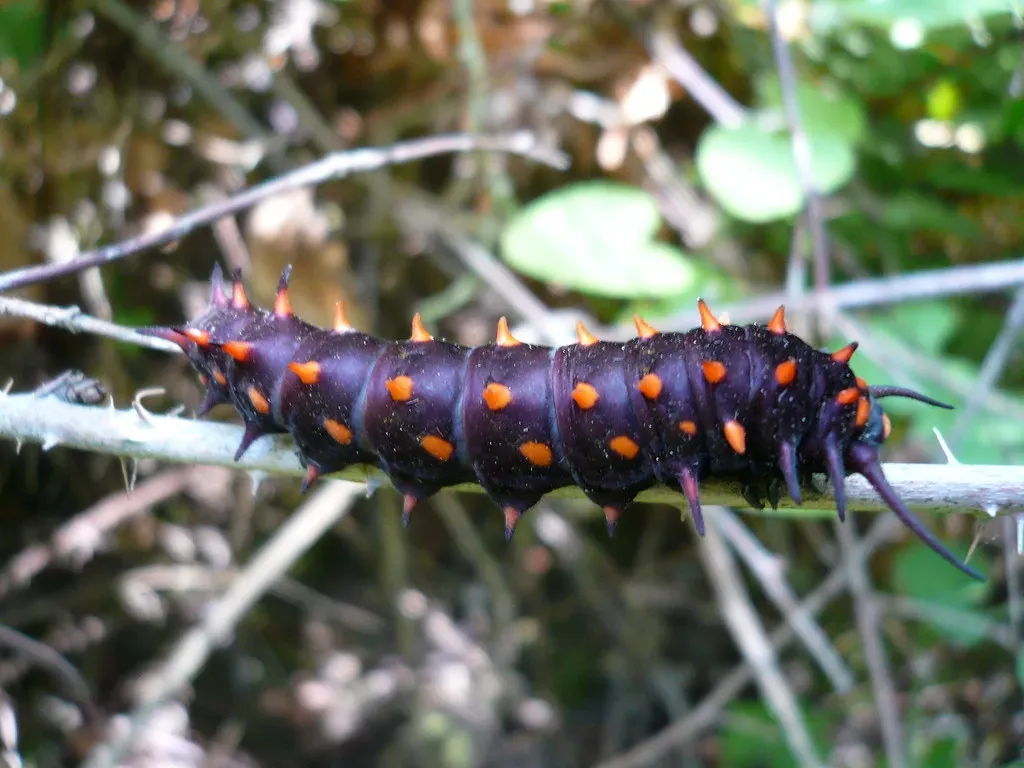
With its orange-red warts and fleshy filaments, the larva of the pipevine swallowtail may not be the most fetching or friendly-looking caterpillar around, but it transforms into a real looker. It stands out thanks to a distinctive diet, as the caterpillars feed exclusively on pipevines which are toxic to most other animals.
The ingested toxins are retained and act as a deterrent to predators. This is nature’s way of saying “don’t eat me” without having to say a word. The caterpillar basically turns itself into a toxic snack that predators learn to avoid pretty quickly.
Spotted Apatelodes Caterpillar
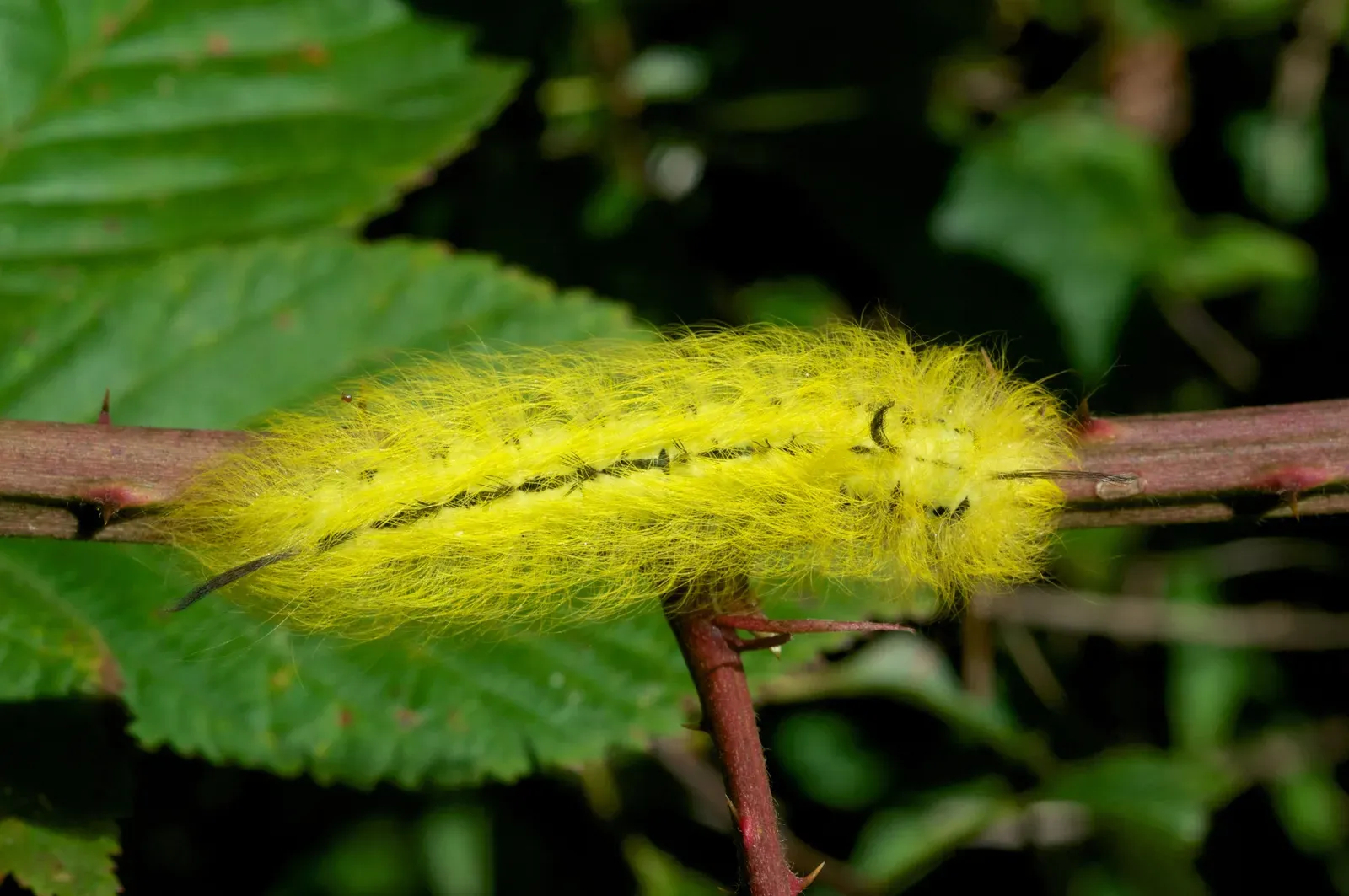
If there was an award for cute caterpillar fluffiness, it would go to the odd-looking, white-haired offspring of the spotted apatelodes moth. Coloring varies from bright white to lemon yellow, and it’s covered in soft, downy hairs that look like fur, making the Spotted Apatelodes Caterpillar seem like a cuddly stuffed animal.
Honestly, there is something almost irresistibly adorable about these fuzzy little creatures. Black spines, similar to antennae, protrude from the ends and back. It’s one of those caterpillars you just want to photograph because it looks so unreal, like someone crafted it from cotton balls and pipe cleaners.
Wattle Cup Caterpillar
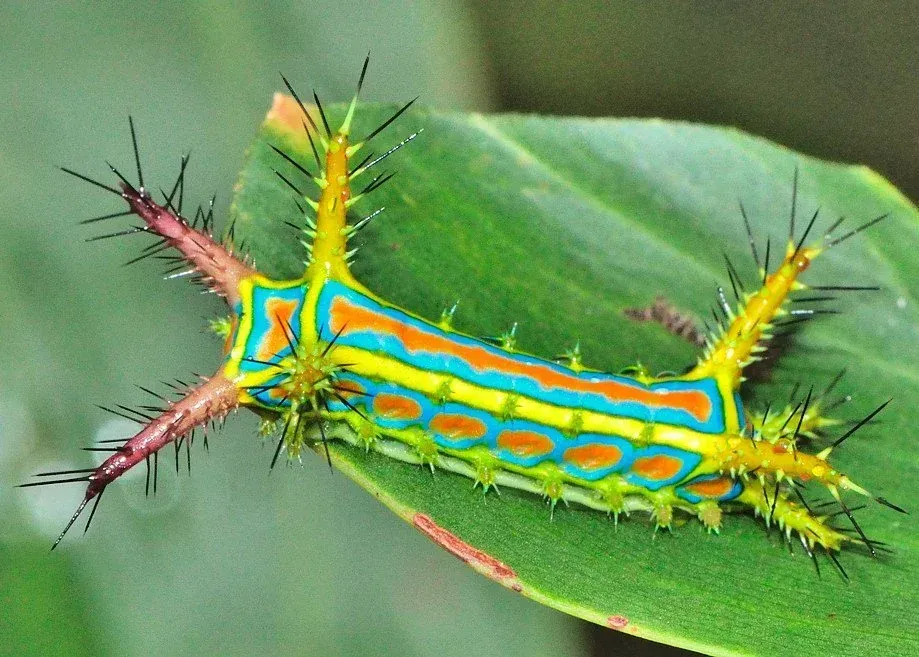
These caterpillars have truly spectacular coloration, as their tops, backs, and sides are bright blue to turquoise and have orange markings, along with being marked with neon green or yellow and having spiky green, antenna-like protrusions. If you’re looking for vibrant colors, this caterpillar delivers.
You might think that bright caterpillars turn into bright butterflies or moths, but that isn’t the case with the wattle cup caterpillar, as when it turns to a moth it is a dull whitish color with brown markings. It’s almost like nature played a trick, giving all the pizzazz to the larval stage and leaving the adult moth looking rather plain in comparison.
Curve-Lined Owlet Caterpillar
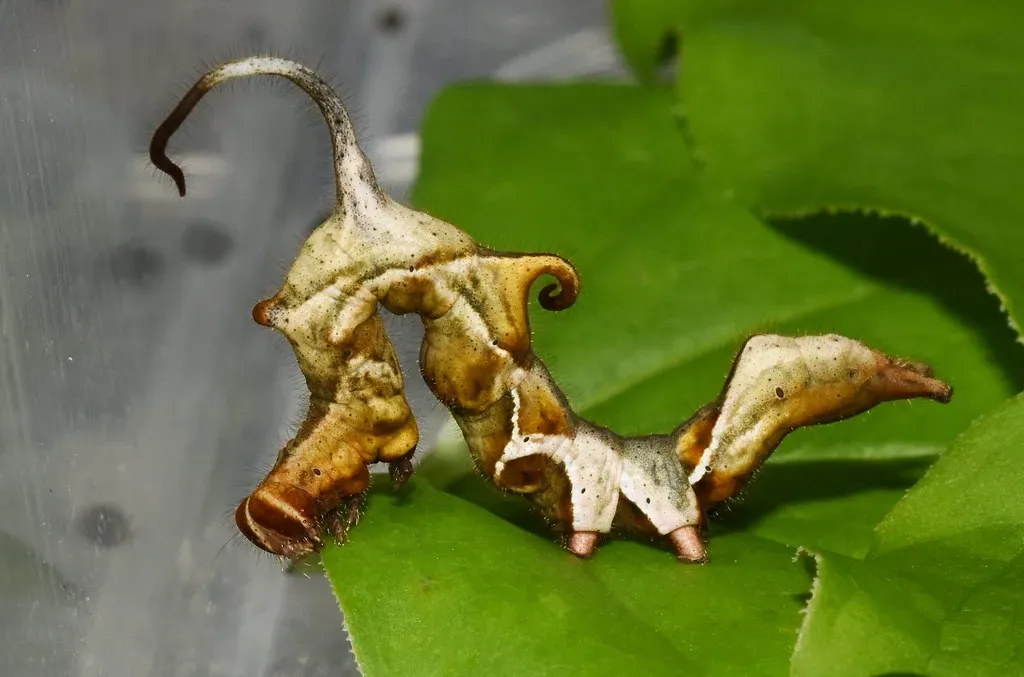
Some sources describe these caterpillars as being fantastically bizarre, as they often don’t look like caterpillars at all with their bodies being brownish with white marking but twisted with several protuberances that make them look more like a twig than an animal. This is camouflage taken to an extreme level.
The strange appearance actually helps camouflage it among the curly tendrils of the greenbrier vines on which it feeds. Although its larval stage is truly bizarre, its adult form is remarkably ordinary, and the curve-lined part of the name references the curved lines on the wings of the moth itself. It’s a reminder that the larval stage is sometimes where all the action happens.
Conclusion
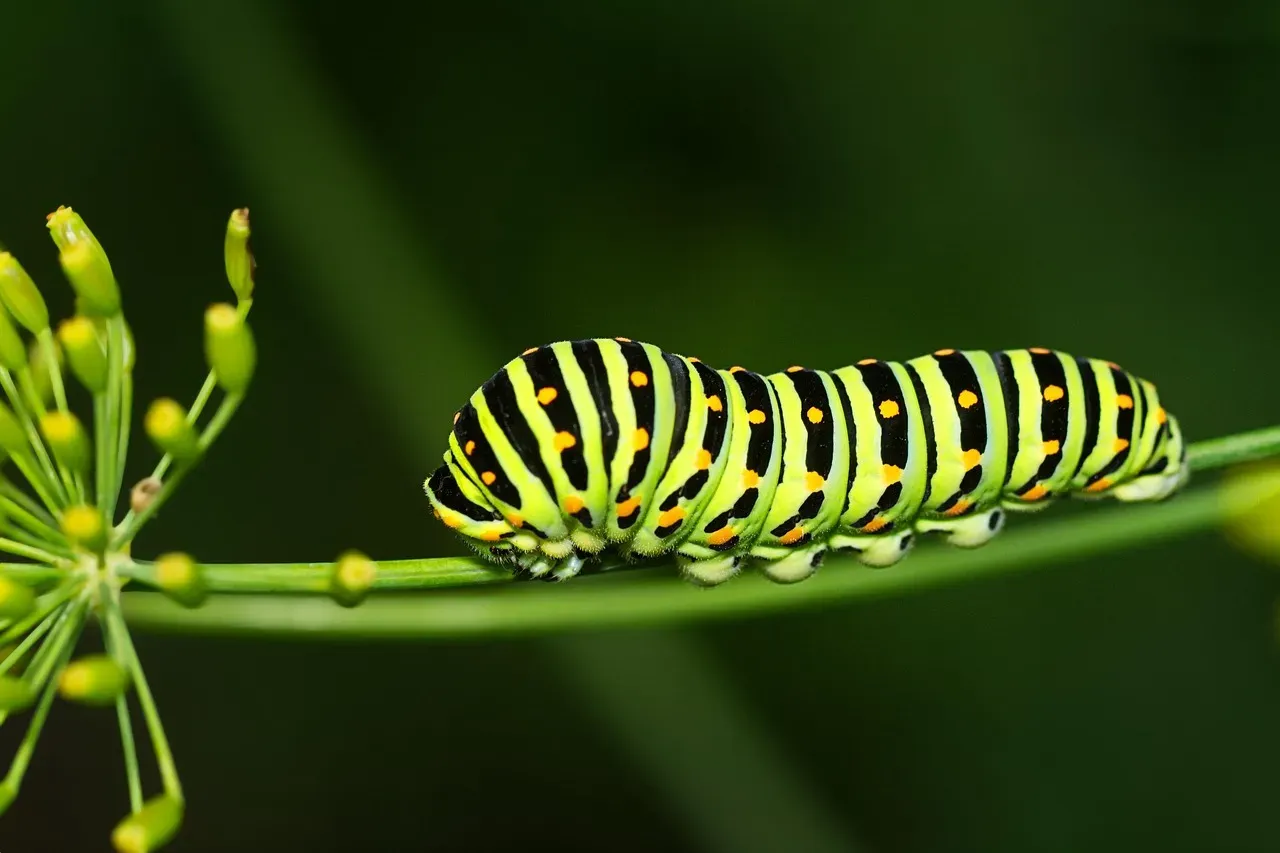
The world of caterpillars is far stranger and more spectacular than most of us ever imagined. These tiny creatures pack an incredible punch when it comes to evolution’s creativity. From toxic defenses to masterful camouflage, from fluorescent glow to jewel-like transparency, caterpillars showcase adaptations that seem almost too wild to be true.
Next time you’re outside, take a closer look at the leaves around you. You might just spot one of these bizarre beauties munching away, preparing for its incredible transformation. What do you think? Which one surprised you the most?

- 10 Dog Breeds That Are Surprisingly Good Apartment Dwellers - June 17, 2026
- The World’s Rainforests Teem With Undiscovered Species Waiting to Be Found - June 17, 2026
- 7 Surprising Benefits of Having a Cat in Your Home - June 17, 2026