
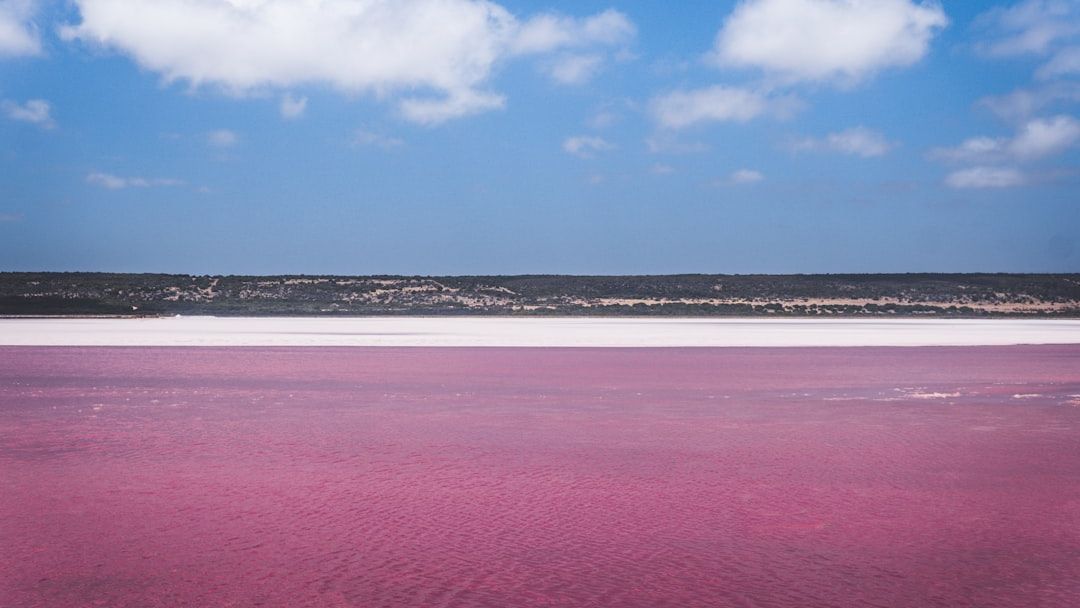
Worried about unexpected vet bills?
Pet insurance can cover thousands in unexpected vet costs. Get a free quote from Lemonade in under 2 minutes.
Get My Free Quote →Sponsored · Opens Lemonade.com
There are places on this planet that will make you genuinely question whether you’ve accidentally walked into a dream. Not a postcard-pretty dream, but the disorienting kind, where the colors are too vivid, the shapes are too perfect, and your brain keeps whispering “this can’t be right.”
The Earth is older than we can really comprehend. Over billions of years, it has cooked up landscapes, phenomena, and geological oddities that defy every expectation we carry. Some of these wonders sit quietly waiting to be discovered. Others have been known for centuries, and scientists still can’t fully explain them. All of them are real. Let’s dive in.
The Danakil Depression, Ethiopia: Welcome to Another Planet
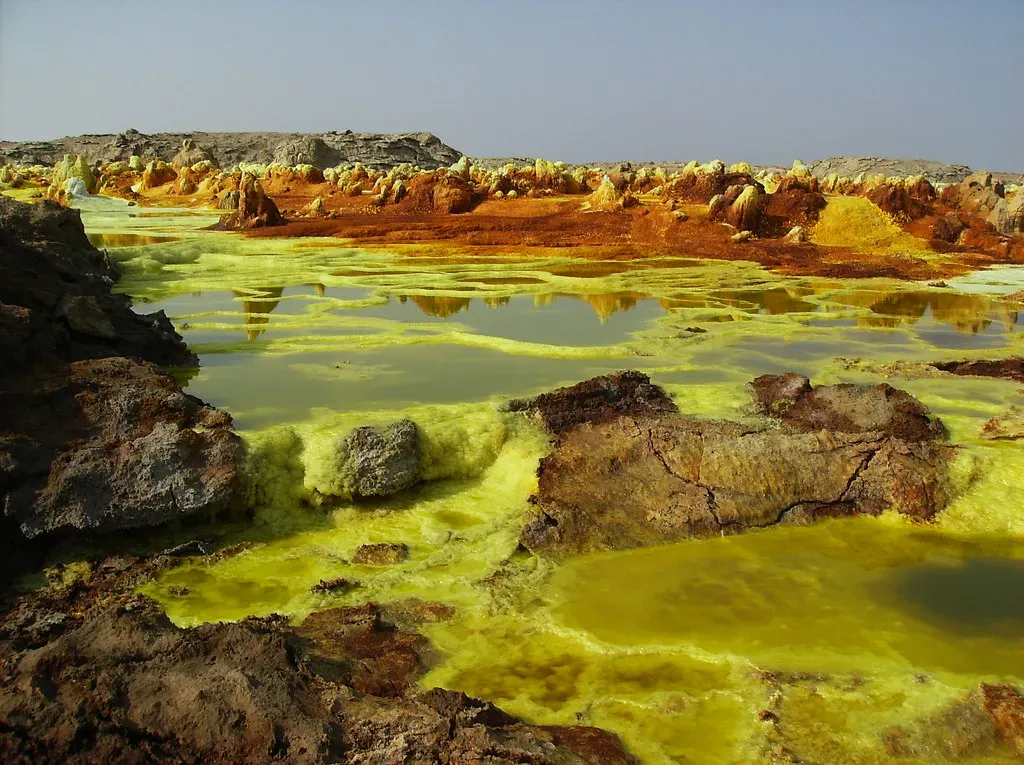
Honestly, if someone showed you a photo of the Danakil Depression without any context, you’d assume it was taken on Mars. The Danakil Depression in Ethiopia is a weirder-than-weird piece of wonder that is the result of three tectonic plates diverging and leaving behind lava lakes, acidic springs and more. Think about that for a second. Three tectonic plates pulling apart simultaneously, right beneath your feet.
The Danakil Depression is one of the hottest and driest places on Earth, and the area developed as a result of the continents Africa and Asia moving apart, which caused an upsurge in volcanic activity. The brilliant yellows and greens you see are caused by salt deposits, hydrothermal fields, and geysers in natural hot springs.
The colors are so loud, so unnaturally vivid, that photographers have to keep reminding themselves they haven’t edited anything. It’s like nature dialed up the saturation to 200 and forgot to turn it back down. This is probably the closest most of us will ever come to standing on an alien world.
Salar de Uyuni, Bolivia: The World’s Biggest Mirror
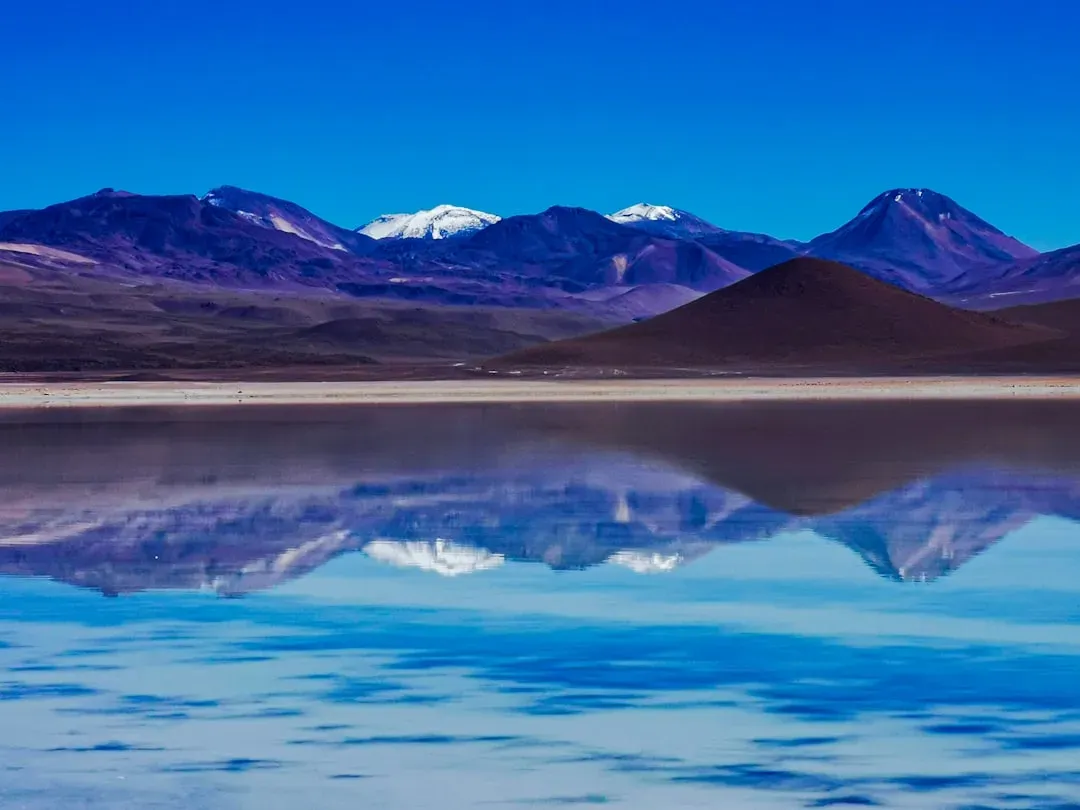
Salar de Uyuni is the world’s largest salt flat, covering over 10,000 square kilometers of Bolivia’s Altiplano at high elevation. This vast expanse formed when prehistoric lakes evaporated, leaving behind a salt crust ranging from two to ten meters thick. The scale of that is genuinely hard to picture. It’s roughly the size of Jamaica, covered entirely in white crystalline salt.
Between November and March, rainwater transforms the salt flat into Earth’s largest natural mirror. A thin water layer creates perfect sky reflections across thousands of square kilometers, erasing the horizon line completely.
That last part is the thing that gets you. When the horizon disappears, you lose all spatial reference. After it rains, this giant salt flat transforms into a stunning mirror, reflecting the sky so perfectly that it feels like you’re walking among the clouds. Standing there, you genuinely can’t tell which way is up. It’s not a metaphor. It’s a physical, almost vertigo-inducing reality.
The Waitomo Glowworm Caves, New Zealand: A Galaxy Underground
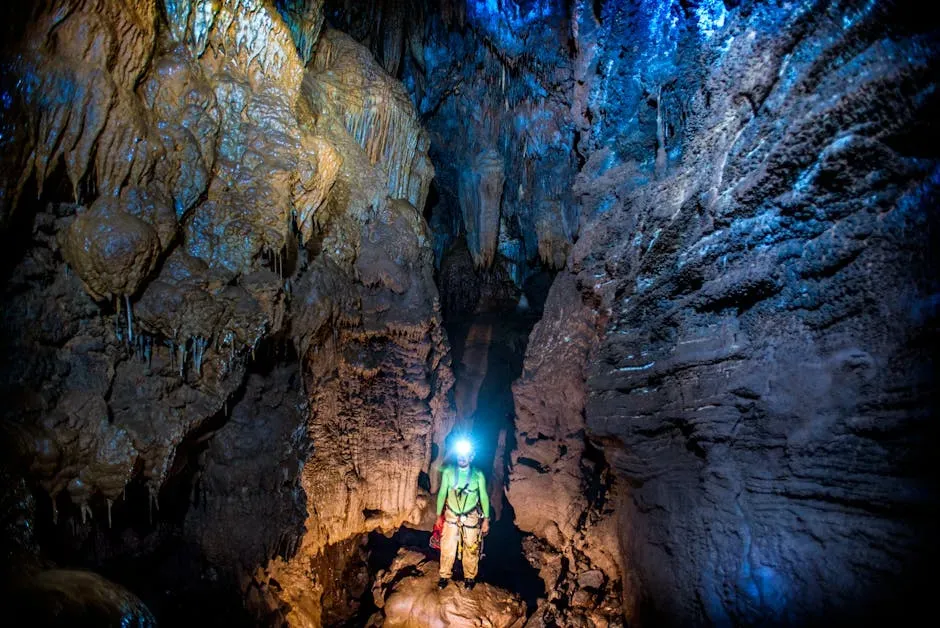
Most caves are defined by darkness. That’s kind of the whole point of being underground. The definition of a cave is “a natural underground chamber,” and you’d be right if you assumed that the “underground” part meant you don’t find a huge amount of light. New Zealand’s Waitomo Caves are a little different, however, lit up as they are by thousands upon thousands of glowworms, giving this subterranean place an undeniably romantic feel.
I think “romantic” might be underselling it. Imagine floating on a silent boat through complete darkness, and then slowly, the ceiling above you comes alive with blue light. Thousands of tiny lights. It looks exactly like a star-filled sky, except it’s underground, and every single pinprick of light is a living creature.
These glowworms are unique to New Zealand and parts of Australia. They produce bioluminescent silk threads to lure prey. Something that evolved purely to catch insects ended up creating one of the most breathtaking sights on Earth. Nature is funny that way.
Lake Hillier, Australia: Bubblegum Pink and Completely Real
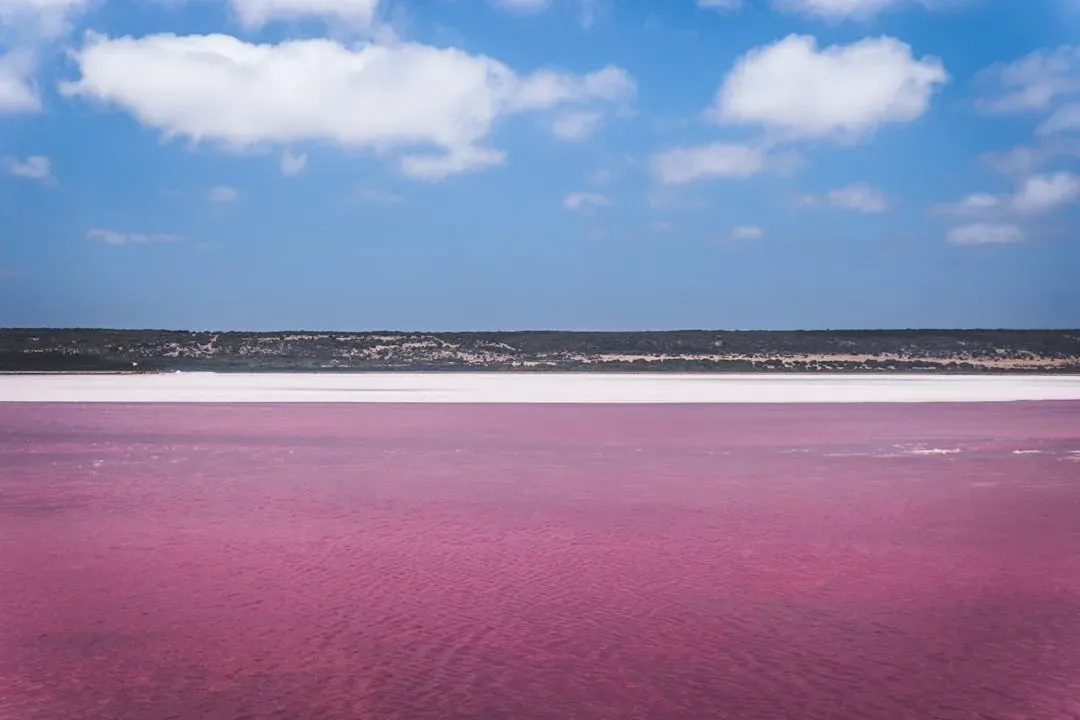
Let’s be real. If someone told you there was a bright pink lake sitting right beside the blue ocean in Australia, you’d assume they were describing a film set. Lakes don’t usually come in shades of bubblegum pink, but this one does. Thanks to the presence of colourful bacteria and algae, Australia’s Lake Hillier is a delightful pink colour that makes it as eye-catching from above as it is from the shore. When flying over the Recherche Archipelago, you’ll see the pink hues stand out even more as it sits right beside the brilliant blue ocean.
The reason for its unique colour is still not fully known. However, most suspect it is the presence of unique microalgae, Dunaliella Salina, which produces carotenoids, the same pigment found in carrots.
Here’s the part that really messes with your head. What makes Lake Hillier even more fascinating is that the pink water stays pink even if you scoop it into a bottle. It’s not a trick of light or a specific angle. The water itself is pink. Carry it away with you, and it’ll still be pink in your hands.
Socotra Island, Yemen: The Alien Garden of Eden
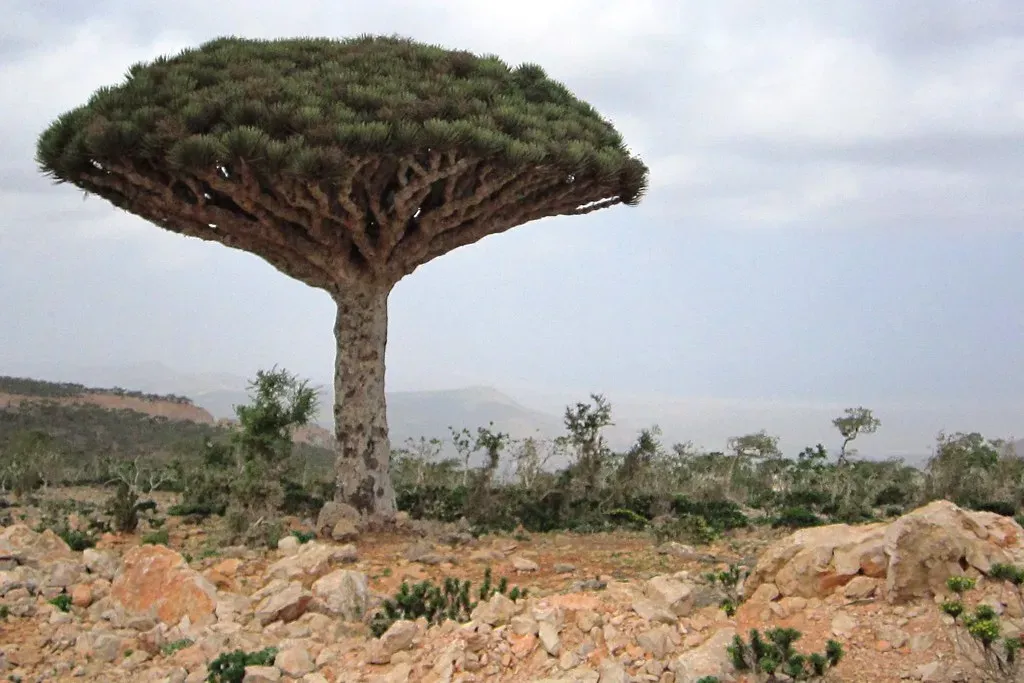
Hailed as the original Garden of Eden due to its isolation and unique biodiversity not found anywhere else in the world, this remote island in Yemen looks like a Dr. Seuss book sprung to life. Expect bulbous bottle trees and the ancient dragon’s blood trees, among many others.
Separated from mainland Africa over six million years ago, Socotra is a biodiversity hotspot with flora and fauna you won’t find anywhere else. Six million years of isolation is a long time. Long enough for an entirely separate branch of the botanical world to evolve, completely disconnected from anything we recognize.
The dragon’s blood tree looks like an upside-down umbrella and oozes a crimson sap, hence the name. Then there’s the bottle tree, which looks like it’s been pulled straight out of a Dr. Seuss book with its swollen trunk and pink flowers. Standing among them feels less like a hike and more like stepping through a portal into a world that branched off from ours millions of years ago.
The Catatumbo Lightning, Venezuela: The Storm That Never Ends
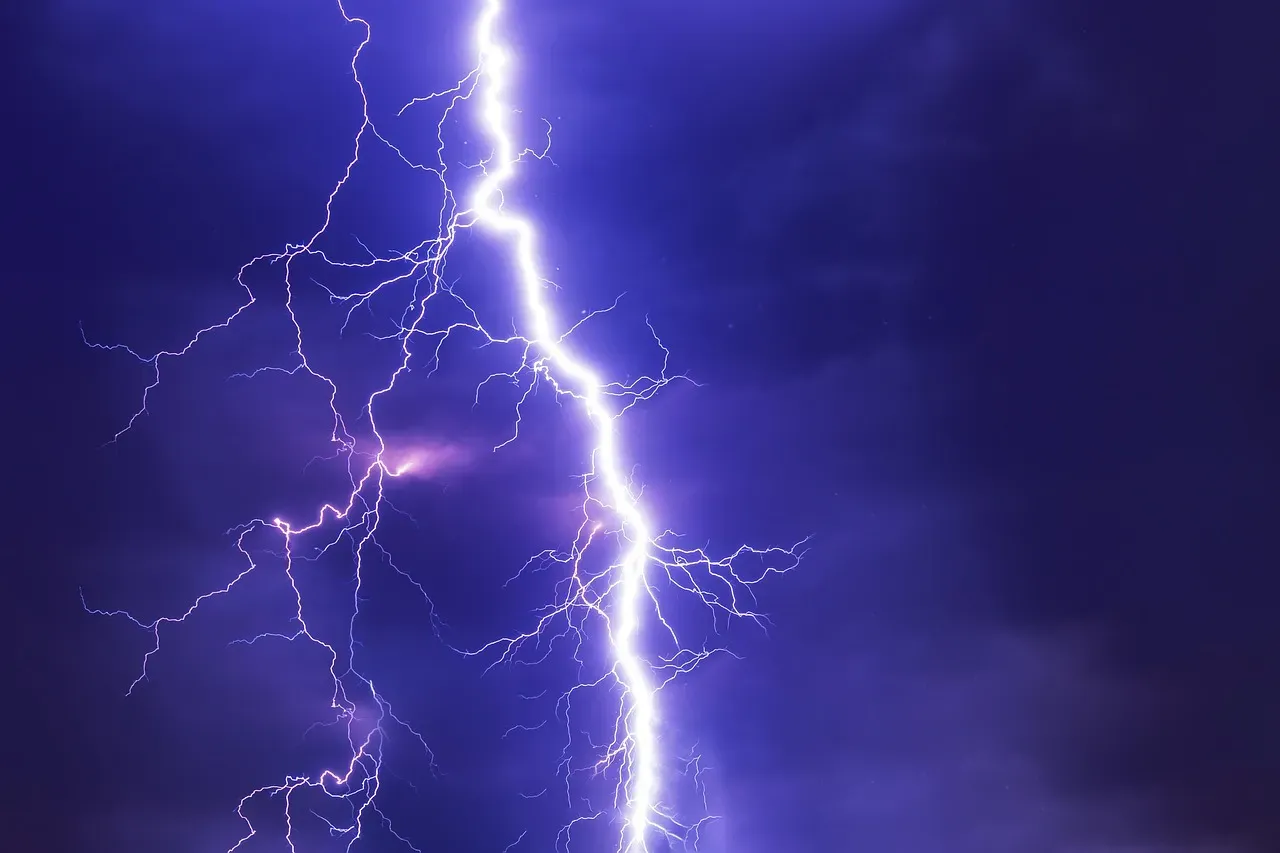
Most lightning storms arrive, throw a spectacular tantrum, and then leave. The Catatumbo lightning did not get that memo. Between 140 and 160 days each year, the Catatumbo River is blanketed by a consistent lightning storm that seems to hover in place over the bog area where the river enters Lake Maracaibo. This lightning display is unique for its consistency and frequency, with the storm clouds producing as many as 40 different lightning bolts each minute. This frequency makes the Catatumbo River by far the most lightning-dense area in the world.
Over Lake Maracaibo in Venezuela, lightning flashes up to 280 times an hour for 10 hours straight. This happens nearly 300 nights a year. There’s almost no thunder, just continuous flashes across the sky.
No thunder. Just constant, silent lightning. If you’ve ever seen a thunderstorm and thought it was dramatic, that experience is barely a preview of what happens here every single night, for months on end, like clockwork.
Blood Falls, Antarctica: A Glacier That Bleeds
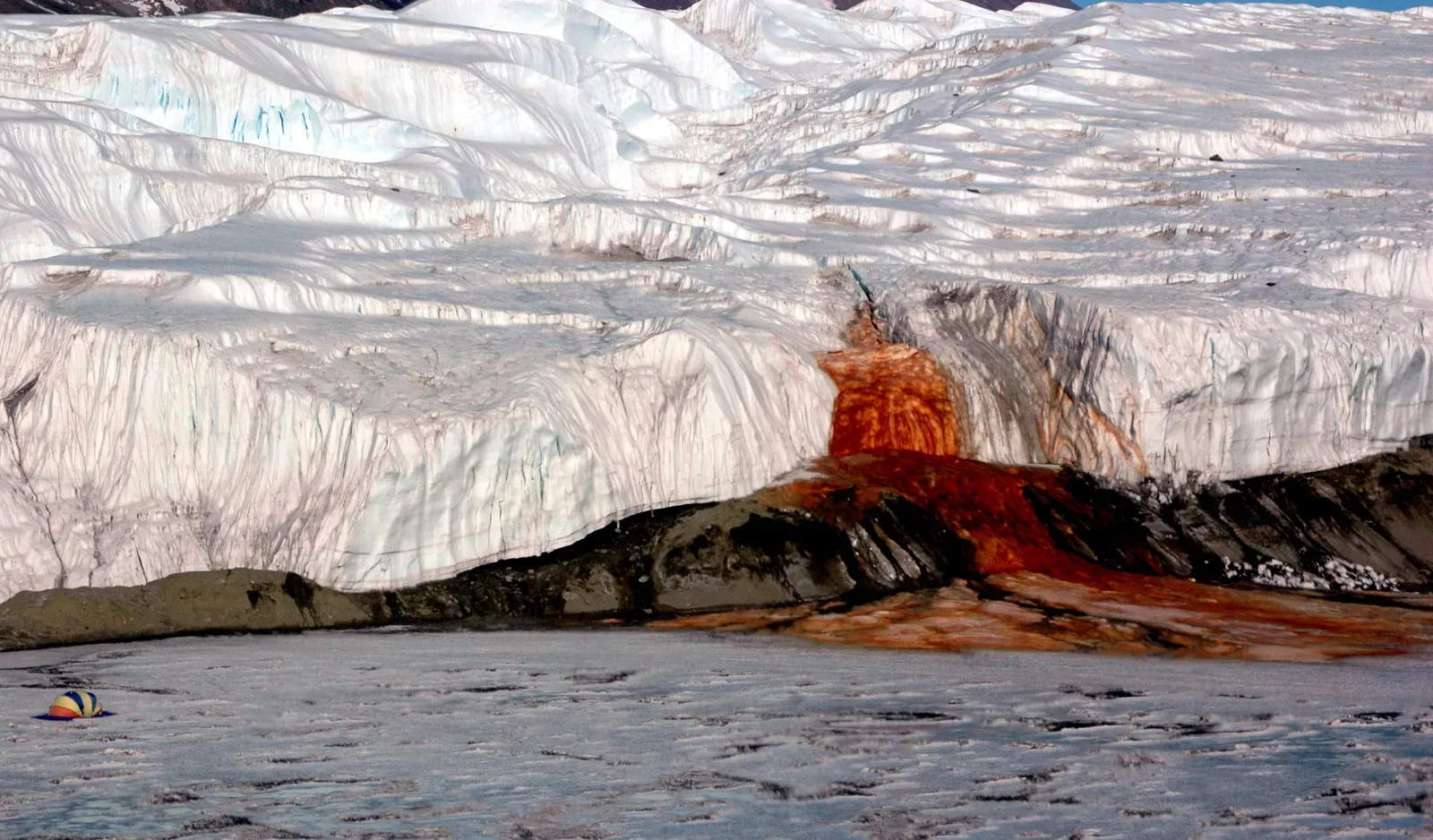
Antarctica is already eerie enough. Add a waterfall that pours blood-red water out of a glacier and you’ve got something that belongs in a horror film. As the name suggests, Blood Falls is a waterfall which shoots blood-red water into a river. It was first seen in 1911 in the eastern part of Antarctica, in the McMurdo Dry Valley. The sight is a perfect backdrop for a horror film: creepy, mysterious, and of course bloody.
The explanation is fascinating once you know it, though honestly not that much less unsettling. The red color comes from iron-rich brine trapped beneath the glacier for millions of years. When the salt water seeps out and meets the air, it oxidizes, turning the deep rusty red of old blood. It’s basically a glacier bleeding iron.
What makes it even more extraordinary is that the water beneath the ice hosts a microbial ecosystem, completely cut off from sunlight, oxygen, and the rest of the world. Life, finding a way in one of Earth’s most hostile pockets. It’s inspiring and slightly terrifying in equal measure.
The Boiling River, Amazon: Shanay-Timpishka
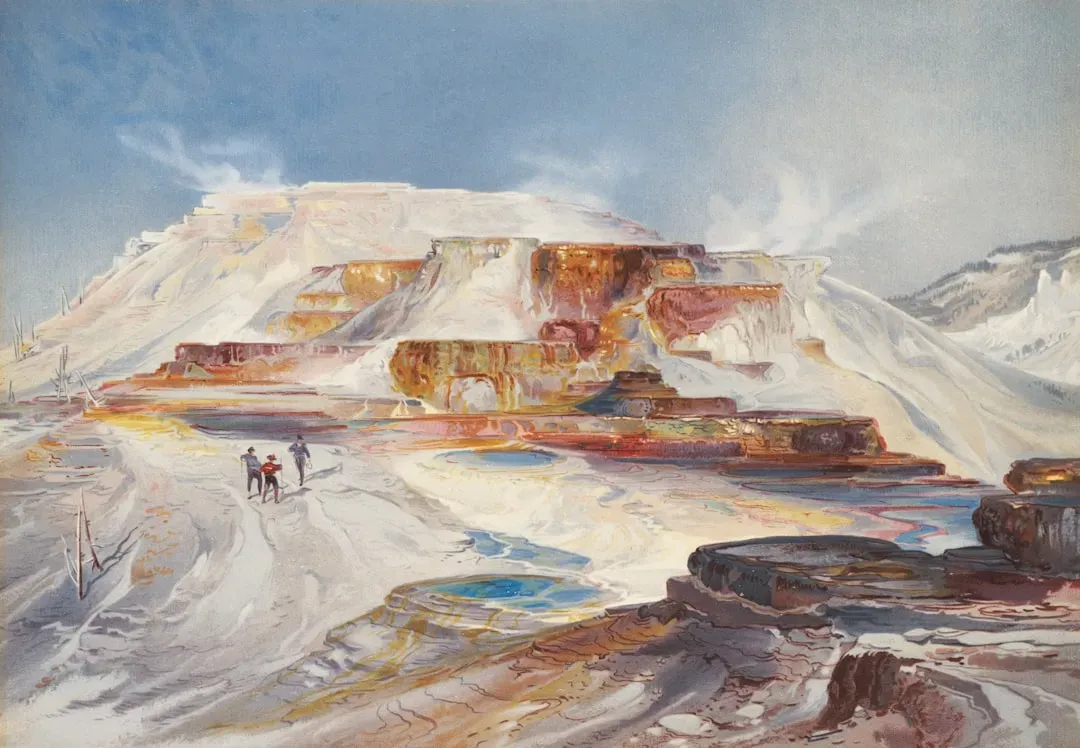
Deep inside the Peruvian Amazon, there is a river that boils. Not metaphorically. Not slightly warm. It actually boils. Known locally as Shanay-timpishka, which means “boiled with the heat of the sun,” this river heats up to temperatures as high as 204.8°F (96°C). Stretching for nearly 4 miles, it’s not volcanic activity but geothermal heat from deep beneath the Earth’s crust that warms its waters.
The discovery of the boiling river was met with skepticism by scientists until it was thoroughly documented by geoscientist Andrés Ruzo. The water is so hot that it can cook any animal that falls into it, a characteristic that has woven the river into local mythology as a place of power and healing.
It’s hard to say for sure just how ancient the local myths surrounding this river are, but the fact that a river boiling in the middle of a jungle remained essentially unknown to the wider scientific world until recently says a lot about how much of our planet we still haven’t truly explored.
The Crooked Forest of Poland: Nature’s Unsolved Riddle
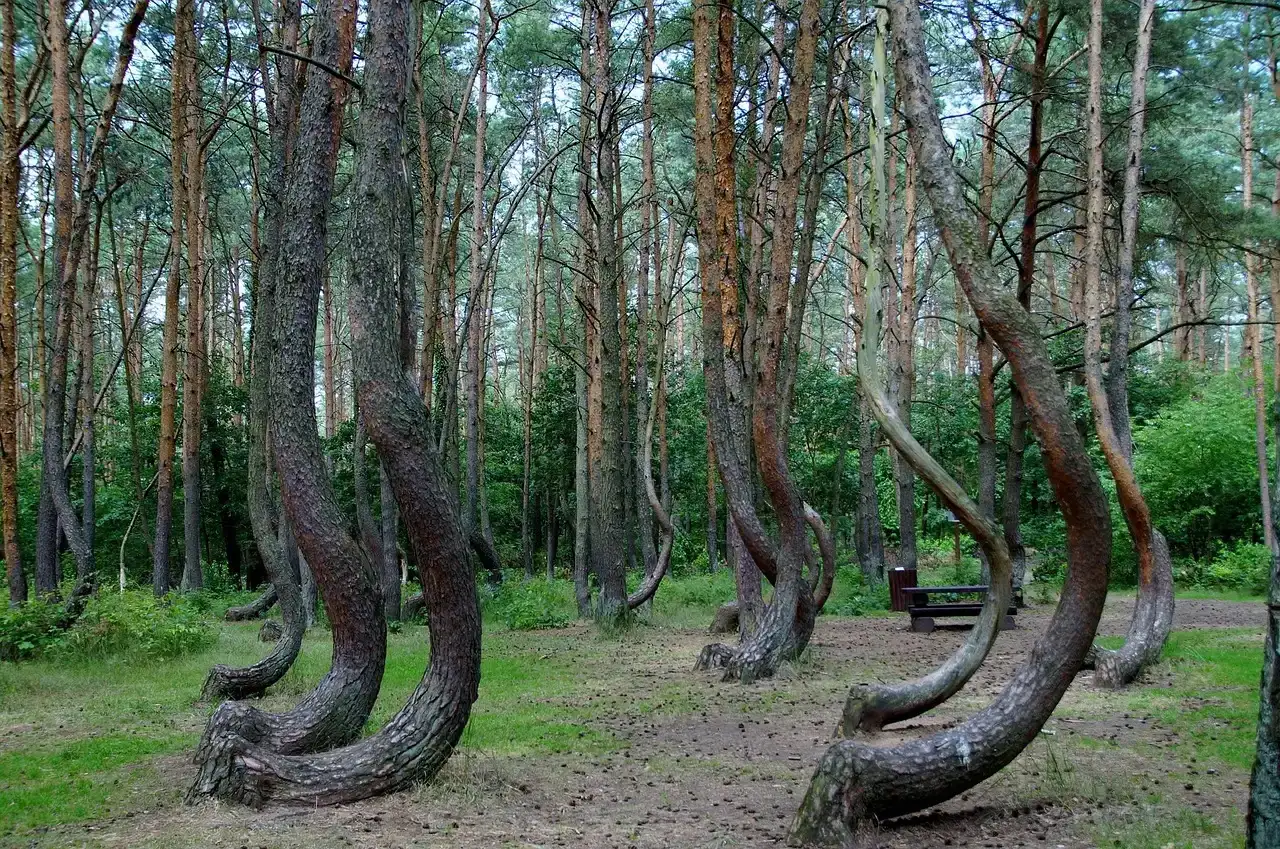
There are strange places, and then there are places that are strange in a way that makes experts shrug. With its J-shaped tree trunks, the aptly named Crooked Forest is as baffling as it is beautiful. Located near the Polish city of Gryfino, it’s home to more than 400 pine trees believed to have been planted in the 1930s, each displaying a curved trunk. Stranger still, the vast majority of them bend in a northward direction. Arboriculturists have debated how this otherworldly landscape came to be, but so far no one has been able to explain it.
Think about that. Hundreds of trees, all bending uniformly in the same direction, and after decades of study, science has no definitive answer. Every tree in the same grove grows perfectly straight. Only these 400 are curved, as if something bent them deliberately when they were young and then disappeared without leaving a trace.
The theories range from heavy snowfall and human manipulation to some kind of gravitational anomaly. None have stuck. This quiet, unassuming patch of Polish forest remains one of nature’s most elegant, stubborn mysteries.
The Fairy Circles of Namibia: Polka Dots on a Desert
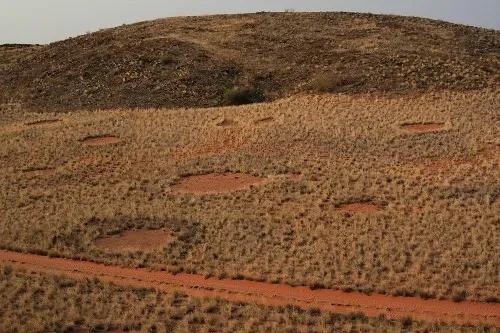
From above, the Namib Desert looks like someone pressed a giant stamp across it. Seen from above, the circular markings on this grassy desert in Namibia look like a vast sheet of polka dots. For hundreds of years, researchers have been unable to determine the cause of the fairy circles, which vary from 10 to 65 feet in diameter and extend across hundreds of miles.
The Namib Desert is unlike any other desert. There are eerie circular patches spread all across the desert, covering an area of roughly 2,500 km. These bare soil patches are popularly known as fairy circles.
One prominent theory suggests the circles emerge from underground termite activity and competing plant life. One mathematician stated that the patches are a combination of two things: the presence of vegetation with the absence of water, which makes the plants compete for resources and eventually disappear, leaving patches, and then those patches are taken over by termites. So it is the complex ecosystem that results in such a bizarre phenomenon. Still, debates continue, and the full picture remains elusive. There’s something deeply satisfying about a landscape that keeps outwitting us.
Conclusion: The Earth Is Stranger Than Any Story We Could Write
We live in an era where satellites map every coastline and sensors monitor every tremor. It’s tempting to assume the world has no surprises left. These ten places prove otherwise, loudly and spectacularly.
From a glacier that bleeds iron-red water in Antarctica, to a storm that has raged for perhaps thousands of nights over Venezuela, to a small forest in Poland where 400 trees refuse to explain themselves, the planet we walk around on every day is genuinely, deeply, beautifully weird.
The most humbling part isn’t that these wonders exist. It’s that many of them sat there for millions of years before we ever noticed. Who knows what else is still out there, quietly being extraordinary while nobody’s looking?
What would you have guessed? Tell us in the comments which of these wonders surprised you the most.
Worried about unexpected vet bills?
Pet insurance can cover thousands in unexpected vet costs. Get a free quote from Lemonade in under 2 minutes.
Get My Free Quote →Sponsored · Opens Lemonade.com
