


When we think of the prehistoric world of dinosaurs, we often forget that they shared their habitat with numerous other fascinating creatures. Among these were many remarkable reptiles that have their own captivating evolutionary stories. While dinosaurs dominated the Mesozoic Era (252-66 million years ago), various non-dinosaurian reptiles carved out their own niches, some evolving into forms as spectacular as their dinosaur contemporaries. From ocean-dwelling behemoths to soaring aerial predators, these creatures represent important branches on the reptilian family tree, many with descendants that survive to this day. Let’s journey back to explore ten remarkable reptiles that walked, swam, and flew alongside dinosaurs during the Age of Reptiles.
Mosasaurs The Sea Serpents of the Late Cretaceous
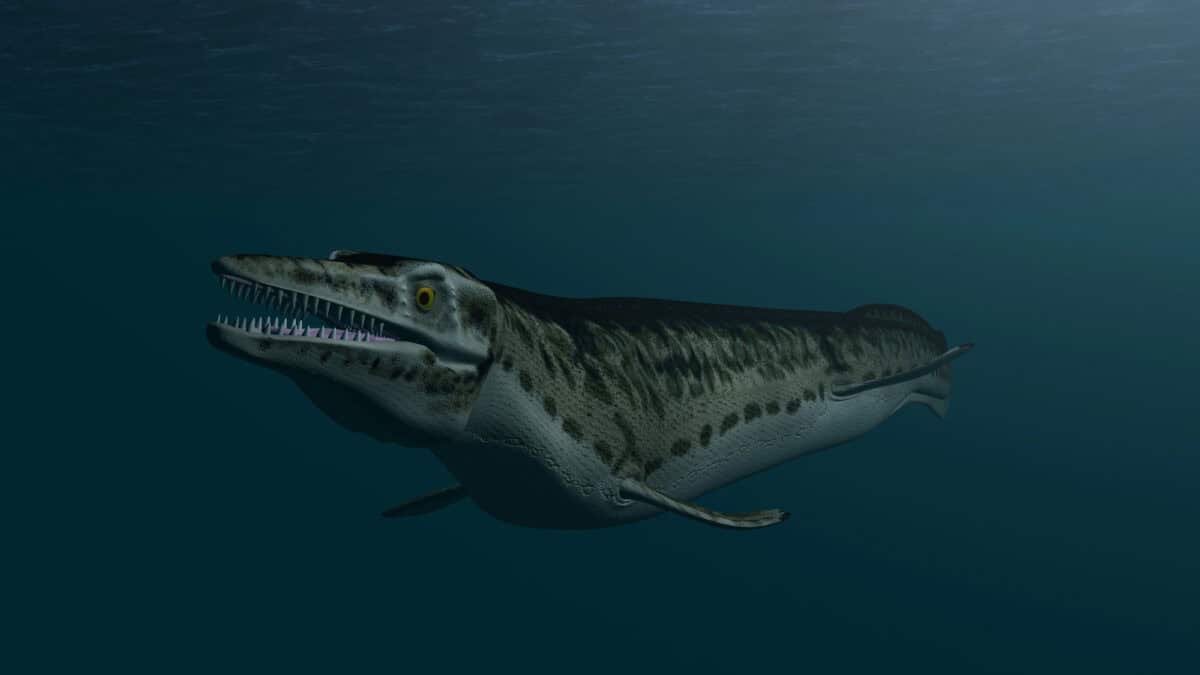
Mosasaurs were massive marine reptiles that dominated the oceans during the Late Cretaceous period, approximately 98-66 million years ago. These predators evolved from semi-aquatic lizards related to modern-day monitor lizards and snakes. Growing to lengths of up to 50 feet (15 meters), mosasaurs possessed powerful paddle-like limbs, a strong tail for propulsion, and jaws lined with sharp, conical teeth. Unlike many modern reptiles, they gave birth to live young rather than laying eggs, an adaptation well-suited to their fully aquatic lifestyle. Tylosaurus, one of the largest mosasaur genera, was an apex predator that could consume almost anything it encountered, from fish and ammonites to sea birds, plesiosaurs, and even other mosasaurs. The discovery of mosasaur fossils with stomach contents has provided valuable insights into their diet and hunting behaviors. When the asteroid impact triggered mass extinction at the end of the Cretaceous, mosasaurs disappeared along with non-avian dinosaurs, leaving no direct descendants today.
Pterosaurs The First Vertebrates to Master Powered Flight

Pterosaurs were flying reptiles that soared the skies during the entire Mesozoic Era, from the late Triassic (about 228 million years ago) until the end of the Cretaceous (66 million years ago). While they’re often mistakenly called dinosaurs, pterosaurs belong to a separate reptile lineage that evolved powered flight independently. Their wings consisted of a membrane of skin stretched from an elongated fourth finger to their bodies, creating an effective aerodynamic surface. Early pterosaurs like Rhamphorhynchus had long tails and teeth, while later forms such as the enormous Quetzalcoatylus—with a wingspan approaching 36 feet (11 meters)—evolved toothless beaks and reduced tails. Despite their fragile bones, pterosaur fossils reveal remarkable adaptations, including hollow bones, sophisticated respiratory systems, and in some species, fur-like body coverings called pycnofibers that likely provided insulation. Recent research suggests many pterosaurs were capable of taking off from a standing position, similar to modern birds. These incredible flying reptiles existed alongside dinosaurs for over 160 million years before perishing in the same extinction event that claimed their terrestrial contemporaries.
Ichthyosaurs Dolphin-Like Marine Predators

Ichthyosaurs represent one of nature’s most striking examples of convergent evolution—reptiles that independently evolved a body form remarkably similar to modern dolphins and sharks. First appearing in the Early Triassic period (about 250 million years ago), ichthyosaurs flourished throughout much of the Mesozoic Era before mysteriously disappearing in the Late Cretaceous, approximately 90 million years ago, well before the mass extinction event. These marine reptiles boasted streamlined bodies perfectly adapted for aquatic life, with a distinct dorsal fin, powerful tail fin, and four flippers. Some species grew to enormous sizes, with Shastasaurus reaching lengths of over 65 feet (20 meters). Exceptionally preserved fossils show ichthyosaurs gave birth to live young in water, and some specimens have been found with embryos inside, providing direct evidence of this reproductive strategy. Their large eyes—among the largest of any vertebrate relative to body size—suggest they were visual hunters, possibly capable of diving to considerable depths. Ichthyosaurs possessed a warm-blooded physiology, allowing them to maintain active lifestyles in cooler waters, much like modern dolphins and tuna.
Plesiosaurs Long-Necked Marine Hunters

Plesiosaurs were among the most distinctive marine reptiles of the Mesozoic, characterized by their barrel-shaped bodies, four large flipper-like limbs, and in many species, extraordinarily long necks. First appearing in the Late Triassic period around 203 million years ago, they diversified into two main groups: the long-necked plesiosauroids (which include Elasmosaurus with its 23-foot neck containing more than 70 vertebrae) and the short-necked, large-headed pliosaurs (like Kronosaurus, which had a skull nearly 10 feet long). These marine reptiles employed a unique swimming method unlike anything alive today—using their four flippers in a “flying” motion underwater, similar to how sea turtles swim but with all four limbs. This provided them with exceptional maneuverability. Plesiosaur fossils have been discovered with stomach contents revealing diets consisting primarily of fish, cephalopods, and other marine creatures. Like other marine reptiles of their time, plesiosaurs gave birth to live young rather than returning to land to lay eggs. The discovery of a plesiosaur fossil with a single large embryo suggests they may have invested significant resources in producing few, well-developed offspring—a reproductive strategy more similar to that of mammals than modern reptiles. Plesiosaurs survived until the end-Cretaceous extinction event 66 million years ago, and some cryptozoologists have speculated (without scientific evidence) that legends of the Loch Ness Monster might derive from cultural memories of these remarkable creatures.
Crocodilians Survivors Through the Ages
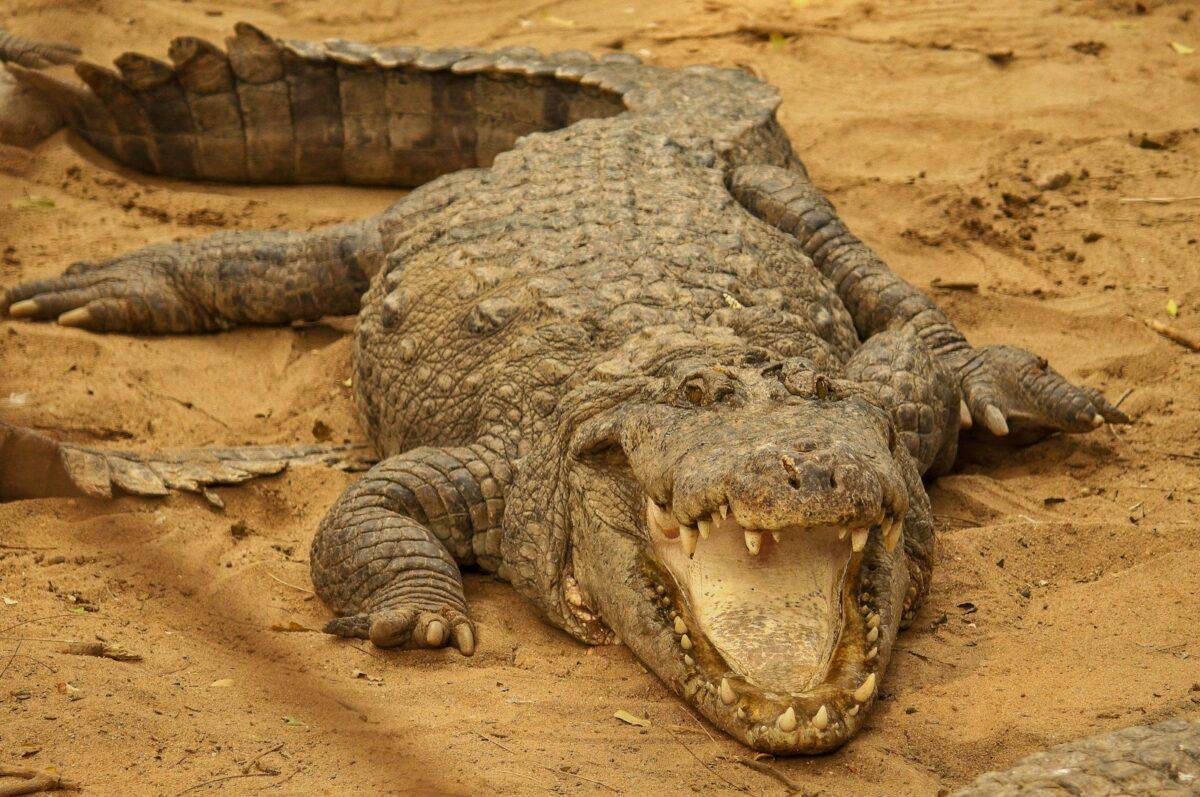
Crocodilians represent one of the greatest success stories in reptilian evolution, having survived for over 200 million years with relatively minor changes to their body plan. These semi-aquatic predators first appeared during the Late Triassic period, evolving from terrestrial ancestors called pseudosuchians. While modern crocodilians (crocodiles, alligators, caimans, and gharials) are familiar to us, their Mesozoic relatives displayed remarkable diversity. Deinosuchus, a giant crocodilian from Late Cretaceous North America, grew to lengths exceeding 33 feet (10 meters) and had teeth strong enough to prey on dinosaurs, as evidenced by bite marks found on dinosaur bones. Other prehistoric crocodilians adapted to different lifestyles: Terrestrisuchus was fully terrestrial and capable of running on its hind legs, while Stomatosuchus may have been a filter feeder with a broad, flat snout. Some forms, like Dakosaurus, became fully marine with flipper-like limbs and tail fins. The unusual notosuchians of Gondwana evolved into terrestrial herbivores and omnivores with complex teeth unlike anything seen in modern crocodilians. While many crocodilian lineages disappeared, particularly during the end-Cretaceous extinction, the group as a whole persisted. Today’s crocodilians are living fossils, retaining many features that have remained effective for hundreds of millions of years, including their armored bodies, powerful jaws, and ambush predation tactics.
Turtles Ancient Shelled Survivors
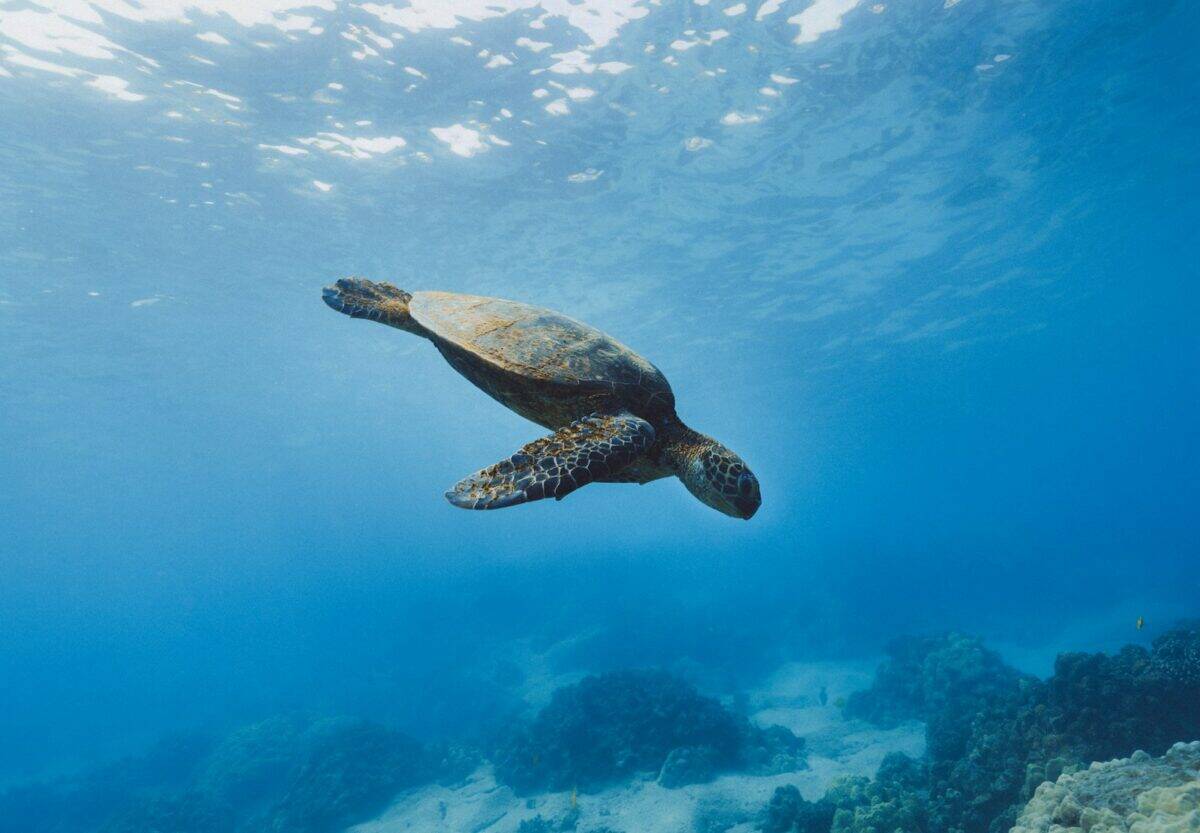
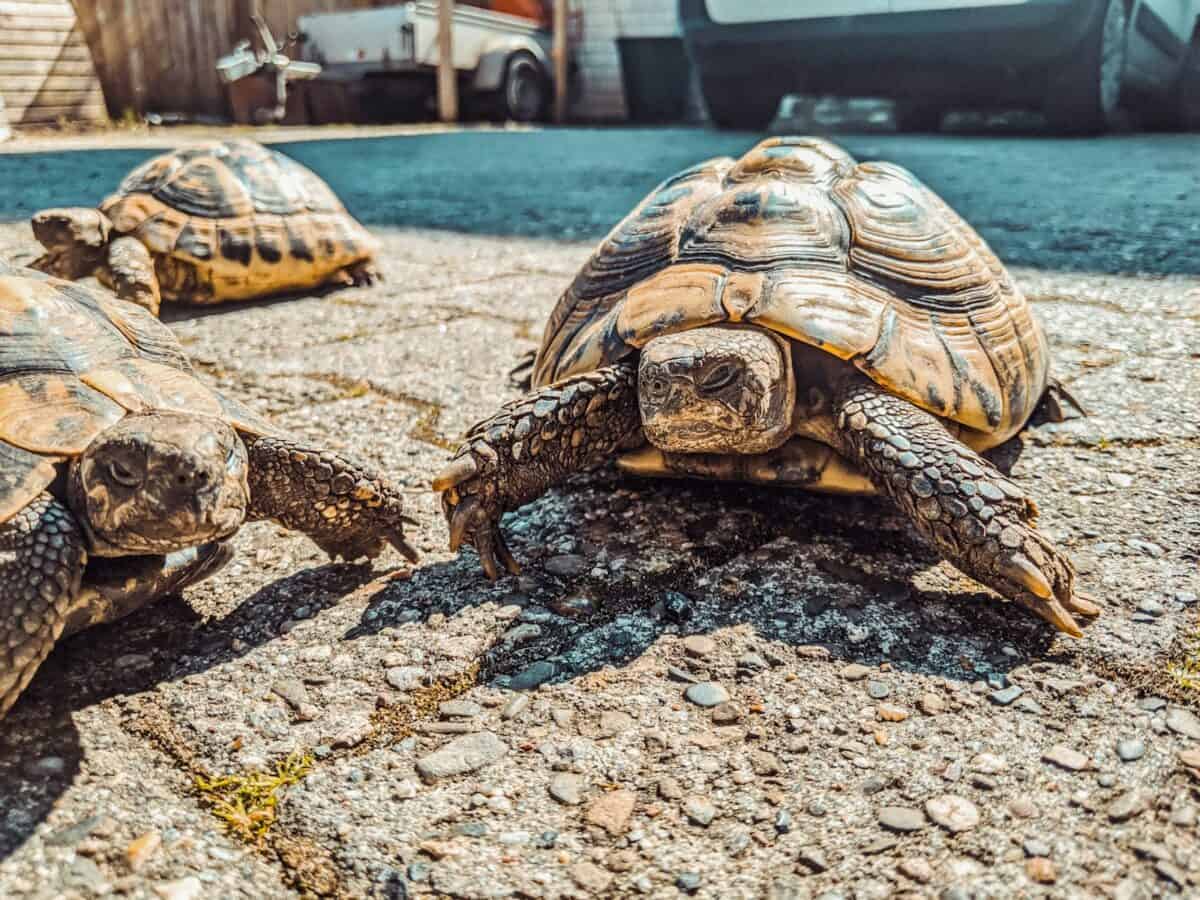
Turtles have one of the most distinctive body plans in the animal kingdom, and their evolutionary history stretches back over 230 million years, meaning they were well-established when dinosaurs were just beginning to diversify. The earliest definitive turtle, Proganochelys from the Late Triassic of Germany and Thailand, already possessed the characteristic shell formed from modified ribs and vertebrae, though it retained primitive features such as teeth and an inability to retract its head into its shell. By the Jurassic period, turtles had evolved into forms more closely resembling modern species, with the major divisions between hidden-necked (cryptodire) and side-necked (pleurodire) turtles already established. Some prehistoric turtles grew to enormous sizes—Archelon from the Late Cretaceous reached lengths of 13 feet (4 meters) and is the largest known turtle to have ever lived. Carbonemys, a freshwater turtle from the Paleocene (just after the dinosaur extinction), had a shell nearly 6 feet (1.8 meters) long and jaws powerful enough to crush crocodilians. Turtles weathered the end-Cretaceous extinction event that wiped out the non-avian dinosaurs, demonstrating the remarkable resilience of their evolutionary design. Their success can be attributed to their protective shells, ability to exploit both aquatic and terrestrial environments, and their omnivorous feeding habits allowing dietary flexibility in changing environments.
Champsosaurs The Crocodile-Like Choristoderans

Champsosaurs were semi-aquatic reptiles belonging to the order Choristodera, a group that superficially resembled crocodiles but were not closely related to them. First appearing in the Late Jurassic period about 150 million years ago, champsosaurs flourished during the Cretaceous and survived the mass extinction that claimed the dinosaurs, persisting into the Miocene epoch around 20 million years ago. These reptiles possessed elongated snouts filled with numerous small, sharp teeth ideal for catching fish, and their bodies were adapted for an aquatic lifestyle with long tails for swimming. Champsosaurus, the most well-known genus, reached lengths of up to 5 feet (1.5 meters) and inhabited freshwater environments across North America and Europe. Unlike many modern aquatic reptiles, champsosaurs likely moved using serpentine undulations of their bodies rather than limb propulsion. What makes champsosaurs particularly interesting is their ability to survive the catastrophic end-Cretaceous extinction event, possibly because their freshwater habitats were less affected by the global environmental changes. This resilience allowed them to thrive in the early Cenozoic Era when many ecological niches were vacant following the mass extinction. Despite this initial success in the post-dinosaur world, champsosaurs ultimately went extinct without leaving any descendants, representing an evolutionary dead-end in reptile evolution.
Drepanosaurs Chameleon-Like Oddities
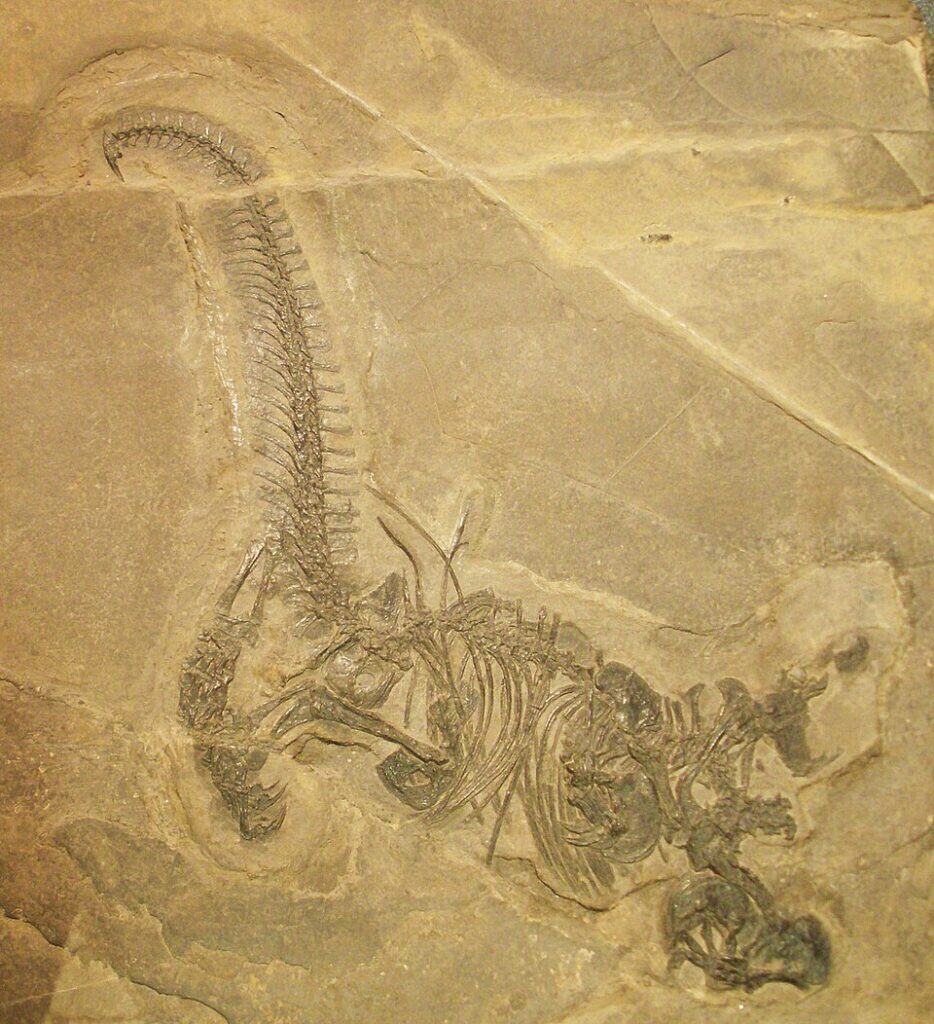
Drepanosaurs represent some of the most peculiar and least-known reptiles of the Triassic period, exhibiting a combination of features not seen in any living animal today. These small, specialized reptiles appeared during the Late Triassic (about 220 million years ago) and vanished before the Jurassic period began. With bodies typically measuring less than 2 feet (60 cm) in length, drepanosaurs possessed several remarkable adaptations for an arboreal lifestyle. Megalancosaurus, a well-studied drepanosaur, had chameleon-like grasping hands, a prehensile tail tipped with a claw that likely assisted in climbing, and bird-like heads with forward-facing eyes suggesting depth perception important for life in the trees. Perhaps their most unusual feature was the specialized second finger that, in some species, formed a prong-like structure potentially used for probing bark to extract insects. The shoulder girdle of drepanosaurs was remarkably bird-like, leading some paleontologists to suggest a potential distant relationship to dinosaurs and birds, though this remains debated. These reptiles likely filled ecological niches similar to modern chameleons, pangolins, and woodpeckers, using their specialized anatomy to navigate the complex forest environments of the Triassic. Despite their fascinating adaptations, drepanosaurs disappeared during the end-Triassic extinction event, leaving no direct descendants and remaining one of the more enigmatic reptile groups from the time of early dinosaurs.
Sphenodontians The Tuatara’s Ancient Relatives

Sphenodontians were once a diverse and widespread group of reptiles that first appeared in the Middle Triassic period, approximately 240 million years ago. Today, this once-flourishing lineage is represented by a single survivor—the tuatara (Sphenodon punctatus) of New Zealand, making it one of the most remarkable living fossils on Earth. During the Mesozoic Era, sphenodontians were common across the globe and displayed considerable diversity in form and ecological adaptation. Some, like Clevosaurus, were small insectivores, while others evolved specialized dentition for processing plant material or crushing the shells of mollusks. Unlike most modern reptiles that replace their teeth throughout life, sphenodontians possessed a unique dental structure where teeth were fused directly to the jawbone, forming a saw-like cutting edge that wore down with use. Fossils reveal that some species, such as the marine-adapted Pleurosaurus, evolved elongated bodies and tail fins for aquatic lifestyles. Sphenodontians coexisted with early dinosaurs but gradually declined through the Jurassic and Cretaceous periods as they faced increasing competition from the rapidly evolving squamates (lizards and snakes). By the end of the Cretaceous, sphenodontians had disappeared from most regions, persisting only in what would become New Zealand after it separated from other landmasses, allowing the tuatara to survive to the present day in isolation from mammalian predators. The modern tuatara retains numerous primitive features, including a “third eye” (parietal eye) on the top of its head, and can live for over 100 years, providing scientists with a living window into reptile evolution during the age of dinosaurs.
Phytosaurs Crocodile Mimics of the Triassic

Phytosaurs were large, semi-aquatic predators that lived worldwide during the Late Triassic period (237-201 million years ago), evolving to fill ecological niches remarkably similar to modern crocodilians despite not being directly related to them. This represents one of the most striking examples of convergent evolution in the fossil record. Growing up to 39 feet (12 meters) in length, phytosaurs possessed elongated, crocodile-like snouts filled with numerous conical teeth, armored bodies, and powerful tails for swimming. The key anatomical difference distinguishing them from true crocodilians was the position of their nostrils, which were located high on the skull near the eyes rather than at the tip of the snout. This adaptation allowed phytosaurs to breathe while remaining almost completely submerged, making them effective ambush predators in ancient rivers and lakes. Fossil evidence suggests phytosaurs were formidable hunters, preying on fish, amphibians, and other reptiles, including early dinosaurs. Some species evolved specialized feeding adaptations, with broader-snouted forms likely focusing on larger prey and slender-snouted varieties specialized for catching fish. Phytosaurs were among the dominant predators of the Late Triassic but mysteriously disappeared during the end-Triassic extinction event approximately 201 million years ago. Their extinction opened ecological niches that would eventually be filled by true crocodilians, which evolved many of the same adaptations independently, demonstrating how similar environmental pressures can produce remarkably similar evolutionary outcomes in unrelated groups.
Kuehneosaurids The Gliding Lizards of the Triassic

Kuehneosaurids were a family of unusual reptiles that lived during the Late Triassic period, approximately 220 million years ago, and represent one of the earliest known vertebrate groups to evolve gliding adaptations. These remarkable animals, including genera such as Kuehneosaurus and Icarosaurus, were relatively small lizard-like reptiles that developed an extraordinary modification: elongated ribs that extended outward from their bodies to support membranes of skin, creating wing-like structures reminiscent of modern flying dragons (Draco lizards) of Southeast Asia. With a wingspan of approximately 1-2 feet (30-60 cm), kuehneosaurids would have been capable of gliding significant distances between trees in the Triassic forests. Biomechanical studies suggest they could achieve glide ratios (horizontal distance traveled relative to vertical drop) of about 4:1, allowing them to cover substantial distances while avoiding ground-dwelling predators.
Conclusion:
The Age of Reptiles was not solely the domain of dinosaurs—it was a vast and dynamic era teeming with a wide array of other extraordinary reptilian life forms that thrived in the skies, seas, and on land. From the oceanic dominance of mosasaurs and ichthyosaurs to the aerial mastery of pterosaurs and the arboreal ingenuity of drepanosaurs, these creatures highlight the astonishing diversity and adaptability of prehistoric reptiles. Some, like crocodilians and turtles, endured and evolved into the present day, serving as living testaments to their resilience. Others, such as phytosaurs and sphenodontians, either vanished entirely or survive as rare evolutionary remnants. Collectively, these reptiles enrich our understanding of prehistoric ecosystems and underscore that the story of the Mesozoic is far broader and more complex than dinosaurs alone. Their legacies—whether still alive or etched only in stone—remind us of evolution’s power to innovate, adapt, and endure across deep time.

As a little kid, I fell in love with nature, wildlife, and animals. Living in the USA, South Africa, Italy, China and Germany gave me the opportunity to discover the world's Wildlife. My favorite animals are Mountain Gorillas, Siberian Tigers, and Great White Sharks.
I'm a certified PADI Open Water Diver, went to Everest Base Camp and Trekked Gorillas in Uganda. I hold a Master of Science in Economics and Finance.
Please send any feedback to feedback@animalsaroundtheglobe.com
- 13 Cat Breeds That Get Along with Dogs - July 20, 2026
- The 12 Largest Dog Breeds That Still Love to Cuddle - July 20, 2026
- 12 Pet Habits That Secretly Mean They Love You - July 20, 2026