
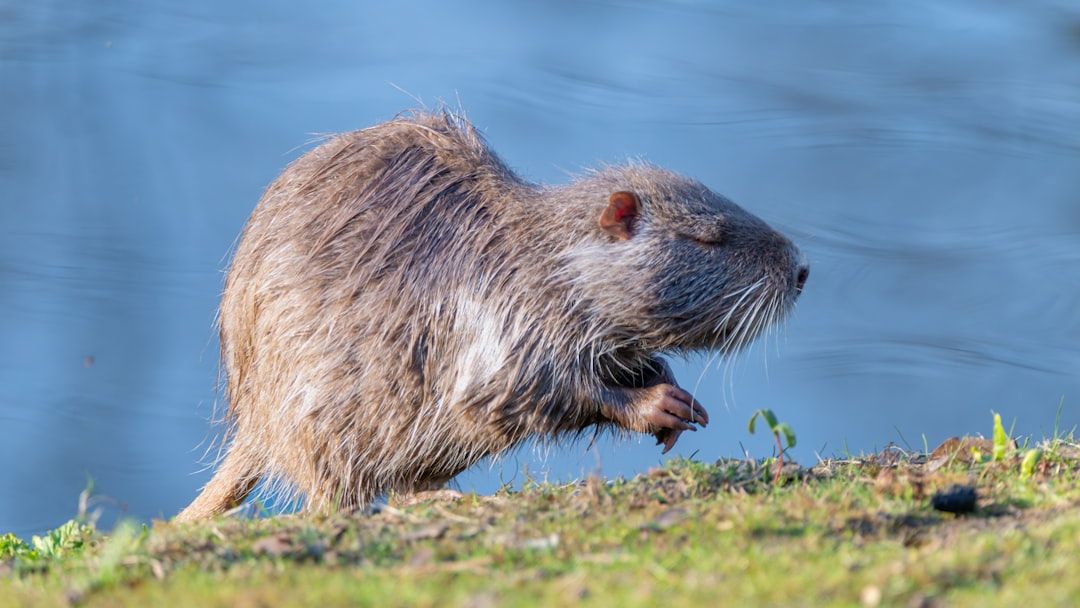
Every February, millions of people watch a drowsy rodent get yanked out of a hole so it can “predict” spring. It’s silly, it’s fun, and it completely buries the truth about what groundhogs actually are. Because underneath that cuddly, camera-friendly image is one of the most biologically extreme animals in North America – a creature whose heart nearly stops beating for months, whose teeth can grow so fast they become a death sentence, and whose underground tunnels have literally rewritten human history.
The weather prediction thing? That’s the least interesting thing about them by a mile. What follows are ten facts about groundhogs that will make you look at that Groundhog Day footage completely differently – starting with a skill almost nobody knows they have.
#10 – They Climb Trees and Swim. Yes, Really.
The image of a groundhog is always the same: a pudgy lump waddling across a field or frozen at the edge of its hole. That image is wrong. Groundhogs are surprisingly capable climbers, using their strong curved claws and stocky muscles to scramble up tree trunks when food or safety demands it. They’ve been spotted resting on branches well above the ground, looking deeply unbothered about defying expectations.
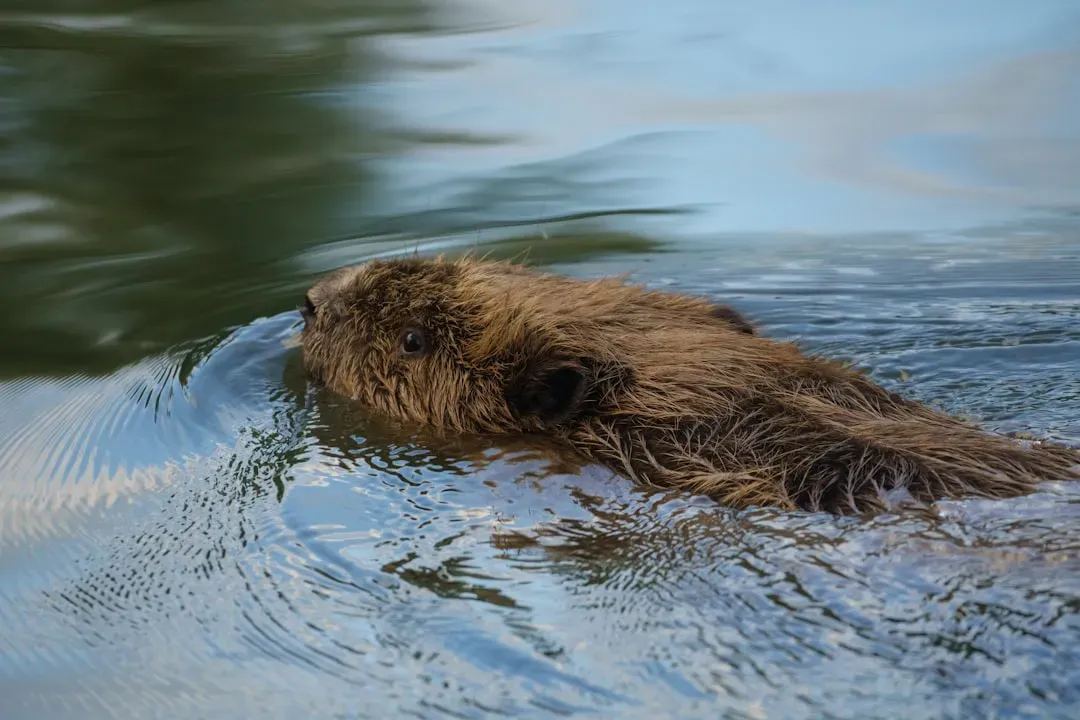
They’re also comfortable in water. When a pond or stream stands between a groundhog and where it needs to go, it just swims across. Their dense, layered fur sheds water reasonably well, and their build is powerful enough to handle a crossing. For an animal most people assume never leaves ground level, this two-directional versatility – up and across – quietly expands their world far beyond what any casual observer would guess.
Fast Facts
- Also known as woodchucks, whistle-pigs, and land beavers – all the same animal (Marmota monax)
- Classified as a marmot, making them the largest member of the squirrel family in their range
- Can weigh up to 13-14 lbs just before hibernation – then lose roughly 25% of that weight over winter
- Top running speed: 8 mph – slower than a fox (25 mph) or a coyote (40 mph)
- Found throughout eastern and central North America, from the U.S. Southeast up into Alaska
#9 – Their Burrows Have Dedicated Bathrooms
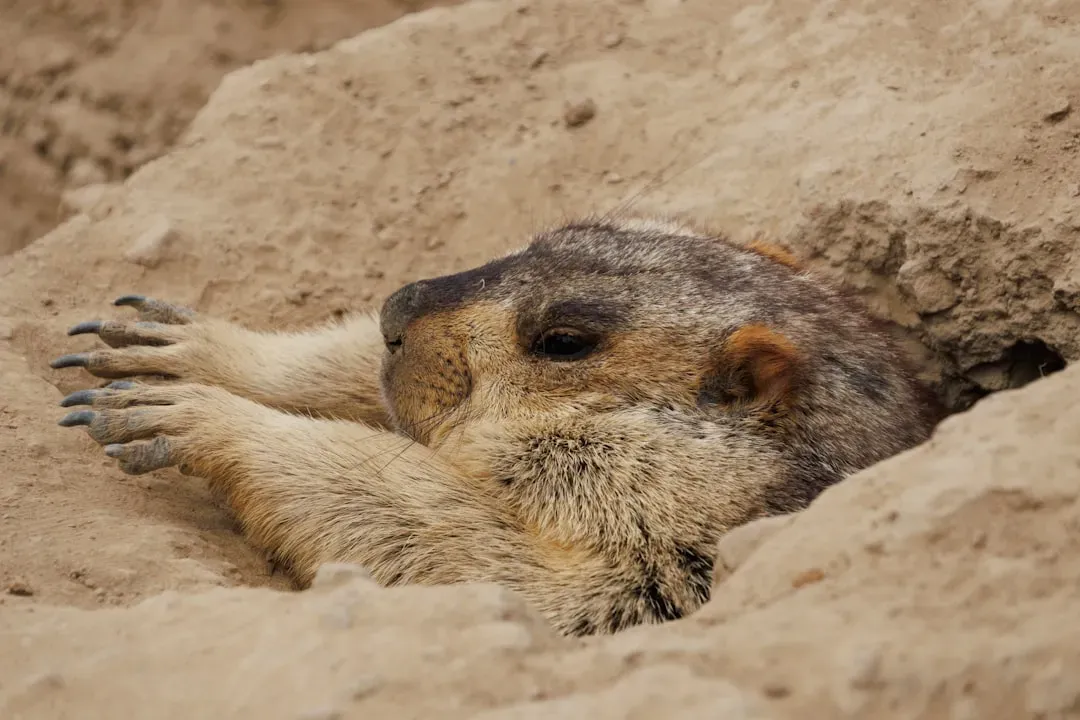
Groundhogs don’t just dig a hole and call it home. They engineer a multi-room underground system with distinct chambers for sleeping, raising pups, and – this is the part that tends to stop people mid-sentence – relieving themselves. The waste chamber is separate from the living quarters, which keeps the nest clean and dramatically reduces the risk of disease spreading through a tight, enclosed space. These aren’t instinct-driven accidents. The layout is deliberate.
The full tunnel system can stretch anywhere from 8 to 66 feet with multiple entrances and passages twisting down six feet below the surface. To build it, a groundhog moves an enormous amount of soil – often hundreds of pounds in a single construction effort. The entrances are staggered and angled to make predators hesitate. It’s less a hole in the ground and more a small, functional fortress with indoor plumbing.
At a Glance: The Groundhog Burrow
- Length: 8 to 66 feet of tunnels
- Depth: Typically 3 to 6 feet underground
- Entrances: Usually one main entrance plus up to four escape exits
- Rooms: Separate chambers for sleeping, hibernating, nursing young, and waste
- Bonus feature: Many groundhogs maintain a separate summer burrow and a deeper winter burrow
#8 – Their Teeth Are Growing Right Now, and That Can Kill Them
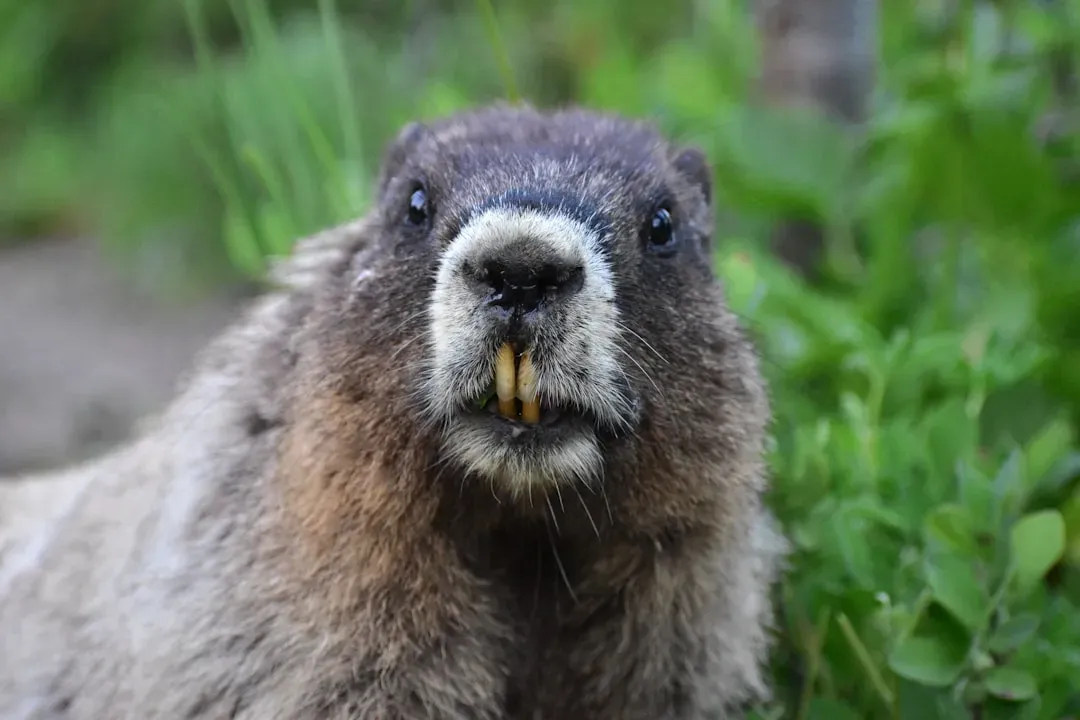
Groundhog incisors never stop growing. Every week, they lengthen by roughly one-sixteenth of an inch. Under normal circumstances, constant gnawing on roots, bark, and vegetation grinds them down at the same rate – a perfect biological balance. But if the teeth fall out of alignment, even slightly, the system collapses fast. The upper incisors can begin curving inward, eventually impaling the lower jaw. The animal can no longer eat. It starves, or the wound becomes infected, and either way the outcome is fatal.
This means every groundhog is in a permanent, lifelong race against its own mouth. It uses those teeth to slice through tough vegetation, defend itself when cornered, and strip bark for nesting material. The same tools that keep it alive are also the ones most likely to kill it if anything goes wrong. There’s something almost poetic – and genuinely unsettling – about an animal whose survival depends entirely on never stopping.
#7 – Their Top Speed Is a Humbling 8 Miles Per Hour
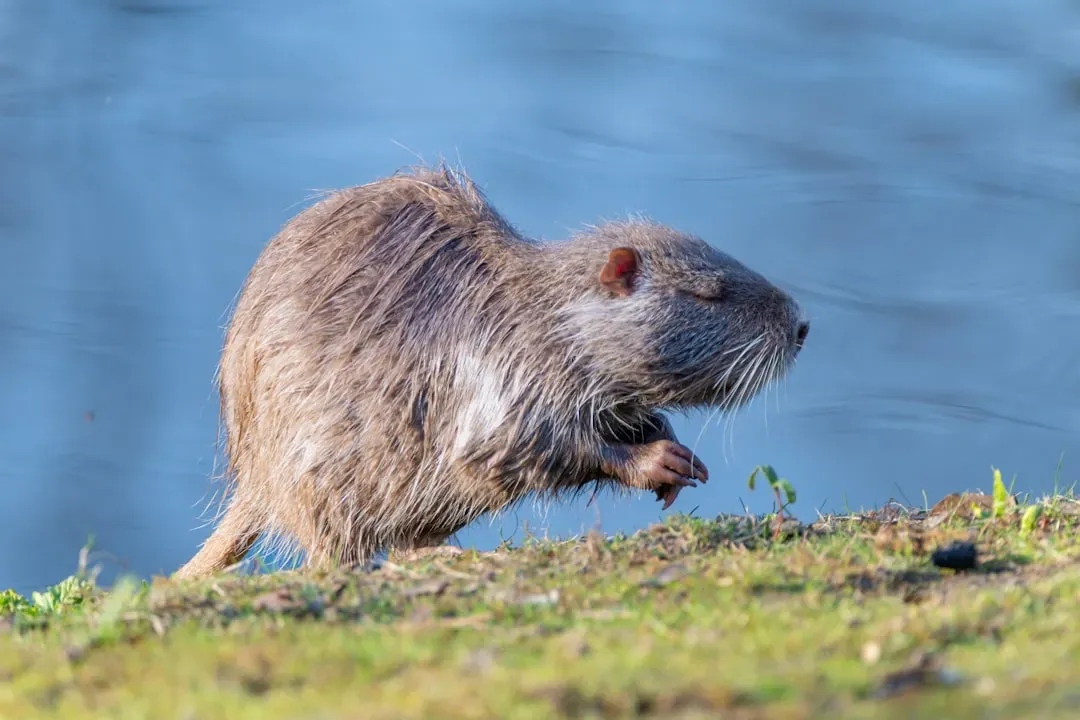
A fox can hit 25 mph. A coyote can push 40. A groundhog tops out around 8. On open ground, this animal loses a footrace against almost everything that wants to eat it – which is a long list that includes hawks, foxes, coyotes, bobcats, and the occasional determined dog. Running is not a strategy. Running is buying seconds, not safety.
This is why the burrow engineering in #9 isn’t a luxury – it’s life or death. Every tunnel system includes multiple exit routes specifically because the groundhog cannot afford to get caught in the open. When they do venture out, they stay close to cover and freeze at the first hint of threat, making themselves smaller and harder to spot before committing to a sprint toward the nearest hole. Their entire behavioral playbook is built around compensating for the speed they simply don’t have.
#6 – They’ve Accidentally Helped Rewrite Early American History
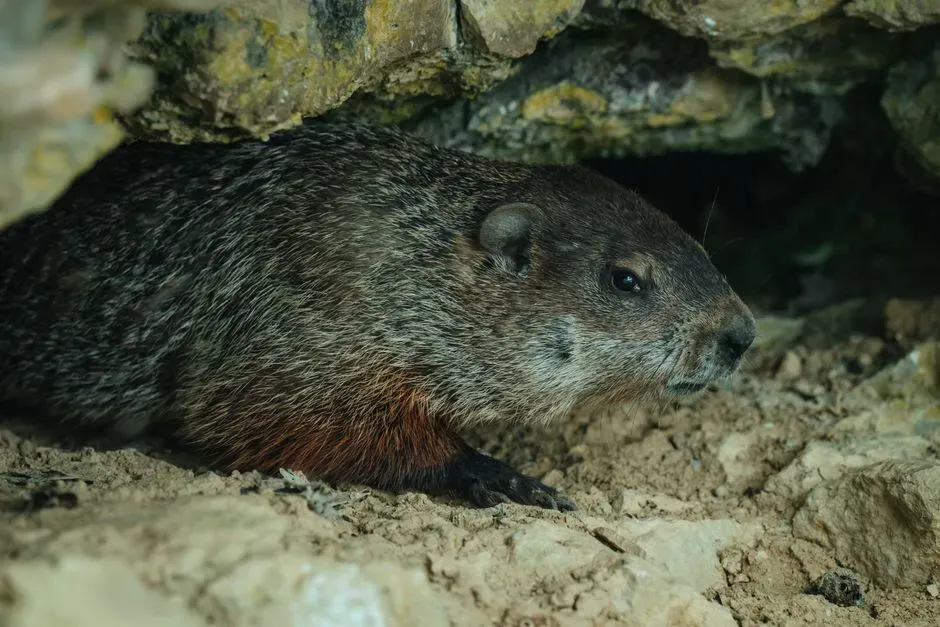
Groundhogs dig constantly and deep, pulling material up from layers of soil that human hands rarely reach. That habit has made them, entirely by accident, contributors to North American archaeology. The most striking example is Pennsylvania’s Meadowcroft Rockshelter, one of the oldest known sites of human habitation in the Americas. In 1955, a Washington County farmer noticed curious objects near a freshly dug groundhog hole – objects that turned out to be of Native American origin. That chance discovery eventually led to formal excavation beginning in 1973, and the findings pushed back the established timeline of human presence on the continent by thousands of years.
Their tunnels act like core samples, slicing vertically through centuries of stratified earth and occasionally depositing ancient material in places where someone might notice it. Archaeologists have learned to pay attention to soil disturbances near groundhog colonies for exactly this reason. It’s one of the stranger overlaps between wildlife behavior and human history – a rodent with no awareness of what it’s doing quietly reshaping what we know about who came before us.
Worth Knowing: Meadowcroft Rockshelter by the Numbers
- Located near Avella, Pennsylvania – about 27 miles west-southwest of Pittsburgh
- Evidence of human habitation dating back up to 19,000 years – thousands of years before the Clovis timeline
- Excavations yielded nearly 2 million artifacts and ecofacts, including ancient stone tools and ice-age fire pit evidence
- Designated a National Historic Landmark by the U.S. Secretary of the Interior in 2005
- The whole chain of discovery started because a groundhog dug a hole in the right place
#5 – The February Emergence Has Nothing to Do With Weather
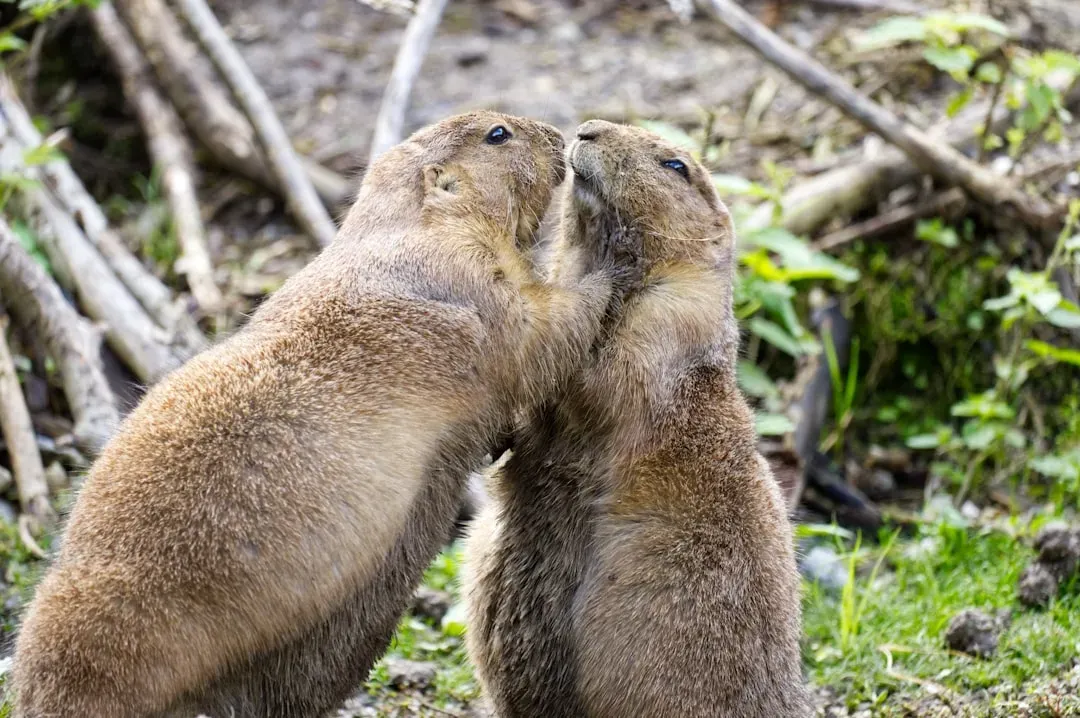
Here’s the part that should probably be more widely known: the male groundhogs that surface in early February aren’t reading the sky. They’re scouting for mates. Males emerge first, move through the territory, locate and visit the burrows of females, then go back underground and sleep some more. It’s a reproductive reconnaissance mission timed by biology, not barometric pressure. Spring forecasting was a human story layered on top of a completely unrelated animal behavior.
The female hasn’t even fully emerged yet when the male makes his rounds. Mating won’t happen for several more weeks. What looks like a dramatic seasonal announcement to a crowd in Punxsutawney is actually just a tired male checking in on his neighbors before going back to bed. The roughly 39% accuracy rate on the actual weather predictions makes a lot more sense once you understand what’s really going on. The groundhog isn’t trying to forecast anything. He has other priorities.
#4 – During Hibernation, Their Heart Nearly Stops
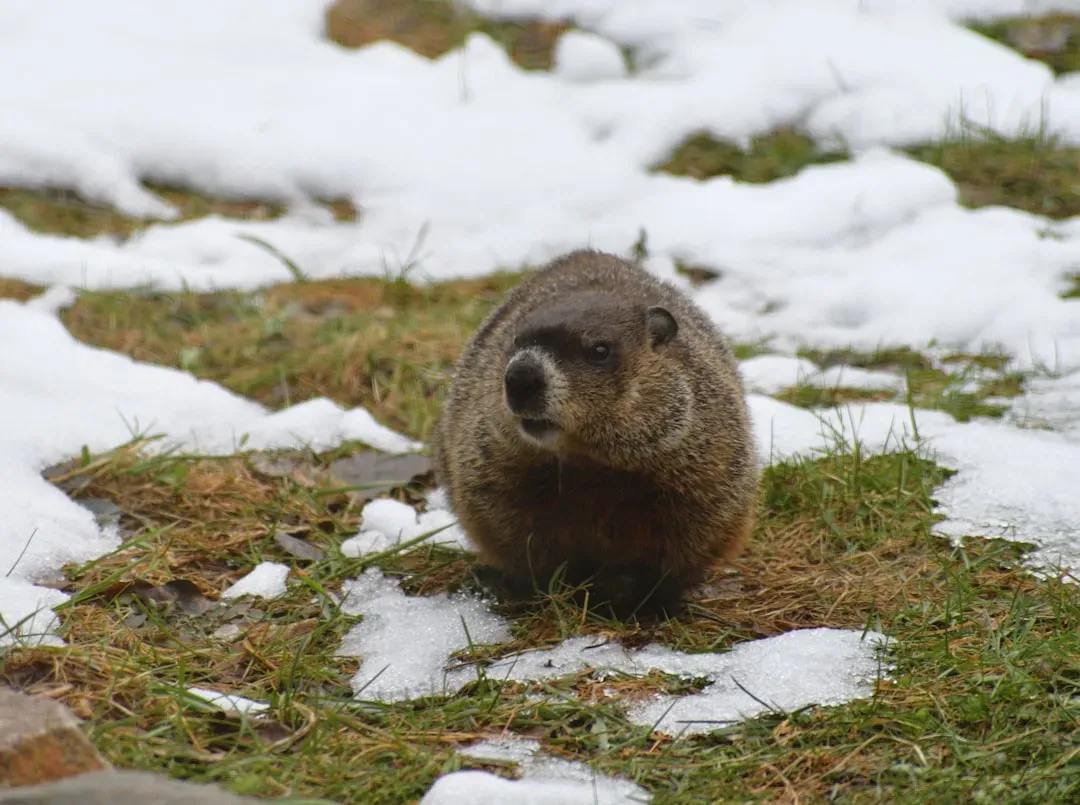
Groundhog hibernation is not sleep. It’s closer to a controlled near-death experience. Body temperature drops from a normal 99°F to as low as 37°F – barely above freezing. The heart rate plummets from around 80 beats per minute down to just 4 or 5. Breathing slows from 16 breaths per minute to as few as 2. The animal is cold, almost motionless, and burning through stored fat reserves at the absolute minimum rate required to sustain life. Over roughly 150 days of hibernation, they lose about 25% of their body weight.
What makes this especially remarkable is that they do it without any external monitoring or intervention, surviving for months in a state that would constitute a medical emergency in almost any other warm-blooded animal. For comparison, humans begin to experience mild hypothermia when their body temperature drops just 3 degrees Fahrenheit. The transition in and out of torpor is equally extreme – their body ramps back up from near-freezing to fully functional in a matter of hours. The physiological control required for that kind of shutdown and restart is something researchers are still working to fully understand, which is exactly why groundhogs have started showing up in medical research.
Quick Compare: Groundhog Hibernation vs. Normal Vital Signs
- Body temp (active): ~99°F → Hibernating: as low as 37°F
- Heart rate (active): ~80 bpm → Hibernating: 4–5 bpm
- Breathing (active): ~16 breaths/min → Hibernating: as few as 2 breaths/min
- Duration: Up to 150 days without eating
- Weight loss: ~25% of body weight by spring emergence
#3 – They Recognize Family and Remember Social Relationships
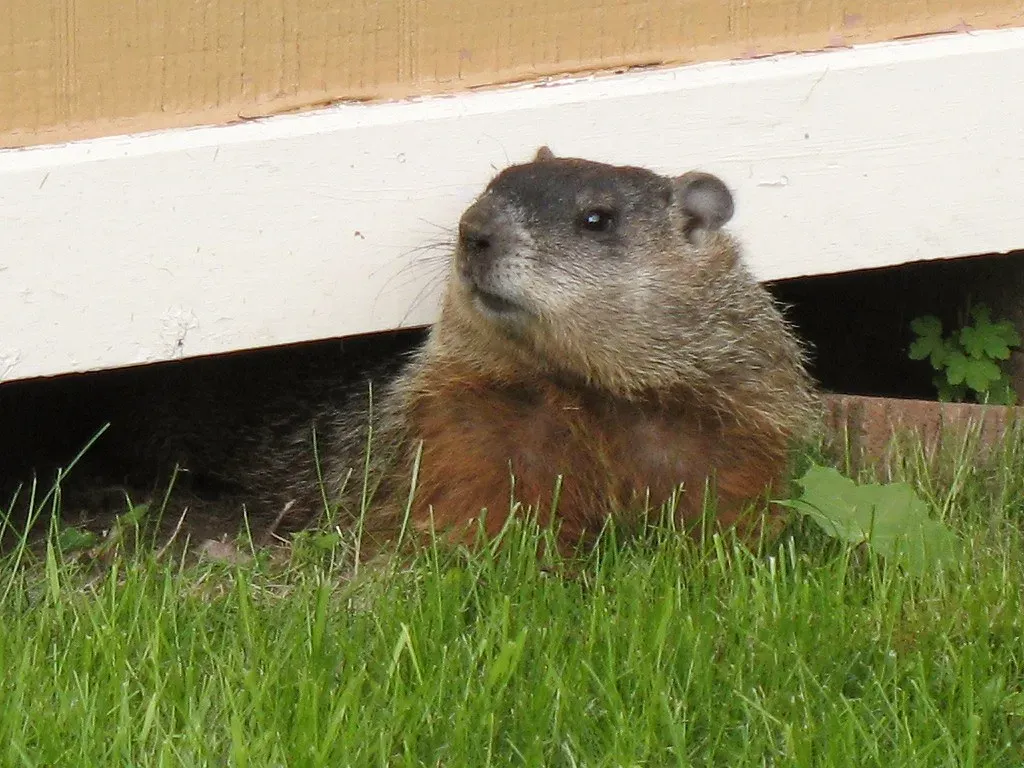
Groundhogs are generally solitary animals, which can make it easy to assume they’re operating on pure instinct with no meaningful social awareness. That assumption underestimates them. They recognize their own offspring and maintain awareness of kin even while living largely independent lives. Mothers invest significantly in their young, and the family structure – while loose by the standards of pack or colony animals – involves genuine recognition and differentiated behavior toward individuals they know versus strangers.
They also navigate complex territorial dynamics that require more cognitive sophistication than raw instinct alone can explain. They track which burrows belong to whom, respond differently to familiar versus unfamiliar groundhogs, and adjust behavior based on social context. For an animal that most people mentally file somewhere between a garden pest and a meteorologist, the evidence of social intelligence is quietly startling. Rodents, as a category, are consistently smarter than we give them credit for – and groundhogs are a reasonable example of why.
#2 – A Single Groundhog Reshapes the Ecosystem Around It
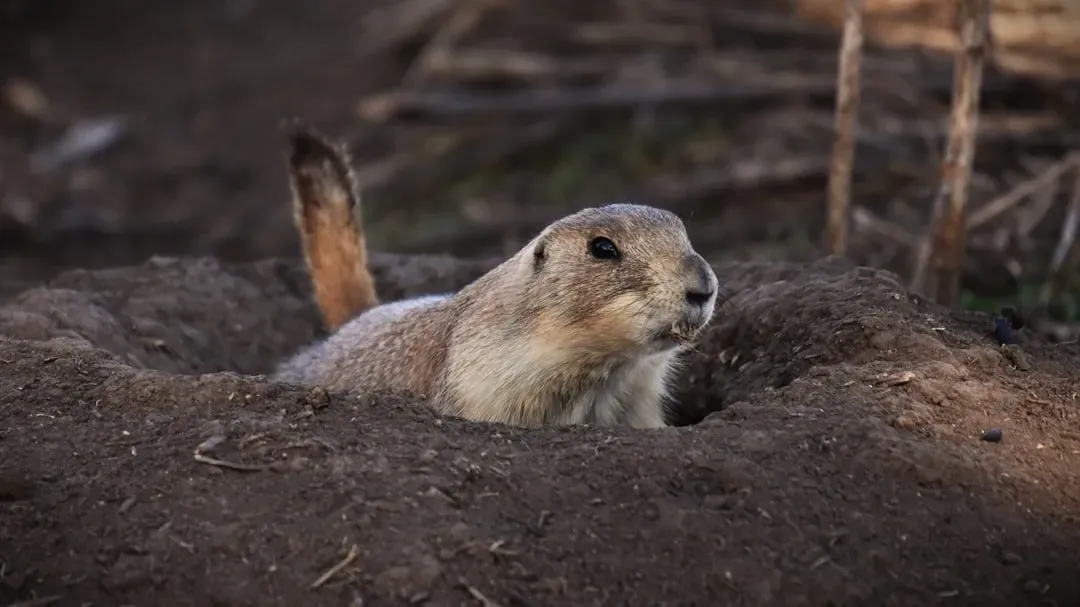
The tonnage of soil a groundhog displaces over a lifetime isn’t just a striking number – it has real ecological consequences. All that digging aerates compacted earth, improves drainage, and cycles nutrients from deeper soil layers toward the surface. The burrows themselves become critical infrastructure for other species. Once a groundhog abandons a tunnel system, foxes, skunks, rabbits, opossums, and even some snakes move in, using the existing architecture without any of the construction effort.
This makes the groundhog a quiet keystone presence in its habitat – an animal whose work benefits a long chain of other species that never interact with it directly. Farmers who despise the holes in their fields and the twisted ankles they cause aren’t wrong about the immediate inconvenience. But the underground networks those holes are connected to are functioning as shared housing for a surprising slice of local wildlife. The groundhog builds the neighborhood. Everyone else just shows up to rent.
Why It Stands Out: The Groundhog as Ecosystem Engineer
- Digging brings subsoil nutrients like iron and nitrogen toward the surface, improving soil fertility
- Burrow tunnels aerate compacted earth and improve drainage after heavy rain
- Abandoned burrows are routinely reused by foxes, skunks, rabbits, opossums, raccoons, and snakes
- Groundhogs are considered the primary hole-digging animal in the eastern United States
- Their indirect benefit to farmers: the foxes and skunks they house prey on crop-destroying insects and rodents
#1 – Their Hibernation Biology Could Change Human Medicine
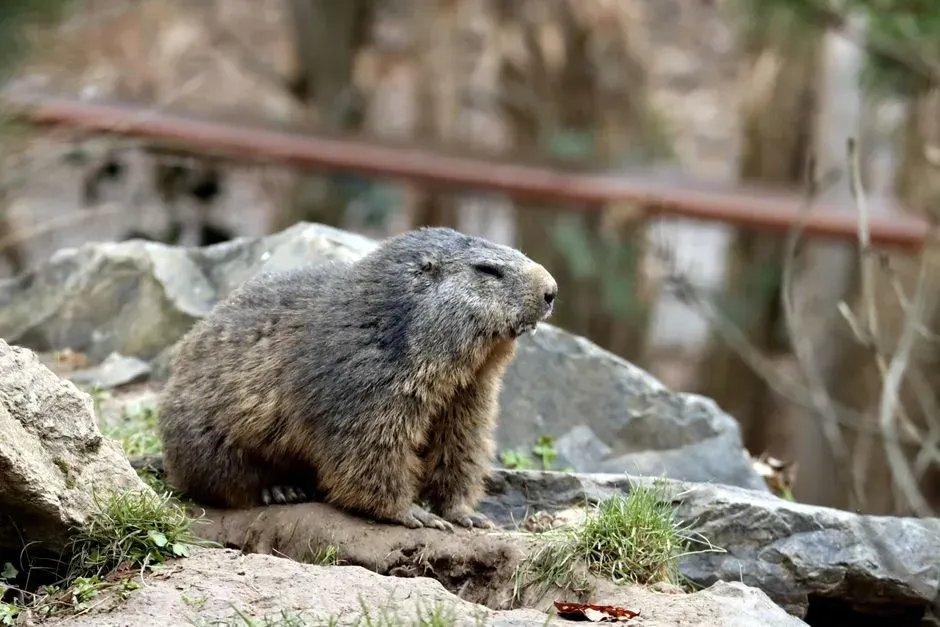
The same extreme metabolic shutdown that lets a groundhog survive months underground at near-freezing temperatures is now drawing serious scientific attention for what it might teach us about human medicine. Researchers are studying how hibernator organs tolerate profound cold and oxygen deprivation without the cellular damage that would destroy human tissue under equivalent conditions. The implications for organ preservation and transplantation are significant – keeping a donor organ viable longer and in better condition is one of the hard limits in transplant medicine, and hibernation biology may point toward solutions.
There’s also active interest in what hibernation physiology might reveal about stroke recovery, metabolic disorders, muscle preservation during long periods of inactivity, and certain neurological conditions. Groundhog hibernation research has even caught the attention of scientists studying kidney preservation – their organs endure the same kind of cold ischemia that destroys human donor kidneys during transport. No other common backyard animal is simultaneously a nuisance, a punchline, and a potential key to extending human life. That’s an unusual combination of qualities for something that spends half the year unconscious.
Groundhogs have spent decades trapped inside one joke – the shadow, the forecast, the celebrity rodent in a top hat. That image isn’t going anywhere, and honestly, it’s fine. But the animal behind it earns a second look. A creature whose teeth can kill it if it stops chewing, whose heart slows to a whisper for months, whose burrows shelter entire communities of wildlife, and whose accidental archaeology has changed what we know about early humans on this continent – that’s not a punchline. That’s one of the more quietly extraordinary animals sharing the landscape with us. The forecast can wait. The real story was always underground.

- 10 Mind Blowing Facts About The Great White Shark - July 26, 2026
- Elephants Communicate With Each Other Using Sounds We Cannot Hear - July 26, 2026
- 10 Surprising Foods That Are Actually Good For Your Dog’s Health - July 26, 2026