
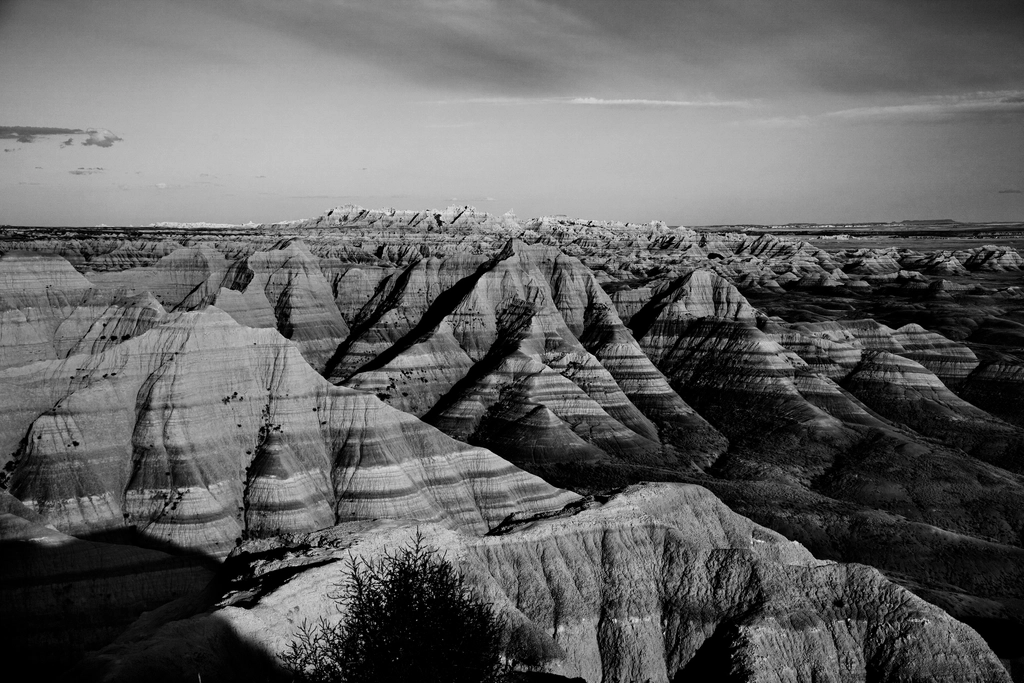
#1 A shallow sea that once covered the Great Plains
Long before there were buttes or canyons, this part of South Dakota sat under the Western Interior Seaway, a shallow inland ocean that split North America in two. The Badlands have long been a choice destination for fossil hunters, as the stone here dates back roughly 75 million years to when the Great Plains were covered by a shallow, inland sea. That sea left behind dark, fine grained mud that eventually hardened into rock.
The lowest, oldest layer visible in the park today is a direct record of that marine world. Two named rock formations represent the Cretaceous stratigraphic sequence in the park: the Pierre Shale and the Fox Hills Formation, with the oldest Cretaceous rocks exposed in the park consisting of marine mudrocks deposited about 75 million years ago. Everything else in the park sits on top of that ancient seabed, layer by layer, like pages stacked in a very old book.
#2 Marine reptiles and sea creatures from the Cretaceous
Because the base of the Badlands began as an ocean floor, it isn’t mammals but sea life that shows up first in the rock record. Fossilized remains of marine organisms, such as ammonites, clams, fish, and marine reptiles, have also been found in the Badlands, indicating that the area was once covered by an inland sea during the Late Cretaceous period. Mosasaurs, in particular, get a lot of attention from park scientists and visitors alike.
Mosasaurs were marine reptiles which once swam through the ancient warm waters of South Dakota. It’s a strange thing to picture, giant marine predators cruising through waters that eventually became dry, cracked badlands hundreds of miles from any ocean. That contrast between past and present is really the whole story of this park in miniature.
#3 A record of the Rocky Mountains rising
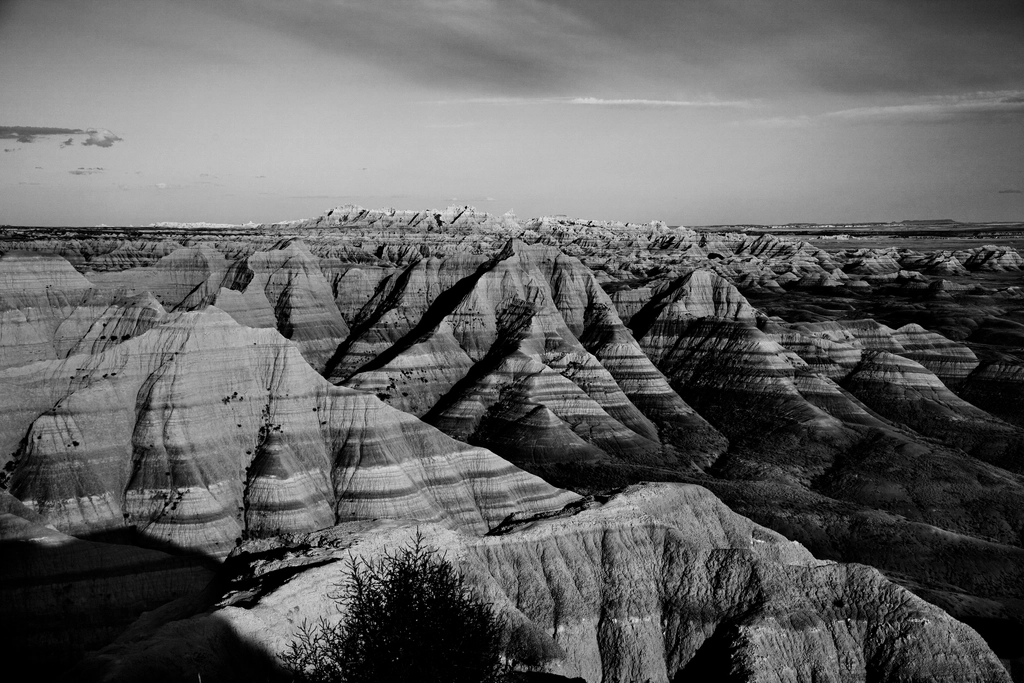
The Badlands aren’t just a passive pile of sediment. They quietly recorded one of the biggest geologic events in North American history. The Late Cretaceous was a time when geologic and environmental changes were occurring in the region and around the globe, and the Laramide Orogeny began in this period, resulting in the gradual uplift of the Rocky Mountains.
As those mountains rose to the west, they changed the way rivers and sediment moved across the plains, which shows up as shifts in rock type and color as you move up through the layers. The exposed sedimentary strata preserve a record of more ancient geologic events and processes including changing depositional environments and the tectonic uplift and folding of rock layers, and the fossils they preserve reveal evidence for gradual changes in the regional and global Earth system. In other words, the mountains you see on a map today left fingerprints in rock formed hundreds of miles away.
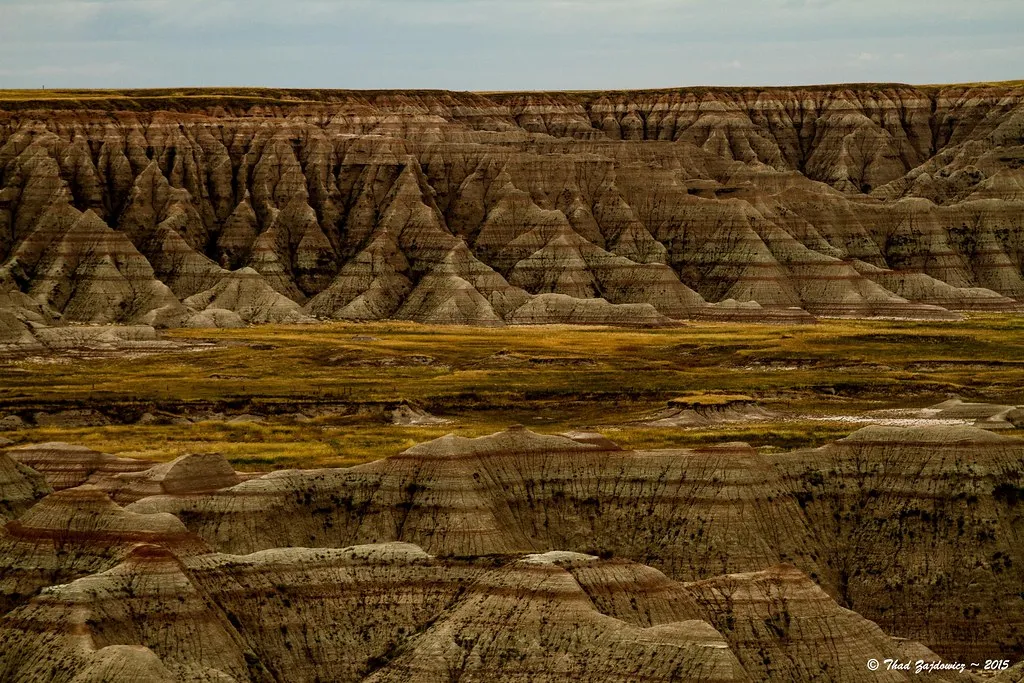
#4 A retreating sea and the mustard colored Yellow Mounds
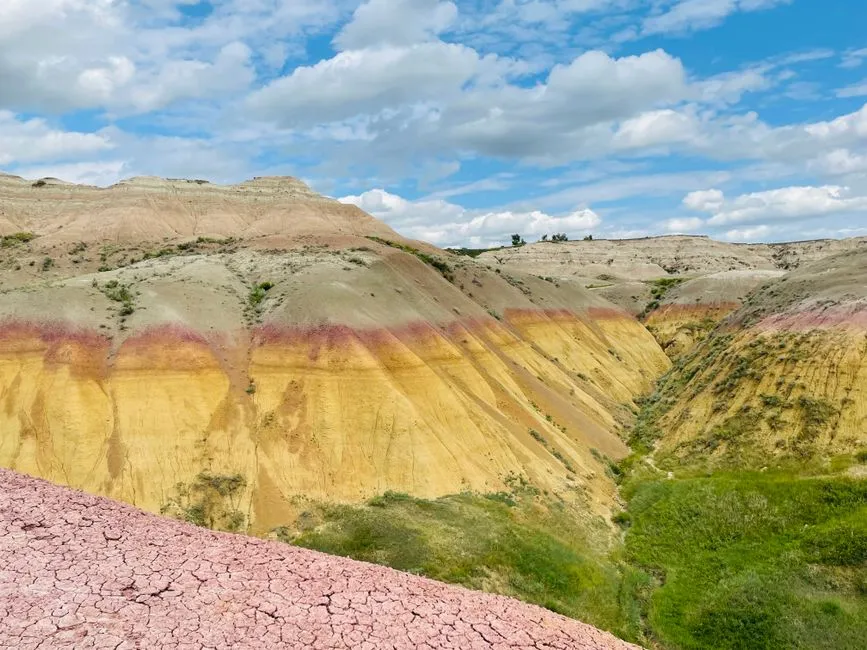
Eventually the seaway drained away, and the exposed seafloor began weathering under open sky for the first time in millions of years. That process created one of the more visually striking layers in the park. As the water level dropped and the sea floor became land, the Pierre Shale crumbled into soil and created the Yellow Mounds Formation, so called because of its mustard-like color.
This layer is technically an ancient soil, not just leftover rock. Paleosols are ancient fossilized soils preserved in the rock record, and they often appear as brightly colored layers like the Yellow Mounds, which gets its mustardy color from a mineral called Goethite. It’s essentially a fossilized lawn from about 34 million years ago, preserved in a color that still looks strikingly fresh today.
#5 A hot, humid floodplain full of alligators and giant mammals
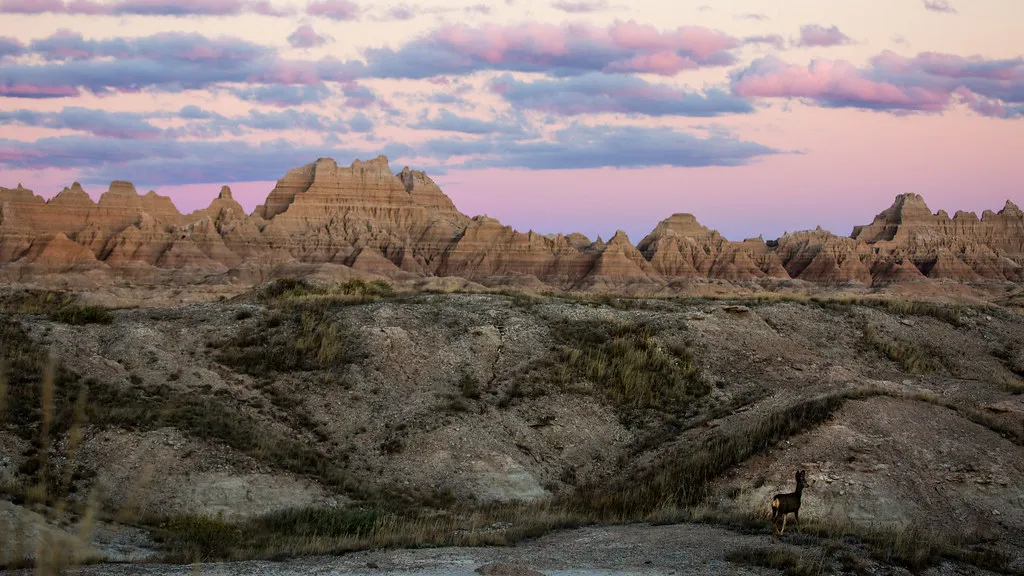
It’s hard to imagine South Dakota as tropical, but the rock says otherwise. The Chadron Formation, consisting largely of light gray claystone beds, was deposited about 37 to 34 million years ago across an ancient floodplain, and the environment would have been hot and wet, like Everglades National Park is today.
That warm, swampy world supported animals you wouldn’t expect this far north today. It was home to creatures that we associate with these modern environments like ancient alligators, as well as some animals that no longer exist, like the massive Brontothere. Picture a rhino-sized mammal wading through humid floodplain vegetation, and you’ve got a decent image of what this layer preserves.
#6 A cooling climate and the rise of open grassland
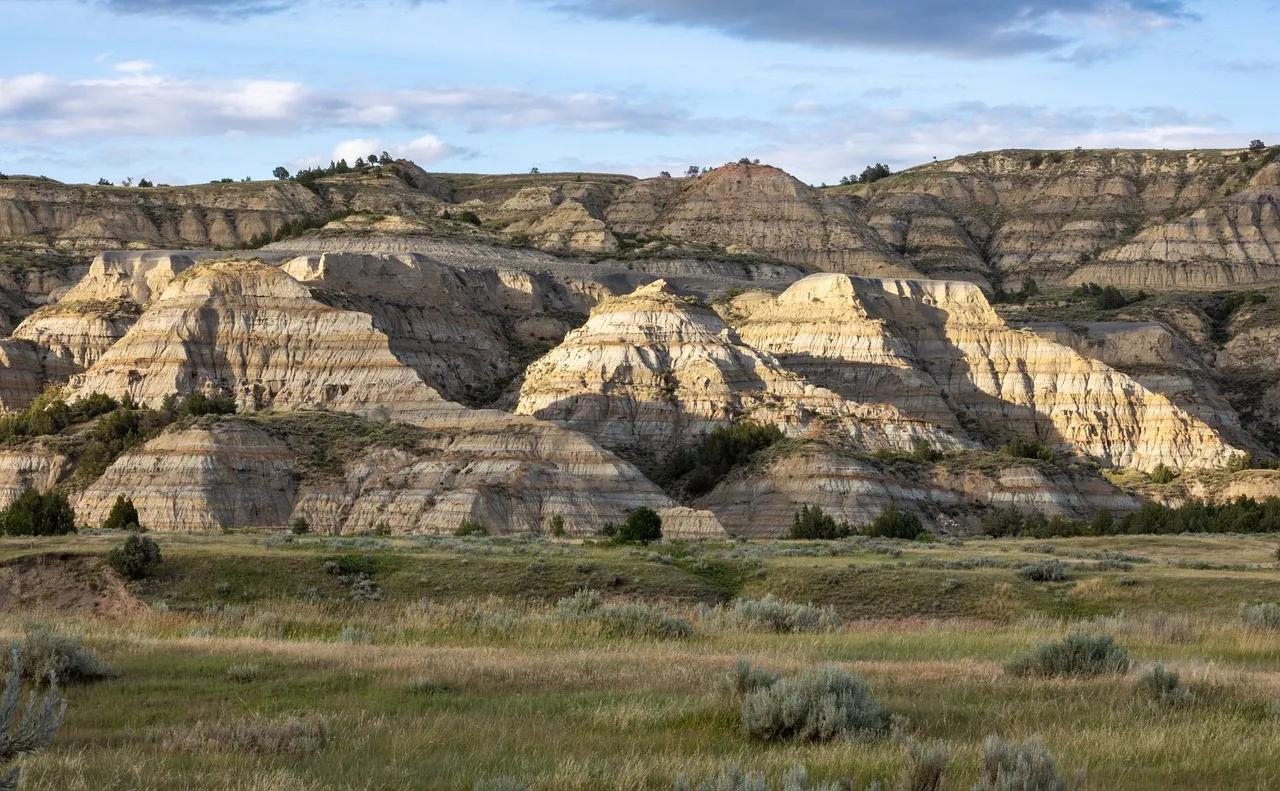
Climate in the Badlands didn’t stay tropical for long, at least on a geologic timescale. Then, 30 to 34 million years ago, the climate began to dry and cool, savannah replaced forests, and oreodonts walked these lands, giving rise to the Brule Formation, a gray layer of stream and floodplain deposits.
This shift from jungle to open plain is one of the clearest ancient climate stories preserved anywhere in North America. The Brule Formation, deposited 34 to 30 million years ago, represents a cooler and drier time, with the hot, wet vegetated floodplains of the Chadron Formation transforming into an open savannah, where occasional river channels would cut through the plains. That transition still shows up as a visible color and texture change in the exposed cliffs today.
#7 Volcanic ash blown in from hundreds of miles away
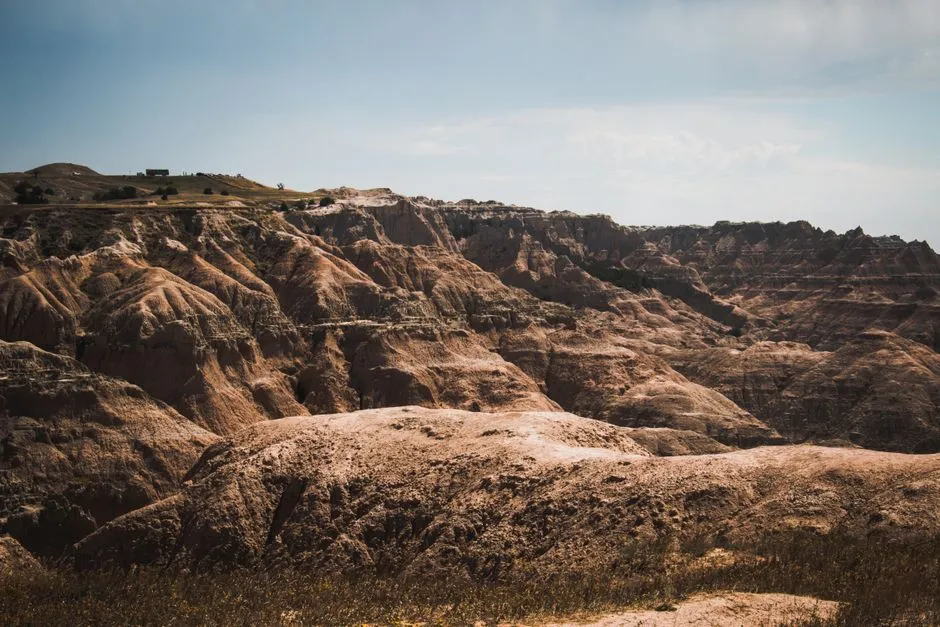
Some of the material in the upper Badlands layers didn’t form locally at all. It traveled a long distance on the wind. Remarkably, the volcanic ash originated from volcanoes located over 500 miles away in present day Nevada and Utah, which was blown eastward before settling in the park area, and over time this deposited ash hardened into beige colored volcanic tuff through lithification.
That ash eventually became part of the youngest visible rock in the park. Later in the Oligocene Epoch, about 28 to 30 million years ago, a dense layer of volcanic ash from episodic eruptions in the Great Basin covered the landscape, and it was this ash, along with sandstones, stream channel sand, and floodplain mud that created the Sharps Formation, which constitutes the uppermost layer of the Badlands today. It’s a strange thought that eruptions in what’s now Nevada left a physical mark on a South Dakota hillside.
#8 One of the richest mammal fossil beds on Earth
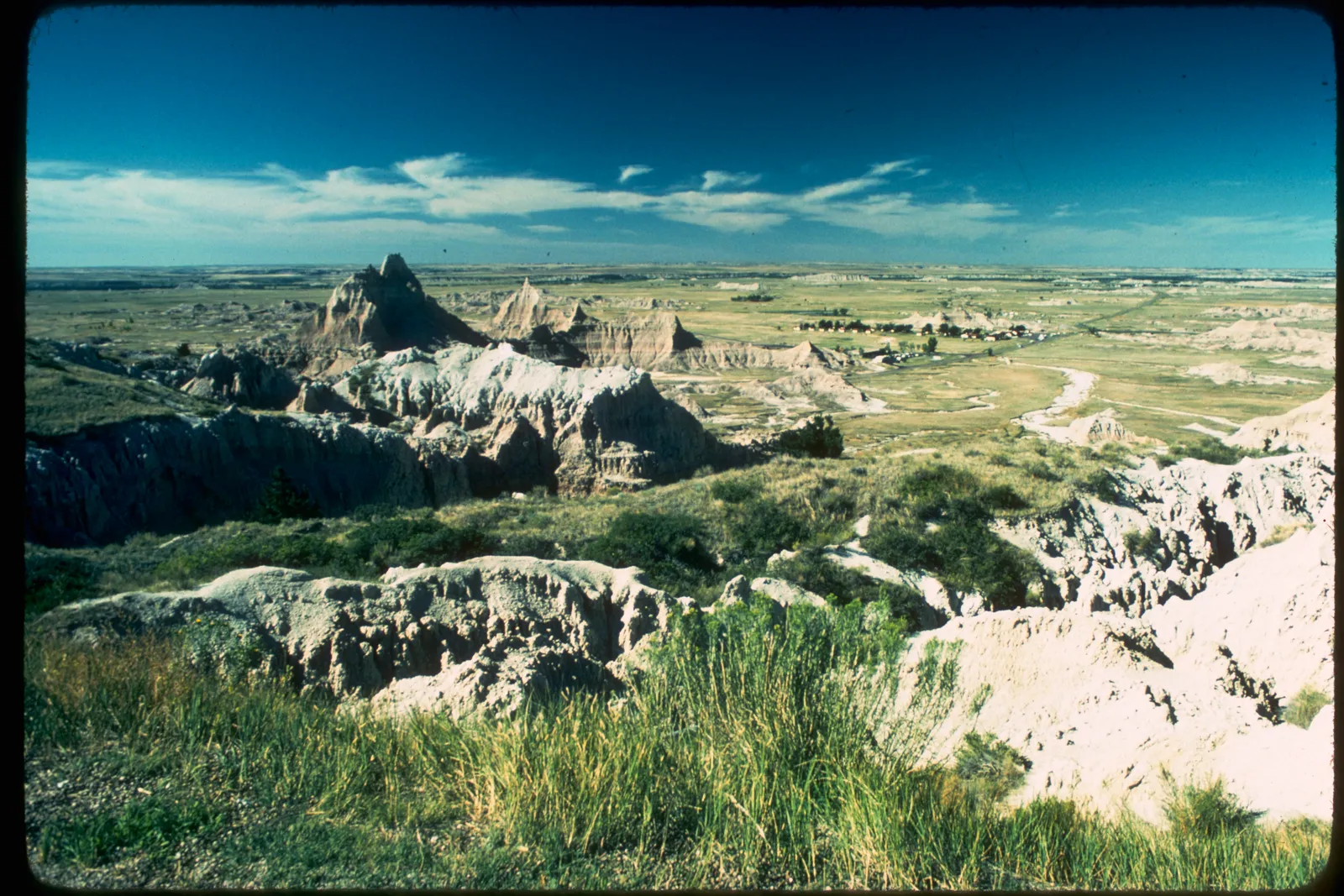
Once the climate cooled and grasslands spread, the Badlands became home to an extraordinary variety of mammals, and their remains are unusually well preserved here. Badlands National Park contains the world’s richest deposits of fossils from the Oligocene epoch, a period of time from about 34 million to 23 million years ago.
The cast of characters is genuinely surprising for anyone expecting dinosaurs. The Park does not contain any dinosaur fossils, but the eroding layers do contain marine fossils and an incredibly rich diversity of extinct mammals, and paleontologists have uncovered the remains of ancient three toed horses, tiny deer like creatures, turtles, and a saber toothed cat. Oreodonts, small hoofed grazers with no modern equivalent, are especially common. Oreodonts are one of the most common fossils found in Badlands National Park, an ancient mammal that no longer has any living relatives quite like it.
#9 The literal birthplace of American vertebrate paleontology
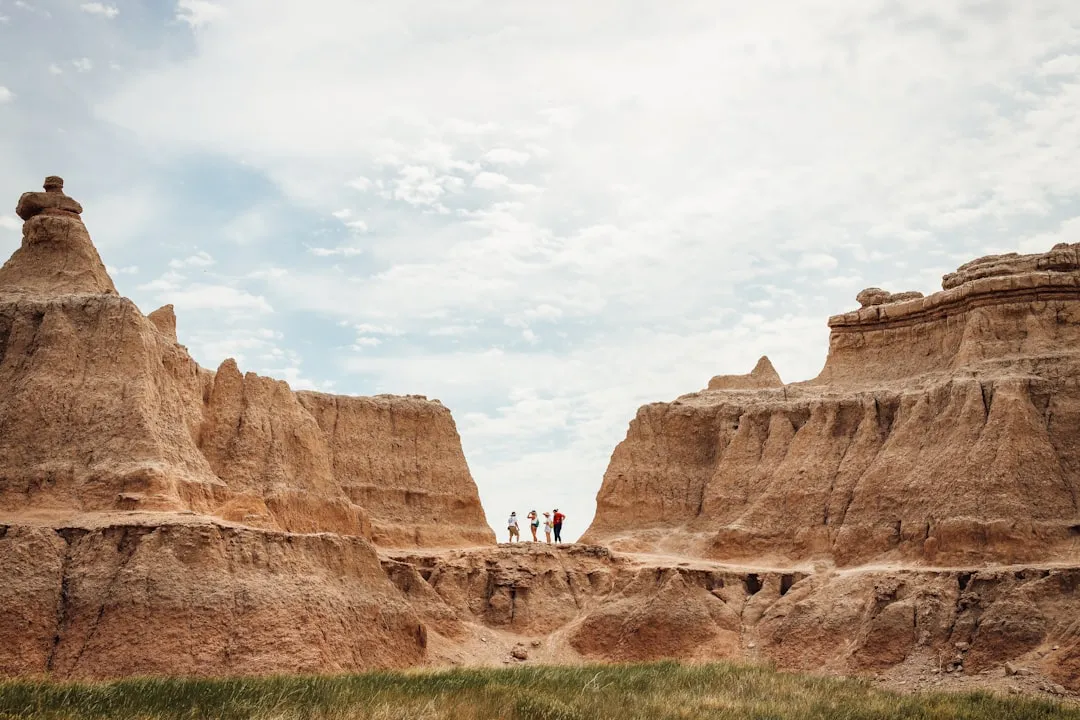
The Badlands aren’t just fossil rich, they’re historically significant to the entire field of paleontology. The White River Badlands of South Dakota are considered to be the birthplace of the science of vertebrate paleontology. Scientists have been studying this exposed rock for well over a century, using it almost like a natural laboratory.
That research continues today, sometimes sparked by ordinary visitors rather than trained scientists. Most well known of the excavation sites within the boundaries of Badlands National Park is the Pig Dig, where excavation continues today near the Conata Picnic Area after digging began in 1993 when two park visitors reported seeing a large backbone protruding from the ground. It’s a nice reminder that the park’s ancient world is still actively being uncovered, not just studied from old museum collections.
#10 A landscape still eroding into view
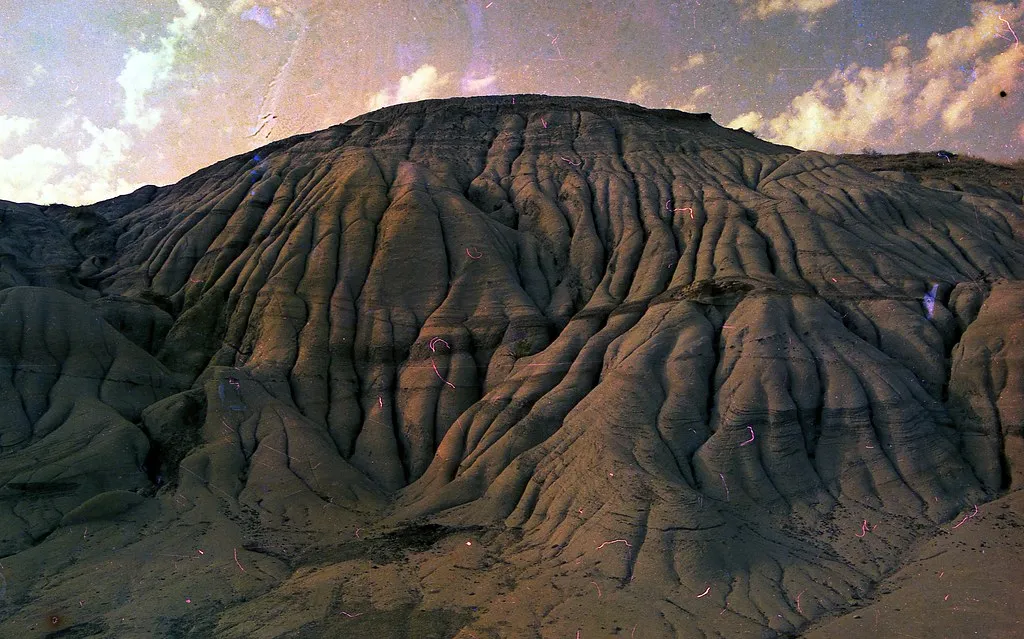
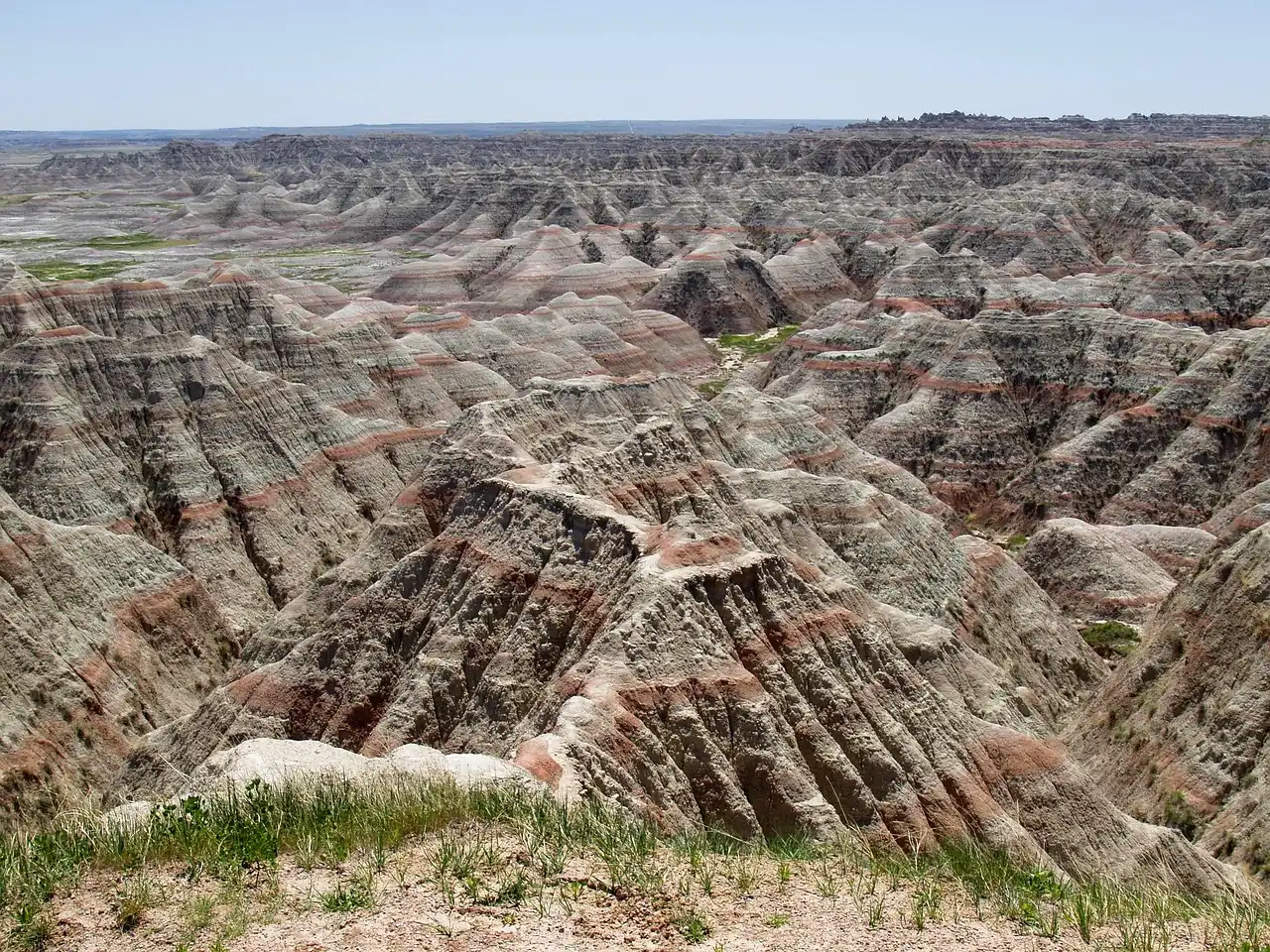
Everything preserved in the Badlands only becomes visible because the rock is actively wearing away. The geology of the Badlands is a result of millions of years of geological processes, including deposition of sediments, erosion, and weathering, and the layered rock formations and fossil rich strata found in the park reveal clues about the ancient environments and climates that once existed in the region.
That erosion hasn’t stopped, and the park’s rangers point out that this makes it a living exhibit rather than a static one. Two words sum it all up: deposition and erosion, whether from water, wind, or ice wedging, and over the course of millions of years the layered rocks of the Badlands were slowly stacked on top of each other like a layer cake. Estimates suggest the park’s formations are wearing away at a rate that will eventually erase them entirely, which means new fossils keep surfacing even as older exposed ones slowly crumble.
Final thoughts
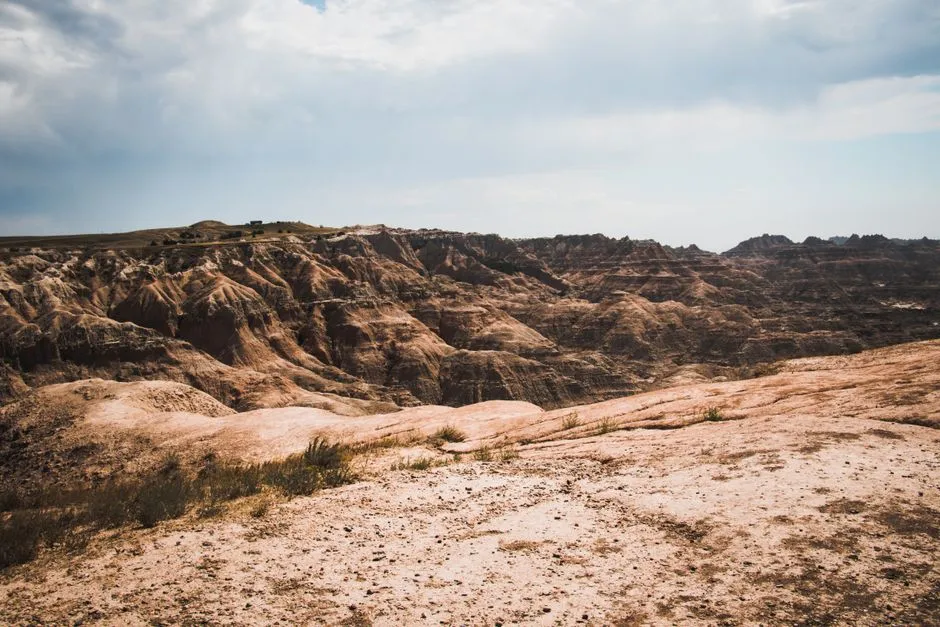
What strikes me most about the Badlands is how little credit this place gets for what it actually holds. People show up for the photographs, the sunset colors on the buttes, the strange lunar quality of the eroded ridgelines, and that’s understandable. But underneath all of that is one of the most complete records anywhere of how a landscape, a climate, and an entire cast of animals can change beyond recognition and still leave a legible trail behind.
I think that’s worth sitting with for a moment. This isn’t a park that preserves one single ancient moment, frozen and tidy. It preserves a sequence, a sea giving way to jungle, jungle giving way to grassland, grassland slowly wearing down into the badlands we see now. Few places let you walk through tens of millions of years of Earth’s history in an afternoon, and fewer still are still actively giving up new fossils while you’re standing there. That ongoing quality, the sense that the ancient world is still being revealed rather than fully catalogued, is what makes the Badlands worth more than a passing glance.

- Does Your Cat Actually Miss You When You’re Gone? Scientists Finally Have the Answer - August 15, 2026
- 12 Incredible Animal Architects Whose Creations Will Astonish You - August 15, 2026
- 7 US States With the Most Prairie Dogs - August 15, 2026