

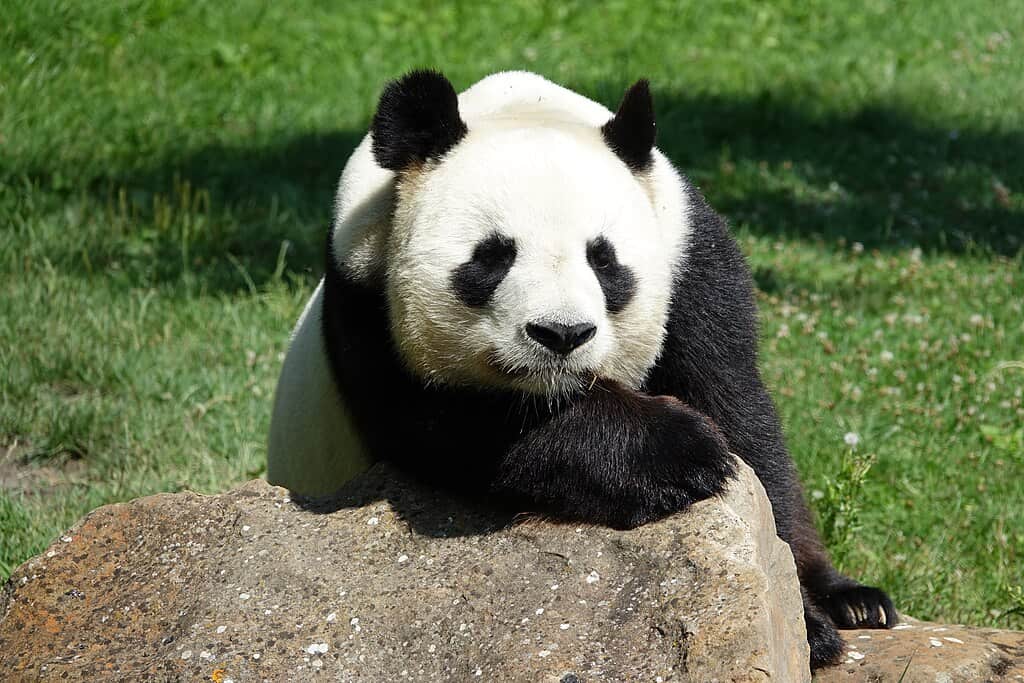
There’s something truly magical about watching a giant panda munching on bamboo, rolling around like an oversized teddy bear, or just sitting there looking impossibly cute. For decades, these black-and-white ambassadors have captured hearts across America, bringing a piece of China’s wild beauty to our shores. But their presence here isn’t just about entertainment – it’s a fascinating tale of diplomacy, conservation, and the complex relationship between two superpowers.
Picture this: it’s 1972, and President Nixon has just made his historic visit to China. As a gesture of friendship, China gifts America two fuzzy, round bears that would become more popular than many Hollywood celebrities. Fast forward to today, and the panda story in the U.S. has taken dramatic twists and turns, with most of our beloved bears having returned home to China, leaving animal lovers scrambling to catch glimpses of the few remaining ones.
10. Smithsonian’s National Zoo – Washington, D.C.

The National Zoo holds the crown as America’s most famous panda destination, and for good reason. Ling-Ling and Hsing-Hsing (pronounced ‘shing-shing’) arrived from China in April as a gift to the American people to commemorate President Nixon’s historic visit to China. These weren’t just any pandas – they were diplomatic superstars who launched what became known as “panda diplomacy.” During their 20 years together at the Smithsonian’s National Zoo, this panda pair produced five cubs; none of the cubs survived. Despite heartbreaking losses, the zoo never gave up on pandas, continuing to house these magnificent creatures for over five decades. The two new pandas, Bao Li and Qing Bao, will live in the National Zoo as part of a 10-year agreement with China, which owns every panda in the world. What makes this zoo special isn’t just its panda history – it’s the $1 million annual fee they pay to China for the privilege of hosting these furry ambassadors. The zoo’s dedication runs so deep that they’ve built state-of-the-art facilities and employed teams of specialists just to ensure their pandas thrive.
9. San Diego Zoo – California

Bai Yun and Shi Shi arrive at the San Diego Zoo from the Wolong Panda Preserve in China. Hua Mei was born in San Diego, the first panda cub to survive in captivity in the United States. This achievement alone would cement San Diego Zoo’s place in panda history, but they didn’t stop there. For 30 years, we’ve had the honor of working alongside our conservation partners in China to make a difference for giant pandas. His mother Zhen Zhen was born in 2007 and was the fourth cub born at the San Diego Zoo. The zoo became a panda breeding powerhouse, with multiple generations calling it home. Enter the fascinating world of giant pandas at the Denny Sanford Panda Ridge. The newly refreshed and expanded area takes inspiration from the breathtaking, lush landscapes in and around giant pandas’ native habitats in Sichuan, Gansu, and Shaanxi provinces. Today, visitors can watch Yun Chuan and Xin Bao in their stunning new habitat, but the real magic lies in understanding that Yun Chuan’s lineage traces back to pandas born right there in San Diego – it’s like a family reunion decades in the making.
8. Zoo Atlanta – Georgia

1999 was an unforgettable year for the Zoo with the arrival of Lun Lun and Yang Yang, a pair of giant pandas on loan from China. For over two decades, these two became Atlanta’s most beloved residents, producing multiple cubs and advancing panda research in ways that would benefit the species globally. Lun Lun arrived at Zoo Atlanta with Yang Yang in 1999 and has gone on to become the mother of seven offspring. Yang Yang arrived at Zoo Atlanta with Lun Lun in 1999 and is the father of all seven of the giant panda cubs born at Zoo Atlanta. But here’s what really sets Zoo Atlanta apart – they didn’t just house pandas, they became genuine partners in conservation. Zoo Atlanta has contributed more than $17 million for the conservation of giant pandas in China, making this our most significant investment in wil Unfortunately, The giant pandas departed Atlanta for China on October 12, 2024. The end of an era that left many visitors making last-minute pilgrimages to see these incredible animals before they returned home. “Panda Palooza” boosted attendance at the National Zoo, animal lovers are racing to Atlanta to see the only giant pandas in the U.S. “With so many things going on with China and the United States, I figured if they pulled the pandas out, I would never get to see them,” she said.
7. Memphis Zoo – Tennessee

Memphis Zoo’s panda story is both heartwarming and heartbreaking, representing the very real challenges of caring for these complex animals. Ya Ya “Beautiful Little Girl” (female) was born on August 3, 2000 at the Beijing Zoo, China. Le Le “Happy Happy” (male) was born on July 18, 1998 at the Chongquing Zoo, China. For twenty years, Le Le and Ya Ya called Memphis home, contributing to vital research on panda reproduction and behavior. In February 3, 2023, the Memphis Zoo announced that Le Le died at 25-years-old. In April 2023, the 22-year-old Ya Ya went home to China accompanied by Memphis Zoo’s senior veterinarian and Chief Zoological Officer. The loss of Le Le was devastating, but Memphis Zoo’s dedication never wavered – they ensured Ya Ya’s safe return to China with their own veterinary team. While caring for the pandas, Memphis Zoo researchers and staff have all contributed to international knowledge on giant panda behavior, nutrition, reproduction, and chemical communication. Their China Exhibit became a pilgrimage site for panda lovers, even though it meant saying goodbye to these beloved animals forever.
6. Toledo Zoo – Ohio

“These statues commemorate the historic visit of the Giant Pandas, Le Le and Nan Nan from 5/24/88 to 10/25/88. and celebrate the friendship between the Peoples Republic of China and the Toledo Zoo”. While Toledo’s panda experience was brief – just five months in 1988 – it left such an indelible mark that bronze statues were erected to commemorate the visit. Le Le (male) was born approximately in 1983 His name means “happy” in Chinese. He died on June 5, 2000 in Wolong. This short-term visit was part of an earlier era of panda exchanges, before the current long-term loan system was established. Nan Nan (female) was born approximately in 1981. She was named after the area where she was found, Nanping. The fact that Toledo still honors this brief encounter with permanent sculptures speaks volumes about the lasting impact these pandas had on the community. Even decades later, visitors to the Toledo Zoo can see these bronze tributes near the main entrance, a testament to how even a short panda visit can create lifelong memories.
5. Brookfield Zoo – Illinois

Before panda diplomacy became a thing, there was Su Lin – and she called Brookfield Zoo home in what would become one of the most remarkable early panda stories in America. The pandas were a huge attraction for the west suburban zoo starting in 1936, when the first panda, named Su Lin, was captured in China and brought to the United States. Su Lin’s arrival was like nothing America had ever seen before – this was during the Great Depression, and people needed something magical to lift their spirits. Su Lin lived with Harkness in her New York apartment for several months until the Brookfield Zoo offered to acquire the panda in exchange for expenses for a second expedition. The next year, Harkness brought back a second panda, Mei Mei, to the zoo, but they did not like each other at all and had to be separated. The drama didn’t end there – A third panda came to Chicago when the publisher of the Chicago Daily News commissioned an expedition for a mate for Mei Mei. That panda, Mei Lan, arrived in 1939. Mei Mei died a few years later, but Mei Lan remained a Brookfield Zoo favorite until he died at the age of 15 in 1953. Brookfield’s pandas were pioneers, paving the way for all future panda programs in America.
4. Lincoln Park Zoo – Chicago

Here’s where things get interesting – and a bit confusing. Wrong zoo. There were, at various times, three pandas – but they were at Brookfield Zoo, not Lincoln Park Zoo. Lincoln Park Zoo never actually housed giant pandas, despite being one of Chicago’s most famous zoos. However, they have been home to red pandas, which often leads to confusion among visitors. Clark and Addison, Lincoln Park Zoo’s prized pair of red pandas are going away for good. The two red panda cubs, born in June last year, are being sent to other zoos, Lincoln Park Zoo revealed in a press release. While red pandas are absolutely adorable and share part of their name, they’re actually more closely related to raccoons than giant pandas. In addition, they also held a pair of red pandas, which were part of the Species Survival Plan. Lincoln Park Zoo’s commitment to conservation is undeniable, but when it comes to giant pandas specifically, visitors need to head to their sister institution, Brookfield Zoo, for that particular piece of Chicago’s panda history.
3. Cincinnati Zoo & Botanical Garden – Ohio

Cincinnati Zoo & Botanical Garden stands as one of America’s most respected zoological institutions, though their giant panda history isn’t as prominent as some of their conservation achievements in other areas. While the search results don’t reveal specific details about giant pandas at Cincinnati Zoo, Cincinnati Zoo and Botanical Garden, Ohio Accredited through September 2025 (also accredited by the American Alliance of Museums) This dual accreditation speaks to their exceptional standards in both animal care and educational programming. The zoo has been instrumental in numerous Species Survival Plans and breeding programs throughout its history. Cincinnati’s approach to animal care has always been holistic, focusing on creating environments that support both physical and psychological well-being. Their expertise in managing complex breeding programs and providing world-class veterinary care would have made them an ideal candidate for panda programs, even if their involvement was more limited or consultative in nature. The zoo’s commitment to conservation extends globally, with partnerships that span continents and contribute to protecting endangered species in their native habitats.
2. Cleveland Metroparks Zoo – Ohio

Cleveland Metroparks Zoo, Ohio Accredited through September 2025 Cleveland Metroparks Zoo represents the gold standard of American zoological institutions, with accreditation that reflects their commitment to excellence in animal care, education, and conservation. While specific details about giant panda programs at Cleveland aren’t prominent in current records, the zoo’s infrastructure and expertise would have positioned them well for such programs. Their long-standing reputation for innovative animal habitats and breeding programs has made them a key player in numerous Species Survival Plans across multiple species. The zoo’s approach to conservation extends far beyond their physical boundaries, with field conservation projects that span the globe. Cleveland’s expertise in managing complex animal care requirements and their track record with endangered species programs demonstrates the level of sophistication that would be required for giant panda care. Their commitment to education and research has contributed significantly to our understanding of animal behavior, nutrition, and veterinary care across many species.
1. Detroit Zoo – Michigan

Detroit Zoo’s connection to pandas comes through an interesting conservation link that showcases how zoos work together for animal welfare. The zoo received two polar bears, brother and sister Lee and Anana, in 2001, but currently only Anana remains, as Lee was sent to the Detroit Zoo to assist in a breeding program. While this refers to polar bears rather than giant pandas, it illustrates the collaborative approach that characterizes modern zoo management and Species Survival Plans. Detroit Zoo has long been recognized for their commitment to animal welfare and conservation, with facilities designed to prioritize animal well-being over visitor convenience. Their approach to habitat design and animal care has influenced zoo practices nationwide. The zoo’s expertise in managing large mammals and their participation in breeding programs for endangered species would have provided valuable experience applicable to giant panda care. Detroit’s cold climate might seem challenging for pandas, but modern zoo technology allows for precise climate control that can recreate the cool, humid conditions that pandas prefer in their native mountain habitats.
The Future of Pandas in America

As we look toward the future, the landscape of giant pandas in American zoos is rapidly changing. The two new pandas, Bao Li and Qing Bao, will live in the National Zoo as part of a 10-year agreement with China, which owns every panda in the world. The return of pandas to Washington D.C. and San Diego offers hope, but it also highlights how precious and rare these opportunities have become. Giant pandas are on the IUCN Red List so part of the reason these contracts exist between China and international zoos is to try to help the species reproduce before they are brought back to their native land. Every panda program represents a massive investment – not just financially, but in expertise, infrastructure, and long-term commitment. On top of upkeep costs, the Smithsonian Zoo pays $1 million a year to the China Wildlife Conservation Association for housing DC’s furry friends. The future of pandas in America depends not just on diplomacy between nations, but on our continued dedication to conservation and our willingness to support these incredible programs. These black-and-white ambassadors continue to bridge cultures and inspire millions of visitors to care about conservation – making every dollar spent and every effort invested absolutely worthwhile. What started as a diplomatic gesture has evolved into one of the most successful international conservation partnerships in history.

As a little kid, I fell in love with nature, wildlife, and animals. Living in the USA, South Africa, Italy, China and Germany gave me the opportunity to discover the world's Wildlife. My favorite animals are Mountain Gorillas, Siberian Tigers, and Great White Sharks.
I'm a certified PADI Open Water Diver, went to Everest Base Camp and Trekked Gorillas in Uganda. I hold a Master of Science in Economics and Finance.
Please send any feedback to feedback@animalsaroundtheglobe.com
- 10 Most Unique Reptiles You will See in the US - July 21, 2026
- 3 Dangerous Invasive Species the USA Must Eradicate - July 21, 2026
- 10 Things That Calm Cats And 4 That Make Them Nervous - July 21, 2026