


Sharks have ruled the oceans for over 450 million years, predating even the dinosaurs by more than 200 million years. These magnificent predators have evolved to dominate specific marine environments with remarkable adaptations that make them perfectly suited to their habitats. As apex predators, sharks play a crucial role in maintaining the health and balance of marine ecosystems, controlling population sizes and weeding out the weak and sick individuals from prey species.
Despite their fearsome reputation, sharks display fascinating habitat preferences that reflect millions of years of evolutionary specialization. While they’ve conquered most marine environments, there are certain waters that remain challenging even for these supreme predators. This article explores the diverse aquatic domains where sharks reign supreme and the few environments where even these ancient mariners rarely venture.
10. Tropical Coral Reefs A Shark Paradise

Tropical coral reefs represent one of the most shark-rich environments on our planet. These vibrant underwater ecosystems serve as home to numerous shark species, including reef sharks, nurse sharks, and the distinctive hammerhead. The Great Barrier Reef alone hosts at least 50 different shark species. These warm, nutrient-rich waters provide abundant food sources and complex structures that create perfect hunting grounds and nursery areas.
Reef sharks have specifically adapted to navigate the intricate coral structures with agility and precision. The Caribbean reef shark and blacktip reef shark, for instance, have developed streamlined bodies that allow them to maneuver effortlessly through narrow coral passages while hunting. The reef ecosystem’s biodiversity supports these predators with a consistent prey base, making coral reefs among the most shark-dominated environments in our oceans.
9. Continental Shelves The Hunting Grounds

Continental shelves—the submerged edges of continents where the seafloor gradually slopes from the shoreline to approximately 200 meters depth—represent prime shark territory. These productive zones account for less than 10% of the ocean’s area but support nearly 90% of the world’s fish catch, making them attractive hunting grounds for various shark species. Great whites, bull sharks, and tiger sharks frequently patrol these waters, capitalizing on the abundance of prey.
The continental shelf’s relatively shallow depth allows sunlight to penetrate, supporting photosynthesis and creating a foundation for rich food webs. Seasonal upwellings bring nutrient-rich waters to the surface, further enhancing productivity. This combination of factors makes continental shelves among the most biologically productive marine environments and, consequently, magnets for shark activity. Studies tracking shark movements consistently show high concentrations of sharks along continental shelves worldwide.
8. Open Ocean Domain of the Pelagic Sharks

The vast open ocean, or pelagic zone, serves as the territory for some of the ocean’s most specialized shark species. Mako sharks, blue sharks, oceanic whitetips, and the massive whale sharks have adapted to life in the blue void. These species undertake incredible migrations spanning thousands of kilometers across open waters. The shortfin mako, capable of swimming at speeds exceeding 45 mph (72 km/h), is perfectly designed for life in the open ocean with its streamlined torpedo-shaped body and powerful tail.
Pelagic sharks have developed remarkable navigational abilities, using the Earth’s magnetic field, temperature gradients, and possibly even celestial cues to guide their journeys. The blue shark, recognizable by its indigo coloration, may travel over 5,700 miles (9,200 km) in a single migratory circuit. These open-ocean specialists have evolved larger pectoral fins for efficient cruising, specialized osmoregulatory systems to maintain water balance, and endothermic adaptations that allow some species to maintain body temperatures warmer than the surrounding water—a significant advantage for hunting in cooler pelagic waters.
7. Deep Sea Trenches The Realm of Sleeper Sharks

The mysterious deep-sea trenches, plunging thousands of meters below the ocean surface, are dominated by specialized shark species adapted to extreme pressure, cold, and darkness. The Greenland shark and Pacific sleeper shark reign supreme in these depths, with the former confirmed at depths exceeding 2,200 meters (7,200 feet). These slow-moving giants have evolved extraordinary longevity—Greenland sharks may live over 400 years—and metabolic adaptations that allow them to thrive in near-freezing temperatures.
Deep-sea sharks possess specialized sensory systems that detect the faintest electrical signals and movements in the darkness. Their soft, flabby bodies withstand immense pressure, while large oil-filled livers provide buoyancy with minimal energy expenditure. Unlike their surface-dwelling relatives, these deep-sea specialists often have smaller eyes with specialized light-sensitive cells and rely more heavily on electroreception and chemoreception to locate prey. Their mastery of this extreme environment demonstrates the remarkable adaptability that has allowed sharks to conquer virtually every ocean habitat.
6. Coastal Estuaries Nurseries for Future Predators
Coastal estuaries—where rivers meet the sea—serve as crucial nursery grounds for numerous shark species. Bull sharks, lemon sharks, and blacktip sharks frequently utilize these productive brackish waters to give birth. The young sharks benefit from abundant food resources and reduced predation risk from larger sharks that typically avoid these areas. Research on lemon shark populations in the Bahamas has documented their consistent return to specific nursery sites year after year, demonstrating the critical importance of these habitats.
The ability to tolerate varying salinity levels is a remarkable adaptation that allows certain shark species to dominate estuarine environments. Bull sharks are especially noteworthy for their osmoregulatory capabilities, which permit them to move seamlessly between freshwater and saltwater—a rare skill among cartilaginous fishes. This adaptation has allowed bull sharks to colonize habitats inaccessible to most other shark species, including miles upriver into freshwater systems like the Mississippi River and Australia’s Brisbane River. By establishing nurseries in these protected waters, sharks ensure higher survival rates for their pups, perpetuating their dominance across marine ecosystems.
5. Tropical Lagoons Shark Sanctuaries

Tropical lagoons, especially those surrounding remote atolls and islands, often harbor impressive shark populations. The protected waters of French Polynesia’s lagoons, for instance, support dense populations of blacktip reef sharks, with some areas hosting over 20 sharks per hectare. These crystal-clear, calm waters provide ideal conditions for sharks to rest, socialize, and hunt. The complex social behaviors observed in these environments have challenged the traditional view of sharks as solitary hunters.
Research conducted in lagoons has revealed fascinating aspects of shark behavior, including social hierarchies and even potential “friendships” among individuals. The protection offered by surrounding reefs creates relatively isolated ecosystems where sharks face limited competition from other large predators. Some shark species, like the epaulette shark, have developed specialized adaptations for lagoon environments, including the ability to “walk” on their fins across exposed reef flats during low tide. This remarkable adaptation allows them to access isolated tide pools to feed on trapped prey, demonstrating yet another way sharks have adapted to dominate specific marine niches.
4. Underwater Seamounts Gathering Points for Predators

Underwater seamounts—submerged mountains rising thousands of meters from the ocean floor without breaking the surface—act as biological hotspots that attract sharks from vast distances. These underwater features create upwellings that bring nutrient-rich water toward the surface, supporting diverse food webs and creating feeding opportunities for sharks. Hammerhead sharks are particularly known for their affinity for seamounts, with scalloped hammerheads forming massive schools numbering in the hundreds around features like Darwin and Wolf Islands in the Galapagos.
The concentration of marine life around seamounts creates perfect hunting grounds for specialized shark species. Thresher sharks utilize the productive waters around seamounts to hunt schooling fish, employing their extraordinarily long tail fins to stun prey. Scientists studying shark movements have documented how certain species navigate directly to specific seamounts from hundreds of kilometers away, suggesting these underwater features serve as important waypoints in oceanic migrations. This precision navigation underscores how thoroughly sharks have mapped and dominated these underwater mountain systems that humans have only recently begun to explore.
3. Upwelling Zones Feeding Frenzies

Coastal upwelling zones, where deep, nutrient-rich waters rise to the surface due to wind and current patterns, represent some of the most biologically productive areas in the ocean—and consequently, prime shark territory. Major upwelling systems off the coasts of California, Peru, Namibia, and South Africa support extraordinary concentrations of marine life, including numerous shark species. Great white sharks are particularly associated with these areas, capitalizing on the abundant prey supported by the nutrient-rich waters.
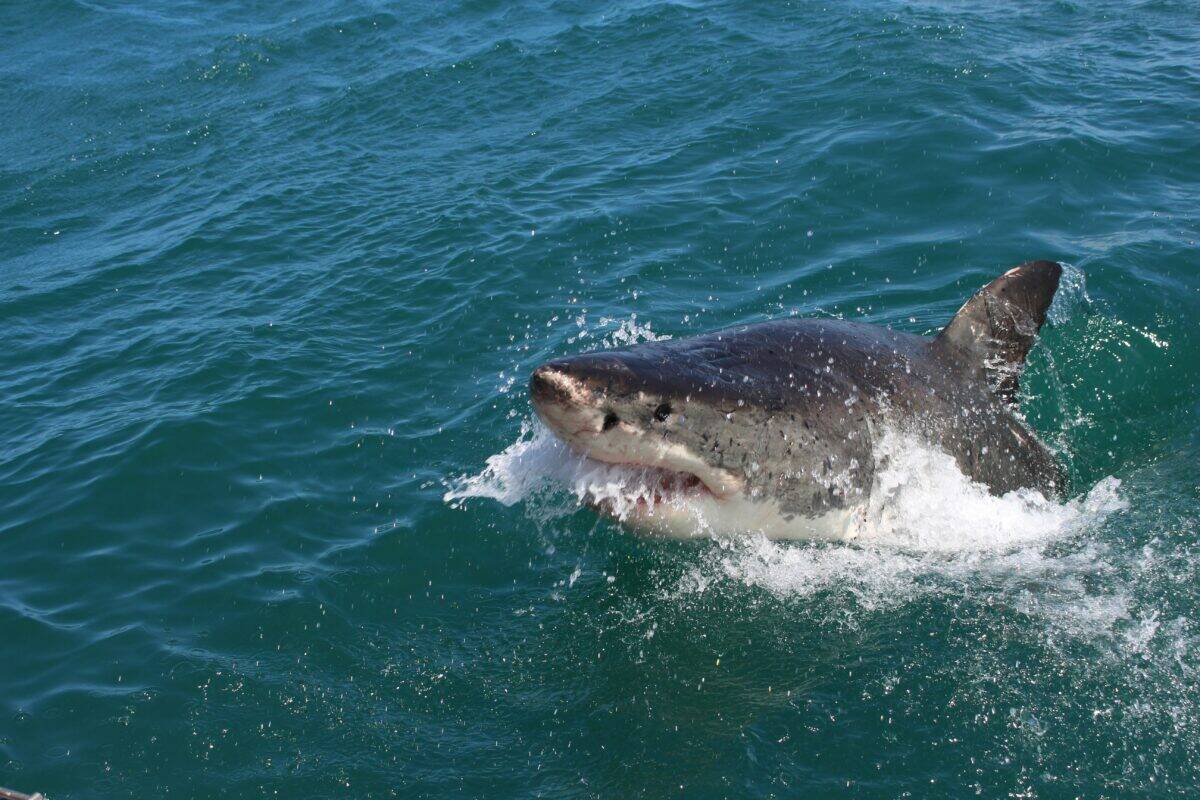
The seasonal upwelling near South Africa’s Cape region creates one of the most spectacular shark displays on Earth as great whites launch themselves completely out of the water while hunting seals—a behavior known as breaching. These productive zones support complex food webs that culminate with apex predators like sharks. While upwelling zones cover less than 1% of the ocean’s surface area, they support approximately 20% of global fisheries catches, highlighting their biological significance. The consistent food availability in these regions allows sharks to establish predictable hunting patterns and territories, further cementing their dominance over these productive waters.
2. Kelp Forests Ambush Alley

Kelp forests—underwater ecosystems dominated by large brown algae—create three-dimensional habitats that certain shark species have mastered as hunting grounds. These underwater forests, found in temperate coastal waters around the world, provide perfect ambush opportunities for species like the seven-gill shark and leopard shark. The complex structure of kelp creates a labyrinth where sharks can hide while stalking prey that use the kelp as shelter, turning prey’s refuge into a deadly trap.
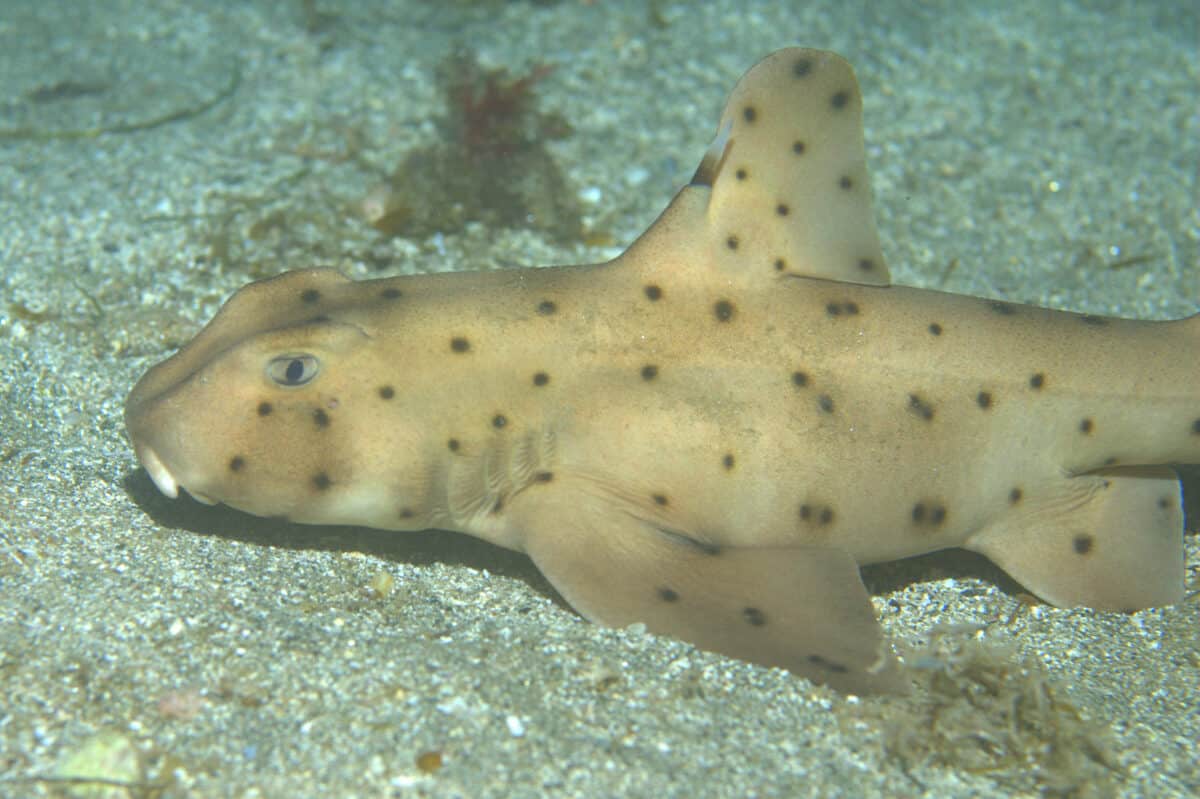
California’s Channel Islands support diverse shark populations that utilize the extensive kelp forests for hunting and protection. Researchers have observed how sevengill sharks navigate through dense kelp using their flexible bodies and precise maneuverability to pursue prey through narrow passages. The horn shark, with its pig-like snout and powerful jaws, specializes in crushing hard-shelled prey found among the kelp holdfasts. By mastering this complex underwater forest environment, these shark species have secured a productive niche that few other large predators can exploit effectively, demonstrating once again the adaptability that has made sharks successful across so many marine habitats.
1. Polar Waters Domain of the Arctic Sharks

The frigid polar waters represent one of the most extreme environments where sharks have established dominance. The Greenland shark stands as the primary shark species in Arctic waters, having evolved remarkable adaptations to function in temperatures hovering just above freezing. These massive sharks, growing up to 24 feet (7.3 meters) long, move slowly to conserve energy and have developed specialized biochemistry that functions like antifreeze, preventing their tissues from crystallizing in sub-zero waters.
Recent research has revealed that Greenland sharks may be the longest-lived vertebrates on Earth, with some individuals estimated to be over 400 years old. Their slow metabolism—a necessity in cold environments with limited food resources—contributes to their extraordinary longevity and slow growth rate. Despite reaching sexual maturity only after about 150 years, these ancient mariners have successfully maintained stable populations in one of Earth’s most challenging environments. Their ability to thrive where few other large predators can survive demonstrates the extraordinary adaptability that has allowed sharks to dominate virtually every marine habitat on our planet.
3. Freshwater Lakes Beyond Shark Territory

Despite their conquest of nearly all marine environments, sharks are notably absent from the world’s freshwater lakes. While a few shark species like bull sharks can venture into freshwater river systems, true freshwater lakes remain largely shark-free domains. The physiological challenges of maintaining osmotic balance in freshwater environments present a significant barrier that most shark species cannot overcome. Their cartilaginous skeletons and specialized kidney functions evolved primarily for marine environments, making permanent freshwater residence nearly impossible.
Lake Nicaragua was once thought to harbor a population of freshwater sharks, but research has confirmed these were actually bull sharks that enter through the connected San Juan River. Even these adaptable predators do not establish permanent populations in isolated lakes. The famous “river sharks” of the Ganges-Hooghly and other Asian river systems remain connected to coastal areas and don’t venture into isolated freshwater lakes. The absence of sharks from these ecosystems has allowed other predators like pike, large catfish, and predatory cichlids to occupy the apex predator niches in freshwater lake ecosystems worldwide.
2. Highly Polluted Harbors Chemical Barriers

While sharks demonstrate remarkable resilience across various marine environments, heavily industrialized and polluted harbors represent areas where their presence is notably diminished. These anthropogenically altered environments often contain cocktails of persistent organic pollutants, heavy metals, and other contaminants that can disrupt shark physiology. Studies examining shark tissues have revealed bioaccumulation of toxins, with potential effects on reproduction, immune function, and neurological development—creating de facto chemical barriers to shark habitation.
Heavily industrialized ports like certain areas of Tokyo Bay, parts of the Houston Ship Channel, and sections of New York Harbor have documented significantly reduced shark populations compared to nearby, less contaminated waters. While occasional visitors may pass through these areas, the establishment of resident populations is rare. The absence of sharks from these polluted harbors highlights a concerning aspect of human impact on marine ecosystems—our ability to create environments so altered that even these ancient and adaptable predators find them challenging. This represents one of the few “victories” against shark dominance that comes not through natural competition but through environmental degradation.
1. Hypersaline Basins Too Salty Even for Sharks

Extreme hypersaline environments like the Dead Sea, Lake Assal in Djibouti, and the deeper portions of the Mediterranean’s Discovery Basin represent aquatic environments where sharks cannot establish populations. These waters, with salinity levels many times higher than normal seawater, create insurmountable physiological challenges for sharks’ osmoregulatory systems. While sharks are well-adapted to manage salt balance in typical marine environments, these extreme salt concentrations exceed their adaptive capacity.
The Discovery Basin in the Mediterranean Sea provides an interesting case study, as sharks may swim above this dense, hypersaline layer but avoid the extreme salt concentrations below. Similarly, coastal hypersaline lagoons like the Shark Bay in Australia (ironically named) see reduced shark presence in areas where evaporation has increased salinity to extreme levels. These salt-saturated environments represent one of the few aquatic realms where microbial life forms rather than sharks dominate the ecosystem, demonstrating a rare boundary to shark adaptation. While these hypersaline zones represent a minimal portion of Earth’s waters, they stand as testament to the few environments these otherwise ubiquitous predators have yet to conquer.
Conclusion: The Enduring Reign of Ocean Predators
Sharks have demonstrated an extraordinary ability to dominate almost every marine environment on our planet through millions of years of evolutionary adaptation. From the sunlit coral reefs to the darkest ocean trenches, from tropical lagoons to frigid polar waters, different shark species have developed specialized adaptations that allow them to reign as apex predators. Their absence from freshwater lakes, heavily polluted harbors, and hypersaline basins highlights the few boundaries to their otherwise comprehensive conquest of aquatic environments.
The remarkable success of sharks across such diverse habitats speaks to their evolutionary perfection—a design so effective it has remained largely unchanged for hundreds of millions of years. As we continue to explore and understand marine ecosystems, sharks remain both powerful symbols of nature’s ingenuity and critical components of healthy ocean systems. Their distribution patterns not only tell us about shark biology but also serve as indicators of ecosystem health and function.
Despite facing unprecedented threats from human activities including overfishing, habitat destruction, and climate change, sharks continue to demonstrate the resilience that has made them successful for 450 million years. By understanding both where they thrive and where they cannot, we gain crucial insights into these magnificent creatures that have truly earned their title as rulers of the ocean realm. Their continued presence across so many marine

As a little kid, I fell in love with nature, wildlife, and animals. Living in the USA, South Africa, Italy, China and Germany gave me the opportunity to discover the world's Wildlife. My favorite animals are Mountain Gorillas, Siberian Tigers, and Great White Sharks.
I'm a certified PADI Open Water Diver, went to Everest Base Camp and Trekked Gorillas in Uganda. I hold a Master of Science in Economics and Finance.
Please send any feedback to feedback@animalsaroundtheglobe.com
- 13 Cat Breeds That Get Along with Dogs - July 20, 2026
- The 12 Largest Dog Breeds That Still Love to Cuddle - July 20, 2026
- 12 Pet Habits That Secretly Mean They Love You - July 20, 2026
Leave a comment
You must be logged in to post a comment.