
Worried about unexpected vet bills?
Pet insurance can cover thousands in unexpected vet costs. Get a free quote from Lemonade in under 2 minutes.
Get My Free Quote →Sponsored · Opens Lemonade.com
Mother Nature has a twisted sense of humor sometimes. She gives some animals speed, others strength, but for a select few creatures, she handed out the ultimate superpower: invisibility. Well, almost. These masters of disguise don’t actually vanish into thin air. They just become so good at looking like something else that you could stare right at them and never know they were there. It’s the kind of survival strategy that makes you wonder what you might have walked past without ever noticing.
From the ocean floor to the treetops of Madagascar’s rainforests, these animals have evolved camouflage techniques that border on the supernatural. Some can change their appearance in milliseconds, others have spent millions of years perfecting a single disguise. Let’s dive into the weird and wonderful world of nature’s greatest illusionists.
Mimic Octopus: The Shapeshifter of the Sea
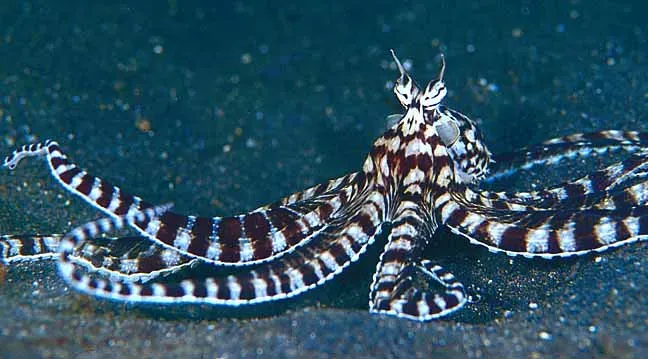
The mimic octopus stands out from other octopus species because of its extraordinary ability to mimic and imitate a wide variety of species, with the ability to switch between various disguises: up to 18 different marine animals. This remarkable creature doesn’t just change its color. It actually contorts its body and alters its behavior to impersonate entirely different sea creatures.
First discovered in Indonesia in 1998, the mimic octopus lives in the shallow waters in the Indo-Pacific and are relatively small, only about two feet in length. Here’s where it gets truly bizarre. Scientists suggest that the mimic octopus may choose which animal to impersonate based on which predator is hovering nearby, such as when bullied by territorial damselfish, an octopus was seen transforming into a sea snake, a well-known predator of damselfish.
The impersonations are disturbingly accurate. By spreading out its arms and propelling itself through the water column, the mimic octopus resembles the brown and white striped lionfish, and since lionfish are known for their very sharp and highly venomous spines, this deters other animals from attempting to prey on the octopus. Talk about method acting.
Octopuses are generally a highly intelligent species with brains especially large for an invertebrate, containing roughly around 300 million neurons. Each of their eight arms has its own neural network, which allows them to have better control, sense of touch, and decision-making abilities. That’s some serious brainpower dedicated to the art of deception.
What makes this octopus especially fascinating is its habitat choice. The ability to impersonate other dangerous animals is particularly helpful in the shallow, sandy environment that the mimic octopus calls home, where other octopuses generally like habitat with complex structure like reefs to hide in. When you can’t hide behind coral, you become something else entirely.
Satanic Leaf-Tailed Gecko: Madagascar’s Dead Leaf Impersonator
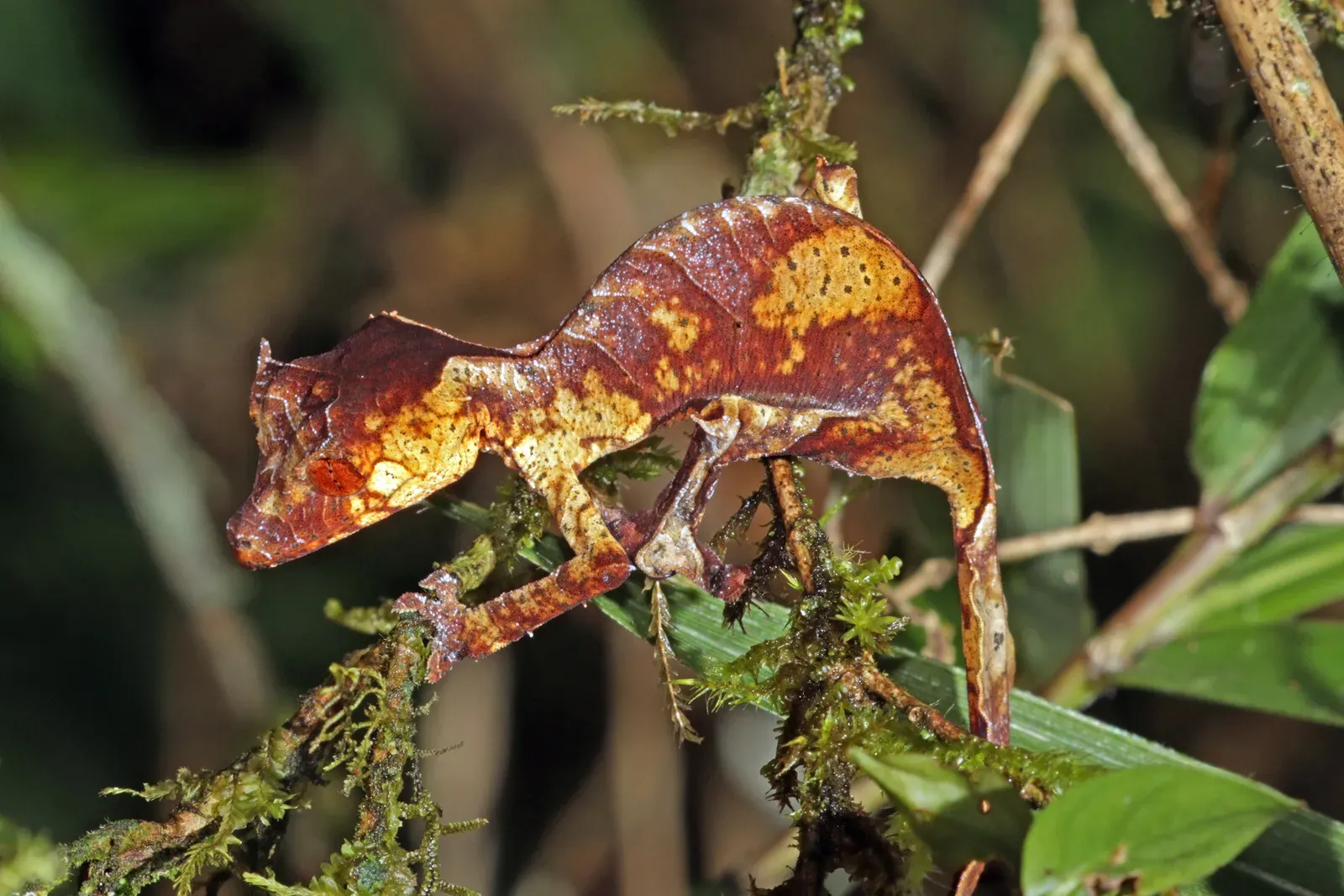
If you ever find yourself in Madagascar’s rainforests, good luck spotting this creature. Also called the satanic leaf-tailed gecko, this master of camouflage is native to Madagascar and is notable for pointed head scales which resemble horns and its remarkably leaf-like appearance. The name sounds ominous, but honestly, this gecko is more interested in avoiding you than frightening you.
This species comes in various shades of mottled brown, gray, or rust to match different types of dead leaves, and their flattened tail closely resembles a dead leaf, complete with apparent decay and missing pieces. Nature really went all out on the details here. Some individuals even have notches in their tails to further mimic a decaying leaf.
These geckos measure around 3.5 inches long, which makes them one of the smaller leaf-tailed species. A nocturnal reptile, with suitably large eyes, the leaf-tailed gecko moves about its rainforest habitat at night feeding on insects. During the day, they press themselves flat against tree bark and essentially disappear.
Let’s be real, though. If a predator does manage to find one, the gecko has a backup plan. If confronted by a predator, this species will open its jaws wide, revealing a bright red tongue and mouth, and let out a loud cry in hopes of scaring off the birds and snakes that might try to eat it. From camouflaged leaf to screaming demon in seconds. That’s quite the range.
They have some of the most perfect camouflage of all reptile species, and can mimic lichen, moss, bark, and leaves, while mossy leaf-tailed geckos have incredible night vision and can see about 350 times better than humans in total darkness. Evolution really played favorites with these little reptiles.
Cuttlefish: The Master of Instant Transformation
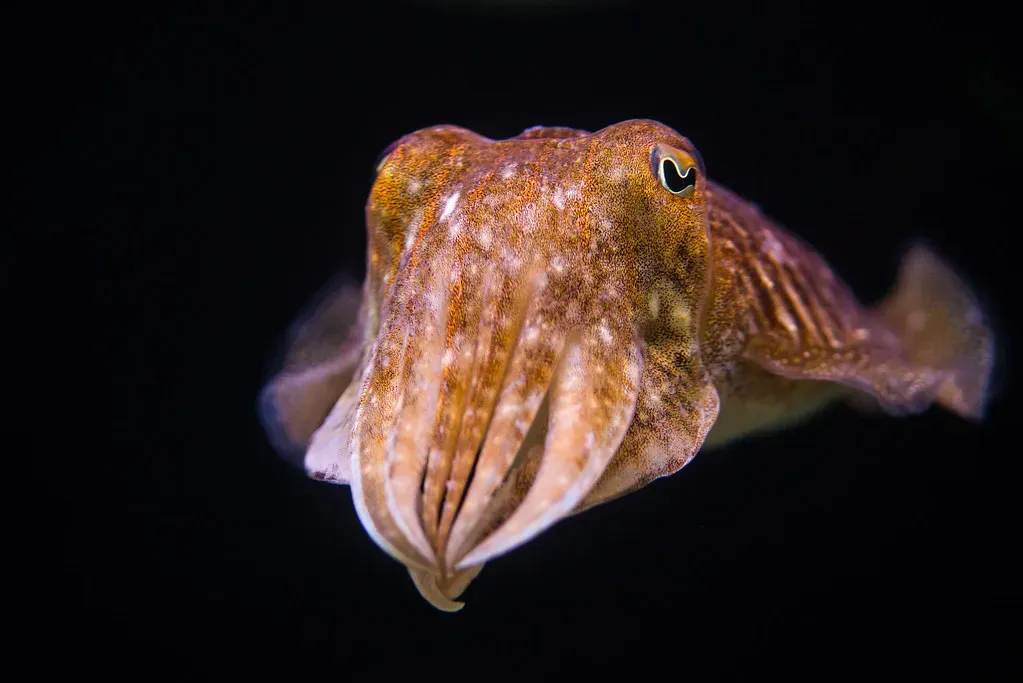
Cuttlefish are amazing animals, unparalleled in their ability to change color and texture almost instantaneously. I’m talking milliseconds here. One moment they’re blending seamlessly with sandy seabed, the next they’re matching the complex patterns of a coral reef. It’s the biological equivalent of having millions of tiny screens embedded in your skin.
Cephalopods control camouflage by the direct action of their brain onto specialized skin cells called chromatophores, that act as biological color pixels on a soft skin display, and cuttlefish possess up to millions of chromatophores, each of which can be expanded and contracted to produce local changes in skin contrast, allowing cuttlefish to transform their appearance in a fraction of a second.
Here’s something that’ll blow your mind. Cephalopod eyes have only a single type of light receptor, making them colorblind, yet cephalopods can change the distance between their lenses and retinas, allowing them to focus specific wavelengths of light. They’re colorblind but can perfectly mimic colors. How? Science is still working on that one.
They use chromatophores, iridophores, and leucophores to create complex patterns and colors to match their surroundings or communicate with other cuttlefish, and their dynamic capabilities allow them to blend into a variety of environments, from sandy seabeds to vibrant coral reefs. It’s not just about hiding from predators either. Cuttlefish use their color-changing abilities to hunt and even to communicate.
To camouflage, cuttlefish do not match their local environment pixel by pixel, instead, they seem to extract, through vision, a statistical approximation of their environment, and use these heuristics to select an adaptive camouflage. They’re essentially running pattern recognition software in their brains. That’s pretty sophisticated for an invertebrate.
Stonefish: The Ocean’s Most Dangerous Rock
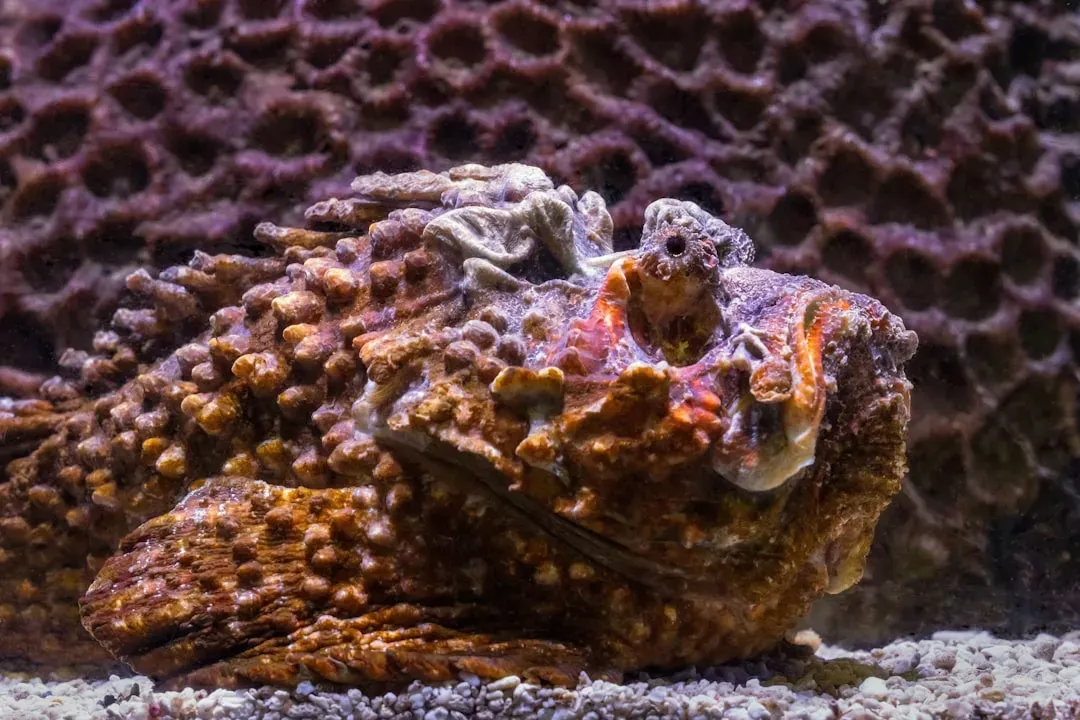
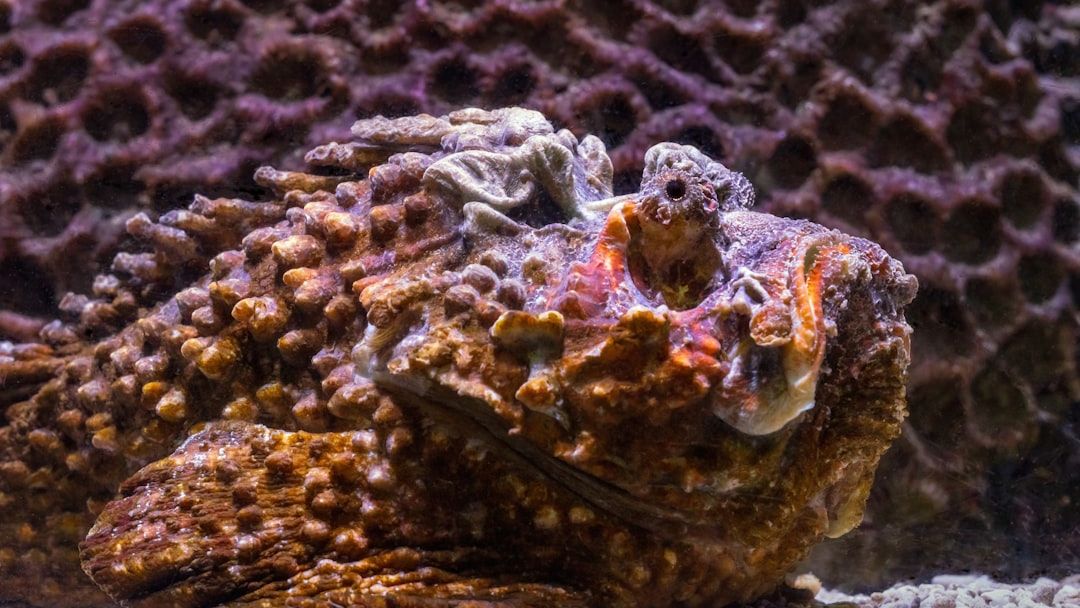
The stonefish is the most venomous known fish in the world and stings can cause death if not treated. But before you can worry about the venom, you have to actually see it. And that’s where the problem begins. The vernacular name of the species, the stonefish, derives from its grey and mottled camouflage similar to the color of a stone, and swimmers may not notice them and inadvertently step on them.
With their encrusted brown or grey skin, and red or yellow patches, the stonefish has the ability to blend incredibly well with its surroundings, and not only are they difficult to notice, but due to their size, they’re often mistaken for a stone or part of a coral reef, and the failure to distinguish a stonefish from a stone due to this camouflaging can have life-threatening consequences. Nature essentially created a venomous trap disguised as scenery.
These fish aren’t out hunting you down, though. As ambush predators, stonefish sink themselves into the sand and wait patiently for prey such as shrimps and small fish to swim by, and once within reach, the stonefish strikes in a fraction of a second using their powerful jaws and large mouths to create pressure, sucking and swallowing their unsuspecting prey whole. The venom is purely defensive.
Unlike most species of fish, the stonefish is able to survive for up to a full day out of the water, which is an uncommon trait in the deep-sea animal kingdom. This means you could potentially step on one while walking on a beach. That’s the stuff of nightmares right there.
The disguise is so effective that divers often point directly at a stonefish and other people still can’t see what they’re indicating. As the name implies, stonefish look rather similar to a stone or a rock, and even when pointing directly at it, it is not uncommon for others to not realize what they are seeing. When your camouflage fools humans even after being warned, you’ve truly mastered the art.
Walking Stick Insects: Living Twigs with Legs
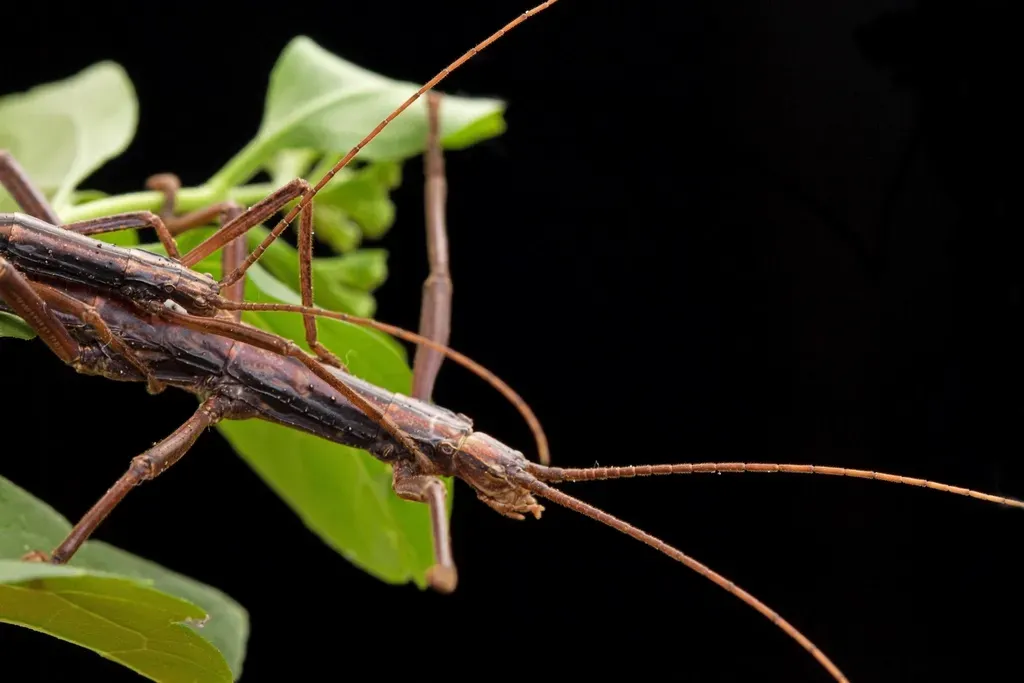
Walkingsticks, or stick insects, are so well camouflaged they even act like sticks, and as their name suggests, these insects of the order Phasmatodea resemble twigs or sticks. I know it sounds crazy, but these insects have taken plant mimicry to an almost absurd level.
They look just like sticks, and may even sway back and forth to more closely resemble a twig moving in the wind. That’s commitment to the disguise. They’re not just shaped like sticks – they move like sticks too. When they stop moving, as they do when they sense a predator nearby, they are almost impossible to see.
The size range is remarkable. Depending on the species, walking sticks can grow from 1 to 12 inches long, with females usually growing bigger than the males, and stick insects are the biggest insects in the world with one species measuring over 20 inches long with its legs outstretched. That’s nearly two feet of living twig.
The defense mechanism most readily identifiable with Phasmatodea is camouflage, in the form of plant mimicry, and most phasmids are known for effectively replicating the forms of sticks and leaves, with some species covered in mossy or lichenous outgrowths that supplement their disguise. Some species look so much like moss-covered branches that you’d need a magnifying glass and a lot of patience to spot them.
Interestingly, their camouflage doesn’t work against every predator. Walking sticks are a favorite food of many animals, but perhaps their most effective predators are bats, as most bats hunt by echolocation rather than sight, so they aren’t fooled by the insect’s sticklike appearance. Sometimes the best disguise in the world doesn’t help when your enemy hunts by sound.
Common Potoo: The Bird That Becomes Wood
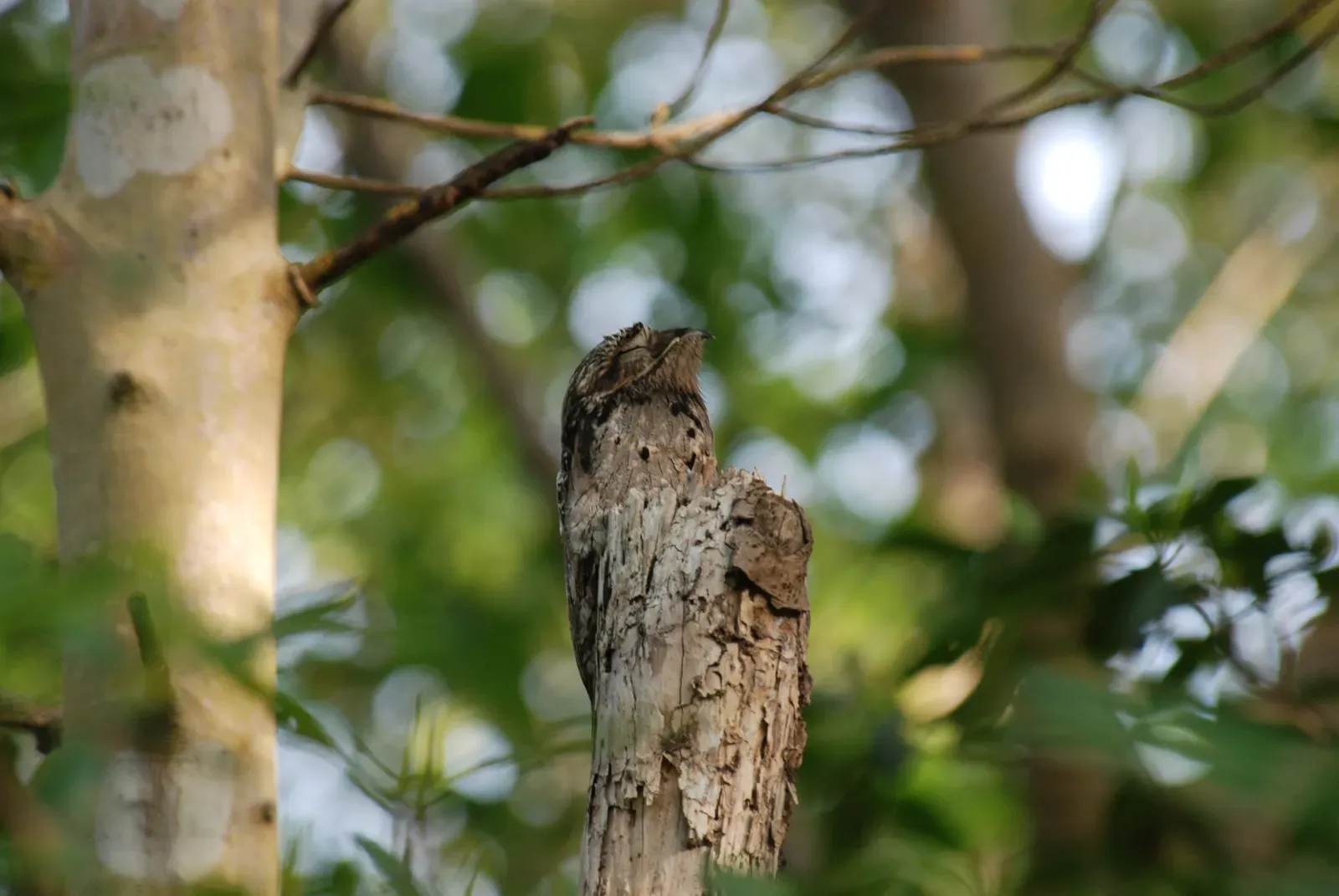
The common potoo is not only colored to look like a log, it acts like one too, perching at the end of a dead tree branch, it tilts itself to look like an extension of the branch, and completes the trick by partially closing its normally huge orange eyes, and trusts its camouflage and remains completely motionless, only flying away when a predator is too close for comfort.
The potoo bird is so well disguised that when perched, it looks like a broken tree stump, and its mottled feathers mimic bark texture and coloring exactly. You could be standing inches away from one and mistake it for part of the tree. They’ve essentially evolved to become living wood.
These nocturnal hunters spend their days in this frozen state, head tilted upward, eyes nearly closed. It’s only at night that they come alive to hunt insects. The patience required for this survival strategy is mind-boggling. Imagine spending twelve hours perfectly still, pretending to be a broken branch.
Camouflage helps it avoid being seen during the day, as it is a nocturnal predator of insects. The potoo’s strategy is all about conserving energy during daylight hours when they’re vulnerable, then hunting efficiently under the cover of darkness. Smart play.
The texture of their feathers deserves special mention. It’s not just about color – the pattern and texture genuinely replicate bark down to remarkable detail. Even experienced birdwatchers can walk right past them. That’s how good the disguise is.
Pygmy Seahorse: Color-Matched to Perfection
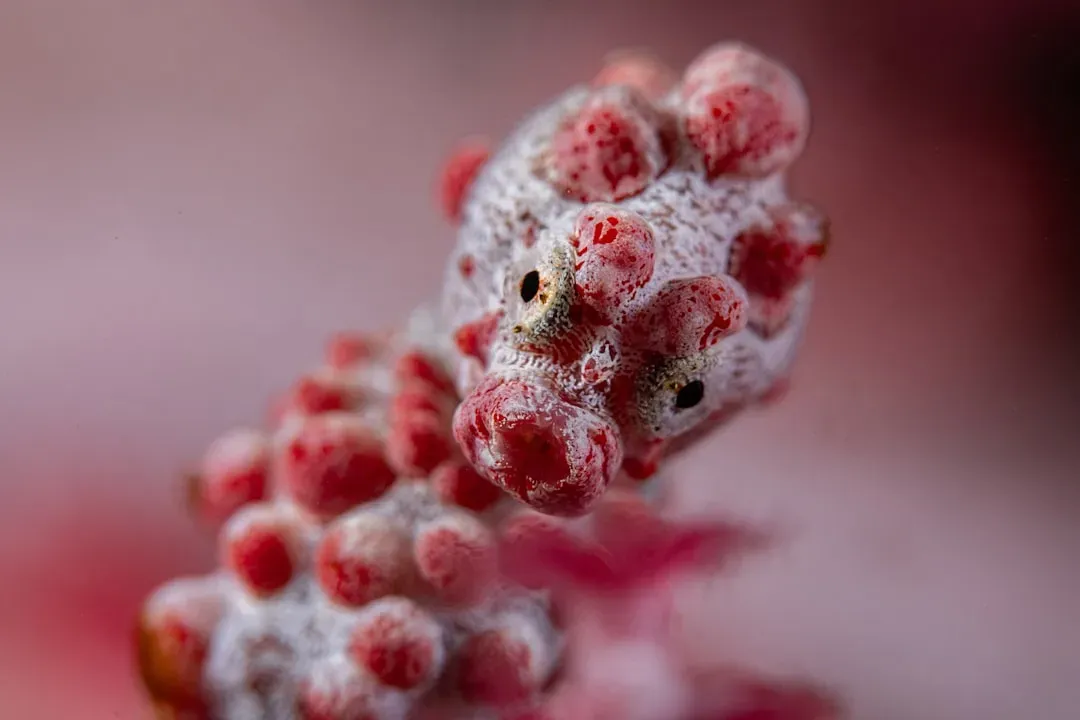
Pygmy seahorses live solely on a type of coral known as a sea fan, different colored seahorses live on the appropriate colored sea fan, and recent research has uncovered that rather than seeking out a sea fan of a particular colour, pygmy seahorses develop suitable colouration once they have landed. Let that sink in for a moment. They don’t choose the coral that matches them – they change to match whatever coral they land on.
These tiny creatures are among the smallest seahorses in the world, making them incredibly difficult to spot even when you know exactly where to look. They blend so perfectly with the coral polyps that scientists didn’t even discover them until 1969, and that was only because researchers were examining a sea fan they’d collected.
The tubercles on their bodies match the polyps of the coral they live on with stunning precision. It’s like they’re wearing a custom-fitted suit designed by the coral itself. The color matching isn’t just close – it’s exact, down to the texture and protrusions on their skin.
Unlike many camouflage specialists that can rapidly change color, pygmy seahorses develop their coloration over time. Once they’ve settled on their particular sea fan home, their body gradually adapts. It’s a slower process, but the end result is absolute perfection.
These miniature masters of disguise rarely venture away from their host coral. Why would they? They’ve achieved such perfect camouflage that moving would only put them at risk. They feed, mate, and live their entire lives on a single sea fan, invisible in plain sight.
Orchid Mantis: The Flower That Eats You
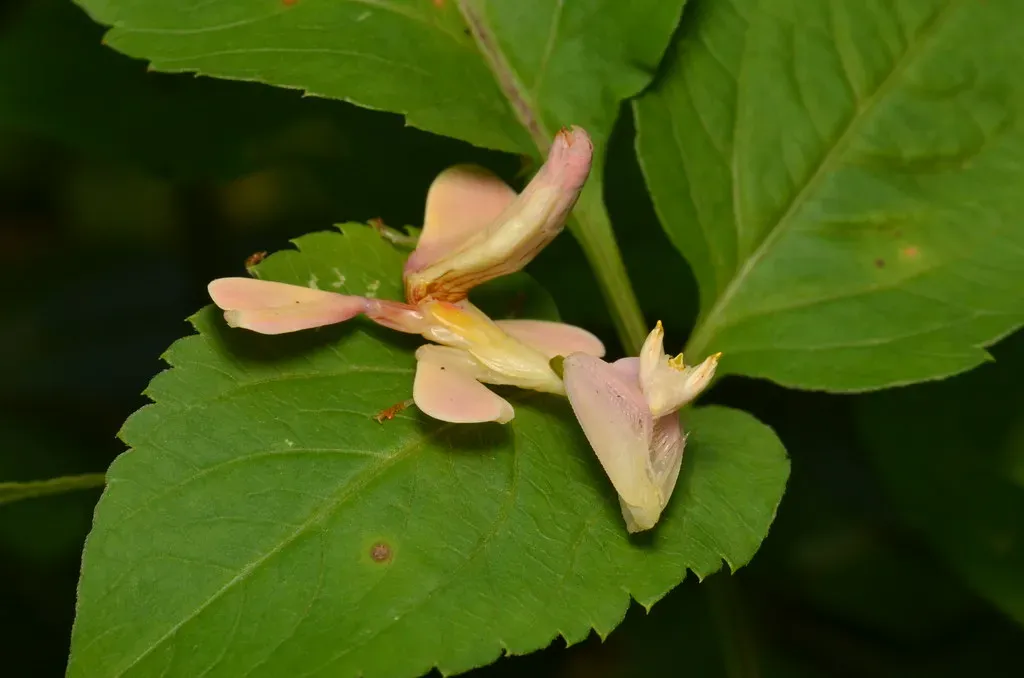
The orchid mantis would appear to be the master of mimicry, using it as an aggressive tactic to lure pollinators as prey and at the same time camouflage itself from predators such as birds, but new research has revealed that the mantis is not trying to copy orchids specifically, and to its insect prey, it looks like a number of flowers, as imperfect mimicry is actually a clever strategy by copying several flower species at once, the mantis can attract a greater variety of prey.
This is camouflage with a sinister twist. Most animals use disguise to hide from predators. The orchid mantis uses it to lure prey directly into its grasp. It’s the equivalent of a serial killer wearing a friendly clown costume. Except, you know, with more petal-like appendages and compound eyes.
The mantis has evolved body parts that look remarkably like flower petals, complete with the delicate curves and colors you’d expect from blooming flowers. Unsuspecting pollinators approach what they think is a tasty flower and become lunch instead. Nature can be pretty ruthless.
The mantis uses its disguise to outwit prey, as well as to hide from its own predators. It’s a two-for-one special in the camouflage world. Not only does it avoid becoming someone’s meal, but it actively uses its disguise to secure its own food supply.
The color variations are impressive too. Orchid mantises can be white, pink, or even yellow, matching different flower species in their environment. The versatility of the disguise makes them exceptionally effective hunters. They’re basically the con artists of the insect world.
Arctic Fox: The Seasonal Shapeshifter
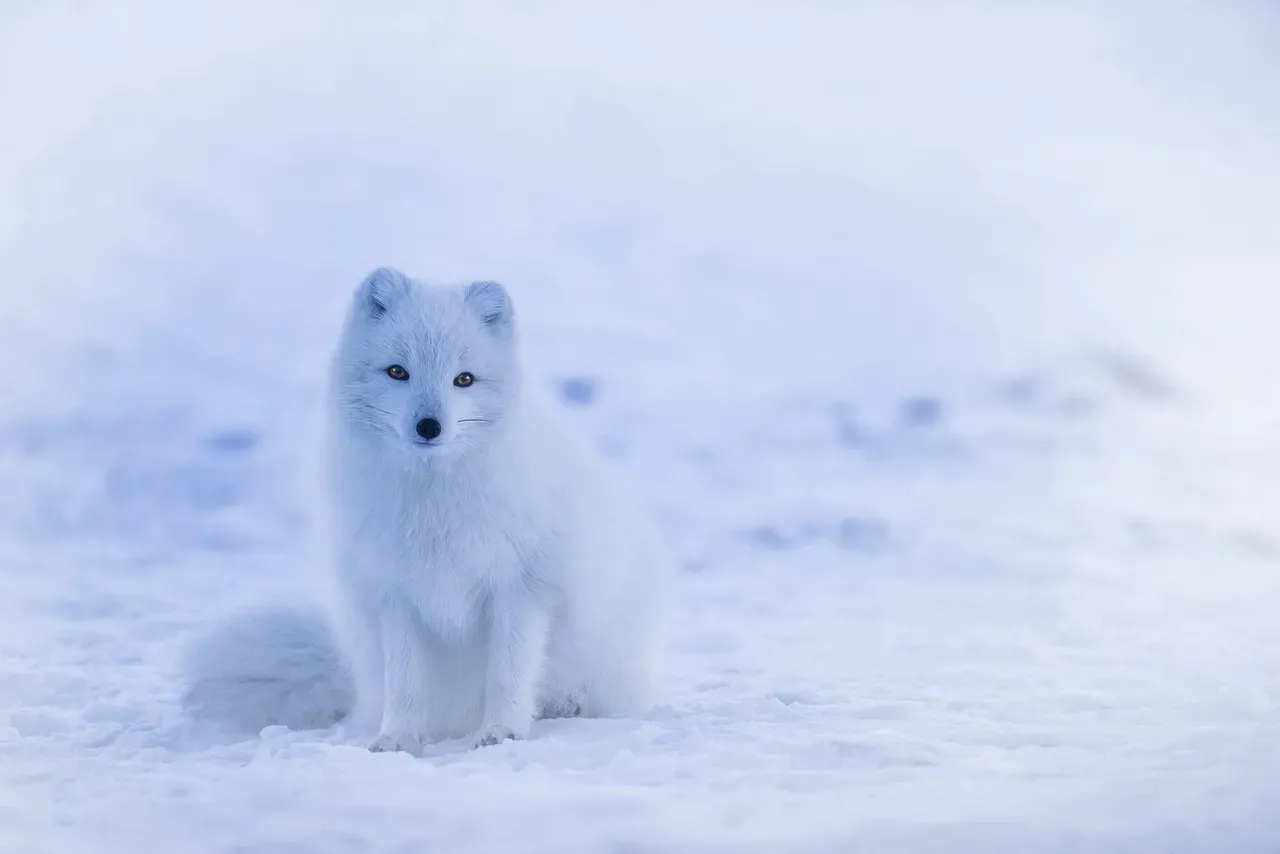
Arctic foxes are known for their striking white fur, but they aren’t white year-round. The Arctic fox’s white coat isn’t permanent, and like many animals, it replaces its winter fur with a shorter summer coat that ranges from gray to brown, which also has a camouflage effect and blends in with grass and shrubs that appear after the snow melts.
This is survival strategy on a grand scale. Blending seamlessly into the snowy landscape, the fox’s white coat effectively conceals it from both predators and prey. When your entire world changes color twice a year, you’d better change with it or become a highly visible target.
The transformation isn’t subtle either. We’re talking about going from brilliant white to earthy browns and grays. It’s like having two completely different outfits for drastically different occasions. Summer casual versus Arctic formal wear.
Arctic foxes face threats from larger predators like wolves and polar bears. Despite its position in the food chain where it preys on smaller animals and in turn is hunted by larger predators like wolves and bears, the Arctic fox’s survival status is of Least Concern, reflecting a stable population in its frigid habitat. The seasonal camouflage definitely helps with that survival rate.
The timing of the molt is crucial. Change too early, and you’re a white target on brown tundra. Change too late, and you’re a brown target on white snow. Evolution has fine-tuned this timing over millennia to match the seasonal shifts in their Arctic home.
Leopard: Spotted Shadows in the Trees
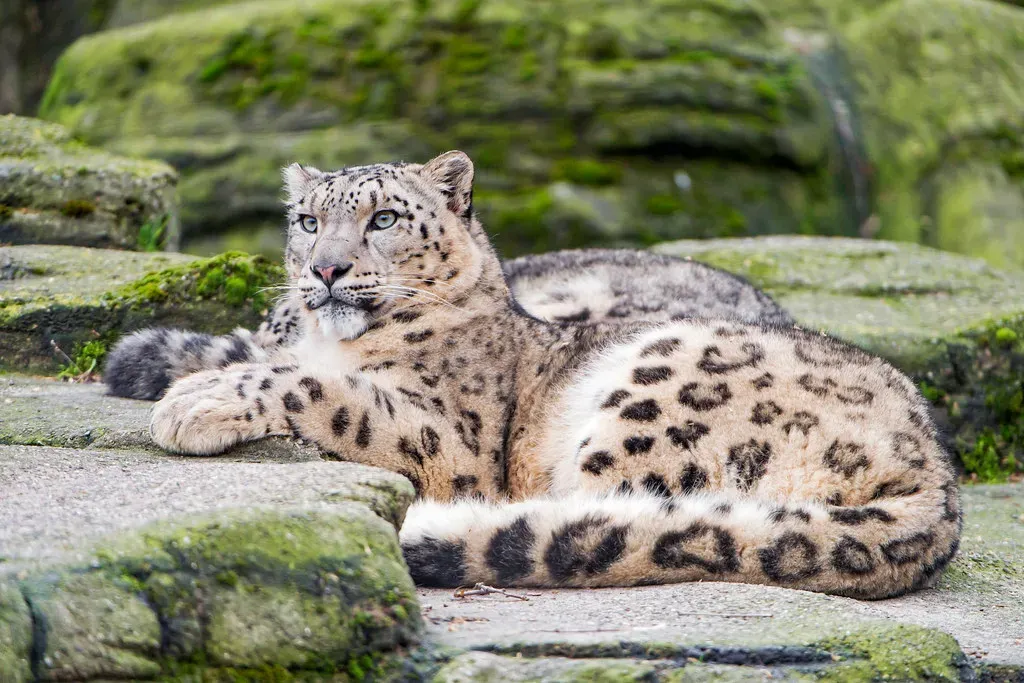
The leopard is a master of stealth and one of the most secretive members among large felines, and its remarkable fur, adorned with distinctive rosettes, functions as an excellent camouflage, making it nearly invisible in its natural habitat. For such a large predator, leopards have an uncanny ability to simply vanish.
Their fur varies from shades of pale beige to darker gold, but all these big cats have the black rosette pattern that makes their camouflage so effective, and rosettes help them blend in with their surroundings as they mimic the appearance of shadows and leaves. Those spots aren’t random – they’re evolutionary masterpieces designed to break up the outline of the leopard’s body.
Astonishingly adaptable, leopards can be found lounging on tree branches, seamlessly blending in with the foliage while they await their next meal. They’ll drag their kills up into trees too, which requires tremendous strength. But before they can do that, they need to catch the prey. And that’s where the camouflage earns its keep.
This big cat thrives in a diverse range of environments, from African savannas to forests in Asia, and despite their solitary nature, leopards are top-tier predators where lions do not dominate, with a leopard’s presence often going undetected until it decides to reveal itself. They’re the ninjas of the big cat world.
The dappled light filtering through tree canopies creates natural patterns of light and shadow. The leopard’s rosettes replicate this pattern so effectively that prey animals can be staring directly at a leopard and not register the threat. By the time they realize what they’re looking at, it’s usually too late.
Conclusion
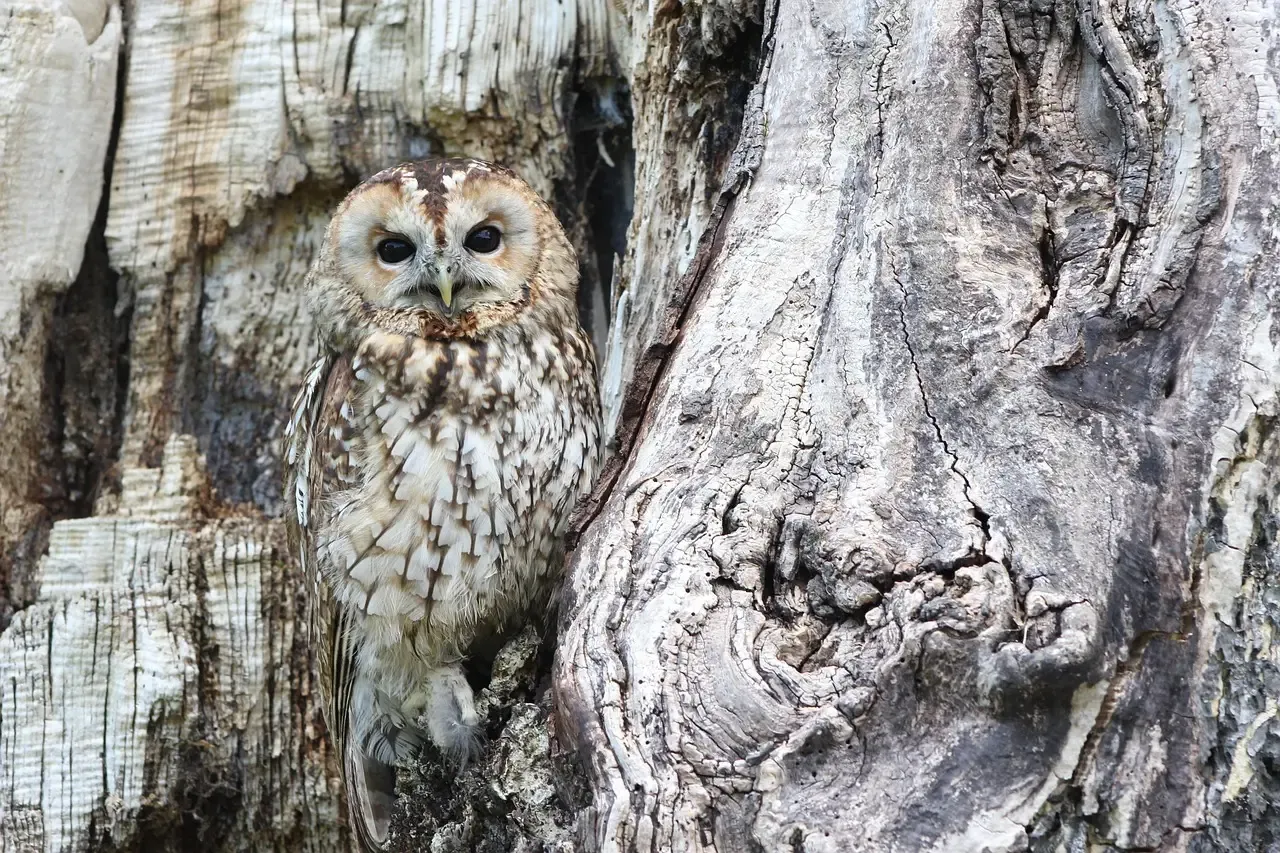
Nature’s masters of disguise prove that survival isn’t always about being the biggest, fastest, or strongest. Sometimes the best strategy is simply to disappear. These ten animals have spent millions of years perfecting the art of deception, evolving camouflage techniques that range from simple color matching to elaborate behavioral mimicry.
From the shapeshifting mimic octopus to the seasonally transforming Arctic fox, each species demonstrates a unique approach to the same problem: how to survive in a world full of predators and prey. The cuttlefish relies on millions of chromatophores for instant transformation, while the leaf-tailed gecko has evolved to look like decaying vegetation down to the last detail.
What’s truly fascinating is how these camouflage strategies extend beyond mere appearance. Many of these animals have developed complementary behaviors – the walking stick’s swaying motion, the stonefish’s patient ambush technique, the potoo’s rigid stillness. The disguise only works when the whole package comes together.
These creatures remind us that the natural world is far stranger and more sophisticated than we often give it credit for. The next time you’re walking through a forest or snorkeling over a reef, remember: you’re probably being watched by something you can’t see. What do you think about these incredible masters of disguise? Have you ever spotted one of these camouflage experts in the wild?
Worried about unexpected vet bills?
Pet insurance can cover thousands in unexpected vet costs. Get a free quote from Lemonade in under 2 minutes.
Get My Free Quote →Sponsored · Opens Lemonade.com
