

Worried about unexpected vet bills?
Pet insurance can cover thousands in unexpected vet costs. Get a free quote from Lemonade in under 2 minutes.
Get My Free Quote →Sponsored · Opens Lemonade.com
In the vast universe of Star Wars, George Lucas and his team created some of the most imaginative alien creatures ever to grace the silver screen. From the tusked Banthas of Tatooine to the amphibious Gungans of Naboo, these fictional beings have captivated audiences for generations. What many fans might not realize, however, is that our own planet hosts creatures that could easily populate the cantina at Mos Eisley or roam the forests of Endor. Let’s explore ten remarkable Earth animals whose otherworldly appearances make them seem like they’ve stepped straight out of a galaxy far, far away.
1. The Aye-Aye: Nature’s Salacious Crumb
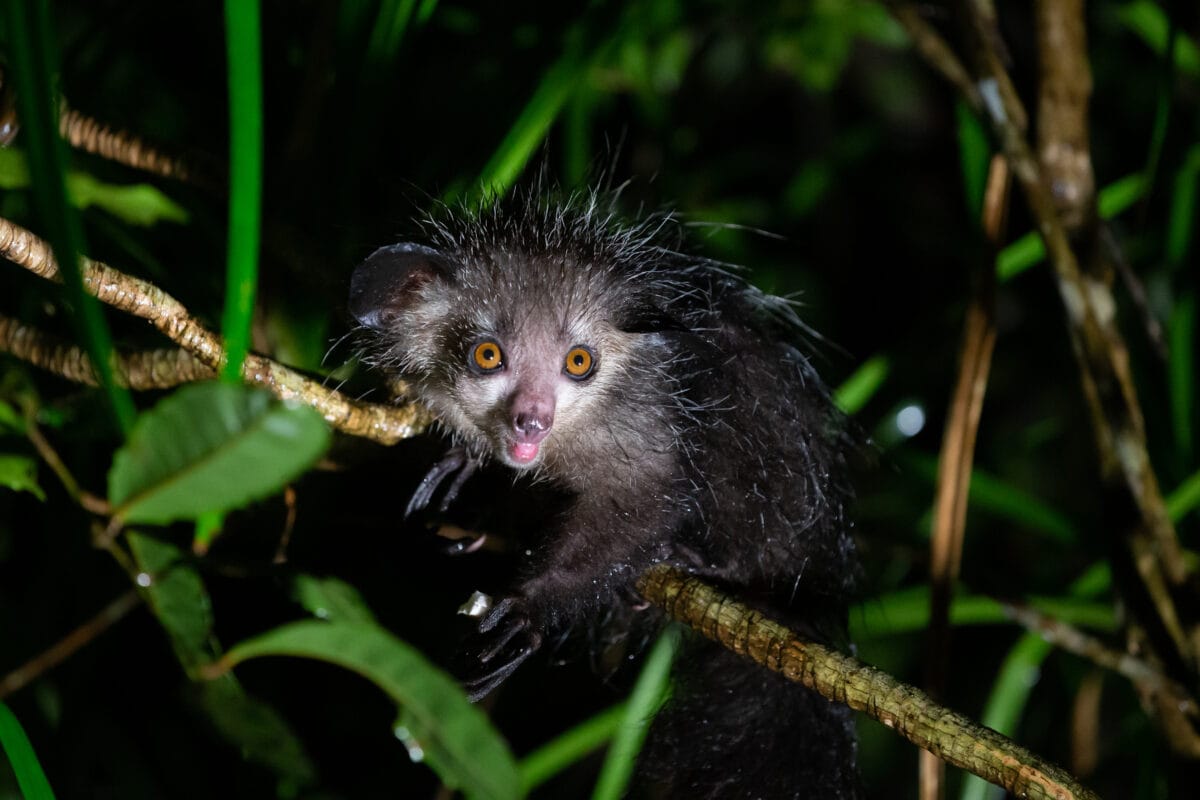
With its oversized ears, bulging yellow eyes, and skeletal middle finger, Madagascar’s aye-aye (Daubentonia madagascariensis) bears an uncanny resemblance to Jabba the Hutt’s cackling court jester, Salacious Crumb. This nocturnal primate uses its unusually elongated middle finger—which can rotate in a ball-and-socket joint—to tap on trees, listening for hollow spaces that might contain insect larvae. When it locates prey, the aye-aye gnaws a hole in the wood and uses that same digit to hook and extract its meal. Despite its eerie appearance that has led to persecution in its native habitat, the aye-aye plays a crucial ecological role similar to woodpeckers. Currently endangered, this bizarre lemur relative represents one of nature’s most specialized evolutionary adaptations—and one of its most Star Wars-worthy designs.
2. The Goblin Shark: Deep Sea Sith Lord
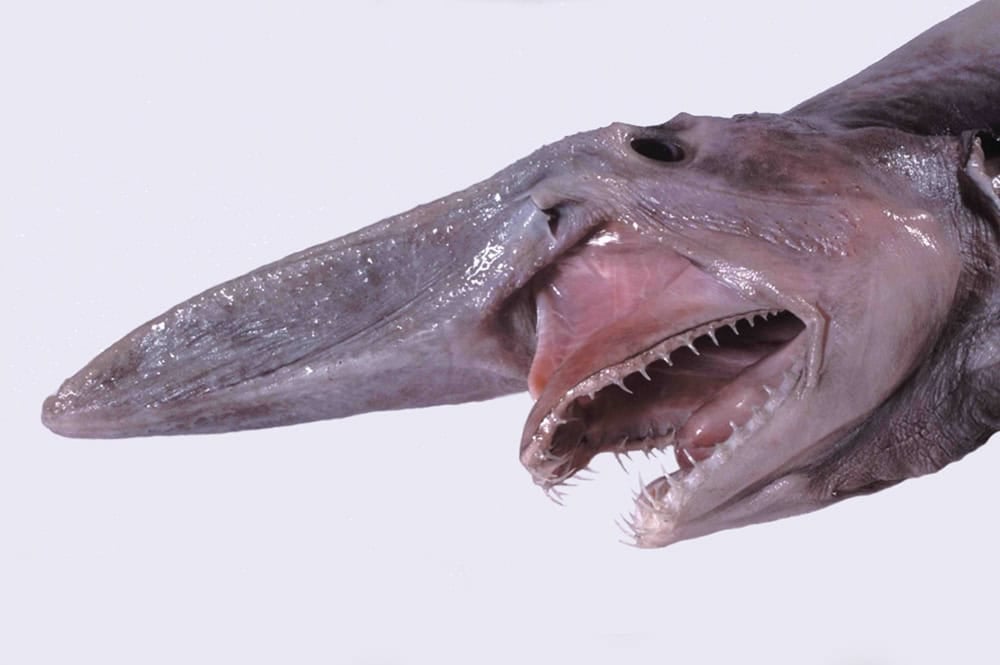
Lurking in the ocean depths at around 4,000 feet below the surface, the goblin shark (Mitsukurina owstoni) possesses one of the most terrifying feeding mechanisms in the animal kingdom. Its pale pinkish skin and elongated, flattened snout give it an appearance reminiscent of a Star Wars villain, but it’s the jaw that truly makes this creature nightmare fuel. When a goblin shark detects prey, it can project its jaws forward at astonishing speed—up to 3.1 meters per second—extending them nearly the length of its snout before snapping shut on unsuspecting victims. This rare deep-sea predator, which can grow up to 12 feet long, has remained largely unchanged for 125 million years, making it a living fossil that would be right at home among the Sith Lords of the Star Wars universe.
3. The Tarsier: Real-Life Yoda
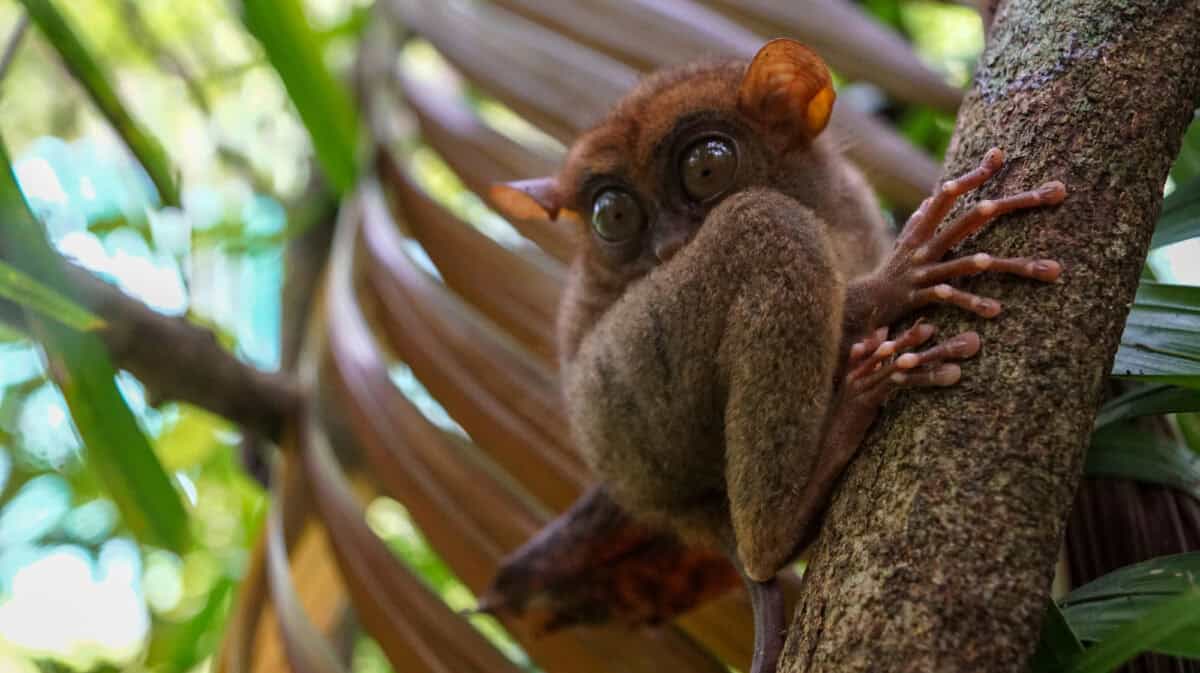
With enormous eyes that seem too big for its tiny head, the tarsier (family Tarsiidae) has often been compared to the wise Jedi Master Yoda. Native to the islands of Southeast Asia, these small primates possess the largest eyes relative to body size of any mammal—each eye is actually heavier than the animal’s brain. Their eyes cannot move in their sockets, but tarsiers can rotate their heads almost 180 degrees in owl-like fashion to scan their surroundings. With large ears that can move independently, long finger-like digits, and the ability to leap more than 40 times their body length, tarsiers seem to possess Force-like abilities. These nocturnal hunters are the only completely carnivorous primates, feeding exclusively on insects and small vertebrates. Unfortunately, habitat destruction has led to several tarsier species becoming endangered, making these Yoda lookalikes increasingly rare in their native forests.
4. The Star-Nosed Mole: Cantina Patron Extraordinaire

If any Earth creature could blend seamlessly into the famous Mos Eisley Cantina scene, it would be the star-nosed mole (Condylura cristata). This North American mammal’s most distinctive feature is its nose, which consists of 22 fleshy appendages arranged in a star-like pattern around its nostrils. This bizarre nasal structure is not just for show—it’s one of the most sensitive tactile organs in the animal kingdom, containing over 25,000 minute sensory receptors called Eimer’s organs. The star-nosed mole can identify and consume prey in less than a quarter of a second, making it the world’s fastest-eating mammal. Living primarily underground in wet lowland areas, these creatures construct extensive tunnel systems and are excellent swimmers. With its tentacle-like nose and near-blind existence, this remarkable animal echoes the alien diversity seen throughout the Star Wars franchise.
5. The Mantis Shrimp: Underwater Mandalorian

Armed with the most complex eyes in the animal kingdom and devastating striking appendages, the mantis shrimp (order Stomatopoda) could easily be mistaken for a heavily armored Mandalorian warrior from beneath the waves. These marine crustaceans possess up to 16 photoreceptor types (humans have just three), allowing them to see ultraviolet, infrared, and polarized light. Their striking capabilities are even more impressive—”smashers” can deliver blows that accelerate faster than a .22 caliber bullet, reaching speeds of 23 meters per second with a force of 1,500 newtons. This impact creates cavitation bubbles that collapse with a flash of light and temperatures approaching those on the sun’s surface. The mantis shrimp’s hard exoskeleton, iridescent coloration, and lethal weaponry make it one of the ocean’s most formidable hunters and a creature that would not look out of place wielding a blaster on Tatooine.
6. The Lowland Streaked Tenrec: Spiky Ewok Cousin

Madagascar’s lowland streaked tenrec (Hemicentetes semispinosus) combines the adorable appearance of an Ewok with the defensive spikes of a pint-sized rancor. This small insectivorous mammal sports a striking pattern of black and yellow stripes, punctuated by clusters of detachable barbed quills. When threatened, the tenrec can aim these quills with surprising accuracy by turning its body toward predators. Beyond its visual appearance, this remarkable creature communicates through stridulation—rubbing specialized quills together to produce ultrasonic sounds that humans cannot hear. This communication method is otherwise almost exclusively found in insects, making the tenrec one of the only mammals to use this technique. With its communal lifestyle, unique vocalizations, and distinctive appearance, this spiky mammal would fit perfectly among the forest-dwelling species of the Star Wars universe.
7. The Axolotl: Naboo’s Missing Native

With its feathery external gills, permanent smile, and otherworldly regenerative abilities, the axolotl (Ambystoma mexicanum) looks like it could have evolved in the underwater cities of Naboo alongside Jar Jar Binks. This remarkable amphibian never undergoes metamorphosis, retaining its larval characteristics throughout its lifespan—a phenomenon called neoteny. Native to Mexico’s Lake Xochimilco, axolotls possess extraordinary regenerative capabilities, able to regrow entire limbs, parts of their brain, heart, and other organs without scarring. Scientists have documented axolotls regenerating the same limb up to 100 times. Their ability to accept transplanted organs without rejection has made them invaluable to medical research. Despite their scientific importance, wild axolotls are critically endangered, with fewer than 1,000 remaining in their natural habitat. Their unusual appearance and almost supernatural regenerative powers make these aquatic salamanders strong contenders for Star Wars creature inspiration.
8. The Saiga Antelope: Tatooine’s Forgotten Herbivore

With its distinctive trunk-like nose and alien profile, the saiga antelope (Saiga tatarica) looks like it would be right at home grazing on the sparse vegetation of Tatooine. This critically endangered ungulate roams the steppes of Central Asia, and its unusual proboscis serves multiple functions: filtering dust during seasonal migrations, cooling blood during summer heat, and warming air during frigid winters. Male saigas sport amber-colored horns prized in traditional Chinese medicine, leading to devastating population declines from poaching. Their appearance is so otherworldly that when Star Wars creator George Lucas first saw photographs of these antelopes, he reportedly commented on their resemblance to the aliens from his films. In recent years, saiga populations have suffered catastrophic die-offs, with mysterious bacterial infections killing hundreds of thousands in just a few weeks. Conservation efforts are now critical to ensure this Star Wars-worthy species doesn’t disappear from Earth.
9. The Giant Isopod: Deep Sea Battle Droid
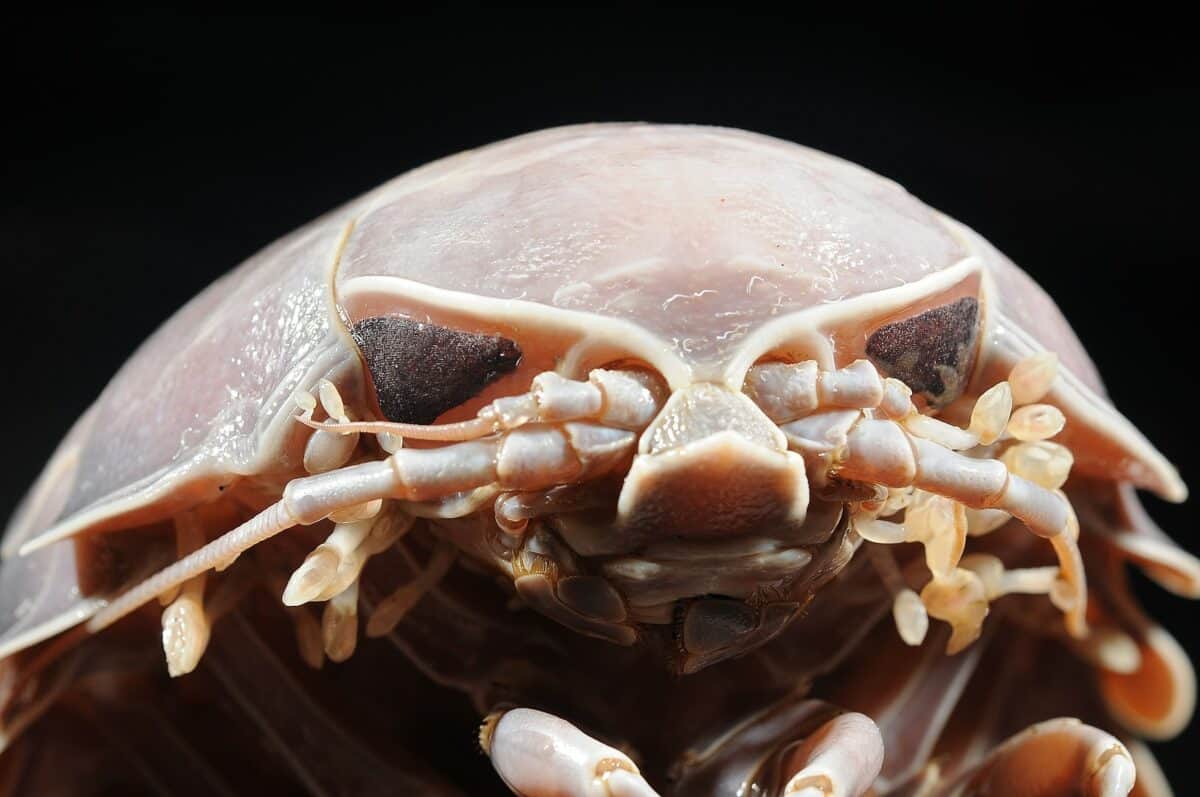
Looking remarkably like the battle droids that fought for the Trade Federation, giant isopods (genus Bathynomus) are enormous crustaceans that dwell in the cold, dark waters of the deep ocean. These distant relatives of the common woodlouse can grow to over 16 inches long and are perfect examples of deep-sea gigantism—the tendency for some marine creatures to grow much larger in deep waters than their shallow-water relatives. With their segmented exoskeletons, multiple legs, and compound eyes, giant isopods appear mechanical despite being living organisms. These scavengers can go for years without food, entering a torpid state and slowing their metabolism to survive the scarce resources of the deep ocean. When a meal does arrive—typically a dead whale, fish, or squid that has sunk from above—giant isopods can consume so much that they become too bloated to move. Their armored appearance and alien lifestyle make them perfect candidates for inclusion in the Star Wars universe.
10. The Lamprey: Sarlacc’s Aquatic Relative
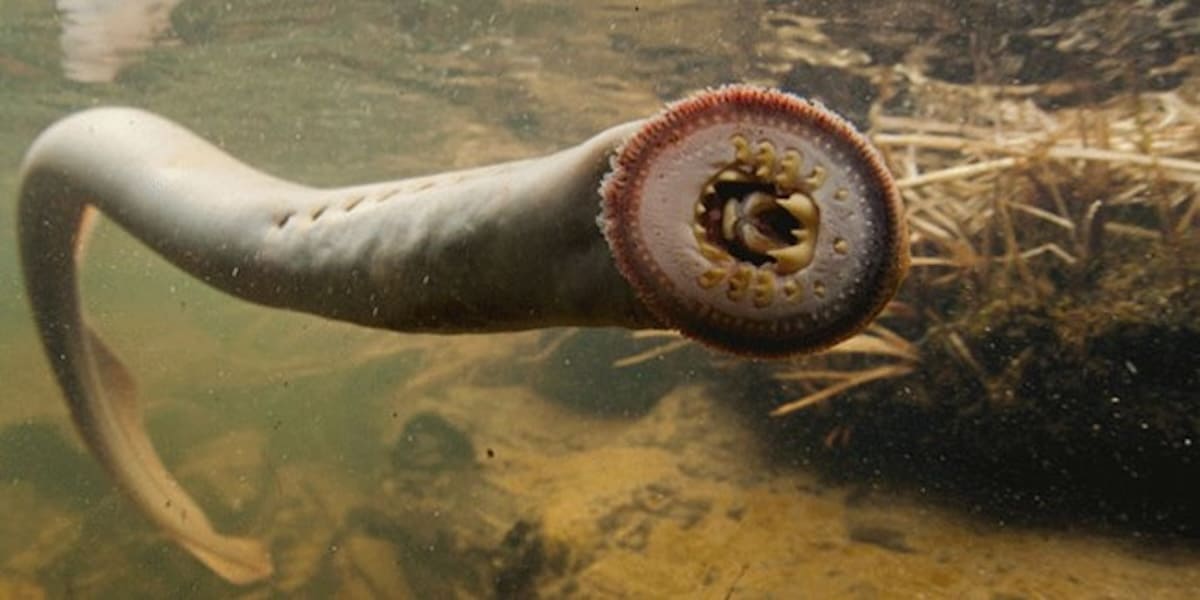
With its circular, tooth-lined mouth and parasitic lifestyle, the sea lamprey (Petromyzon marinus) bears a striking resemblance to the fearsome Sarlacc that nearly consumed Han Solo in Return of the Jedi. These primitive jawless fish have remained virtually unchanged for 360 million years and represent one of Earth’s oldest vertebrate lineages. Adult lampreys use their suction-cup mouths lined with up to 100 razor-sharp teeth to attach to host fish, where they use a rasping tongue to bore through scales and skin to feed on blood and tissues. A single lamprey can kill up to 40 pounds of fish in its lifetime. Unlike the fictional Sarlacc, which supposedly digests victims over a thousand years, lampreys typically feed on a host for several weeks before moving to another. In the Great Lakes, where they were accidentally introduced, sea lampreys have devastated native fish populations, requiring ongoing control efforts costing millions annually. Their primitive appearance and parasitic feeding method make lampreys some of the most alien-looking creatures on Earth.
11. The Tardigrade: Microscopic Hutt
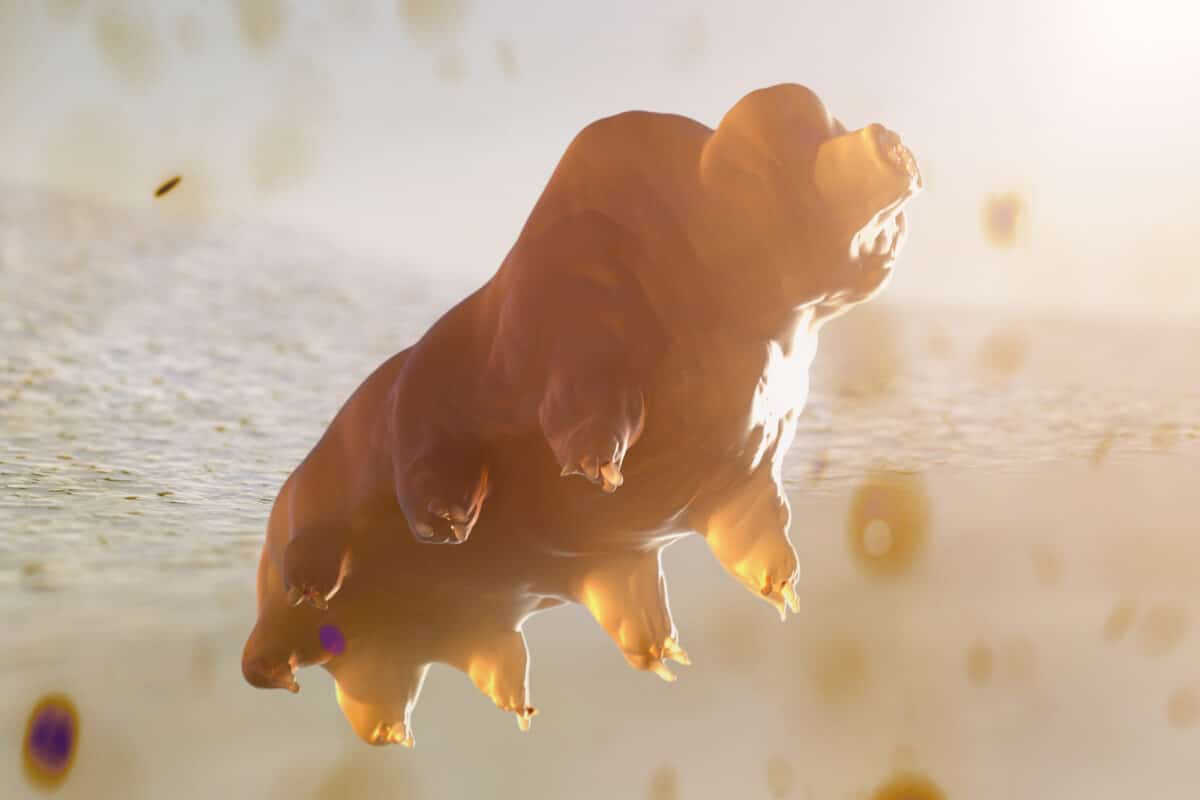
Perhaps the most alien-looking creature on our list is also the smallest. Tardigrades, colloquially known as water bears or moss piglets, are microscopic eight-legged animals measuring less than 1mm in length that look remarkably like miniature versions of Jabba the Hutt. What makes these tiny creatures truly Star Wars-worthy is their near indestructibility. Tardigrades can survive temperatures from near absolute zero (-458°F) to well above boiling (300°F), pressures six times greater than those in the deepest ocean trenches, radiation at doses hundreds of times higher than would kill a human, and the vacuum of space. They can also enter a state called cryptobiosis, essentially suspending all metabolic processes when conditions become unfavorable and reviving even after decades of dormancy when conditions improve. Found everywhere from mountaintops to ocean trenches, from tropical rainforests to Antarctic ice, these resilient micro-animals have survived all five mass extinction events and would likely survive even the destruction of Alderaan.
Earth’s Remarkable Biodiversity: Stranger Than Science Fiction

Our planet hosts an astonishing array of life forms that rival even the most creative alien designs from Hollywood. The ten animals highlighted in this article represent just a fraction of Earth’s bizarre and wonderful creatures that could easily populate the Star Wars universe. From the deep-sea goblin shark to the microscopic but indestructible tardigrade, these animals demonstrate that evolutionary adaptation can produce results more fantastic than science fiction.
What makes these creatures even more remarkable is that they developed their unusual features through natural selection rather than a costume designer’s imagination. As we continue to explore Earth’s remote corners and inaccessible environments, scientists discover new species that expand our understanding of life’s possibilities. Perhaps the most valuable lesson from comparing real animals to Star Wars creatures is the reminder that we need not look to distant galaxies for wonder and amazement—our own planet offers biological diversity that continues to surprise and inspire us.
Worried about unexpected vet bills?
Pet insurance can cover thousands in unexpected vet costs. Get a free quote from Lemonade in under 2 minutes.
Get My Free Quote →Sponsored · Opens Lemonade.com
