

The United States’ vast coastlines are home to a diverse array of shark species, from the massive whale shark to the infamous great white. While sharks often evoke fear—largely fueled by sensationalized media portrayals—the reality of shark behavior and the actual risk they pose to humans is far more nuanced. Understanding these magnificent predators, their habitats, and their true nature not only helps dispel unwarranted fears but also promotes conservation efforts for these vital ocean ecosystem regulators. This article explores eleven shark species commonly found in U.S. waters, examining their characteristics, behaviors, and providing a realistic assessment of the threat they pose to humans.
Great White Shark: The Misunderstood Predator
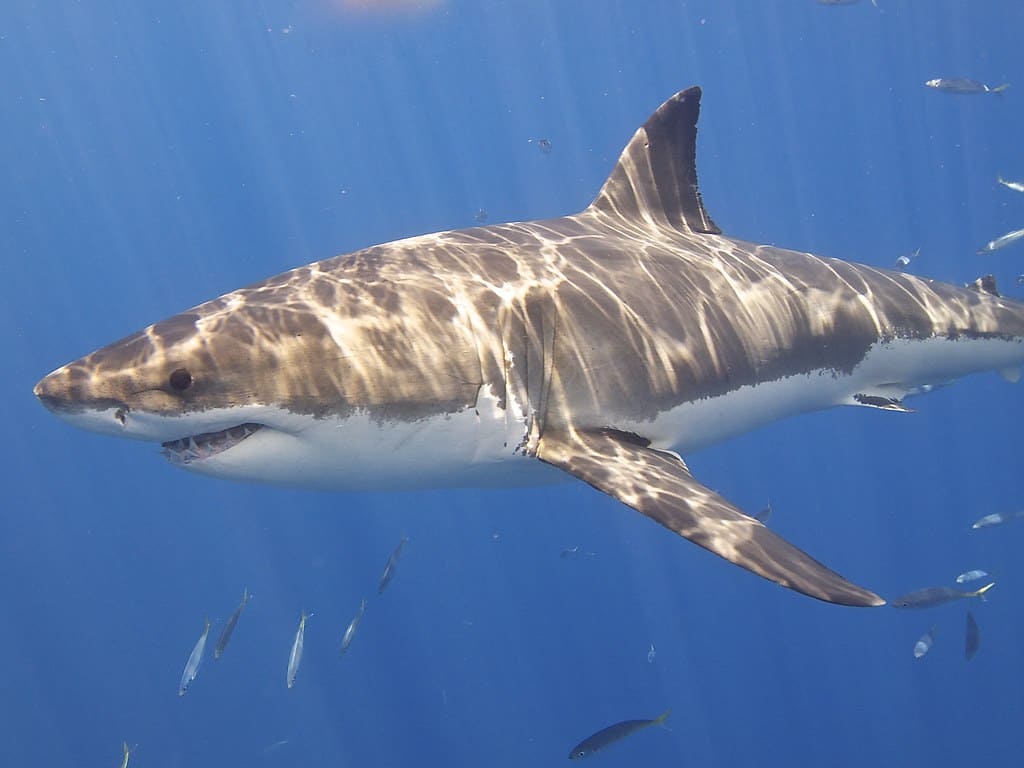
Perhaps the most recognizable shark species globally, the great white shark (Carcharodon carcharias) inhabits coastal waters throughout the United States, with notable populations off California and the northeastern seaboard. Growing up to 20 feet in length and weighing up to 4,500 pounds, these apex predators are impressive hunters with a muscular build, distinctive torpedo-shaped body, and rows of serrated, triangular teeth designed for tearing prey.
Despite their fearsome reputation amplified by films like “Jaws,” great white sharks rarely target humans. Between 1958 and 2016, there were just 80 unprovoked great white attacks in U.S. waters, with only 13 fatalities. Most attacks are investigatory “test bites”—cases of mistaken identity where sharks mistake swimmers or surfers for seals or sea lions. Once they realize humans aren’t their preferred prey, they typically don’t return for a second bite. While respect for these powerful predators is warranted, the actual risk of a fatal encounter is extraordinarily low—you’re more likely to be killed by a cow or a vending machine than by a great white shark.
Bull Shark: The Freshwater Wanderer

Bull sharks (Carcharhinus leucas) are unique among sharks for their remarkable ability to tolerate freshwater, allowing them to venture far up rivers and into brackish environments. They’re common along the Gulf Coast, Eastern Seaboard, and have been documented in the Mississippi River as far north as Illinois. Recognizable by their stocky build, broad, flat snout, and aggressive demeanor, bull sharks typically grow to 7-11.5 feet in length and can weigh up to 500 pounds.
Considered one of the most dangerous shark species to humans, bull sharks combine several concerning traits: territorial aggression, comfort in shallow waters where humans recreate, poor vision, and a powerful bite force measured at over 1,300 pounds per square inch. They’re responsible for many attacks in the Gulf of Mexico and along the eastern coast, particularly in Florida. However, even with these factors, bull shark attacks remain rare, with an average of only 1-2 incidents per year in U.S. waters. Their ability to enter freshwater areas where people don’t expect to encounter sharks contributes to their reputation, but with proper precautions—avoiding swimming at dawn, dusk, or in murky waters—the risk of an encounter remains minimal.
Tiger Shark: The Garbage Disposal of the Sea

Tiger sharks (Galeocerdo cuvier) are instantly recognizable by their distinctive dark vertical stripes, which fade as they mature, and blunt, wide heads. Common in tropical and subtropical waters, they’re frequently spotted around Hawaii and along the southeastern U.S. coast and Gulf of Mexico. These large predators can grow up to 14 feet long and weigh over 1,400 pounds. Tiger sharks are notorious for their undiscriminating appetite, earning them the nickname “garbage cans of the sea” for consuming everything from sea turtles and fish to license plates, tires, and other inedible objects.
This indiscriminate feeding behavior contributes to their reputation as one of the three shark species most likely to attack humans, alongside great whites and bull sharks. In Hawaiian waters, tiger sharks are responsible for more attacks than any other species. However, the International Shark Attack File records only about 131 tiger shark attacks worldwide since 1580, with 34 fatalities. Their tendency to inhabit shallow coastal waters where humans swim increases encounter opportunities, but attacks remain exceptionally rare compared to the number of people entering the water daily. Most experts believe tiger sharks don’t target humans specifically but may bite out of curiosity or mistaken identity.
Hammerhead Sharks: The Distinctive Hunters
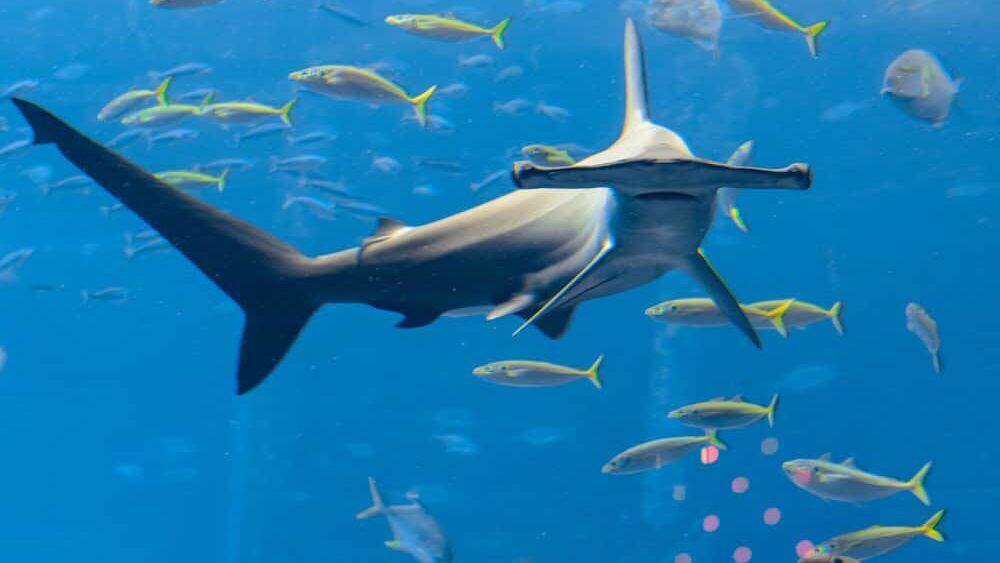
With their unmistakable T-shaped heads, hammerhead sharks are among the most recognizable ocean predators. Three species are commonly found in U.S. waters: the great hammerhead (Sphyrna mokarran), scalloped hammerhead (Sphyrna lewini), and smooth hammerhead (Sphyrna zygaena). These sharks frequent the warm waters off Florida, in the Gulf of Mexico, and along the southern California coast. The great hammerhead, the largest of the family, can reach lengths of 20 feet, while the others typically grow to 8-14 feet.
Their distinctive head shape, called a cephalofoil, provides evolutionary advantages including enhanced sensory perception. The widely-spaced eyes offer improved binocular vision, while specialized electroreceptors called ampullae of Lorenzini spread across the hammer’s wide surface allow them to detect the electrical fields of prey hiding beneath the sand. Despite their intimidating appearance, hammerhead sharks rarely pose a threat to humans. The International Shark Attack File has recorded only 17 unprovoked attacks by hammerheads worldwide, with no fatalities. Scalloped and great hammerheads are listed as endangered, primarily due to commercial fishing pressure for their valuable fins.
Blacktip Shark: The Coastal Acrobat

Blacktip sharks (Carcharhinus limbatus) are medium-sized predators immediately identifiable by the black markings on their pectoral, dorsal, and tail fins. Ranging from 4-8 feet in length, these agile hunters frequent warm, shallow coastal waters from Virginia to Texas, with particularly large populations along Florida’s coastlines. They’re famous for their spectacular feeding frenzies, during which they can be seen leaping completely out of the water while pursuing schools of fish—a behavior called “spinning” or “breaching.”
While blacktip sharks account for many of the reported shark bites in Florida—the “shark bite capital of the world”—these incidents are rarely serious or life-threatening. Most bites occur in murky, turbulent waters where the sharks mistake human hands or feet for their natural prey of small fish. Between 1929 and 2011, blacktips were responsible for 28 unprovoked attacks in U.S. waters, none of which were fatal. These sharks are typically shy around humans and quick to flee when approached. Their conservation status is currently listed as “vulnerable” due to their slow reproductive rate and pressure from commercial and recreational fishing.
Nurse Shark: The Gentle Giant
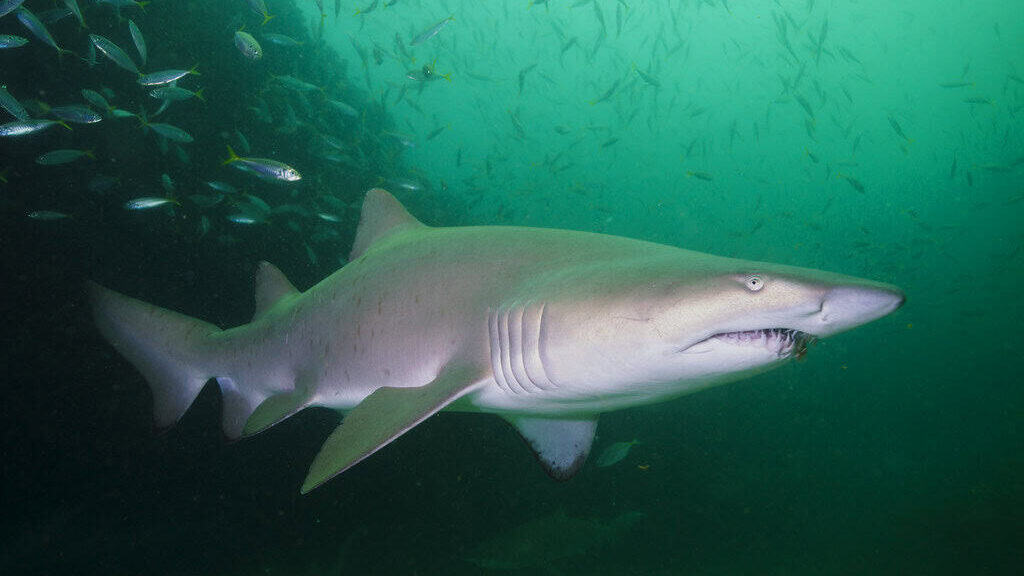
Nurse sharks (Ginglymostoma cirratum) are bottom-dwelling species common in the warm waters of the Gulf of Mexico, around Florida, and up the Eastern Seaboard during summer months. With their brownish coloration, broad heads, and characteristic barbels (whisker-like sensory organs near the mouth), nurse sharks are distinctively different from the stereotypical shark image. Growing up to 14 feet but typically around 7-9 feet in length, these nocturnal hunters spend their days resting on the ocean floor in groups, often piled atop one another in caves or under ledges.
Despite their size, nurse sharks are among the least dangerous shark species to humans. They’re slow-moving, generally docile, and feed primarily on small fish, crustaceans, and mollusks, which they suck into their mouths rather than bite with their small teeth. Most recorded nurse shark “attacks” involve defensive bites when the sharks are stepped on, grabbed, or otherwise harassed by humans—a testament to their non-aggressive nature. Even when they do bite, their small teeth typically cause minor injuries. Their placid disposition makes them popular attractions for snorkelers and divers, though experts still recommend maintaining a respectful distance as with any wild animal.
Blue Shark: The Open Ocean Wanderer

The blue shark (Prionace glauca) is perhaps the most elegant of shark species, with its slender body, indigo-blue coloration, and long, graceful pectoral fins. Though primarily creatures of the open ocean, blue sharks can be found in U.S. coastal waters along both the Atlantic and Pacific coasts, typically in cooler temperatures. Growing to about 12 feet in length, these sharks are highly migratory, with individuals tracked traveling over 5,700 miles in a single journey. They’re recognizable by their deep blue upper body, white underside, and large, round eyes.
Despite being abundant and widespread, blue sharks rarely interact with humans due to their preference for deep, open waters. The International Shark Attack File has recorded only 13 unprovoked attacks attributed to blue sharks worldwide, with four fatalities. Most encounters occur with divers or fishermen, rather than swimmers or surfers. The greater threat is actually in the opposite direction—blue sharks are among the most heavily fished shark species globally, with tens of millions killed annually for their fins. Their numbers have declined dramatically, though they remain listed as “near threatened” rather than endangered due to their wide distribution and relatively fast reproduction rate compared to other shark species.
Whale Shark: The Gentle Filter-Feeder
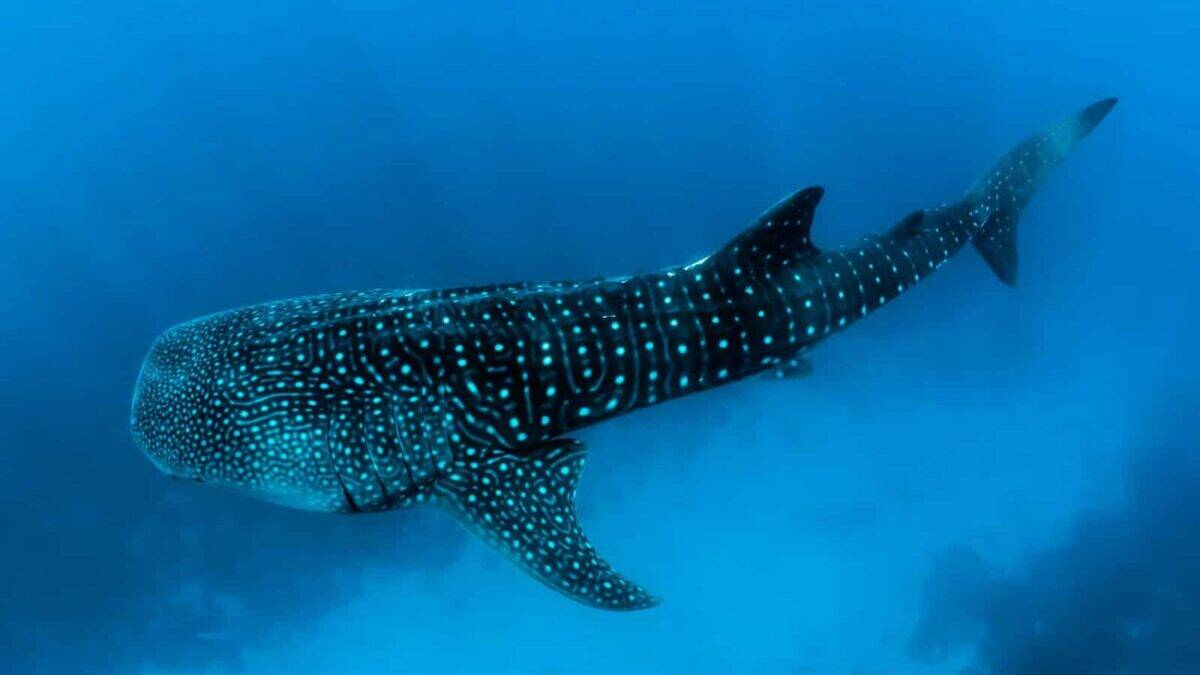
The whale shark (Rhincodon typus) holds the distinction of being the largest fish in the world, reaching lengths of up to 40 feet and weights exceeding 20 tons. Despite their intimidating size, these giants are among the ocean’s most gentle creatures. Whale sharks are occasional visitors to U.S. waters, primarily in the Gulf of Mexico off the Texas coast and around Hawaii. Instantly recognizable by their checkerboard pattern of light spots and stripes over a dark background, whale sharks also have a distinctively wide, flattened head with a huge terminal mouth.
As filter feeders, whale sharks pose absolutely no danger to humans. They swim slowly near the surface with their massive mouths open, filtering thousands of gallons of water per hour to extract plankton, small fish, and crustaceans. Far from being predatory, whale sharks allow divers and snorkelers to swim alongside them, creating unforgettable ecotourism opportunities in places like the Gulf Coast. Unfortunately, these magnificent creatures are listed as endangered, with population declines of over 50% in recent decades due to commercial fishing, vessel strikes, and habitat disruption. Several conservation initiatives in the U.S. now focus on protecting these gentle giants when they visit American waters.
Sandbar Shark: The Shallow Water Dweller
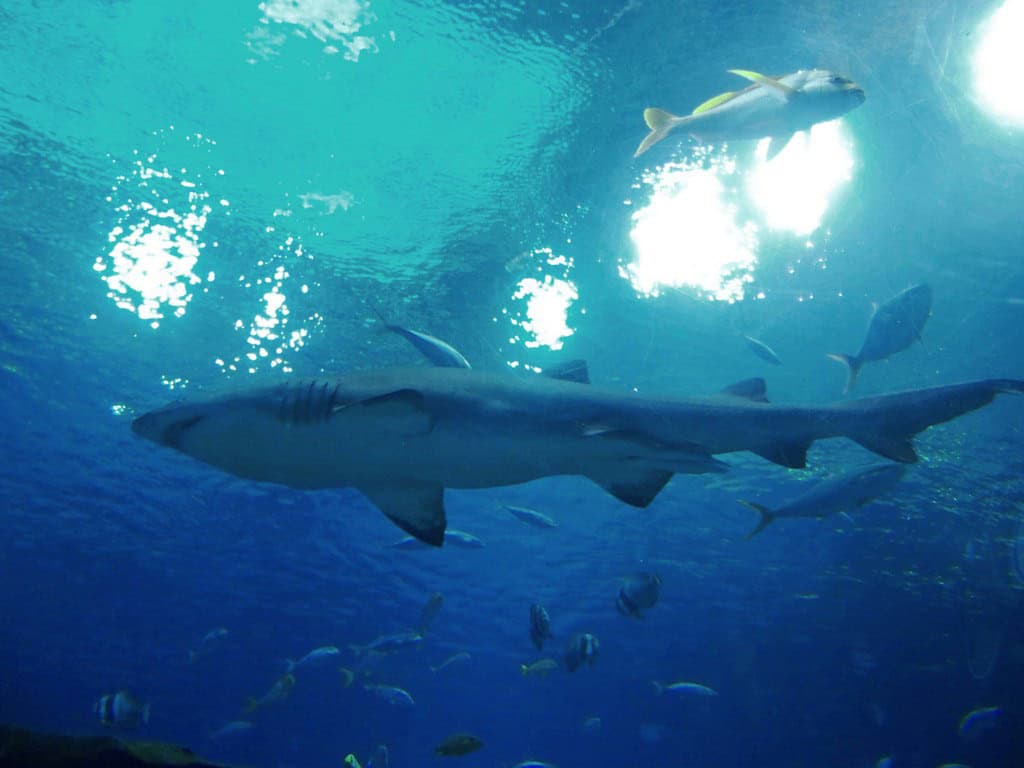
Sandbar sharks (Carcharhinus plumbeus) are one of the largest coastal shark species in U.S. waters, common along both the Atlantic and Pacific coasts, with particularly significant populations in the Chesapeake Bay and Delaware Bay. These robust sharks typically grow to 6-8 feet in length and are characterized by their tall, triangular first dorsal fin and interdorsal ridge (a raised line running between their dorsal fins). With their brownish-gray coloration and white underbelly, sandbar sharks exemplify the classic shark silhouette.
Despite their size and prevalence in areas where humans frequently enter the water, sandbar sharks are remarkably non-aggressive toward people. The International Shark Attack File lists only four unprovoked attacks attributed to this species, none of which were fatal. Their diet consists primarily of bottom-dwelling fish, crustaceans, and smaller sharks, and they show little interest in larger prey. Unfortunately, sandbar sharks have been heavily targeted by commercial and recreational fisheries, leading to significant population declines. In response, NOAA Fisheries has implemented strict management measures along the Atlantic coast, including prohibiting their retention in most commercial fisheries, to help this important species recover.
Lemon Shark: The Social Intelligence

Lemon sharks (Negaprion brevirostris) derive their name from their distinctive yellowish-brown coloration, which provides excellent camouflage in the sandy, shallow habitats they prefer. Common in the coastal waters of Florida, the Gulf of Mexico, and southern California, these substantial predators typically grow to 8-10 feet in length. Unlike many shark species that lead solitary lives, lemon sharks are known for their complex social behaviors, forming loose groups particularly during mating season. Research has demonstrated they’re capable of learning from each other and even show preferences for certain “friends” over others.
Despite their size and powerful build, lemon sharks have rarely been implicated in attacks on humans. The International Shark Attack File has recorded only 10 unprovoked lemon shark bites, none resulting in fatalities. These sharks show a natural curiosity toward divers but typically maintain a respectful distance. Their intelligence and relatively docile nature make them popular subjects for shark research and education programs. Scientists at the Bimini Biological Field Station in the Bahamas have conducted groundbreaking studies on lemon shark cognition, demonstrating abilities previously unrecognized in sharks, including social learning and recognition of individual humans over time.
Thresher Shark: The Tail-Whipping Hunter

The thresher shark (Alopias vulpinus) is instantly recognizable by its most distinctive feature: an enormously elongated upper lobe of the tail fin, which can be as long as the entire body of the shark itself. This remarkable adaptation isn’t just for show—threshers use their tails like whips to stun or kill prey. Found primarily in offshore waters along both U.S. coasts, with notable populations off California and New England, thresher sharks typically grow to 10-20 feet in length (including the tail) and can weigh up to 1,000 pounds. Their sleek bodies and large eyes adapt them well to their pelagic lifestyle.
Thresher sharks pose virtually no threat to humans, with zero confirmed unprovoked attacks in the International Shark Attack File. These sharks are shy around humans and typically flee when encountered. Their hunting technique—herding small schooling fish into tight balls, then slapping them with their tails—is specialized for small prey rather than large animals. Unfortunately, threshers are heavily targeted by commercial fisheries for their meat, fins, and liver oil, and all three thresher species (common, bigeye, and pelagic) are listed as vulnerable or endangered. Their slow growth, late maturity (at 4-5 years), and low reproductive output (just 2-4 pups every year) make them particularly susceptible to overfishing.
Understanding the Reality of Shark Attacks and Conservation
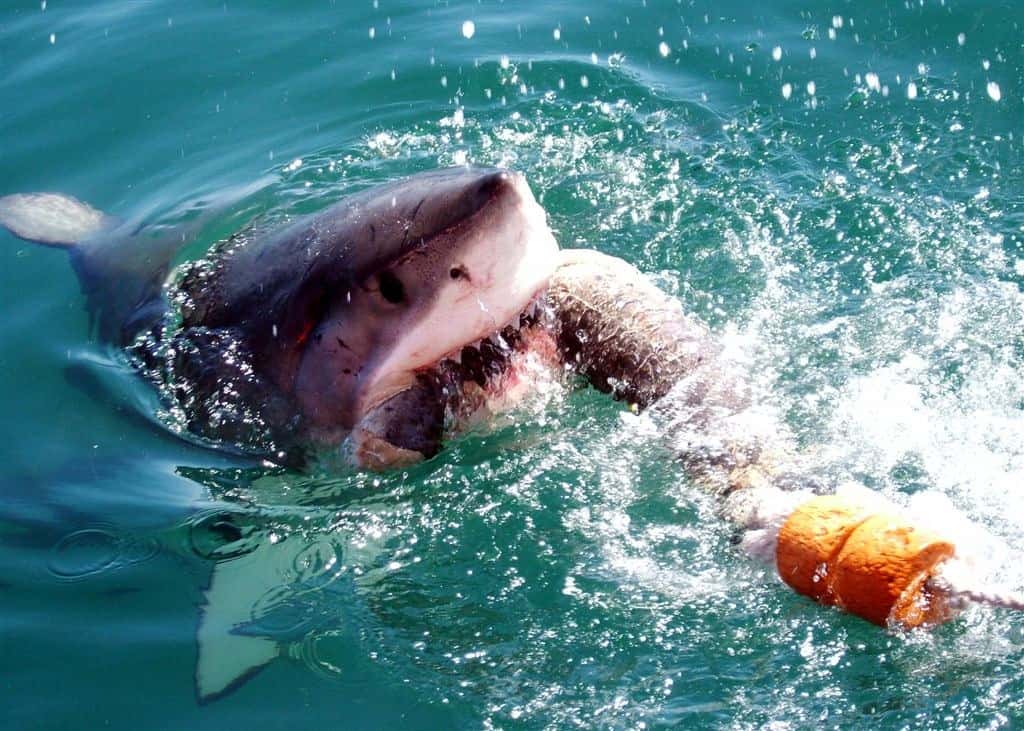
The statistics speak volumes about the actual risk sharks pose to humans. In the United States, an average of just 16 shark attacks occur annually, with less than one fatality per year. For perspective, Americans have a 1 in 3.7 million chance of dying from a shark attack in their lifetime, compared to a 1 in 84 chance of dying in a car accident. Even in shark-rich waters like those off Florida’s coast, lightning strikes kill more people annually than sharks do nationwide. Most attacks are cases of mistaken identity or defensive reactions, not predatory behavior toward humans.
Conversely, humans kill an estimated 100 million sharks annually through commercial fishing, bycatch, and finning practices. Many species found in U.S. waters are now listed as vulnerable, endangered, or critically endangered. Conservation efforts have made progress through fishing regulations, the creation of marine protected areas, and public education campaigns that emphasize the ecological importance of sharks as apex predators that maintain healthy ocean ecosystems. By understanding these magnificent creatures more accurately—appreciating both their power and their vulnerability—we can develop a more balanced perspective that replaces irrational fear with informed respect and conservation awareness. The future of our oceans depends on maintaining healthy shark populations, making education about their true nature not just interesting but essential.

- 10 Animals That Cheat Death in the Most Unexpected Ways - July 19, 2026
- The Shrimp That Punches Like a Bullet - July 19, 2026
- This Tiny Mammal Can Slow Its Heartbeat to One Beat Per Minute - July 19, 2026