


The bald eagle, America’s national bird, is renowned for its majestic appearance and impressive flying abilities. However, what truly sets this raptor apart is its extraordinary vision – a remarkable adaptation that makes it one of nature’s most efficient predators. While many know that eagles have exceptional eyesight, the specifics of their visual capabilities are fascinating and often surprising. From specialized retinal structures to unique physiological adaptations, bald eagle vision represents one of the most sophisticated visual systems in the animal kingdom. This article explores eleven remarkable facts about bald eagle vision that showcase just how extraordinary these birds’ visual abilities truly are.
Eagles Have Visual Acuity Up to 8 Times Sharper Than Humans

Bald eagles possess visual acuity that far surpasses human capabilities. While a person with 20/20 vision can identify details from 20 feet away, bald eagles can see the same details from distances of up to 160 feet. This translates to visual acuity that is approximately 4-8 times sharper than human vision. This extraordinary ability allows eagles to spot small prey animals from remarkable distances, often exceeding a mile away when perched at a high vantage point.
This superior visual acuity stems from the eagle’s unique retinal structure. Their retinas contain approximately one million photoreceptors per square millimeter, compared to the human eye’s 200,000 photoreceptors per square millimeter. Additionally, eagles have a higher concentration of cone cells, the photoreceptors responsible for visual acuity and color perception. This dense arrangement of specialized cells enables the incredible detail recognition that makes bald eagles such efficient hunters.
Eagles Have Two Foveae in Each Eye

Unlike humans who have a single fovea (the area of the retina with the highest concentration of cone cells) in each eye, bald eagles possess two foveae per eye. This unusual adaptation creates two areas of extreme visual clarity in each eye. The central fovea provides the eagle with detailed frontal vision, while the temporal fovea gives the bird enhanced peripheral vision. This dual-fovea system allows eagles to simultaneously maintain sharp focus on objects in front of them while also monitoring movement in their peripheral field of view.
The presence of two foveae essentially gives bald eagles the equivalent of built-in binoculars and wide-angle lenses, working in tandem to create an exceptionally comprehensive visual field. This adaptation is particularly valuable during hunting, as it allows eagles to track prey movement with their peripheral vision while maintaining precise focus on their target with their central vision. The dual-fovea system represents one of the most sophisticated visual adaptations in the avian world.
Eagles Can See Five Basic Color Spectrums
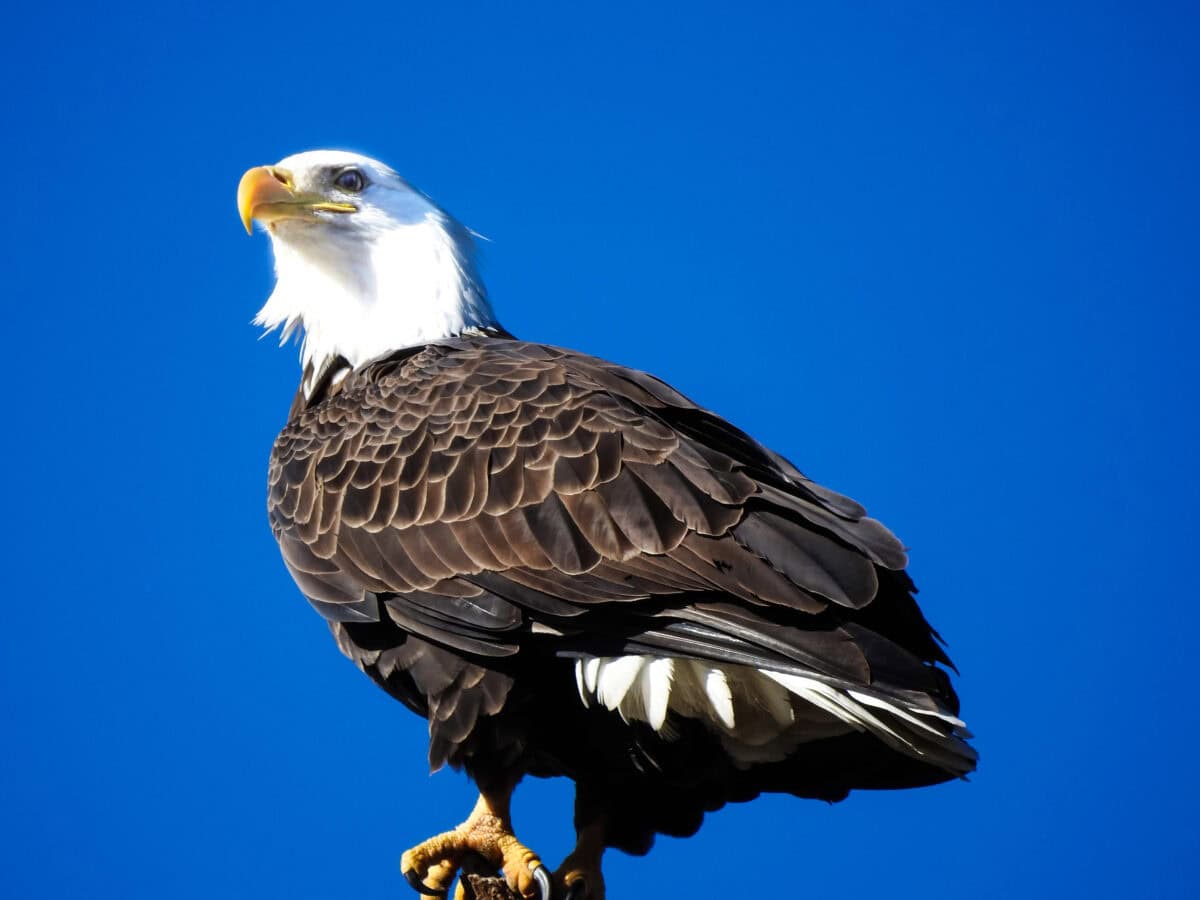
While humans have trichromatic vision (able to see three primary colors – red, green, and blue), bald eagles possess pentachromatic vision, meaning they can see five basic color spectrums. This expanded color perception includes the ability to see in the ultraviolet range, which is invisible to humans. This enhanced color vision helps eagles detect the UV reflectance of rodent urine trails, which appear as glowing paths against vegetation, effectively guiding them to areas where prey is likely to be found.
The eagle’s superior color vision also aids in detecting camouflaged prey. Fish scales reflect UV light in distinct patterns that are highly visible to eagles, making fish near the water’s surface easy to spot even in conditions that would render them nearly invisible to human eyes. This heightened color sensitivity represents a critical advantage in the eagle’s hunting strategy, particularly when fishing – their preferred method of obtaining food.
Eagles Have Specialized Eyelids

Bald eagles possess a unique three-eyelid system that provides exceptional protection for their valuable eyes. In addition to the standard upper and lower eyelids found in most animals, eagles have a third transparent eyelid called the nictitating membrane. This membrane sweeps horizontally across the eye from the inner corner to the outer edge, functioning like a windshield wiper to clean and moisten the eye surface while maintaining visibility.
This specialized membrane serves multiple critical functions. During flight, it protects the eagle’s eyes from wind, dust, and debris while still allowing the bird to see. When diving into water at high speeds to catch fish, the nictitating membrane acts as protective goggles, shielding the eyes from impact while maintaining clear underwater vision. The membrane also provides protection during confrontations with prey or other eagles, reducing the risk of eye injury while allowing the bird to keep its target in sight.
Eagles Can Control Their Pupil Size Independently
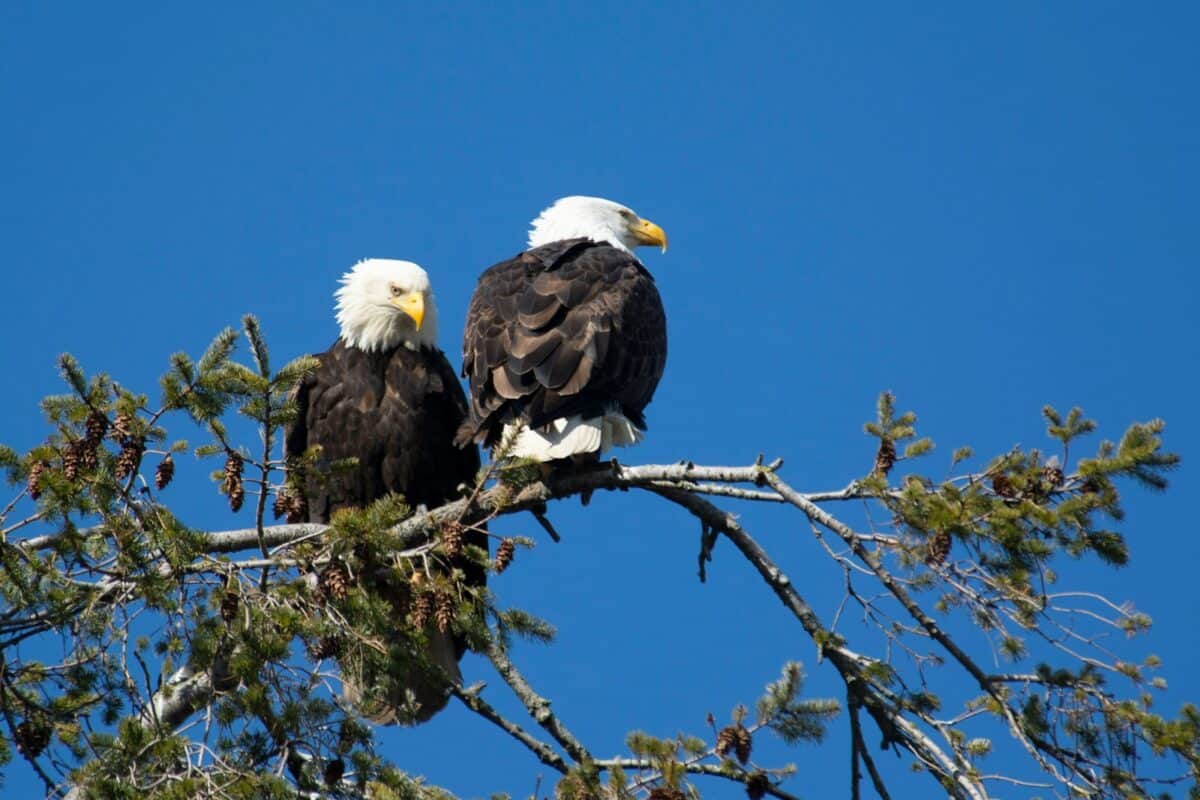
Unlike humans, whose pupils dilate or constrict in unison, bald eagles can control each pupil independently. This remarkable adaptation allows them to precisely regulate the amount of light entering each eye separately. When an eagle faces the sun with one eye, that pupil can constrict to reduce light entry, while the pupil in the eye facing away from the sun can remain dilated to maximize light reception.
This independent pupillary control gives eagles a significant advantage when hunting in varied lighting conditions. For instance, when scanning the water’s surface for fish, reflective glare can create challenging visibility issues. By adjusting each pupil independently, eagles can optimize vision in both the glare-affected areas and shadowed regions simultaneously. This adaptation represents a sophisticated level of visual control that far exceeds human capabilities and contributes significantly to the eagle’s hunting success.
Eagles Have Specialized Oil Glands for Eye Protection

Bald eagles possess specialized oil glands that produce a water-repellent secretion they apply to their eyes through preening. This natural protective coating is particularly important for eagles, as they frequently dive into water at high speeds to catch fish. The oil creates a hydrophobic barrier that prevents water from adhering to the eye surface, ensuring clear vision both during the dive and upon emerging from the water.
Beyond water repellency, this oil coating serves additional protective functions. It helps shield the eagle’s eyes from irritating particulates in the air, reduces damage from UV radiation, and provides a measure of insulation in cold conditions. The composition of this oil is uniquely adapted to the eagle’s lifestyle, being particularly effective in both freshwater and saltwater environments. This specialized eye protection mechanism represents yet another evolutionary adaptation that enhances the eagle’s already remarkable visual capabilities.
Eagles Have Nearly 360-Degree Visual Field

Bald eagles possess an extraordinarily wide visual field that spans almost 360 degrees. This comprehensive field of view is made possible by the lateral positioning of their eyes on their skull, which allows them to see in nearly all directions simultaneously. Unlike humans, who have approximately a 180-degree visual field with both eyes working together, eagles can observe almost their entire surroundings without turning their head.
Within this expansive visual field, eagles maintain approximately 60 degrees of binocular vision (where the visual fields of both eyes overlap) directly in front of them. This binocular zone provides enhanced depth perception and distance judgment – critical abilities for accurately striking prey from great heights. The combination of an extensive panoramic visual field with a focused binocular zone gives eagles both situational awareness and precise targeting capabilities, making them exceptionally effective predators while also helping them avoid becoming prey themselves.
Eagles Can See Underwater with Remarkable Clarity

Bald eagles possess specialized adaptations that allow them to see underwater with exceptional clarity, a crucial ability for a bird that primarily hunts fish. Their eyes contain a higher density of rod cells – photoreceptors responsible for vision in low-light conditions – which enhances their ability to detect movement and shapes beneath the water’s surface. Additionally, the eagle’s cornea has evolved to compensate for the refraction of light that occurs at the air-water interface, allowing for more accurate visual assessment of prey location.
This underwater visual acuity enables eagles to make precise calculations when diving for fish. They can accurately judge not only the location of the fish but also its swimming direction and speed, allowing them to intercept prey with remarkable precision. Research suggests that eagles can detect fish swimming up to several feet beneath the water’s surface, even in conditions where water clarity is compromised by silt or other particulates. This specialized underwater vision represents a perfect adaptation for their ecological niche as apex predators in aquatic environments.
Eagles Can Track Fast-Moving Objects with Unparalleled Precision

The visual system of bald eagles is extraordinarily adept at tracking fast-moving objects, an ability that far exceeds human capabilities. Eagles can process visual information at a much higher rate than humans, allowing them to effectively track prey moving at high speeds without the motion blur that would affect human vision. This heightened temporal resolution – the ability to detect changes in visual stimuli over time – enables eagles to maintain crystal-clear focus on rapidly moving targets.
This exceptional motion-tracking ability stems from the specialized structure of the eagle’s retina, which contains a higher proportion of cells dedicated to detecting movement. Additionally, neural pathways from the eagle’s eyes to its brain are optimized for rapid signal transmission and processing. When pursuing prey, an eagle can make split-second adjustments to its flight path based on the target’s movements, maintaining precise visual lock even when both predator and prey are moving at considerable speeds. This remarkable tracking precision is a key factor in the bald eagle’s hunting success rate, particularly when catching agile prey like fish or birds.
Eagles Have Superior Night Vision Compared to Many Diurnal Birds

While bald eagles are primarily diurnal hunters, they possess surprisingly effective vision in low-light conditions that exceeds that of many other day-active birds. Their retinas contain a higher ratio of rod cells to cone cells than typical diurnal birds, with rods being specialized for light sensitivity rather than color detection. This adaptation allows eagles to begin hunting earlier in the morning and continue later into the evening than many other birds of prey.
Eagles also possess a reflective layer behind their retina called the tapetum lucidum, though it’s less developed than in nocturnal predators like owls. This structure reflects light back through the retina, effectively giving photoreceptors a second chance to capture light that passed through initially. While not true night vision specialists like owls, eagles can function effectively in twilight conditions, extending their hunting opportunities at dawn and dusk when many prey species are active. This adaptability in varying light conditions provides bald eagles with a competitive advantage in their ecological niche.
Eagles Have Specialized Brain Regions for Visual Processing

The bald eagle’s brain has evolved specialized regions dedicated to visual processing that are proportionally larger than in most other animals. The optic tectum, the area responsible for processing visual information, comprises a significantly larger percentage of the eagle’s brain compared to mammals, including humans. This enhanced neural architecture allows for more sophisticated analysis of visual data, contributing to the eagle’s remarkable ability to detect, track, and assess potential prey from great distances.
Beyond simply having enlarged visual processing centers, eagles possess specialized neural networks that perform rapid calculations related to movement, distance, and trajectory. These dedicated circuits enable eagles to solve complex visual problems instantaneously, such as calculating the interception point for a moving fish while accounting for refraction at the water’s surface. The neural adaptations supporting eagle vision represent a remarkable example of evolutionary specialization, with a significant portion of the bird’s brain power dedicated to maximizing the effectiveness of its exceptional visual capabilities.
Conclusion: The Remarkable Evolution of Eagle Vision

The extraordinary visual system of bald eagles represents one of nature’s most impressive evolutionary achievements. From their specialized retinal structure to their sophisticated neural processing capabilities, every aspect of eagle vision has been refined through millions of years of natural selection to create an unparalleled visual hunter. These adaptations have enabled bald eagles to occupy a dominant predatory niche, particularly in aquatic ecosystems where their fishing prowess depends on exceptional vision.
Understanding the remarkable capabilities of eagle vision not only enhances our appreciation for these magnificent birds but also provides valuable insights for human technologies. Researchers studying eagle vision have developed improved optics for applications ranging from cameras to military targeting systems. As we continue to study and protect these iconic birds, we gain not only ecological benefits but also inspiration for human innovation. The bald eagle’s visual system stands as a powerful reminder of nature’s ingenuity and the extraordinary adaptations that can emerge through evolutionary processes.

As a little kid, I fell in love with nature, wildlife, and animals. Living in the USA, South Africa, Italy, China and Germany gave me the opportunity to discover the world's Wildlife. My favorite animals are Mountain Gorillas, Siberian Tigers, and Great White Sharks.
I'm a certified PADI Open Water Diver, went to Everest Base Camp and Trekked Gorillas in Uganda. I hold a Master of Science in Economics and Finance.
Please send any feedback to feedback@animalsaroundtheglobe.com
- 13 Cat Breeds That Get Along with Dogs - July 20, 2026
- The 12 Largest Dog Breeds That Still Love to Cuddle - July 20, 2026
- 12 Pet Habits That Secretly Mean They Love You - July 20, 2026