
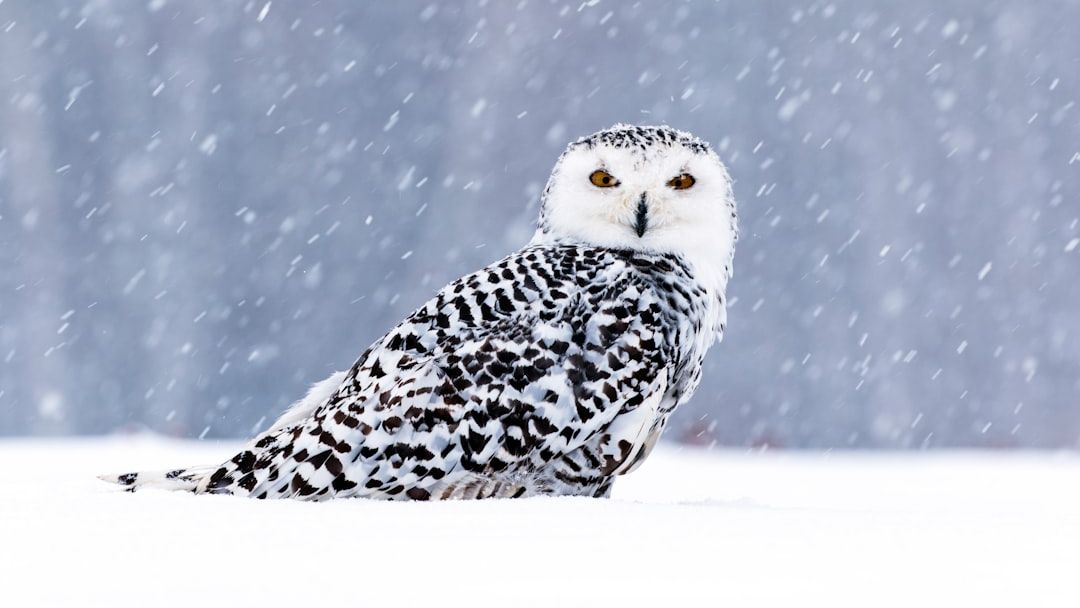
There’s something unsettling about the silence of an owl in flight. No wingbeat. No whisper. Just a shadow moving through the dark, and then – nothing. Whatever was scurrying through the undergrowth a moment ago is gone. It happens so fast, so quietly, that prey often never registers the threat at all.
Owls have spent millions of years being shaped into something close to a perfect killing machine. They evolved specific adaptations to their nocturnal predatory lifestyle, including asymmetrical ears, a facial disk, and a feather structure that allows silent flight. Every feature serves a precise function. Nothing is accidental. What follows are twelve of the most remarkable facts that explain why owls stand apart from virtually every other predator on Earth.
#1: Eyes That Take Up 75% of the Skull
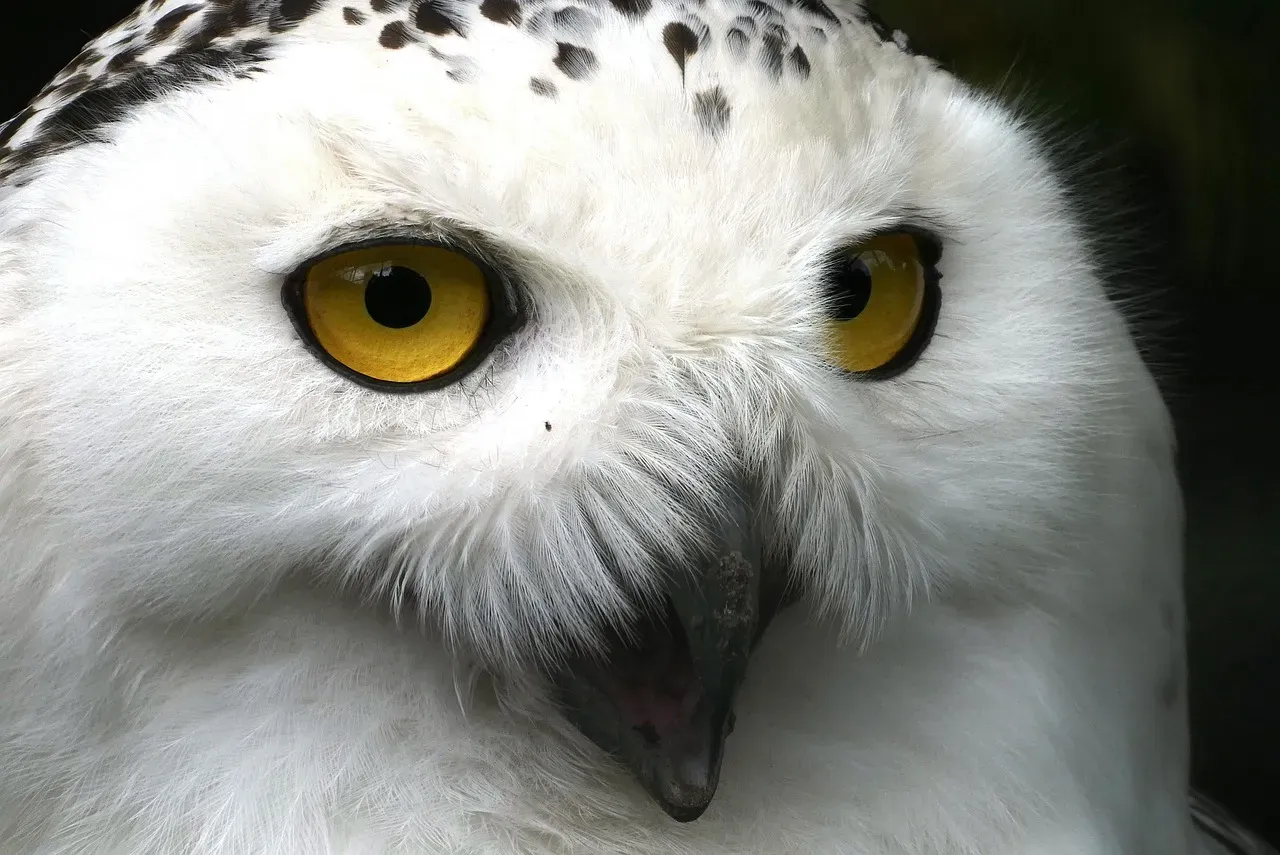
Most people assume owls simply have “good eyesight.” The reality is considerably more extreme than that. Human eyes take up around five percent of the space inside our skulls, whereas owl eyes take up a staggering seventy-five percent of theirs. This isn’t a small evolutionary tweak – it’s a complete rearchitecting of the skull around the demands of nocturnal vision.
If an owl were the height of an average human, their eyes would be as large as softballs. Most birds of prey have eyes on the sides of their heads, but the stereoscopic nature of the owl’s forward-facing eyes permits the greater sense of depth perception necessary for low-light hunting. That precision is not a luxury – it’s the difference between a successful strike and a missed meal.
#2: Night Vision That Outclasses Almost Every Other Animal
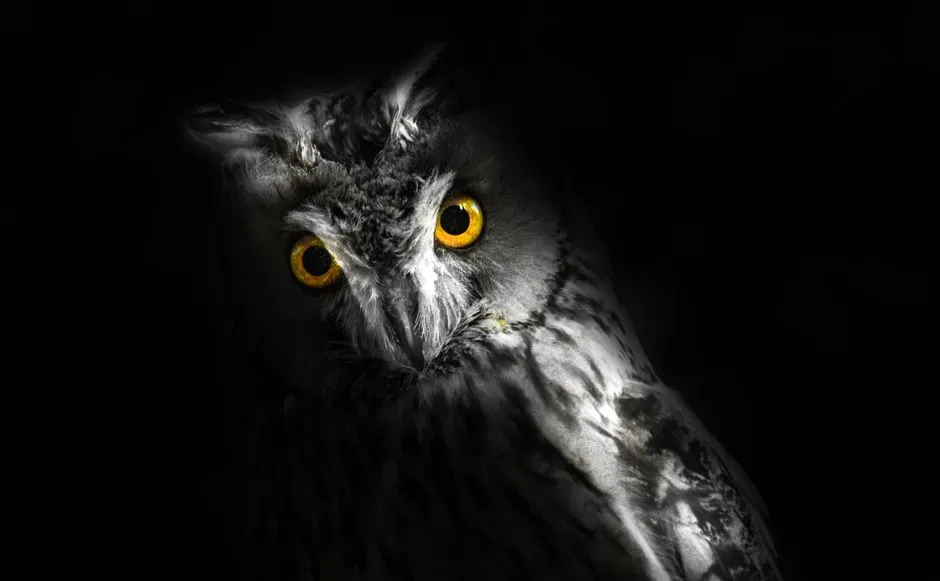
Owls are widely believed to have the best night vision in the animal kingdom, with large pupils and corneas that gather light very effectively. Their eyes are densely packed with rod cells – the light-sensitive receptors that work in dim conditions. Since most owls hunt at night, their eyes contain mostly rod cells, which means they see primarily in black and white.
The visual sensitivity of a Tawny Owl is roughly one hundred times greater than that of a diurnal bird like a pigeon. That’s not a modest advantage – that’s an entirely different perceptual world. For a Barn Owl hunting at night across open fields, there is enough natural light from stars to enable it to see its way around and find food. Starlight. That’s all it needs.
#3: Binocular Vision Built for Precision Strikes
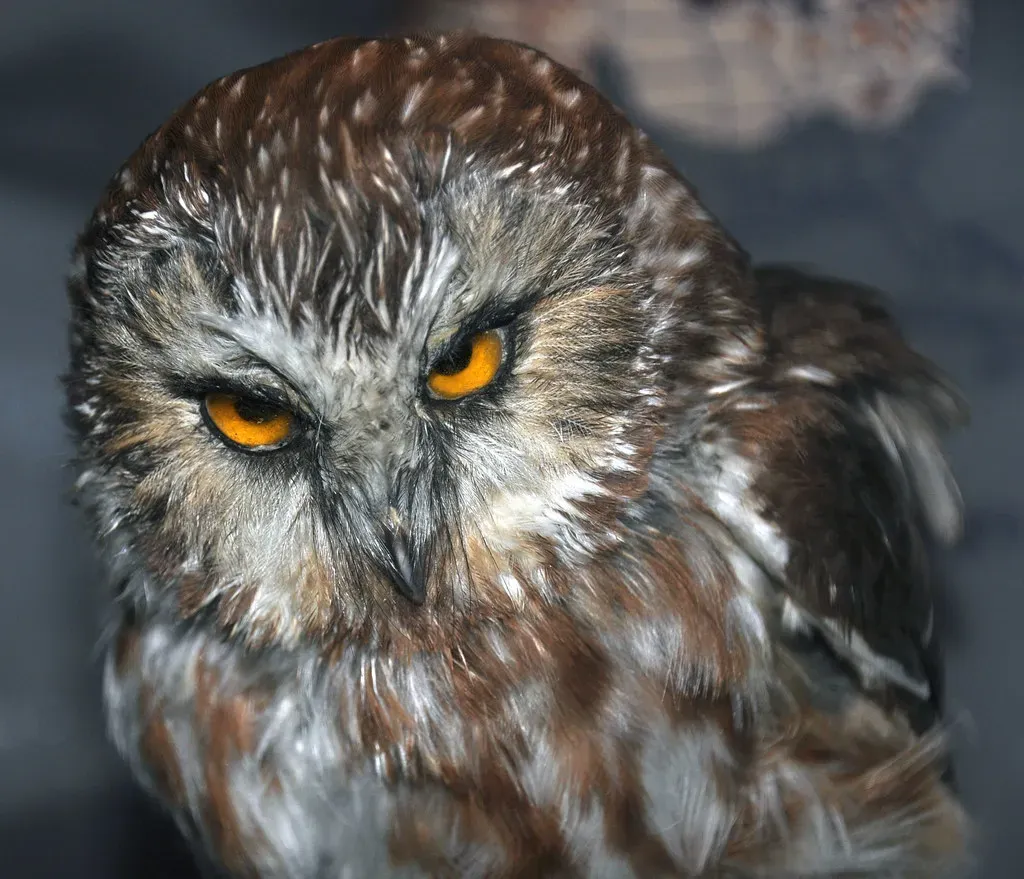
Owls focus on prey with binocular vision, which means each eye sees an object from a slightly different angle. The two views overlap, triangulating the object in the owl’s sight, and allowing them to judge exact distance. This is why an owl can drop from a branch and land directly on a mouse in near-complete darkness without misjudging the gap.
Owls are regarded as having the most frontally placed eyes among all avian groups, which gives them some of the largest binocular fields of vision of any bird. There’s a trade-off, though. Owls lack ocular muscles to move their eyeballs, meaning they are constantly looking forward and must move their entire head to see what is happening on the periphery. Evolution solved that problem in an entirely different way, as you’ll read shortly.
#4: A Head That Rotates 270 Degrees
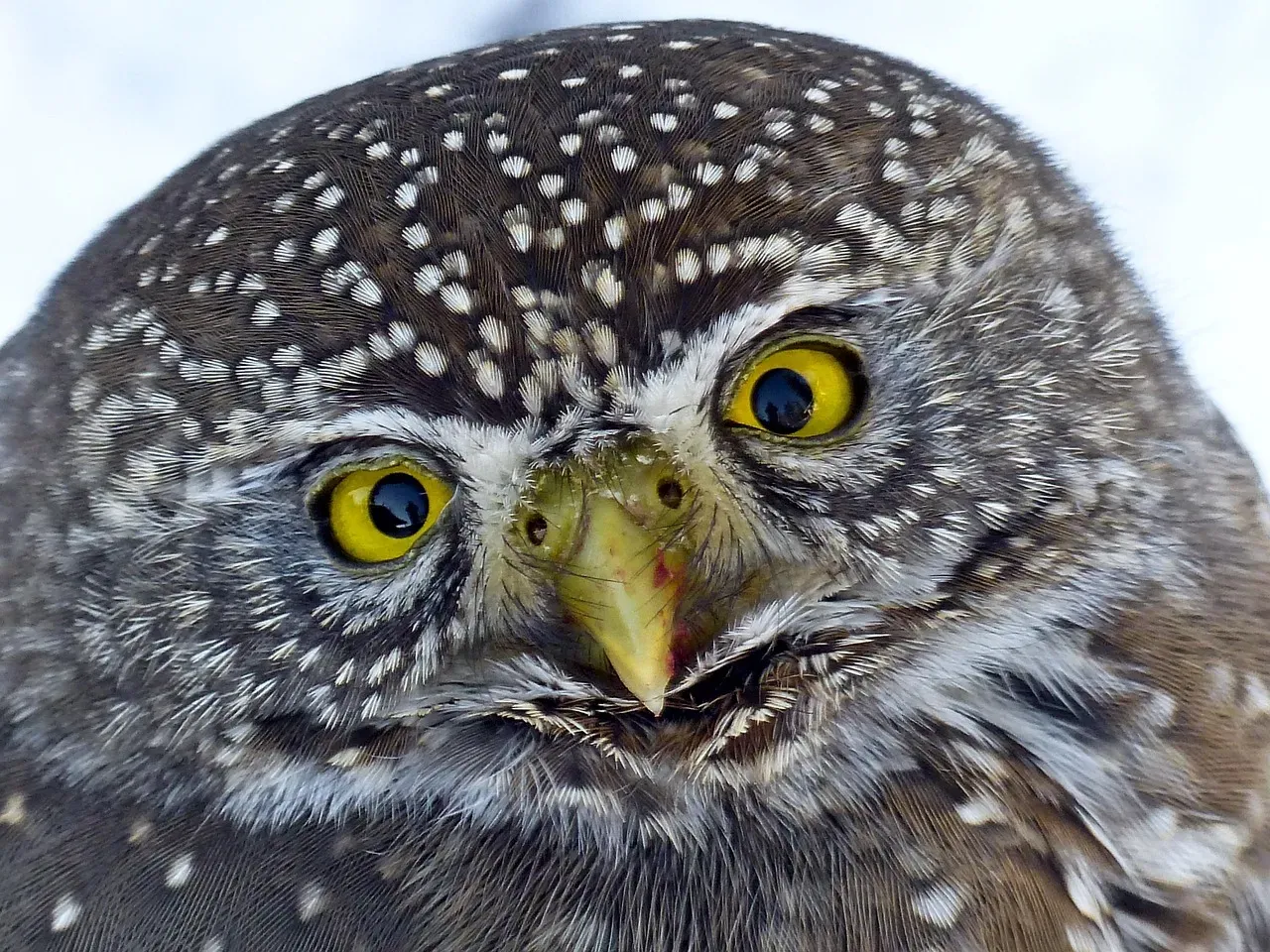
Owls can rotate their heads and necks as much as 270 degrees. They have 14 neck vertebrae – humans have only seven – and their vertebral circulatory systems are adapted to allow them to rotate their heads without cutting off blood to the brain. That last detail matters enormously. A human attempting a similar rotation would immediately lose blood flow to the brain.
Owls’ heads are capable of swiveling through an angle of roughly 270 degrees in either direction, easily enabling them to see behind them without relocating the torso. This ability keeps bodily movement at a minimum, which reduces the amount of sound the owl makes as it waits for its prey. Stillness is strategy. The less movement, the less noise – and the more likely the hunt ends in success.
#5: Asymmetrical Ears That Act as a GPS System
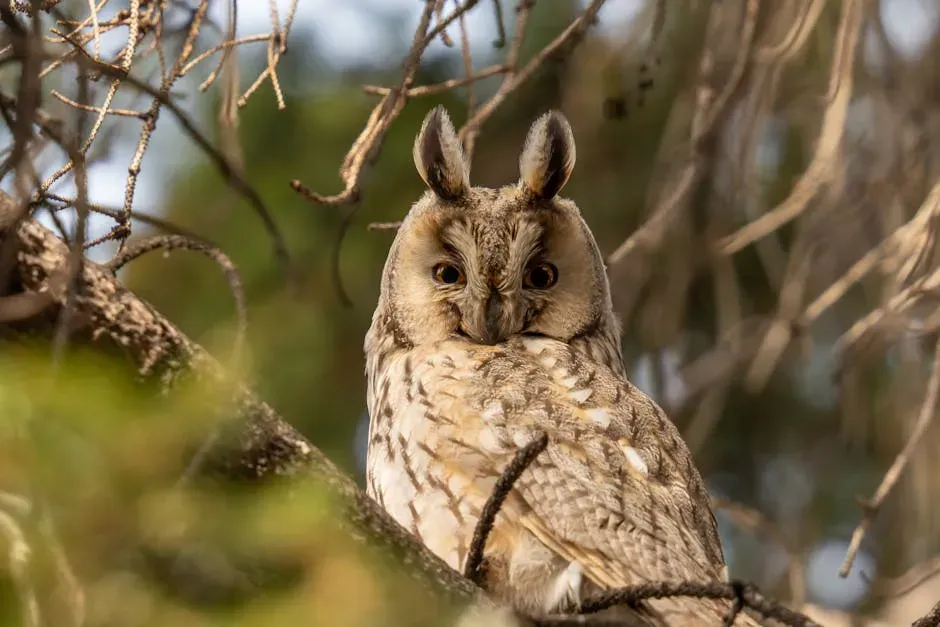
The two ears are asymmetrical in their positioning in most owl species: the left ear is positioned lower than the right, and the two are also out of line in the vertical plane. Such asymmetry generates a tiny amount of separation between when a sound hits one ear compared to the other, allowing an owl to better pinpoint the source of a sound than is the case with human hearing. The owl essentially triangulates sound the way a satellite system triangulates location.
This system is so effective that the owl is capable of locating and taking prey virtually by sound alone. Owls often bob and twist their heads to get still more information on what they can see and hear by taking a reading from several different positions. This makes an owl able to hear the softest rustle of its prey to locate the sound precisely. A mouse shifting its weight under a layer of snow is not safe from a hunting owl.
#6: The Facial Disk – A Built-In Satellite Dish
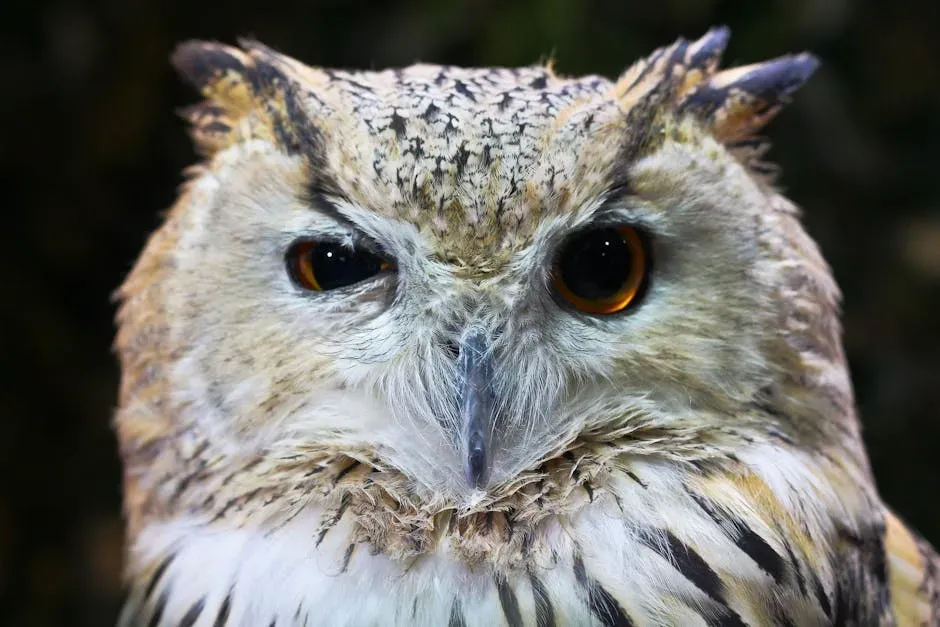
All species of owl, regardless of ear symmetry, have a “facial disk” – a stiff ring of feathers around the face of the owl that acts like one large outer ear. These species have a very pronounced facial disk, which acts like a “radar dish,” guiding sounds into the ear openings. The disk is not decorative. It is a precision acoustic instrument.
The ears of an owl are hidden within the feathers that make up the ruff surrounding the facial disc. The feathers of the ruff are thickened and, coupled with the filamentous auricular feathers of the facial disc, help to channel sound towards the ears. Barn Owl hearing is one of the most sensitive of any animal ever tested. This combination of disk, ruff, and asymmetrical ear placement creates a hearing system with almost no parallel in nature.
#7: Silent Flight Engineered at the Feather Level
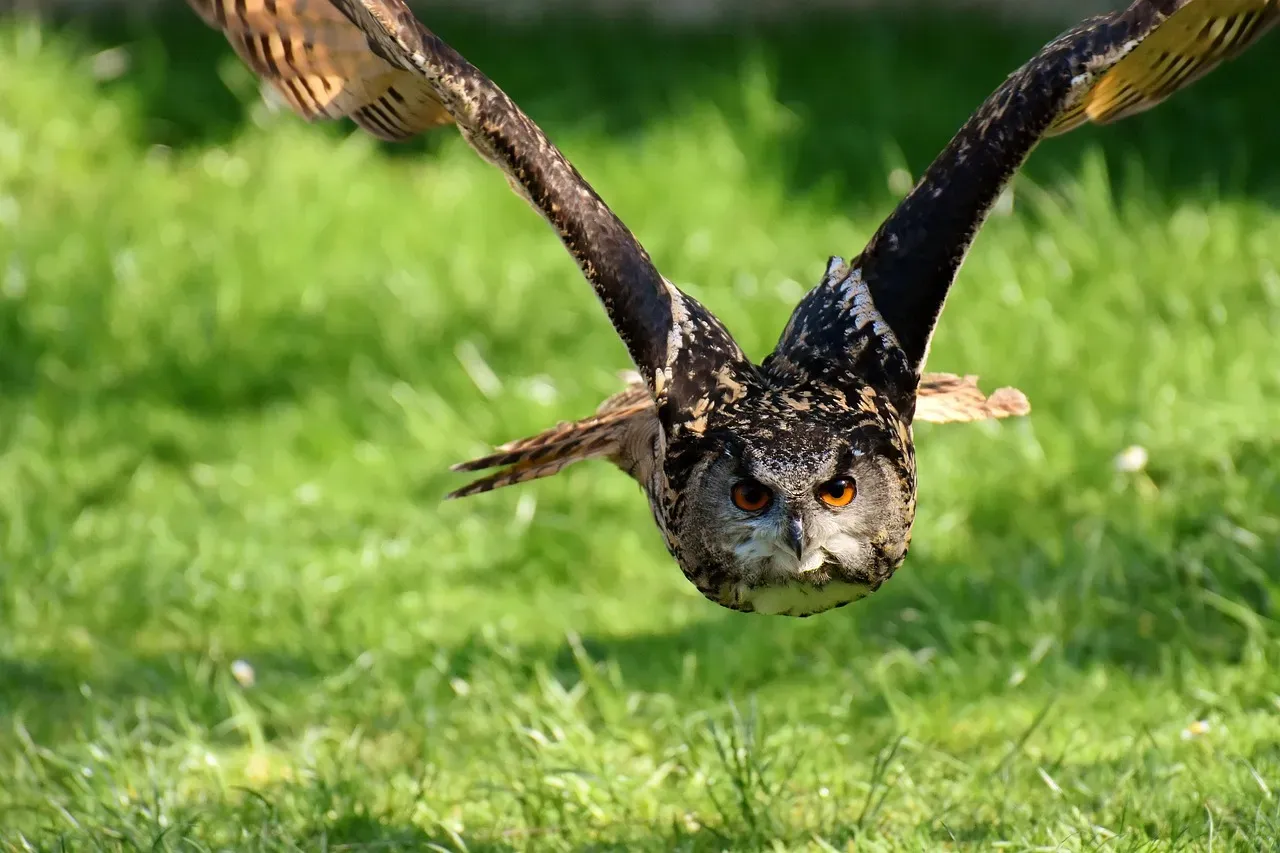
The flight feathers of most owls have fine, comb-like fringes which deaden the sound made by the movement of wings through the air. Not only does this mean that prey can’t hear the approach of the owl, but the owl can still use its own hearing while airborne, without interference from the rush of air through its feathers. That second point is worth sitting with – the silence isn’t just about stealth. It keeps the owl’s own sonar system operational mid-flight.
Owl feathers are very soft – another adaptation for quiet flight. The flight feathers are covered in a thin hair-like structure that traps air within the feather surface, helping to maintain a smooth airflow across the wings and avoid stalling at very low airspeeds. The foremost wing feather also has a row of tiny hooks that help to deaden the sound of air hitting the wings’ leading edge. One experiment conducted by BBC sound engineers used an array of extremely sensitive microphones to measure the sound produced by a flying Barn Owl. Not only were the wingbeats unregistered by human ears, but the sounds recorded by the microphones were infinitesimal.
#8: Zygodactyl Feet That Lock Onto Prey
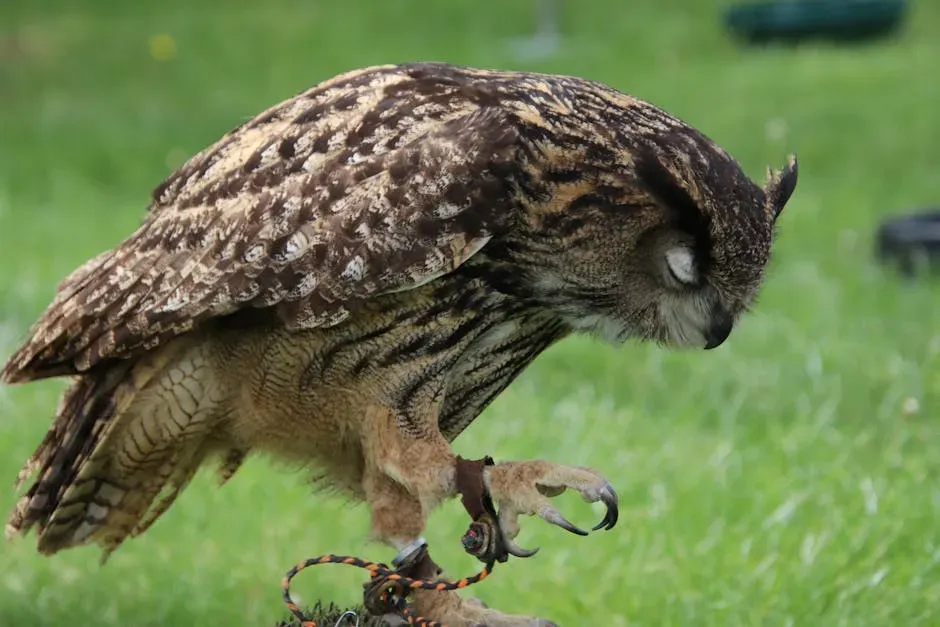
Zygodactyl toe arrangement considerably enhances an owl’s ability to capture prey effectively. This unique toe anatomy, featuring two toes facing forward and two facing backward, allows for a powerful grip on various surfaces. Each foot also has a reversible outer toe, letting the owl switch between a three-forward/one-backward grip or a two-and-two zygodactyl hold. This gives them better balance on branches and a steadier grip on prey.
Once an owl makes contact, it’s very hard to escape. A natural tendon-locking system takes over once they clamp down, so the owl doesn’t need constant muscle effort to hold on. Their talons are adapted to piercing through tough animal hides and holding heavy weights without breaking, and the bones in their feet are strong enough to withstand the impact made by snatching or striking prey at high speeds. This is grip designed for finality.
#9: Talons With Extraordinary Crushing Force
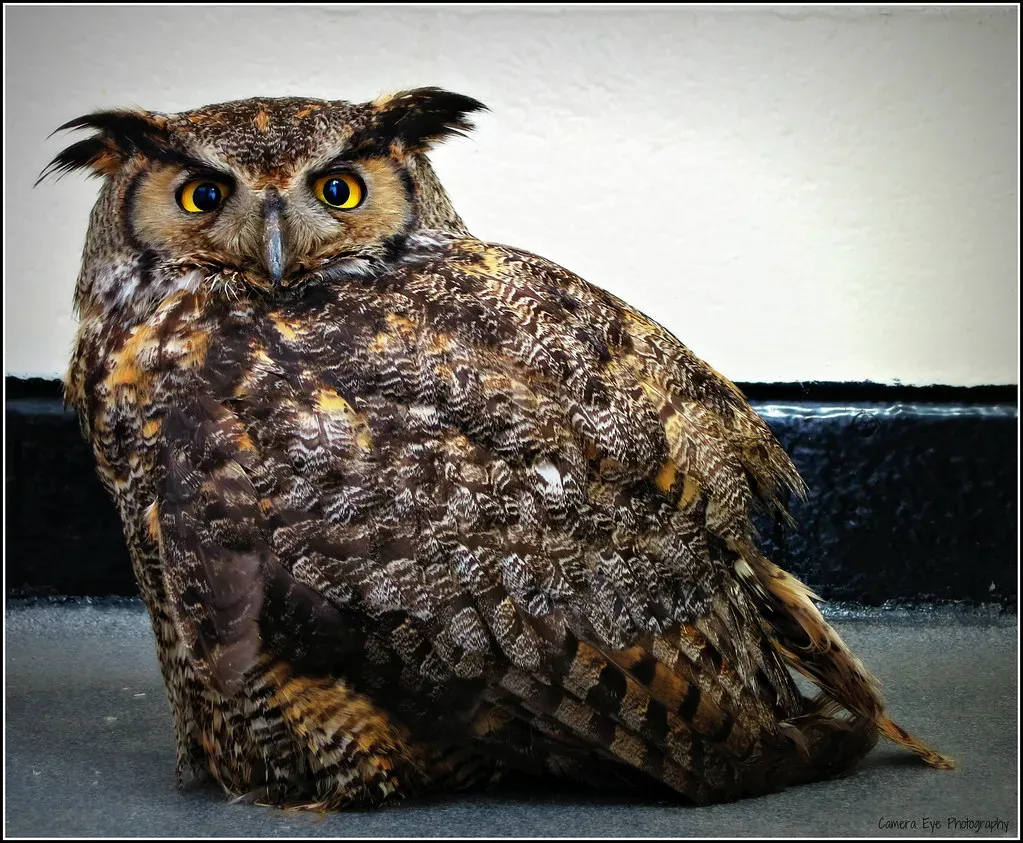
Owls use their powerful feet and sharp talons to snare their prey. The force behind those talons varies considerably by species, but in large owls like the Great Horned Owl, it is genuinely formidable. The crushing force of the Great Horned Owl’s talons is said to range from 200 to an incredible 500 pounds per square inch, which is around ten times stronger than the grip of a standard human hand.
The grip strength of owls’ feet is among the greatest of all raptors. Owls fly skillfully without much effort, because their wings are large compared with the size and weight of their bodies. With large wings and a light body, owls can carry heavy prey animals, fly among thick vegetation and trees, and hover above open fields. The combination of carrying capacity and grip strength allows some owls to take prey considerably heavier than themselves.
#10: Hunting Strategies Tailored to the Environment
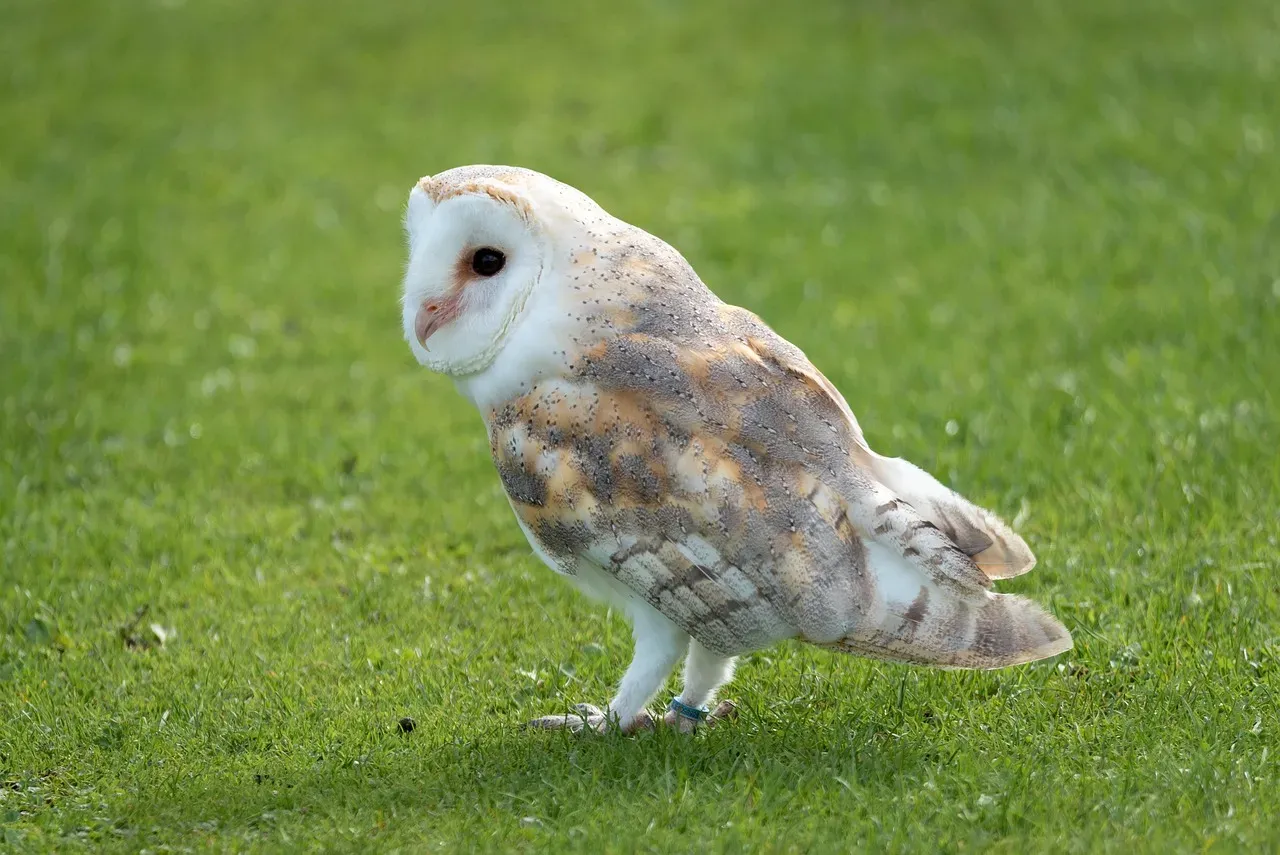
Owls are not one-trick hunters. Owls hunt in various ways. One technique is called perch and pounce, in which owls wait comfortably until they see their prey, then glide down upon it. Another approach, called quartering flight, involves searching for prey while flying, as utilized by the Barn Owl. Different terrain calls for different approaches, and owls switch between them readily.
Some owls that hunt in open country, like the Short-eared Owl, hover like a helicopter above prey until they are ready to zoom in. Burrowing Owls, meanwhile, commonly run across the ground after their prey. Owls sometimes also cache food – capturing prey and stuffing it carefully into a hiding spot. This might be holes in trees, forks of tree branches, behind rocks, or in clumps of grass. They do this when hunting is good and typically return for the prey within a day or two.
#11: The Remarkable Science of Owl Pellets
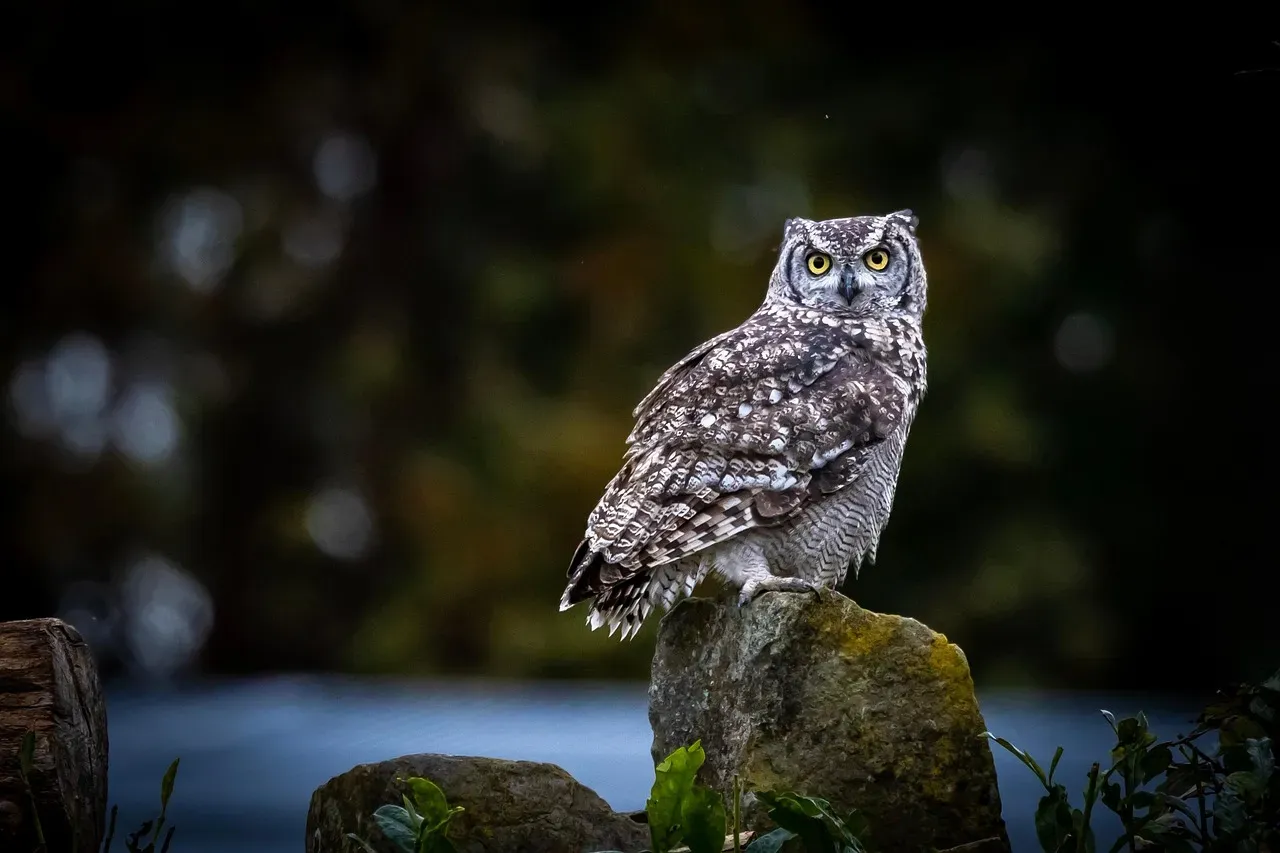
Owls swallow their prey whole, ingesting the entire skeleton. Other raptors selectively tear at their prey, eating only the soft digestible parts and leaving the indigestible bones. What owls can’t digest, they compact and expel. Owl pellets are masses of undigested bones, fur, and other indigestible materials regurgitated after feeding. The pellet formation process occurs in the owl’s gizzard, where indigestible materials are compressed into an oval mass that is later expelled.
Unlike other birds, owls do not have a crop – the organ that holds food until the stomach is ready to receive it. Other raptors don’t need to regurgitate pellets as frequently because food remains in the crop, preventing it from passing upward through the mouth for several hours. For scientists, these pellets are a treasure. Pellet analysis provides valuable scientific data about owl diets, prey populations, and local ecosystem health. A small grey oval, coughed up onto a barn floor, can tell you what animals are living in the surrounding fields.
#12: Unmatched Adaptability Across Every Ecosystem
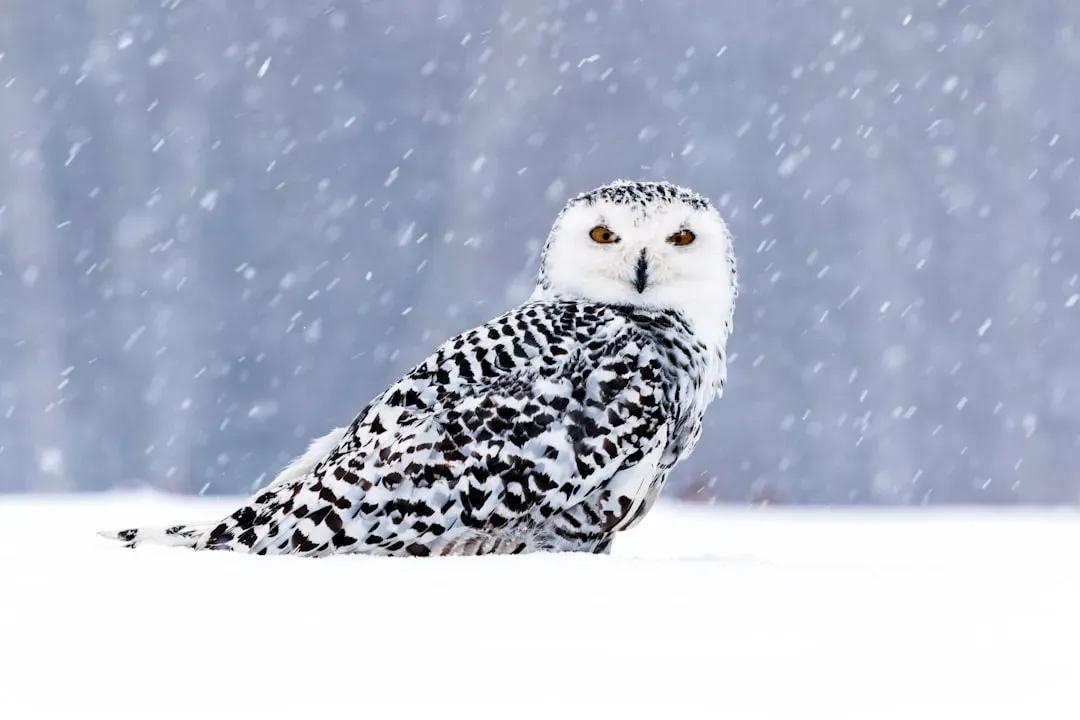
There are about 250 owl species in the world, and they live on every continent except Antarctica. That’s a staggering range. Deserts, rainforests, Arctic tundra, farmland, suburban parks – owls have settled into nearly all of them. Owls’ feathers are colored and patterned so the bird is camouflaged and not easily seen. Owls living in deserts are usually sandy-brown, those in snowy regions are usually white, woodland owls are generally brown, and owls in rocky areas tend toward grey.
Since owls can be found in nearly all parts of the world and across a multitude of ecosystems, their hunting skills and characteristics vary slightly from species to species, though most characteristics are shared among all species. Owls live in many different environments but have evolved in order to stay at the top of the food chain. From the tiny Flammulated Owl hunting moths in mountain forests to the Snowy Owl patrolling open Arctic terrain, the underlying architecture remains the same – built for silence, precision, and total dominance in the dark.
Conclusion
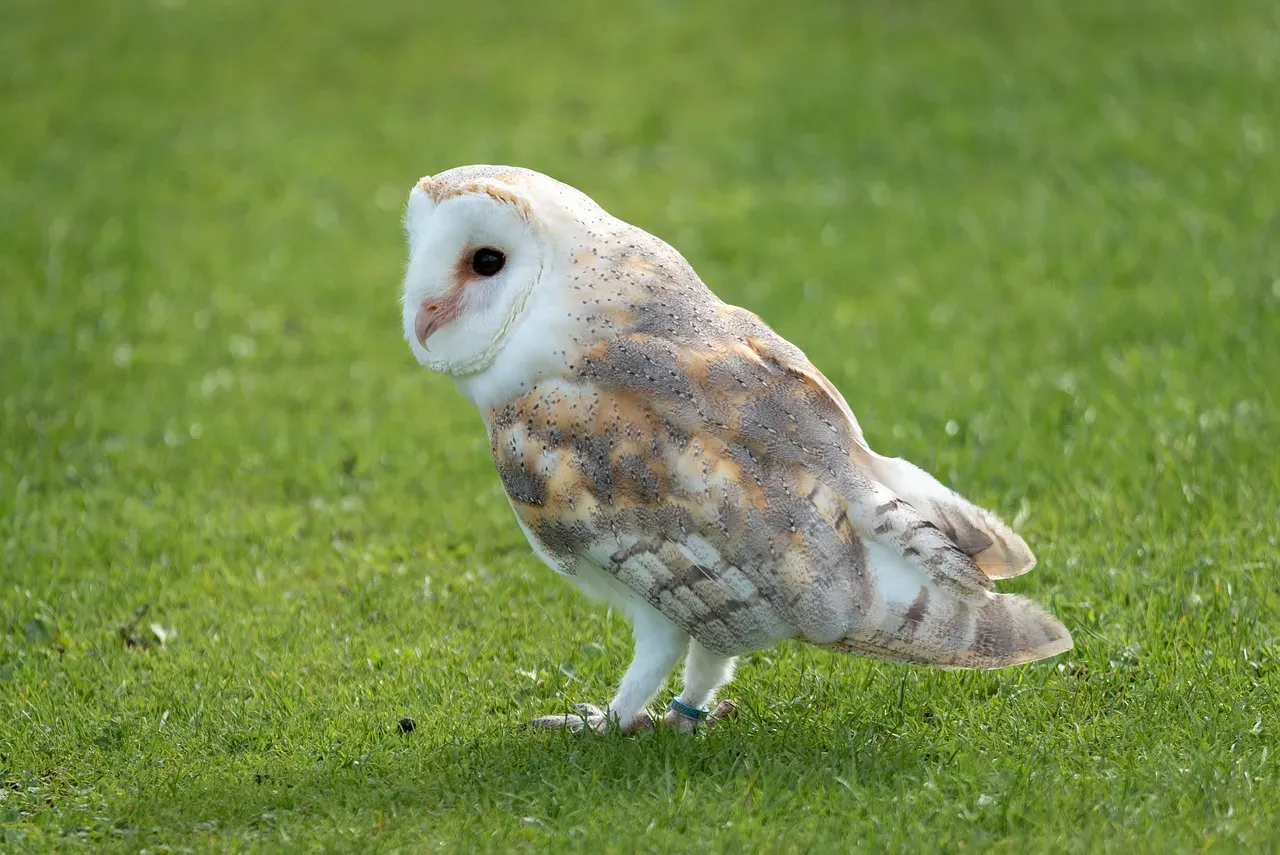
When you lay out all these adaptations together – the tube-shaped eyes, the rotating skull, the sound-nullifying feathers, the locking talons – a clear picture emerges. Owls aren’t just capable predators. They are the product of a long, extraordinarily focused evolutionary process, one that has refined every single feature toward a single goal: finding and catching prey before that prey ever knows the danger is there.
There’s a quiet lesson in that. Nature rarely overbuilds. Every adaptation costs energy to produce and maintain. The fact that owls carry all of these systems simultaneously tells you just how fierce the pressure of nocturnal survival has been across millions of years. The owl isn’t an accident of evolution. It’s the result of it – patient, precise, and still very much at the top of the dark.

- 12 Architectural Wonders From The Ancient World That Inspire Us Today - July 18, 2026
- 6 Beautiful Ancient Cities That Time Forgot (But Shouldn’t) - July 18, 2026
- 6 Common Animal Behaviors That Are Often Misunderstood by Humans - July 18, 2026