

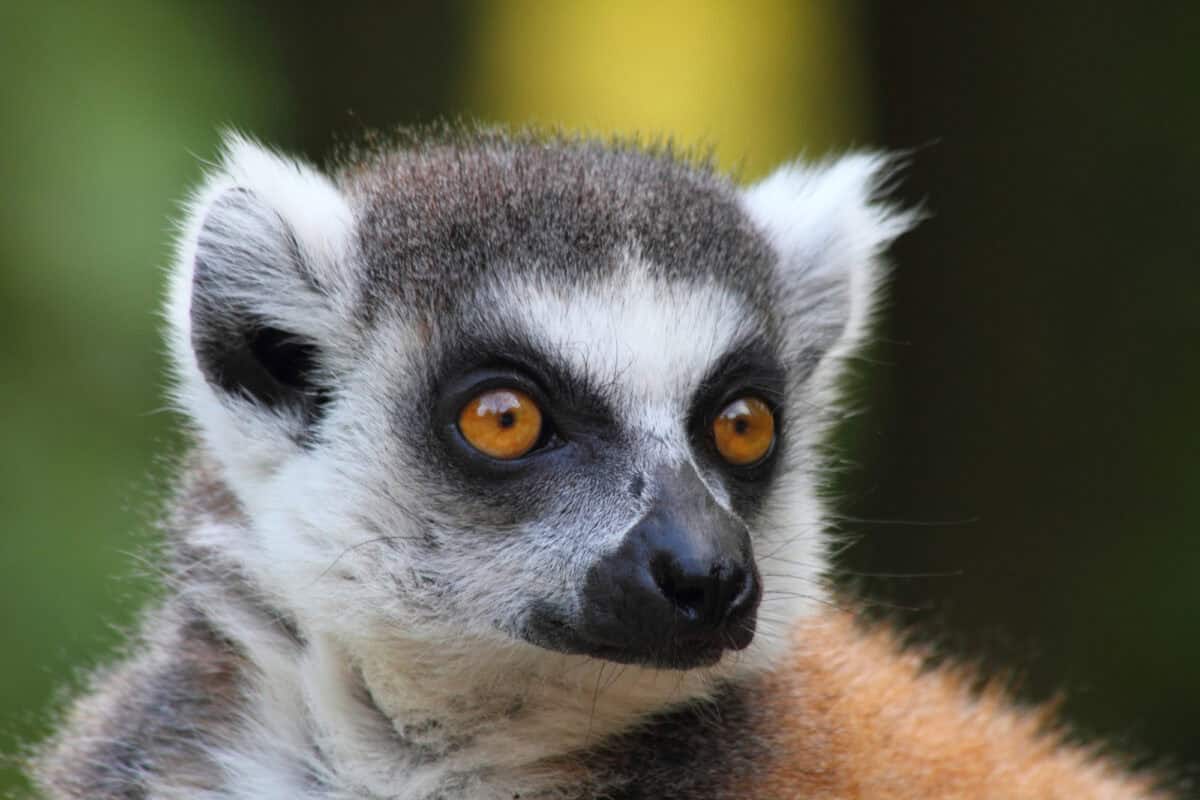
Nature has crafted some truly remarkable creatures that seem to have emerged straight from our nightmares or science fiction films. While these animals may appear frightening or bizarre at first glance, their unusual appearances often serve vital evolutionary purposes – from camouflage and predator deterrence to specialized feeding adaptations. This exploration of 12 animals that resemble monsters reveals the fascinating biology behind their otherworldly appearances and reminds us that even the strangest-looking creatures play important roles in their ecosystems. From the depths of the ocean to remote forest habitats, these living “monsters” demonstrate nature’s incredible diversity and adaptability.
12. Goblin Shark (Mitsukurina owstoni)

The goblin shark, often called a “living fossil,” roams the deep seas with an appearance straight from a horror movie. Its most distinctive feature is its elongated, flattened snout that resembles a sword blade, sitting above a protrusible jaw that can rapidly extend outward to catch prey. When feeding, this jaw mechanism shoots forward like an alien appendage, creating one of the most startling sights in the ocean. Their pale pinkish-gray skin, which comes from blood vessels visible through semi-transparent skin, adds to their ghostly appearance. Found at depths of up to 4,300 feet, these elusive creatures can grow to nearly 13 feet long. Despite their fearsome appearance, goblin sharks pose no threat to humans due to their deep-sea habitat and rarity – they’re so seldom encountered that scientists still know relatively little about their behavior and ecology.
11. Aye-Aye (Daubentonia madagascariensis)
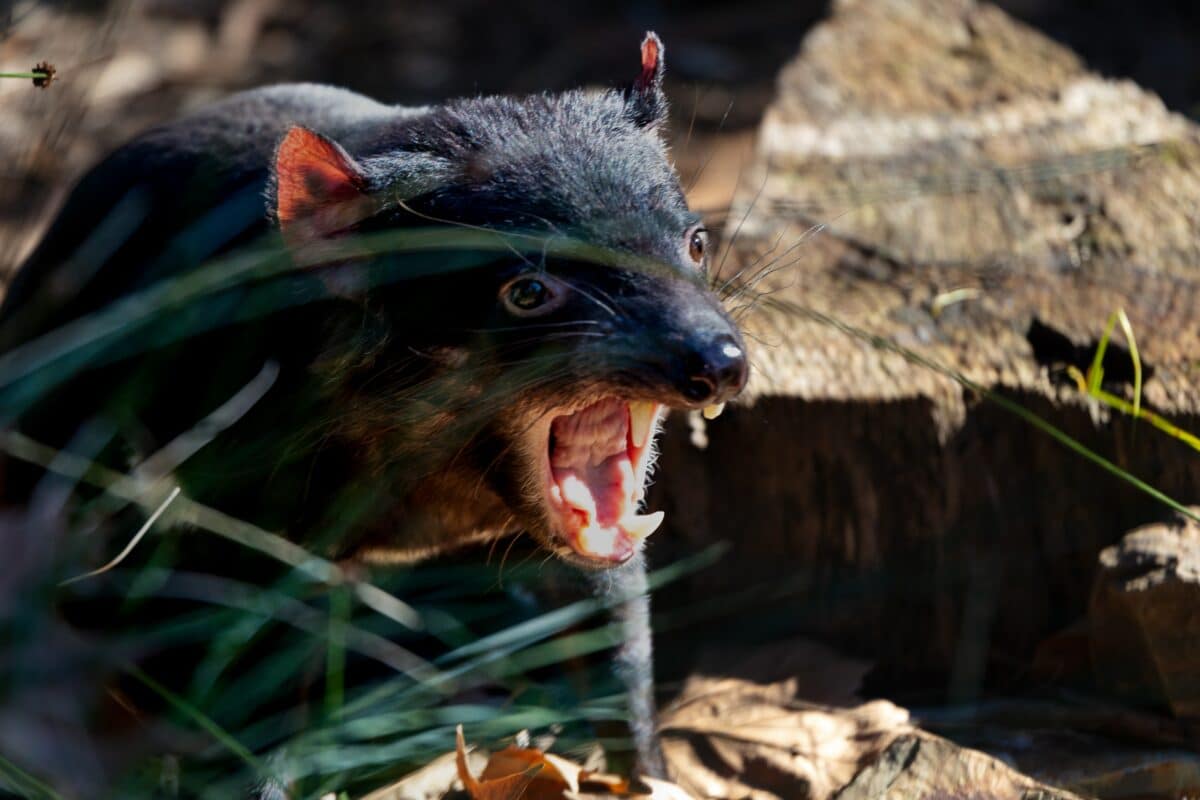
Madagascar’s aye-aye could easily be mistaken for a creature of dark fantasy with its combination of bat-like ears, rodent-like teeth, skeletal middle finger, and glowing orange eyes. This nocturnal primate is the world’s largest nocturnal primate, with a specialized middle finger that’s thin and elongated – an adaptation used to tap on trees to find insect larvae, then extract them from wood. Local superstitions in Madagascar consider the aye-aye an omen of death, with some believing that if one points its characteristic middle finger at you, you’re marked for death. This unfortunate reputation has contributed to the species’ endangerment, as they’re often killed on sight. Scientists recognize them as remarkable examples of evolutionary adaptation, filling a woodpecker-like niche in Madagascar’s forests where there are no actual woodpeckers. Their bizarre appearance serves a critical ecological function, allowing them to survive on food sources other animals cannot access.
10. Barreleye Fish (Macropinna microstoma)
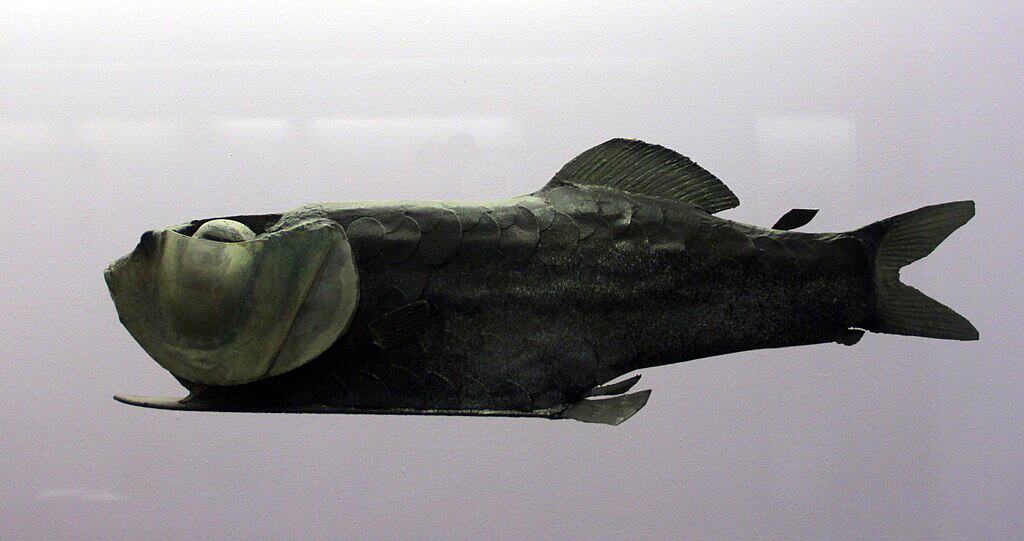
The barreleye fish looks like something designed by a science fiction artist with its transparent head and tubular, upward-facing green eyes encased in a fluid-filled dome. This deep-sea dweller, found at depths between 2,000 and 2,600 feet in the Pacific Ocean, has one of the most unusual visual systems in the animal kingdom. The transparent head acts as a protective shield while allowing the fish an expanded field of vision. What makes them particularly monster-like is how their eyes are actually positioned inside their head rather than on the outside. These highly sensitive tubular eyes can rotate within the transparent shield, allowing the fish to look up for potential prey or forward as needed. Their bodies are small (typically 6 inches long) and dark, helping them remain nearly invisible to predators from below. First discovered in 1939, the barreleye’s remarkable head wasn’t properly understood until 2009, when researchers captured footage of living specimens and realized the dome was transparent rather than filled with dark tissue as previously thought from damaged specimens.
9. Star-Nosed Mole (Condylura cristata)

The star-nosed mole possesses what appears to be a bizarre, tentacled growth erupting from its snout that resembles an alien parasite. This pink, fleshy structure consists of 22 mobile tentacles arranged in a star pattern, each covered with more than 25,000 minute sensory receptors called Eimer’s organs. This gives the star-nosed mole the most sensitive touch organ in the animal kingdom. Native to northeastern North America, these small mammals spend most of their lives underground or swimming in water, using their extraordinary nose to identify food with astonishing speed—they can decide whether something is edible in less than 25 milliseconds. The mole’s “star” contains more than 100,000 nerve fibers in total, six times more than in the human hand, concentrated in an area the size of a fingertip. Though frightening in appearance, this specialized sensory organ represents one of nature’s most remarkable adaptations for touch-based hunting, allowing the mole to thrive in dark, wet environments where vision would be of little use.
8. Giant Isopod (Bathynomus giganteus)

Imagine a roly-poly pill bug, but supersized to the dimensions of a house cat—that’s the giant isopod, a deep-sea crustacean that resembles an armored alien creature. Growing up to 16 inches long, these distant relatives of backyard pill bugs have adapted to the crushing pressures of the deep ocean floor, where they scavenge for food at depths between 550 and 7,020 feet. Their prehistoric appearance features a segmented exoskeleton with multiple pairs of legs and two compound eyes. What makes them particularly monster-like is their scavenging lifestyle—they can go years without eating and will voraciously consume any dead matter that reaches the deep sea floor, including whale carcasses. Their bodies have changed little in the past 160 million years, making them living fossils. Despite their intimidating appearance, giant isopods are crucial deep-sea cleaners, breaking down organic matter and recycling nutrients in an ecosystem where food is extremely scarce. Their remarkable ability to withstand enormous pressure (up to 178 times that at sea level) and extreme cold has made them objects of scientific fascination.
7. Lamprey (Petromyzontiformes)

The lamprey’s circular, tooth-lined sucker mouth evokes images straight from horror films. These ancient, jawless fish have existed for over 360 million years and possess a truly nightmarish feeding apparatus: a round, suction-cup mouth filled with concentric rings of sharp, keratinous teeth. Parasitic species attach to other fish, use their teeth to rasp away scales and skin, and feed on blood and body fluids of their hosts. A single lamprey can kill up to 40 pounds of fish in its lifetime. Their eel-like bodies can grow up to 3 feet long, and they lack jaws, paired fins, and even vertebrae made of bone (their skeleton is cartilaginous). Lampreys represent one of the oldest lineages of vertebrates on Earth, predating even dinosaurs, and their primitive appearance has changed little over hundreds of millions of years. Despite their fearsome aspect, their populations have declined significantly in many regions due to pollution, habitat destruction, and deliberate eradication efforts. Ironically, these “monsters” are now protected in many areas as scientists recognize their ecological importance and their value in understanding vertebrate evolution.
6. Blob Fish (Psychrolutes marcidus)

The blob fish earned internet fame as the “world’s ugliest animal” with its saggy, gelatinous appearance resembling a grumpy old man with a bulbous nose. However, the monstrous appearance we associate with this deep-sea dweller is somewhat misleading. In its natural habitat—the deep waters off Australia and New Zealand at depths of 2,000 to 4,000 feet—the blob fish looks much more like a conventional fish. What we typically see in photographs is a blob fish that has been brought to the surface, where the extreme pressure change causes its body to distort dramatically. The blob fish’s body is adapted to the crushing pressures of the deep sea, with a density slightly less than water and a jelly-like flesh instead of gas-filled swim bladders that would collapse under pressure. This adaptation allows them to hover just above the ocean floor with minimal energy expenditure. Rather than actively swimming to hunt, they simply open their mouths and consume edible particles that float by. Their seemingly melted appearance out of water represents a tragic distortion of a creature perfectly adapted to one of Earth’s most extreme environments.
5. Vampire Squid (Vampyroteuthis infernalis)
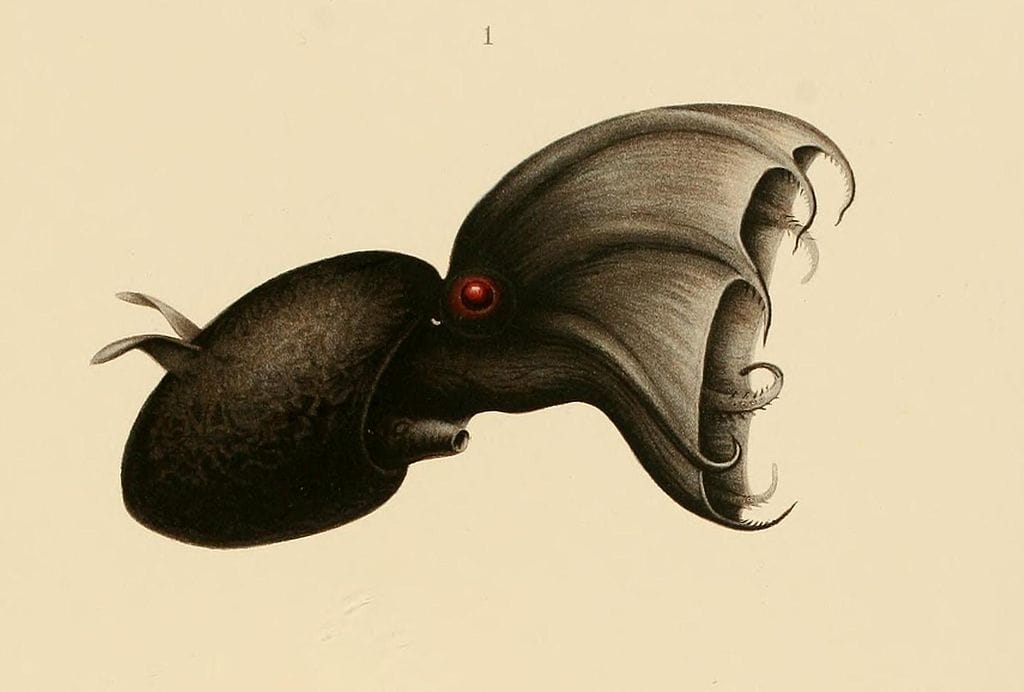
With a scientific name that literally translates to “vampire squid from hell,” this deep-sea cephalopod lives up to its monstrous reputation. Though relatively small (reaching only about 1 foot in length), the vampire squid possesses several features that make it appear otherworldly. Its most distinctive characteristic is the webbing between its arms that resembles a cloak, which it can draw over its body like a vampire’s cape. When threatened, it can turn itself inside out, displaying spiny projections called cirri that give it a thorny, menacing appearance. Perhaps most startlingly, it can emit bioluminescent mucus from the tips of its arms that glows blue in the darkness, creating a disorienting cloud that allows it to escape predators. Despite its fearsome name and appearance, the vampire squid is not a predator but a gentle detritivore, consuming “marine snow”—organic debris that falls from upper ocean layers. Living at oxygen-minimum zones between 2,000 and 3,000 feet deep where few predators can survive, the vampire squid represents a remarkable evolutionary compromise between squids and octopuses, with characteristics of both yet belonging to its own distinct order.
4. Japanese Spider Crab (Macrocheira kaempferi)
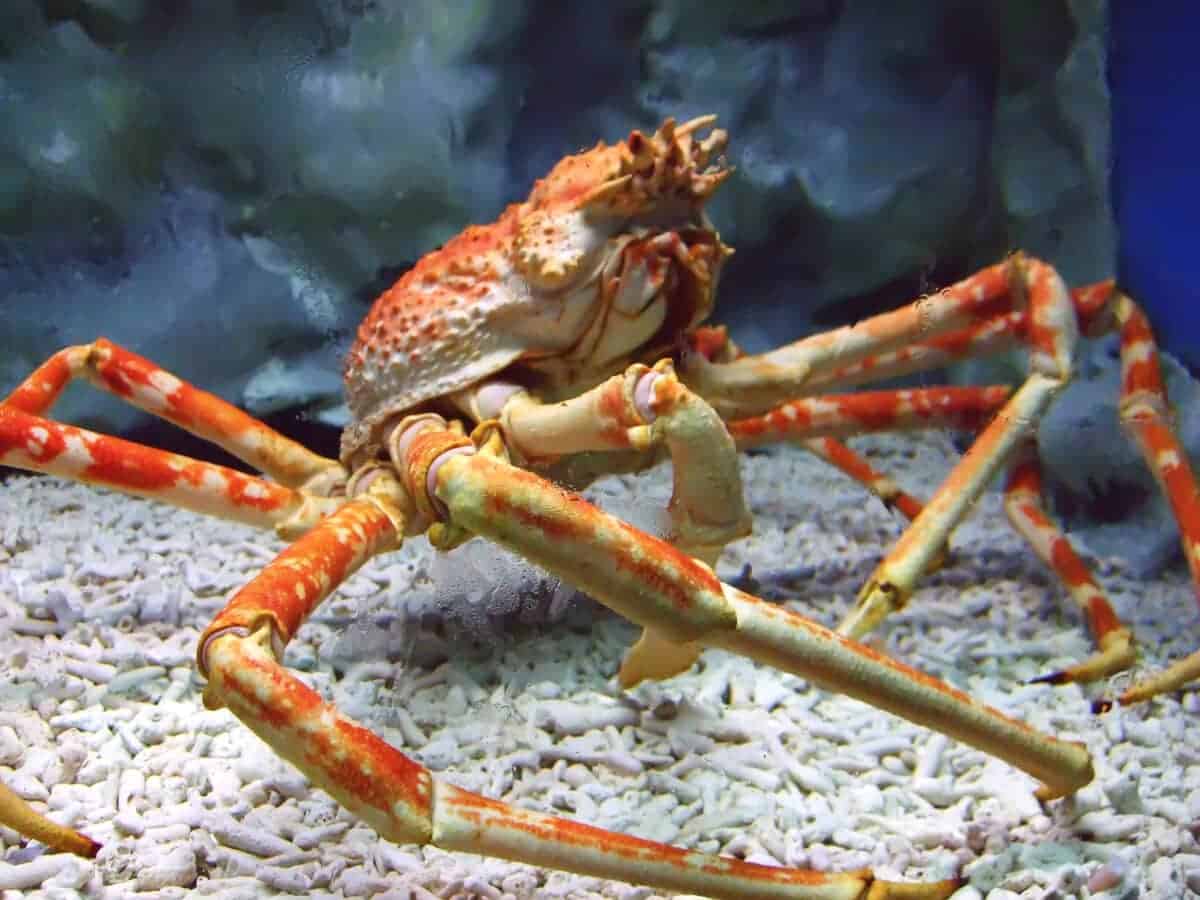
The Japanese spider crab could easily be mistaken for an alien invader with its massive leg span of up to 12 feet—the largest of any arthropod on Earth. Native to the waters off Japan, these giants inhabit depths ranging from 150 to 2,000 feet. Their disproportionately long, spindly legs combined with a relatively small body create an unsettling, spider-like appearance that can trigger arachnophobia even though they’re crustaceans. Adding to their monstrous quality, they can live for decades—possibly up to 100 years—growing continuously throughout their lives. Their carapace is covered in spines and bumps that collect marine debris, allowing them to camouflage themselves on the ocean floor. Despite their intimidating size, Japanese spider crabs are typically gentle scavengers rather than active hunters, using their powerful claws to tear apart dead organisms or occasionally prey on slow-moving shellfish. Their numbers have declined due to overfishing (they’re considered a delicacy in Japan) and habitat destruction, making these living sea monsters increasingly rare encounters, even for deep-sea explorers.
3. Gharial (Gavialis gangeticus)

The gharial appears like a living fossil with its extraordinarily thin, elongated snout filled with 110 interlocking needle-like teeth and bulbous growth on males’ snouts. Native to the northern Indian subcontinent, these critically endangered crocodilians can grow up to 20 feet long, making them one of the largest reptilian predators. What gives males their particularly monstrous appearance is the ghara—a bulbous nasal protuberance that develops when they reach sexual maturity. This structure allows males to produce underwater buzzing sounds that can be heard over half a mile away during mating season. Their bizarre snout shape is a specialized adaptation for catching fish, which comprise 85-90% of their diet. Unlike other crocodilians, gharials cannot walk on land with their body raised, making them awkward and vulnerable when out of water. Once abundant throughout the river systems of the northern Indian subcontinent, today fewer than 1,000 adult gharials remain in the wild due to habitat loss, fishing net entanglement, and poaching. Conservation efforts focus on reintroduction programs and habitat protection to save these extraordinary living relics that have existed relatively unchanged for over 100 million years.
2. Saiga Antelope (Saiga tatarica)

The saiga antelope sports one of the animal kingdom’s most alien-looking faces, with an oversized, flexible proboscis nose that hangs over its mouth, giving it an appearance reminiscent of a science fiction creature. This unusual nose serves critical functions: it warms cold air before it reaches the lungs in winter, filters out dust in summer, and enhances the animal’s sense of smell for detecting predators across vast Central Asian steppes. Males develop distinctive amber-colored horns that can reach nearly 15 inches in length, adding to their unusual appearance. Once numbering in the millions and ranging from the British Isles to Alaska, today these critically endangered antelopes are confined to parts of Kazakhstan, Russia, and Mongolia. Their population has plummeted by more than 95% since the early 1990s due to poaching (their horns are valued in traditional Chinese medicine), habitat loss, and disease. In 2015, a devastating bacterial infection killed over 200,000 saiga—more than half the global population—in just three weeks. Despite their monstrous appearance, saigas are gentle herbivores that once formed some of the largest migratory herds on Earth, with their unique adaptations allowing them to thrive in some of the planet’s most extreme environments.
1. Tarsier (Tarsius)
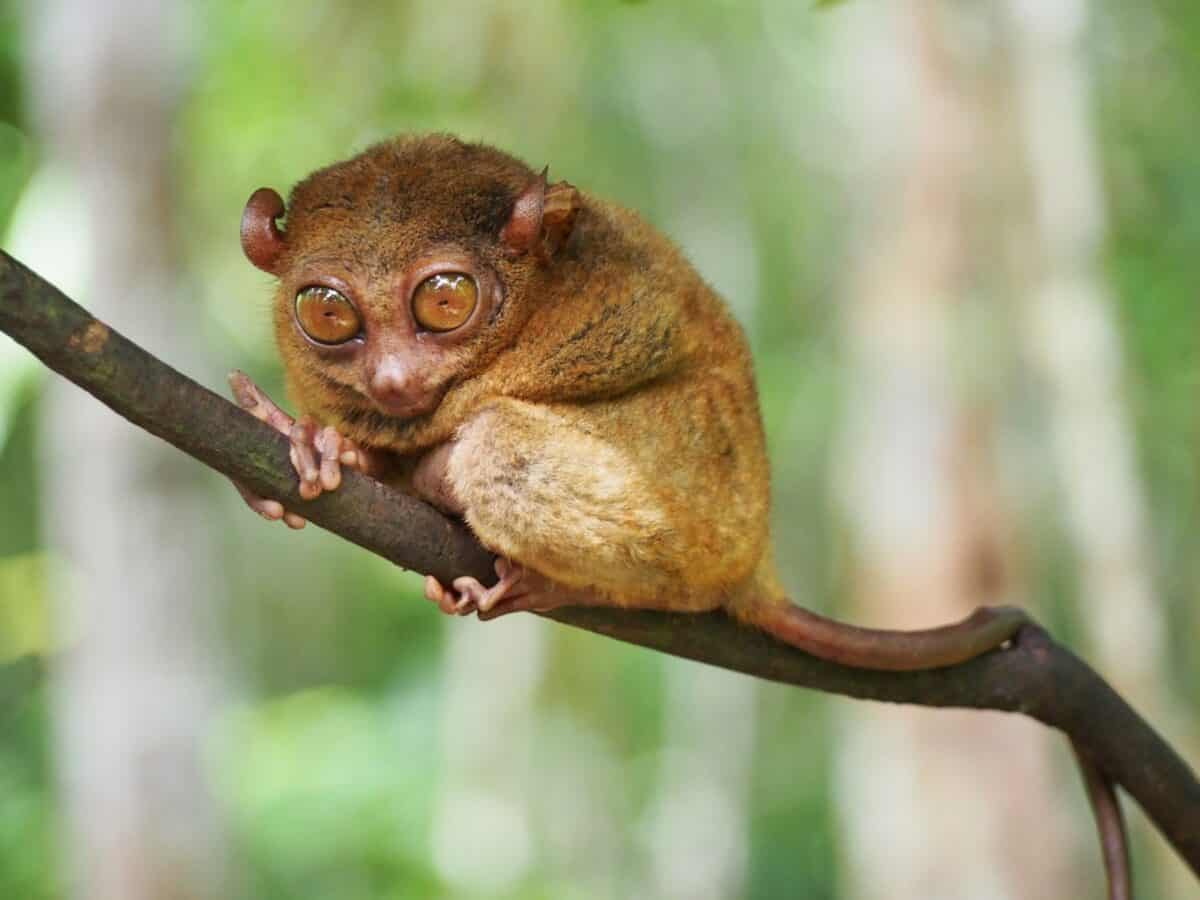
The tarsier looks like a nocturnal gremlin with enormous, unblinking eyes that dominate its tiny face. These eyes are truly remarkable—proportionally the largest of any mammal, with each eyeball actually larger than the animal’s entire brain. Unable to move their eyes, tarsiers compensate with the ability to rotate their heads 180 degrees like owls. Native to the islands of Southeast Asia, these small primates (typically 4-6 inches long) have additional features that contribute to their otherworldly appearance: long, thin fingers ending in suction cup-like pads, a nearly hairless, rat-like tail, and hind legs with elongated ankle bones (tarsals) that allow them to jump over 40 times their body length. What truly makes them monster-like is their feeding behavior—they are the only entirely carnivorous primates, consuming insects, lizards, snakes, and birds that they capture with lightning-fast pounces. Their strange vocalizations, including ultrasonic calls beyond human hearing range, add to their mysterious nature. Conservation concerns are significant for many tarsier species, with habitat destruction threatening their survival. Unfortunately, their unusual appearance has also made them targets for the illegal pet trade, despite the fact that they typically die quickly in captivity due to their specialized needs and stress sensitivity.
Conclusion: Remarkable Adaptations Behind Monstrous Appearances

The seemingly nightmarish features of these 12 animals reveal nature’s extraordinary problem-solving abilities rather than any malevolent design. Each bizarre characteristic—from the barreleye’s transparent head to the star-nosed mole’s tentacled snout—represents a specialized adaptation that allows these creatures to thrive in challenging environments. Many of these “monsters” face significant conservation threats, with their unusual appearances sometimes contributing to persecution or exploitation by humans who misunderstand their ecological importance. By looking beyond our initial reactions of fear or disgust, we can appreciate these remarkable creatures as evolutionary marvels that have found unique solutions to life’s challenges. Their existence reminds us that nature’s diversity extends far beyond conventional beauty, with even the strangest-looking creatures playing vital roles in maintaining the balance of their ecosystems.

As a little kid, I fell in love with nature, wildlife, and animals. Living in the USA, South Africa, Italy, China and Germany gave me the opportunity to discover the world's Wildlife. My favorite animals are Mountain Gorillas, Siberian Tigers, and Great White Sharks.
I'm a certified PADI Open Water Diver, went to Everest Base Camp and Trekked Gorillas in Uganda. I hold a Master of Science in Economics and Finance.
Please send any feedback to feedback@animalsaroundtheglobe.com
- 12 Animals That Look Like Monsters - July 17, 2026
- 13 Animals With Record-Breaking Speed or Strength - July 17, 2026
- The Most Camouflaged Creature Lurking in Pacific Waters - July 17, 2026
Leave a comment
You must be logged in to post a comment.