


The bald eagle, America’s national symbol, has soared back from the brink of extinction in one of wildlife conservation’s greatest success stories. Once decimated by hunting, habitat destruction, and the devastating effects of DDT pesticide, these majestic birds have made remarkable recoveries across the United States. Their journey from fewer than 500 nesting pairs in the 1960s to over 71,400 nesting pairs today demonstrates the power of focused conservation efforts, legal protections, and environmental stewardship. Let’s explore 12 remarkable bald eagle comebacks that stand as powerful testaments to what we can achieve when we commit to protecting our natural heritage.
12. The Chesapeake Bay Revival

In the early 1970s, the Chesapeake Bay region—once a stronghold for bald eagles—had seen its population plummet to just 60 breeding pairs. The widespread use of DDT had thinned eagle eggshells to the point where parents would crush their own eggs during incubation. Following the 1972 DDT ban and protection under the Endangered Species Act, the Chesapeake Bay has witnessed an extraordinary recovery. Today, the region boasts over 2,000 nesting pairs, with Maryland alone hosting more than 800 breeding pairs. The annual Conowingo Dam eagle gathering has become a celebrated wildlife spectacle, where hundreds of eagles congregate during winter migrations, attracting photographers and nature enthusiasts from across the country. This revival has occurred despite the challenges of urbanization and climate change affecting the Chesapeake watershed.
11. Minnesota’s Northern Resurgence

Minnesota, particularly along the northern lakes and rivers, has experienced one of the most dramatic bald eagle comebacks in America. From fewer than 40 nesting pairs in the 1970s, the state now supports more than 9,800 bald eagles—the largest population in the lower 48 states. The Chippewa National Forest alone hosts one of the highest nesting densities in the country. Minnesota’s commitment to protecting shoreline habitats, maintaining healthy fish populations, and public education programs has contributed significantly to this success. The state’s Department of Natural Resources has documented multiple generations of eagles returning to ancestral nesting territories, some nests being continuously occupied for over 30 years. This multigenerational recovery demonstrates how eagle populations can rebuild when given appropriate protection and habitat management.
10. Arizona’s Desert Miracle

Perhaps one of the most unlikely success stories comes from Arizona, where bald eagles have adapted to desert conditions along the Salt and Verde Rivers. In 1978, only 11 breeding pairs remained in the state. Thanks to the Arizona Bald Eagle Nestwatch Program—one of the most hands-on conservation efforts in the country—Arizona now celebrates over 70 breeding pairs. What makes this comeback remarkable is that these desert-adapted eagles represent a genetically distinct population that nests earlier than other bald eagles and has developed specialized hunting techniques for desert waterways. Conservation efforts included placing shade structures over nests to protect eaglets from extreme desert heat, rescuing fallen nestlings, and seasonal closures of critical nesting areas. The Arizona Game and Fish Department has documented record-breaking productivity rates in recent years, with the 2021 breeding season producing more fledglings than any previous year on record.
9. Florida’s Peninsula Prosperity
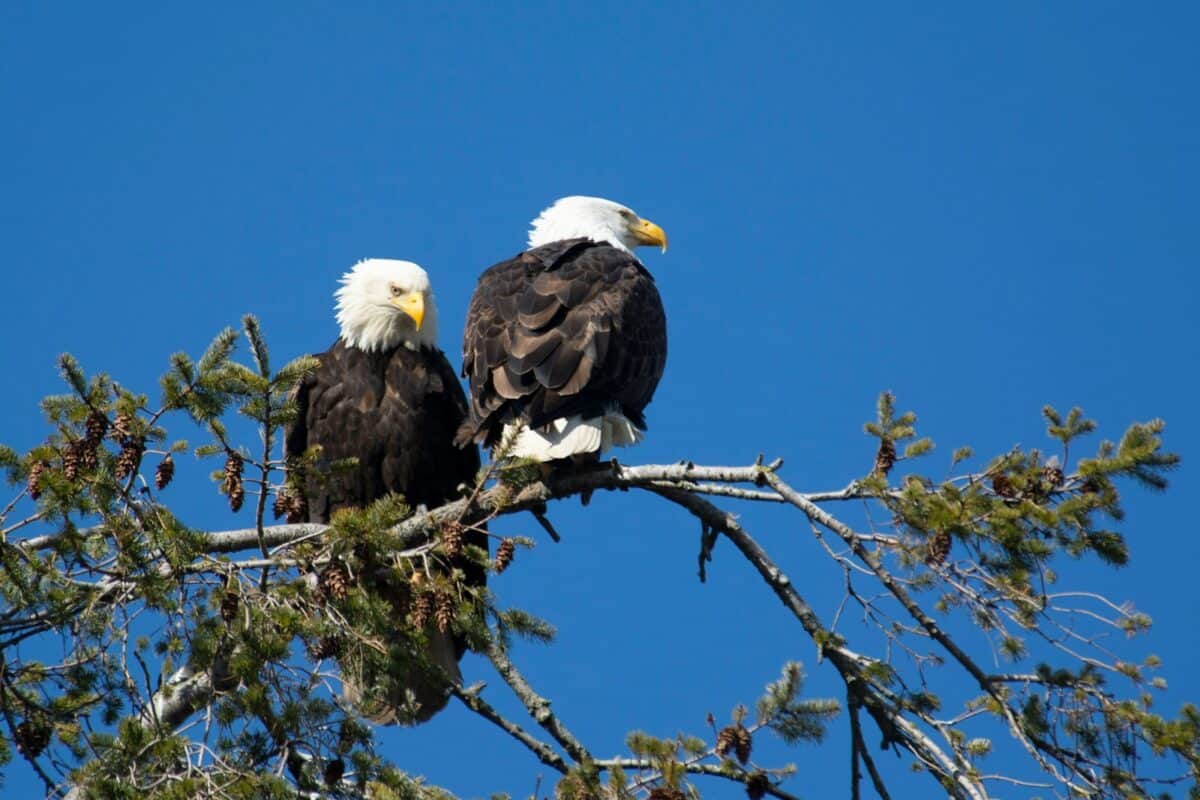
Florida has long been a crucial stronghold for bald eagles, even during their darkest population decline. In the 1970s, approximately 88 nesting pairs remained in the state. Today, Florida boasts over 1,500 nesting pairs, second only to Minnesota in the lower 48 states. The recovery has been so successful that eagles have adapted to increasingly urban environments, nesting in cell towers, artificial platforms, and even in busy areas near human activity. Comprehensive protection of nesting sites through buffer zones, even during development projects, has been crucial to this success. Florida’s eagle monitoring program has documented remarkable site fidelity, with some territories being occupied continuously for over 40 years. Interestingly, Florida’s eagles often nest during winter months (October to May), contrary to northern populations, demonstrating their adaptability to regional conditions. The state’s recovery has been so robust that bald eagles were removed from Florida’s endangered species list in 2008.
8. New York’s Hudson River Redemption

The Hudson River Valley tells a compelling story of environmental recovery and eagle resurgence. In 1976, only one known bald eagle nest remained in New York State. Pollution, habitat loss, and DDT had devastated the once-abundant population. Through a pioneering reintroduction program from 1976 to 1988, wildlife biologists relocated nearly 200 eaglets from Alaska and other states with healthier populations to New York. Today, New York hosts approximately 400 breeding pairs, with the Hudson River serving as a critical wintering ground for eagles from Canada and northern states. The annual Hudson River Eagle Fest celebrates this remarkable comeback, drawing thousands of visitors. The eagles’ return coincided with and partly resulted from the Hudson River’s own environmental recovery after decades of industrial pollution. The Clean Water Act’s implementation has improved water quality, restored fish populations, and consequently created better hunting opportunities for these apex predators. New York’s Department of Environmental Conservation continues monitoring nests and has documented eagle pairs returning to historically occupied territories that had been abandoned for decades.
7. Maine’s Coastal Resurgence

Maine’s rugged coastline and interior lakes once supported hundreds of bald eagle pairs before their decline. By 1972, only 29 nesting pairs remained in the entire state. Maine implemented one of the earliest eagle recovery programs, focusing on habitat protection along shorelines and supplemental feeding during winter months when ice cover limited fishing opportunities. Today, Maine celebrates over 700 nesting pairs, with eagles occupying territories across the state’s diverse ecosystems, from coastal islands to inland lakes. Maine’s recovery effort included pioneering work in contaminant research, documenting how environmental toxins accumulated in eagles and affected their reproduction. The state’s “Beginning with Habitat” program has been instrumental in preserving critical eagle nesting and foraging areas through conservation partnerships with private landowners. Maine’s eagles now produce more than 300 fledglings annually, creating a source population that helps repopulate neighboring states and Canadian provinces.
6. Washington’s Pacific Northwest Revival

Washington State’s bald eagle population tells a dramatic recovery story, particularly along the Skagit River. In the 1980s, fewer than 105 breeding pairs remained statewide. Today, Washington hosts approximately 1,800 breeding pairs. The Skagit River Eagle Festival celebrates the annual winter congregation of hundreds of eagles that feast on salmon during spawning season. Conservation efforts included strict protection of old-growth trees essential for nesting and developing the first Habitat Management Plan specifically for bald eagles in the United States. Washington’s Department of Fish and Wildlife implemented innovative nest monitoring techniques, including satellite tracking to understand migration patterns and critical habitat needs. Research revealed that many of Washington’s eagles migrate to British Columbia and Alaska during summer months, highlighting the importance of international conservation cooperation. The state’s recovery has been so successful that eagles have become a year-round presence in many areas where they were once seasonal visitors, including Puget Sound, where they frequently feed on seal placentas during pupping season—an example of their adaptable feeding strategies.
5. Alaska’s Sustained Abundance

While Alaska maintained the largest bald eagle population even during the species’ decline in the lower 48 states, the population faced its own challenges from bounty hunting (until 1952) and habitat threats. Conservation efforts focused on protecting crucial salmon streams and coastal breeding territories. Today, Alaska hosts an estimated 30,000 bald eagles—approximately half of North America’s total population. The Chilkat Bald Eagle Preserve near Haines protects the world’s largest concentration of bald eagles, where over 3,000 eagles gather during the late fall salmon run. Alaska’s eagles played a crucial role in the recovery of the species nationally, as eaglets from Alaska were used in reintroduction programs in multiple states. The state’s continued protection of old-growth forests along salmon streams ensures nesting habitat remains available. Alaska’s healthy eagle population demonstrates how maintaining intact ecosystems allows wildlife to thrive naturally, with minimal human intervention beyond habitat protection. The state’s eagles serve as important indicators of ecosystem health, particularly regarding salmon populations and water quality.
4. Wisconsin’s Northwoods Success
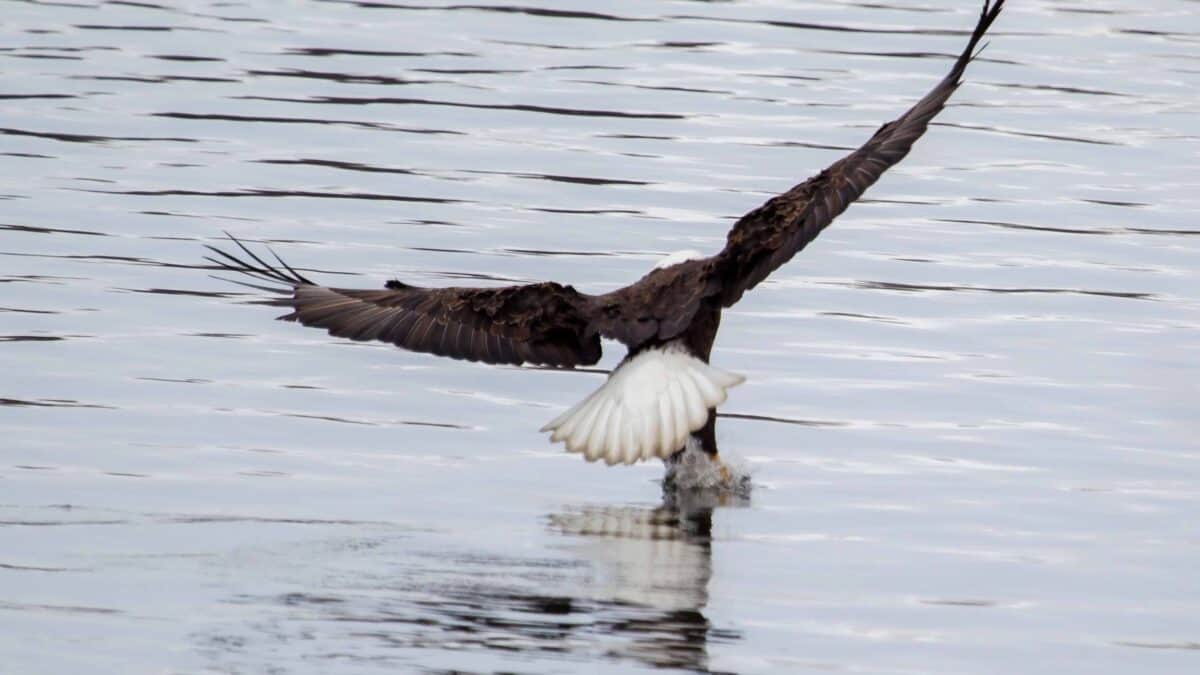
Wisconsin’s bald eagle recovery represents one of the most thorough documentation efforts of any state. In 1974, Wisconsin had just 108 occupied nests. Through meticulous annual aerial surveys begun in 1973, researchers have tracked the population’s growth to more than 1,700 nesting pairs today. The Northern Highland-American Legion State Forest has become a stronghold for breeding eagles. Wisconsin’s Natural Resources Foundation initiated an “Adopt an Eagle Nest” program that funded research and monitoring while engaging the public in conservation efforts. The state’s Bald Eagle Watching Days in January celebrate winter concentrations along the Wisconsin River, where open water below dams provides crucial winter fishing grounds. Wisconsin’s eagle recovery benefited from the protection of shoreline habitats through the state’s Knowles-Nelson Stewardship Program, which preserves critical natural areas. The Wisconsin Department of Natural Resources has documented increasing adaptability in nest site selection, with eagles increasingly tolerating human activity and utilizing previously avoided areas near roads and developments—indicating behavioral adaptation alongside population recovery.
3. Michigan’s Great Lakes Recovery

Michigan’s bald eagle comeback spans the Upper Peninsula wilderness and the Great Lakes shorelines. In 1977, Michigan recorded only 86 breeding pairs statewide. Today, more than 900 pairs nest across Michigan, with particularly strong populations along the Au Sable River and in the Upper Peninsula. Michigan’s recovery efforts included intensive monitoring for environmental contaminants, revealing that persistent chemicals like PCBs continued to affect reproduction even after DDT was banned. The establishment of the Michigan Wildlife Action Plan prioritized eagle habitat protection around the Great Lakes, recognizing the importance of clean shorelines and healthy fish populations. Michigan Technological University’s long-term research program on Isle Royale has documented how isolated eagle populations recover differently from mainland populations, providing valuable insights into genetic diversity and population dynamics. Michigan’s eagles have shown remarkable resilience against challenges like botulism outbreaks in the Great Lakes, which affected their food sources. The state’s conservation partners now focus on protecting large, super-canopy trees needed for nesting, which can take over 100 years to grow to suitable size.
2. Pennsylvania’s Keystone State Restoration

Pennsylvania’s bald eagle restoration stands out for its intensive human intervention and remarkable success. By 1980, just three nesting pairs remained in the entire state, all located in Crawford County along the Ohio border. The Pennsylvania Game Commission launched an ambitious seven-year reintroduction program, releasing 88 eaglets obtained from Saskatchewan, Canada, at specially constructed artificial nest towers. Today, Pennsylvania celebrates more than 300 nesting pairs distributed across 63 of the state’s 67 counties. The recovery has been so successful that the Pennsylvania Game Commission ended its annual nest survey in 2018, as the population had become too large to monitor comprehensively. Pennsylvania’s program included pioneering work in addressing lead poisoning in eagles, a continuing threat from ingested lead ammunition fragments in hunter-harvested game. The Pymatuning Reservoir and the upper Delaware River have become eagle hotspots, with some areas hosting multiple nests within sight of each other—a density that would have been unimaginable during the species’ decline. Pennsylvania’s success demonstrates how targeted reintroduction efforts, combined with habitat protection and public education, can restore a species even in states with significant human development and altered landscapes.
1. Iowa’s Heartland Comeback

Iowa represents one of the most dramatic bald eagle comebacks in America’s heartland. In 1977, Iowa recorded its first bald eagle nest in 72 years—a sobering indicator of how completely the species had been eliminated from the state. Through protection of riparian habitats along the Mississippi, Missouri, and interior rivers, Iowa now hosts more than 400 nesting pairs. The recovery has been particularly visible along the Mississippi River, where winter concentrations below locks and dams can attract hundreds of eagles. Iowa’s Eagle View app, developed by the Iowa Department of Natural Resources, has engaged citizens in monitoring and reporting eagle sightings, creating a community-based conservation network. The state’s Decorah Eagles became an internet sensation when the Raptor Resource Project installed live-streaming cameras at a nest, allowing millions worldwide to witness the nesting cycle and raising awareness about eagle conservation. Iowa’s eagle recovery demonstrates how agricultural states can successfully integrate wildlife conservation alongside productive landscapes. The state continues to address challenges from lead poisoning, which affects eagles that scavenge hunter-harvested deer remains containing lead bullet fragments. Iowa’s Bald Eagle Appreciation Days have become popular winter events in multiple river communities, generating eco-tourism benefits alongside conservation awareness.
Conclusion: The Conservation Legacy and Future Challenges

The bald eagle’s recovery represents one of conservation’s greatest triumphs, demonstrating how legal protection, habitat preservation, and public engagement can reverse the decline of even severely threatened species. From fewer than 500 nesting pairs in the contiguous United States in the 1960s to more than 71,400 today, the population growth has exceeded even the most optimistic projections made when recovery plans were initiated. Yet challenges remain, including ongoing threats from lead poisoning, habitat loss, climate change impacts on fish populations, and emerging contaminants in waterways. The eagle’s recovery teaches us that conservation requires vigilance and continued commitment, even after a species rebounds. As we face unprecedented biodiversity loss globally, the bald eagle stands as a powerful reminder that with dedicated effort and appropriate protections, we can restore wildlife populations and the ecosystems they depend upon.

As a little kid, I fell in love with nature, wildlife, and animals. Living in the USA, South Africa, Italy, China and Germany gave me the opportunity to discover the world's Wildlife. My favorite animals are Mountain Gorillas, Siberian Tigers, and Great White Sharks.
I'm a certified PADI Open Water Diver, went to Everest Base Camp and Trekked Gorillas in Uganda. I hold a Master of Science in Economics and Finance.
Please send any feedback to feedback@animalsaroundtheglobe.com
- A Tribute How Wolf 907 F Outlived Her Lifespan to become Yellowstone’s Queen of Wolves - July 23, 2026
- 10 Sounds Dogs React To And 3 That Annoy Them - July 23, 2026
- 10 Animals that live in Swamps - July 23, 2026