

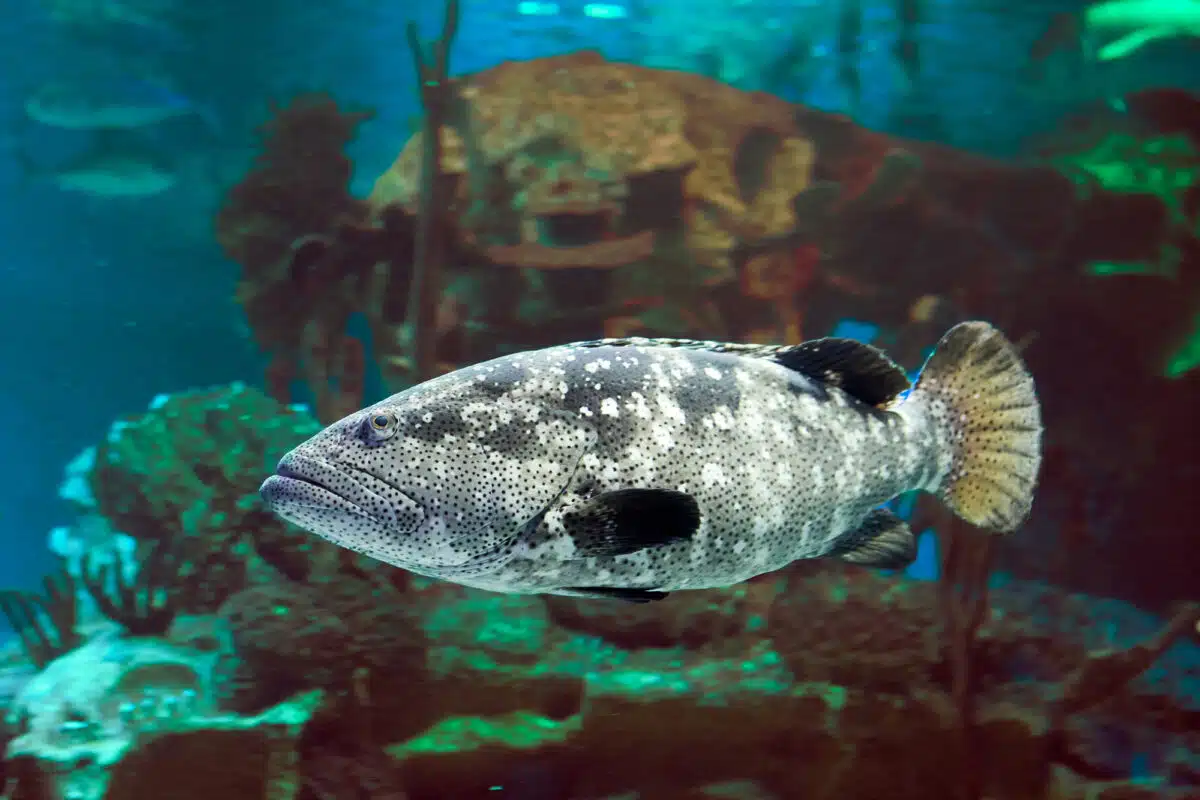
When we think of cooperative hunting, wolves, lions, and other mammalian predators typically come to mind. However, beneath the water’s surface, several fish species have evolved remarkably similar social hunting strategies. These underwater predators work together with precision and coordination that rivals their terrestrial counterparts. Cooperative hunting in fish demonstrates the parallel evolution of complex social behaviors across different evolutionary lineages and environments. From forming hunting parties to assuming specialized roles during the chase, these fish showcase nature’s ingenious solutions to the challenges of survival.
12. Goliath Grouper (Epinephelus itajara)
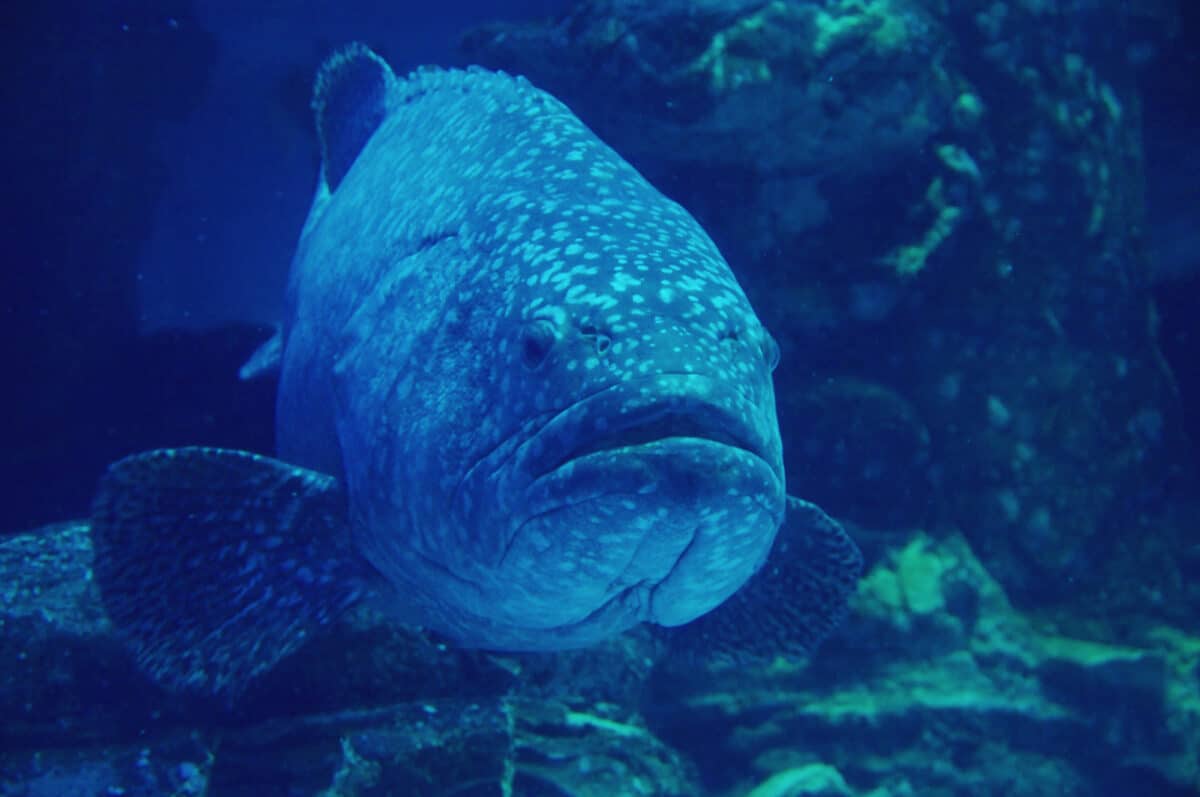
Goliath Groupers, massive fish that can grow up to 8 feet long and weigh over 800 pounds, engage in fascinating cooperative hunting behaviors. These gentle giants will often pair up with other predatory species like snappers or wrasses to hunt more effectively. During these joint ventures, the grouper’s massive size helps to flush prey from hiding spots in coral reefs, while their hunting partners are quick to catch fleeing prey. Research published in the journal “PLOS ONE” documented how Goliath Groupers use body signals to communicate with their hunting partners, including specific head shakes and color changes that indicate when they’re ready to initiate a coordinated attack. This interspecies cooperation represents one of the ocean’s most sophisticated hunting arrangements.
11. Yellow Saddle Goatfish (Parupeneus cyclostomus)
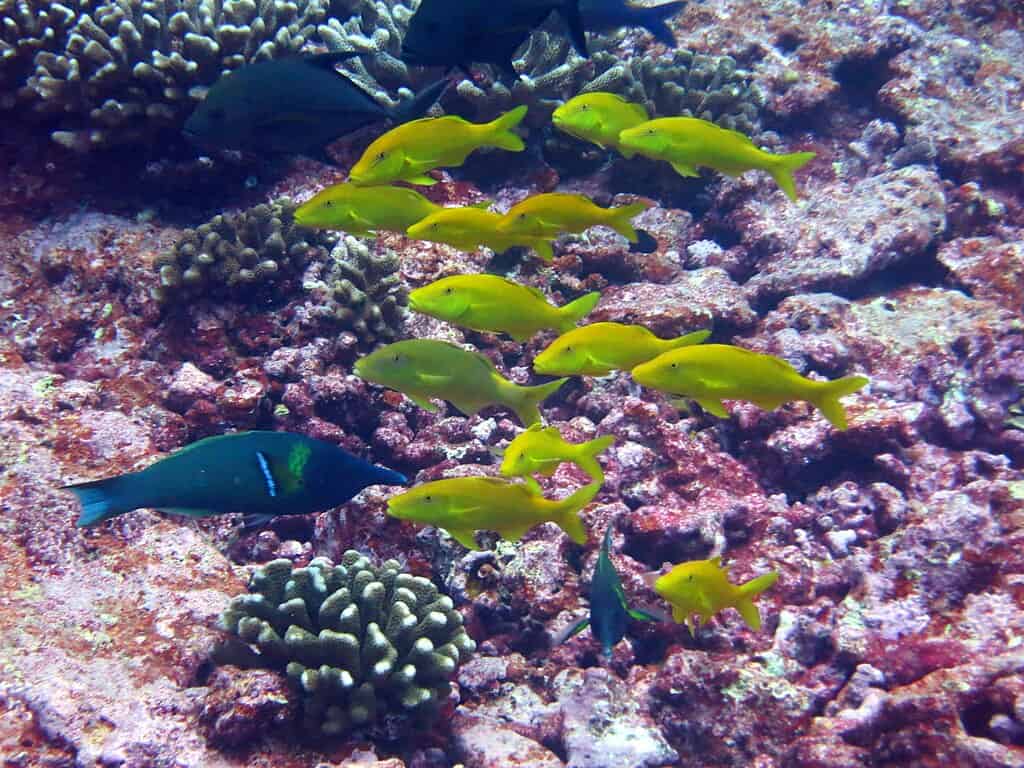
The Yellow Saddle Goatfish has developed an impressive cooperative hunting strategy that relies on both teamwork and specialized roles. These colorful reef dwellers form hunting parties of 5-20 individuals that spread out across sandy bottoms adjacent to coral reefs. Some goatfish serve as “beaters,” using their barbels (whisker-like sensory organs) to dig through sand and flush out hidden prey, while others position themselves strategically to intercept escaping victims. Marine biologists have observed that these hunting formations can change dynamically based on prey behavior and seafloor topography. The fish communicate through subtle body positioning and color changes, allowing them to coordinate their movements with remarkable precision. This division of labor significantly increases their hunting success rate compared to solitary foraging.
10. Red-Bellied Piranha (Pygocentrus nattereri)

Contrary to their Hollywood portrayal as mindless eating machines, red-bellied piranhas employ sophisticated cooperative hunting strategies. These Amazonian fish form hunting schools of 20-100 individuals that work together to overwhelm larger prey. During coordinated hunts, piranhas assume different roles—scouts swim ahead to locate potential prey, while others form tight formations that can quickly surround and isolate targets. Research conducted at the University of St. Andrews revealed that piranhas use low-frequency sounds to communicate during hunts, producing different calls to signal prey location or initiate synchronized attacks. Their cooperative approach allows them to take down animals many times their size, including birds, mammals, and larger fish that venture into their territory. This social hunting behavior helps explain how these relatively small fish (rarely exceeding 13 inches) have become such effective predators in South American river systems.
9. Mahi-Mahi (Coryphaena hippurus)

Mahi-Mahi, also known as dorado or dolphinfish, are renowned for their dazzling colors and impressive speed, but their cooperative hunting behaviors are equally remarkable. These open-ocean predators form hunting pods of 5-30 individuals that work together to corral schools of flying fish and squid—their primary prey. Marine biologists studying Mahi-Mahi hunting patterns have documented how they position themselves in strategic formations, with some fish driving prey toward the surface while others wait to ambush from below. This coordinated approach forces prey into what ecologists call a “bait ball,” a tightly packed defensive formation that actually makes them more vulnerable to synchronized attacks. During these cooperative hunts, Mahi-Mahi can reach bursts of speed up to 57 mph, making them one of the fastest fish in the ocean. Their hunting success depends not just on their physical capabilities but on their ability to communicate and coordinate through body language and positioning.
8. Giant Trevally (Caranx ignobilis)
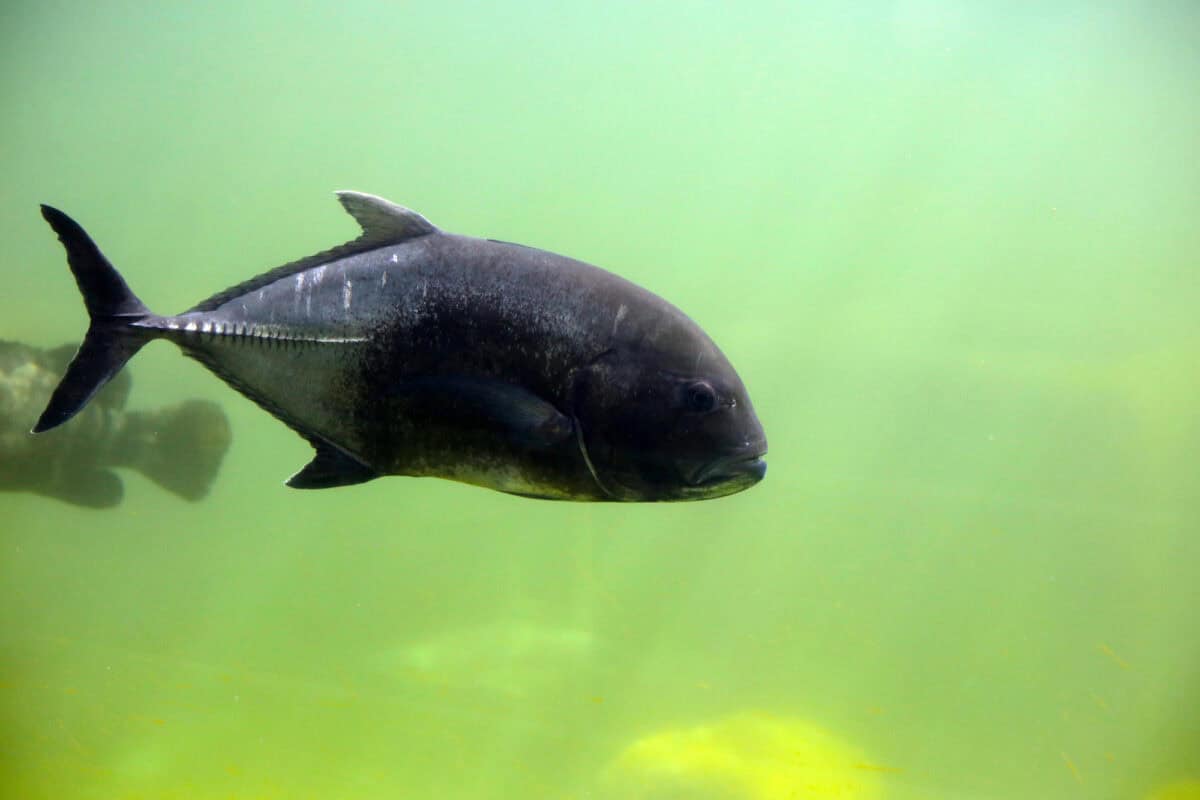
The Giant Trevally, sometimes called the GT or ulua, is the dominant apex predator in many Indo-Pacific reef ecosystems, growing up to 5.5 feet long and weighing over 170 pounds. These powerful hunters have been documented engaging in sophisticated cooperative hunting behaviors by marine biologists from the University of Cambridge. Giant Trevallies form hunting parties of 5-20 individuals that coordinate their movements to herd smaller fish against physical barriers like coral reefs or the ocean surface. Some trevallies will position themselves as blockers while others drive prey from different directions, creating an inescapable trap. This wolf-like coordination requires complex social understanding and communication, which researchers believe occurs through subtle body movements and positioning. Their hunting prowess is so remarkable that BBC’s Blue Planet II famously captured footage of Giant Trevallies launching themselves out of the water to catch birds in flight—a behavior that demonstrates their extraordinary adaptability and predatory intelligence.
7. Great Barracuda (Sphyraena barracuda)

Great Barracudas, with their menacing appearance and formidable teeth, might seem like solitary hunters, but they frequently engage in sophisticated cooperative hunting behaviors. These streamlined predators, which can grow up to 6.5 feet long, form hunting groups of 10-30 individuals that work together to pursue schools of smaller fish like herrings and mullets. Marine biologists from the Woods Hole Oceanographic Institution have documented how barracudas employ a “shepherding” technique, with different individuals taking positions around a prey school to prevent escape while others dart in to make precision strikes. This coordinated approach allows them to overcome the defensive formations of their prey. Interestingly, barracuda hunting groups often include individuals of different sizes, with each size class playing a distinct role in the hunt. Smaller barracudas may squeeze into tight spaces to flush out hiding prey, while larger ones position themselves to intercept those that flee. Their silvery bodies reflect light in ways that can confuse prey but also serve as visual signals to coordinate with other barracudas during complex hunting maneuvers.
6. Yellowtail Amberjack (Seriola lalandi)
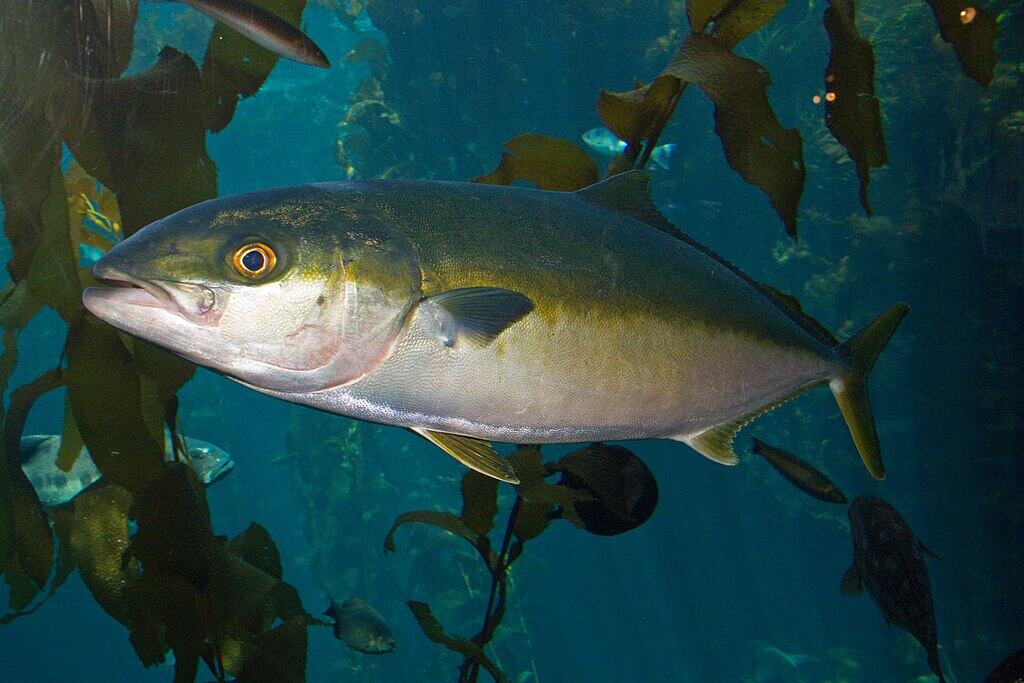
Yellowtail Amberjacks, powerful open-water predators that can reach lengths of over 6 feet, employ sophisticated cooperative hunting strategies that mirror wolf pack tactics. These streamlined fish form hunting groups of 10-50 individuals that work together to isolate prey from larger schools. Research conducted by marine biologists at Scripps Institution of Oceanography documented how Yellowtails use a technique called “carousel feeding,” where they encircle a school of smaller fish, gradually tightening their formation to create a dense bait ball. Some amberjacks patrol the perimeter of this living carousel to prevent prey escape, while others take turns darting through the concentrated prey. This coordination requires complex social understanding and communication, which happens through subtle body language and positioning. Yellowtails have been observed maintaining these hunting formations for hours, rotating roles to conserve energy while maximizing feeding opportunities. Their cooperative approach enables them to exploit prey resources that would be inaccessible to solitary hunters and helps explain why they’re such successful predators across their range from California to New Zealand.
5. Blacktip Reef Shark (Carcharhinus melanopterus)

While many sharks hunt alone, Blacktip Reef Sharks have developed remarkable cooperative hunting behaviors that increase their success rate. These medium-sized sharks, recognizable by the distinctive black tips on their fins, form hunting groups of 3-20 individuals in shallow lagoons and coral reef systems across the Indo-Pacific. Research published in the journal “Animal Behaviour” detailed how these sharks coordinate to herd schools of small fish into shallow water or against physical barriers like sandbars or reef edges. The hunting formation typically takes a crescent shape, with sharks positioned at strategic intervals to block escape routes while others drive prey forward. When the prey is sufficiently corralled, the sharks take turns making quick strikes into the concentrated school. Marine biologists have observed that these hunting groups often include sharks of similar size, suggesting that they select partners with comparable swimming speeds and hunting capabilities. This coordination requires sophisticated social intelligence and communication, challenging our understanding of cognitive capabilities in these ancient predators.
4. Jack Crevalle (Caranx hippos)
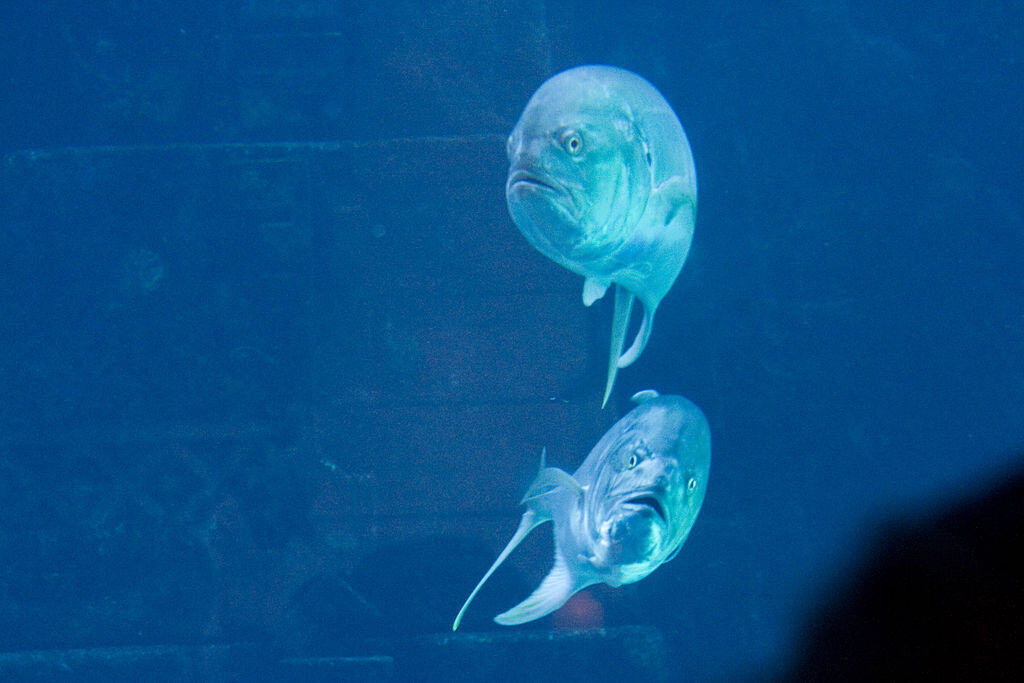
Jack Crevalles are powerful, fast-swimming predators that have perfected cooperative hunting techniques to an art form. These streamlined fish form hunting pods of 10-100 individuals that coordinate their movements with remarkable precision to pursue schools of smaller fish like sardines and anchovies. Marine biologists studying their behavior in the Gulf of Mexico have documented how Jacks employ a strategy called “bait balling,” where they work together to force prey into tight, defensive formations. The hunting pod typically splits into specialized roles—some Jacks circle beneath the prey school to prevent downward escape, while others patrol the perimeter to block horizontal movement. When the prey is sufficiently concentrated, Jacks take turns making rapid dashes through the bait ball, each fish catching what it can before rejoining the formation. This rotation ensures all members of the hunting group benefit from their collective effort. Perhaps most impressive is the Jacks’ ability to coordinate these attacks with other predator species, including dolphins and seabirds, in what ecologists call “multispecies hunting associations.” These complex interspecies collaborations demonstrate remarkable behavioral flexibility and ecological intelligence.
3. African Tigerfish (Hydrocynus vittatus)

The African Tigerfish, named for its impressive teeth and predatory nature, engages in sophisticated cooperative hunting behaviors in the freshwater systems of Africa. These powerful fish, which can grow up to 3.5 feet long, form hunting packs of 5-20 individuals that work together to pursue prey in the rivers and lakes of sub-Saharan Africa. Research conducted by ichthyologists from the University of Pretoria documented how tigerfish coordinate to herd schools of smaller fish into shallow waters or against structural barriers like riverbanks. The hunting formation typically includes lead fish that drive prey forward, while others position themselves strategically to block escape routes. When the prey is sufficiently cornered, tigerfish attack in coordinated waves, with some individuals creating disturbance while others strike from unexpected angles. This wolf-like pack hunting strategy enables them to capture prey that would be too fast or evasive for individual hunters. Most remarkably, African Tigerfish have been documented leaping from the water to catch swallows in flight—the only freshwater fish known to regularly hunt birds in this manner. This extraordinary behavior, combined with their cooperative hunting tactics, places them among the most sophisticated predatory fish in freshwater ecosystems.
2. Bluefin Tuna (Thunnus thynnus)
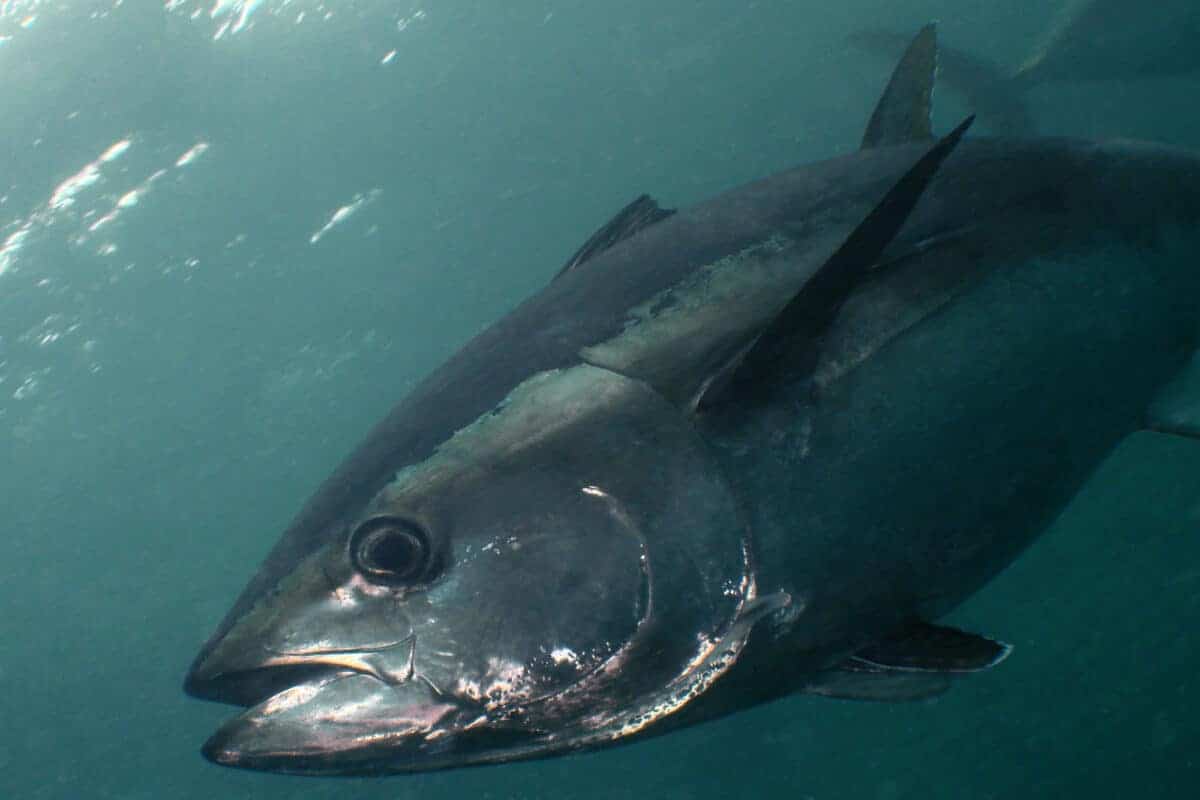
Bluefin Tuna, among the ocean’s most magnificent predators, employ cooperative hunting strategies that enable these massive fish (which can exceed 1,500 pounds) to efficiently capture elusive prey. These open-ocean giants form hunting schools of 10-50 individuals that work together to pursue fast-swimming prey like mackerel, herring, and squid. Researchers using underwater drones have documented how bluefin tuna coordinate their movements to herd prey schools into tight formations, with some tuna positioning themselves beneath the prey to prevent downward escape while others circle horizontally. This three-dimensional coordination requires sophisticated spatial awareness and communication, which occurs through subtle body movements and positioning. When the prey is sufficiently concentrated, tuna take turns making high-speed passes through the school, each fish capturing prey before rejoining the formation. Their hydrodynamic bodies, capable of sustained swimming speeds of 40 mph and short bursts up to 60 mph, make them formidable hunters individually, but their cooperative approach multiplies their effectiveness. Marine biologists studying bluefin behavior have noted that these hunting formations often include tuna of similar size, suggesting they select hunting partners with comparable swimming capabilities to maintain cohesion during high-speed pursuits.
1. False Killer Whale (Pseudorca crassidens)

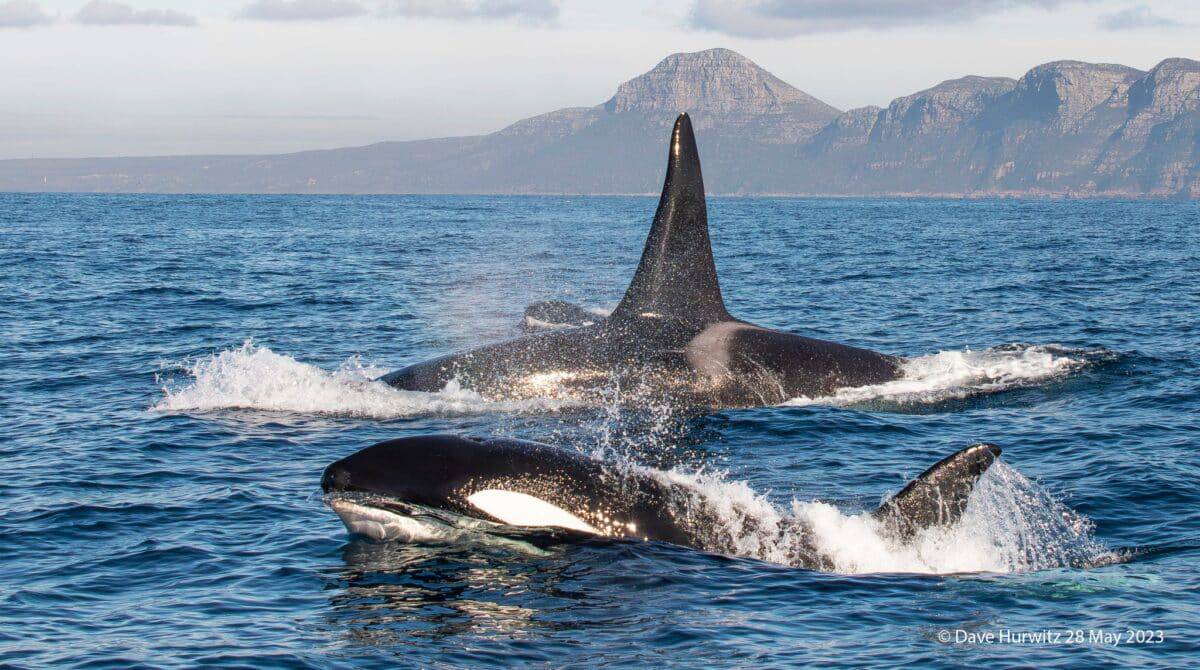
Though technically cetaceans rather than fish, False Killer Whales are included in this list because they represent the pinnacle of cooperative hunting in marine environments and provide an illuminating comparison to fish with similar strategies. These oceanic dolphins form tight-knit pods of 10-50 individuals that hunt together using tactics remarkably similar to both wolf packs and cooperative fish like tuna. Marine mammal researchers from the Cascadia Research Collective have documented how false killer whales spread out in organized search patterns covering several miles of ocean, then use vocalizations to alert pod members when prey is located. The pod quickly converges and coordinates to surround schools of fish or squid, using their bodies to create a barrier while individuals take turns charging through to feed. What makes false killer whales particularly relevant to this discussion is their documented cooperation with other species—they regularly hunt alongside bottlenose dolphins and even share food with them, demonstrating levels of interspecies cooperation that parallel the partnerships seen in some cooperative fish species. This convergent evolution of cooperative hunting strategies across such different taxonomic groups (fish and mammals) highlights how similar ecological pressures can produce similar behavioral adaptations regardless of evolutionary history.
Conclusion: The Evolutionary Significance of Cooperative Hunting in Fish
The diverse examples of cooperative hunting behaviors among fish species demonstrate that complex social strategies aren’t limited to mammals and birds but have evolved independently in aquatic environments. These remarkable behaviors challenge our understanding of fish cognition and social intelligence, suggesting that we’ve historically underestimated the cognitive capabilities of these vertebrates. From an evolutionary perspective, the parallel development of cooperative hunting across such different taxonomic groups highlights how similar ecological pressures can produce comparable behavioral adaptations regardless of evolutionary history. As climate change and overfishing continue to alter marine ecosystems, understanding these sophisticated social behaviors becomes increasingly important for conservation efforts aimed at preserving not just species, but the complex ecological interactions they participate in. The next frontier in marine behavioral research lies in better understanding how these cooperative hunting groups form, communicate, and adapt their strategies to changing conditions—knowledge that may ultimately provide insights into the evolution of cooperation across all animal groups.

As a little kid, I fell in love with nature, wildlife, and animals. Living in the USA, South Africa, Italy, China and Germany gave me the opportunity to discover the world's Wildlife. My favorite animals are Mountain Gorillas, Siberian Tigers, and Great White Sharks.
I'm a certified PADI Open Water Diver, went to Everest Base Camp and Trekked Gorillas in Uganda. I hold a Master of Science in Economics and Finance.
Please send any feedback to feedback@animalsaroundtheglobe.com
- 14 Stunning Animals You Can See in India - July 18, 2026
- The Most Enormous Lobster Ever Pulled From Maine Waters - July 18, 2026
- The Most Dangerous Waters for Sharks in North America - July 18, 2026