

There’s something deeply satisfying about standing before a building that makes you stop and stare. Maybe it’s the way light hits its facade, or how it seems to defy gravity, or perhaps just the sheer audacity of its design. Architecture tells stories without words, capturing the dreams and ambitions of those who imagined them into existence.
The United States might be young compared to Europe or Asia, yet in its relatively brief modern history, it has produced structures that rival anything the old world has to offer. From soaring Art Deco towers that pierced the clouds during the Jazz Age to neoclassical monuments that anchor the nation’s capital, these buildings represent more than engineering triumphs. They’re symbols of innovation, resilience, and creative expression. So let’s dive in and explore twelve of the most stunning buildings that grace American soil.
The Empire State Building: Art Deco Majesty in Manhattan
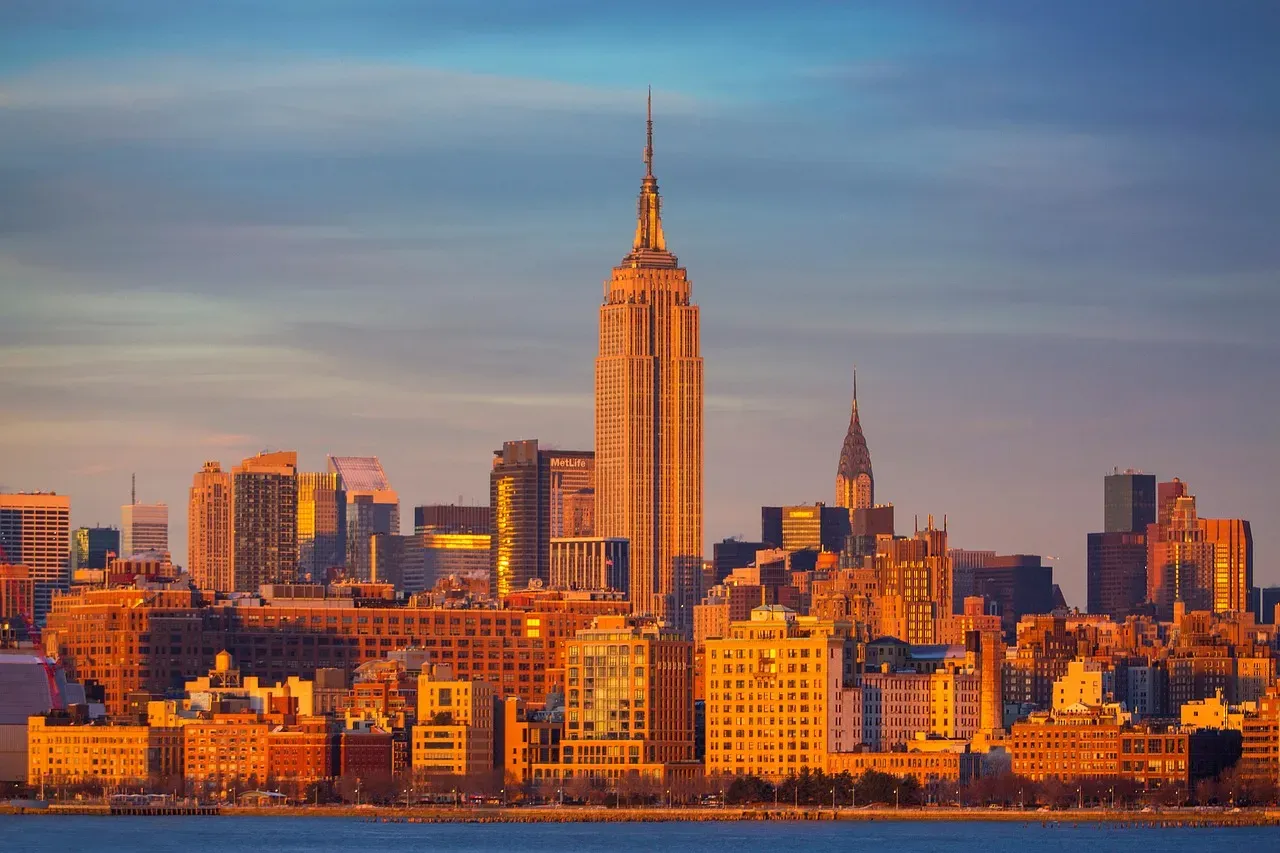
Considered an Art Deco masterpiece, this iconic skyscraper in Midtown Manhattan attracts millions of tourists annually, with observatory lookouts on the 86th and 102nd floors offering stunning views. There’s something almost mythical about the Empire State Building. Completed in 1931 during the Great Depression, it was a marvel of engineering and a symbol of American resilience, with workers finishing it in just over a year.
It was ranked first on the American Institute of Architects’ List of America’s Favorite Architecture in 2007. The building’s distinctive stepped silhouette resulted partly from zoning laws requiring setbacks to allow sunlight to reach street level. Yet this practical constraint created an iconic profile that has appeared in countless films and photographs, forever linking the tower to New York’s identity.
Frequently illuminated to commemorate special events, the Empire State Building is indeed one of the country’s true architectural treasures, recognized around the globe. Its Art Deco design features geometric decorative elements rather than narrative ornamentation, giving it a distinctly modern aesthetic. Even today, roughly about four million visitors come each year to experience those breathtaking views from its observation decks.
Here’s the thing: the building wasn’t just about height. It was about making a statement during one of America’s darkest economic times. The steel ordered for the project was the largest-ever single order at the time, comprising more steel than the Chrysler Building and 40 Wall Street combined.
The Chrysler Building: Chrome Dreams and Automotive Glory

Arguably the world’s most prominent example of art deco architecture, the Chrysler Building was completed in 1930 and is characterised by the concentric arches on its cap and car-centric ornamentation. If the Empire State Building is the pragmatic giant, then the Chrysler is the elegant showstopper. An Art Deco masterpiece, it stands as one of New York’s most elegant skyscrapers, with its stainless-steel spire, sunburst motifs, and eagle gargoyles celebrating the city’s industrial age.
Located at the intersection of 42nd Street and Lexington Avenue, it is the tallest brick building in the world with a steel framework and was both the world’s first supertall skyscraper and tallest building for 11 months after its completion in 1930. The building engaged in a fierce competition with other skyscrapers to claim the title of world’s tallest. Though it held the crown briefly, its beauty endures far beyond that fleeting victory.
The ornate details are simply stunning. Eagle gargoyles perch at the 61st floor, echoing automotive themes that pay tribute to Walter Chrysler’s automobile empire. Its sunburst-patterned stainless steel spire remains one of the most striking features of the Manhattan skyline, built between 1928 and 1930.
Although the Chrysler Building was criticized as “too theatrical” at the time of its completion, the general public quickly took a liking to the city’s crowning skyscraper. Critics eventually came around too. Today it represents the pinnacle of Jazz Age ambition, a shimmering tribute to an era when buildings dared to be bold and beautiful.
The White House: Democracy’s Enduring Home

Completed in 1800, the White House has been both the official workplace and residence of every US President except George Washington, designed by Irish architect James Hoban as a neoclassical mansion on 1600 Pennsylvania Avenue. It’s hard to overstate the White House’s significance. This isn’t just a residence. It’s a symbol of democracy itself, recognized instantly around the globe.
The building’s history is turbulent and fascinating. It burned during the War of 1812, was rebuilt, expanded, redesigned, and adapted over centuries. Every president since John Adams has walked its halls, made critical decisions within its walls, and left their mark on the nation from this iconic address.
To Americans, it represents leadership, democracy, and national identity, standing among the most important buildings in American culture and history. The neoclassical design features clean lines, symmetrical proportions, and an imposing portico that conveys both authority and accessibility. While tours require advance planning through a Member of Congress, even viewing the exterior from Pennsylvania Avenue provides a powerful connection to American history.
What strikes me most is how the building has endured through fire, war, and political upheaval, yet remains a beacon of continuity. The symbol of the presidency transcends whoever currently occupies the office, embodying ideals larger than any single individual.
The Jefferson Memorial: Neoclassical Serenity

This neoclassical pantheon-like temple was built to honor the memory of Founding Father and 3rd President Thomas Jefferson and opened to the public in 1943, located on the west end of the National Mall overlooking the Potomac River. There’s a quiet dignity to this memorial that sets it apart from Washington’s busier monuments. The open-air design invites contemplation rather than spectacle.
Framed by cherry blossoms and situated on the water-filled west end of the National Mall, this serene pantheon commemorates the nation’s third president and arguably its most important founding father. Visiting during cherry blossom season transforms the memorial into something almost magical. The pink blossoms against white marble create a scene that photographers dream about.
Featuring a 10,000-pound, 19-foot statue of Jefferson surrounded by quotes from the Declaration of Independence, this beautiful Roman-inspired temple is perfect for escaping some of Washington’s busiest crowds. The circular colonnade and domed roof echo the architecture of ancient Rome, a deliberate choice reflecting Jefferson’s admiration for classical civilization and republican ideals.
The memorial doesn’t shout for attention. It whispers instead, offering a space for reflection on the principles that shaped the nation. That restraint, honestly, makes it even more powerful.
Fallingwater: Architecture Embracing Nature
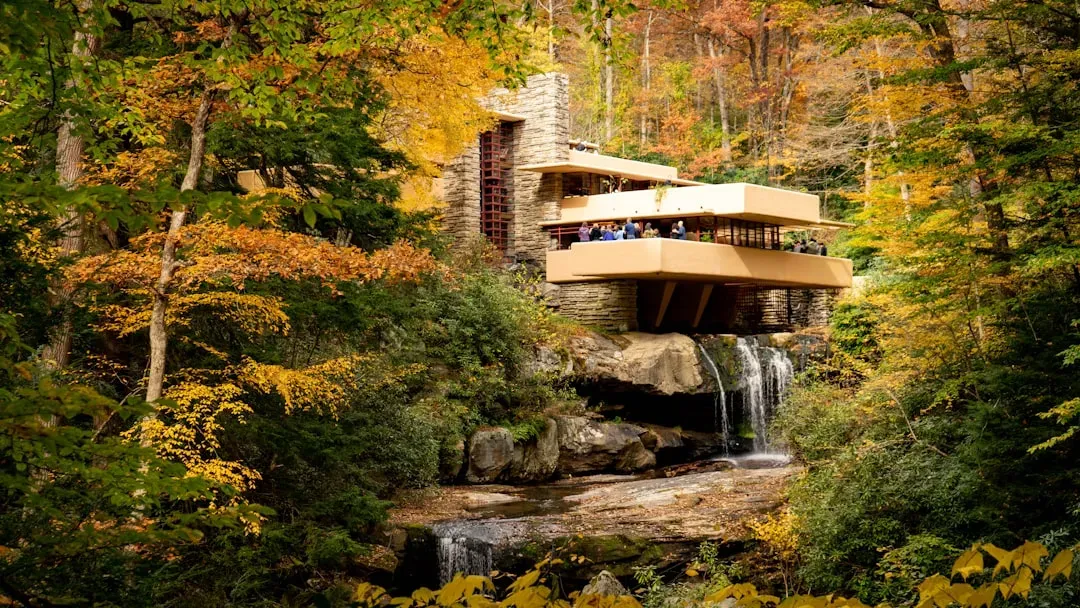
Frank Lloyd Wright’s Fallingwater is one of the most celebrated homes ever built, completed in 1939 and famous for being constructed directly over a waterfall. This isn’t just a building. It’s a philosophy made manifest. Wright believed architecture should harmonize with its environment, and Fallingwater represents that vision in its purest form.
The design merges nature and architecture through cantilevered terraces and stonework drawn from the landscape itself, with visitors experiencing serenity as water flows beneath their feet. Imagine sitting in a living room and hearing the constant murmur of a waterfall directly below. The experience blurs the line between inside and outside, between human creation and natural wonder.
The cantilevered terraces seem to float impossibly over the rushing water, defying conventional architectural logic. Wright sourced stone from the property itself, ensuring the structure looks as if it grew organically from the Pennsylvania hillside. Every angle offers a different perspective on how architecture can coexist beautifully with the natural world.
Critics initially questioned whether such an audacious design could even be structurally sound. Time proved them wrong. Fallingwater has become perhaps the most famous example of organic architecture anywhere, inspiring generations of architects to think beyond traditional boundaries.
The Flatiron Building: Manhattan’s Elegant Triangle
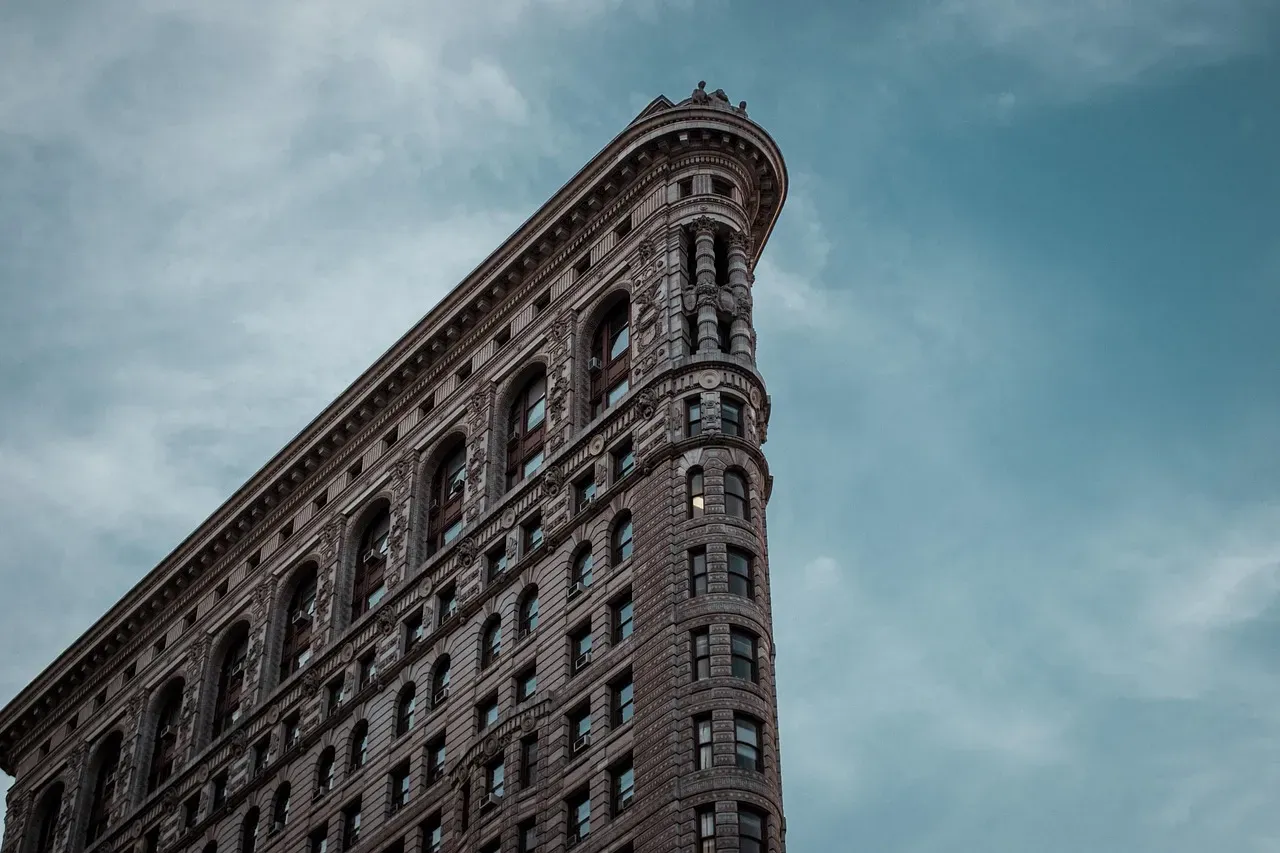
This triangular-shaped skyscraper is an architectural gem in the heart of Manhattan, completed in 1902 with a Beaux-Arts design that is both elegant and distinctive. The Flatiron Building looks impossible. How can a building be that narrow and still stand? Yet there it is, wedged into the acute angle where Broadway and Fifth Avenue meet, impossibly thin at its point.
The Flatiron Building’s design makes it one of the city’s most photographed landmarks. Standing a mere six feet wide at its narrowest point, the building captivated New Yorkers when it first appeared. Some predicted the winds would knock it down. Others worried it would collapse under its own weight. The Flatiron proved doubters wrong and became an instant icon.
The Beaux-Arts facade features elaborate terracotta detailing that catches light beautifully throughout the day. Its unique shape forces photographers and tourists to find creative angles, making it endlessly photogenic. The building represents a moment when New York was transforming from a collection of low structures into a vertical city reaching for the sky.
Walking past the Flatiron today, you can almost feel the excitement of early twentieth-century New York. The building remains a testament to architectural ingenuity and the willingness to embrace unconventional solutions.
The Getty Center: Modern Beauty in the Hills
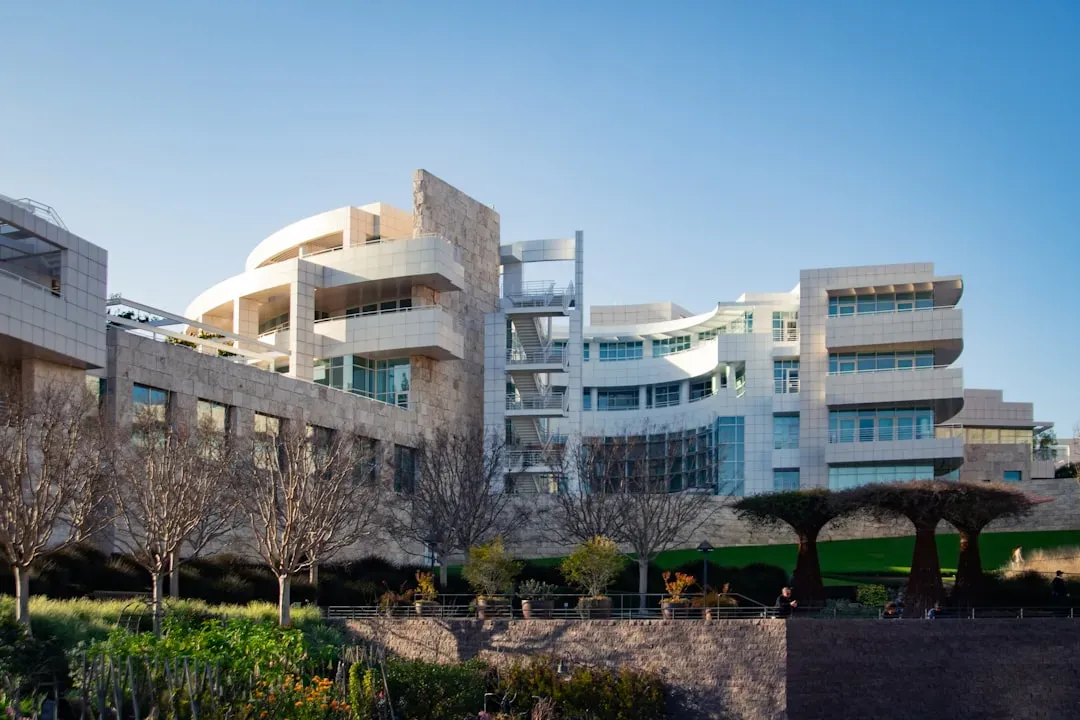
Designed by architect Richard Meier and completed in 1997, the Getty Center is a striking combination of modernist architecture and the natural beauty of the Santa Monica Mountains, with white travertine facades, lush gardens, and world-class art collections. Perched high above Los Angeles, the Getty Center offers something rare: a modern architectural masterpiece that enhances rather than dominates its natural surroundings.
The white travertine cladding seems to glow in the California sunshine, creating an almost ethereal presence against the chaparral-covered hillsides. Meier’s geometric forms and clean lines embody modernist principles while remaining warm and inviting. The complex doesn’t feel cold or austere despite its contemporary aesthetic.
Gardens designed by artist Robert Irwin weave through the campus, creating pockets of tranquility between the galleries. Visitors arrive via a sleek tram that climbs the hillside, building anticipation before revealing the stunning complex at the summit. The views stretching from downtown Los Angeles to the Pacific Ocean are breathtaking.
What makes the Getty special is how successfully it balances multiple functions: world-class museum, architectural destination, botanical garden, and public gathering space. It proves that contemporary architecture can be both beautiful and functional without sacrificing either quality.
The Space Needle: Seattle’s Futuristic Icon

Built for the 1962 World’s Fair, the Space Needle is a futuristic icon of the Pacific Northwest, with its unique design inspired by the concept of a flying saucer featuring an observation deck with panoramic views. The Space Age captured American imagination in the early 1960s, and nowhere is that enthusiasm more visible than in Seattle’s most recognizable landmark.
Designed for the 1962 World’s Fair at 605 feet tall, its saucer-shaped observation deck and slender legs represented the zeitgeist regarding space exploration. The design seems plucked straight from a science fiction novel, embodying optimism about technological progress and humanity’s future among the stars. That vision feels charmingly retro now, yet the structure remains captivating.
The observation deck provides sweeping views of Puget Sound, Mount Rainier, and the Cascade Range. On clear days, the vista stretches seemingly forever, offering visitors a bird’s-eye perspective on the Pacific Northwest’s natural beauty. The rotating restaurant once represented the height of dining sophistication, allowing diners to enjoy a 360-degree panorama.
Though newer towers have surpassed its height, the Space Needle maintains its place in the Seattle skyline through sheer personality. It reminds us of an era when the future seemed limitless and architecture dared to be playful and imaginative.
The Lincoln Memorial: Monument to Unity

This grand neoclassical monument pays tribute to Abraham Lincoln, one of America’s greatest presidents. It showcases a massive seated statue of Abraham Lincoln, constituting a site of several relevant moments in civil rights history, notably Martin Luther King Jr’s “I Have a Dream” speech.
The Greek Revival temple rises majestically at one end of the National Mall, its thirty-six columns representing the states in the Union at Lincoln’s death. Ascending the steps feels ceremonial, each footfall bringing you closer to the towering statue of the seated president. Daniel Chester French’s sculpture captures Lincoln’s strength and weariness, the weight of preserving the Union etched into his marble face.
The memorial’s walls bear the inscribed words of the Gettysburg Address and Lincoln’s Second Inaugural Address, reminding visitors of the ideals for which so many fought and died. Standing before these words, you can’t help but feel the gravity of that historical moment. The memorial transcends mere commemoration, becoming a space for reflection on justice, equality, and national purpose.
The location overlooking the Reflecting Pool toward the Washington Monument creates a powerful visual axis connecting past and present. At night, illuminated against the darkness, the memorial takes on an almost spiritual quality. It’s a place that makes you think about what it means to be American.
Independence Hall: The Birthplace of America
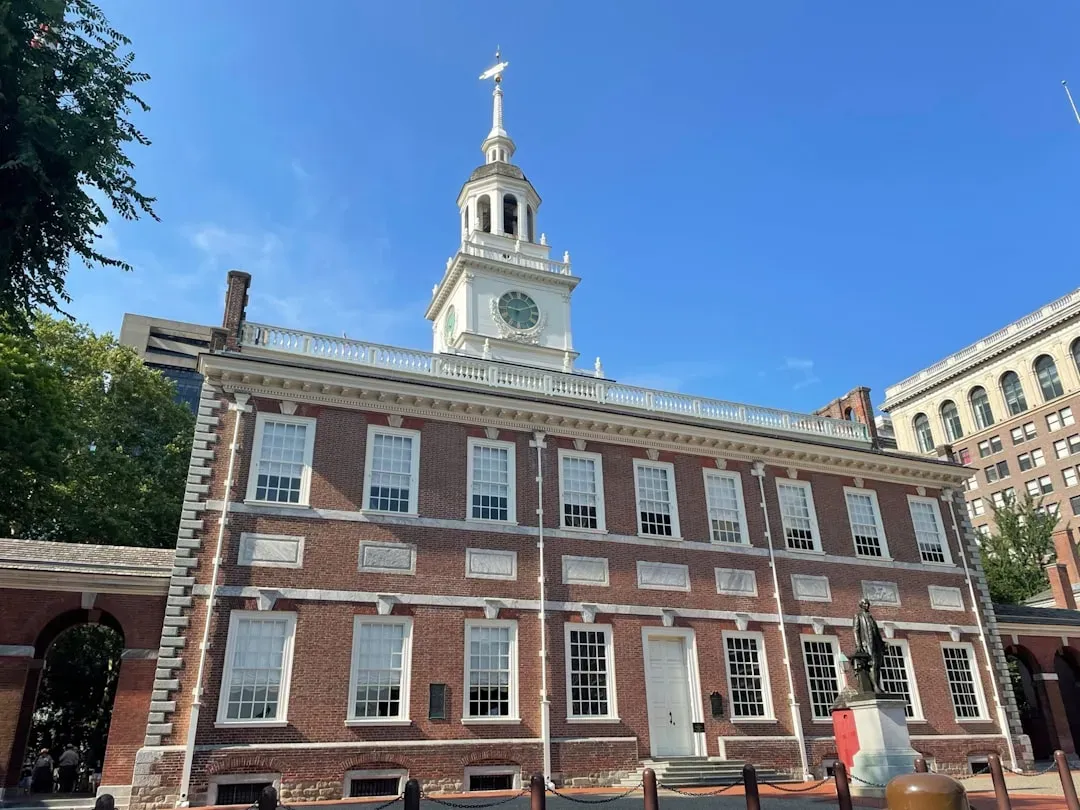
A UNESCO World Heritage Site, this edifice constructed in 1753 hosted America’s Founding Fathers who debated, drafted, and adopted the Declaration of Independence and the United States Constitution during the Revolutionary War. Few buildings have witnessed more consequential moments than this modest brick structure in Philadelphia.
Often called the “birthplace of America,” this imposing red brick structure and its clock tower brings visitors back in time some 250 years in a most moving historical setting. The Georgian architecture seems almost humble compared to grander government buildings constructed later. Yet that simplicity feels appropriate for the revolutionary ideals debated within its walls.
Walking through Independence Hall’s Assembly Room, you can almost hear the passionate debates that shaped the nation. The chairs and tables remain arranged much as they were when delegates argued over the nature of representation, individual rights, and the structure of government. These weren’t abstract philosophical discussions but urgent deliberations with life-or-death consequences.
The building represents a moment when everything hung in the balance, when a group of colonists dared to imagine a new form of government based on radical principles of self-determination. Standing where they stood, you feel connected to that audacious leap of faith.
The Guggenheim Museum: Spiraling Innovation
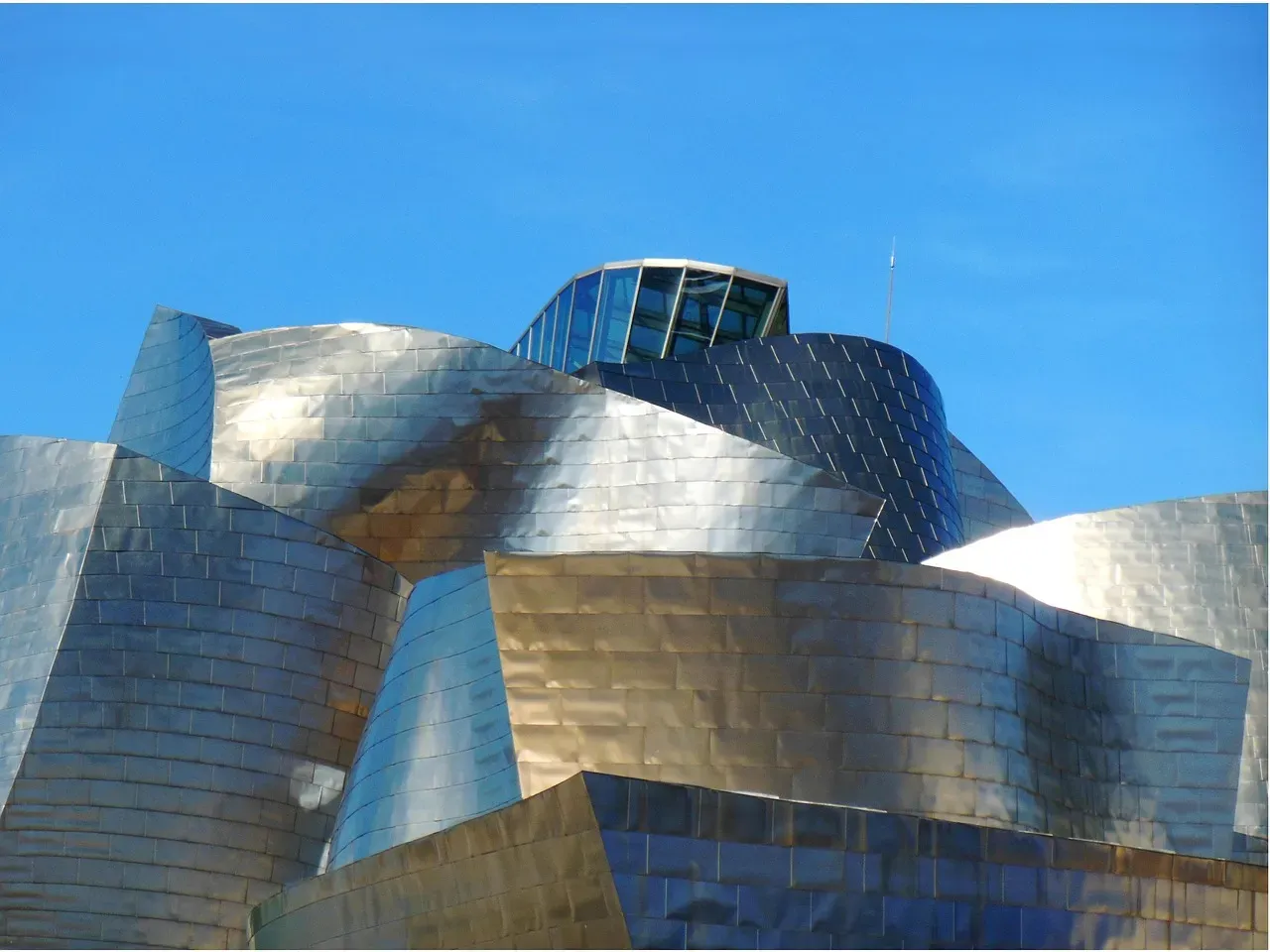
Designed by Frank Lloyd Wright and opened in 1959, the Guggenheim Museum remains one of the most recognizable buildings in the world, with its spiral form and continuous ramp defying traditional museum design. Wright saved perhaps his most controversial work for last, creating a building that sparked fierce debate while fundamentally changing how we think about museum spaces.
Visitors ascend gently upward through the galleries beneath a stunning glass dome, set along Fifth Avenue as a masterpiece of modern architecture and a symbol of New York’s creative energy. The inverted ziggurat shape looks unlike anything else on Fifth Avenue, its sweeping curves a dramatic counterpoint to the rigid Manhattan street grid surrounding it.
The interior experience is equally revolutionary. Rather than moving through discrete rooms, visitors take an elevator to the top and spiral downward along a continuous ramp, experiencing art in an unbroken flow. Critics argued this design overwhelms the artwork, forcing paintings to compete with the architecture itself. Wright countered that architecture and art should be experienced together, creating a unified aesthetic experience.
Love it or question it, you can’t ignore the Guggenheim. It represents Wright’s uncompromising vision and willingness to challenge convention even late in his career. The building proves that great architecture provokes conversation and makes us reconsider our assumptions.
The Air Force Academy Chapel: Soaring Modernism
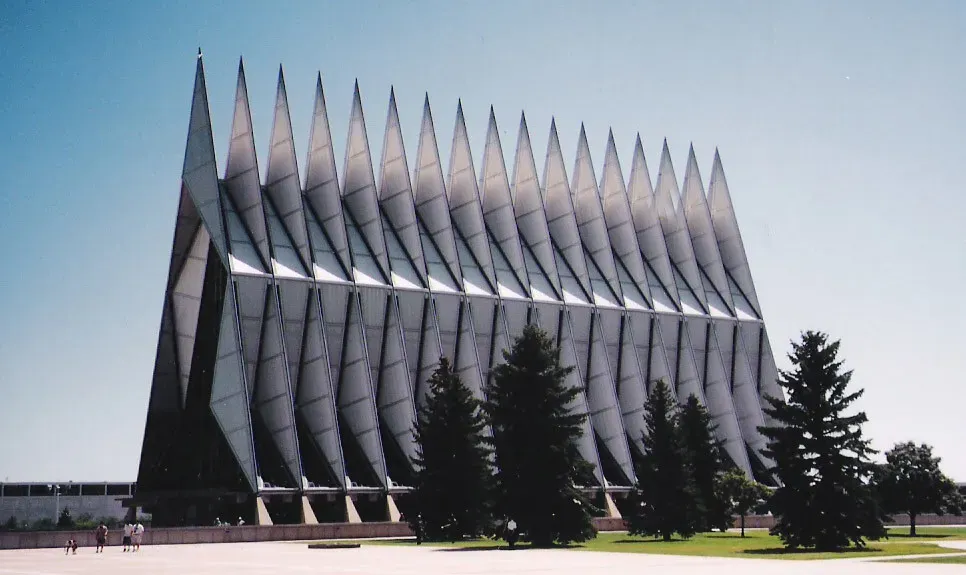
One of the most distinguishing features of the United States Air Force Academy, Cadet Chapel was completed in 1962 and designated a National Historical Landmark in 2004, standing 150 feet tall with 17 striking spires, and includes a Protestant, Catholic, Muslim, Jewish, and Buddhist chapel.
The chapel seems ready for flight, its aluminum and glass spires thrusting skyward like a row of fighter jets pointed toward heaven. The design breaks completely from traditional religious architecture, rejecting conventional domes and towers for something entirely modern and uniquely American. Each spire rises dramatically against the Colorado sky, creating a serrated silhouette visible for miles.
The modernist approach initially sparked controversy among those expecting something more traditional. Yet the design perfectly suits its purpose, embodying both spiritual aspiration and the forward-looking ethos of the Air Force. Sunlight streaming through the stained glass creates an ethereal glow inside, transforming the stark geometric forms into a genuinely sacred space.
The multi-faith design acknowledges America’s religious diversity, providing separate worship spaces for different traditions under one roof. This inclusivity feels appropriate for an institution serving Americans of all backgrounds. The chapel demonstrates that modernist architecture can convey spirituality and meaning without relying on historical precedent.
Conclusion
These twelve buildings represent just a fraction of America’s architectural treasures, yet they capture something essential about the nation’s character. From Art Deco skyscrapers that reached impossibly toward the sky during the Great Depression to modernist structures that dared to reimagine what buildings could be, American architecture reflects ambition, innovation, and creativity.
What strikes me most about these structures is their diversity. There’s no single “American style” but rather a willingness to experiment, to borrow from classical traditions while inventing new forms, to take risks that sometimes succeed spectacularly and occasionally fail. These buildings tell stories about the eras that produced them and the people who imagined them into existence.
Like any nation, the United States is home to major architectural landmarks which continue to inspire all who visit them, showcasing a great range of styles, eras, and history, as diverse as the country itself. Each building invites us to pause, look up, and appreciate the extraordinary vision required to transform drawings into structures that shape skylines and define cities. Which of these architectural marvels would you most want to experience in person?

- 10 Cat Breeds That Tolerate Dogs Surprisingly Well - July 15, 2026
- 5 US States With the Most Grizzly Bears - July 15, 2026
- 10 Wild Cat Breeds Vets Say You Should Never Keep as Pets - July 15, 2026