

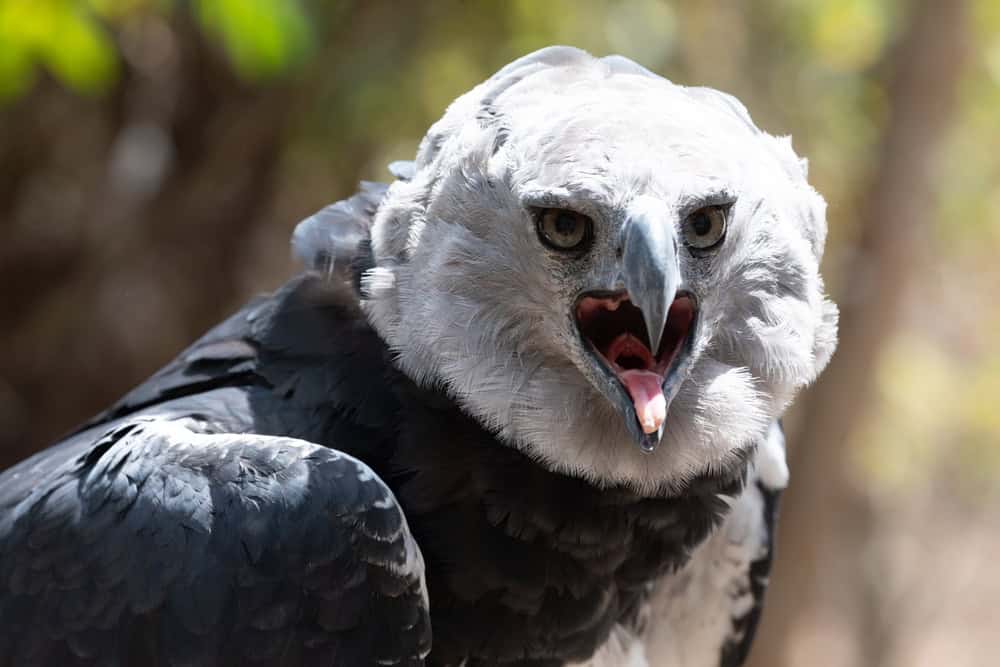
The harpy eagle is often celebrated as one of the world’s most enthralling and formidable birds of prey. Known for its impressive size and striking appearance, this bird embodies the apex of avian hunting capabilities. As the most powerful eagle among its peers, the harpy eagle commands respect and admiration from bird enthusiasts and researchers alike.
Physical Characteristics

Characterized by its large, stately build, the harpy eagle is unmistakable. Females, typically larger than males, can weigh up to 20 pounds and boast a wingspan of over 7 feet. Their dark grey feathers contrast sharply with their white bellies, and the distinctly elongated feathers form a crown-like crest on their heads, contributing to their regal appearance. Their talons are particularly noteworthy; they are the size of grizzly bear claws, making them incredibly effective hunting tools.
Habitat and Distribution

The harpy eagle primarily inhabits the lush, dense rainforests of Central and South America, from Mexico to Brazil and Argentina. These birds thrive in environments that offer vast expanses of continuous forest cover, which provide ample hunting ground and nesting sites. Unfortunately, this preference makes them vulnerable to habitat destruction due to deforestation.
Behavior and Diet

As solitary hunters, harpy eagles rely on an acute sense of sight and extraordinary flight skills to pursue prey. They predominantly hunt treetop animals like sloths, monkeys, and birds, although they are capable of preying on larger animals due to their formidable strength. The eagles can remain perched and patient, an essential trait when waiting for the perfect moment to ambush predators.
Reproduction and Lifespan

Harpy eagles are monogamous and known for their long-term pair bonds. Mating pairs usually produce one chick every two to three years. Their nests, built high in the canopies, can be as large as a king-sized bed. The young eagles remain under their parents’ care for up to two years before gaining independence. In the wild, harpy eagles can live over 25 years, although this can extend under human care.
Conservation Status

Sadly, the harpy eagle is categorized as Near Threatened due to habitat loss and human encroachment. Deforestation and illegal hunting pose significant risks to their already diminishing numbers. Conservation efforts are vital to preserving the species, with initiatives focusing on habitat preservation and public education to promote coexistence.
Conclusion

The harpy eagle is undoubtedly a magnificent testament to nature’s grandeur. Its power, beauty, and unique role in the ecosystem make it an essential species worth protecting. With continued conservation efforts, there is hope that future generations will also be able to marvel at the majesty of the harpy eagle soaring through the rainforest canopy.

As a little kid, I fell in love with nature, wildlife, and animals. Living in the USA, South Africa, Italy, China and Germany gave me the opportunity to discover the world's Wildlife. My favorite animals are Mountain Gorillas, Siberian Tigers, and Great White Sharks.
I'm a certified PADI Open Water Diver, went to Everest Base Camp and Trekked Gorillas in Uganda. I hold a Master of Science in Economics and Finance.
Please send any feedback to feedback@animalsaroundtheglobe.com
- 13 Aquatic Mammals That Don not Look It - July 10, 2026
- 15 Unlikely Hunters With Killer Instincts - July 10, 2026
- 10 Low-Maintenance Pets for Busy Owners - July 10, 2026