
South America holds a reputation that’s hard to beat when it comes to winged wonders. Picture this: you’re standing beneath a dense canopy, and suddenly a flash of electric blue zips past your head. Maybe it’s followed by a streak of scarlet, or perhaps a glint of emerald green catches your eye. Honestly, it’s not a hallucination.
The continent boasts over 3,500 bird species, creating what many call a living kaleidoscope in the skies. From the steamy Amazon basin to the misty cloud forests clinging to Andean slopes, these feathered marvels don’t just exist – they dominate. Their colors seem almost too vivid to be real, yet there they are, perched on branches or darting through foliage.
Each species tells its own story through plumage that evolved over millennia. So let’s dive in and discover which birds bring the most dazzling color to this remarkable continent.
Scarlet Macaw: The Red Icon of Tropical Forests
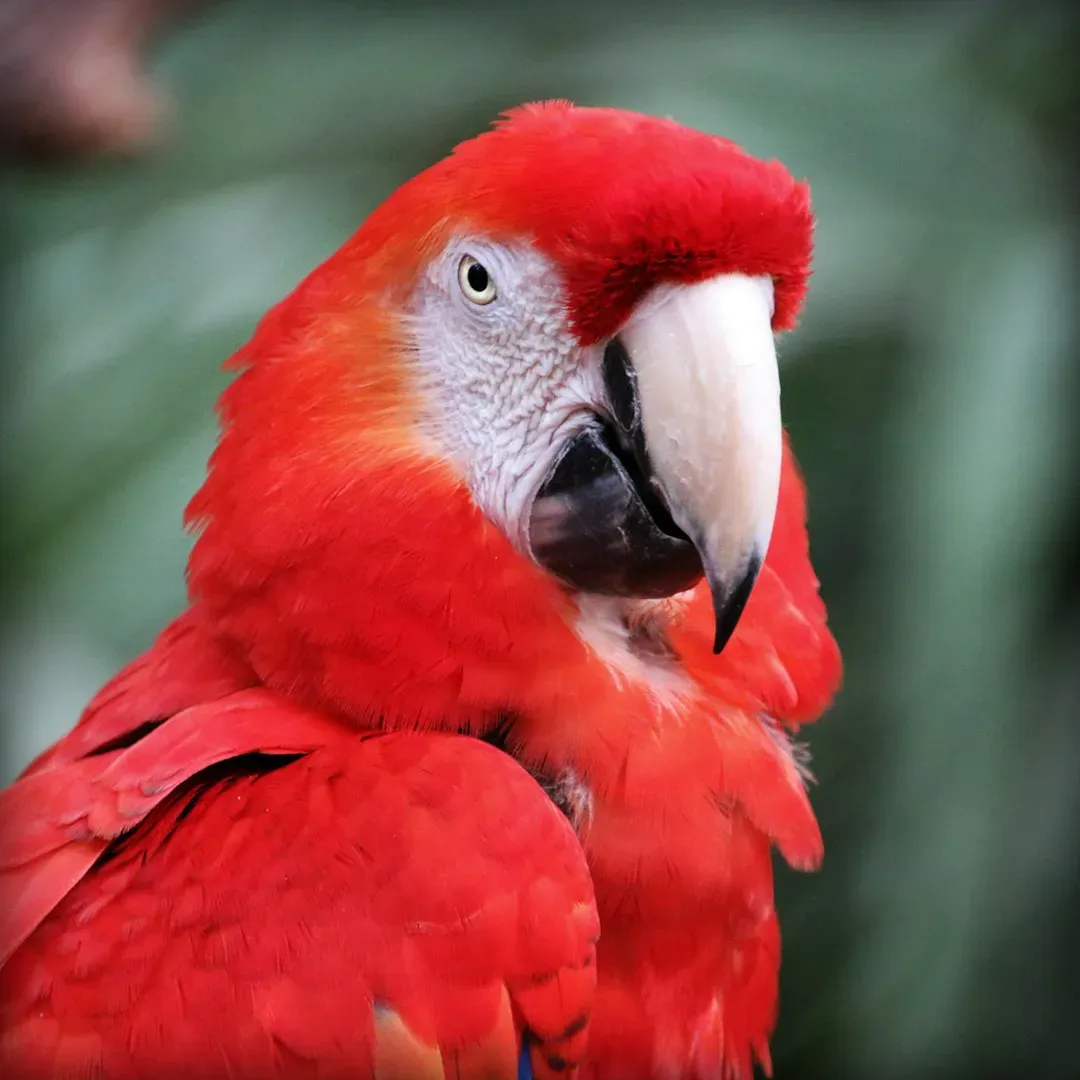
The Scarlet Macaw’s range spans much of the Amazon basin and rainforest across the northern half of South America, making it one of the most recognized symbols of the region. These magnificent parrots wear predominantly bright red feathers that seem to catch fire in the sunlight. Their wings display brilliant blue and yellow accents that create a stunning contrast.
Measuring up to 33 inches from beak to tail end, Scarlet Macaws are among the largest parrots in the world. They possess incredibly strong beaks capable of cracking the hardest nuts found in rainforest trees. Watching them fly overhead feels like witnessing a streak of flame cutting through the green canopy.
These birds form lifelong pair bonds and can often be seen flying together in pairs or small family groups. Every individual appears to favor their left foot for peeling fruit and other tasks requiring precise movements. It’s a curious trait that makes them even more fascinating.
Their loud, raucous calls echo through the forest, announcing their presence long before you spot them. Let’s be real: once you see a Scarlet Macaw in the wild, that image burns itself into your memory forever.
Hyacinth Macaw: The Cobalt Giant
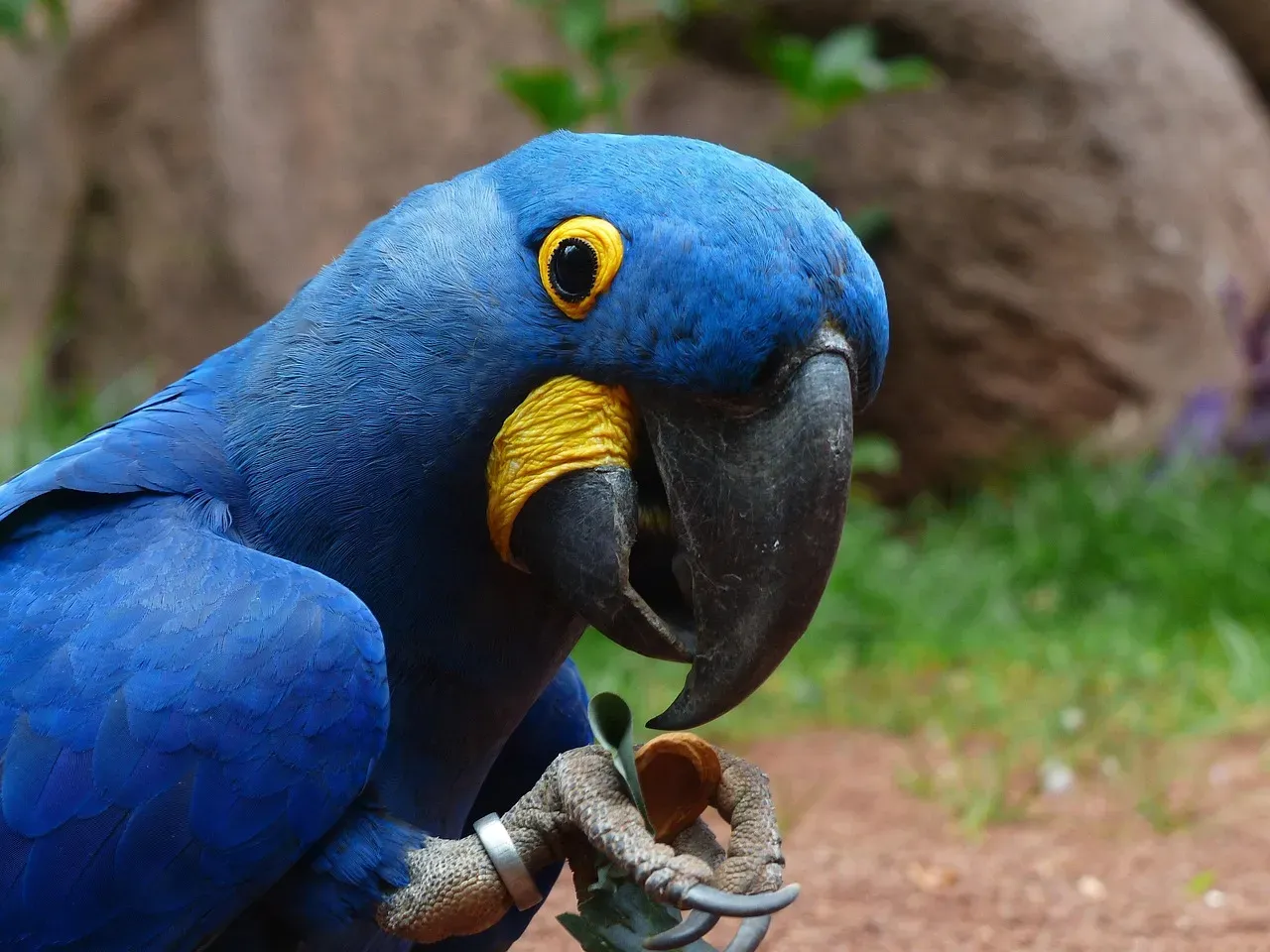
The Hyacinth Macaw measures 1 meter long from the tip of its tail to the top of its head and weighs between 1.2 and 1.7 kilograms, earning it the title of the largest parrot by length. Its feathers are mostly blue, lighter above, while the ring around the parrot’s eyes and the area just underneath the beak display a strong, vibrant yellow. That deep cobalt blue is simply breathtaking.
Today, this species occurs in three main areas: the Pantanal region of Brazil and adjacent areas, the cerrado regions of eastern interior Brazil, and relatively open areas of the eastern Amazon Basin. The Brazilian Pantanal remains your best bet for spotting these gentle giants in their natural habitat.
These birds have surprisingly strong beaks designed to crack incredibly tough palm nuts. The acuri nut is so hard that the parrots cannot feed on it until it has passed through the digestive system of cattle, which softens the shell enough for them to access. Talk about adapting to your environment.
Hyacinth Macaws mate for life and share a peculiar relationship with toucans. Toucans are the primary seed dispersers of manduvi trees, and in the Pantanal region, 90% of hyacinth macaw nests are constructed from these trees. Nature’s irony: the toucan helps create nesting sites but also preys on macaw eggs.
Their calm, even-tempered personalities have earned them the nickname of gentle giants among bird enthusiasts.
Andean Cock-of-the-Rock: Peru’s Flaming National Bird
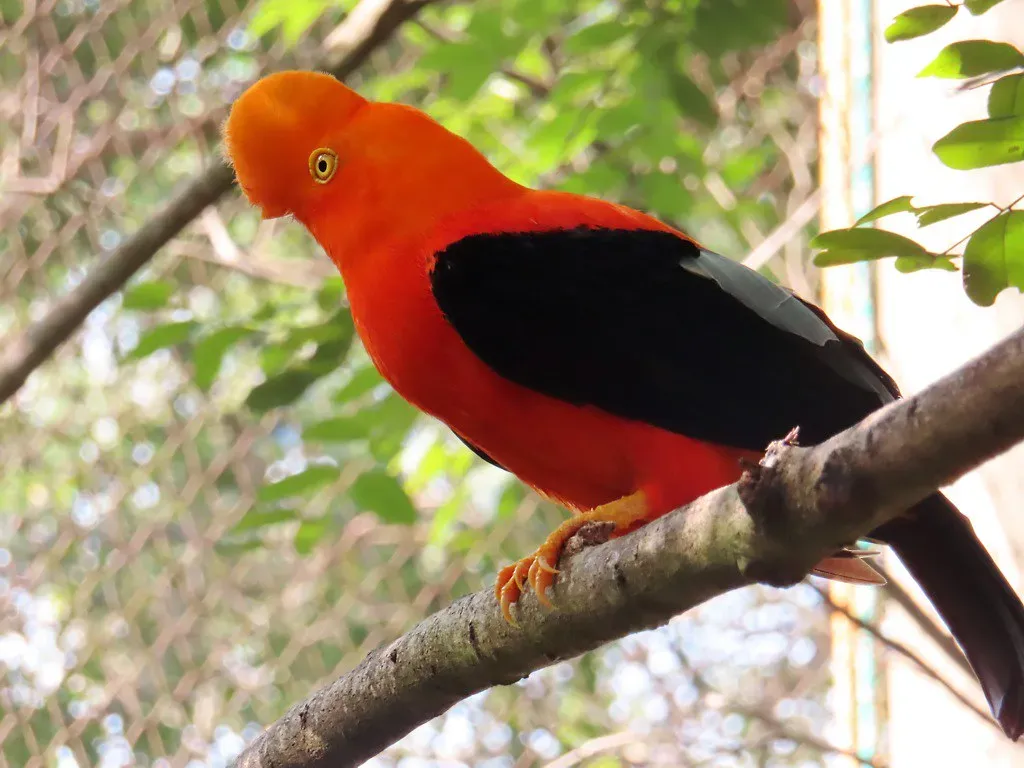
The Andean Cock-of-the-Rock is a large passerine bird of the cotinga family native to Andean cloud forests, and it serves as the national bird of Peru. Males have a large disk-like crest and brilliant scarlet or orange plumage that seems to glow even in the misty mountain forests they call home.
This species lives across Venezuela, Colombia, Ecuador, Peru, and Bolivia, mostly in ravines and forested streams at elevations between 500 and 2,400 meters. The best way to spot them is at a lek, where males gather to perform their elaborate courtship displays.
Males gather at communal leks to display their prowess in jumping, wing-flapping, head-bobbing, squealing and beak-clapping, with performances intensifying when drab brown females arrive to watch. It’s pure theater in the forest. The females, dressed in subtle browns, make their choice and then handle all nesting duties alone.
Despite their vibrant appearance, these birds can be surprisingly elusive. They are generally shy and inconspicuous, often seen only briefly after being flushed out or while swiftly flying down a valley. Patience is key when seeking these beauties in the wild.
Their distinctive crest gives males the appearance of wearing a helmet, which adds to their dramatic presence during breeding displays.
Paradise Tanager: A Rainbow in Feathers
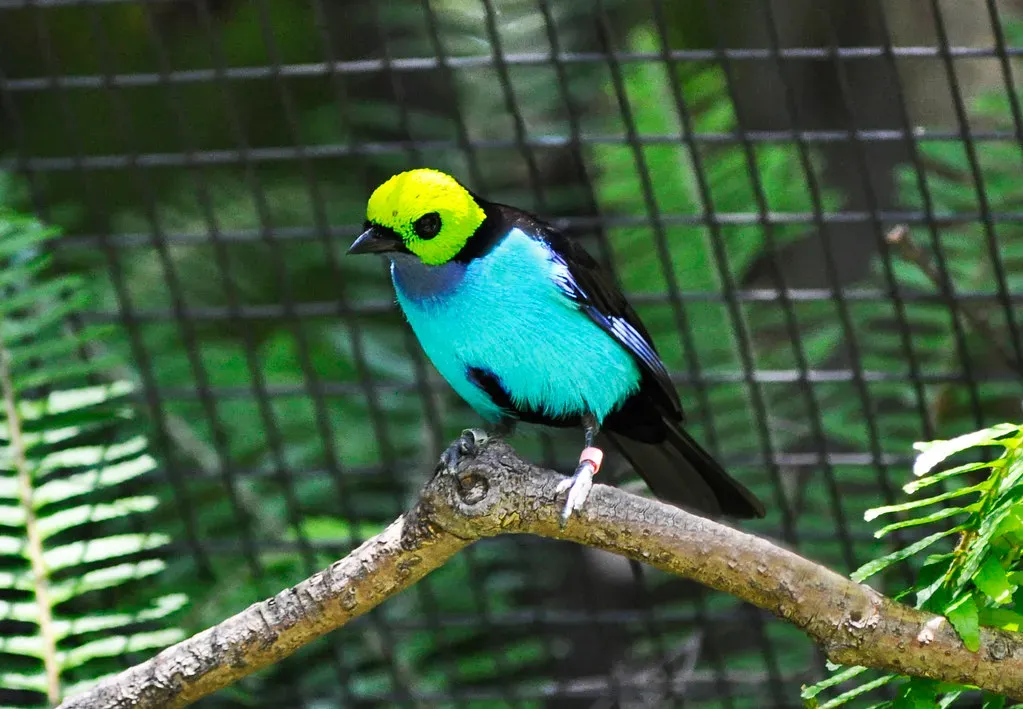
The Paradise Tanager gives any bird a run for its money in the beauty stakes with its sky-blue belly, almost fluorescent green head and bright-red back. Honestly, when you first see one, you might wonder if someone painted it. The color combination seems almost impossible.
This 5.5-inch-long songbird has a lime-green head and a turquoise breast and belly, with red or yellow feathers at the base of their tails depending on the subspecies, and they are native to the Amazon rainforest and northern South America. They prefer staying high in the canopy where they forage in mixed-species flocks.
These tanagers move rapidly between perches, making them somewhat challenging to photograph despite their brilliant colors. They feed primarily on fruits and insects found in the upper reaches of rainforest trees. Watching them dart through the canopy is like following a flying jewel.
This small yet very colorful bird is widely distributed in the tropical forests of the Amazon in South America and is a songbird, meaning it can make various musical sounds that are pleasant to the ears. Their calls add a melodic soundtrack to the visual spectacle they provide.
The Paradise Tanager lives up to its heavenly name in every possible way.
Keel-Billed Toucan: The Rainbow-Billed Wonder
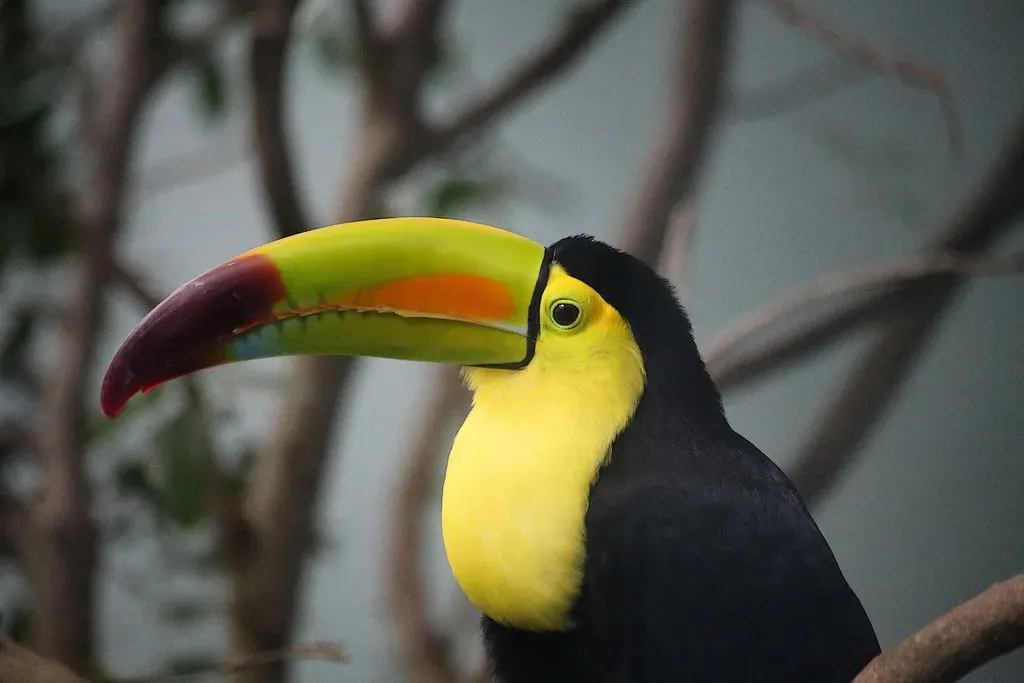
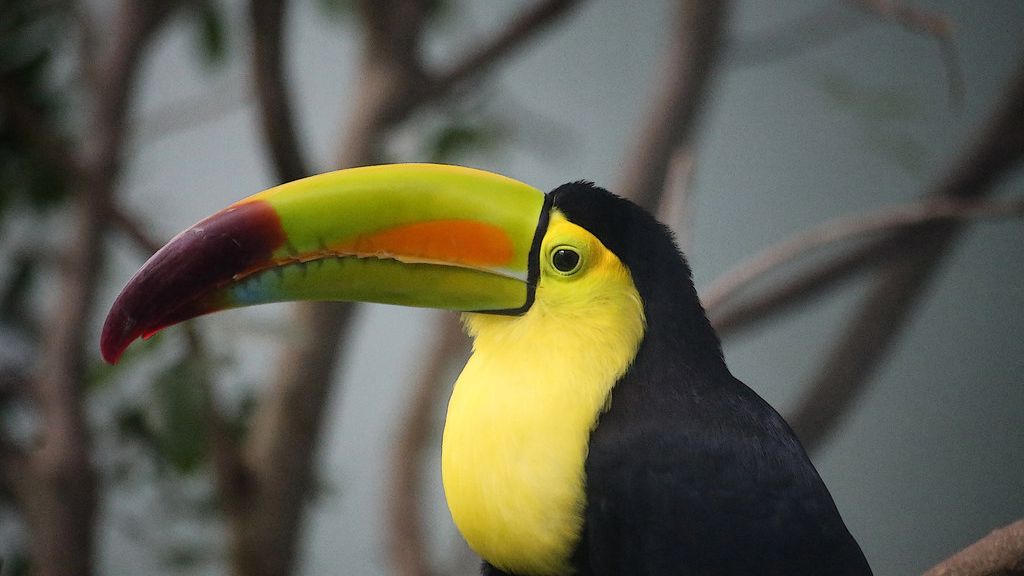
The Keel-billed Toucan, also known as rainbow-billed toucan, is a species native to southern Mexico, Central America and the far northwest of South America, and is the national bird of Belize. Its colorful green, orange, red, and blue bill makes up about one-third of this bird’s 20-inch length.
That massive bill looks heavy but it’s actually remarkably light. The bill is made of hollow, reinforced bone sheathed in keratin, the same protein found in human hair and nails. Despite its size, the bird can still hop nimbly through branches, though it prefers hopping to flying.
Keel-billed toucans are very social birds rarely seen alone, flying in small flocks of approximately six to twelve individuals through lowland rainforests. They’re known for their playful behavior, sometimes tossing fruit back and forth in what looks like a game of catch.
The birds make a variety of vocalizations including sounds described as frog-like croaks. Their song is a far-carrying, frog-like croak, repeated steadily. Once you hear it echoing through the forest, you’ll never forget that distinctive call.
Their vibrant bills serve multiple purposes including food gathering, temperature regulation, and attracting potential mates during breeding season.
Toco Toucan: Brazil’s Black and Orange Beauty
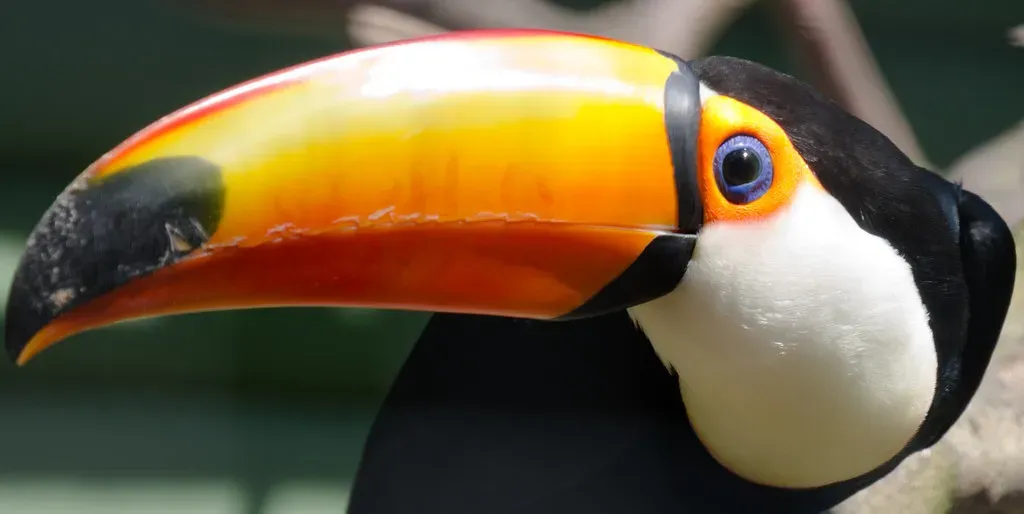
The Toco Toucan’s oversized colorful bill is by far its most distinctive feature, and there are about 40 different species of toucans which inhabit the forests of South and Central America, with the Toco being the largest of all. These birds have become iconic symbols of tropical South America.
With a yellow-orange bill a third as long as its entire body, the toco toucan is a remarkable sight. Their black plumage is set off by a white bib that creates a striking contrast. The beak makes up a third of its entire length and is a multi-functional tool, capable of fluctuating blood flow so it acts as a hot water bottle when tucked into feathers on chilly nights.
Despite being hunted for the pet trade, toucans still occupy a huge range in South America, found in eastern and southern Brazil, Bolivia, Paraguay, and into northern Argentina, though Brazil remains the best place to spot them. They live in tropical forests and often gather in small flocks.
Their distinctive bill has serrated edges perfect for peeling the fruit they feed on. Despite the toucan’s comical appearance, those bright colors actually work as effective camouflage in the bright light and dark shadows of the forest canopy.
It’s hard to say for sure, but the Toco Toucan might just be nature’s most recognizable tropical bird.
Blue-and-Yellow Macaw: The Classic Amazon Parrot
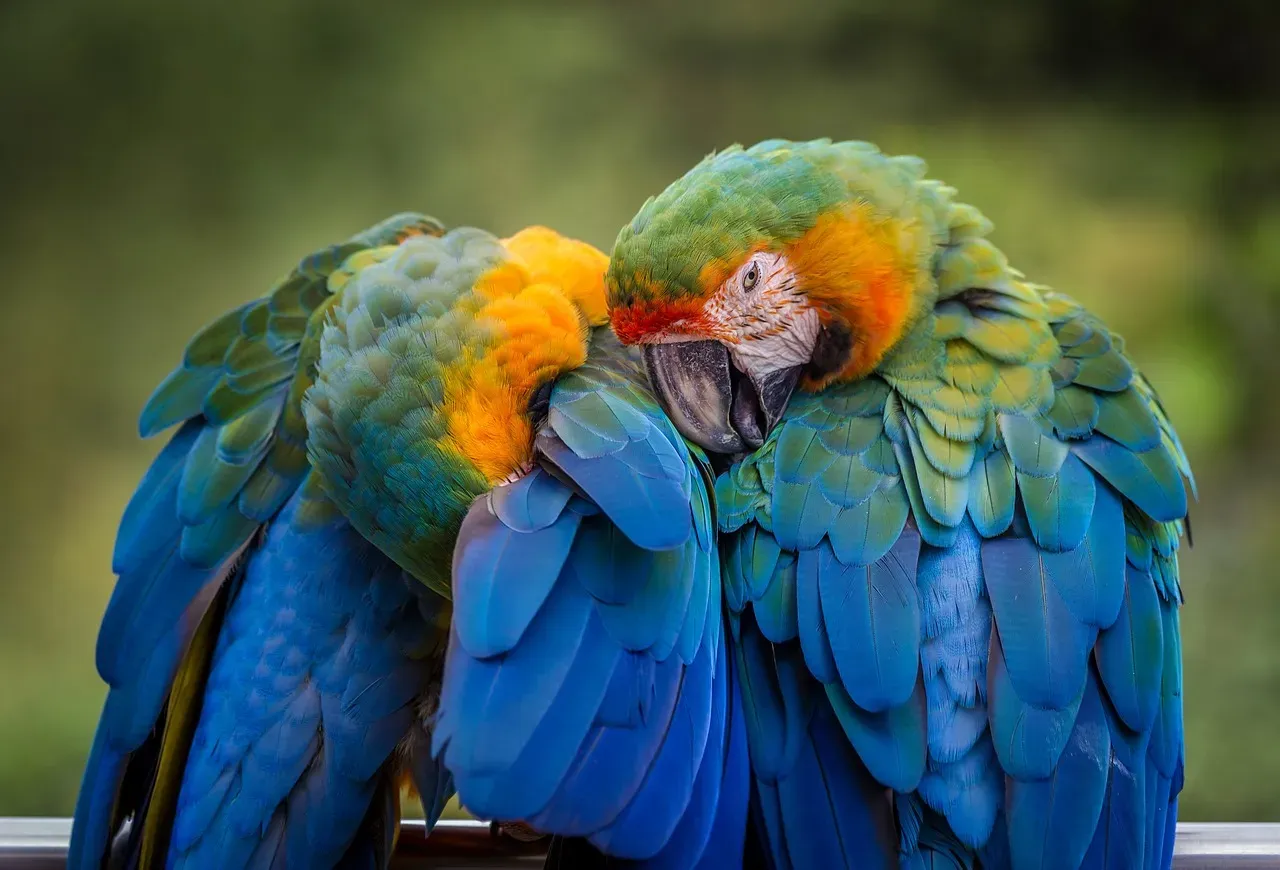
The Blue-and-yellow Macaw is found in the forests of South America from Venezuela to Brazil, with bright blue feathers on its wings and tail, yellow feathers on its head and body, and a black beak, known for its ability to mimic human speech. These intelligent birds have become popular in captivity, though wild populations remain strong.
The Blue-and-yellow macaw is distributed throughout the Amazon basin, making it one of the more commonly encountered large parrots in South America. They’re often seen in pairs or small family groups flying over rivers and forests.
These macaws nest in tree cavities, which are prized commodities in their world. At Pousada Piuval Lodge in the northern Pantanal, there is a pair nesting in the trunk of a dead palm tree by the swimming pool, with owners likely keeping the dead tree untouched specifically for the macaws, as nesting hollows are a prized commodity in the macaw world.
Their loud calls and social nature make them fairly easy to locate in the wild. They feed on a variety of fruits, nuts, and seeds found throughout their forest habitat. Watching a pair fly in synchronized formation is one of those moments that makes you grateful to be alive.
Their striking color combination of vibrant blue and golden yellow creates one of nature’s most perfect contrasts.
Green Jay: The Tropical Emerald
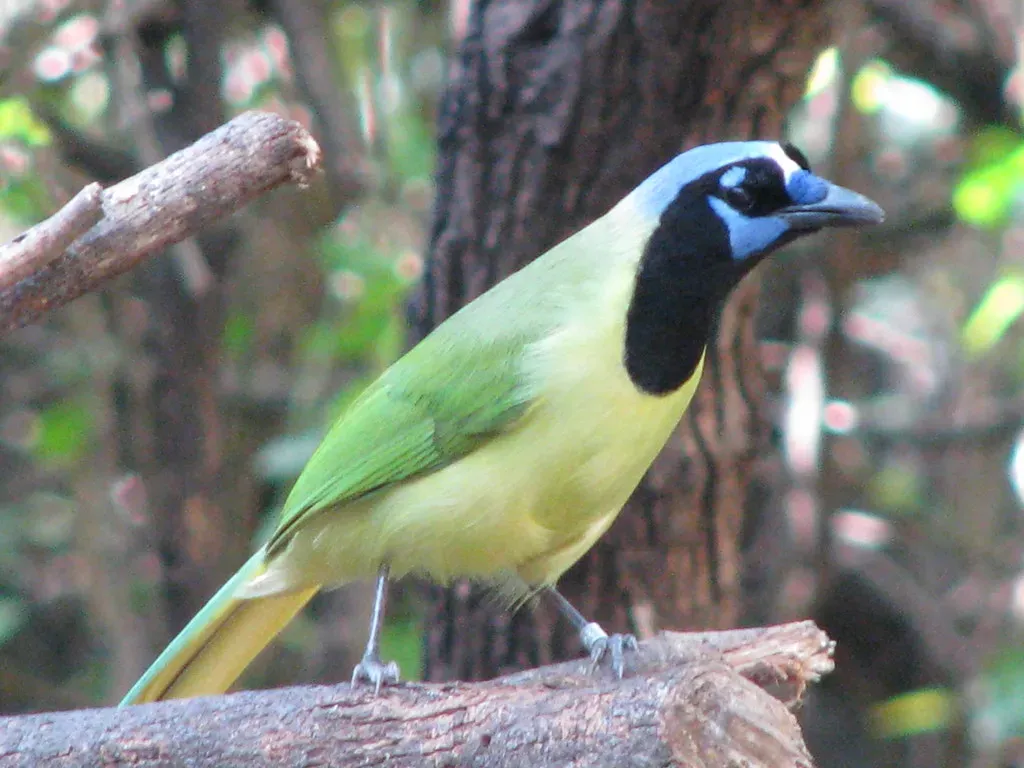
The brilliantly colored Green Jay brings a bright splash of blue, green, and yellow to dry scrub, and in South America, populations range from Venezuela to Bolivia. Unlike their northern relatives, South American Green Jays display notably different colors and behaviors.
Green Jays seen in South America look quite different from individuals spotted elsewhere, and in South America they are found in a separate population ranging from Venezuela to Bolivia. Some ornithologists believe these southern populations may actually represent a distinct species.
These intelligent birds exhibit the typical jay behaviors of curiosity and boldness. They’re omnivorous, feeding on everything from insects to fruits to small vertebrates. Their calls are varied and loud, often alerting other forest creatures to potential threats.
The iridescent quality of their green plumage shifts in different lighting conditions, sometimes appearing almost electric. Their blue crown and yellow underparts complete a color palette that rivals even the most vibrant tanagers. Here’s the thing: Green Jays don’t get as much attention as macaws or toucans, but they’re every bit as stunning.
Their adaptability allows them to thrive in various habitats from dense forests to more open woodland areas.
Golden-Headed Quetzal: The Cloud Forest Jewel
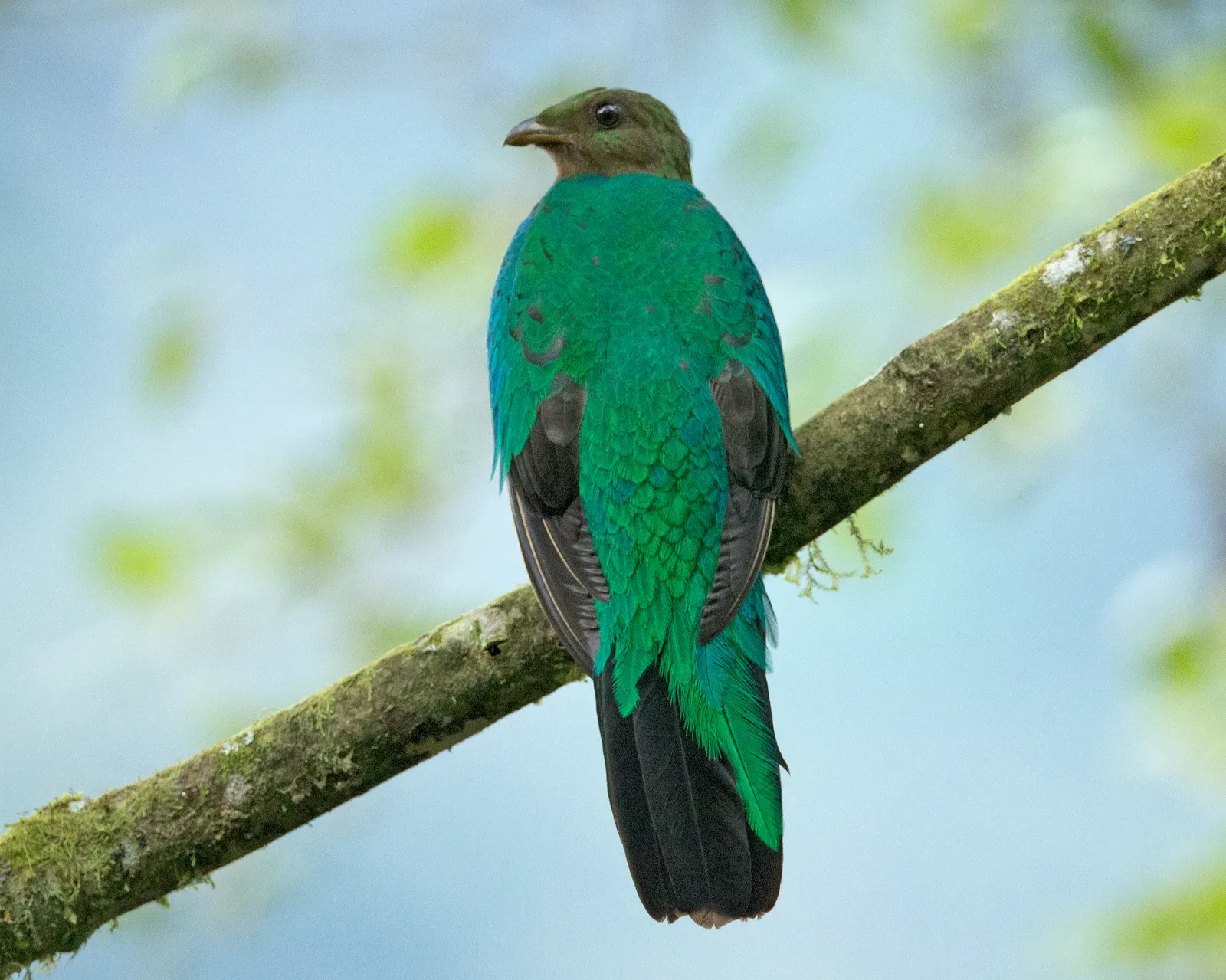
Quetzals represent some of the most sought-after sightings for birdwatchers visiting South America. There are four different species of quetzal living in Colombia, and while the iconic resplendent quetzal is limited to Central America, the almost-as-beautiful white-tipped quetzal can be observed in locations like the Sierra Nevada mountains.
The Golden-headed Quetzal can be spotted in areas like Gamboa near the Panama Canal, though these elusive birds require patience and often local knowledge to locate. They prefer cloud forests and montane habitats where mist clings to moss-covered trees.
Quetzals have iridescent emerald and sapphire plumage that shimmers with every movement. Males display particularly dramatic tail feathers during breeding season, though not as extensive as their Central American cousin. They feed primarily on wild avocados and other small fruits found in their mountain forest homes.
Spotting a quetzal can be difficult due to their elusive and shy nature, making any sighting feel like a genuine treasure. Their preference for staying high in dense canopy makes them challenging targets even for experienced birders.
The metallic quality of their feathers changes color depending on the angle of light, creating an almost magical effect in the filtered forest sunlight.
Multicolored Tanager: Colombia’s Endemic Rainbow
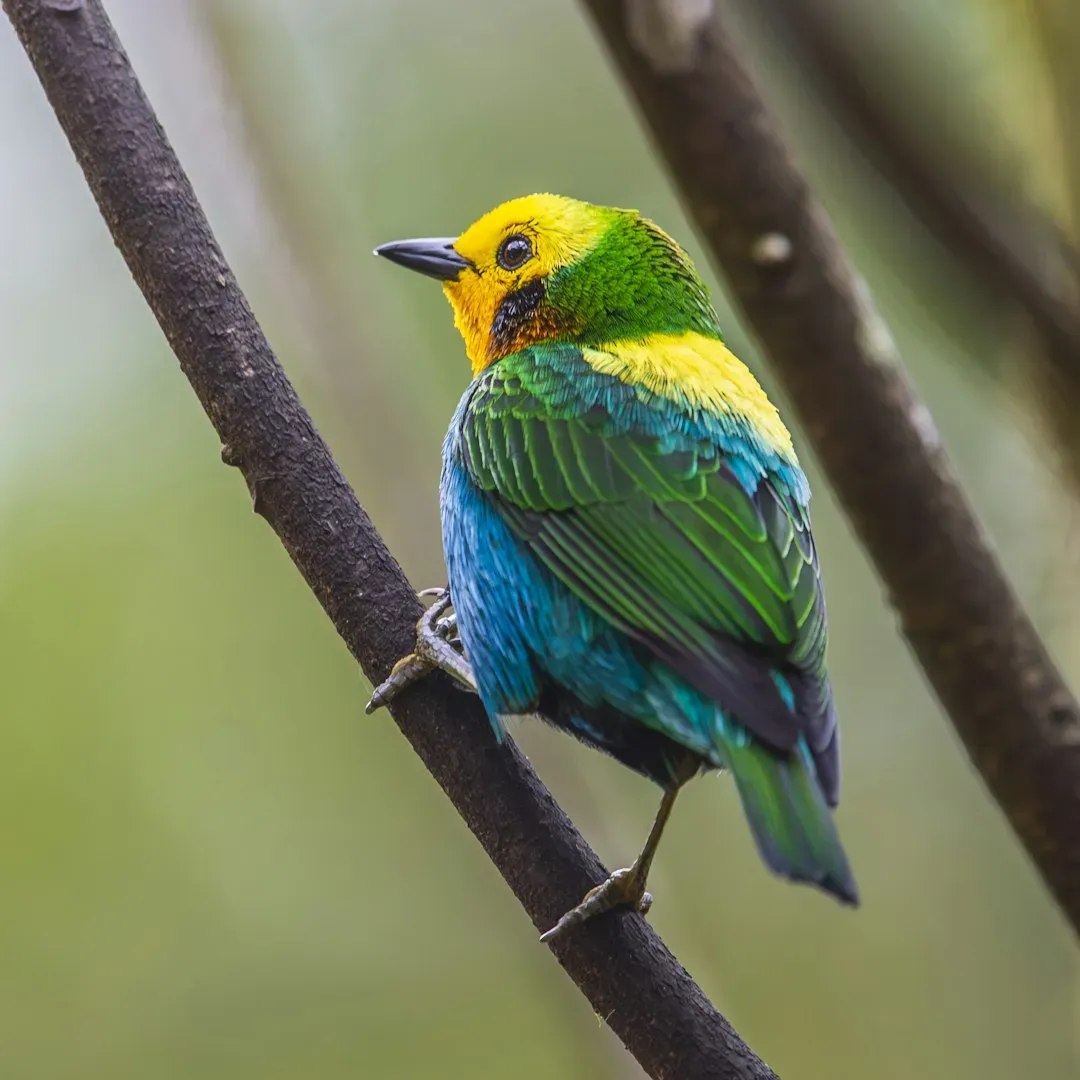
The multicolored tanager is endemic to Colombia, meaning it can only be observed in this country, and its name sums up its beauty effectively as the little birds seem to have been covered in almost every color imaginable. This is one of those birds that looks like it was designed by a committee that couldn’t agree on just one or two colors.
They can be seen quite easily at the bird feeders at Finca Alejandria, just outside the city of Cali, making them accessible even to casual birdwatchers. The concentrated populations at feeding stations offer excellent photography opportunities.
A traveler to some parts of South America might see more than 30 kinds of tanager birds, displaying a brilliant rainbow of every color imaginable. Among all these colorful species, the Multicolored Tanager stands out for sheer variety of hues in its plumage.
These small songbirds move actively through the foliage, constantly searching for insects and small fruits. Their energetic behavior combined with their spectacular coloring makes them endlessly entertaining to observe. They often join mixed-species flocks that roam through the forest canopy.
The fact that this species exists nowhere else on Earth makes any sighting special for birders keeping continental lists.
Toucan Barbet: The Technicolor Dream
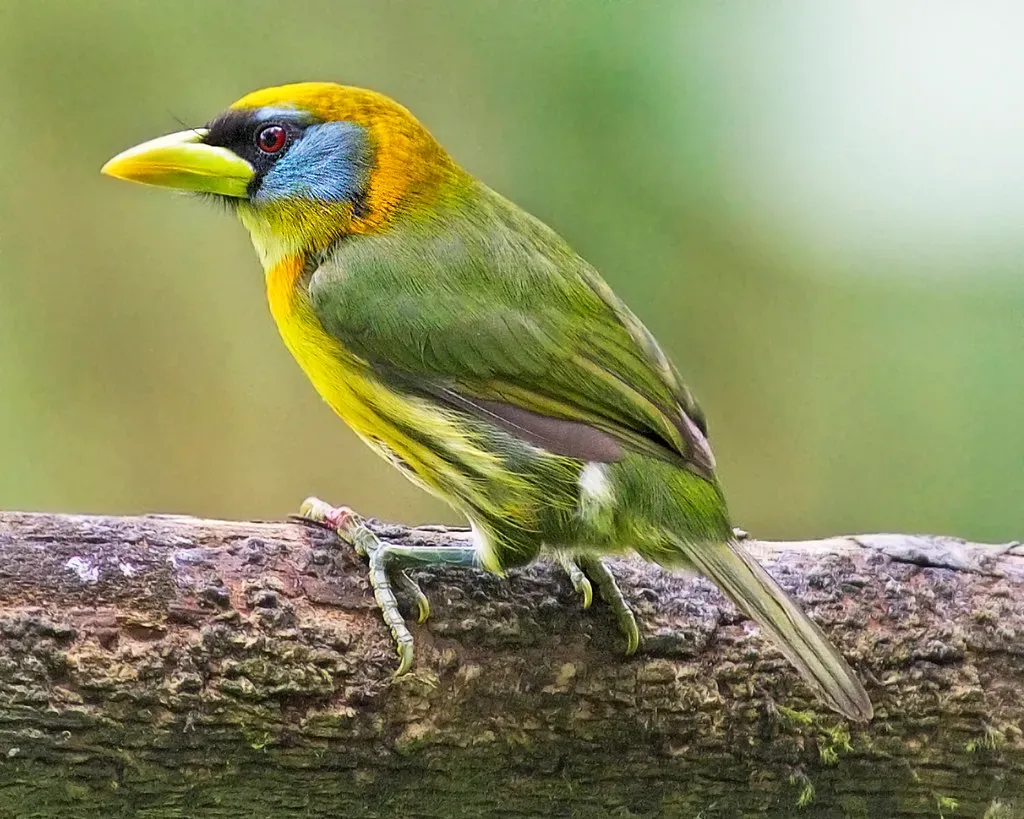
Closely related to toucans, barbets are medium-sized colorful birds, and the most beautiful by far is the spectacular toucan barbet, a bird so colorful that it’s hard to believe the pictures are real, generally quite easy to see despite their range being restricted to the Pacific slopes of the Western Colombian Andes.
This species packs an almost absurd amount of color onto a relatively small body. Blues, greens, reds, yellows, and oranges all compete for space on its plumage. The effect is dazzling and slightly surreal, like someone took every bright color in the paint store and applied them to a single bird.
Best viewing locations include Montezuma Reserve, Las Tangaras Reserve and La Planada Natural Reserve in Colombia. These protected areas offer the dense montane forests that toucan barbets prefer. Their loud calls help locate them even when they’re hidden in thick vegetation.
Unlike true toucans, barbets have stout bodies and shorter bills, though still substantial for their size. They feed on fruits and insects found in the middle and upper forest levels. Their behavior is less gregarious than toucans, often seen in pairs rather than flocks.
What would you have guessed: that nature could create something this outrageously colorful? The toucan barbet proves that sometimes reality exceeds even the wildest imagination.
Hoatzin: The Prehistoric Punk Rocker
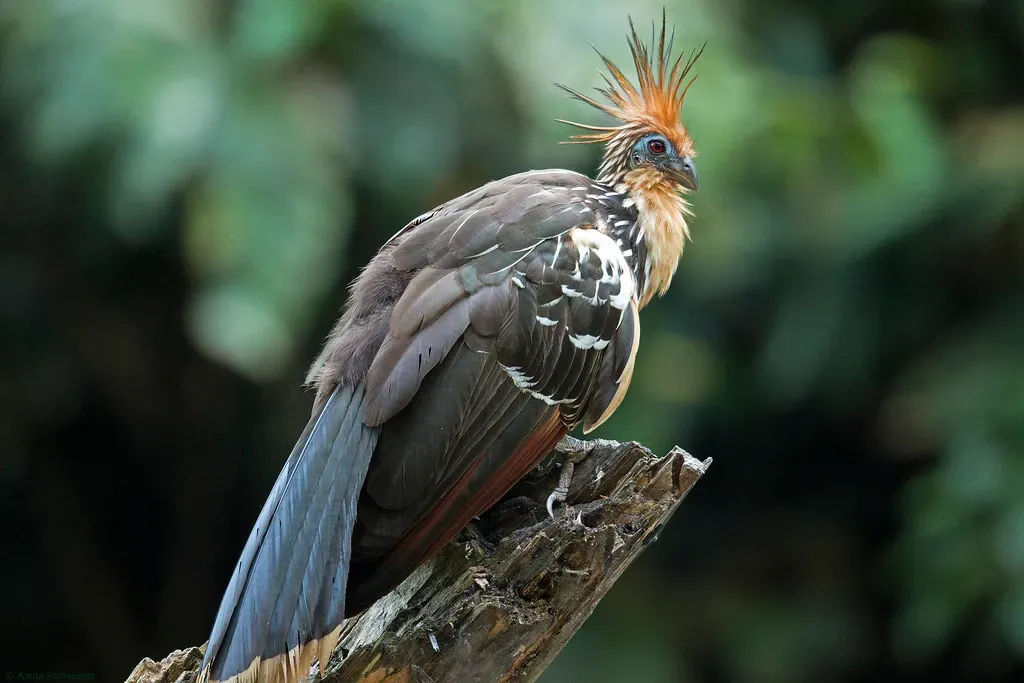
The hoatzin is a unique and colorful bird found in the swamps, riparian forests, and mangroves of the Amazon and Orinoco basins in South America, measuring about 65 cm in length, with a distinctive appearance including a long neck, small head, and a spiky rufous crest. This bird looks like it stepped out of another era entirely.
Its unfeathered blue face contrasts with maroon eyes, while upper parts are dark sooty brown with buff streaks and underparts are buff, with wings and flanks displaying rich rufous-chestnut hues, and the tail is bronze-green tipped with a whitish or buff band. The combination creates a bird that’s equal parts beautiful and bizarre.
The Hoatzin stands out as the only bird that uses foregut fermentation to digest leaves, a process similar to that of ruminant mammals like cows. This unique digestive system gives them a distinctive odor that has earned them the local nickname of “stink bird.”
The hoatzin is notable for its chicks, which have wing claws that help them climb branches, and is the national bird of Guyana, known locally as the Canje pheasant. Those wing claws are a throwback to ancient avian ancestors, making hoatzins living links to prehistoric times.
Their awkward, labored flight and preference for staying near water make them relatively easy to observe once you locate their habitat.
Conclusion: South America’s Living Palette
South America’s birds don’t just add color to the landscape. They define it. From the massive cobalt Hyacinth Macaw to the tiny, multi-hued Paradise Tanager, each species brings its own impossibly vivid contribution to the continent’s ecosystems. These aren’t just pretty faces either – they serve crucial roles as seed dispersers, pollinators, and indicators of forest health.
The best part about spotting these colorful birds is that moment of pure wonder when one appears from seemingly nowhere. Maybe you’re hiking through cloud forest when an Andean Cock-of-the-Rock suddenly materializes on a branch. Or perhaps you’re drifting down a river when a pair of Scarlet Macaws flies overhead, their calls echoing off the water.
Conservation efforts across South America work to protect these species and their habitats. Supporting eco-tourism, local reserves, and responsible birdwatching practices helps ensure future generations can experience the same jaw-dropping encounters. Which of these colorful birds would you most want to see in the wild? Tell us in the comments.
