


Florida’s diverse ecosystems harbor an impressive array of wildlife, from the mysterious depths of the Everglades to the warm waters of the Gulf Coast. While the Sunshine State is known for its beautiful beaches and vibrant wildlife, it’s also home to some creatures that pose significant dangers to humans. This article explores the 16 most dangerous animals in Florida, ranked according to the level of threat they present to people. Whether you’re a resident or planning to visit this tropical paradise, understanding these potential hazards can help you stay safe while appreciating Florida’s natural wonders. From venomous snakes to powerful predators, let’s examine the animals that demand respect and caution in the wild and sometimes developed areas of Florida.
1. American Alligator: Florida’s Apex Predator

The American alligator (Alligator mississippiensis) tops our list as Florida’s most dangerous animal, with approximately 1.3 million alligators inhabiting the state’s freshwater systems. These prehistoric reptiles can grow up to 14 feet long and weigh more than 1,000 pounds, making them formidable predators. While alligator attacks on humans are relatively rare—averaging about seven unprovoked attacks per year in Florida—they can be deadly when they occur. Most attacks happen when alligators feel threatened or when they’ve been illegally fed by humans and lose their natural fear.
The danger of alligators lies in their incredible bite force (approximately 2,000 pounds per square inch) and their ambush hunting style. They’re most active during breeding season from April to June, when males become territorial and aggressive. Florida’s Fish and Wildlife Conservation Commission advises keeping a safe distance of at least 30 feet from any alligator, never feeding them, swimming only in designated areas, and being especially vigilant near water at dawn and dusk when alligators are most active. Despite their fearsome reputation, fatal attacks are extremely rare, with only 25 recorded deaths since 1948.
2. Eastern Diamondback Rattlesnake: Deadly Venom

The Eastern Diamondback Rattlesnake (Crotalus adamanteus) earns the second spot on our list as North America’s largest venomous snake and the most dangerous snake in Florida. Growing up to 7 feet long, these powerful pit vipers deliver a potent hemotoxic venom that destroys tissue, causes internal bleeding, and can lead to death if not treated promptly. Their distinctive diamond pattern, rattle warning system, and triangular head make them recognizable, but they’re also masters of camouflage in Florida’s pine forests and palmetto flatwoods.
With venom yields reaching up to 800-1000 mg per bite (lethal dose for humans is approximately 100-150 mg), Eastern Diamondbacks are responsible for the majority of snakebite fatalities in the southeastern United States. However, they typically only strike when threatened or cornered, using their rattle as a warning before attacking. Bites require immediate medical attention and antivenom treatment. Fortunately, with modern medical care, deaths are now rare, though permanent tissue damage can still occur. Hikers and outdoor enthusiasts should wear closed-toe shoes, watch where they step and place their hands, and never attempt to handle or provoke these formidable reptiles.
3. Bull Shark: Aggressive Coastal Predator

Bull sharks (Carcharhinus leucas) rank third on our list due to their aggressive nature, powerful bite, and unique ability to tolerate freshwater—allowing them to venture far up rivers and into inland waterways where people don’t expect to encounter sharks. These robust predators can grow to 11 feet and weigh up to 500 pounds, with females typically larger than males. Florida’s warm coastal waters provide ideal hunting grounds for bull sharks, particularly in the summer months when they move closer to shore to feed and give birth.
What makes bull sharks particularly dangerous is their indiscriminate feeding behavior and high testosterone levels (even in females), which contribute to their aggressive temperament. According to the International Shark Attack File, bull sharks are responsible for the third-highest number of unprovoked attacks on humans worldwide, behind only great whites and tiger sharks. In Florida, they’re believed to be responsible for many attacks in murky, shallow waters. To reduce risk, experts recommend avoiding swimming at dawn, dusk, or night when sharks feed more actively, staying away from areas with fishing activity, removing shiny jewelry that might resemble fish scales, and avoiding isolated areas for water recreation.
4. Florida Black Bear: Powerful But Typically Shy
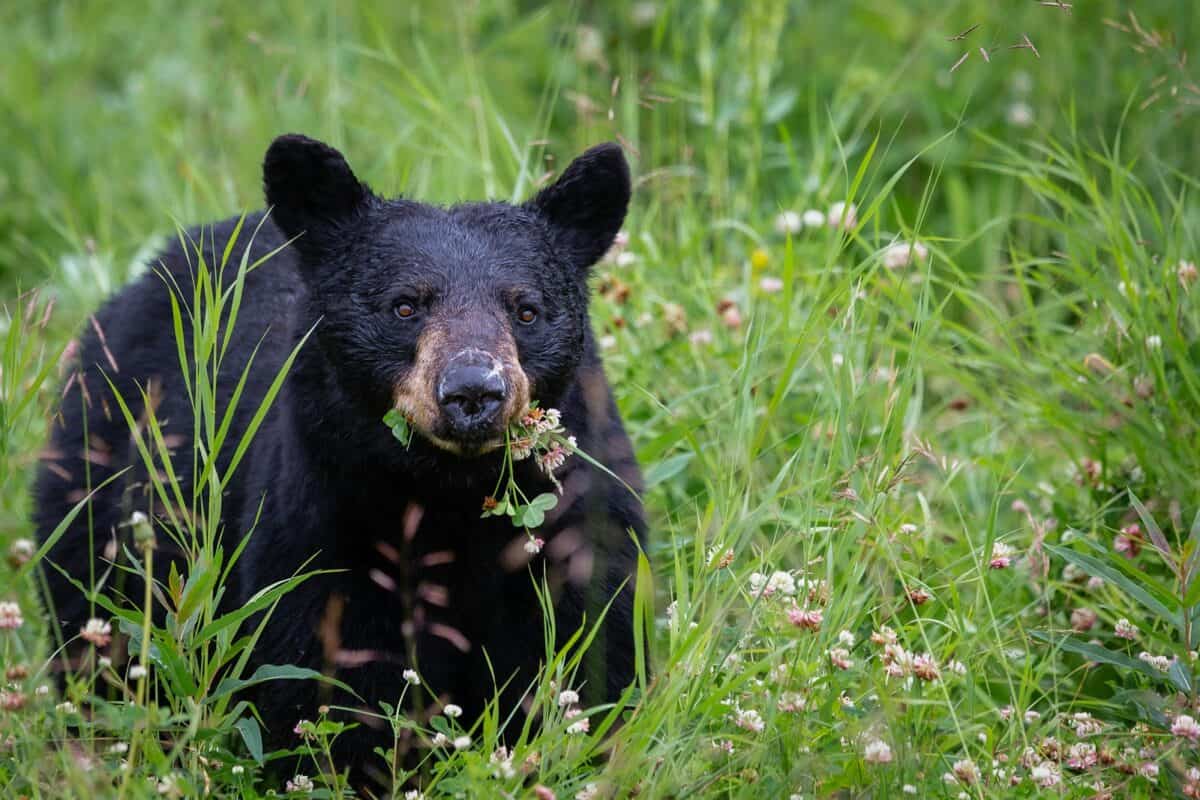
The Florida black bear (Ursus americanus floridanus) earns its place on this list not for frequency of attacks but for the potential danger when conflicts occur. As the state’s largest land mammal, adult males can weigh up to 450 pounds and possess incredible strength. These bears are generally shy and avoid human contact, but as development encroaches on their habitat, human-bear encounters have increased. Most problematic interactions involve bears seeking food in residential areas, where they can damage property and potentially become dangerous if cornered or if they perceive a threat to their cubs.
Despite their imposing size, serious attacks on humans are extremely rare in Florida, with no documented fatalities in the state’s history. However, the potential for injury exists, especially if bears become food-conditioned from accessing human garbage or deliberate feeding. The Florida Fish and Wildlife Conservation Commission reports hundreds of bear-related calls annually, though most involve property damage rather than human injury. To minimize risk, residents in bear country should secure garbage bins, remove bird feeders when bears are active, clean grills thoroughly, and never approach or feed bears. If encountered, experts recommend speaking calmly while backing away slowly and avoiding direct eye contact.
5. Southern Copperhead: Frequently Encountered Viper

The Southern Copperhead (Agkistrodon contortrix contortrix) ranks fifth on our list of Florida’s most dangerous animals due to its wide distribution, excellent camouflage, and the frequency of human encounters rather than the potency of its venom. These medium-sized pit vipers, reaching 2-3 feet in length, are responsible for more snake bites in the United States than any other venomous species, primarily because they freeze rather than flee when threatened, making them easy to step on accidentally. Their distinctive copper-colored head and hourglass-patterned body blend perfectly with forest floor leaf litter.
While rarely fatal to healthy adults, copperhead venom is painful and can cause tissue damage, severe swelling, and in some cases, long-term complications. These snakes are particularly concerning because they adapt well to suburban environments, frequently appearing in gardens, parks, and woodpiles near homes in northern and western Florida. Unlike rattlesnakes, copperheads give no audible warning before striking, making encounters more dangerous. Medical attention should be sought immediately after a bite, though many bites are “dry” (without venom). The best prevention is vigilance when working outdoors, wearing protective footwear, and using a flashlight when walking in potential copperhead habitat at night.
6. Water Moccasin (Cottonmouth): Aggressive Aquatic Snake

The Water Moccasin or Cottonmouth (Agkistrodon piscivorus) secures the sixth position on our list as Florida’s most aggressive venomous snake and the only venomous water snake in North America. Growing up to 6 feet long, these heavy-bodied pit vipers are identified by their dark coloration, blocky heads, and the distinctive white lining of their mouths which they display when threatened—giving rise to the name “cottonmouth.” Unlike many snakes that flee from human presence, cottonmouths often stand their ground and may even approach perceived threats, making encounters particularly dangerous.
Found throughout Florida in swamps, marshes, lakes, and slow-moving streams, cottonmouths deliver a potent cytotoxic venom that destroys tissue and can cause severe pain, swelling, and necrosis. Though fatalities are rare with prompt medical treatment, bites can result in permanent tissue damage or limb loss in severe cases. Their semi-aquatic nature makes them especially concerning for waders, anglers, and kayakers who may inadvertently disturb them while navigating shorelines or overhanging vegetation. To reduce risk, maintain vigilance around waterways, avoid reaching into holes or dense vegetation without visual confirmation, and never attempt to handle or provoke these snakes. If bitten, remain calm and seek immediate medical attention rather than attempting outdated first-aid measures like tourniquets or suction.
7. American Crocodile: Rare But Potentially Dangerous

The American crocodile (Crocodylus acutus) ranks seventh on our list as a federally threatened species found primarily in South Florida’s coastal areas. Growing up to 15 feet long and weighing over 1,000 pounds, these prehistoric reptiles are generally more shy and less aggressive toward humans than their alligator cousins, which partly explains their lower ranking despite their impressive size. With only about 2,000 American crocodiles estimated to live in Florida, human encounters are relatively rare and typically occur in the southern tip of the peninsula, Florida Keys, and along both coasts up to Tampa Bay on the west and Fort Lauderdale on the east.
Unlike alligators, American crocodiles prefer saltwater and brackish environments, and they have a narrower, more V-shaped snout with a protruding fourth tooth visible when their mouth is closed. While attacks on humans in Florida are extremely uncommon—with no confirmed fatalities in the state—they remain potentially dangerous predators deserving of caution and respect. Their population has been gradually recovering since the 1970s, increasing the likelihood of human-crocodile interactions in developed coastal areas. The Florida Fish and Wildlife Conservation Commission recommends maintaining a safe distance, never feeding crocodiles, swimming only in designated areas away from known crocodile habitat, and being especially vigilant at dawn and dusk when these reptiles are most active.
8. Florida Panther: Endangered and Elusive

The Florida panther (Puma concolor coryi) earns the eighth position on our list as the state’s official animal and one of the most endangered mammals on Earth. With fewer than 230 individuals remaining in the wild, these magnificent big cats are extremely rare and primarily restricted to southwestern Florida, including Big Cypress National Preserve and Everglades National Park. Adult males can weigh up to 160 pounds and measure nearly 7 feet from nose to tail tip. Despite their power and predatory capabilities, Florida panthers rank relatively low on our danger scale because they actively avoid human contact and there has never been a documented attack on a human in Florida’s history.
The theoretical danger posed by panthers stems from their status as apex predators with powerful jaws, sharp claws, and the ability to take down prey much larger than themselves, including deer and wild hogs. Conservation efforts have helped the population grow from fewer than 30 individuals in the 1970s, but this success has led to more panther sightings in areas with human development as young males disperse in search of territory. While attacks remain extremely unlikely, the Florida Fish and Wildlife Conservation Commission recommends keeping children and pets supervised in panther habitat, especially at dawn and dusk when these cats are most active. If you encounter a panther, experts advise making yourself appear larger, maintaining eye contact, and backing away slowly while giving the animal space to escape.
9. Coral Snake: Beautiful But Deadly
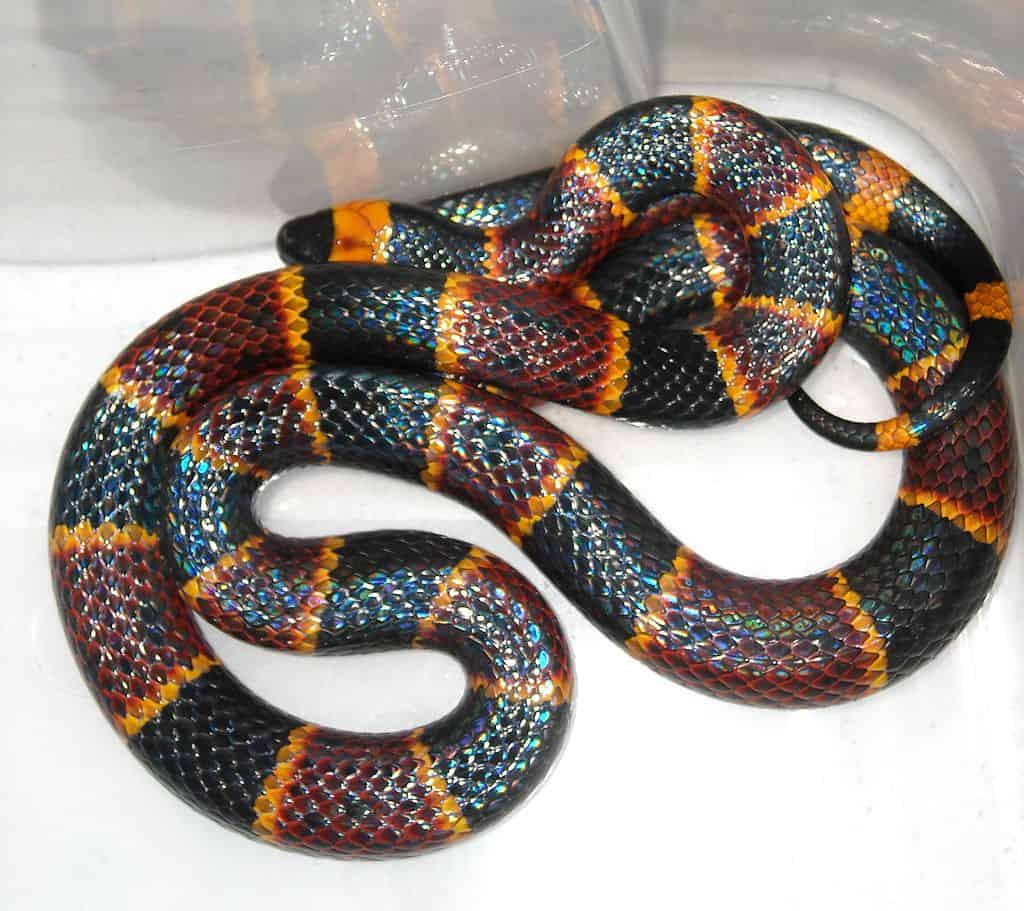
The Eastern coral snake (Micrurus fulvius) ranks ninth on our list of Florida’s most dangerous animals due to its highly potent neurotoxic venom, which attacks the nervous system and can cause respiratory failure. These strikingly beautiful reptiles are easily identified by their distinctive red, yellow, and black banding pattern—giving rise to the warning rhyme: “Red touch yellow, kill a fellow; red touch black, friend of Jack.” Despite possessing venom more potent than that of a rattlesnake, coral snakes account for relatively few bites in Florida because of their reclusive nature, relatively small size (usually 20-30 inches), and reluctance to bite unless handled or severely provoked.
Unlike pit vipers that inject venom through long, hinged fangs, coral snakes have short, fixed front fangs that require a chewing motion to deliver venom effectively. This means they must hang on rather than strike and release, which reduces the likelihood of envenomation during brief encounters. However, when bites do occur, they require immediate medical attention as symptoms may develop slowly—sometimes taking 12 hours to appear—but can progress rapidly to include slurred speech, double vision, and eventual respiratory paralysis. Florida residents should exercise caution when gardening or moving debris, wear protective gloves when working outdoors, and teach children to avoid all snakes regardless of appearance. With proper antivenom treatment, fatalities from coral snake bites are now extremely rare in the United States.
10. Wild Boar: Destructive and Unpredictable

Wild boars (Sus scrofa), also known as feral hogs, secure the tenth position on our list as one of Florida’s most destructive and potentially dangerous invasive species. Descended from escaped domestic pigs and European wild boars introduced for hunting, these highly adaptable mammals now number an estimated 500,000 in Florida alone. Adult males (boars) can weigh up to 400 pounds and possess razor-sharp tusks that can grow to 5 inches long, which they use for defense and fighting. While not typically aggressive toward humans without provocation, they can become dangerous when cornered, threatened, or when sows are protecting their young.
What makes wild boars particularly concerning is their intelligence, unpredictable nature, and their ability to thrive in nearly any habitat in Florida, including suburban areas. They’re known to charge when threatened, capable of running at speeds up to 30 mph, and their tusks can inflict serious lacerations. Additionally, they can carry diseases transmissible to humans, including brucellosis and leptospirosis. The Florida Fish and Wildlife Conservation Commission permits hunting wild hogs year-round on private property with landowner permission, as they cause an estimated $1.5 billion in damage nationwide annually. Hikers and outdoor enthusiasts should maintain distance if wild boars are encountered, avoid getting between a sow and her piglets, and slowly back away rather than running, which might trigger a chase response.
11. Box Jellyfish: Invisible Ocean Threat
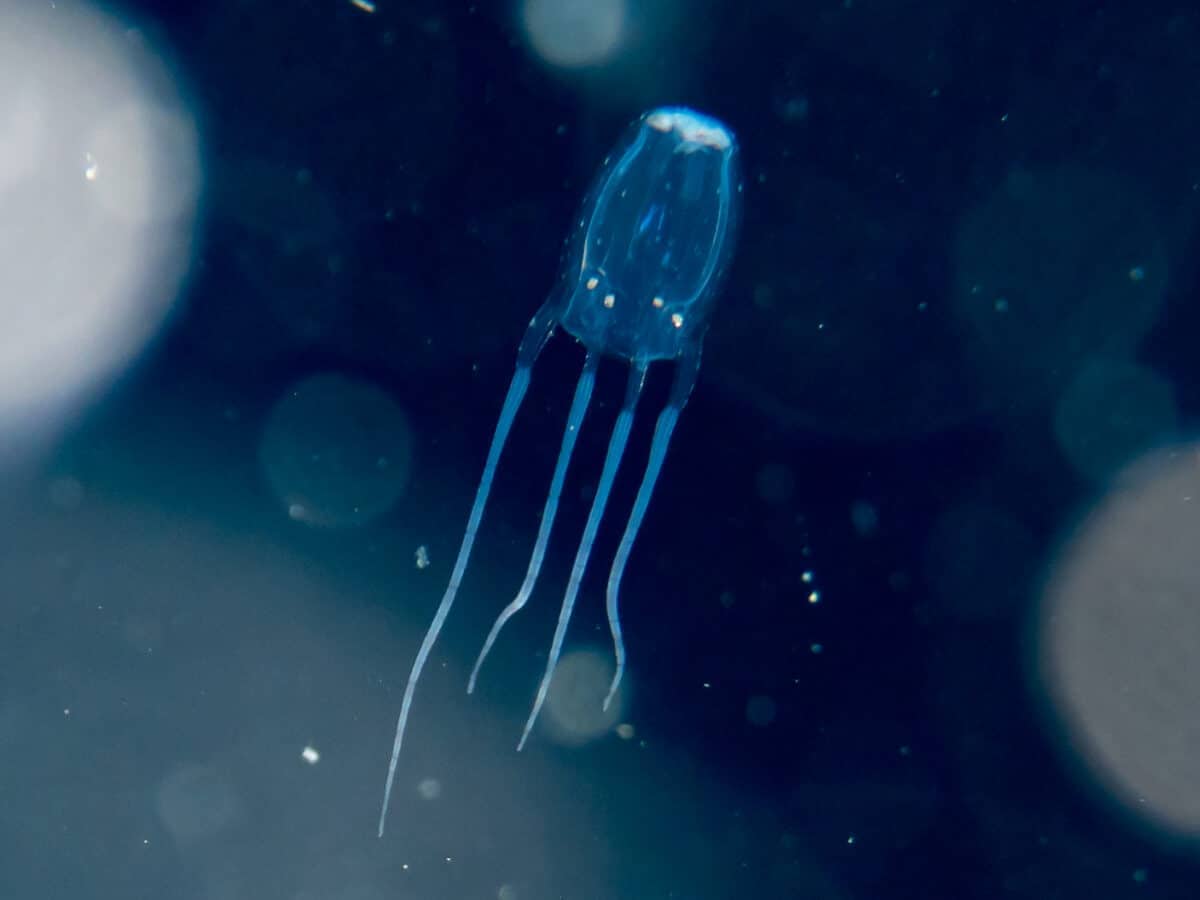
The box jellyfish (Cubozoa class) earns the eleventh spot on our list of Florida’s most dangerous animals, representing a growing concern in the state’s coastal waters. Though not as lethal as their Australian relatives, Florida’s box jellyfish species still pack a powerful punch with their venomous nematocysts (stinging cells). These nearly transparent marine creatures are named for their cube-shaped bells and can be difficult to spot in water, making them particularly dangerous for swimmers. The most common species in Florida waters include the sea wasp (Chiropsalmus quadrumanus) and the four-handed box jellyfish (Tamoya haplonema), both capable of delivering extremely painful stings.
Box jellyfish are becoming more prevalent in Florida waters, with some scientists linking increased sightings to warming ocean temperatures and changing currents. Unlike many jellyfish that drift passively, box jellyfish are active swimmers with rudimentary eyes that allow them to pursue prey, potentially making them more likely to encounter humans. Stings typically cause intense pain, red welts, and sometimes systemic symptoms including difficulty breathing, nausea, and in severe cases, cardiovascular problems. Treatment involves removing tentacles (without touching them directly), rinsing with vinegar to deactivate unfired nematocysts, and seeking medical attention for severe reactions. Beach-goers should check local jellyfish warnings, consider wearing protective clothing like rash guards in affected areas, and avoid swimming when box jellyfish advisories are in effect.
12. Portuguese Man-of-War: Floating Colonies of Pain
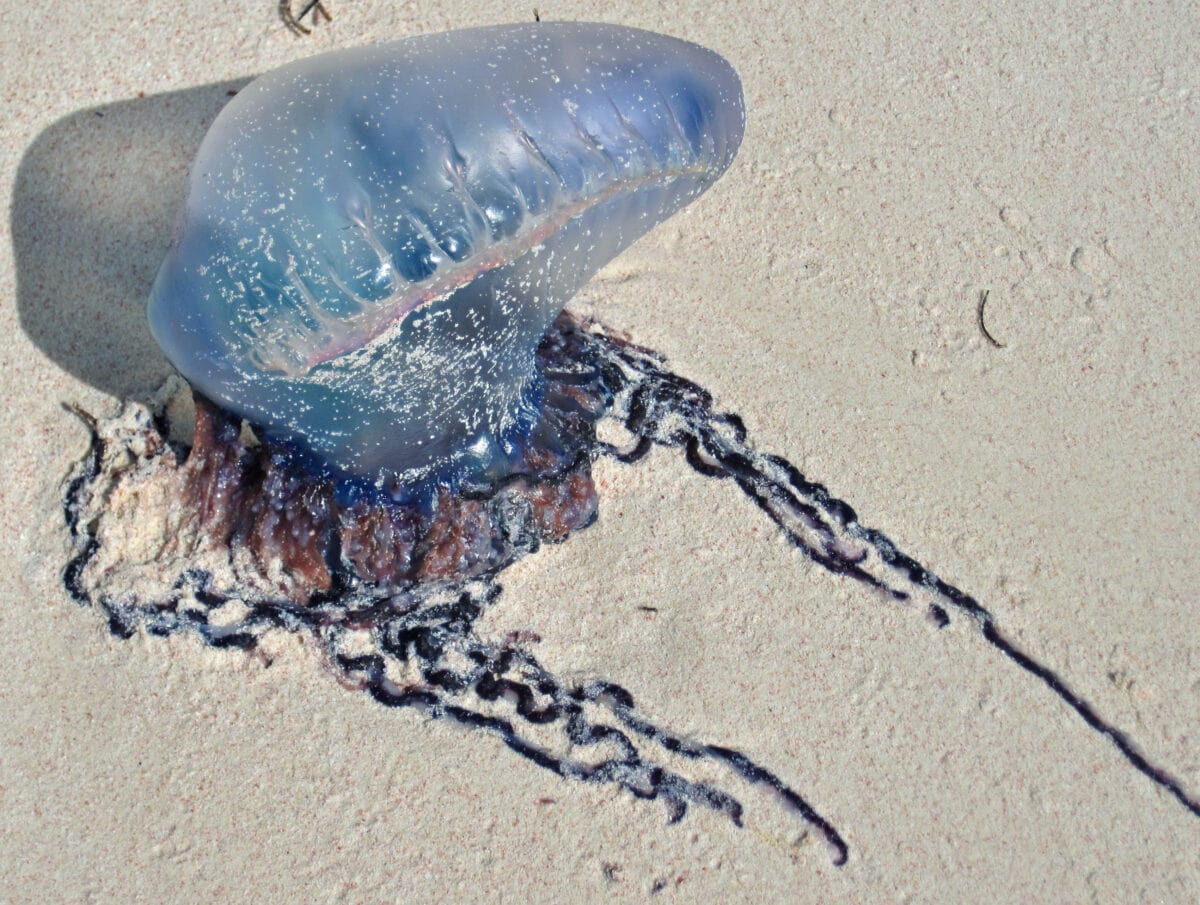
The Portuguese Man-of-War (Physalia physalis) claims the twelfth position on our list despite being a common hazard along Florida’s beaches, particularly on the Atlantic coast. Often mistaken for a jellyfish, this fascinating organism is actually a siphonophore—a colonial organism made up of specialized individual animals (zooids) working together as one. Its distinctive purple-blue gas-filled float (pneumatophore) acts like a sail, allowing ocean winds to carry it across the water’s surface. Beneath the float trail long, venomous tentacles that can extend up to 165 feet, though 30 feet is more typical. These tentacles are lined with thousands of nematocysts—stinging cells capable of delivering painful neurotoxic venom to fish, small marine animals, and unlucky beachgoers.
Stings from a Portuguese Man-of-War can cause intense pain, welts, and in some cases, more severe systemic reactions such as fever, difficulty breathing, and muscle cramps. Even detached tentacles washed up on shore remain dangerous and can sting upon contact. Though rarely fatal, the sting can be debilitating and requires prompt first aid. Vinegar should not be used for Man-of-War stings, as it may worsen the reaction—rinsing with salt water and gently removing tentacles with a stick or gloved hand is advised before seeking medical attention. As wind patterns and ocean currents shift, these drifting colonies of pain can appear suddenly, prompting beach closures and warning flags. Despite their fragility, Portuguese Man-of-Wars remain among Florida’s most iconic and dangerous marine invertebrates.
Conclusion: Coexisting with Caution in the Sunshine State
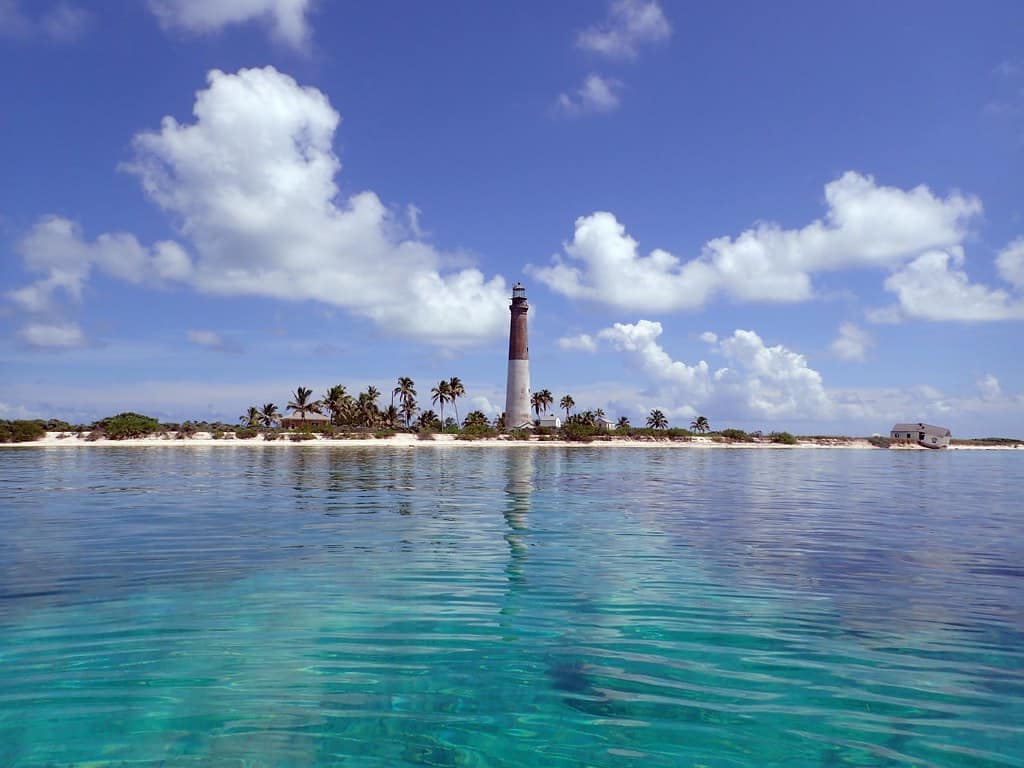
Florida’s warm climate and diverse ecosystems make it a haven for wildlife—including some of the most dangerous animals in the U.S. From powerful alligators and aggressive bull sharks to venomous snakes and disease-carrying mosquitoes, many of these creatures rank high in potential risk to humans. But it’s important to remember that most of these animals don’t seek out conflict; danger typically arises when humans encroach on their space, behave carelessly, or fail to recognize warning signs.
By understanding the habits, habitats, and behaviors of Florida’s most dangerous species, we can reduce the likelihood of harmful encounters and learn to appreciate these animals from a safe distance. Education, respect, and preparedness are key to staying safe while enjoying the state’s natural beauty. Ultimately, Florida’s wild residents aren’t enemies—they’re vital parts of a rich and complex environment. Coexistence is not only possible, it’s essential for protecting both people and the precious ecosystems that make the Sunshine State so unique.

From exploring the marine wonders in the Azores and witnessing the vast savannas of Kenya, to delving deep into the rich biodiversity of South Africa and traversing iconic landscapes in Australia and the US like Yellowstone, Chris's experiences are vast.
With a penchant for diving alongside sharks, the ocean holds a special place in his heart.
Through his academic insights, he champions wildlife conservation, striving with 'Animals Around The Globe' to cultivate a profound connection between humans and animals, enhancing our mutual appreciation.
Connect with him at Feedback@animalsaroundtheglobe.com.
- This Monkey Has a Mustache - July 21, 2026
- How Steve Irwin Changed the World’s View of Wildlife - July 21, 2026
- The Catfish That Caused Earthquakes in Japanese Folklore - July 21, 2026