


The ocean’s vast blue expanse hides countless secrets, including masters of disguise who have perfected the art of disappearing in plain sight. Marine camouflage represents one of nature’s most sophisticated evolutionary adaptations, allowing creatures to blend seamlessly with their surroundings to evade predators or ambush prey. From color-changing cephalopods to fish that mimic seaweed, these underwater illusionists employ techniques that would make even the most skilled human magicians envious. In this fascinating exploration, we’ll dive deep into the remarkable world of marine camouflage and discover 15 sea animals whose disappearing acts are nothing short of magical.
The Science Behind Marine Camouflage
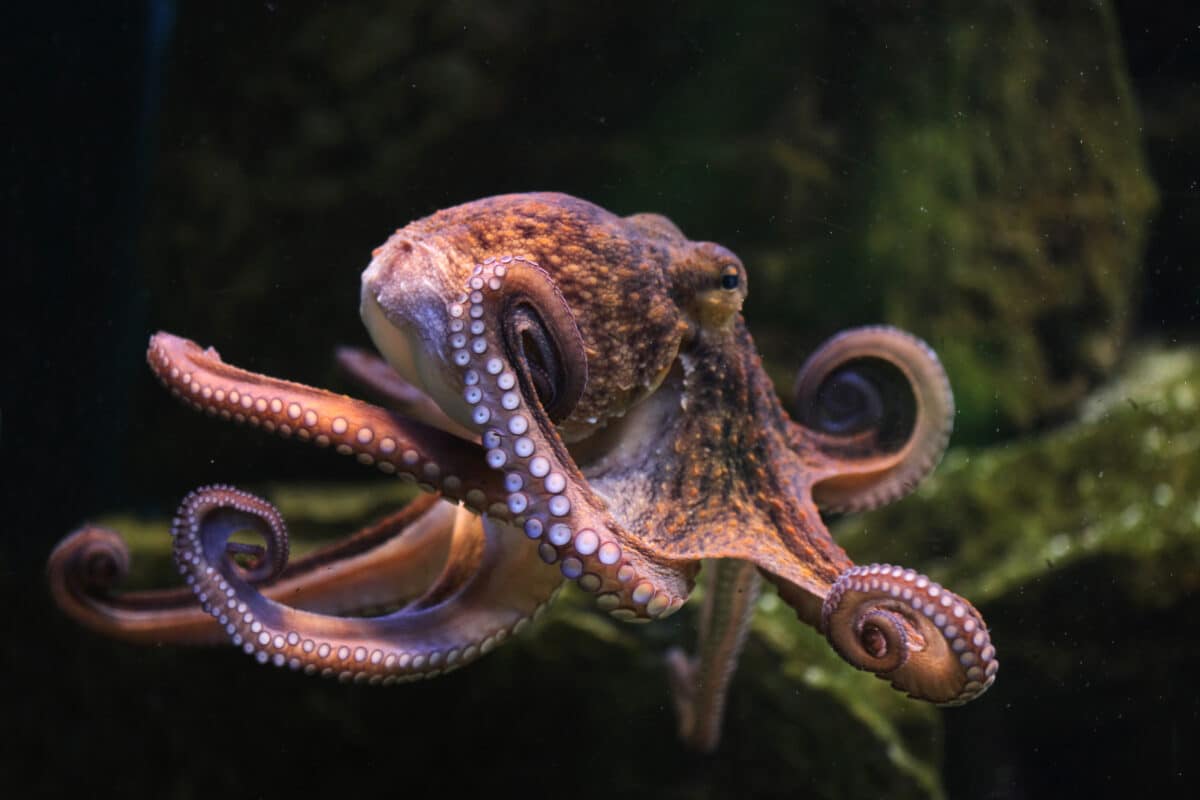
Marine camouflage involves several sophisticated biological mechanisms that have evolved over millions of years. The most common techniques include background matching (adopting colors and patterns similar to the surroundings), disruptive coloration (breaking up body outlines with contrasting patterns), countershading (having a darker upper side and lighter underside to counter the effects of sunlight), and masquerading (resembling inanimate objects like rocks or plants). Some advanced species can actively change their coloration through specialized cells called chromatophores, which contain pigments that can expand or contract based on neural or hormonal signals. These adaptations aren’t merely cosmetic—they represent critical survival strategies in the highly competitive underwater ecosystems where being seen often means becoming someone else’s meal.
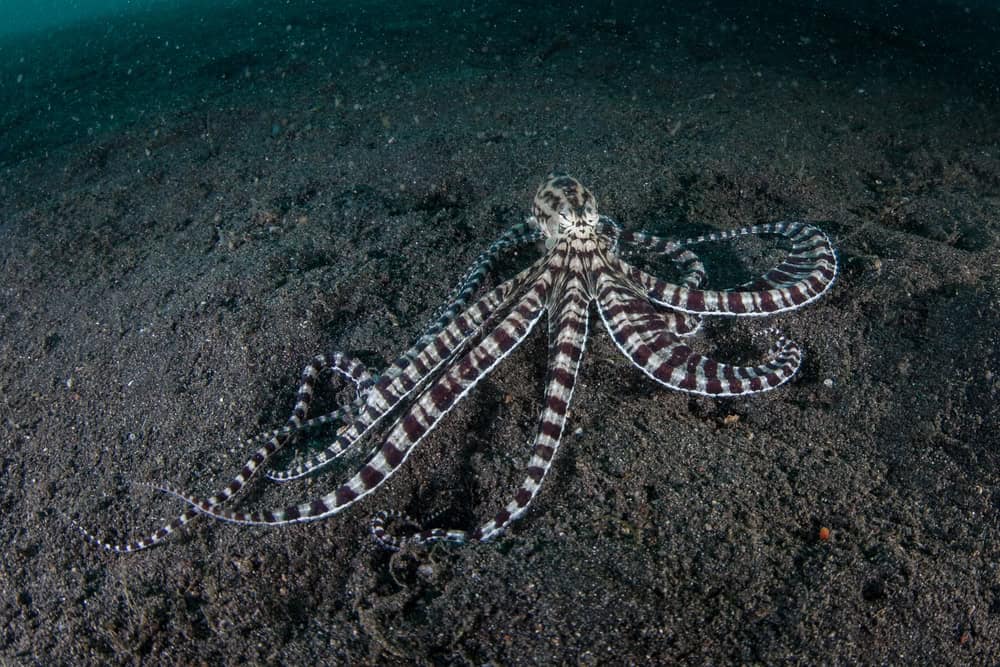
12. The Mimic Octopus The Ultimate Shapeshifter

The mimic octopus (Thaumoctopus mimicus) stands as perhaps the ocean’s most versatile impersonator. Discovered in 1998 in the waters of Indonesia, this remarkable cephalopod doesn’t just change its color and texture—it transforms its entire body shape and behavior to mimic at least 15 different species, including sea snakes, lionfish, flatfish, and even mantis shrimp. Using its flexible body and control over its skin pigmentation, the mimic octopus can decide which dangerous animal to impersonate based on the specific threat it faces. For example, when confronted by damselfish, it will extend six arms to mimic the banded sea snake, the damselfish’s natural predator. This level of situational awareness and adaptability makes the mimic octopus one of the most sophisticated masters of disguise in the animal kingdom, employing not just camouflage but actual mimicry as a defense strategy.
11. Cuttlefish The Color-Changing Virtuosos

Cuttlefish have earned their reputation as the “chameleons of the sea” through their unparalleled ability to transform their appearance instantaneously. These cephalopods possess up to 200 specialized pigment cells called chromatophores per square millimeter of skin—far more than chameleons—allowing them to create complex patterns and color changes in fractions of a second. Research has shown that cuttlefish don’t just match backgrounds; they can create disruptive patterns that break up their outline, and they can even produce moving bands of color to confuse predators, a technique known as the “passing cloud” effect. Perhaps most impressively, cuttlefish accomplish these feats despite being colorblind. Scientists believe they may detect patterns through polarized light perception, using a mechanism we’re still working to understand fully. The common cuttlefish (Sepia officinalis) can reproduce the appearance of rock formations, coral, seaweed, and sand with such precision that they seemingly vanish against these backgrounds.
10. Stonefish Deadly Masters of Disguise

The stonefish (Synanceia genus) represents one of nature’s most perfect examples of masquerade camouflage, with potentially fatal consequences for unwary beachgoers. These sedentary ambush predators have evolved body shapes, textures, and coloration that mimic encrusted rocks or coral formations with extraordinary accuracy. Their warty, textured skin often develops algal growths that enhance the disguise, making them virtually indistinguishable from the seafloor. This camouflage serves a dual purpose: it allows stonefish to ambush prey and provides protection from predators. When prey fish swim nearby, the stonefish can strike with lightning speed, opening its mouth to create a powerful vacuum that sucks in the victim. What makes stonefish particularly dangerous to humans is that their camouflage is so effective that swimmers or waders might inadvertently step on them, triggering their venomous dorsal spines. These spines deliver one of the most potent neurotoxins in the ocean, causing excruciating pain and potentially death if left untreated, making the stonefish’s disguise not just a hunting strategy but a defensive weapon.
9. Decorator Crabs The Living Arts and Crafts Projects
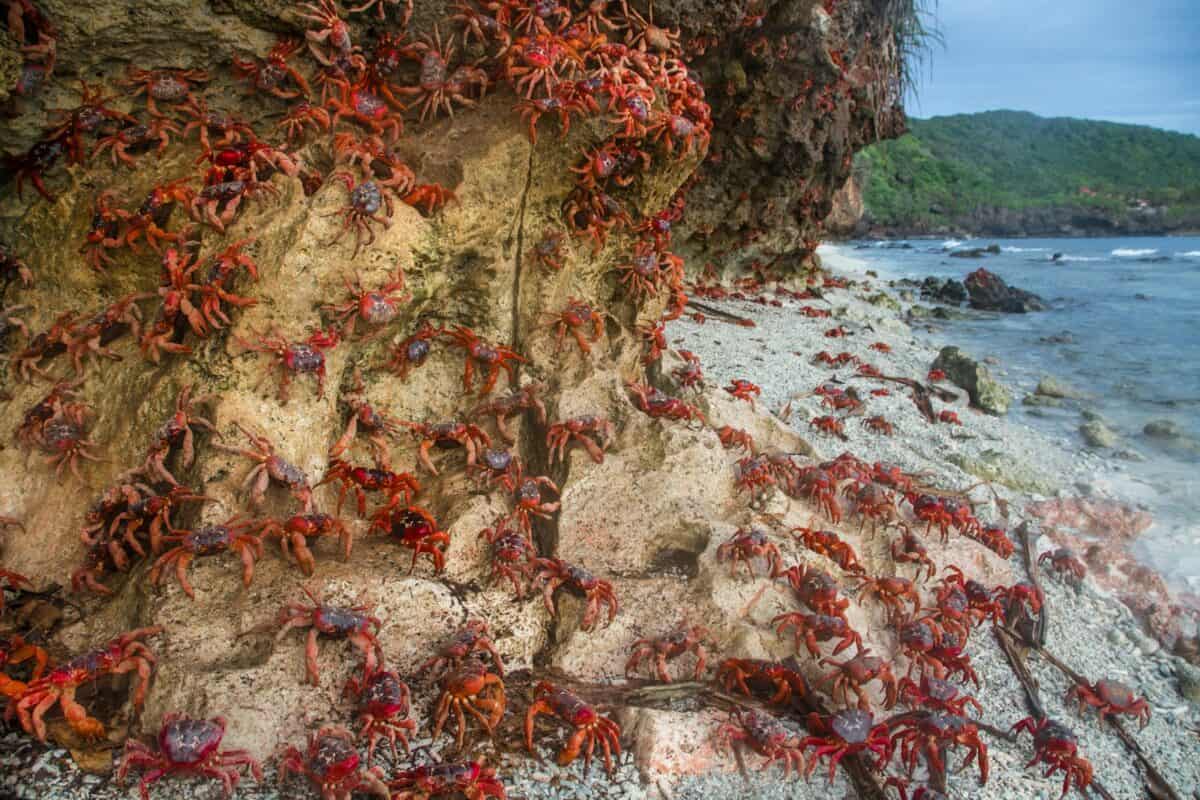
Decorator crabs elevate camouflage to an art form by actively adorning their bodies with pieces of their environment. These ingenious crustaceans, belonging to the superfamily Majoidea, possess specialized hooked setae (hair-like structures) on their shells that allow them to attach sponges, algae, hydroids, and even small anemones to their carapaces. The process isn’t random—studies have shown that decorator crabs selectively choose materials that provide chemical or physical protection beyond mere visual concealment. For example, some species preferentially select stinging hydrozoans that deter predators or algae that provide additional oxygen when the crab is buried in low-oxygen sediments. The Japanese spider crab (Macrocheira kaempferi) and the mosaic crab (Loxorhynchus crispatus) are particularly adept decorators, continuously updating their disguises as they move through different habitats. This behavior represents one of the few examples in nature where an animal actively constructs its camouflage rather than relying solely on evolved physical characteristics, demonstrating remarkable behavioral adaptation.
8. Leafy Seadragon Living Seaweed

The leafy seadragon (Phycodurus eques) exemplifies evolutionary masquerade taken to extraordinary lengths. Endemic to the southern and western coasts of Australia, these relatives of seahorses have evolved elaborate leaf-like appendages that extend from their bodies, creating a perfect disguise among the seaweed and kelp forests they inhabit. What appears decorative serves a crucial survival function—their yellow and brown-green coloration combines with their leaf-like protrusions to break up their outline and make them virtually indistinguishable from the surrounding vegetation. Unlike some camouflage specialists, leafy seadragons cannot rapidly change color; instead, they rely on slow movement and their exquisite morphological adaptation. They swim by using nearly transparent pectoral and dorsal fins that ripple gently, mimicking the wave-induced movement of seaweed fronds. Their camouflage is so complete that potential predators often swim directly past them without detection. Conservation efforts for these remarkable creatures have intensified as they face threats from habitat loss, with their populations protected under Australian law since the early 1990s.
7. Flatfish Masters of Seafloor Impersonation
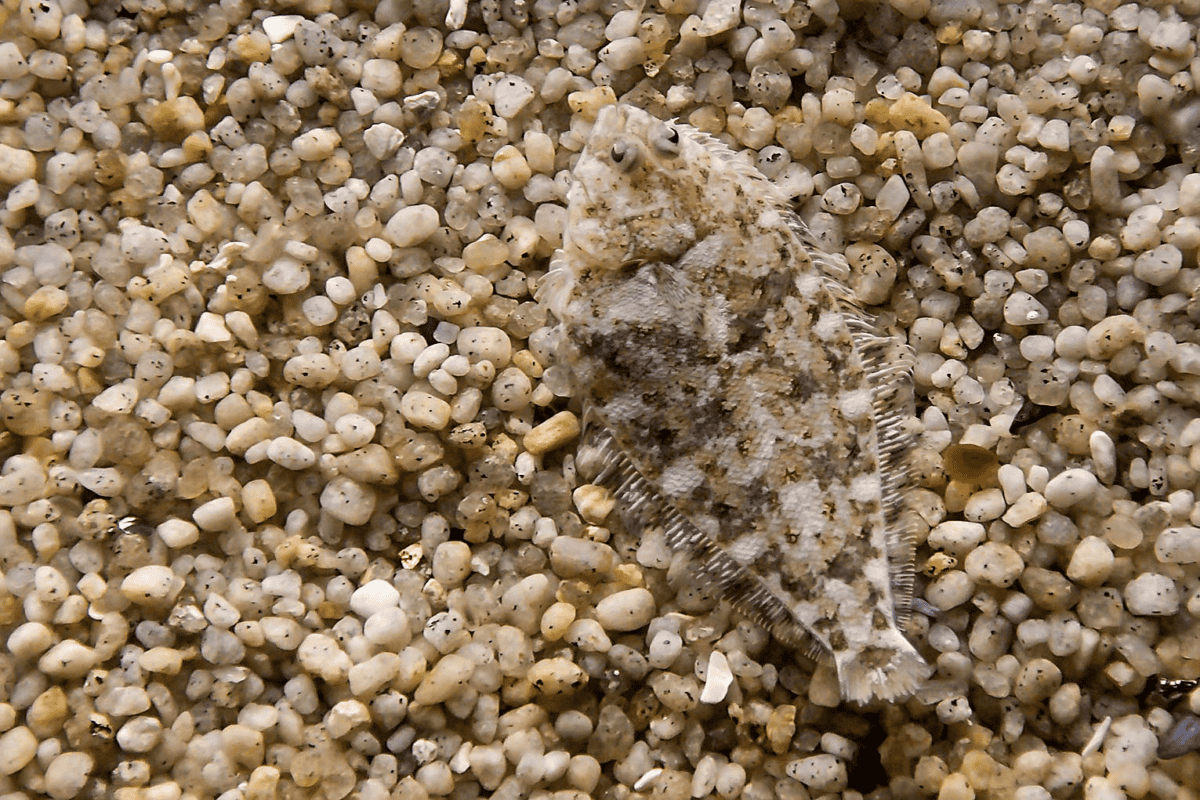
Flatfish, including flounders, sole, and halibut, undergo one of the most dramatic physical transformations in the animal kingdom as part of their camouflage strategy. Beginning life as normal-looking fish with eyes on both sides of their head, they undergo a remarkable metamorphosis during development. As juveniles, one eye migrates across the skull to join the other on what becomes the “top” side of the fish, while the blind side becomes the bottom, allowing them to lie flat on the ocean floor. This unusual anatomy supports their specialized lifestyle as ambush predators that blend with the seafloor. Species like the peacock flounder (Bothus mancus) can change their coloration and pattern in as little as 2-8 seconds to match the substrate they’re resting on, thanks to specialized chromatophores. Research using computer vision analysis has demonstrated that their pattern-matching abilities rival sophisticated artificial camouflage systems. Some species can even create three-dimensional skin textures to mimic sand ripples or gravel. This comprehensive disguise allows flatfish to remain hidden from both predators and prey while conserving energy between hunting opportunities.
6. Frogfish The Patient Anglers

Frogfish, members of the family Antennariidae, combine elaborate camouflage with an ingenious hunting strategy. These stocky ambush predators have evolved to mimic sponges, rocks, and coral with remarkable accuracy. Different species display specialized adaptations: the warty frogfish (Antennarius maculatus) resembles encrusted rocks with its textured skin; the painted frogfish (Antennarius pictus) mimics colorful sponges; and the sargassum frogfish (Histrio histrio) perfectly imitates floating sargassum seaweed with leaf-like appendages. Their camouflage is enhanced by their ability to change color over days or weeks to match their chosen habitat. What makes frogfish truly remarkable is their modified first dorsal spine, which has evolved into a fishing rod-like appendage called an illicium, tipped with a fleshy lure called an esca. The frogfish waves this bait to attract prey, mimicking small fish, crustaceans, or worms. When prey approaches the lure, the frogfish can strike with one of the fastest feeding actions in nature, expanding its mouth to create a vacuum that engulfs the victim in as little as 6 milliseconds—faster than a human eye can detect. This combination of expert camouflage and specialized hunting apparatus makes frogfish among the ocean’s most successful ambush predators.
5. Ghost Pipefish Hovering Phantoms
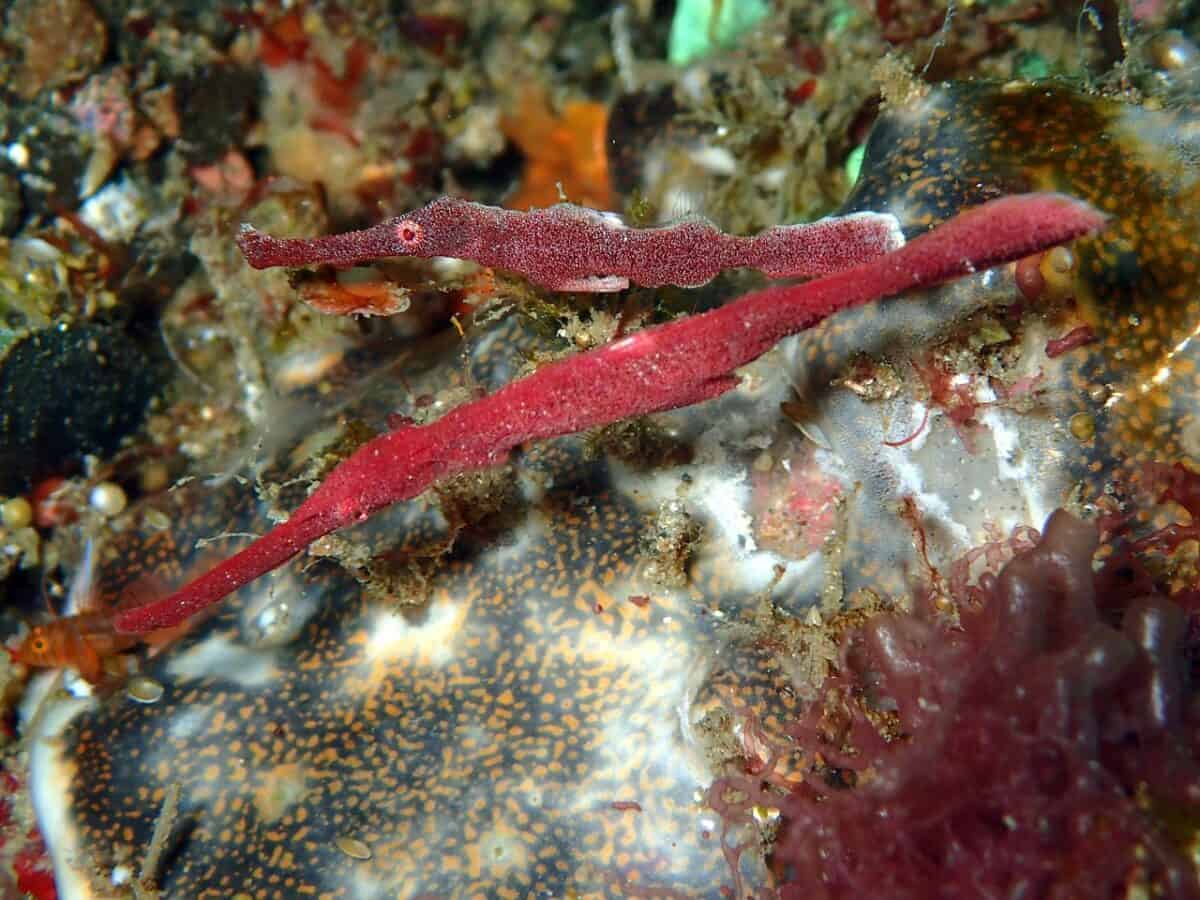
Ghost pipefish (family Solenostomidae) exemplify specialized camouflage adapted to very specific microhabitats. These delicate relatives of seahorses have evolved body shapes and coloration that precisely mimic particular marine vegetation or invertebrates. The ornate ghost pipefish (Solenostomus paradoxus) resembles drifting seaweed or algae with its elaborate fins and filaments, while the robust ghost pipefish (Solenostomus cyanopterus) often positions itself among crinoid feather stars, perfectly matching their color and texture. Their camouflage is so specialized that ghost pipefish typically remain in the same small area for their entire adult lives, having evolved to match that specific habitat perfectly. Unlike many camouflage experts, ghost pipefish maintain their disguise even during reproduction—females carry their eggs in specialized brood pouches formed by their pelvic fins, which are often disguised to look like additional pieces of vegetation. Their extraordinary camouflage makes ghost pipefish highly prized sightings for underwater photographers and marine naturalists, who often must rely on experienced local guides to locate these nearly invisible masters of disguise.
4. The Seahorse Blending Through Stillness
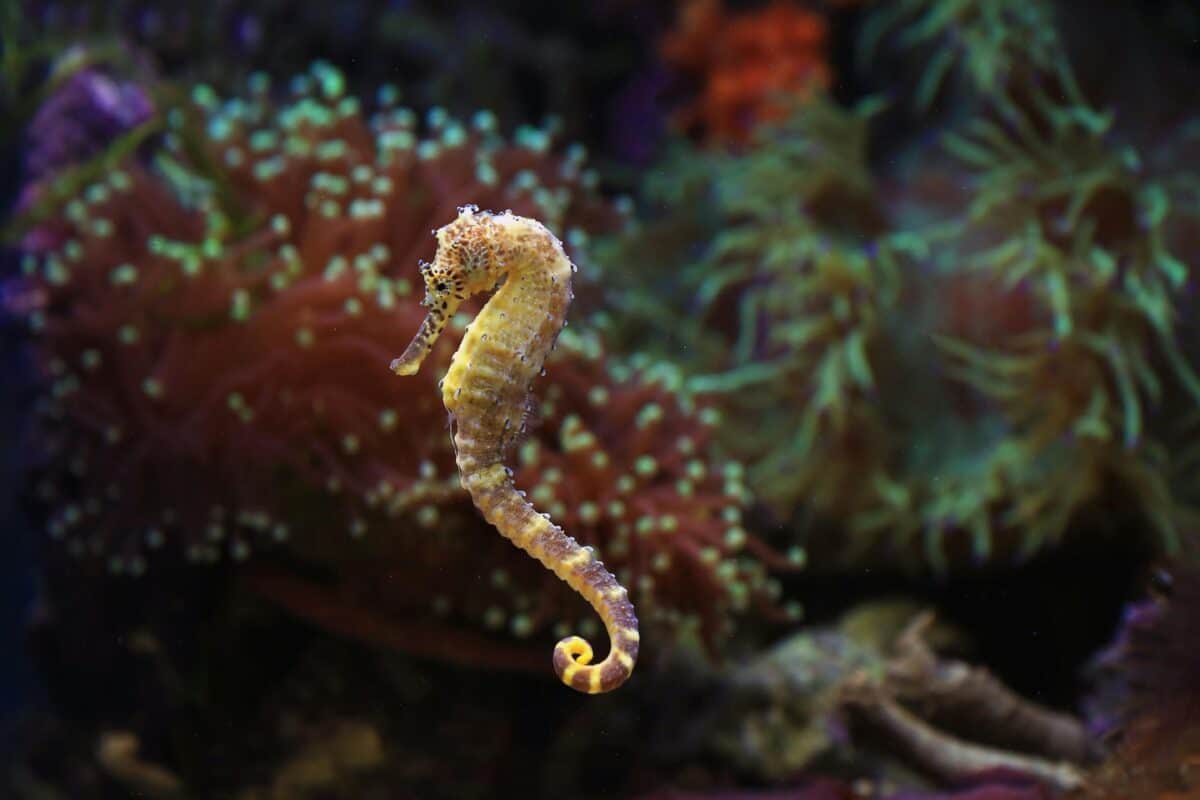
Seahorses (family Syngnathidae) employ a combination of morphological adaptation and behavioral strategies to achieve effective camouflage. Their bodies feature bony plates and skin filaments that mimic the texture of coral branches, seagrass, or gorgonian fans in their preferred habitats. Species like the pygmy seahorse (Hippocampus bargibanti) take specialized camouflage to extraordinary levels, with body shapes, colors, and textures that exactly match their host gorgonian corals—including perfectly replicating the polyps of their host. At less than an inch long and matching their coral hosts perfectly, these tiny seahorses remained undiscovered by science until 1969. Unlike more active camouflage specialists, seahorses rely heavily on stillness as part of their disguise. They anchor themselves to vegetation or coral with their prehensile tails and can remain motionless for extended periods, swaying gently with the currents just as the surrounding vegetation does. This strategy conserves energy while keeping them hidden from both predators and prey. Their eyes can move independently, allowing them to scan for food or threats without betraying their position through body movement. These combined adaptations make seahorses incredibly difficult to spot in their natural habitats despite their distinctive shape.
3. Sand Octopus The Disappearing Act

The sand octopus (particularly species like Amphioctopus marginatus) demonstrates one of the most remarkable active camouflage behaviors in the marine world. Beyond the color-changing abilities shared with other octopuses, these intelligent cephalopods have developed a specialized technique for completely concealing themselves in open sandy areas where no obvious cover exists. Using their powerful arms and water jets from their siphons, they can excavate a temporary burrow in the seafloor in seconds. The octopus then covers itself with a fine layer of sand, leaving only its eyes exposed for vigilance. Research published in the Journal of Experimental Marine Biology and Ecology has documented how these octopuses use different techniques depending on the substrate: on coarse sand, they use their arms to create a space, while on fine sand, they use water jets more extensively. Most impressively, they can perform this vanishing act while carrying a coconut shell or other object to use as a protective shelter once buried. This behavior represents a sophisticated combination of tool use and camouflage strategy, demonstrating the remarkable intelligence and adaptability that characterizes octopuses as a group.
2. Scorpionfish Venomous Rock Impersonators
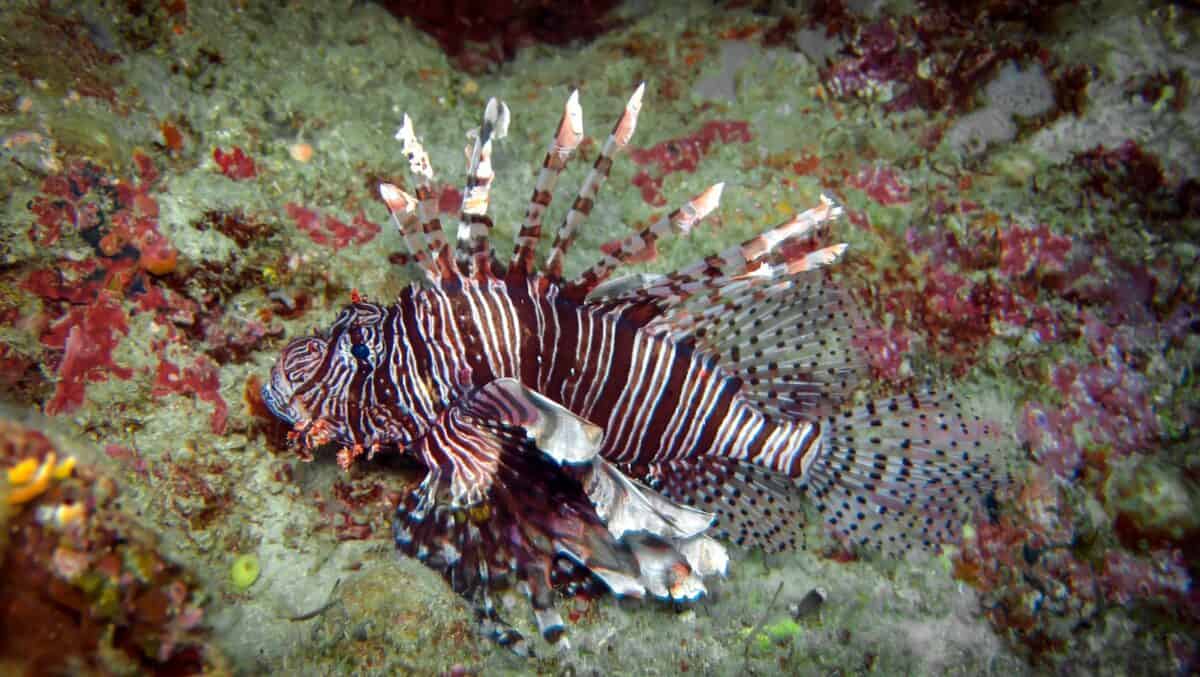
Scorpionfish (family Scorpaenidae) exemplify how evolution can perfect the art of disappearing through both appearance and behavior. These venomous ambush predators possess bodies covered with skin flaps, ridges, and protrusions that precisely mimic encrusted rocks, coral heads, or debris-covered seafloors. Species like the tasseled scorpionfish (Scorpaenopsis oxycephala) take this disguise further with elaborate appendages that resemble algae or hydroids growing on rocks. Their camouflage extends beyond physical appearance—scorpionfish are masters of stillness, capable of remaining motionless for hours or even days while waiting for prey to approach. They often position themselves strategically among similarly colored coral or rock formations to enhance their disguise. When prey comes within striking distance, they can expand their mouths with explosive speed, creating negative pressure that sucks in the victim whole. The effectiveness of their camouflage serves a dual purpose: hunting success and protection from their own predators. Like their relatives the stonefish, scorpionfish possess venomous dorsal spines as a secondary defense, making their ability to remain undetected crucial for both capturing food and avoiding becoming food themselves.
1. Crocodile Fish The Patient Predators
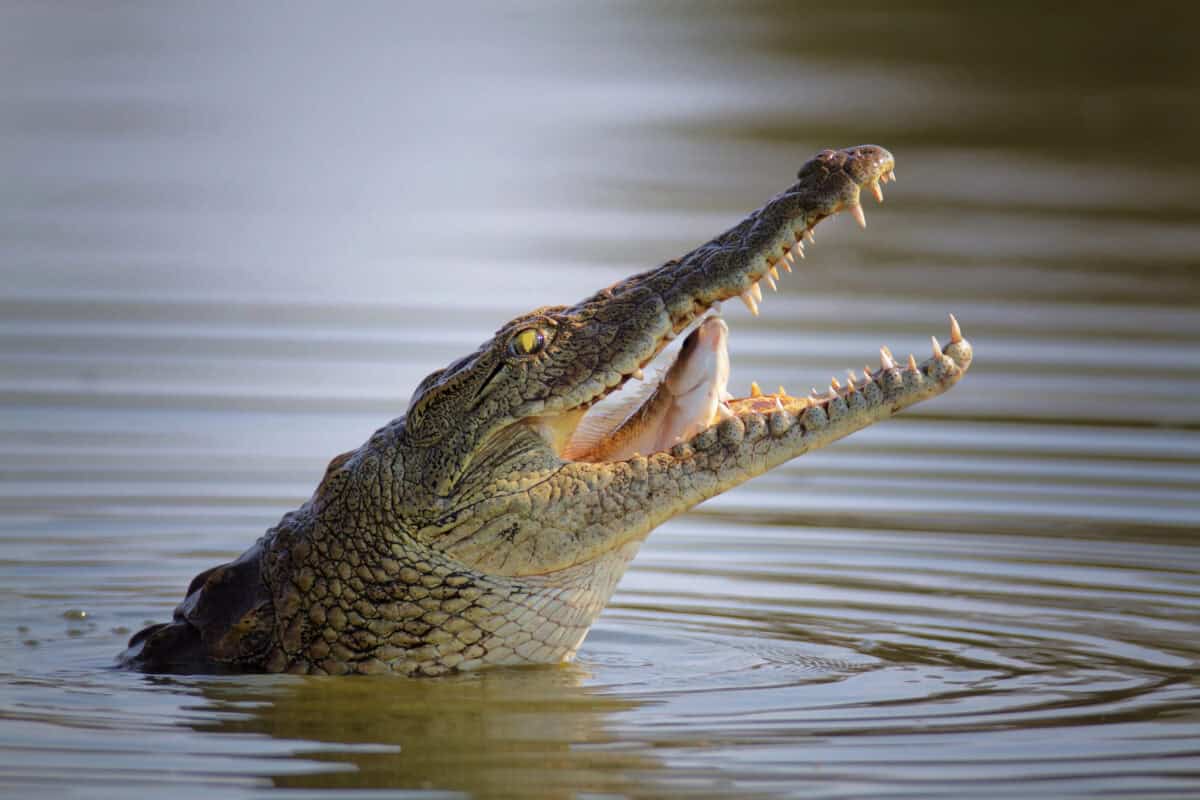
The crocodile fish (Cymbacephalus beauforti and related species) demonstrates how specialized morphology can create near-perfect camouflage for a sedentary ambush predator. These flatfish relatives have evolved elongated bodies with textured, mottled skin that precisely mimics coral rubble, sand, or the seafloor detritus where they typically rest. Their most distinctive features are their eyes, which sit on raised stalks on top of their heads, allowing them to bury most of their body while maintaining vigilance. These eyes feature elaborate fringed iris lappets that break up the otherwise conspicuous circular pupil, creating a disguise within a disguise. The crocodile fish’s lower jaw projects forward slightly, resembling a crocodile’s snout (hence the name) and houses rows of small, sharp teeth perfect for seizing passing prey. Like many ambush specialists, they employ extraordinary patience, sometimes remaining motionless for days in the same position, relying on their camouflage to keep them safe while waiting for the perfect opportunity to strike. When prey comes within range, they can expand their mouths with remarkable speed, creating powerful suction that draws in unsuspecting fish or crustaceans before they can react to the danger.
Conclusion:
The marine world is full of surprises, but few are as captivating—or as cleverly deceptive—as the ocean’s camouflage artists. From the leaf-like elegance of the seadragon to the shape-shifting brilliance of the mimic octopus, these animals demonstrate that survival in the sea often hinges not on brute strength or speed, but on invisibility, adaptation, and illusion. Their mastery of disguise is not just a biological curiosity—it’s a finely tuned evolutionary strategy honed over millions of years. These sea creatures show us that the ability to disappear can be as powerful as the ability to fight. Whether it’s to evade predators, stalk prey, or simply avoid detection in the endless blue, camouflage is their ultimate secret weapon. In studying these masters of marine mimicry, we gain more than awe—we glimpse the ingenuity of evolution and the delicate balance of life beneath the waves. So the next time you peer into the ocean’s depths, remember: some of its most extraordinary creatures are the ones you don’t see.

As a little kid, I fell in love with nature, wildlife, and animals. Living in the USA, South Africa, Italy, China and Germany gave me the opportunity to discover the world's Wildlife. My favorite animals are Mountain Gorillas, Siberian Tigers, and Great White Sharks.
I'm a certified PADI Open Water Diver, went to Everest Base Camp and Trekked Gorillas in Uganda. I hold a Master of Science in Economics and Finance.
Please send any feedback to feedback@animalsaroundtheglobe.com
- 10 Quirky Cat Behaviors — And 2 That Signal Discomfort - July 13, 2026
- 13 Facts About Animal Migration That Will Amaze You - July 13, 2026
- 13 Survivors Animals That Lived Through the Impossible - July 13, 2026