

While chameleons are famous for their color-changing abilities, they’re not the only masters of disguise in the animal kingdom. Several spider species possess the remarkable ability to change their coloration, helping them blend into their surroundings, attract mates, or avoid predators. This fascinating adaptation, known as physiological color change, allows these arachnids to alter their appearance in response to environmental cues or internal factors. Unlike chameleons that change color through specialized cells called chromatophores, spiders employ various mechanisms, including the movement of pigments within their cells or structural changes that affect how light reflects off their bodies. Let’s explore 12 incredible spider species that rival chameleons in their color-changing capabilities.
The Magnificent Misumena vatia (Goldenrod Crab Spider)

The Goldenrod Crab Spider (Misumena vatia) is perhaps the most renowned color-changing spider. Females of this species can switch between bright yellow and white coloration depending on the flower they’re hunting on. This remarkable transformation isn’t instantaneous—it typically takes 3-10 days to complete the change, which is driven by visual cues from their environment. The spider secretes a yellow pigment when on yellow flowers and withdraws it when on white flowers, allowing them to become nearly invisible to both prey and predators.
These crafty ambush predators primarily target pollinating insects like bees, flies, and butterflies. Their color-changing ability gives them a significant hunting advantage, as research has shown that bees are less likely to detect spiders that match the flower color. Interestingly, the males of this species don’t share this color-changing ability and remain a much less conspicuous whitish-yellow or green color, as they spend less time hunting on flowers and more time searching for mates.
Thomisus onustus (Pink Crab Spider)
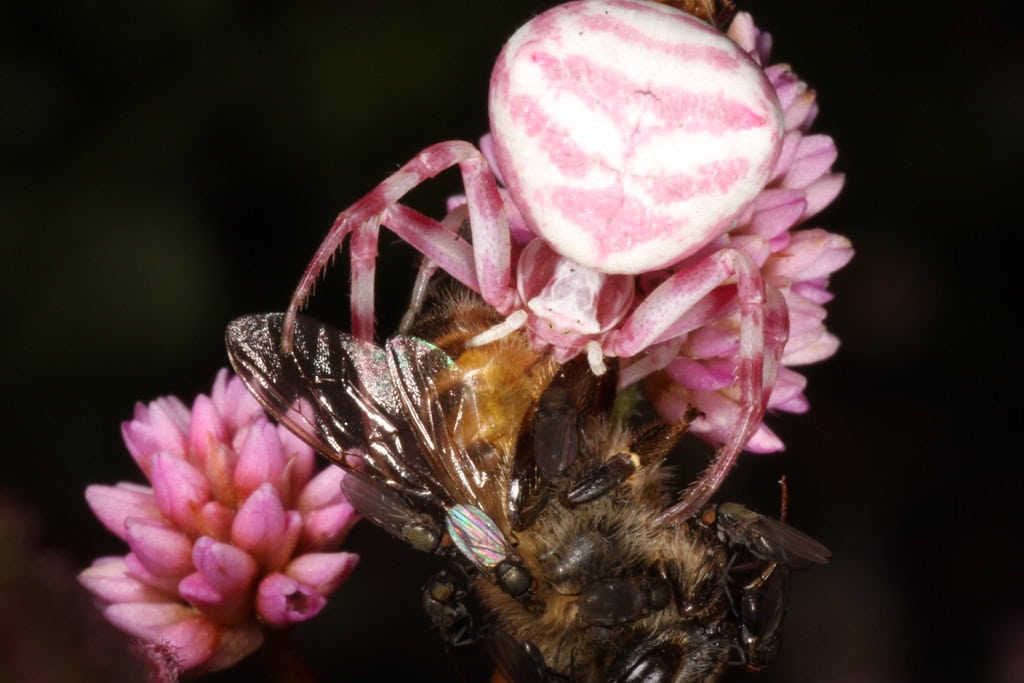
Similar to its relative the Goldenrod Crab Spider, Thomisus onustus possesses impressive color-changing abilities. This European species can shift between white, yellow, and pink colorations to match the flowers it hunts on. These spiders are particularly fond of sitting on bright flowers like daisies and cosmos, where they can easily ambush unsuspecting pollinating insects. The color change process is gradual, taking several days to complete as the spider adjusts its pigmentation in response to the background color.
Research has shown that the Pink Crab Spider’s color change is not merely for camouflage but also helps with thermoregulation. The lighter colors reflect more sunlight, helping the spider maintain an optimal body temperature while waiting for prey. Female Thomisus onustus spiders grow significantly larger than males and exhibit more dramatic color changes, which correlates with their more sedentary, ambush-based hunting strategy compared to the more mobile males.
Araneus diadematus (European Garden Spider)

The European Garden Spider, also known as the Cross Spider or Diadem Spider, exhibits subtle but effective color changes throughout its lifetime. While not as dramatic as some crab spiders, Araneus diadematus can adjust its coloration to better match its surroundings, shifting between various shades of brown, orange, and gray. This orb-weaver spider’s ability to blend with bark, leaves, and garden structures provides crucial camouflage from predators like birds and wasps that specifically target spiders.
One fascinating aspect of the European Garden Spider’s color-changing ability is how it correlates with humidity and diet. Spiders in more humid environments tend to develop darker colorations, while those in drier regions display lighter hues. Additionally, their diet influences their coloration, with different prey types contributing to varied pigmentation patterns. The distinctive cross-shaped marking on their abdomen, formed by white dots, remains constant regardless of their base coloration, serving as a key identifying feature for this adaptive species.
Marpissa muscosa (Fence-post Jumping Spider)
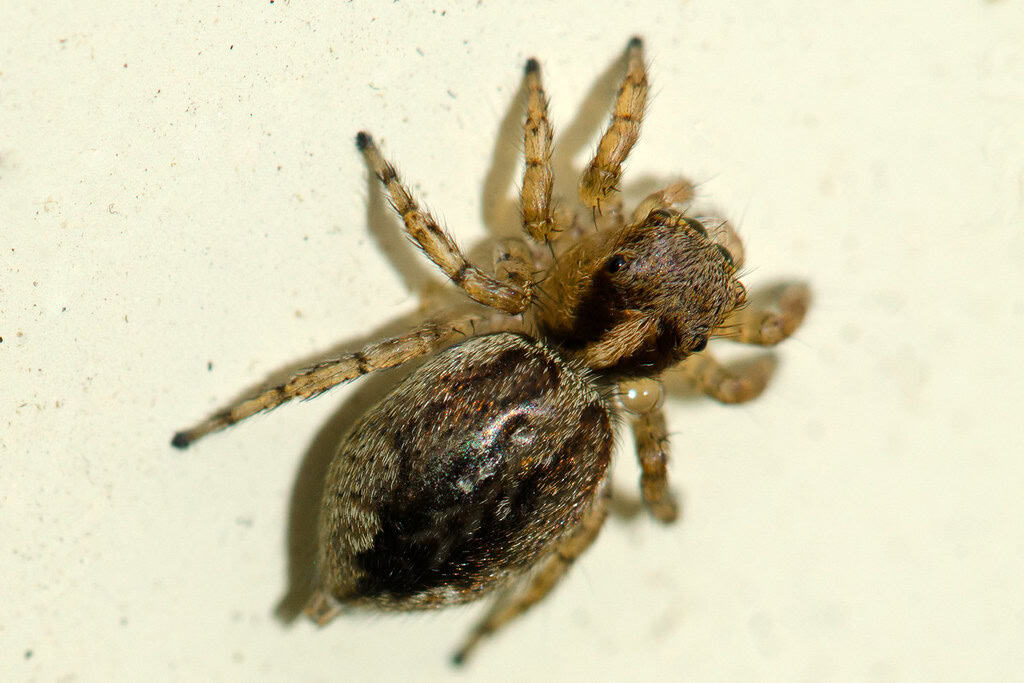
The Fence-post Jumping Spider demonstrates a more subtle form of color change compared to crab spiders, but its adaptations are no less impressive. This European jumping spider can gradually alter its coloration to better match the wooden surfaces it frequently inhabits. Young spiders start with a lighter coloration that darkens as they mature, but they can also adjust their shade in response to the specific type of wood or bark they’re living on, shifting between light tan and deep brown hues.
Unlike some color-changing spiders that primarily use this ability for hunting, Marpissa muscosa’s color adjustments are more focused on predator avoidance. Their excellent vision allows them to actively select backgrounds that complement their current coloration, and over time, they can fine-tune their appearance to match these surfaces better. This species also exhibits sexual dichromatism, with males displaying more vivid markings and females having more subdued coloration that better facilitates camouflage, highlighting how color change can serve multiple evolutionary purposes.
Micrommata virescens (Green Huntsman Spider)

The Green Huntsman Spider, found throughout Europe and parts of Asia, displays a fascinating seasonal color change. Adult females maintain a brilliant green coloration during spring and summer, created by a combination of yellow and blue pigments in their hemolymph (spider blood). However, as autumn approaches, they gradually shift to a pale yellow or light brown color. This seasonal adaptation helps them maintain effective camouflage as their environment changes from lush green vegetation to autumn foliage.
What makes Micrommata virescens particularly interesting is that their color change isn’t solely triggered by visual cues but also by temperature and day length. Juvenile spiders of this species exhibit even more variable coloration, often appearing yellowish-brown before developing their characteristic green hue after molting several times. Males display less dramatic coloration than females, with a greenish-yellow body and distinctive red stripes on their abdomen, demonstrating how color changes can be influenced by both environmental factors and sexual dimorphism.
Synaema globosum (Black and Red Crab Spider)
Synaema globosum is an unusual color-changing spider that doesn’t just alter its overall hue but can modify specific pattern elements on its body. This Mediterranean crab spider typically displays a striking black and red pattern, but it can adjust the intensity and distribution of these colors to better match flower petals. The most remarkable aspect of their color change is how they can expand or contract the black markings on their abdomen, effectively creating different patterns depending on their background.
Unlike many other color-changing spiders that hunt by complete camouflage, Synaema globosum uses a more complex strategy. Their contrasting colors sometimes serve as disruptive camouflage, breaking up their outline against patterned backgrounds like flower petals with various colors. Research indicates that these spiders can assess their background and selectively adjust which color elements to emphasize, with changes occurring over several days. This sophisticated control over their appearance demonstrates a highly evolved form of color adaptation that serves both hunting and defensive purposes.
Pisaura mirabilis (Nursery Web Spider)
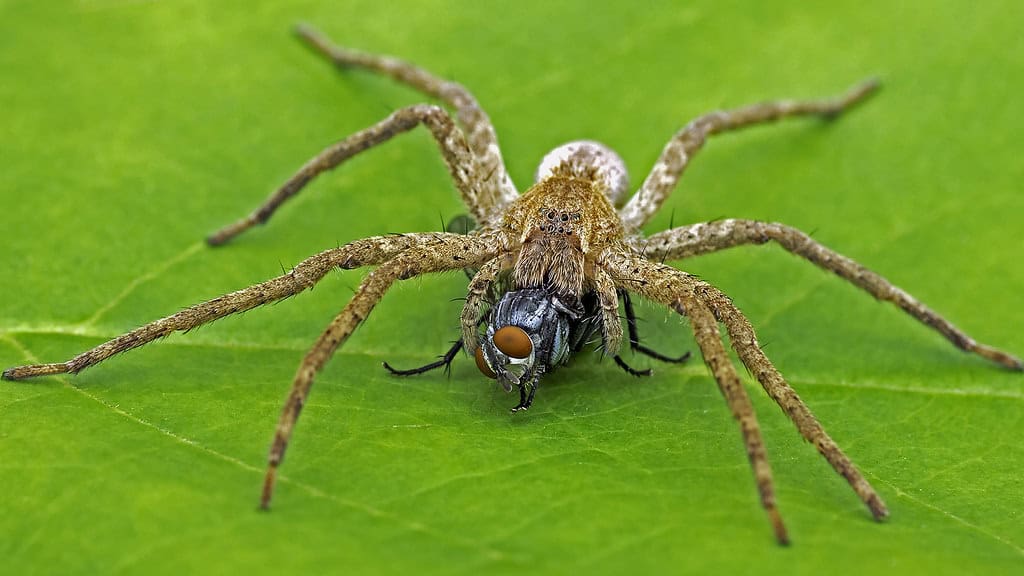
The Nursery Web Spider exhibits a more subtle yet effective form of color change that occurs throughout its lifecycle and in response to environmental conditions. These European spiders can gradually shift their body coloration between various shades of brown, gray, and greenish-brown to match the vegetation they inhabit. This adaptation is particularly important for females, who must remain camouflaged while carrying their egg sacs and guarding their nursery webs filled with vulnerable spiderlings.
What makes Pisaura mirabilis’ color-changing ability unique is how it combines both fixed and flexible elements. Their base pattern remains consistent throughout their lives, but the intensity and specific hues can be adjusted. This spider also displays different color forms in various parts of its range, with populations adapting to local vegetation types. Additionally, they can undergo more rapid color adjustments in response to temperature, becoming darker in cooler conditions to absorb more heat and lighter in warmer environments, demonstrating how color change serves both camouflage and thermoregulatory functions.
Tmarus angulatus (Angular Crab Spider)

Tmarus angulatus, the Angular Crab Spider, possesses a remarkable ability to mimic dead or withered plant parts by changing its coloration. This species can shift between green, brown, and gray hues to match stems, buds, or dead leaves. Unlike some color-changing spiders that primarily hunt on flowers, these angular hunters prefer woody stems and leaf edges, where their irregular shape and variable coloration make them virtually invisible to both prey and predators.
The color-changing mechanism of Tmarus angulatus involves both pigmentary changes and strategic positioning. They can alter their body pigments over several days to better match their chosen hunting spot, but they also select backgrounds that complement their current coloration and position themselves to minimize shadows and maximize camouflage. Juveniles of this species exhibit even more plastic coloration than adults, allowing them to adapt quickly to different microhabitats as they grow and disperse. This sophisticated combination of behavioral and physiological adaptations makes them masters of disguise in the arachnid world.
Gasteracantha cancriformis (Spiny Orb-weaver)
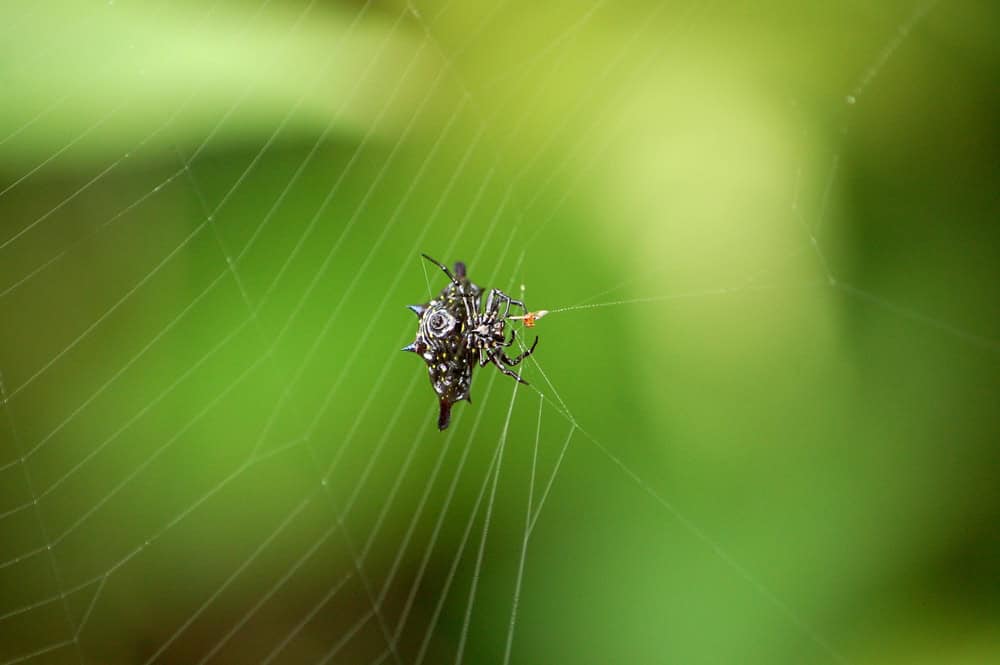
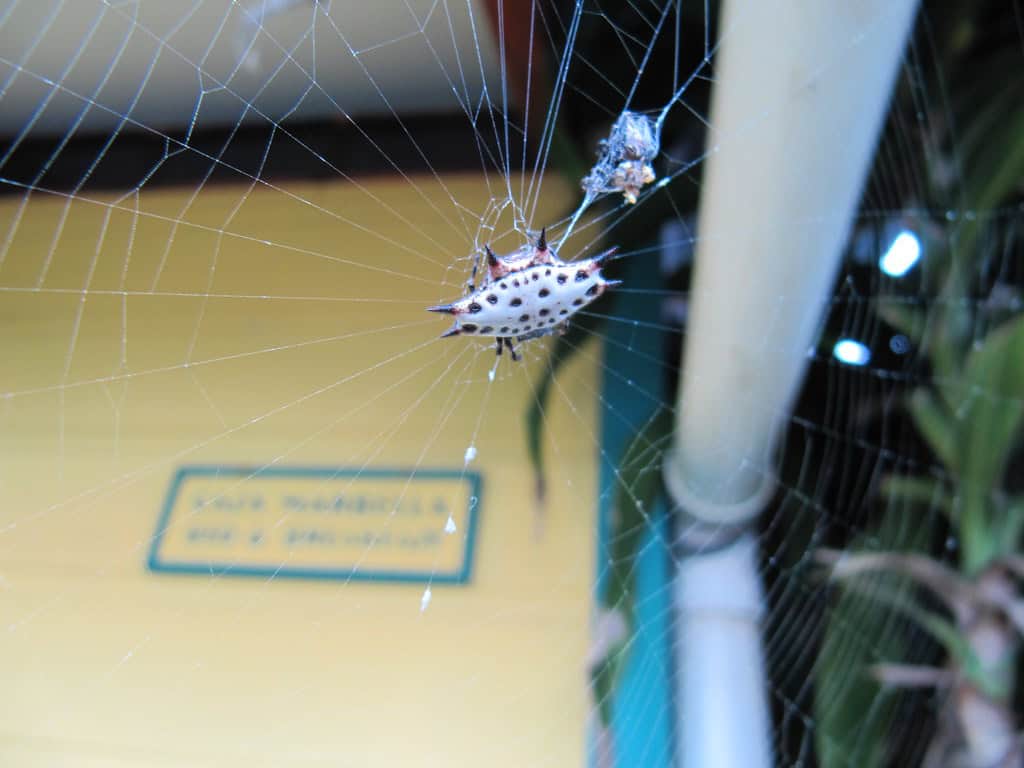
The Spiny Orb-weaver displays an unusual form of color change that occurs primarily between molts and generations rather than as a rapid response to environment. These distinctive spiders, recognized by their hard, spiny abdomens, can appear in a wide range of colors including white, yellow, orange, and red. While individual spiders maintain their coloration throughout their adult life, populations can shift their predominant color based on seasonal changes and habitat conditions, with certain colors becoming more common during specific seasons.
What makes Gasteracantha cancriformis fascinating is how its color polymorphism functions as a form of predator deterrence rather than pure camouflage. Their bright colors serve as warning signals (aposematism), and the specific colors that predominate in a population can shift in response to which color forms are experiencing less predation. Studies have shown that birds learn to avoid certain color morphs after negative experiences, leading to frequency-dependent selection that maintains color diversity within populations. This represents an evolutionary color-changing strategy that operates at the population level rather than within individual spiders.
Cyrtophora citricola (Tropical Tent-web Spider)
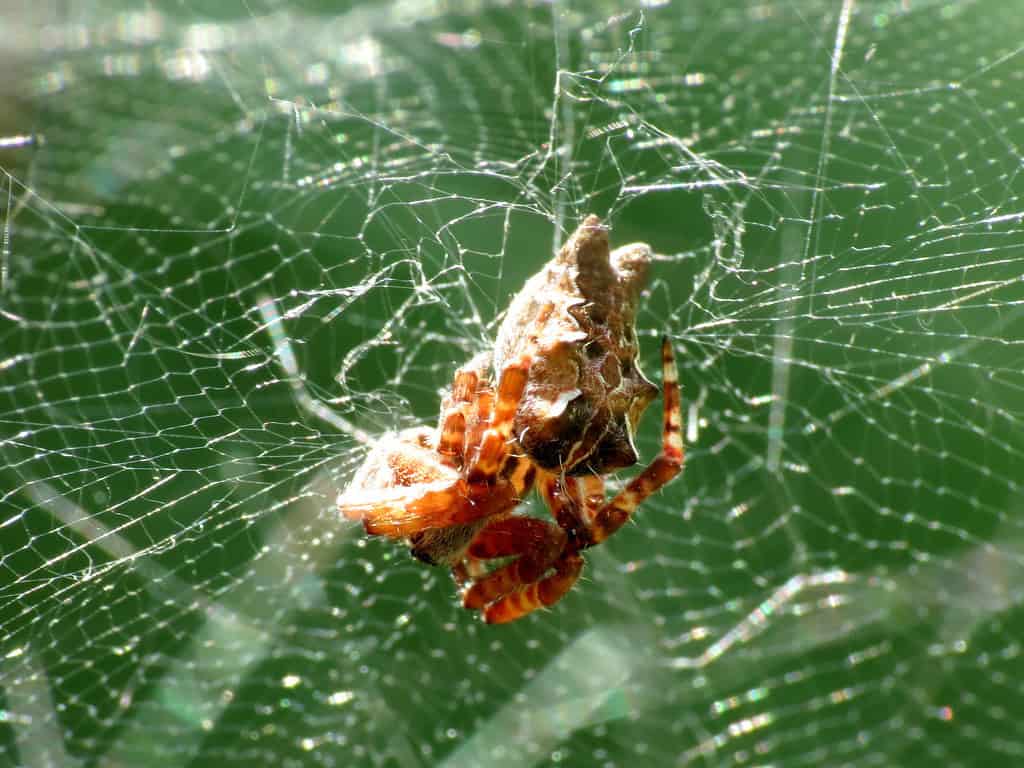
The Tropical Tent-web Spider exhibits a remarkable form of developmental color change that helps it blend into different environments throughout its life cycle. Young spiderlings appear silvery-white, making them nearly invisible on the silken threads of their communal webs. As they mature, they gradually darken and develop more complex patterns, eventually reaching an adult coloration that can range from light tan to dark brown with various markings depending on their habitat. This progression allows them to maintain optimal camouflage as they grow and transition from living in communal webs to constructing their own individual tent webs.
What distinguishes Cyrtophora citricola’s color-changing ability is its responsiveness to both light levels and background coloration. Spiders living in bright, exposed locations develop lighter colorations with more distinct patterns, while those in shadier environments become darker and more uniformly colored. This adaptive coloration helps them avoid visual predators like birds and wasps. Additionally, research has shown that these spiders can fine-tune their color over several molts to better match the specific vegetation where they build their distinctive tent-shaped webs, demonstrating a sophisticated if slow form of environmental color adaptation.
Poltys illepidus (Oak Tree Orb-weaver)
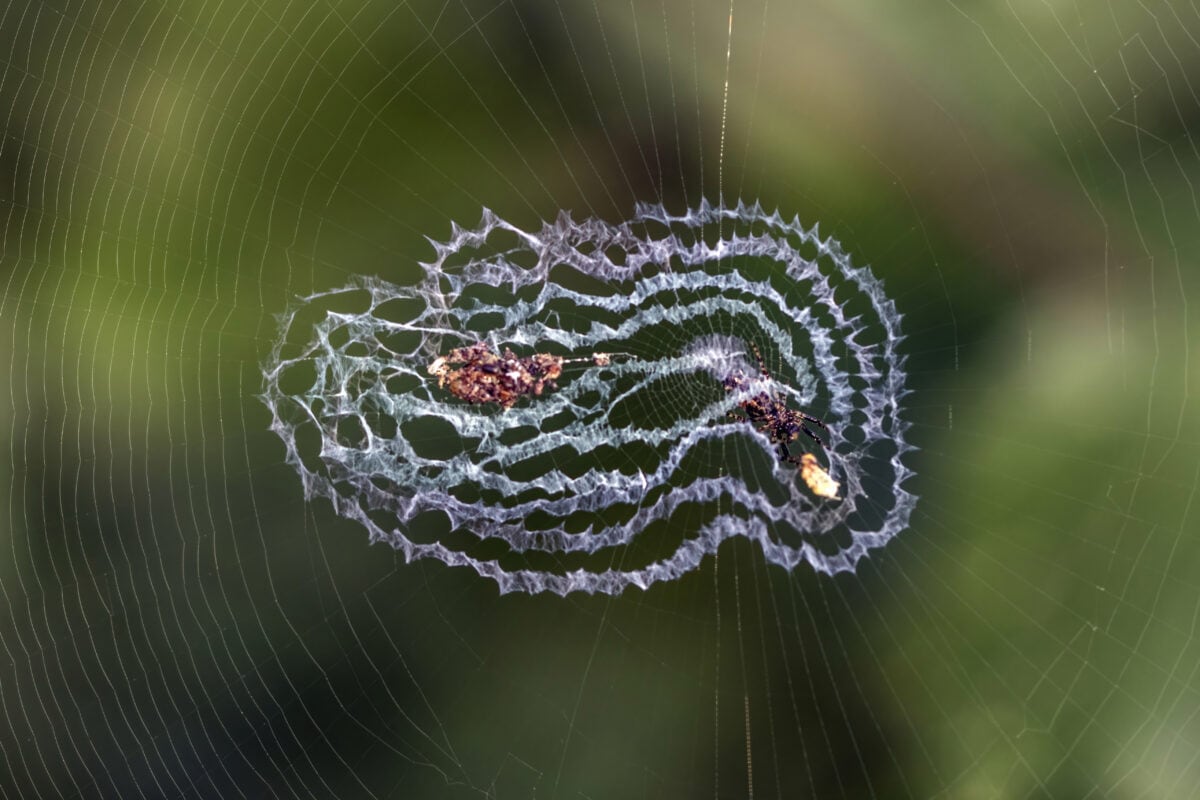
The Oak Tree Orb-weaver possesses one of the most specialized forms of color change, allowing it to mimic specific plant parts with extraordinary precision. During daylight hours, these nocturnal hunters press themselves against tree bark or position themselves among twigs, where they can alter their coloration to match the exact shade of their resting spot. Their color palette ranges from gray to brown to greenish, with the ability to develop mottled patterns that mimic lichen or moss on tree bark. This precise camouflage is crucial for their survival during their inactive daytime period.
What makes Poltys illepidus truly remarkable is the morphological component of their disguise. Beyond just changing color, these spiders can alter their body shape by folding their legs and positioning their abdomen to resemble plant buds, thorns, or broken twigs. Their color change occurs gradually over several days and is triggered by visual cues from their surroundings. Studies have shown that these spiders will actively select resting spots that best match their current coloration, and then gradually adjust their appearance if they remain in that location for an extended period, demonstrating a sophisticated integration of behavior and physiological color change.
Theridion grallator (Happy Face Spider)
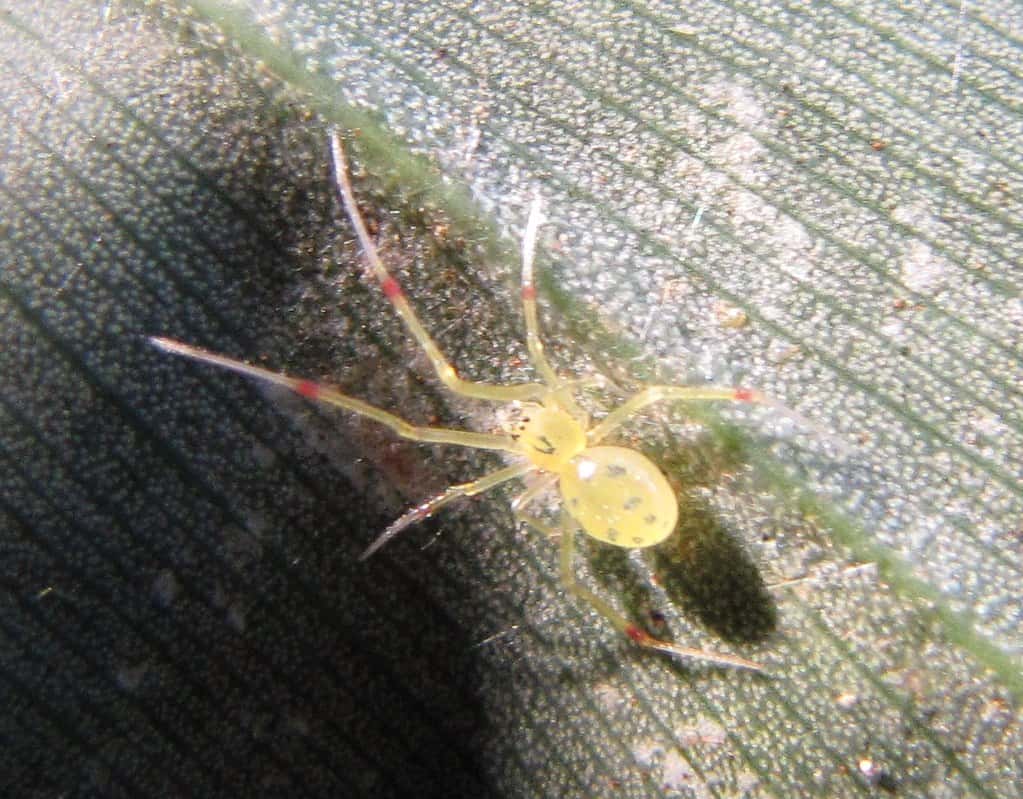
The Happy Face Spider, native to the Hawaiian Islands, showcases one of the most variable color patterns in the spider world. While individual spiders don’t rapidly change color like some other species, this tiny spider (measuring only about 5mm) exhibits extreme polymorphism within its populations. The translucent yellow abdomen can feature various red, black, or white patterns—including the famous “smiling face” pattern that gives the species its common name. Remarkably, over 20 distinct pattern morphs have been documented, and research suggests these patterns can shift between generations in response to predation pressure.
What makes Theridion grallator’s color system fascinating is that it represents a different evolutionary approach to color change. Rather than individuals changing color, the species maintains tremendous genetic diversity for coloration, allowing rapid population-level adaptation to changing environments. The polymorphism is maintained through complex genetic inheritance patterns and appears to provide protection against predators who develop search images for common morphs. Studies have shown that rare color patterns have a survival advantage, creating negative frequency-dependent selection that maintains this extraordinary diversity. While not changing color in the same way as chameleons, this evolutionary strategy allows the species as a whole to “change color” across generations and habitats.
Understanding Nature’s Masters of Disguise
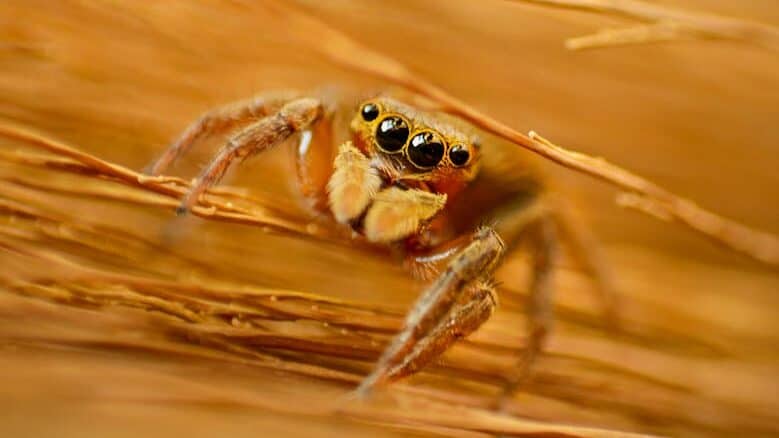
The color-changing abilities of these 12 spider species demonstrate the remarkable diversity of adaptive strategies in the natural world. From the rapid transformations of crab spiders to match their floral hunting grounds, to the seasonal shifts of the Green Huntsman Spider, to the population-level polymorphism of the Happy Face Spider, these arachnids showcase different approaches to solving similar ecological challenges. Their color-changing mechanisms, while different from those of chameleons, are no less sophisticated and often involve complex interactions between visual perception, pigment production, and behavioral adaptations.
These spiders remind us that evolution can produce similar solutions through different pathways, with color change serving multiple functions including predator avoidance, improved hunting success, thermoregulation, and even communication. As we continue to study these fascinating creatures, we’re likely to discover even more species with color-changing abilities and gain deeper insights into how these adaptations evolve. For the casual observer, these master-of-disguise spiders offer a glimpse into the sophisticated strategies that have evolved in even the smallest creatures, making them some of nature’s most impressive artists of camouflage and transformation.

- Could Wolves Be the Answer to America’s Ecosystem Crisis? - July 20, 2026
- 10 Animals That Cheat Death in the Most Unexpected Ways - July 19, 2026
- The Shrimp That Punches Like a Bullet - July 19, 2026