
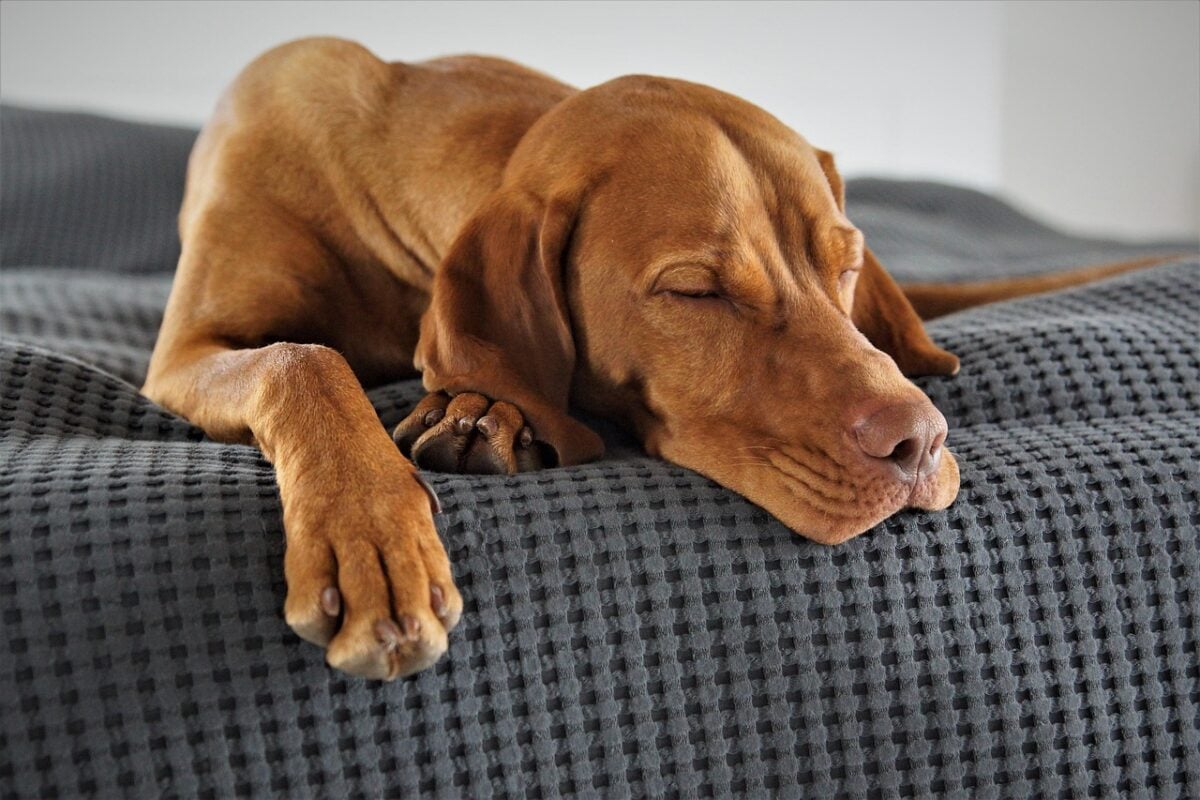
There’s a particular moment almost every dog owner has witnessed. Your dog is curled up on the floor, paws twitching, maybe a soft whimper escaping between breaths, and you can’t help but wonder what’s playing out behind those closed eyes. Is it a rabbit chase? A trip to the park? Or, more curiously, is it you?
For years this question sat firmly in the realm of guesswork, the kind of thing dog owners debated over coffee without any real answer. That’s changed. A Harvard Medical School psychologist spent years studying sleep and dreaming, and her conclusions about what’s happening inside a sleeping dog’s brain have quietly reshaped how we think about our pets’ inner lives.
#1 Meet the Harvard psychologist behind the theory
The name at the center of this story is Dr. Deirdre Barrett, a clinical and evolutionary psychologist at Harvard Medical School. She carried out extensive research into sleep behaviour and concluded that it is a reasonable assumption that your dog dreams very much in the same way you do. Her work doesn’t come from studying dogs directly in a lab with wires and electrodes attached to their heads. It builds on decades of human sleep research, then applies the same logic to animals whose brains are structured similarly to ours.
Barrett’s central idea is refreshingly simple. Experts theorise that dogs dream not in a logical way, but more visually about what they find interesting and the things that they are emotionally attached to. Since most dogs spend their entire day orbiting around one person or family, it stands to reason that person would show up in their dreams too. It’s not a wild leap. It’s closer to common sense dressed up in psychological research.
#2 Why scientists think dogs dream at all
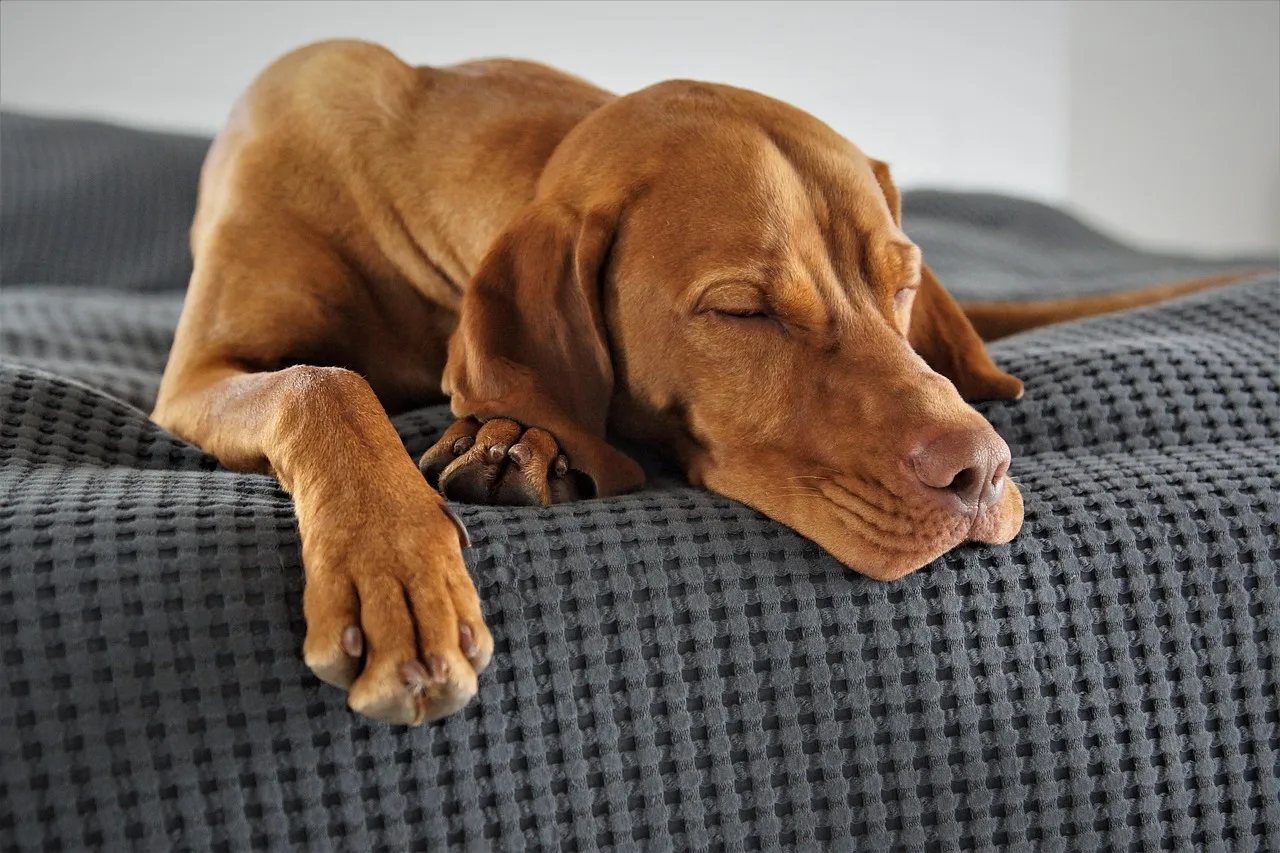
Before we get to the “about you” part, it helps to understand why researchers believe dogs dream in the first place. Like humans, dogs cycle through different stages of sleep, including REM (rapid eye movement) sleep, which is the phase most closely associated with dreaming. This isn’t speculation dressed up as science. It’s measurable brain activity.
The physical evidence backs this up in a few specific ways. Research shows that during REM sleep, dogs’ brain activity on EEG closely resembles their waking state, similar to what we see in people when they’re dreaming. On top of that, dogs share key brain anatomy with us. Dogs have a hippocampus, the brain region responsible for memory consolidation during sleep, and a brain wave pattern during sleep that closely mirrors that of humans. That overlap in structure is a big part of why scientists feel confident saying dogs experience something dream-like, even if we can’t ask them about it directly.
#3 The rat maze experiment that changed everything
One of the most convincing pieces of evidence for animal dreaming didn’t even come from dogs. It came from rats, and a researcher at MIT named Matthew Wilson. In 2001 Matthew Wilson, a neuroscientist at the Massachusetts Institute of Technology, found a way to sidestep this problem, at least partly. He recorded the hippocampal activity of rats while they ran through mazes during the day.
Then came the striking part. When the same rats fell asleep, their brains lit up in nearly identical patterns to what he’d recorded while they were awake and running the maze. When rats ran through mazes during the day, their brain patterns matched up almost perfectly with patterns recorded during REM sleep, and scientists concluded that rats, and by extension, dogs, likely dream about their daily activities. It was, in effect, proof that the brain replays the day’s events during sleep in a very literal way. That single study is why so much of the reasoning about dog dreams leans on the idea of replay rather than pure invention.
#4 What your dog’s twitches and barks really mean
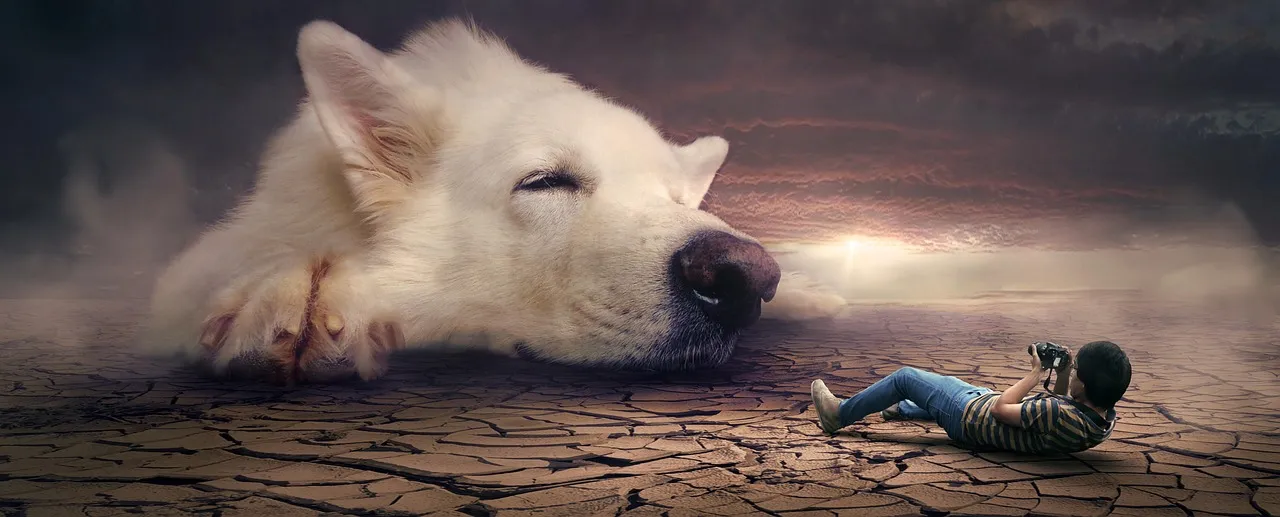
If dogs are replaying their day while asleep, why don’t they get up and act it out? The answer involves a small but crucial part of the brainstem called the pons. The paralysis mechanism is controlled by the pons, a region in the brainstem that suppresses motor output during REM sleep, a state called REM atonia, and in dogs the pons performs the same function as in humans but with slightly less efficiency, which is why you see the twitching, leg movements, and vocalizations. In other words, the leaking twitches and soft barks aren’t random. They’re small signals escaping from a mostly locked-down body.
Researchers have gone further than just observing this leakage. In classic experiments on cats, scientists actually disabled this braking mechanism to see what would happen. Once a cat’s body is no longer inhibited of movement during REM sleep, the cat can perform actions like they would when they were awake, and the feline subjects stalked invisible prey, groomed themselves, and walked around, all while asleep. Similar work with dogs produced comparable results. In similar studies, dogs also began to execute the actions that they were performing in their dreams, according to Psychology Today. That’s about as close as science has come to literally watching a dog act out a dream in real time.
#5 So, are you really in your dog’s dreams?
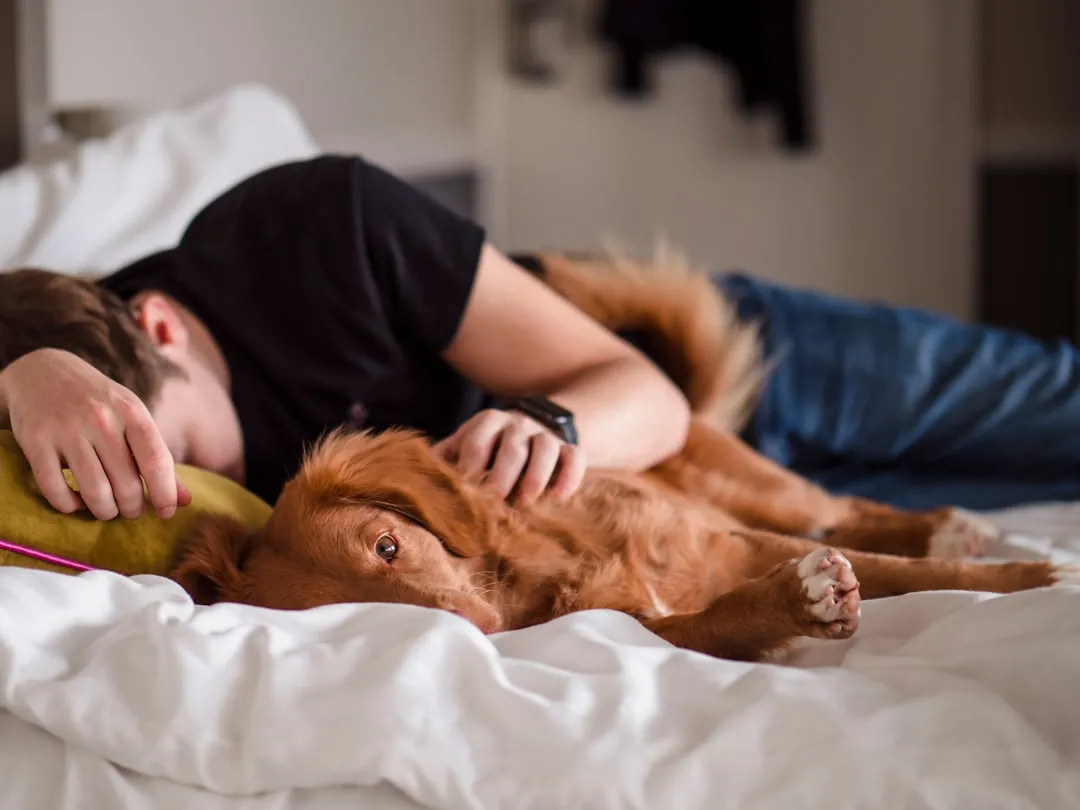
Here’s where Barrett’s Harvard research gets personal. She’s suggested that the emotional bond between dogs and their owners is simply too strong for it not to show up during sleep. As Dr. Barrett explains, since dogs are generally extremely attached to their human owners, it’s likely your dog is dreaming of your face, your smell and of pleasing or annoying you. That last detail, the pleasing or annoying part, is a nice touch. It suggests dogs aren’t just dreaming warm, uncomplicated affection. They might be replaying the small daily friction too, like getting scolded for chewing a shoe.
Separately, actual dream survey data backs up part of this picture, even if it comes from the human side of the equation. The findings indicate that dogs show up, on average, in about one in twenty remembered dreams, but this percentage is much higher in the dreams of dog owners and persons with close contacts with dogs, and the active time spent with a dog and the proximity during sleep is also related to a higher percentage of dreams that include dogs. So the bond runs both directions. The more time you spend together, awake or asleep, the more each of you seems to show up in the other’s dream life.
#6 Nightmares, puppies, and senior dogs: the fuller picture
Not every dream is a good one, and this is where the science gets a little more sobering. Although dreams including dogs are on average more positively toned than dreams in general, about eleven percent of the dog dreams included threatening dogs. That statistic comes from human dream surveys, but researchers believe dogs are just as capable of replaying bad moments as good ones. Because a dog’s dreams usually have something to do with what occurred during their waking hours, bad dreams are certainly possible, and if a dog had an unpleasant encounter during a daily trip to the dog park, it seems likely they could have a bad dream related to it later.
There’s also a practical warning worth repeating here for anyone tempted to wake a whimpering dog. The American Kennel Club cautions owners to refrain from rousing their pets, as dogs may react aggressively when abruptly awakened. Interestingly, dreaming frequency also seems to shift with age. Senior dogs dream more often than middle-aged dogs, and changes in sleep patterns as they age might cause this. Puppies, too, tend to twitch and dream heavily, likely a byproduct of their still-developing brains working overtime to process a world that’s brand new to them.
The takeaway

I’ll be honest, I don’t think any of this qualifies as a “mystery solved” in the strict scientific sense. Nobody has hooked a dog’s brain up to a screen and watched your face appear in high definition. What we do have is a credible, Harvard-backed theory built on solid sleep science, real brain structure similarities, and a landmark rat study that gives the whole idea some real teeth.
Put plainly, the evidence leans toward yes. Your dog probably does dream about you, alongside squirrels, tennis balls, and whatever chaos filled their afternoon. That’s not proof in the courtroom sense, but it’s close enough to comfort, and honestly, that might be all we really needed from this question in the first place.
