


North America’s largest land mammals, bison, are magnificent creatures that command respect in the wild. Weighing up to 2,000 pounds and capable of running at speeds of 35 miles per hour, these massive bovines combine power, agility, and unpredictability in a way few other animals can match. While they might appear docile when grazing peacefully across the plains, bison have repeatedly demonstrated why maintaining a safe distance is crucial for human safety. From Yellowstone National Park to protected grasslands across the continent, countless incidents have shown that these iconic animals deserve our admiration, from afar. Let’s explore twelve notable examples that illustrate why bison are truly forces of nature not to be underestimated.
Yellowstone’s Recurring Visitor Incidents

Yellowstone National Park sees an average of one to three bison-related injuries annually, making it the epicenter of human-bison conflicts in North America. In 2022 alone, three visitors were gored within a single month, highlighting the dangers of approaching these wild animals. Park regulations require visitors to maintain at least 25 yards (23 meters) from bison, but these rules are frequently ignored. Most incidents occur when visitors approach within 10 feet of the animals to take photos or selfies. Notably, in May 2022, a 25-year-old woman was tossed 10 feet into the air after approaching a bison. These recurring incidents at America’s first national park demonstrate that even in protected areas with clear warnings, bison command a respect that some visitors unfortunately learn the hard way.
The Car-Flipping Incident

In one of the most dramatic displays of bison strength, a 2,000-pound bull in South Dakota’s Custer State Park flipped a parked sedan in 2004, demonstrating their incredible power. The incident occurred when a family left their vehicle to photograph the animal, which then became agitated by their presence. Using its massive head as a battering ram, the bison lifted the vehicle’s front end completely off the ground before flipping it onto its side. Park rangers noted that the car, weighing approximately 3,000 pounds, was no match for the determined bull. The family escaped injury only by retreating to another visitor’s vehicle. This incident serves as a sobering reminder that bison can easily overcome human technology when provoked, and even our vehicles provide little protection when these animals feel threatened.
The Charging Bull at Theodore Roosevelt National Park

In 2019, a particularly harrowing incident at Theodore Roosevelt National Park in North Dakota demonstrated the lightning-quick reactions bison are capable of. A bull that had been grazing peacefully suddenly charged a group of hikers who had ventured too close, covering 50 yards in just seconds. The hikers scattered, but one 55-year-old man was unable to reach safety and suffered serious injuries, including broken ribs and a punctured lung, when the bison gored him. Park rangers who witnessed the event noted that there was virtually no warning before the charge—the bison simply raised its tail (a subtle warning sign many visitors don’t recognize) and attacked. Wildlife biologists studying the incident pointed out that the bull had shown remarkable restraint, as it could have easily killed the man, but disengaged after the initial contact. This event highlights how bison can transition from calm to deadly force with minimal warning.
Trampling Through a Campsite

A 2017 incident in Grand Teton National Park showed that even designated camping areas aren’t immune to bison encounters. A herd of approximately 20 bison moved through a campground at dawn, causing panic when they trampled through several occupied campsites. One particular bull, agitated by the commotion, destroyed a tent, camping equipment, and a cooler containing food. A camper who attempted to retrieve his belongings was charged and sustained minor injuries. Park officials later explained that the campground had been established along a traditional bison migration route, and the animals were simply following paths they had used for generations. This incident demonstrates that in bison territory, humans are merely visitors, and these massive animals will follow their instinctual behaviors regardless of human infrastructure or expectations.
The Motorcycle Rally Stampede

During the 2020 Sturgis Motorcycle Rally in South Dakota, an extraordinary event unfolded when a woman approached a bison calf to take photos. The protective mother charged the woman, creating panic among the gathered motorcyclists. This triggered a chain reaction that resulted in a stampede involving approximately 200 bison. The massive animals thundered across Highway 36, forcing dozens of motorcyclists to flee. Several bikes were damaged, and three riders sustained injuries when they crashed while attempting to escape. Wildlife officials noted that the combination of motorcycle noise, human encroachment, and the presence of calves created a “perfect storm” for bison aggression. This mass reaction demonstrated the collective power of a bison herd and how quickly a single poor decision can escalate into a dangerous situation involving numerous animals.
The Antelope Island State Park Incident
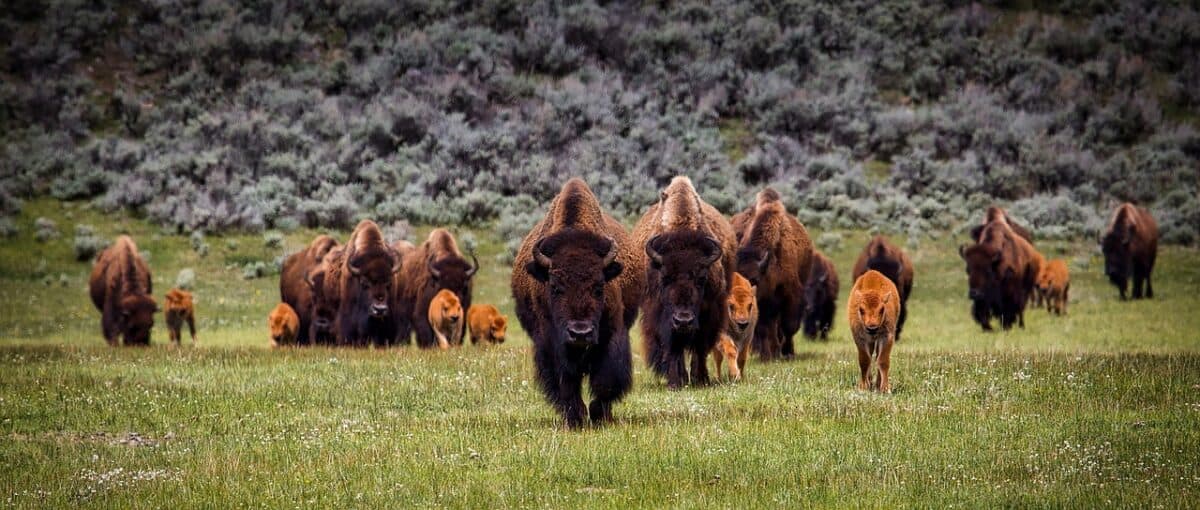
Utah’s Antelope Island State Park was the site of a particularly sobering incident in 2019 when an experienced trail runner was gored and tossed into the air by a bison. The 55-year-old woman, who had run the same trail numerous times before, encountered the bison while rounding a blind corner. Despite her attempt to move away slowly, the bison charged and gored her thigh, tossing her 15 feet into the air. She suffered a compound fracture and required extensive surgery. Park biologists later determined that the bison had likely been harassed by other visitors earlier that day, putting it in a heightened state of agitation before the runner’s arrival. This case illustrates that even those with experience in bison country can fall victim to these unpredictable animals, and that a bison’s response may be influenced by previous human interactions unknown to the current victim.
Protecting Their Young

Maternal instincts in bison create some of the most dangerous encounter scenarios, as demonstrated by a 2018 incident in Yellowstone when a mother bison charged and seriously injured a family that had approached within 20 feet of her calf. The mother bison, weighing approximately 1,500 pounds, covered the distance between them in seconds, goring the father and tossing the mother several feet when she attempted to protect their 9-year-old child. Bison cows are notoriously protective during calving season (April through June), with studies showing they will defend their offspring more aggressively than almost any other ungulate species in North America. Wildlife biologists explain that this fierce protection evolved as a defense against predators like wolves and bears. This protective instinct means that during calving season, maintaining even greater distances from bison herds is essential, as the standard 25-yard recommendation may not be sufficient when calves are present.
The Paynes Prairie Preserve Rampage
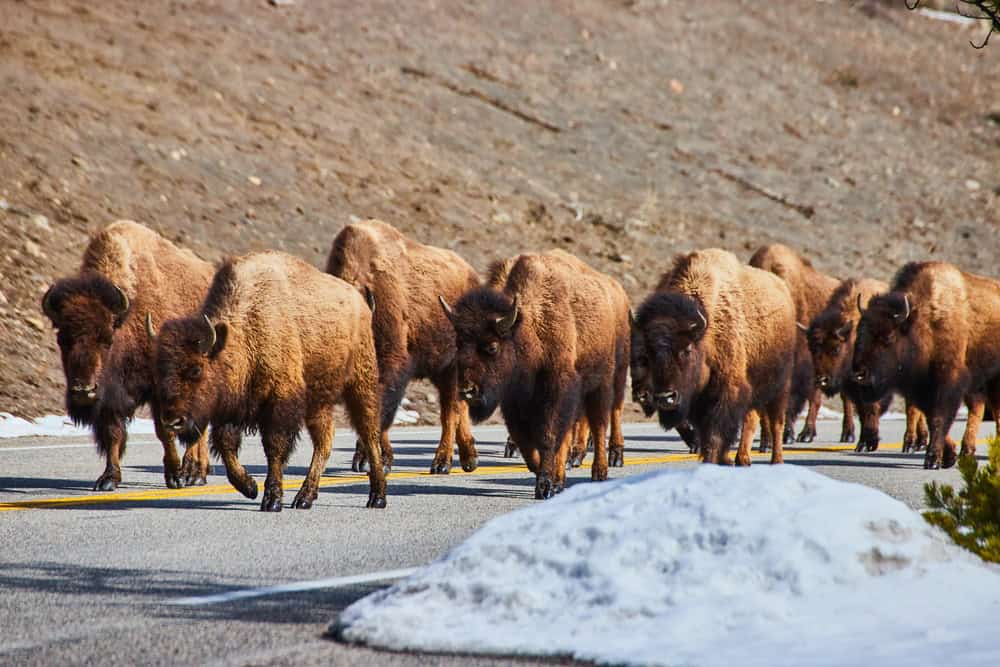
Florida’s Paynes Prairie Preserve State Park experienced an unusual incident in 2016 when a bull bison escaped from a maintenance area and went on what witnesses described as a “rampage” through a visitor center parking lot. The 1,800-pound animal damaged seven vehicles, breaking windows and denting body panels with its massive head and horns. When park rangers attempted to contain the situation, the bison charged a park vehicle, flipping the small utility cart and injuring two staff members. It took nearly three hours to safely recapture the animal. This incident showcased not only the raw strength of bison but also their persistence and endurance when agitated. Park officials later determined that the bull had been separated from its herd during routine health checks, triggering its aggressive behavior. The incident highlighted how even managed bison in semi-captive settings retain their wild instincts and unpredictable nature.
Surviving a Winter Attack

A particularly remarkable incident occurred in Yellowstone during the winter of 2015, when a wildlife photographer was gored by a bull bison in deep snow conditions. The attack left the photographer with a punctured lung, broken ribs, and internal bleeding, over 30 miles from the nearest medical facility. The photographer survived only due to the quick actions of his guide, who carried emergency trauma supplies and had satellite communication equipment. Search and rescue teams battled blizzard conditions to evacuate the injured man. Winter incidents with bison are especially dangerous as the animals are more irritable due to the challenges of finding food beneath the snow and conserving energy in cold conditions. Wildlife biologists note that winter bison, operating on caloric deficits, have less tolerance for disturbance and will expend precious energy to remove perceived threats. This case illustrates that bison encounters can be even more hazardous during harsh seasonal conditions when the animals are already under environmental stress.
Battling Other Bison
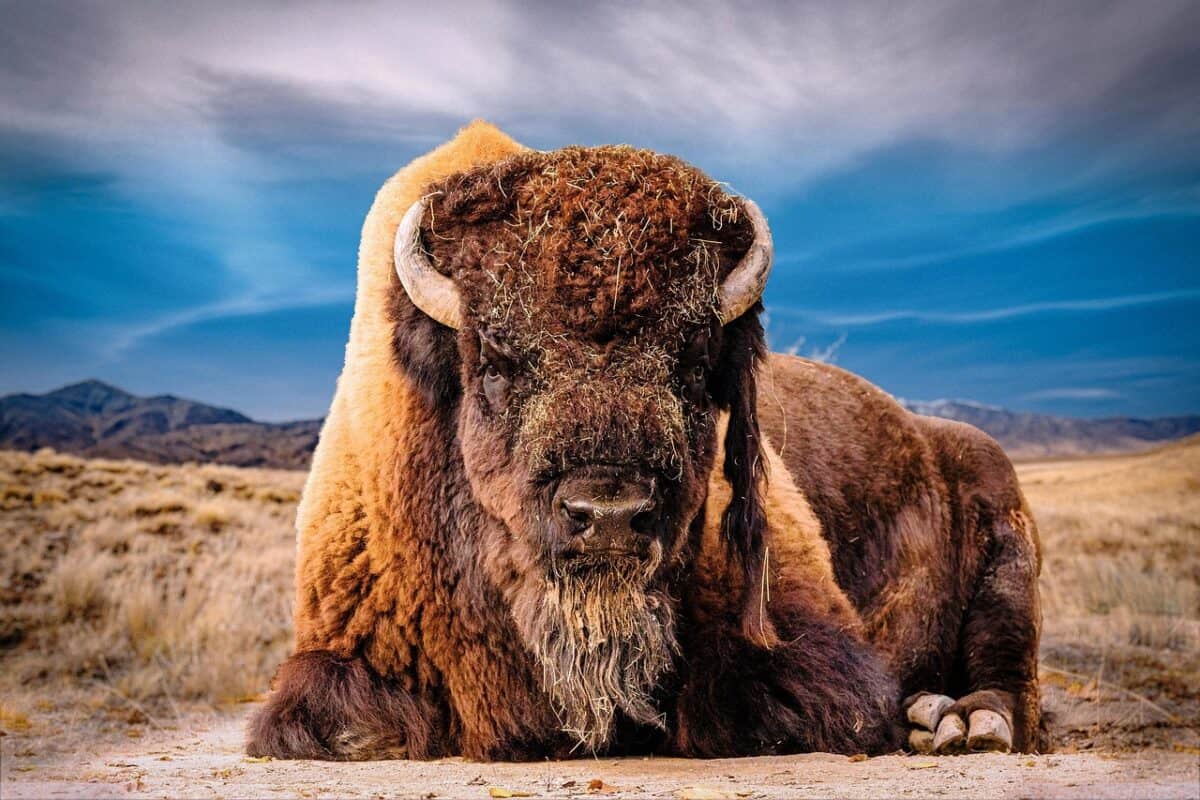
The awesome power of bison is perhaps most evident when they battle each other during rutting season. In July 2021, visitors to Yellowstone’s Lamar Valley witnessed and recorded an epic battle between two massive bulls that lasted over 40 minutes. The confrontation began with roaring and pawing the ground before escalating to violent head-butting collisions that could be heard echoing across the valley. According to bison researchers, these clashes can generate impact forces exceeding 2,000 pounds per square inch—enough to crack each other’s skulls were it not for their specially adapted thick bone structure and shock-absorbing brain case. During the battle, one bull was pushed into a line of vehicles, denting a car door and shattering a window in the process. The incident served as a vivid reminder that if bison can inflict such damage on each other, animals specifically evolved to withstand such impacts—human bodies and structures stand little chance when subjected to the same forces.
Breaking Through Fences
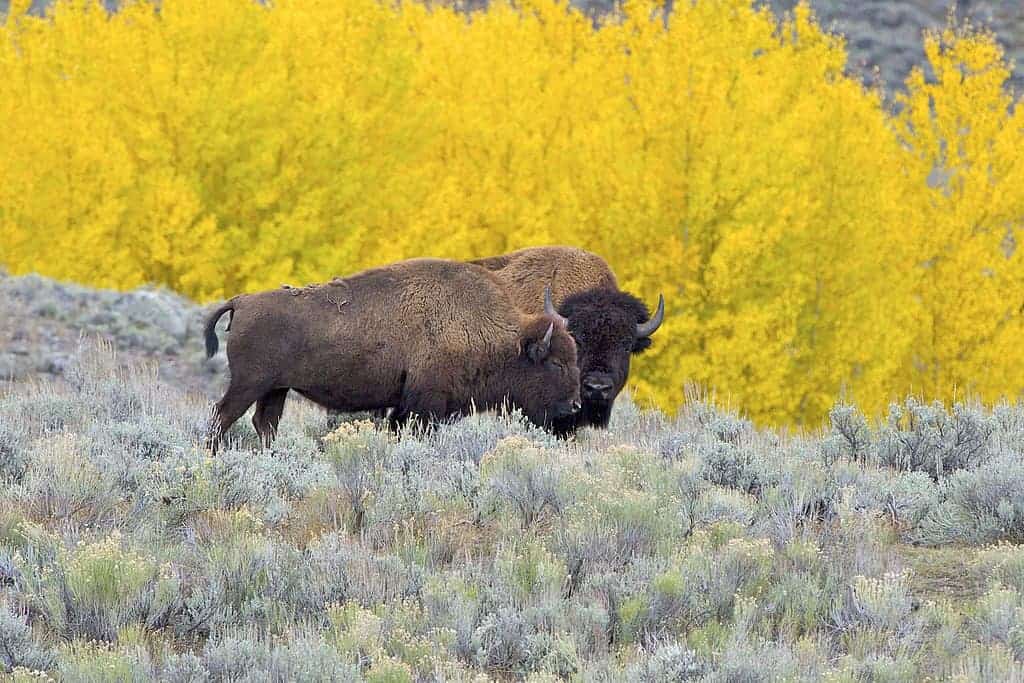
Numerous ranchers and wildlife managers have documented bison’s remarkable ability to break through fencing designed to contain them. In a notable 2018 incident near Minnedosa, Manitoba, a small herd of commercially raised bison broke through three separate fence lines after being spooked by a thunderstorm. The escaped animals traveled over 20 miles before being recaptured, damaging several farm fences along the way. Standard cattle fencing, even when reinforced, often proves inadequate for containing determined bison. Agricultural extension research from North Dakota State University indicates that properly containing bison requires fencing at least 6 feet tall with reinforced posts set deeper and closer together than standard livestock fencing. One particularly determined bull in the Manitoba incident broke through a fence rated to stop vehicles moving at 30 mph. This fence-breaking capability demonstrates that human attempts to control these animals are often merely suggestions rather than true barriers when bison decide to go somewhere.
The Wichita Mountains Wildlife Refuge Incident

In 2020, Oklahoma’s Wichita Mountains Wildlife Refuge experienced a troubling incident when a photographer using a drone to capture images of bison inadvertently caused a stampede that resulted in several calves being separated from the herd. When the drone operator attempted to retrieve his crashed equipment, he was charged by a protective bull and suffered multiple broken bones and internal injuries. This modern technological encounter highlights how even our advanced devices can trigger primal responses in bison. Refuge biologists later explained that bison perceive drones as airborne predators similar to eagles, which sometimes prey on vulnerable calves. The incident led to new regulations prohibiting drone use in the refuge and serves as a reminder that even indirect human interaction through technology can provoke dangerous responses from bison. It also demonstrated that our modern technological advantages do little to protect us when facing the raw physical power of these animals.
Conclusion: Respecting Nature’s Heavyweight Champions

These twelve incidents represent just a fraction of the documented cases where bison have demonstrated their formidable nature. As North America’s largest land mammals, they command respect not through malice but through their immense physical capabilities and wild instincts that have sustained them for thousands of years. Wildlife experts universally agree that maintaining appropriate distances—at least 25 yards in protected areas—is essential for both human safety and the wellbeing of these magnificent animals. Most bison-human conflicts stem from a fundamental misunderstanding of wild animal behavior and a tendency to anthropomorphize these creatures as gentle giants. The reality is that bison are neither pets nor performers, but powerful wild animals deserving of space and respect. As we continue to share landscapes with these iconic symbols of American wilderness, the lessons from these incidents serve as critical reminders that appreciating wildlife sometimes means admiring from a distance.

As a little kid, I fell in love with nature, wildlife, and animals. Living in the USA, South Africa, Italy, China and Germany gave me the opportunity to discover the world's Wildlife. My favorite animals are Mountain Gorillas, Siberian Tigers, and Great White Sharks.
I'm a certified PADI Open Water Diver, went to Everest Base Camp and Trekked Gorillas in Uganda. I hold a Master of Science in Economics and Finance.
Please send any feedback to feedback@animalsaroundtheglobe.com
- 14 Most Mysterious Mass Animal Deaths - July 29, 2026
- 15 Sea Creatures That Live Along the California Coast - July 29, 2026
- Mind-Control Fungus Turns Insects into Zombies - July 29, 2026